Reluctant Moses

Scripture: Exodus 3:1-14 & 4:1-17

Title: Reluctant Moses

Structure:

  • Introduction
  • Back-bone
  • The dialogue
  • Conclusion


Introduction:

True perfection is the ability to include imperfection [1]


The teacher who perseveres with a difficult student

  • The wife who goes on loving her husband even though he doesn’t trim his nose hairs and keeps leaving the toilet seat up
  • The father who welcomes home the prodigal son or daughter
  • The mother who patiently stays up all night nursing her sick child
  • The humble who can laugh at their own mistakes
  • The leader who allows criticism even when it is unfair
  • Anyone really who is able to forgive others and most especially able to forgive themselves


Please turn with me to Exodus 3, verse 10, page 61 in your pew Bibles

  • Today we continue our series on Moses
  • Last week we heard how God spoke to Moses as a flame in a bush, calling him to confront Pharaoh and lead the Israelites out of slavery
  • This week we hear how a very reluctant Moses tries to evade God’s call
  • Moses is all too aware of his own inadequacy
  • But God, who is true perfection, wants to include Moses in all his glorious imperfection


Our reading is in two parts this morning – the first part from the middle of chapter 3 and the second part from the first half of chapter 4

  • From verse 10 of chapter 3, God says to Moses…


[Read Exodus 3:10-14]


Now we will skip to the beginning of chapter 4 on page 62 of your pew Bibles

  • From verse 1 we read…


[Read Exodus 4:1-17]


May the Spirit of Jesus help us to accept the imperfection in ourselves


Back-bone:

Most of you would have heard of the three classic parenting styles…

  • Brick wall
  • Jellyfish, and
  • Back-bone


The brick wall parent doesn’t give an inch

  • It’s my way or the highway
  • There is no flexibility, no grace, no understanding with the brick wall parent – they come off as hard and unloving
  • The demanding (sometimes brutal) discipline of the brick wall style often leaves the child angry, resentful and alienated
  • Brick wall relationships are brittle – they don’t cope well with earthquakes or other crises because they have no give


Jellyfish parents are the opposite to this

  • They don’t know how to say ‘No’ to their kids – they are too soft and give in all the time
  • Jellyfish relationships tend to lack integrity or substance
  • You can’t really trust a jellyfish – they won’t support you when the chips are down and they may even sting you


Then we have the back-bone parenting style

  • As the name suggests, backbone parents combine strength & support with flexibility
  • A back-bone relationship is one you can rely on – it has integrity and substance, but it also has grace & understanding
  • Therefore you can trust the other person


Now when I first heard this brick wall, jellyfish, backbone thing, like most parents, I felt guilty for not always being a backbone parent

  • In reality though there are no perfect parents – we are all a bit of a mixture of the three
  • And that’s okay – the world is not a perfect place and so children need imperfect parents in order to prepare them for an imperfect world
  • True perfection is the ability to include imperfection


If you turn to the back page of your newsletter you will see a table there

  • This table basically summarises God’s dialogue with Moses
  • On one side of the table we have Moses’ objections to God’s call
  • And on the other side we have God’s response


Verses Moses’ objections God’s response Verses
3:11 Who am I? (I am nobody)  I will be with you 3:12
3:13 Who are you?(What’s your name) “I am who I am” Or,“I will be who I will be” 3:14
4:1 What if Israel doesn’t believe me? Here are 3 signs to help them believe you 4:2-9
4:10 I’m not a good speaker  I will help you to speak 4:11-12
4:13 Send someone else(or – send whoever you want) I will give you Aaron as your spokesman 4:14-17


When God calls Moses to confront Pharaoh and lead the people of Israel out of Egypt, Moses tries to talk God out of it

  • Five times he resists God’s call on his life


Moses comes across as a bit insecure

  • He appears full of self-doubt and lacking confidence
  • But in a paradoxical kind of way Moses’ questions and objections are actually a good thing
  • It is helpful and necessary to deal with our doubts in God’s presence before going out to face the enemy


Not only that but Moses’ questioning of God allows a meaningful dialogue to take place

  • If Moses had simply said ‘yes’ to God without offering any resistance then the conversation would have ended
  • Moses might not have heard God’s name nor been properly equipped to face Israel and Pharaoh – he would have no answer for his doubts


The other good thing here, about Moses’ resistance, is that it reveals back-bone

  • The fact that Moses is able to stand up to God bodes well for when he will have to stand up to Pharaoh
  • Leaders need a certain amount of stubbornness
  • Pharaoh was a brick wall, against which a jellyfish would make no impression
  • If you want to shift a brick wall you need backbone – strength combined with flexibility


God responds to Moses’ reluctance with some backbone of his own

  • He doesn’t give Moses what he wants or let him off the hook
  • God could have done the job himself but he doesn’t
  • God is resolute in his plan to work with the imperfect Moses
  • By the same token he doesn’t bulldoze Moses either
  • God gives Moses support with flexibility
  • He dialogues with Moses


The Dialogue:

A dialogue is a two way conversation, sort of like tennis – one player hits the ball over the net and the other player responds by hitting it back


God serves a rip snorter to Moses saying, ‘I am sending you to the king of Egypt so that you can lead my people out of his country

  • And Moses sends God’s serve right back over the net with, ‘I am nobody’
  • Or more literally, ‘Who am I to go the king of Egypt?’


Interestingly, God takes Moses’ concerns seriously

  • God doesn’t deny what Moses is feeling
  • And he doesn’t disagree with Moses’ assessment of himself
  • God simply says, ‘I will be with you’
  • Which is sort of like saying, ‘Yea, I agree with you Moses. You’re not adequate by yourself. But I’m more than adequate, so don’t worry’
  • God is inviting Moses to trust him


Moses isn’t entirely sure if he is ready to trust the Lord just yet, so he fires the ball back over the net to God with another question

  • ‘In case someone asks me, what’s your name?’
  • First Moses had asked, ‘Who am I?’
  • Now he asks, ‘Who are you?’


Names in Biblical times were significant

  • The Lord’s name is his story
  • It sums up who he is and what he wants to make known about himself [2]


In verse 14 of Exodus 3, God famously replies, “I am who I am” which can also be translated, “I will be who I will be”


God’s name doesn’t reveal everything about him but it does show us some things

  • Firstly, that we don’t define God – he defines himself
  • There is a certain divine freedom in this


‘I am who I am’ is quite open ended

  • It means, if we are going to be in relationship with God, then we must be prepared to cope with mystery
  • with not knowing
  • with loose ends and unresolved questions,
  • For God won’t be tied down or dissected


‘I will be who I will be’ indicates that God’s story is being told in human history and so it is unfolding even as history continues to unfold


In Tolkien’s book, The Lord of the Rings, the character Treebeard speaks of his name in this way…

  • “My name is growing all the time and I’ve lived a very long, long time; so my name is like a story. Real names tell you the story of the things they belong to” [3]


The people of Israel would come to know the meaning of God’s name through the history of his presence with them and salvation of them

  • We come to know the meaning of God’s name through Christ


Reluctant Moses tries to get the ball out of his court a third time by saying, in verse 1 of Exodus 4, ‘But suppose the Israelites do not believe me and will not listen to what I say…?

  • At which point God gives Moses power to perform three signs
  • Turning a stick into a snake and back into a stick again
  • Turning a hand leprous and back into a healthy hand again
  • And turning water into blood


These might seem like pretty random things but I suspect they were freighted with meaning


The Pharaohs wore a crown on their head and on the front of that crown was a cobra snake, raised and ready to strike as a threat to Egypt’s enemies

  • By giving Moses the power to change his stick into a snake and back again I reckon God was saying, ‘Egypt is no threat to me, so you don’t need to feel threatened by them either’
  • Interestingly God told Moses to pick up the snake by the tail
  • This is the most dangerous way to pick up a snake for it can whip it’s head around and bite you
  • Just as God protected Moses from the snake, so too he would protect Moses (and Israel) from Pharaoh


With the second sign God tells Moses to put his hand inside his robe and when Moses does it turns leprous

  • Then when Moses repeats the movement his hand is made healthy again
  • This sign is different from the other two in that it was a sign which was done to Moses’ person – his own body


Lepers were considered unclean and were excluded from society

  • Moses had lived like a leper for a long time, in the sense that he had been excluded from Hebrew & Egyptian society
  • Moses also felt unfit or unworthy for the task God was calling him to
  • But God has the power to declare things clean
  • He has the power to open doors so those standing on the outside looking in may be included
  • God, who is true perfection, is able to include Moses’ imperfection – to declare Moses clean


The third sign, turning the water of the river Nile into blood, shows us that God has power over life and death and he is putting that power into Moses’ hands

  • Water & blood are both symbols of life and potentially death
  • Egypt relied on the Nile for its livelihood
  • Turning the river into blood would destroy the economy


These three signs prefigure the 10 plagues that will come on Egypt


Moses is becoming a bit desperate now – God just doesn’t seem to be getting the hint, so he says…

  • Lord… I have never been a good speaker and I haven’t become one since you began speaking to me. I am a poor speaker, slow and hesitant.


Perhaps Moses thinks he’s got God here, because a leader needs to be able to communicate effectively


There was a king who lived during the Second World War who struggled with a speech impediment – can anyone tell me his name? [Wait]

  • Yes, that’s right, King George the sixth, also known as Bertie
  • He was the father of our current Monarch, Queen Elizabeth the second


A movie came out recently called the King’s Speech, which tells King George’s story

  • After his brother abdicated, Bertie reluctantly assumes the throne
  • He doesn’t want to be king because that requires public speaking – the one thing he can’t do well
  • Every time he opens his mouth in public he is vulnerable – for his greatest weakness is exposed for the whole world to see
  • Bertie engages the help of an unorthodox speech therapist named Lionel Logue who helps him find his voice and lead the country through the war


Hitler was articulate and charismatic, some might say a gifted speaker – kind of the opposite of King George and yet, who won the war?

  • God does not call perfect individuals to leadership – he chooses what is weak in the eyes of the world to shame the strong
  • God did not miraculously heal Moses’ slowness of speech and he didn’t heal King George’s stammer either
  • But he does help Moses, as he helped King George
  • God works in and through real human impediments to further his purpose
  • True perfection is the ability to include imperfection


In verse 13 of Exodus 4, Moses says, No Lord, send someone else

  • This translation is something of a paraphrase
  • The original Hebrew is far more vague – it literally reads…
  • Send by whose hand you will send– which could mean…
  • Have it your own way [God] – do what you want – send whoever [4]


Either way it is clear that Moses is not happy to be chosen for the task


Verse 14 tells us God became angry with Moses at this


I don’t think God’s anger here is the anger of impatience

  • God is eternal – he literally has all the time in the world – he is the very definition of patience and long suffering
  • So why is God angry?


Well, it seems to me that often when God gets angry in the Bible it is because someone has mistreated what God values

  • For example, God values the poor & the oppressed – so if we mistreat them God will be angry with us
  • Likewise if God gives us something sacred or holy and we treat his gift cheaply or in an unholy way, then he is not happy


God has just given Moses a sacred call – a special job to do – and that job involves helping the poor & oppressed

  • But Moses has turned his back on the poor by rejecting God’s call – he has treated them cheaply as though they were nothing
  • So we can understand why God is angry – Moses has been careless with people God cares about


And yet God still has the strength and the flexibility to accommodate Moses

  • He says, ‘Okay then, I’ll send Aaron with you as your spokesman’
  • As it turns out Moses ends up doing most of the talking anyway


Conclusion:

True perfection is the ability to include imperfection


When we look at the ministry of Jesus we see quite clearly that he included imperfection

  • Jesus called very ordinary people to be his witnesses and disciples
  • Not only that but he had a reputation for hanging out with imperfect people – lepers, tax collectors, prostitutes and so on


In Matthew 5 Jesus says to his disciples…

  • Love your enemies and pray for those who persecute you…
  • You must be perfect just as your Father in heaven is perfect
  • And what does it mean to love your enemy?
  • It means to include them – include them in your prayers, include them in sharing good things – even though they are not perfect


The ones Jesus had the biggest problem with were the Pharisees. Why?

  • Because they had no tolerance for imperfection
  • They wouldn’t admit the imperfection in themselves and consequently they gave everybody else a hard time for being imperfect


It is one thing to include other people’s imperfection but it is another thing entirely to accept our own imperfection

  • Somehow imperfection is more tolerable in other people
  • In fact someone else’s imperfection can make us feel positively wonderful about ourselves – unless of course their failings remind us of our own, and then we are likely to give them a hard time


We do such violence to our own soul when we judge and condemn those parts of ourselves that we find unacceptable

  • We can be that brick wall parent to the child in us


  • We can be so hard on ourselves – so unforgiving of our own weaknesses and mistakes
  • We do well to remember that we are sacred to God
  • You are sacred to God – so be careful with yourself
  • The things you detest may be the very things God values the most


True perfection is the ability to include imperfection


[1] From Richard Rohr’s daily meditation for Tuesday 16 June 2015

[2] Motyer, BST Exodus, page 68

[3] J.R.R. Tolkien, Lord of the Rings, page 454.

[4] Alec Motyer, BST Exodus, page 81

Close Encounters

Scripture: Exodus 3:1-12

Title: Close Encounters

Structure:

  • Introduction
  • God’s humility – vv. 1-6
  • God’s love – vv. 7-10
  • Moses’ honesty – vv. 11-12
  • Conclusion

Introduction:

The Franciscan scholar Ilia Delio observes…

  • Before encounter, God is perceived as omnipotent power; after encounter, God is perceived as humble love.’

Omnipotent power is unlimited power, supreme power, power which cannot be trumped by any other

  • Omnipotent power is overwhelming and fills us with fear
  • In contrast, humble love is down to earth, accessible love, love which empties us of all pretence and invites an honest response

Please turn with me to Exodus chapter 3, page 61 near the beginning of your pew Bibles

  • In this reading we see God’s humility in the very down to earth way he speaks to Moses out of a bush.
  • And we see God’s love through his attention and concern for Israel, his oppressed people
  • We also see Moses’ honesty in objecting to God’s call

From verse 1 of Exodus 3 we read…

[Read Exodus 3:1-12]


May we encounter the Spirit of Jesus in this Scripture reading

God’s humility:

Aslan is the Lion in CS Lewis’ Narnia series

  • Aslan represents God

I suppose Lewis chose a Lion to represent God because of the particular images lions raise in the human imagination

  • We associate lions with power, strength & royalty (they are considered the king of the jungle)
  • Lions are also normally thought of as wild or untameable – something we can’t control and therefore something to be feared

Lucy may have been afraid of Aslan at first (before actually meeting him) – as we are all afraid of omnipotent power, but after actually encountering Aslan Lucy came to know this lion as humble love

  • The movement from perceiving God as omnipotent power to perceiving him as humble love is a movement from fear to faith – from terror to trust
  • It is a movement from hiding from God to being honest with God
  • This appears to be Moses’ experience in our reading this morning

Exodus 3 begins by telling us how Moses was going about his regular job – shepherding sheep & goats

  • Moses is quite a bit older by this stage – it has been many years since he ran away from Egypt
  • He arrives at Mt Sinai in the Horeb wilderness
  • Horeb basically means ‘wasteland’
  • This is a lonely place

Verse 2 tells us that, there (at Sinai) the angel of the Lord appeared to Moses as a flame coming from the middle of a bush

  • Moses saw that the bush was on fire but that it was not burning up
  • So he went closer to investigate
  • He doesn’t yet realise that the angel of the Lord is in the bush

Many Christians believe the angel of the Lord in the Old Testament is a cloaked reference to Jesus – before he became human

  • An angel is basically a heavenly messenger and Jesus is the Word of God
  • Hence the angel of the Lord is God’s Word – Jesus in a different form

I’m not sure we should try to tie it down too much for there is a certain mystery here which we can’t explain

  • The point seems to be, God presents himself to Moses, on this occasion, as a talking flame inside a bush

There is significant symbolism in this

  • Fire is powerful and dangerous – it is not safe to get too close to fire but, at just the right distance, fire can warm us, comfort us and give us light

Furthermore, as Alec Motyer points out, the fact that the fire does not consume the bush shows us that Yahweh is ‘a self-maintaining, self-sufficient reality [who] does not need to draw vitality from the outside’ [1]

  • In other words, God is not like fire in every respect
  • Fire needs oxygen and fuel to survive – but God doesn’t need anything to survive – he is entirely independent and without needs
  • Creation depends on God but God does not depend on creation

It’s also interesting that God should be found in a bush

  • You can’t get more down to earth, more grounded, more humble, more non-threatening than a bush

God (who is bigger than we can imagine) is basically making himself small so that Moses can cope with the conversation

  • If God were to reveal himself to Moses (or any of us) in all his glory we couldn’t handle it – we would be completely overwhelmed
  • So God very graciously speaks out of a bush – he dresses down and makes himself small so that Moses won’t feel so threatened

Having said that, Moses is still pretty frightened by the whole experience

  • When he realises God is in the bush he covers his face because he is afraid to look at God
  • Before encounter, God is perceived to be omnipotent power – and therefore terrifying
  • Moses won’t always be so afraid though – and nor will God always seem so small
  • Moses’ perception of God is like Lucy’s perception of Aslan
  • Returning to Narnia for a moment, in the book Prince Caspian Lucy says…

 “Aslan”, you’re bigger”.

  • “That’s because you are older little one…
  • every year you grow, you will find me bigger”

God starts small with Moses, but as Moses grows in faith he finds that God gets bigger too, until eventually the Lord is represented as a pillar of fire by night and pillar of cloud by day

  • The beauty of it is we can never out-grow God nor be too small for him

Interestingly God introduces himself by saying…

  • I am the God of your ancestors, the God of Abraham, Isaac and Jacob
  • To me this says that God is known through relationship
  • It also indicates a continuity or connection between Moses and his forebears – it’s sort of a way of establishing common ground
  • A way of saying – I know your roots Moses, I understand where you come from – your family and me have got history, we go way back

But the part that is most interesting to me is God’s humility in identifying with Abraham, Isaac & Jacob

  • God could have introduced himself in a quite a big deal kind of way
  • He could have said, ‘I am the God of the universe – the God of the Milky Way, the God of infinite might, the God of eternity and time, bow before me mortal’ – but he doesn’t
  • God doesn’t give a list of his achievements
  • Instead in a rather humble and far more personal way he identifies himself with three imperfect human beings
  • That’s quite cool really


God’s love:

The Hunger Games movies have been quite popular the past 2 or 3 years

  • The Hunger Games is a variation on the ‘Exodus story with the ‘Capital’ parallel to Egypt and the oppressed ‘Districts’ parallel to Israel
  • President ‘Snow’ is like Pharaoh and Katniss is sort of like Moses
  • The story line and characters in the Hunger Games don’t match the Exodus account exactly but certainly they share similar themes

Returning to Exodus 3…

  • You might be thinking, ‘I get what you’re saying about God being humble, but where does the love part come in?’

Well, God reveals his love in verses 7-10, where he says…

I have seen how cruelly my people are being treated…

  • I have heard them cry out to be rescued…
  • I know all about their sufferings…
  • I have come down to rescue them…
  • I have indeed heard the cry of my people…
  • I see how the Egyptians are oppressing them…
  • Now I am sending you [Moses] to lead my people out of Egypt

I have seen

I have heard

I know

I have come down

I have heard

I see

I am sending you

Here we have seven statements of God’s love

  • The key to understanding is found in the middle of the list where the Lord says, I have come down

God’s seeing isn’t from a distance – up on a cloud somewhere

  • His seeing is up close and personal, for he has come down
  • Nor is his hearing detached or unfeeling, for God hears the cry of his people like a parent hears the unique cry of their child in distress
  • It tears at his heart
  • Likewise, God’s knowing isn’t just an intellectual head knowledge
  • God’s knowing is the understanding which comes from first-hand experience – for God has been present amongst his people throughout their suffering and has in fact suffered with them

Although God sees, hears and knows (first hand) the sufferings of his people in Egypt, Moses doesn’t – at least not to the same extent

  • Moses has been living away from his people for a long time and even when he did live in Egypt he was in the sheltered environment of the palace – so why does God want to send Moses to lead the people out?

Well, Moses may not have suffered in exactly the same way as his fellow Israelites, but he had suffered – exile is no picnic

  • Perhaps Moses’ exile was one of the things that qualified him for this particular task. As Richard Rohr says…

It seems until you are excluded from any system, you are not able to recognise the idolatries, lies or shadow side of that system… There seems to be a ‘structural blindness’ for people who are content and satisfied on the inside…

It is always the forgotten one… who understands things more deeply and breaks through to enlightenment.”  [2]

Perhaps it was necessary for Moses to be excluded and forgotten for a time in order for him to recognise what was wrong with the Egyptian system

  • That way he wouldn’t make the same mistakes with Israel

Moses’ honesty:

Before encounter, God is perceived as omnipotent power; after encounter, God is perceived as humble love.’

  • The movement from perceiving God as omnipotent power to perceiving him as humble love is a movement from fear to faith – from terror to trust
  • It is a movement from hiding from God to being honest with God

Moses has gone from being too afraid to look at God, to feeling comfortable enough to talk back to God

  • This is what an encounter with the God of humble love does – it makes honest dialogue possible
  • Moses responds to God’s request by saying, “I am nobody. How can I go to the king and bring the Israelites out of Egypt”
  • To us this might appear like humility – but actually it’s not


As our friend C.S. Lewis reminds us…

  • Humility is not thinking less of yourself, but thinking of yourself less
  • In other words, humility is not the same thing as poor self-esteem
  • It’s not the same as doubting your value

God is humble in the sense of thinking of himself less

  • When we look at God’s words to Moses so far, we notice they are largely about other people – God says hardly anything about himself
  • Moses on the other hand is quite self-focused at this point
  • Thinking less of yourself (as Moses does here) is still thinking of yourself

God answers Moses, “I will be with you…”

  • In other words, think of yourself less and think of me more – you’re not alone

God also gives Moses a sign or a proof

  • When you bring the people out of Egypt you will worship me on this mountain

I think God is saying more than one thing at once here

  • At a surface level God is saying…
  • ‘The proof that I have sent you is that you will be successful – you will bring the people out of Egypt and worship me on this mountain’

The flip side (or the unspoken part of this) is…

  • ‘You won’t argue with me (as you are now Moses) you will praise me’

Going a little deeper – God is inviting Moses to trust him, for the sign requires faith, it won’t be fulfilled until after Moses has done what God asks


But at an even deeper level I think God is also saying to Moses…

  • ‘You doubt your value, don’t run from who you are’ [3]

In other words,

  • ‘I believe in you Moses – you are a leader – you were born to do this’

Conclusion:

Before encounter, God is perceived as omnipotent power; after encounter, God is perceived as humble love.


Soren Kierkegaard tells a parable of a king and a maiden which helps to illustrate the humble love of God. [4]

Once there was a rich and powerful king who fell in love with a beautiful woman

  • This king was no ordinary king
  • Every statesman trembled before his power and might
  • World leaders brought him tributes and showered him with the best of everything their lands had to offer
  • People were so afraid of him that no one dared breath a word against himOne day, while out walking, this most mighty of men was stopped in his tracks by the sight of a beautiful woman
  • The king had his intelligence service investigate the woman
  • And they found that she was not rich and powerful like him
  • She was simply a regular person with an ordinary job, paying her bills like everyone elseAt first the king tried to ignore his feelings but unexpressed love turns into pain
  • The more he tried to ignore what he felt the more he couldn’t help thinking about her until eventually the king could stand it no more
  • There was nothing for it but to declare his love for the beautiful maiden
  • And to find out if she held love in her heart for him
  • Perhaps that way he might find some peaceBut the king was no sooner on his way to her house than he realized something
  • How would he know whether she really loved him or not – whether she would be truly happy at his side?The king knew he could impress the woman with his power and wealth
  • He could visit her in his helicopter with all his body guards
  • He could fly her to Paris for dinner and shower her with jewellery, but grand gestures like that might only deceive them both
  • For then the maiden would never truly know whether she loved the giver or just his gifts
  • Elevating the maiden would only alienate her from him further In an ironic kind of way the king’s very power and wealth made it difficult for people to get close to him
  • The king didn’t want a cringing fearful subject for a wife
  • He wanted someone who would be honest with him
  • He wanted someone he could trust
  • He wanted a friend and a loverFor this is the nature of love, that it desires genuine equality with the beloved So, motivated by love for the maiden, the king humbled himself
  • Putting aside his claim to the throne he took on a new identity to win her hand
  • He rented a place in her neighbourhood, became a carpenter and suffered much – for this was the only way she could know him and relate with him on equal terms Humble love you see
  • God doesn’t want to force or manipulate or control people
  • God wants people to relate with him freely, willingly, because we trust him and because we love him

The goal with God is not following orders

  • The goal is mutual friendship
  • The goal is not grudging service
  • The goal is joyful worship
  • Not duty – but delight
  • With the goal of right relationship in mind God does not overwhelm us with his power – He descends to us in humble love

It’s shocking really that God Almighty would seek equality of relationship with humanity

  • But that is exactly what he did with Moses
  • And what he has done with each one of us through Christ

[1] Alec Motyer, BST Commentary on Exodus, page 56

[2] Richard Rohr, ‘Things Hidden’, pages 92-93.

[3] I think Aslan may have said this to Edmund in one of the Narnia books

[4] This is not Kierkegaard’s original parable, just a paraphrase of it

Just Moses

Scripture: Exodus 2:11-22

Title: Just Moses

Structure:

  • Introduction
  • Punitive justice
  • Restorative justice
  • Social justice
  • Conclusion

Introduction:

“Peace without justice is tyranny”  [1]

Please turn with me to Exodus chapter 2, verse 11, page 60, near the beginning of your pew Bibles

  • Today we continue our series on Moses in the book of Exodus
  • I’ve given this morning’s sermon the title ‘Just Moses’
  • Partly because we see Moses on his own quite a bit in this reading
  • But also because, in this passage, Moses realises that the peace Egypt enjoys is a false peace – it is in fact tyranny for it is peace without justice
  • From verse 11 of chapter 2 we read…

 Read Exodus 2:11-22


May the Spirit of Jesus illuminate this Scripture for us

In this reading Moses demonstrates three kinds of justice…

  • Punitive justice, restorative justice and social justice

Punitive justice:

Scales of Justice

On the wall here is a picture of a woman (a virgin actually) holding a sword in one hand and set of scales in the other

  • Who can tell me what this symbolises? [Wait]
  • Yes, that’s right – it is a symbol of justice

The virgin woman represents purity and innocence

  • While the scales represent even handedness or fairness – the idea of weighing the evidence equitably so that justice is served
  • But also the idea of making sure the punishment measured out is in balance with the crime committed
  • The sword represents not only the power to punish but also the precision to clearly separate the issues in dispute


This image finds resonance with the Bible in a number of respects…

Quite often in the Bible wisdom is personified as a woman

  • And wisdom is what is needed for rulers to exercise justice
  • Hence it is a woman (the symbol of wisdom) holding the scales of justice

The Bible also talks about the importance of using honest scales and in not going overboard with punishment

  • In Matthew’s gospel Jesus indicated that God’s justice fits the crime, when he said…
  • The measure you use for others is the measure God will use for you  [2]

Likewise, in the book of Hebrews, God’s word is described as a double edged sword separating the thoughts and attitudes of the heart, [3] so an accurate and fair judgment can be made

  • And of course, the sword is also a metaphor of punishment
  • In his letter to the Romans, Paul talks about the government having a God given role in executing punitive justice…
  • For he does not bear the sword for nothing. He [the government] is God’s servant, an agent of wrath to bring punishment on the wrong doer.

In Exodus 2 we read how an adult Moses went out to visit his people

  • Moses you will remember had been raised with the royal Egyptian family after Pharaoh’s daughter took him under her wing to protect him
  • Moses’ upbringing had been a relatively privileged one
  • He received the best education available and never wanted for a thing
  • So he wasn’t treated like a slave as his Hebrew kin were
  • And this was probably necessary for God’s purpose
  • To be effective in leading Israel out of slavery Moses needed to think like a freeman – not like a slave

It is quite significant really that Moses sent himself

  • He could have stayed in the comfort of the palace
  • He could have sent a servant to check things out and bring back a report
  • He could have given money
  • But he didn’t – Moses gave himself and that takes courage

This reminds us of Jesus who left heaven and came to earth to give himself

When Moses saw the suffering of his own people

  • And when he saw an Egyptian kill a Hebrew he felt compelled to act
  • In quite a deliberate & premeditated way Moses looked around to see no one was watching & then killed the offender, hiding his body in the sand

Some people are a bit hard on Moses at this point – they say he was an angry young man or that he was impetuous and lacked self-control

  • I don’t think we should be too quick to judge Moses though
  • The text doesn’t actually say Moses was angry – although it is reasonable to infer that he was
  • It takes a lot to kill a man and it is hard to imagine Moses not feeling anything here
  • Whatever he may have felt I don’t think Moses had a problem with anger
  • I think he had a problem with injustice – he had no tolerance for it
  • And that is actually a good thing. As Benjamin Franklin said…

Justice will not be served until those who are unaffected are as outraged as those who are.”

Many of us were brought up with this idea that anger is always bad and we must never get angry because that suggests we are bad

  • And to be fair, anger is bad when it’s misplaced – when we take our rage out on some innocent third party
  • But outrage is not wrong in itself – it can be an appropriate response to injustice
  • If you cut yourself you bleed, if you see injustice you feel angry
  • I think God made us like himself, to be disturbed by injustice
  • So that we will be motivated to do something about it

It appears Moses was affected by the injustice he saw

  • He wanted to restore some balance to the scales of justice
  • So he killed the Egyptian as a punishment
  • We might call this punitive justice – justice which makes things even by taking something away

The Law of Moses would later include elements of punitive justice

  • An eye for an eye and a tooth for a tooth
  • The idea here is not so much to enforce a punishment as it is to limit the extent of the punishment
  • To ensure that people don’t go overboard in carry out their vengeance

Punitive justice is not ideal in that it takes something away

  • It’s a lose / lose scenario – no one wins
  • ‘An eye for eye will make the whole world blind’ [4] – as they say

Having said that, punitive justice will probably always be necessary, at least until Christ returns

  • It can be a deterrent for many people
  • And it may placate people’s anger for a time
  • But it doesn’t have the power to transform people
  • Punitive justice, by its very nature, influences people by external force
  • Genuine transformation comes from the inside, not from the outside

By killing the Egyptian Moses didn’t really achieve much – there would be plenty more task masters just as brutal to replace the one Moses eliminated

  • And the result for Moses was a loss of freedom
  • Moses was forced into exile and obscurity by his actions

Restorative justice:

Earlier we showed a classic image of justice – a woman carrying balanced scales in one hand and a sword in the other

  • Here’s another image of justice…

Or a couple of images actually

  • One of two people shaking hands
  • And the other of a group of people sitting in a circle talking
  • These are images of restorative justice

The image of a woman carrying scales and a sword is quite impersonal

  • Justice isn’t merely a mechanism – like scales or a sword
  • Nor is it an end in itself
  • Justice is an inter-personal relationship – justice must serve relationship

The next day, after killing the Egyptian, Moses returned and saw two Hebrew men fighting

  • Once again Moses is confronted with an injustice and finds himself unable to resist getting involved – he says to the one in the wrong,
  • “Why are you beating up a fellow Hebrew?”

What we notice here is that Moses takes a different approach from the day before – Moses doesn’t resort to violence, instead he uses his words

  • He tries to restore the relationship by talking about it

Punitive justice takes something away – Restorative justice puts it back

So for example, if someone steals your car and crashes it, then punitive justice takes something away from the offender without giving anything to the victim

  • Neither the offender nor the victim get a say in the matter – it’s lose / lose
  • Restorative justice though, gives the victim a voice and the offender the opportunity to make it right – it’s potentially win / win

On the wall here is a table comparing & contrasting punitive justice & restorative justice…


Punitive Justice Restorative Justice [5]

What rule has been broken?

What happened?

Who is to blame?

Who has been affected and how?

What will the punishment be?

What needs to be done to put things right?

There is no redemption in punitive justice but there is opportunity for redemption with restorative justice

The Law of Moses would later include elements of restorative justice

  • Leviticus 6, for example: If anyone cheats his neighbour out of his stuff then he must return what was lost or stolen and add 20% to it

Later Jesus would give strong emphasis to a restorative approach

  • When Peter came to him and asked, ‘Lord, how many times should I forgive my brother? Seven times?’
  • Jesus replied, ‘No, not seven times, but seventy times seven’ – meaning as often as it takes

Moses may have had the right idea in acting as a peace-maker and trying to restore the relationship between the two Hebrew men, but his input wasn’t appreciated

  • The man in the wrong answered, “Who made you our ruler and judge? Are you going to kill me just as you killed that Egyptian?”
  • Moses was only trying to help but he was rejected by his own people
  • I think this would have hurt Moses – it would have left its mark on him

This was Jesus’ experience too

  • When Jesus challenged the religious leaders by asking…
  • Why are you laying heavy burdens on your own people,
  • Why are you beating them up with unnecessary shame & guilt,
  • Why are you making their lives harder?
  • They crucified him

After Moses learned that Pharaoh was trying to have him killed, he fled for his life to the land of Midian

Social justice:

So far we have looked at two different kinds of justice: punitive & restorative

  • God is interested in a third kind also – what we might call social justice

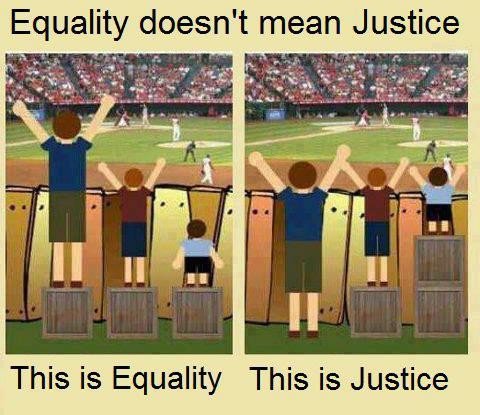
Justice

‘Equality does not mean justice’

  • Giving everyone the same box to stand on doesn’t make it fair because not everyone is the same height
  • The tall guy doesn’t need a box to see over the fence
  • The short guy needs two boxes
  • Distributing resources & opportunities so everyone has what they need to see over the fence is social justice

One day, after running away from Egypt, Moses finds himself sitting by a well when seven young women come along to draw water for their flocks

  • As they do this some other (male) shepherds drive the women away
  • Once again Moses is confronted with an injustice

You’ve probably heard the saying,

  • ‘Give a man a fish and he will eat for a day. Teach a man to fish and he will eat for a lifetime’
  • Well that’s okay but what if the man doesn’t have fair access to fishing equipment or to the fish pond itself?
  • Then we have a social justice issue

Driving the women away from the well so they couldn’t water their flocks was a social justice issue

  • And as one who can’t stand to see people abusing power Moses takes action to help correct the imbalance
  • This time though he doesn’t use violence or diplomacy
  • He doesn’t try to punish the shepherds nor does he try to restore the broken relationship
  • This time Moses simply waters the flocks for the women

Now there may be some who would say, ‘That’s a poor solution because it doesn’t empower the women to do it themselves – and it reinforces unhelpful stereotypes about women not being able to cope without men’

Well, that’s not how I see it

  • If the goal is to bring about social change, so that women shepherds are allowed fair access to the well for watering their flocks, then the change needs to come from inside the male shepherds
  • I’m talking about changing attitudes and values and mind-sets
  • Internal change comes about by being with someone who embodies that change – experiencing someone who is a living example of the change

Just outside the Wellington railway station there is a statue of Mahatma Ghandi with the quote, “Be the change you want to see in the world

  • I wonder if this is what Moses was aiming for when he watered the women’s flock
  • Yea he was doing it for them – but perhaps he was also making a statement to the other male shepherds
  • Perhaps his act of chivalry would have made them stop and think about their actions so they felt a little ashamed for how they had behaved
  • Maybe next time they would remember Moses’ example and allow the women access to the well – who knows?

What we do know is that Moses found acceptance and a family for his efforts

Whether Moses was able to change attitudes by his example or not the Law of Moses would later include elements of social justice

  • In the book of Numbers (chapter 27) the five daughters of Zelophehad asked for an inheritance in the Promised Land because their father had no sons and Moses granted it to them
  • Social justice you see – giving everyone fair access to the fish pond, giving everyone the means to see over the fence.

Conclusion:

This morning we’ve considered three different kinds of justice…

  • Punitive justice – where people are punished by having something taken away from them
  • Restorative justice – where the loss (and hopefully the relationship) are restored
  • And social justice – where everyone gets fair access to the fish pond, or the watering well

There is a true story which illustrates all of these kinds of justice at once

  • Many of you would have heard it already but it’s worth retelling

Fiorello LaGuardia was mayor of New York City during the worst days of the Great Depression and all of WWII

  • He was a colourful character who used to ride the New York City fire trucks, take entire orphanages to baseball games, and whenever the New York newspapers were on strike, he would go on the radio and read the Sunday funnies to the kids.

One bitterly cold evening in January of 1935, the mayor turned up at a night court that served the poorest ward of the city

  • LaGuardia dismissed the judge for the evening and took over the bench himself
  • Within a few minutes, a tattered old woman was brought before him, charged with stealing a loaf of bread
  • She told LaGuardia that her daughter’s husband had deserted her, her daughter was sick, and her two grandchildren were starving

But the shopkeeper, from whom the bread was stolen, refused to drop the charges

  • “It’s a real bad neighbourhood, your Honour.” the man told the mayor. “She’s got to be punished to teach other people around here a lesson.”

LaGuardia sighed. He turned to the woman and said “I’ve got to punish you. The law makes no exceptions—ten dollars or ten days in jail.”

  • But even as he pronounced sentence, the mayor was already reaching into his pocket. He extracted a bill and tossed it into his famous sombrero saying: “Here is the ten dollar fine which I now remit; and furthermore I am going to fine everyone in this courtroom fifty cents for living in a town where a person has to steal bread so that her grandchildren can eat. Mr. Baliff, collect the fines and give them to the defendant.”

Everyone in the court room gave the mayor a standing ovation [6]

Mayor LaGuardia made sure the requirements of punitive justice were met and at the same time attempted some social justice

  • The woman was also restored in that she now had money in her pocket with which to pay the grocer for the bread she had stolen

There was someone else of course who managed to satisfy the requirements of punitive, restorative and social justice all at once & that was Jesus, on the cross

  • He took our punishment
  • He made it possible for us to be restored to right relationship with God
  • And he provided access for everyone to drink from the well of life
  • For [in Christ] there is no difference between Jew and Gentile – the same Lord is Lord of all and richly blesses all who call on him, for, ‘Everyone who calls on the name of the Lord will be saved.’ [7]  

[1] Attributed to William Allen White

[2] Matthew 7:1-2

[3] Hebrews 4:12

[4] This is often attributed to Mahatma Ghandi although it is unclear if he actually said it

[5] http://www.restorativeschools.org.nz/restorative-practice

[6] Brennan Manning, The Ragamuffin Gospel, pages 91-2

[7] Romans 10:12