Israel’s Baptism

Scripture: Exodus 14:5-31

Title: Israel’s Baptism

Structure:

  • Introduction
  • Israel’s baptism
  • Moses’ leadership
  • Jesus’ identity
  • Conclusion

Introduction:

Please turn with me to Exodus chapter 14, page 72 in your pew Bibles

  • Today we continue our series on Moses
  • By this point in the story God has struck Egypt with the tenth plague – the death of the first born
  • Pharaoh has sent the Hebrew people away and they are making good their escape
  • We pick up the story from Exodus 14, verse 5…

[Read Exodus 14:5-31]


May the Spirit of Jesus illuminate this reading for us
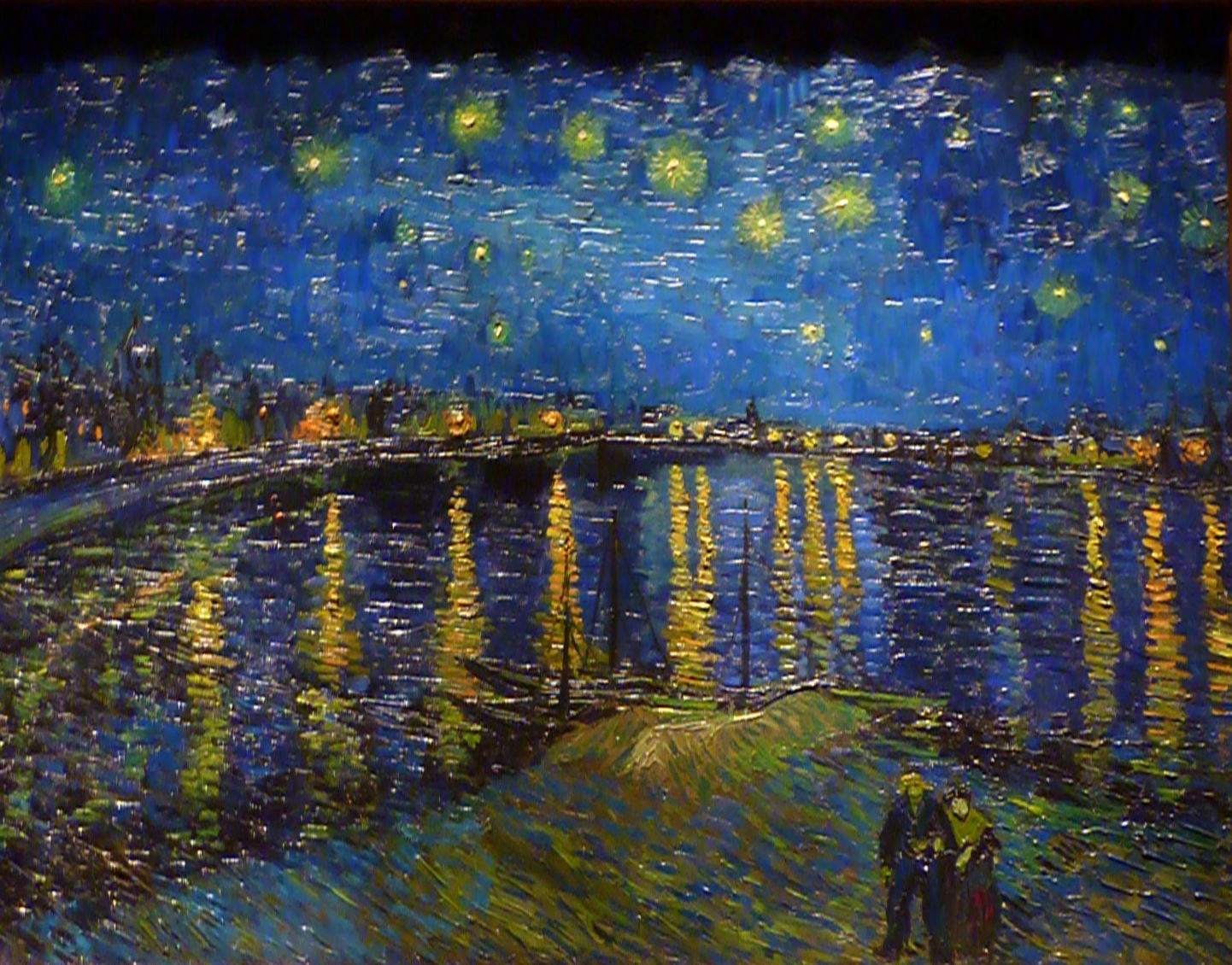
Impressionist - Starry Night


On the wall here is a painting by Vincent Van Gogh

  • Can anyone tell me what style this is painted in? [Wait]
  • Yes – that’s right, ‘Impressionist’ (or post-impressionist)

Impressionism is not interested in capturing a scene with photographic accuracy

  • Impressionism is about capturing the light and movement of a scene
  • This painting is called ‘Starry Night Over The Rhone’
  • You can see how Van Gogh is trying to give the impression of the star light reflecting on the rippling waters of the river – light and movement

Some would describe the account of Israel crossing the Red Sea as impressionistic [1]

  • It recalls a real historical event, perhaps not with photographic accuracy, but certainly in a way which conveys the light & movement of that night


We see a real movement for Israel in Exodus 14

  • Not just in the geographical sense of moving from one location to another
  • But in a spiritual sense as the people move from terror to trust – from fear of death to faith in God
  • In fact, as Christians looking back at this, we get the overall impression that Israel (as a nation) went through a kind of baptism when they passed through the Red Sea
  • This was a conversion experience, an internal change took place for them

Israel’s baptism:

Verse 8 of Exodus 14 tells us the Israelites were leaving Egypt triumphantly

  • They were full of confidence and bluster in other words

Triumphalism is the counterfeit of true faith

  • Triumphalism feels like what we imagine faith should feel like, but it actually isn’t faith

Triumphalism insulates us from reality

  • Faith exposes us to reality

Triumphalism is the advertisement

  • Faith is using the product

Triumphalism is maxing out our credit card and telling ourselves we will pay for it later

  • Faith is waiting until we can pay for it by cash

Triumphalism is telling ourselves we don’t need to prepare for exams – we just need to pray

  • Faith is studying

Triumphalism is the illusion (or the fantasy) that we cannot fail, that we are bullet proof, that we are always right and this will be easy

  • Faith is waking up from the fantasy, realising from experience that we can fail, that we are not bullet proof, that this life is difficult in practice

Triumphalism is what young men feel when they enlist in the army to go to war – “We’ll be home by Christmas”, they said

  • Faith is surviving the battle and learning respect for our enemies

Triumphalism is falling in love

  • Faith is the commitment to tough it out through the hard times

Triumphalism is what we Christians sometimes feel on a Sunday morning when we sing heroic songs to God, surrounded by people who think the same as us

  • Faith is Monday to Saturday when we are out in the world at work or school surrounded by people who think differently to us
  • Faith is also when we are at home struggling with grizzly children or at home by ourselves struggling with loneliness

We could go on but you get the point…

  • Triumphalism has no foundation – it is based on illusion
  • Faith has a firm foundation – it is based on reality

The Israelites left Egypt triumphantly, not realising their confidence had no foundation – it was based on a passing feeling

  • God was about to give them a firm foundation though – the reality of experiencing His salvation

From verse 10 of Exodus 14 we read…

When the Israelites saw the king and his army marching against them, they were terrified and cried out to the Lord for help. They said to Moses, “Weren’t there any graves in Egypt? Did you have to bring us out here in the desert to die? …It would be better to be slaves there than to die here in the desert.”


Their bubble of triumphalism has been burst

  • We shouldn’t be too hard on the Israelites though
  • Their backs were against the wall at this point
  • They were trapped between the devil and the deep blue sea
  • Or more precisely between Pharaoh’s army and the Red Sea
  • So they had good reason to panic

In that moment of terror, as they feared for their lives, and all trace of triumphalism had been drained from their hearts – it probably felt like they were a long way from faith

  • But in actual fact, the Israelites were closer to faith when they were scared than they were when they left Egypt triumphantly
  • The terror of the Egyptian army purged the Hebrew people of all illusion
  • The reality of their mortality wiped the slate clean to make room for faith
  • Fear is like a wind which blows the fog of fantasy away

You see, it is our thirst which makes us drink

  • It is our need which brings us to God
  • And it can be fear which brings us to our senses, clearing the way for faith

At God’s command Moses raised his hand and the Lord parted the sea so the people could walk through

  • Their walking through the sea was an act of faith
  • Faith isn’t just what we say we believe in the safety of church
  • Faith is what we do both in the ordinary moments of our lives and in those moments of utter desperation
  • Through the night the nation of Israel made its way on dry ground while God held back the water and the Egyptians

At the end of chapter 14, when the Israelites have made it through safely to the other side and they see the Egyptians lying dead on the seashore, we read how they [the Hebrew people] had faith in the Lord

  • The experience of God’s salvation has changed the Israelites
  • An internal shift has taken place within them
  • God has taken Israel from triumphalism through terror to trust
  • He has brought them from fantasy through fear to faith
  • The past is dead on the seashore – the future is open before them

It’s not that their faith is made perfect yet – baptism is just a beginning – the people still have a long way to go before they reach the Promised Land

  • But it is a start – the experience of God’s salvation has given Israel foundation for their faith

Okay, having heard about Israel’s baptism into faith, let’s now consider Moses’ leadership in this situation…


Moses’ leadership:

Although Moses is Israel’s leader, verse 31 describes him as The Lord’s servant

  • Moses is the original servant leader
  • Moses does not exercise leadership for his own benefit, as Pharaoh did
  • Moses exercises leadership in service to God’s agenda
  • He takes his direction from God and the people follow Moses
  • This serves both God’s purpose and the well-being of the people

One of the qualities required of leaders – and particularly of servant leaders – is differentiation

Differentiation is a term coined by the psychologist Murray Bowen

  • ‘Differentiation’ refers to a person’s capacity to “define his or her own life’s goals and values apart from the pressures of those around them” [2]

To put it another way, ‘differentiation’ is the ability to hold on to yourself, while staying connected to others

  • Holding on to yourself means holding on to who you are
  • Holding on to your beliefs and values – your integrity
  • Sticking to what you know is right and not being too easily swayed by other people’s feelings or opinions
  • Staying true to yourself, in other words

People who can differentiate in their relationships are able to stay calm, manage their anxiety and avoid blaming other people 

Rudyard Kipling has a famous poem – the opening lines of which describe differentiation. It goes like this…

If you can keep your head when all about you

Are losing theirs and blaming it on you,

If you can trust yourself when all men doubt you,

But make allowance for their doubting too;

If you can wait and not be tired by waiting,

Or being lied about, don’t deal in lies,

Or being hated, don’t give way to hating…

                                  …you’ll be a man, my son!


Good leadership requires the emotional intelligence to differentiate – to hold onto yourself like this

Now this concept of differentiation or ‘holding onto yourself’ is not new – it’s been around for thousands of years

  • When our core beliefs and values (our true self) is informed by God, differentiation goes by the term: ‘Fear of the Lord’
  • “The fear of the Lord is the beginning of wisdom”
  • It sets you free from the fear of lesser things – like the fear of man

To fear the Lord is to not be swayed by the opinion of others

  • So when people think you are a bit simple for believing in God
  • When they say that science is the answer to everything
  • And that religion is the opiate of the people
  • You don’t go along with that – you hold onto yourself
  • You stick to what you believe in your heart – that God is real and that one day, every knee shall bow and every tongue confess that Jesus is Lord
  • But you’re not offended either – you don’t just walk away
  • You simply smile & ask them what they believe & quietly pray for them

To fear the Lord is to stay calm in a crisis, even when people are saying the crisis is your fault

  • So when the boss is swearing at you at work because things didn’t go well that day
  • Or you are the boss and your team is not talking to you because you had to make a hard decision that they can’t understand
  • Or you’re at home and your kids are telling you it’s not fair and you’re the worst parent in the world
  • Or you’re on the sports field and some clown is yelling at you from the side lines because they are frustrated with their own lives
  • In those situations, to fear the Lord, means remembering that God is your judge – no one else
  • Not your boss, not your teacher, not your work mates, not your parents, not your children and certainly not the random armchair critics

Fear of the Lord, in the specific sense of remembering that God is our judge, enables us to hold onto our perspective and not take the criticism personally

  • It helps us to turn the other cheek and stay in the conversation
  • To listen without reacting and to communicate without antagonising

Differentiation, fear of the Lord, holding on to yourself, whatever you want to call it – if you can do that, you have the makings of a servant leader

Moses could do that

  • In verses 10-14 Moses demonstrates a high level of differentiation
  • Moses holds onto himself under extreme pressure

The entire Egyptian army is bearing down on them

  • They have nowhere to run and Moses has brought them to this cul-de-sac of death
  • Over a million people are terrified and blaming him saying things like…
  • “Did you have to bring us out here in the desert to die? Didn’t we tell you this would happen?”

And how does Moses respond?

  • With a message of good news
  • He doesn’t get angry with the people
  • He doesn’t turn the blame back on them or give in to their fear
  • Nor does he walk away

Moses holds onto himself, while staying connected to the people

  • He keeps his perspective and he sticks to what he believes, saying…
  • Do not be afraid
  • Stand your ground
  • You will see God’s salvation

Stay calm – be still – wait for God

This is not triumphalism – this is an invitation to faith

For Moses to respond in this way (with a message of good news), under these circumstances, required a high level of differentiation

  • Moses feared the Lord, more than he did the Red Sea or the Egyptians
  • Moses was more concerned about God’s opinion than he was the opinion of the people
  • Moses was able to define and differentiate what he believed & felt from what the people believed & felt
  • And he was able to hold onto his personal conviction without letting go of his connection with the people
  • So he was not swamped or knocked over by the tidal wave of criticism coming his way

As I said earlier, the experience of God’s salvation changed the Israelites

  • Verse 31 again, When the Israelites saw the great power with which the Lord had defeated the Egyptians, they feared the Lord
  • In other words, they began to learn to differentiate
  • They began to learn to hold onto themselves
  • Or, as Terence Fretheim puts it…
  • “Israel’s perspective will now be shaped by what God does, not by what the Egyptians do…”  [3]

It’s fair to say that, at this point, Israel has not mastered differentiation by any means – but it is a start

  • By saving Israel, God has strengthened the nation’s identity as His people

Jesus’ identity:

Strength of identity is key when it comes to holding onto ourselves

  • Those who have a clear understanding of who they are and who they are not, are less likely to lose their shape or identity around others

Jesus had a strong sense of identity – He knew in His heart of hearts (through & through) that He was God’s Son

After His baptism in the Jordan River, by John the Baptiser, God said of Jesus,

  • “This is my own dear Son with whom I am pleased” [4]
  • With this clear sense of identity Jesus was able to differentiate – to hold onto Himself throughout His ministry

So when the Devil tempted Jesus in the wilderness saying, ‘If you are the Son of God’, do this, that and the other thing [5]

  • Jesus was able to refuse, saying in effect…
  • ‘I have nothing to prove. I am not defined by what I do or what I own or what other people think of me. I am defined by God.’

Jesus held onto Himself in His confrontations with the religious leaders too

  • Like when He broke their man-made traditions by healing on the Sabbath
  • Or when He stood up for a woman caught in adultery [6]

Sticking to your principles in the face of an enemy is one thing but, in many ways, differentiation is more difficult when it comes to family & friends…

Like when Jesus’ mother and siblings came to take charge of Him – to bring Him home with them – because they doubted Him

  • Jesus was able to stay true to God’s purpose for Him and say,
  • ‘Anyone who does the will of my Father in heaven is my brother, my sister, and my mother’ [7]
  • Sometimes our family make it hard for us to leave home – but Jesus feared God more than His mum

He also feared God more than His friends – like when Jesus predicted His own death & resurrection and Peter took Jesus aside to rebuke Him

  • Jesus defined His purpose as different from Peter’s purpose, saying…
  • ‘Get away from me Satan… These thoughts of yours don’t come from God, but from man.’ [8]

We could go on but you get the point…

  • Jesus had a strong sense of identity grounded in His relationship with God
  • And from this firm foundation he had a tremendous capacity to stay true to God’s purpose for Him through all kinds of circumstances

Conclusion:

Differentiation, fear of the Lord, holding on to yourself, whatever you want to call it – it’s difficult to learn

  • None of us are quite at the level of Moses or Jesus (least of all me)
  • But that’s okay – we are all on a journey with this stuff
  • We don’t need to beat ourselves up about not being perfect
  • We do need to know that God’s grace is sufficient for us
  • And we also need to know what we’re aiming for

The temptation for us may be to try and manufacture our own identity…

  • Perhaps by what we do in racking up a long list of achievements,
  • Or by what we accumulate in terms of possessions,
  • Or maybe by pretending to be what we are not

Authentic identity cannot be manufactured

  • It can only be received as a gift from God

By the experience of God’s salvation the Israelites learned to fear the Lord and to trust Him as well

  • And through this process their identity as the people of God was strengthened

By the experience of Christ’s salvation of us we learn to fear the Lord and trust Him as well

  • And through this process our identity as members of the body of Christ is formed

Let us pray…

[1] For example, Terence Fretheim in his commentary on Exodus, page 158

[2] Quoted in Peter Scazzero’s book, ‘Emotionally Heathy Spirituality’, page 82

[3] Terence Fretheim, Exodus, page 156

[4] Matthew 3:13-17

[5] Matthew 4:1-11

[6] John 8:1-11

[7] Matthew 12:46-50

[8] Matthew 16:21-28

Passover

Scripture: Exodus 12:1-14

Title: Passover

Structure:

  • Introduction
  • Passover is about deliverance (God’s commitment)
  • Passover is about new beginnings (letting go)
  • Passover is about the gathered community (everyone counted/included)
  • Conclusion

Introduction:

Please turn with me to Exodus 12, page 69 in your pew Bibles

  • Today we continue our series on Moses
  • By this stage in the story God has struck Egypt with nine plagues and Moses has warned Pharaoh of a tenth plague to come – the death of the first born
  • This morning we hear God’s instructions for the Passover festival
  • From Exodus 12, verse 1 we read…

[Read Exodus 12:1-14]


May the Spirit of Jesus illuminate this reading for us

This morning we will consider the meaning of the Jewish Passover festival

  • Passover is about deliverance
  • It’s about new beginnings
  • And it’s about the gathered community

Passover is about deliverance:

Passover – it’s an interesting word

In Kiwi culture a ‘pass-over’ can refer to a road or a bridge which enables people to pass over some kind of obstacle safely

  • For example, the foot bridge by the Tawa railway station, enables pedestrians to safely pass over the railway lines

Another way we hear the term ‘pass over’ used is in relation to work when someone says, ‘I was passed over for promotion’ – meaning I missed out on advancing in my career

So, depending on the context, the term ‘pass over’, in the English language, means either…

  • A safe passage
  • Or to miss out on something

These two English meanings of pass-over actually find a connection with the meaning of the Jewish Passover

For the Hebrew people ‘Passover’ is a religious festival (similar to our Easter)

  • It remembers Israel’s safe passage out of Egypt
  • And it also recalls how they missed out on the death of the first born
  • Put those two things together – being given safe passage and missing out on judgement – and the primary meaning of Passover is deliverance

The Passover celebrates God’s deliverance of Israel from slavery and death

  • So it is an annual party to celebrate God’s gifts of life and freedom

One of the things we notice in God’s instructions to Moses is, the blood of the lamb or kid goat is to be painted on the doorframes as a sign

  • Verse 13 in the NIV translates God’s words saying…
  • “The blood will be a sign for you on the houses where you are; and when I see the blood, I will pass over you. No destructive plague will touch you when I strike Egypt” 

Blood, of course, symbolises life and in the ancient world shedding blood was a way of making a solemn commitment – a way of ‘sealing the deal’

  • The blood, therefore, is a sign of God’s solemn commitment to protect Israel from the tenth plague [1]
  • The blood tells the abused & oppressed Israelites that God is for them
  • It’s not that the blood had some magical property which protected them
  • It’s more that the Israelites needed to perform an act of faith to acknowledge they accepted God’s commitment to them
  • And that act of faith was painting the blood on their door posts

The other thing we should note here is, the blood of the Passover is not about the forgiveness of sins

  • Sin is not mentioned in today’s Scripture reading
  • Later on, when the Law is given at Sinai, God would stipulate other kinds of sacrifices for atonement of sin, but not at this point with the Passover
  • The blood of the Passover lamb is not for God’s benefit
  • It is not for appeasing God in some way
  • The blood of the lamb is for Israel’s benefit
  • It is a sign of God’s commitment to protect Israel from judgment

The Passover finds its ultimate meaning in the person of Christ

  • Jesus, who was crucified during the Passover festival, is the perfect sacrificial Lamb
  • And as the perfect Passover Lamb, Jesus’ blood shed on the cross is the sign of God’s commitment to humanity
  • A commitment to deliver us from judgement
  • A commitment to set us free to serve and enjoy Him forever

Now most of us here come from a Protestant / evangelical church tradition

  • So we tend to associate the blood of Christ with the forgiveness of sins – end of story
  • And while it is true that Jesus is the lamb of God who takes away the sin of the world, [2] that is not the whole truth
  • As I keep saying, the first Passover wasn’t really about forgiveness or atonement
  • In this situation the Jewish people were not the sinners – they were the ones who were sinned against
  • The Egyptians were the sinners and they didn’t get forgiveness, they got judgement

The typical protestant approach to evangelism is to say to people something like

  • ‘You are a sinner, but the good news is you can be forgiven and avoid hell if you accept Jesus’
  • And that might be okay for some people, but it doesn’t fit for everyone
  • In fact, if you tell someone who has been abused badly or experienced terrible suffering & injustice, that they are a sinner and need to repent to be forgiven, you would most likely turn them away from God

The oppressed don’t need forgiveness – they need release

  • The abused don’t need to be threatened with judgment – they are already going through hell
  • The oppressed & abused need a sign (some kind of evidence) that God is committed to their well-being and is going to deliver them from the injustice they suffer

To the abused and the oppressed we can say…

  • Jesus has suffered as you have suffered
  • He understands injustice and He understands your pain
  • Jesus’ blood, shed on the cross, is the sign of God’s commitment to you
  • It is a commitment to deliver you from oppression and death
  • It is a commitment to set you free to serve Him and enjoy eternal life
  • That’s good news for the poor

I’m not saying the abused & oppressed are perfect and don’t need forgiveness

  • I’m just saying we must be careful not to turn people away
  • People need to hear and feel that God is for them
  • Grace must come first and then repentance can follow

As well as being about deliverance for the oppressed the Passover is also about new beginnings

Passover is about new beginnings:

It’s August at the moment – technically the end of winter

  • Come September we will officially begin spring
  • By this time of year most of us are a bit weary and a bit sick of the wet and cold
  • We are starting to fantasise about summer and going on holiday and being warm
  • With the first signs of spring (blossoms on the trees, pine pollen on our cars and daffodils in our gardens) we start to see light at the end of winter’s tunnel

In verse 2 of Exodus 12, God says to Moses…

  • “This month is to be the first month of the year for you…”

This means the Passover was like a New Year’s celebration

  • Passover happens in March / April each year – which is spring time in the Northern hemisphere – sort of like August / September for us
  • God wants Israel to be different from the other nations around them and celebrate the New Year at the beginning of spring
  • In many ways this makes better sense, for spring is a new beginning

Passover then, is about new beginnings

  • It celebrates both the beginning of a New Year and a new beginning for Israel as a nation
  • This new beginning is not by Israel’s own strength but by the hand of God who has the power to make all things new
  • It comes when the Israelites are tired and low, after a very long winter of oppression

Of course, new beginnings usually require a letting go of something – or a sacrifice in other words

Sometimes we find it hard to let go but really we needn’t feel this way because letting go is built into the natural rhythm of our lives

Think about your breathing

  • You draw breathe in and you let it go, without even thinking about it
  • If we try to hold on to our breathe it starts to hurt
  • Not letting go pains us

The NZ poet Glenn Colquhoun has a poem called, The trick of standing upright here [3]


The last four lines read…


The art of walking upright here

is the art of using both feet.


One is for holding on.

One is for letting go.

If you hold on with both feet you don’t go anywhere

  • And if you let go with both feet you fall over
  • To walk without falling we need to hold on with one foot while simultaneously letting go with the other

For Israel to make a new beginning – for Israel to learn the art of walking with God by faith – they needed to use both feet

  • One for holding on
  • One for letting go
  • Sacrifice is about letting go

God instructed Israel to select a one year old male lamb or kid goat, without blemish, on the 10th day of the month

  • Then on the 14th day, four days later around dusk, everyone in Israel was to slaughter their animals

Imagine that for a moment

  • You take one of the best animals in your flock, one with most of its life ahead of it and you set it apart from the rest
  • Perhaps you and your children become a little attached to this cute lamb – like a family pet – and then you have to kill it
  • I imagine that would be difficult – killing something young, innocent, healthy and loved – so why do it?

Verse 11 has God saying…

  • “…It is a Passover festival to honour me.”

The way to honour God is to give Him the best we have to offer

  • It’s not so much that God needs us to pay homage to him
  • He’s not insecure
  • He doesn’t need our reassurance and He doesn’t need to be appeased
  • In fact He doesn’t need anything from us
  • It’s more that we need to honour Him
  • We need God so our lives will have meaning and purpose
  • God is the ground of our being – without God there is no point

If we make something else (like a lamb or a goat or our work) more important than God then our meaning & hope depend on the animal

  • And that is a very insecure position to put yourself in
  • But if God is the most important then nothing can threaten our meaning and our hope so we have a real sense of security

Honouring God with our best is really for our benefit

  • The obvious practical benefit for the Israelites in making a sacrifice was the people ate the meat as nourishment for the journey ahead

Beyond this, sacrificing the Passover lamb was an acted out parable for Israel

  • If we think of the sacrificial lamb as representing the Hebrew people:
  • Up till this point in their history the nation of Israel had been like a child (like a yearling lamb) – powerless and bullied in Egypt
  • Now God was saying, it is time to grow up, time to leave your childhood behind and follow me into adulthood

So killing the young innocent lamb was kind of like a ‘rite of passage’

  • A ritual for letting go of one stage of the nation’s development in order to transition to the next phase
  • They were transitioning from being slaves to being free
  • From being told what to do (like children) to learning how to handle freedom & responsibility (like adults)

Rituals to recognise transitions in life are everywhere

In Vanuatu, for example, the transition from boyhood to manhood is demonstrated by land diving (which is sort of like bungy jumping)

  • The jumper’s goal is to launch off the platform and brush his head on the ground – if he survives he is a man

For the people of Israel, growing up and leaving Egypt was a little bit like land diving

  • It meant taking a risk – stepping out in faith, letting go of the platform

The killing of the lamb or kid goat also represented a letting go of what the people themselves wanted

  • It was a way of saying, ‘Not my will God, but Your will be done’

There’s a song we sometimes sing called All for Jesus

  • One of the verses goes like this…


All of my ambitions, hopes and plans

I surrender these into Your hands

For it’s only in Your will that I am free

For it’s only in Your will that I am free…

Sacrificing the young lamb or goat was a way for the Hebrew people to demonstrate that they were surrendering their ambitions, hopes and plans into God’s hands

  • It was a real and physical way of reminding themselves that it is only in God’s will that they are free
  • Leaving Egypt in itself isn’t freedom
  • Walking with God is freedom

Passover is about new beginnings

  • It’s about being ready to let go, ready to make the transition to the next stage in our life – the next stage in God’s will for us
  • That’s why the people had to eat the meal in a hurry, dressed and ready to leave with staff in hand

As Christians we don’t celebrate Passover but we do have other rituals for marking new beginnings:

Baptism, for example, is a new beginning – it is the letting go of our old way of life and stepping out, in faith, to follow Jesus

Marriage is another new beginning – when we let go of single life and find a new kind of freedom (a new kind of intimacy) with our partner in marriage

Dedication of a baby and his or her parents is also a new beginning

Transitions and new beginnings can happen all through life, and we don’t always have a ritual to celebrate them, like…

When you hit 40 and realise your life is more than half over so you’d better make the most of what’s left

Or when you turn 65 and become eligible for a Gold Card and a pension

  • Now you have a new found freedom with your time

Or when someone returns to the church and Christian faith after spending years away – except on returning their faith is different

  • So they are now more comfortable with mystery,
  • Not needing an answer for everything,
  • Not needing to prove themselves right,
  • Happy to trust themselves to God’s grace

We don’t have a Passover festival as such but we do have Easter and Lent

  • Lent (the six weeks leading up to Easter) is a time of sacrifice – a time of fasting or letting go – when we surrender afresh to God our ambitions, hopes and plans
  • Easter weekend itself is a time when we remember Jesus and the new beginning of resurrection
  • For Christians, Easter is the equivalent of a New Year celebration

Passover is about deliverance and new beginnings

  • Passover is also about the gathered community, everyone counted

Passover is about the gathered community:

John, can you tell me how many people are here this morning?

  • Thanks John


Every Sunday when you come to church someone greets you at the door and gives you a newsletter

  • Then, when everyone is seated (and before the kids go out) one of the door stewards does a head count and writes the number in attendance in the blue book in the foyer
  • It’s not exactly like taking the roll at school – we don’t put a tick by people’s names or anything like that – but we do keep a track of totals

John said there were about 150 odd here this morning

  • If everyone who attends Tawa Baptist were to turn up at the same time there would be over 200 people here
  • So that tells me there are about 60 or 70 people away this morning

I’m not saying this to make you feel guilty if you miss a Sunday

  • I’m saying this so you know you count

The Passover festival was something the Jewish people were to do at the same time, together, as a gathered community – verse 4 says…

  • If his family is too small to eat a whole animal, he and his next door neighbour may share an animal, in proportion to the number of people and the amount that each person can eat.

As a general rule of thumb it was thought 10 people could finish off a beast

  • So if there were five in your family then you could get together with some of your neighbours to share an animal

The point is, Passover was designed to bring communities together

  • It was designed to include people – not just those in your own family but also those who worked for you, those who couldn’t afford their own sacrifice and anyone else who happened to be travelling through
  • It wasn’t an exclusive meal – it was a meal which required the host to account for everyone

We all have a responsibility for each other

  • If you have noticed someone missing from our gathered worship for a while, it might be appropriate to give that person a call – not to reprimand them but simply to ask how they are, show you care, show they count with you and are not forgotten

Conclusion:

I suppose there is much more we could say about the Passover but that’s probably enough for today

For us, as Christians, the main thing is Jesus

  • Jesus is the ultimate Passover Lamb – the perfect sacrifice
  • Jesus’ blood is a sign of God’s commitment to deliver us from judgement
  • Jesus’ death & resurrection makes a new beginning possible for all of us
  • And Jesus is the one who draws us together as a gathered community – the one who counts us among God’s people

Let us pray…

[1] Refer Terence Fretheim, Exodus, page 138

[2] John 1:29

[3] Glenn Colquhoun, “The Art of Walking Upright”, page 33.

Meek Moses

Scripture: Exodus 9:8 to 11:10

Title: Meek Moses

Structure:

  • Introduction
  • God’s Grace
  • Moses’ Meekness
  • Conclusion

Introduction:

Please turn with me to Exodus chapter 9, page 67 in your pew Bibles

  • Today we continue our series on Moses
  • Last Sunday we covered the first five plagues that God brought on Egypt – blood, frogs, gnats, flies and death of animals
  • This morning we will cover the remaining five plagues – boils, hail, locusts, darkness and the death of the first born

Our message today is a sermon of two halves

  • The first half focuses on God’s grace in bringing the plagues
  • And the second half focuses Moses’ meekness

We don’t have time to read chapters 9 through to 11 in full, so I’ll just read the account of the sixth plague to put you in the picture and then pick the eyes out of the rest

  • From Exodus 9, verse 8 we read…

[Read Exodus 9:8-12]

May the Spirit of Jesus illuminate this reading for us

God’s Grace:

Things aren’t always what they seem

  • On the wall here we have a picture of a rough looking homeless man and a sweet looking girl
  • We might be more inclined to trust the girl but when we take a second look behind their backs – we see the man is holding flowers and the girl is holding an axe

Things are not always as they seem

  • At first glance the plagues on Egypt make God appear mean and cruel
  • But when we take a closer look we find the plagues actually point to God’s grace

The sixth plague (of boils) is the most personal and painful the Egyptians have experienced so far

  • The first four plagues were a significant inconvenience
  • But the sixth plague directly affected the Egyptians’ health

Pharaoh’s magicians were unable to stand before Moses because they were covered in sores – they have been publicly humiliated, shown up as frauds

Verse 12 of Exodus 9 says, the Lord made the king stubborn

  • God had predicted, right at the beginning, that He would make Pharaoh stubborn
  • But God doesn’t actually do this until the sixth plague
  • Up till now (with the first five plagues) it has been Pharaoh who has hardened his own heart
  • It is only after the boils that God starts to harden Pharaoh’s heart
  • Why is this?

Well, the Lord is gracious and compassionate – slow to anger and rich in love

  • By the end of the fifth plague God has given Pharaoh at least seven opportunities to repent – to admit he is wrong & let Israel go
  • Two chances before the plagues and then five more with the plagues
  • But Pharaoh hardened his own heart and missed the opportunities for grace that God offered

Sometimes in life there is a point of no return – a point at which we might realise our mistake but are unable to avoid the consequences of our actions

  • Like going too fast around a corner and losing control of your car – there comes a point when you just know it’s too late for you to do anything to correct the problem and the car is going to leave the road
  • Or like swimming in the ocean and getting caught in a rip – there comes a point when you realise the current has got you and there is nothing you can do to fight it

Other times we might not realise we have gone past the point of no return and still try to fix the problem ourselves

  • When it says that God hardened Pharaoh’s heart, it means that God prevented Pharaoh from realising he had gone past the point of no return

It’s like God had given Pharaoh (the driver of Egypt’s car) plenty or warnings that a corner was coming, so he should slow down

  • But Pharaoh ignored the signs and when he lost control on the bend he tried to fix the problem by going faster
  • Of course the faster you go the bigger the mess

Or to use the metaphor of getting caught in a rip…

  • God had given Pharaoh plenty of warnings of a strong current but Pharaoh ignored the signs and when he got caught in the rip he wore Egypt out trying to swim against it

From the sixth plague onwards, Pharaoh has gone past the point of no return and so God gives Pharaoh over to the consequences of Pharaoh’s own actions

  • By repeatedly refusing to let the Hebrews go Pharaoh sealed his own fate
  • Now God is committed to finishing the cycle of plagues

The seventh plague is hail – not just little pea sized hail, like we might be used to, but pieces big enough to kill livestock and break branches off trees

  • With this plague God makes it clear that Pharaoh deserves to die for his crimes – indeed God could have killed Pharaoh with the boils
  • But instead God is keeping Pharaoh alive and prolonging the plagues
  • Why is this?

Well, the Lord is gracious – He has compassion on all that He has made

Now you might think – how is it gracious & compassionate to prolong Egypt’s suffering?

  • If Pharaoh has gone past the point of no return wouldn’t it be kinder to simply end it and put him out of his misery?
  • No – that would not be the kindest thing in this situation

God’s purpose is not to destroy Pharaoh or to make him suffer

  • God’s purpose is to reveal Himself to the whole world

From verse 15 of Exodus 9, God says to Pharaoh (through Moses)…

  • “If I had raised my hand to strike you and your people with disease, you would have been completely destroyed
  • But to show you my power I have let you live so that my fame might spread over the whole earth”

God could have completely annihilated the Egyptians – He could have wiped them off the face of the earth so the nation of Egypt no longer existed

  • But He didn’t – God, in His grace, withheld the full force of His power
  • God wants all people everywhere (including the Egyptians) to know His name – to know His character – to know His love

This isn’t God blowing His own trumpet to make Himself look good

  • This is God making all people of the earth aware who the Lord of creation is so that we might be saved from the futility of idol worship
  • God isn’t doing the plagues for Himself – He is doing them for the well-being of the human race

As a token of His grace God instructs Moses to tell the Egyptians to stay indoors so they are not harmed by the coming hail

  • It is clear that God doesn’t want to see people or animals suffer
  • Some people heed the warning and are saved
  • Others ignore Moses and pay the price

The other point to note with the hail is that the Israelites in Goshen were not affected – once again God makes a distinction

The eighth plague is locusts – probably the most well-known of the plagues

  • What the hail didn’t destroy the locusts did
  • Now Egypt’s economy was ruined and the people faced a famine

What isn’t so well known from our distance in history is that the Egyptians worshipped Senehem, a god who supposedly protected Egypt’s crops from insects [1]

  • The plague of locusts were a clear sign that Senehem (the god of insecticide) was a false god
  • Whenever the Egyptian gods are put to the test they prove unreliable
  • It isn’t just Pharaoh’s injustice which is being judged and found wanting
  • Egypt’s whole religious system is rotten too

We could say the locusts are a sign against out of control consumerism

  • Just as the locusts stripped the plant life bare so too Egypt was stripping bare the environment and the Hebrew people
  • And just as the locusts were eventually driven into the Red Sea, so too the Egyptian army would be driven into the sea
  • The locusts are a warning to all societies to keep consumerism in check

With the locusts Pharaoh’s own advisors tell him to let the Hebrews go but still Pharaoh won’t listen

  • It seems everyone understands the situation except the king
  • Pharaoh thinks he is right when he is actually wrong
  • Hardness of heart is blindness

The ninth plague is a darkness over the land that was so heavy it could be felt

  • The darkness lasted for 3 days everywhere in Egypt, except where the Israelites were
  • This plague is a blow against Amon-Re, the sun god – Egypt’s chief god [2]

It is also a sign that God is on the cusp of a new creation

  • With the darkness God takes Egypt back to primordial chaos [3] – before the first day of creation when God had said ‘Let there be light’
  • Just as God separated light from darkness in the beginning – so now he is about separate Israel from Egypt
  • God’s grace is seen in the way He brings order to the chaos – the way He restores the moral order
  • It’s like God is pressing the reset button to make things new again

By this ninth plague (of darkness) Pharaoh was livid – in anger he threatened to kill Moses if he ever came back

  • Moses wasn’t worried though – he did come back – at least one more time to warn Pharaoh about the death of the first born
  • In verse 6 of Exodus 11 Moses predicts…
  • “There will be loud crying all over Egypt…”
  • Just as Israel had cried out under the yoke of slavery, so too all Egypt would cry out in grief with the death of their first born

You might say, ‘Where’s the grace in that – in killing children?’

  • Well, grace is when we are treated better than we deserve
  • As terrible as the death of the first born was, Egypt was still escaping full punishment
  • At least two Pharaoh’s had a policy of genocide against the Jewish race
  • By that measure, if Pharaoh and the Egyptians were to get what they truly deserved, they would have all been killed and Egypt wouldn’t exist today
  • God’s grace is seen in that He withheld the full force of His judgement and allowed the nation to survive
  • So even with the death of the first born Egypt was being treated better  than it deserved

Pharaoh could have had more of God’s grace if he wanted but he was too proud and rejected it

  • Like Pharaoh, we all have a choice
  • We can choose God’s grace or His judgement
  • We can humbly receive God’s mercy or we can proudly insist on justice
  • We can put our trust in Jesus or we can rely on our own deeds

As for the children who died – I am inclined to believe they were better off in heaven with God than they would have been with their parents on earth

Verse 8 of Exodus 11 tells us that Moses left the king in great anger

  • It gave Moses no pleasure to see the Egyptians suffer – he was angry that Pharaoh was bringing so much bloodshed and grief on his own people

So that’s the first half of the sermon

  • Things are not always as they seem
  • A closer look at the plagues reveals God’s grace
  • Now let’s turn our attention to Moses himself

Moses’ Meekness:

What we notice with the last five plagues is that Aaron fades out of the picture

  • We hear about Aaron less and we see Moses in action more

Numbers 12, verse 3 says that Moses was a meek man – the meekest on earth

  • So what does that word meek mean anyway?
  • Well to help us understand this I need two volunteers
  • This is not difficult or embarrassing – in fact if you like eating brownie you might find it quite enjoyable

[Select two volunteers and give them a piece of brownie each – ask them to taste the brownie and try to guess the ingredients]


Ingredients:

  • Cocoa
  • Chocolate bar (white / raspberry & dark / hazelnut chocolate)
  • Sugar
  • Flour
  • Butter
  • Vanilla essence
  • Eggs

Now obviously there are a number of ingredients which go into making a brownie – a brownie isn’t just one ingredient

  • So it is with meekness
  • We can’t describe or define meekness with just one word
  • Meekness combines a number of qualities in just the right proportion

The main qualities or ingredients which go into the mix of a meek character include…

  • A good measure of humility
  • A healthy self-awareness coupled with self-restraint
  • Patience
  • Inner strength or back bone
  • A capacity for long suffering
  • And respect for others

Putting these ingredients together we might say, a meek person will put aside their own ambitions and desires for the sake of someone else

Or said another way, meekness is the readiness to restrain one’s own power in order to make room for others

By this definition a meek person has power and the ability to exercise it – they simply choose to restrain their power for the well-being of others

We see God’s meekness in dealing with Egypt

  • Although Egypt deserved to be wiped out altogether, God (in His grace)  dialled back His power and allowed the country to survive

In this sense meekness is close to mercy, but not exactly the same

  • With mercy someone uses their power to help someone else
  • But with meekness it’s the opposite – they hold back their power to help someone else

So for example, a meek person won’t rush in to take the last piece of cake

  • They will wait to see if someone else wants it first

Or, if there is a lolly scramble a meek child won’t grab as many lollies as they can without regard to others

  • A meek child will hold back a little to let the younger kids get some lollies

A meek person makes room for others in a conversation by listening

Turning the other cheek when someone strikes you and not seeking revenge is another example of the self-restraint of the meek

  • Likewise, when we forgive someone we make room for that person to change and we also make room for God to sort them out

Recently, in the lead up to our AGM, we invited members of the congregation to put themselves forward for the role of deacon or to nominate someone else for the Deacons Board

  • We were one person short of the minimum number of deacons required
  • So either there are lots of meek people in this church (all wanting to make room for others) or hardly anyone wants to be a deacon

It is interesting that God called Moses to be Israel’s leader

  • God chose a man who is the very definition of meekness to lead His people – someone who was powerful and yet ready to restrain his power in order to make room for others

Moses had all of the ingredients of meekness and we see them on display through his interaction with Pharaoh, who is the opposite of meek

  • The light of Moses’ meekness shines brightly against the darkness of Pharaoh’s greed

[Stop displaying slide 3]


Moses demonstrates patience and long suffering with Pharaoh

  • And Moses makes room for Pharaoh to turn to God by repeatedly forgiving Pharaoh whenever he asks for help
  • Four times in the cycle of ten plagues Pharaoh asks Moses to pray for him and each time Moses prays, the Lord removes the plague
  • But Pharaoh’s repentance is shallow – it has no roots – for as soon as the plague is lifted the king goes back on his word

Many people today equate meekness with being quiet and submissive or easily imposed on by other people

  • They see meekness as the sign of a weak or limp personality – sort of the opposite of assertiveness
  • But meekness is not weakness.
  • Meekness requires an uncommon degree of inner strength
  • Meekness does not mean giving in to everyone all the time
  • As well as being meek Moses is also discerning – he knows when to give way and when to stand his ground

When Pharaoh tries to negotiate with Moses, Moses does not compromise

  • For example, with the plague of flies Pharaoh says, ‘your people can sacrifice here in Egypt – but they can’t leave the country’
  • And Moses says, ‘No, we must travel 3 days into the wilderness’
  • Then with the locusts Pharaoh says, ‘the men can go but the women and children must stay’
  • But Moses doesn’t budge – they all leave or none of them go
  • And then with the darkness Pharaoh agrees to let the women and children go, but says the Hebrews must leave their livestock
  • Once again Moses is uncompromising saying, ‘No, we will take our animals with us’

I imagine it would have been very tempting for Moses to give in to Pharaoh – to make concessions for him

  • Moses would have been under incredible pressure
  • All these people suffering and he could potentially end their suffering by negotiating with Pharaoh
  • But compromising with the king would mean disobeying God
  • God has said all the people must travel 3 days into the wilderness to worship Him and Moses won’t change what God has said
  • By standing his ground and insisting on what God has asked for Moses makes room for God

Meekness is not weakness – meekness is humility

  • Moses doesn’t presume to know better than God
  • Moses walks in humble obedience to God’s word

Conclusion:

Jesus is our model in meekness

  • We see this most clearly in the Garden of Gethsemane where Jesus wrestles with God’s request that he go to the cross
  • Jesus says, ‘Not my will Father, but Your will be done.’
  • Jesus had the power to walk away but he didn’t
  • Instead Jesus restrained his own will to make room for God and for us

In doing this Jesus was practising what he preached when he said…

Blessed are the meek for they will inherit the earth.

In other words…

  • Blessed are those who restrain their own power to make room for others
  • Blessed are those who walk in humble obedience to God
  • Blessed are those who are patient and suffer long without taking revenge
  • Because when we make room for God and for others, God makes room for us – it is the meek (not the greedy & grasping) who inherit the earth

The Lord is gracious & compassionate – His is the power of meekness

Let us pray…

[1] Alec Motyer, Exodus, page 124

[2] Alec Motyer, Exodus, page 125

[3] Terence Fretheim, Exodus, page 129

Striking Signs

Scripture: Exodus 7:14-25 (followed by 8:1-9:7)


Title: Striking Signs


Structure:

  • Introduction
  • Striking
  • Signs
  • Conclusion


Introduction:

Please turn with me to Exodus 7, page 65 near the beginning of your pew Bibles

  • This morning we continue our series on Moses in the book of Exodus
  • Moses & Aaron have, by this stage, met with Pharaoh twice and both times the king refused to let the Israelites go
  • Now come the plagues


There were 10 plagues altogether – this morning we will cover the first five: blood, frogs, gnats, flies and the death of animals

  • For the sake of time I will only read the account of the first plague in full and then give you a brief overview of the next four plagues
  • From Exodus 7, verse 14, we read…


[Read Exodus 7:14-25]


May the Spirit of Jesus illuminate this Scripture for us


So that was the first plague God brought on Egypt – turning water to blood


The next plague was an infestation of frogs

  • Frogs everywhere – all through the house, in people’s kitchens, bedrooms, pantries, toilets, you name it
  • As with the first plague Pharaoh’s magicians were able to replicate it – although this would be the last plague they could copy
  • But unlike the first plague Pharaoh said to Moses, pray to the Lord to take away the frogs and I will let your people go
  • So, the next day Moses prayed and the frogs all died leaving a terrible stench in the land from rotting flesh
  • Sadly, Pharaoh went back on his word and refused to the let the people go


The third plague was to change the dust of Egypt into gnats

  • We are not sure exactly what type of insect is meant by a gnat but it was something annoying and disgusting like mosquitos or fleas or lice
  • Unlike the first two plagues, Pharaoh’s magicians were not able to replicate gnats and admitted, “God has done this”
  • But still the king refused to release the Israelites


The fourth plague was swarms of flies – once again an incredibly annoying and disgusting plague

  • The main difference here is that God makes a distinction so that only the Egyptians are affected while the Israelites in Goshen have no flies
  • Pharaoh tries to negotiate with Moses at this point saying, ‘you can offer sacrifices to your God here in Egypt but you can’t leave’
  • Moses doesn’t compromise though
  • So Pharaoh says, ‘Okay, I’ll let you go, just don’t go too far’
  • Moses prays and the next day the flies leave
  • But the king remained stubborn and went back on his word a second time


The fifth plague was a disease which killed all kinds of animals – horses, donkeys, camels, cattle, sheep and goats.

  • As with the fourth plague the Israelite’s animals were not affected
  • And yet still the king refused to let the Israelites go


All these plagues are both a striking of Egypt and a sign to Pharaoh at the same time

  • First let us consider the plagues as a striking of Egypt


Striking:

We are going to have a little quiz now – it’s multi-choice so it’s fairly easy

First question:

  • What was Moses’ job before he encountered God at the burning bush?
    • A.) Camel salesman
    • B.) Preacher
    • C.) Shepherd
    • D.) Farrier
    • [Wait]

Yes – that’s right – C.) Shepherd 

Okay – next question, something slightly harder this time:

  • What two shepherd’s tools are mentioned in the fourth verse of the 23rd Psalm?
    • A.) Slingshot & knife
    • B.) Slingshot & shears
    • C.) Rod & spear
    • D.) Rod & staff              [Wait]

Yes – that’s right – D.) “Your rod & staff they comfort me”


Now, one more question. This one is a bit tricky though:

  • Which one of these diagrams best resembles a shepherd’s rod?
    • A.) or B.)?
    • [Wait]

The shepherd’s rod is A.)

  • B.) is a picture of a shepherd’s staff (what we might call a shepherd’s crook)


A shepherd’s rod is basically a weapon – like a mace or a club

  • The shepherd’s rod is shorter than a staff with a lumpy heavy round bit on the end for hitting predators with
  • The shepherd uses their rod to protect the sheep from wild animals
  • They use the staff for gently bringing the sheep back into line and steering them in the right direction
  • For this reason both the rod & the staff are a comfort to the sheep – because they make the sheep safe


When it comes to the plagues and God striking Egypt we need to be careful to remember the character of our God

  • Some people are frightened by the plagues and come away with faulty ideas of a God who is always violent and angry and out to punish people
  • That perception of God is quite unfair


It is more accurate and more helpful to think about the Lord as a good shepherd who cares for His sheep

  • This includes protecting His flock (Israel) from predators like Pharaoh.
  • The shepherd does not want to kill the wolf but if the wolf is attacking his sheep, and won’t be scared off, what choice does the shepherd have?


As Israel’s shepherd the Lord God takes His rod and strikes Egypt with plagues in order to protect His flock

  • What we notice though is that the first four plagues (blood, frogs, gnats and flies) are not calculated to hurt anyone, but rather to make life unpleasant
  • It’s not until the sixth plague (of boils) that God actually strikes people
  • So in protecting His flock from the big bad wolf (that is from Pharaoh) God does not go in for the kill straight away
  • God tries to warn Pharaoh off first


In God’s hand the rod of the plagues is both an instrument of judgement and an instrument of salvation at the same time

  • In general terms, the rod means judgment for Egypt & salvation for Israel
  • We see this pointed to in the fourth plague, where flies trouble the Egyptians but not the Israelites,
  • And in the fifth plague, where many of the Egyptian’s animals die while the Hebrew animals live
  • God makes a distinction you see – He doesn’t use His rod on His own sheep – God only uses the rod on those who threaten His sheep
  • So while the plagues are terrifying to the Egyptians they are a comfort to the Hebrews because they demonstrate that God is doing something to help His oppressed people – thy rod & staff comfort me


Now at this point I need to make it clear, just because God was behind the plagues in ancient Egypt, it does not automatically follow that all natural disasters, pandemics, famines and pestilence can be attributed to God


New Zealand suffers from a pestilence of opossums, which threaten our natural environment, but that is not God punishing us

  • The opossums were introduced by man in 1837 to establish a fur trade
  • God didn’t plague NZ with opossums – our ancestors did


I don’t believe the earthquakes in Nepal were a punishment from God

  • As far as I know the Nepalese people are not oppressing anyone like the Egyptians did
  • Earthquakes are caused by the movement of tectonic plates
  • If you live on a fault line you have to expect earthquakes from time to time – but that doesn’t mean God is striking you


Not every bad thing that happens in the world can be thought of as a divine punishment


Signs:

If something is a plague from God then usually there is some kind of relationship between the plague and the problem

  • The plague serves as a sign (or a clue) as to what the evil is


So when God turns the River Nile to blood we see how this points to the crime

  • Pharaoh once decreed that Hebrew babies be thrown into the Nile to drown or be eaten by crocodiles
  • By turning the river to blood God is reminding Pharaoh of what he has done – Pharaoh has spilled innocent blood in the Nile
  • But Pharaoh ignores the sign


The first two plagues (of blood and frogs) both caused an awful stink

  • Perhaps God was saying here, ‘Pharaoh, your injustice stinks – it is an offensive stench to me – if you get up my nose I’ll get up yours’


The other thing the first two plagues share in common is that Pharaoh’s magicians were able to replicate them

  • They were able to turn water into blood and produce more frogs
  • The irony is, this only made matters worse
  • If the magicians had any real power they would have used it to reverse the plagues – surely
  • The point is: the magicians of Egypt are part of the problem – Pharaoh should get rid of them


The third and fourth plagues of gnats & flies also give a clue to what the problem is

  • Generally speaking the Egyptians were scrupulously clean – they shaved off all their hair and they showered 5x a day in order to pray to their idols
  • So you can imagine what a horror it was for them to be covered with lice and fleas and mosquitos and maggots and flies
  • It would have interrupted their religious rituals
  • Perhaps the Lord was saying to them here, ‘You may pride yourself on cleanliness but in reality your deeds are filthy – if you won’t let the Hebrews go to worship me, I will interrupt your worship’


The fifth plague (the death of animals) also highlights a problem

  • Animals of all kinds were sacred to the Egyptians [1]
  • We see this in verse 26 of Exodus 8 where Moses says the Egyptian people would be offended by our sacrificing animals to the Lord
  • While animals are important to God they are not as sacred as human beings, who are made in God’s image
  • The irony is, the Egyptians had more respect for their livestock than they did for the Hebrew people and that is wrong
  • Not that our world is much better today
  • You know there’s something wrong when cattle are fed corn while human beings go hungry

As well as pointing to the problem the plagues also point to God, who is the solution


Back in chapter 5, when Moses first confronted Pharaoh, asking him to let the people go, Pharaoh said…

  • “Who is the Lord? Why should I listen to him? I do not know the Lord and I will not let Israel go.”


So, in verse 17 of Exodus 7, Moses says to Pharaoh…

  • “Now your majesty, the Lord says that you will find out who he is by what he is going to do…”
  • The plagues are striking signs (or clues) designed to communicate something about God to Pharaoh and the whole world


Okay – so what do the plagues say about God?

  • Well, essentially that Yahweh (the God of the Hebrews) is Lord of all
  • He is Lord over creation
  • He is Lord over time
  • And He is Lord over life & death
  • Taken together the plagues make it clear to everyone that God is in charge, not Pharaoh and not any of the so called Egyptian gods


The Egyptians worshipped the Nile [2] because it provided so much of what they needed for survival – water for drinking, fish for food and irrigation for crops

  • The Pharaohs took credit for the Nile as their own creation [3]
  • By turning the river to blood God shows clearly that He is in fact the creator of the Nile – not Pharaoh
  • Therefore the Egyptian people should be worshipping the Lord God – for He is the one who sustains life


If Pharaoh had let the Hebrews go after the first sign he would be admitting that he wasn’t creator of the Nile – which means he would lose face with the people

  • Better to lose face though than to ruin the nation

What about the frogs – what’s the connection there?

  • Well, the frogs were associated with the Egyptian god Hapi and the goddess Heqt who the ancient Egyptians believed assisted at child birth [4]
  • So frogs were a fertility symbol in ancient Egypt


By making the frogs prolific and then killing them Yahweh was demonstrating that He is Lord over life & death – not Hapi and not Heqt

  • And by making frogs a pest Yahweh was also saying, ‘these false fertility gods you worship are actually a nuisance – you don’t need them’

Incidentally, with the frogs, Pharaoh became so fed up with them that he called for Moses and Aaron and said…

  • “Pray to the Lord to take away these frogs and I will let your people go”
  • And Moses replied, “I will be glad to pray for you. Just set the time when I am to pray… then you will be rid of the frogs”
  • The king answered, “Pray for me tomorrow”
  • So Moses did and, when he did, the frogs died


This shows us Yahweh is in control of events and indeed is Lord of time


Pharaoh went back on his word though – so the plagues continued


The plagues are striking signs

  • They point to the problem of injustice
  • And they point to the solution of God
  • They also point to the future outcome for Egypt


Okay – now for something different

  • Who remembers playing pass the parcel when you were a kid?
  • If you haven’t played pass the parcel in a while let me remind you how it goes
  • As long as the music plays you must keep passing the parcel to the person next to you
  • So in this case you would pass it along the pew and then when it gets to the end of the pew you pass it to the pew behind you and they pass it along their row and so on
  • But when the music stops – so does the parcel
  • And the person left holding the parcel opens just one layer of paper


You need to open the paper carefully though because the underside of each sheet has a clue written on it – a clue to the gift inside

  • Whoever unwraps a layer must read out the clue and we’ll see if anyone can guess what’s coming


Okay – here’s the parcel

  • Music please – play the song Yahweh by U2 – track 11 on CD


  1. 33% cocoa – that’s the first clue
  2. 50 grams net – that’s the second clue
  3. 24 Mohuia Cres
  4. Peanuts


Okay can anyone guess what’s underneath?

  • Yes – that’s right


Sometimes our lives are a bit like pass the parcel

  • We carry along our merry way, moving to life’s music, but every now and then we are stopped, we take a layer off and we go deeper
  • We discover something new about ourselves and about God – something which changes our outlook
  • It might be a pleasant realisation, like when a child is born
  • Or it might be a difficult realisation, like when we face our own mortality
  • But we keep going and with each layer we get closer to the core, closer to the truth, closer to God


As I keep saying the plagues are signs – signs with clues attached

  • Put all the clues together and you get an idea of what’s coming
  • Unfortunately for Pharaoh it wasn’t a nice surprise


Blood in the water, dead fish, dead frogs and dead animals – all pointed toward Egypt’s future – when the first born would die and thousands of Egyptian soldiers would drown in the Red Sea


So how do we interpret our clues – how do we read the signs of our times – to know what is in store for us?

  • Well, appearances can be deceiving
  • Misfortune now is no indictor of calamity later
  • In fact suffering now can mean peace later


In Matthew 5 Jesus says…

  • Blessed are the poor in spirit for the kingdom of heaven belongs to them


The poor in spirit are those who have come to the end of their own resources and they know it

  • This first beatitude describes the Hebrew people in slavery in Egypt
  • Despite appearances, God had good things in store for Israel


Generally speaking, in the west today, we think the opposite to Jesus

  • We think, blessed are the self sufficient
  • Blessed are those who win
  • And blessed are those who get even
  • Jesus’ interpretation of the clues is as counter cultural for us as it was for his original listeners


So does that mean powerful countries in the West today are like ancient Egypt – on track for disaster?

  • Not necessarily – we all have a choice


Jesus went on to say…

  • Blessed are the merciful for they will be shown mercy


  • The merciful are, by definition, those in a place of power – because you can’t show mercy unless you have some kind of power
  • Pharaoh had power and he could have used it to show mercy to Israel
  • If he had, things would have turned out a lot differently for Egypt
  • They would have received the peanut slab instead of rotten tomatoes
  • It is similar for powerful countries and powerful individuals today – those who use their power to help others will be shown mercy by Christ
  • The measure we use for others is the measure God will use for us


Perhaps the plagues were God’s way of bringing Pharaoh & the Egyptian people to the end of their own resources?


Conclusion:

This morning we have looked at the first five plagues in Exodus chapter 7 through to chapter 9

  • These plagues are striking signs from God
  • God doesn’t want to hit Egypt with them but as Israel’s shepherd He must use His rod to protect His flock against Pharaoh the wolf


More than punishment though the plagues are signs (or clues) which point to…

  • The problem of Egypt’s injustice,
  • The solution in God (who is Lord of all)
  • And the future outcome for Egypt


While the plagues spell disaster for Egypt they are a comfort and a hope to Israel


Let us pray…


[1] http://www.bbc.co.uk/history/ancient/egyptians/animal_gallery.shtml

[2] Alan Cole, Exodus, page 97

[3] Ezekiel 29:3

[4] Alan Cole, Exodus, page 98

Communion is Union

COMMUNION IS UNION


Last month, when we celebrated communion together, I talked about how communion is about remembering Jesus

  • And that remembering is a past, present and future remembering
  • Remembering what Christ did on the cross 2000 years ago
  • Remembering that Christ is present with us now by His Spirit
  • And remembering that Christ will return in glory one day


More than simply remembering though, communion is union


Desmond Tutu once said, “We are only lightbulbs and our job is just to remain screwed in”


In John chapter 14, the night before his crucifixion and death Jesus said…

  • ‘I am in the Father and you are in me, just as I am in you’
  • Then he went on to talk about how he is the vine and we are the branches and the only way to be fruitful is to remain in him
  • Desmond Tutu’s lightbulb metaphor is a modern day take on this


Jesus was talking about our union with him and with God


In taking communion (into ourselves) we are reminded of our union with Jesus

  • The bread we eat represents the body of Christ and the grape juice (or the wine) represents his blood
  • When we eat or drink something it becomes a part of us – it sustains us
  • Sort of like electricity sustains the lightbulb so it can give off light
  • Or like the sap from the vine sustains the branches so they may bear fruit


There is a certain mystery associated with our union with Christ and with communion itself

  • In some sense, which can’t be explained scientifically, Christ is in us and we are in Him


Communion is union and when we have union with God through Christ it is possible to face all manner of suffering with hope & joy