Scriptures: Psalm 46 & Mark 4:35-41
Video Link: https://youtu.be/5qVW-vn7Gm8
Structure:
- Introduction
- God in the chaos
- God in the city
- God among the nations
- Conclusion
Introduction:
Good morning everyone. How is this lockdown going for you?
I imagine some of you will be busier than ever and others may have a bit more time on your hands. Maybe you have had the opportunity to play some board games, like Scrabble. Scrabble is a bit like life in that you never know what letters you are going to get.
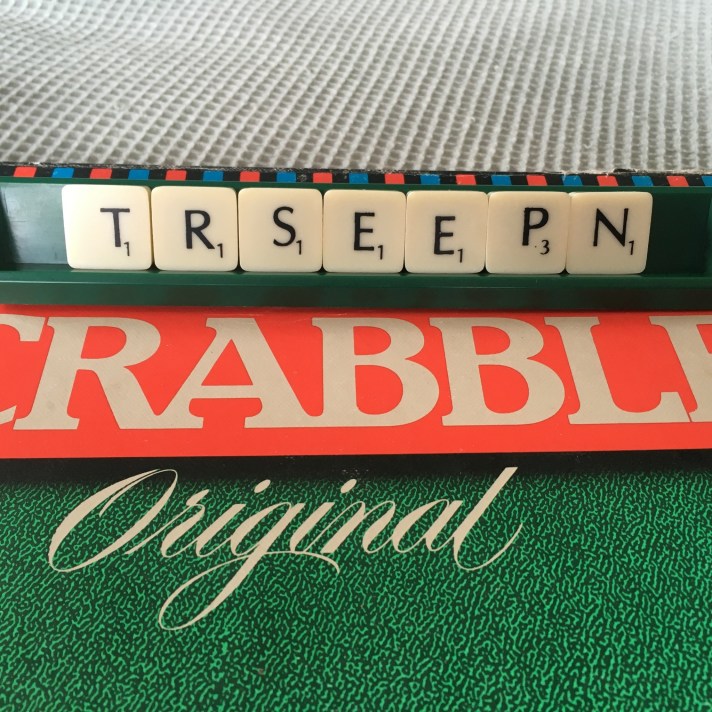
Imagine you are starting the game with these seven letters? T R S E E P N
This is a fortunate start because you have some vowels. You could spell the word PRESENT.
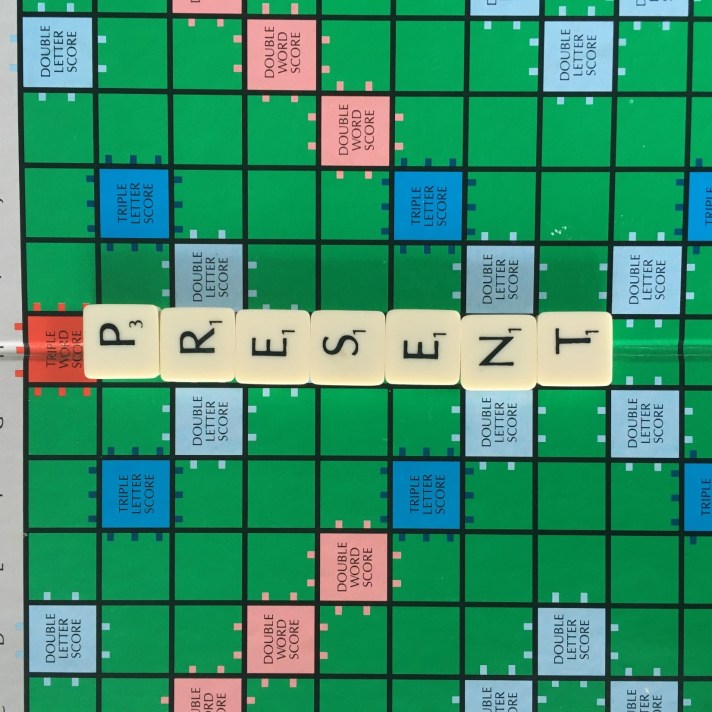
It is most fortunate indeed that we are able to spell the word ‘PRESENT’. That fits quite nicely with our message today. This week we focus on Psalm 46, one of the songs of the Sons of Korah. In a nut shell, Psalm 46 is an affirmation that God is present. Let’s read Psalm 46 together now…
God is our refuge and strength, an ever-present help in trouble. Therefore, we will not fear, though the earth give way and the mountains fall into the heart of the sea, though its waters roar and foam and the mountains quake with their surging.
There is a river whose streams make glad the city of God, the holy place where the Most High dwells. God is within her, she will not fall; God will help her at break of day. Nations are in uproar, kingdoms fall; he lifts his voice, the earth melts. The Lord Almighty is with us; the God of Jacob is our fortress.
Come and see what the Lord has done, the desolations he has brought on the earth. He makes wars cease to the ends of the earth. He breaks the bow and shatters the spear; he burns the shields with fire.
He says, “Be still, and know that I am God; I will be exalted among the nations, I will be exalted in the earth.”
The Lord Almighty is with us; the God of Jacob is our fortress.
May the Spirit of Jesus illuminate God’s word for us.
Psalm 46 is punctuated with reminders that the Lord Almighty is with us. God is present. God is present in the chaos. God is present in the city. And God is present among the nations.
God is present in the chaos:
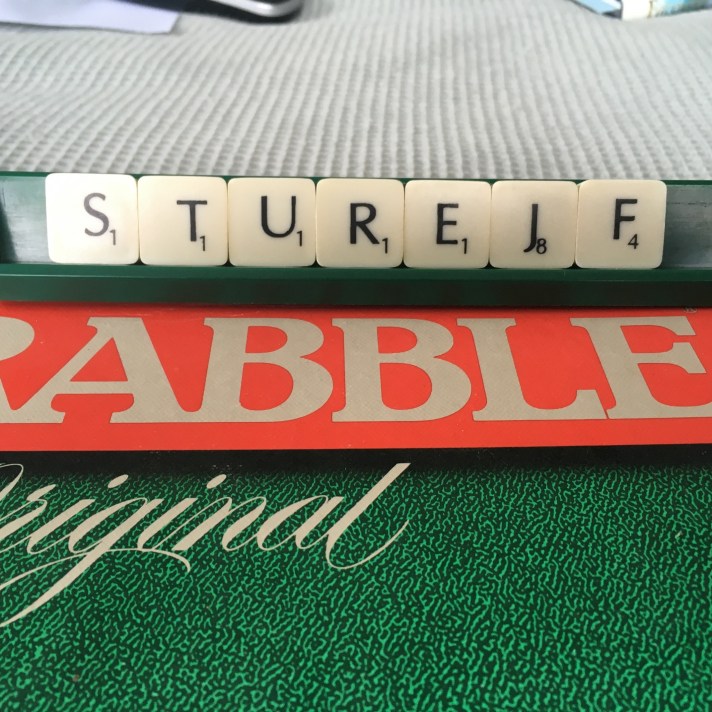
Now as providence would have it, the next player in our game of Scrabble has these letters: STUREJF. What word can we make with this lot?
One of the cool things about Scrabble is that you can use the letters the other players provide. This enables you to spell words you might not otherwise be able to spell. As keen Christians you will automatically notice the letter J and think, ‘I wonder if we can spell JESUS’.
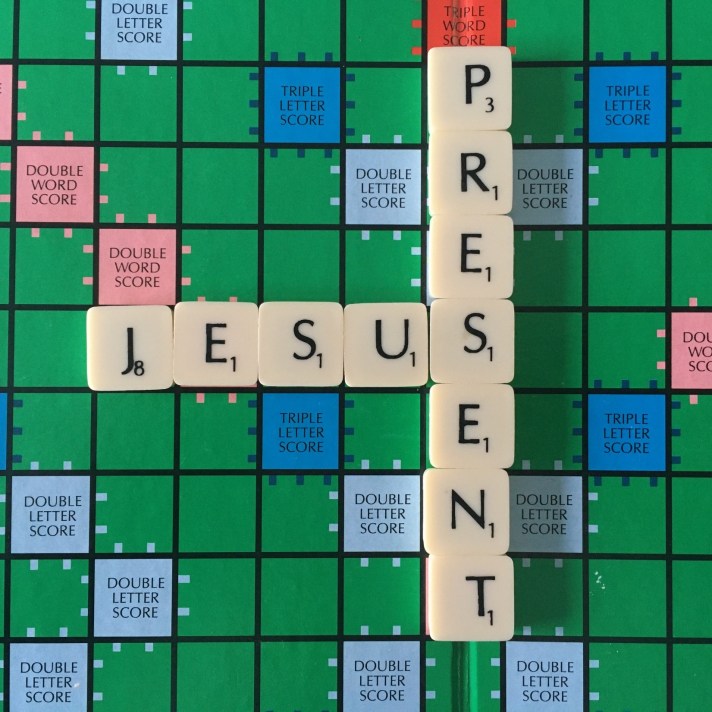
And yes, with the letters we have, we could spell JESUS, if we use the S in PRESENT. However, under the traditional rules of Scrabble, you are not allowed to use people’s names, so we will have to think of another word.
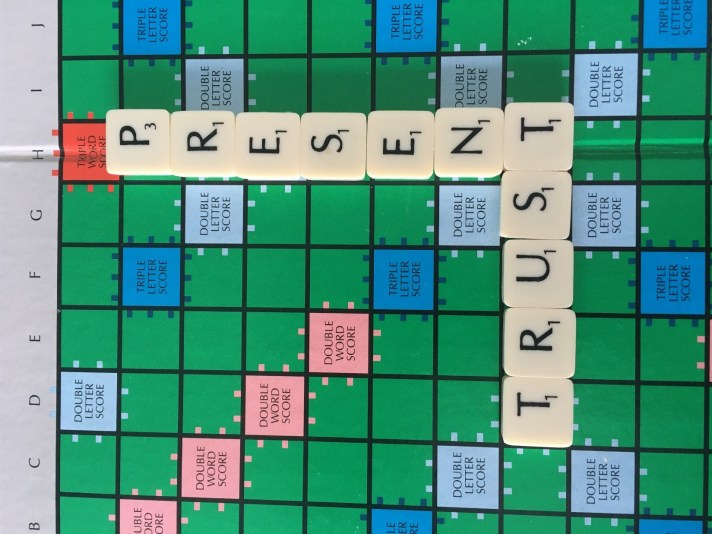
STUREJF enables us to spell rust. But with the T on the end of PRESENT we can spell TRUST. Verses 1-3 of Psalm 46 sound a note of defiant trust.
Psalm 46 starts, in verse 1, with God. God comes first.
Verses 2-3 describe primordial chaos, with the earth giving way and the mountains falling into the sea. Earthquakes and storms and floods basically. But before the chaos, there is God.
Verse 1 says that God is our refuge and strength. A refuge is a shelter or a sanctuary, a safe place. God is our safe place. As our refuge God protects us from the chaos out there in the world.
God is also our strength. While refuge has to do with protection from external threats, strength has to do with our inner person. Strength is about mental and emotional resilience or fortitude.
Or to think of it another way, to say that God is our refuge is to say that we are within God, like being in a life boat or in a safe house or in a fortress. And to say that God is our strength is to say God is within us; in our heart and mind.
In John 14:20 Jesus talked about being in God and God being in us through him, when he said to his disciples: “On that day you will realise that I am in the Father and you are in me, and I am in you.”
To be a Christian is to be ‘in Christ’, which means Jesus is our refuge, our strong tower. To be a Christian also means having Christ live in us, in our heart and mind; which means Jesus is our inner strength, like the reinforcing steel in concrete, or better still, like the backbone in your body holding everything together but at the same time allowing flexibility.
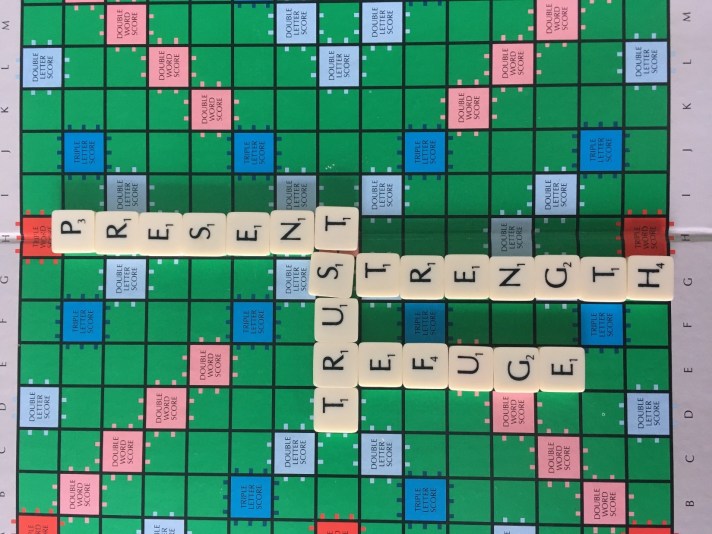
Because God is ever-present in the chaos and the storm, we do not need to be afraid. The opposite of fear is trust. Trust is the foundation of life really. Trust gives us something firm to stand on. When our trust (our foundation) is in God, then we have nothing to fear because our foundation cannot be moved.
Refuge and strength flow out of trust. We can use the R in TRUST to spell REFUGE and the S to spell STRENGTH.
The idea of the earth giving way and the mountains falling into the sea is quite real for us today. This generation is all too aware of global warming and the effects of climate change. We see images of flooding and earthquakes and tsunamis and hurricanes and forest fires almost every week on the news.
Our hope of a better future is under constant bombardment.
In Psalm 46 the Sons of Korah stir us to defy despair and, through trust in God, find refuge and strength and security. Yes, evil threatens. But ultimately God is in control. God is present in the chaos and God is present in the city.
God is present in the city:
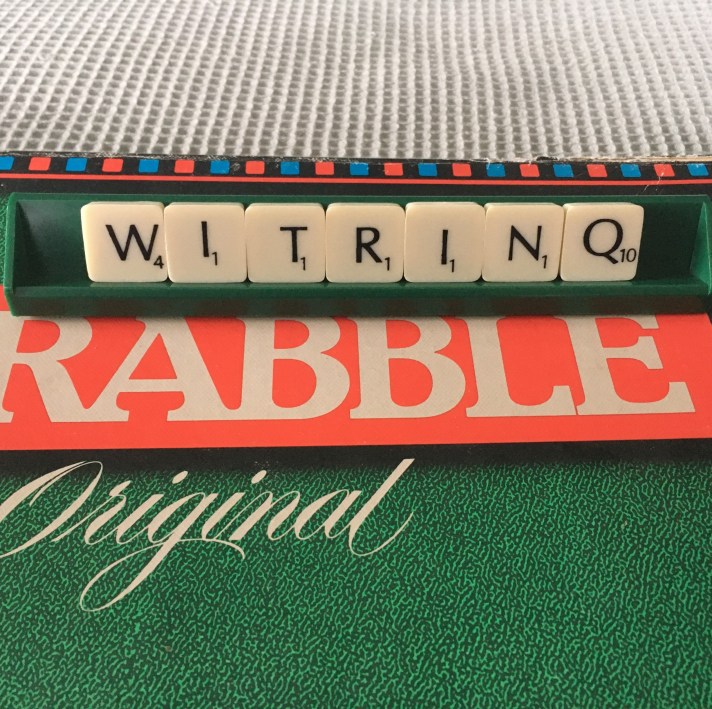
Returning to our game of Scrabble; if you want bonus points, you need to get a triple word score. We happen to have an H right beside a triple word score. What can we do with the letters WITRINQ?
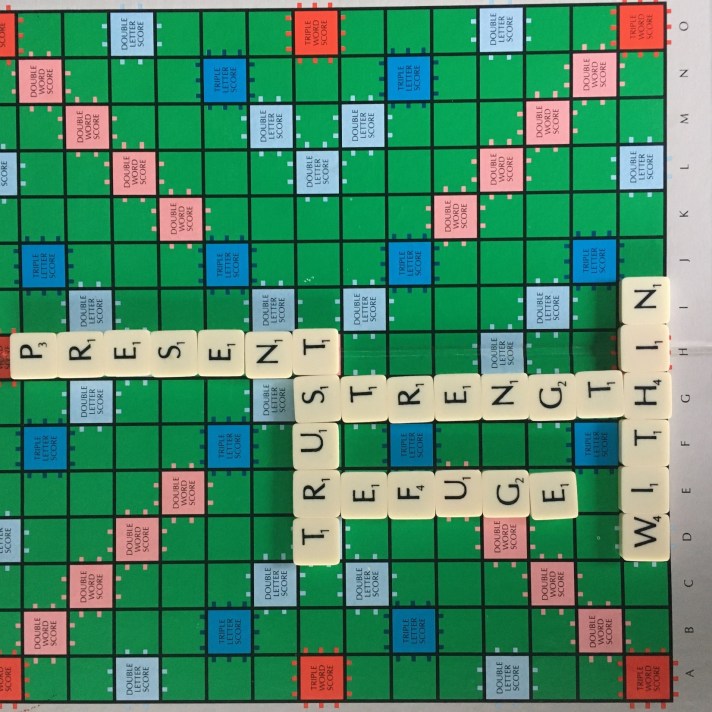
Well, we know we can’t do anything with the Q because you usually need a U if you want to make a word with a Q. But we could spell WITHIN. That would give us 48 points. Smashing it.
From verse 4 of Psalm 46 we read how God is present in the city…
There is a river whose streams make glad the city of God, the holy place where the Most High dwells. God is within her, she will not fall; God will help her at break of day.
The city in view here is Jerusalem. For the Jews of ancient times God dwelt within the city, because the Lord Almighty had his temple there. The holy place is another way of talking about the temple. This picks up the theme of God being present with his people.
That phrase where it says, God will help her at break of day, is a reference to the city under siege. In ancient times enemy armies would attack and besiege a city at dawn, at day break. This enabled the enemy soldiers to get close to the walls while it was still dark.
At break of day reminds us of the dawn raids in New Zealand during the 1970’s. I imagine the Pasifika community felt under siege at that time.
The Sons of Korah and the other worshippers look to God for help in the time of a siege, rather than military might.
According to Wikipedia, Jerusalem has been attacked 52 times and besieged 23 times during its long history. It was destroyed twice, and both times rebuilt.
But Psalm 46 isn’t primarily about the earthly Jerusalem. Psalm 46 is really more about the heavenly Jerusalem. The eternal city of God that can never be conquered or destroyed.
The river whose streams make glad the city of God reminds us of the pool of Siloam, which is a gentle flowing stream supplying Jerusalem with water during a time of siege.
Taking a less literal (more poetic) view, the river of God’s city is a metaphor for God’s provision and blessing. Christians may see here a connection with the Holy Spirit who gives life and cleansing to God’s people.
In Revelation 22, at the end of the Bible, we read about the heavenly Jerusalem;
Then the angel showed me the river of the water of life, as clear as crystal, flowing from the throne of God and of the Lamb down the middle of the great street of the city. On each side of the river stood the tree of life, bearing twelve crops of fruit, yielding its fruit every month. And the leaves of the tree are for the healing of the nations.
And how the nations of the world need that healing.
The Lord Almighty is with us; the God of Jacob is our fortress.
This refrain is repeated, like the chorus of the song, in verses 7 & 11. Martin Luther, the great reformer of the 16th Century, found inspiration for his hymn, A mighty fortress is our God, from this line and indeed from the whole of Psalm 46.
A fortress speaks again of refuge, protection and security from external threats.
The expression, God of Jacob, is perhaps a subtle way of reminding the worshippers of God’s grace throughout their nation’s history. God is with his people in the city of Jerusalem, not because of any virtue on their part, but because He is gracious and kind.
We might not have cities with walls, like they did in ancient times, but we do understand what it is to be under siege.
The Covid virus besieges us in a number of ways. Our movement and contact with others is restricted, with good reason. Not only that but some may feel besieged with unpleasant thoughts and feelings.
By comparison with the rest of the world though, we (in NZ) are pretty well off really. God has been with New Zealand in this siege, not because we are more deserving than other countries but simply because the Lord is gracious.
We have watched in sadness this week while events have unfolded in and around Kabul airport, as people try to flee Afghanistan. We pray for God to be present in the chaos of that city. We pray too for the Lord Almighty to be present among the nations, as world leaders seek to help the vulnerable.
God is present among the nations:
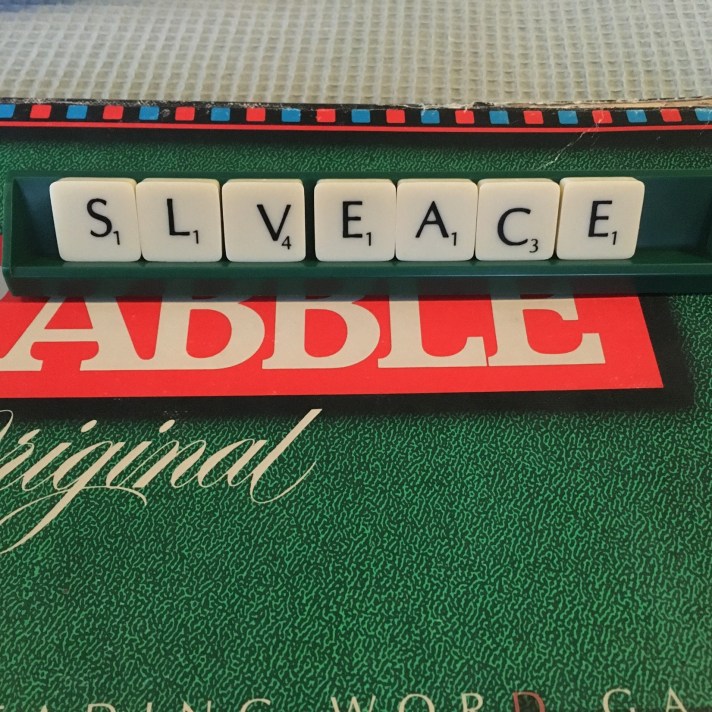
Sometimes the letters you get, in Scrabble, enable you to make more than one word. With the letters SLVEACE, for example, we can make ACE, LEASE, LEAVE and SLAVE. And if we use the some of the letters already on the board from the word PRESENT, we have even more options.
When I have the choice I prefer to go with the word which is more edifying and that will open up more options on the board, even it doesn’t get me as many points.
I could make the word SLAVE, which would give me 18 points because it is a double word score. Or, if I borrow a letter from the word PRESENT (already on the board) I could make PEACE, which only gives me 11 points.
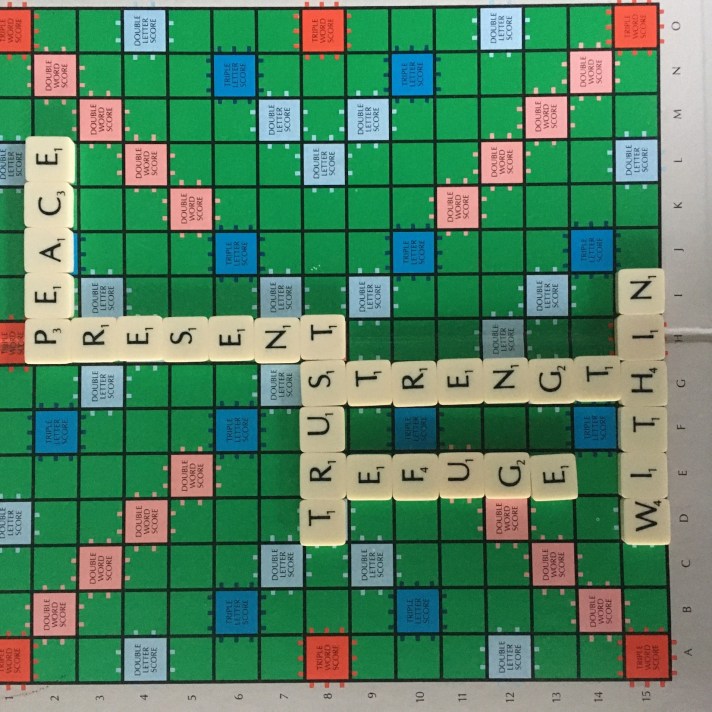
But I prefer peace to slavery and so I choose peace.
Peace is what we long for. Peace in our inner being, peace in our personal relationships and peace in our international relations.
Verses 8-10 of Psalm 46 tell us that God alone has the power to end war and bring peace…
Come and see what the Lord has done, the desolations he has brought on the earth. He makes wars cease to the ends of the earth. He breaks the bow and shatters the spear; he burns the shields with fire.
Then in verse 10 the Lord God Himself speaks…
He says, “Be still, and know that I am God; I will be exalted among the nations, I will be exalted in the earth.”
More often than not we read only half of what God says here. We focus on the first part where the Lord says, “Be still and know that I am God”, and we stop there. We (in the West) tend to think this means quieting our mind, being personally still (on the inside) and meditating on God.
That is certainly an important part of the meaning here. Most of us could well do with more stillness and less busy-ness in our lives. Lockdown is a kind of forced stillness. If only we could lean into a slower pace and give more mental space to God.
But there’s more at stake here than our personal stillness. The second part of what God says in verse 10 is: “I will be exalted among the nations, I will be exalted in the earth.”
This phrase, in the context of verses 8-9, makes it clear that the stillness in view here is more than inner peace. It is international, global peace. Peace among the nations.
Earlier in the service we heard a reading from Mark 4 retelling how Jesus calmed the storm on the lake. God’s word, “Be still” (in Psalm 46), is actually a command to end war and violence, much like Jesus’ word, “Be still”, in Mark 4, was a command for the wind and waves to stop.
The Bible teaches that justice is the prerequisite to peace and wisdom is the prerequisite to justice. There is no real peace without wise justice. What happened with the bombings in Kabul a few days ago was not wise or just.
To exalt the Lord is to lift up his wisdom and justice, to follow His way. Jesus shows us the way of God. When God is exalted among the nations there is peace.
Sometimes in the game of Scrabble you get letters which are hard to use, like an X or a Q. It always feels satisfying when you can put these less common letters to good use.
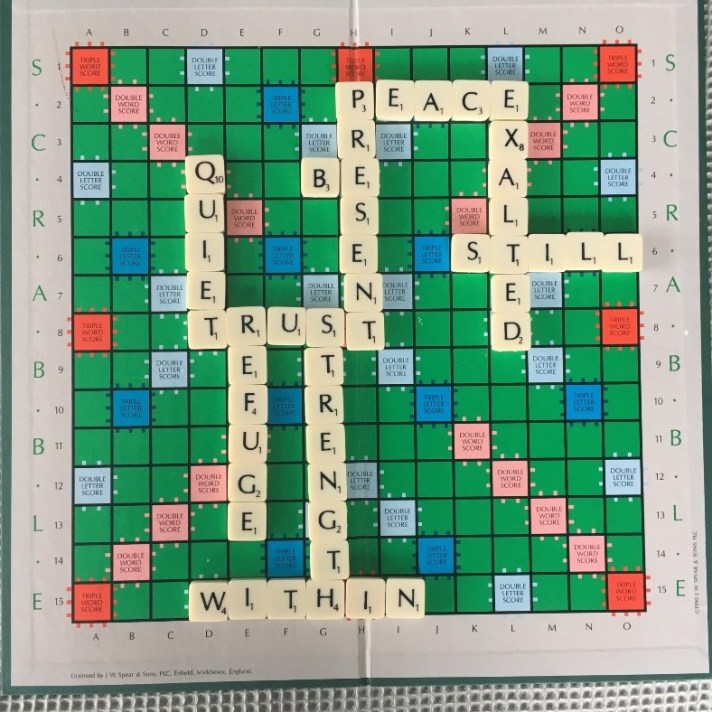
See what happens when you choose peace instead of slavery. You allow room to use your X to spell EXALTED and your Q to spell QUIET. And you are able to sneak in a BE STILL also.
Conclusion:
When we look at all that is going on in the world today; extreme weather events, a global pandemic, the rise of extremism and acts of terror, wars and rumours of wars, we may feel like the disciples in the storm in Mark 4, overwhelmed, confused and anxious.
We need to remember that, just as Jesus was present in the boat with his disciples in that storm, so too God is present with us in every circumstance we face in this world (whether good or bad).
And just as Jesus was able to calm the storm on the lake with one word, so too God is able to change things very quickly when He decides.
Psalm 46 shows us how to look at the reality of this world through the lens of eternity. The violence and turmoil of this world will not last forever. Ultimately God’s peace will reign. God’s plan is to establish heaven on earth. The best is yet to come.
Therefore, we do not need to be afraid. We can trust God for he is our refuge and our strength. God is present among the nations. God is present in this city of Wellington and God is present in the chaos; present to restore order. Best of all, through the Spirit of Jesus, God is present within your very soul.
Let us pray…
Mighty God, loving Father, help us to understand that, through Jesus, we are in you and you are in us. Keep us mindful of the fact that our life depends on you and that nothing can separate us from your love, therefore we do not need to be afraid. May you be exalted in all the earth. May your wise justice be lifted up that peace would reign. In Jesus’ name we pray. Amen.
Look after yourself and look after each other.
Questions for discussion or reflection:
What stands out for you in reading these Scriptures and/or in listening to the sermon? Why do you think this stood out to you?
- Do you have a favourite board game? What is it and why?
- What does it mean that God is our refuge? What does it mean that God is our strength? How are these terms similar? How are they different?
- In what ways does Psalm 46 speak to the situation of our world today? Is God saying anything to you personally through this psalm?
- Why is the term ‘break of day’ significant?
- What might the river of the city of God refer to, both literally and poetically? What light does Revelation 22 shed on the river of God’s city?
- Discuss / reflect on verse 10 of Psalm 46. What does this verse mean to you? What does it mean in the context of the psalm? (E.g. what does “Be still” mean? How is God exalted in all the earth?)
- Take some time to reflect on the ways God is present for you? Give thanks to him for this.

 Tawa Baptist