High Fidelity

Scripture: Deuteronomy 5:18 and Matthew 5:27-28 & 31-32

Video Link: https://youtu.be/Pva-KR5maAE

Structure:

  • Introduction
  • What is adultery?
  • Strengthening marriage
  • Conclusion

Introduction:

Kia ora whanau and good morning everyone.

Normally my messages are rated PG but today’s sermon is more like an R16. Content may disturb. 

If I say the word, Hi-Fi, what am I talking about? [Wait]

That’s right, a Hi-Fi is a stereo system, for playing music. Hi-Fi is short for High Fidelity, meaning high quality sound reproduction.

Fidelity is another word for faithfulness. So a High Fidelity sound system is one which faithfully reproduces the original music to a high standard. A Hi-Fi sound is a pure sound, unadulterated.

Today we continue our series in Deuteronomy. We are up to that part (in chapter 5) where Moses reiterates the ten commandments or the ten words of Yahweh. Today our focus is the command, ‘You shall not commit adultery’, in verse 18.

In actual fact, God wants us to do more than just avoid adultery. His real intention here is for marriage to be high fidelity. Because a high fidelity marriage clearly reproduces the faithfulness of God and the faithfulness of God is music to the ears of his creation.

When we look at where adultery is placed among the ten commandments, we see it comes between murder and theft. In some ways, adultery is like murder in that it (usually) kills a marriage and breaks up a family. At the same time, it is also like theft in that it takes something precious that does not belong to you. 

The command prohibiting adultery is about protecting marriage. When you protect marriage, you protect families and when you protect families you strengthen society.  

Our message today puts the instruction of Moses (in Deuteronomy) alongside the teaching of Jesus (in the gospel of Matthew). Broadly speaking, we will look at what adultery is and how we might strengthen marriage.

What is adultery?

First though, what do we mean by adultery? Well, from a contemporary secular perspective, adultery is voluntary sexual intercourse between a married person and someone other than his or her spouse.

Or to put it more plainly, adultery is when a person who is married willingly has sex with someone they are not married to. Usually my sermons come with pictures to illustrate what I mean, but it doesn’t seem appropriate in this case.  

The Bible agrees with the secular definition of adultery, except that Jesus takes it even further.

In Matthew 5, Jesus says…

27 “You have heard that it was said, ‘You shall not commit adultery.’ 28 But I tell you that anyone who looks at a woman lustfully has already committed adultery with her in his heart. 

So by Jesus’ (kingdom of God) definition, you don’t need to have sex in order to commit adultery. You can be guilty of adultery without touching anyone. 

Like much of Jesus’ sermon on the mount, the Lord is setting the bar of holiness very high indeed. There are a couple of things to clarify here.

Firstly, Jesus appears to be addressing married men in these verses, for he says anyone who looks at a woman lustfully has already committed adultery. Is he being sexist? Does this mean that only men can commit adultery and that women are not culpable?

No. Jesus is not being sexist. Women are just as capable of adultery as men and can be just as guilty. We need to understand that Jesus was speaking into a patriarchal culture. In a patriarchal society men are in control and women are generally subservient to their husbands. So there is a power imbalance.

As I read it, Jesus is addressing married men because they are the ones with the power. He is telling men to be responsible and use their power to protect their families by guarding against adultery.

At the same time, I think Jesus is undermining a common male prejudice that women are the problem; that women are somehow to blame for adultery. It’s her fault for dressing like that. Or it’s her fault for flirting with me in that way.

Jesus is not having any of that. Guys, you can’t blame women for your own selfish desire. That’s not fair. A man needs to take responsibility for controlling himself. He needs to keep it in his pants, especially in a society where women are not treated equally.  

Okay, so what does Jesus mean by looking at a woman lustfully? Well, lust is the hunger or the desire to possess someone else for your own self-gratification. Let me explain by way of example. And for this example to work you need to think of yourself as married.

You might be taking the train into the city when you notice someone who looks quite attractive. You think to yourself, they’re handsome or they’re beautiful. You don’t stare at them though. You don’t want to possess them for your own self-gratification. Instead you check the emails on your phone and your mind quickly moves on to its next thought. That is not lust or adultery.

But what if, in that scenario, an impure thought momentarily and involuntarily enters your mind. You quickly caste it out with a silent prayer, then distract yourself by doing the daily Wordle. Is that adultery? No. That is not adultery. That is temptation.

Temptation is that thin line between right and wrong. Temptation is the doorway to evil deeds. In the scenario I just described you did not cross the line of temptation. You backed away from it. Well done you.

Okay, so when does it become adultery? Well, you are on the train. You see the beautiful person. An impure thought enters your mind but this time, instead of distracting yourself with the Wordle, you welcome the thought in. You start undressing that person in your mind or you imagine them in the shower. Okay, now stop imagining. (I did warn you, this message is R16.)

If you entertain that kind of fantasy you have crossed the line of temptation and you have committed adultery with that person in your heart. You have wanted to possess that person for your own self-gratification.

You might say, that’s disgusting, I would never think like that. The truth is you don’t know the depths of your own heart. None of us knows what we might do given the opportunity. Remember how king David fell. He watched Bathsheba from a distance as she bathed naked and then he sent for her so he could sleep with her. So he could possess her for his own self-gratification.

Having said that, I don’t want you leave here today thinking, everyone is undressing me with their eyes. Most people are not thinking about you at all.

The point is, we have to be very careful with our thoughts. Thoughts are like seeds. A good thought grows into good actions. But the seed of a bad thought bears the fruit of all sorts of wrong doing. Where lust is the root, adultery is the fruit. Jesus wants us to nip adultery in the bud and prevent wrong doing before it has a chance to bear fruit. 

Choose prevention, not perversion. Choose self-denial, not self-gratification.

We are talking about what adultery is and what it means to look at someone lustfully, because by Jesus’ definition lust qualifies as adultery.

Now at this point some of you may be thinking, what about pornography? How does that fit with Jesus’ definition of adultery? Well, pornography encourages lust. Pornography provides the means for self-gratification. So, by Jesus’ standards, the use of pornography is a form of adultery.

The ancient Greek word for sexual immorality, in a general sense, is porneia, The English word pornography comes from the Greek word porneia. Pornography literally means ‘sexually immoral images’.  

In mainstream media, the use of pornography is accepted as normal and okay, provided it doesn’t involve children. But for Christians no form of pornography is acceptable, whether you are married or single.

Some people might say, ‘What’s the problem with pornography? No one is getting hurt’. That is simply not true. People are being hurt by pornography.

The use of pornography has the potential to destroy a marriage. God’s intention is for a husband and wife to give themselves to each other fully. If the husband is giving part of himself to dirty magazines and dodgey websites, then his wife is not getting the best of him.     

Deeper than this, pornography hurts the one who uses it. The more someone uses pornography the more likely they are to have impure thoughts about random strangers on the train. Pornography distorts our perception. It causes us to see other people as objects for our own self-gratification. Things to consume rather than human beings made in the image of God.

Whether you are married or single, please (for your own sake) do not go down the path of using pornography. It will put you in a prison that is very difficult to escape from.  

Deuteronomy 5, verse 21, reads: “You shall not covet your neighbour’s wife”.

In Catholic and Lutheran tradition, this verse (about not coveting your neighbour’s wife) stands alone as the ninth commandment. It is not lumped together with coveting your neighbour’s house and donkey. Wives are qualitatively different from houses and cars.

In the Greek version of the Old Testament, the word translated as covet is the same word Jesus uses for lust in Matthew 5. Lust / covet, same word in the original Greek. This is because coveting (like lust) is about the hunger or the desire to possess someone or something for our own self-gratification.

The implication here is that adultery isn’t just about sexual desire. Adultery can be about desiring someone else’s spouse for any reason. For example, a woman may covet her neighbour’s husband because he is good at earning money. In that case the lust isn’t sexual, it’s about greed or insecurity.    

Adultery doesn’t always present itself as so obviously evil. More often the temptation to self-gratification presents itself as something good, at first, but we don’t realise the path we are on until too late.

Returning to our train scenario. Imagine someone sits beside you on the train. You don’t have any inappropriate thoughts. You talk about the weather.  A couple of days later you sit together again and they share a few small details of their life. Turns out they work in a government department.

The weeks go by and you look forward to your daily commute. Your train buddy is easy to talk to. You feel comfortable with them. One day, their hand brushes against yours. It feels electric. You wonder if they felt it too. 

You find yourself thinking of them more and more after that. Innocent enough thoughts. You wonder what they might be having for dinner, whether they are watching the same TV programme as you, what they are planning for the weekend, that sort of thing.

Over the course of weeks and months you learn bits and pieces of their story. How their husband or wife left them to raise a child on their own. You feel a kind of empathy for their situation and before long you imagine yourself coming to their rescue, being their white knight or their Fraulein Maria.

Next you find they are populating your every waking thought. You become jealous when you see anyone else talking with them. You start going to the gym more often and eating a little less to get in shape, just in case.

At the same time, you pull away from your own spouse. You stay later at work, you talk less when you come home, you are more irritable with your family and you choose to withhold sex from your husband or wife.

Occasionally, you have a twinge of guilt but it soon passes. How can this be wrong when I feel so good? Besides, you are not sleeping with your train buddy (at least not yet). But still, your loyalty is divided. You are having an affair of the heart. You are trapped in a fantasy, an illusion which gratifies your ego or at least dulls the pain you feel. This too is a form of adultery.

Okay, so we’ve talked about the physical act of adultery, which is normally preceded by mental and emotional adultery, an adultery of the heart. But there is another kind of adultery too. In Matthew 5, verses 31-32, Jesus says…

31 “It has been said, ‘Anyone who divorces his wife must give her a certificate of divorce.’ 32 But I tell you that anyone who divorces his wife, except for sexual immorality, makes her the victim of adultery, and anyone who marries a divorced woman commits adultery.

This is high fidelity stuff. Again, Jesus’ words here need to be understood in their proper context. A man in ancient Jewish culture could divorce his wife simply by writing her a letter of dismissal. Jewish women had no legal right to divorce their husband. It was a patriarchal society. Power imbalance.   

The conservatives of Jesus’ day said the only justifiable cause for divorcing your wife was if she was guilty of sexual immorality of some kind (porneia). The liberals, on the other hand, said a man could divorce his wife for anything. Maybe if she burnt the dinner or if he decided he liked the lady on the train more.

Not all husbands were so callous. Some loved their wives and remained loyal to them. But, by and large, men at that time felt entitled to send their wife away at a moment’s notice.

This was incredibly unfair to women, especially when we remember they had no social welfare benefit to fall back on and career options were limited.

Jesus took a hard line approach on the issue of divorce because he could see men were abusing the law at the expense of women and children. Some husbands were using a loop hole to get rid of their old wife so they could marry a new one. Serial monogamy. That is effectively the same as adultery, just with a thin veil of respectability.

Jesus is saying, it’s not okay guys for you opt out of your marriage commitment for your own convenience. Men, you need to stay loyal to your wife.

Now I imagine there will be some here who have been through the pain of divorce and remarriage. These words of Jesus are not meant to condemn you. Jesus’ intent is to protect those who are most vulnerable.

Your attitude to marriage and the reasons for your divorce may be entirely different from the problem Jesus was addressing in the first century. If you have left a marriage because you were abused or abandoned or betrayed, that’s a different matter. 

Whatever the circumstances of your divorce, God is gracious. I believe the Lord is willing to forgive anyone who is genuinely repentant.

The other thing I want to make plain is that, by Jesus’ standards, almost everyone listening to this is guilty of committing adultery, if not in deed then in their heart. And so no one here has the moral high ground. We are all in need of God’s mercy and forgiveness.

Returning to the main point. As Christians we are called to high fidelity in marriage. For us, marriage needs to be about commitment, not convenience. Divorce, in order to trade up to someone you like better, is not allowed for believers.

Strengthening marriage:

Okay, so now that we have explored what adultery is, let’s turn to something more positive. How do we strengthen marriage? How do we improve fidelity in marriage? I have three D’s for you: Discipleship, delight and disclosure.

Many people these days look to marriage as a means for self-fulfilment. They approach marriage with the mind-set of what can I get out of this? How can this benefit me? How can this make me happy? Me, me, me.

That sort of expectation puts way too much pressure on a marriage. As soon as one partner is unhappy, they look for a way out.

There are benefits and happiness in being married but marriage can also be difficult at times. A husband and wife need to be prepared to weather some unhappiness and stick with each other through the tough times.  

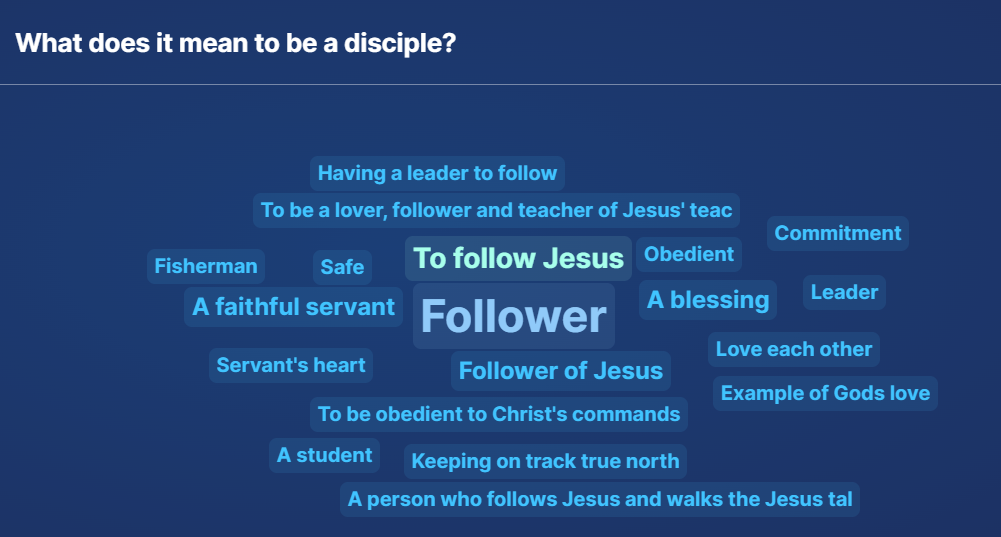
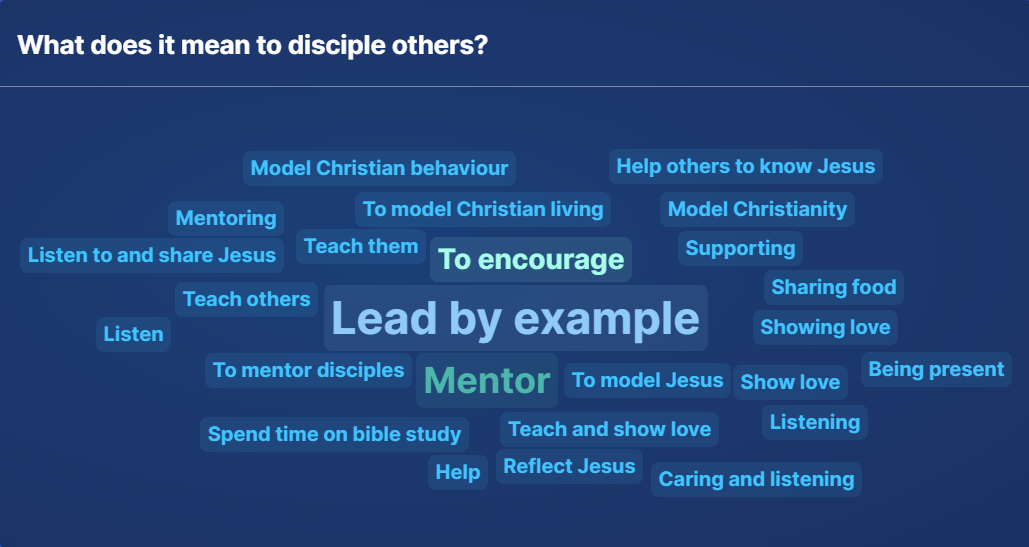
When Jesus talked about marriage it was often in the context of discipleship.    A disciple is a student or an apprentice. A disciple of Christ is someone who is learning to be like Christ. Marriage is one way to learn to be more like Jesus. It’s not the only way but if you are married it is probably the main way.

When we think of marriage not as something that fulfils me but rather as an opportunity to love and serve our partner, even when that involves sacrifice, then our expectations will be far more realistic. Over time, we will strengthen our marriage relationship, we will build our character and become more like Christ.

For example, there might be times in your marriage when you go months (perhaps longer) without having sex, due to illness or busy-ness or whatever.

If that happens you don’t think, where can I go to get some satisfaction? (Maybe I’ll take the train to work today.) No. As a disciple you think, how can I learn to be more like Christ through this experience? Jesus was celibate. I too will practice self-control and find other ways to be intimate with my spouse.

Another example of how discipleship works: In any marriage there will be little things that irk you about your partner. Small frustrations. Maybe they always leave the toilet seat up or they put the milk bottle back in the fridge when the bottle is empty or they don’t replace the toilet roll or they throw the tooth paste out before it has been fully used, or they restack the dishwasher after you’ve already done it, or something else that might annoy you.

Those moments of frustration are part of your discipleship. They are an opportunity to develop patience and show grace, as Jesus does for us.      

Our second D stands for delight. Husbands and wives can strengthen fidelity in marriage by delighting in each other. This means having fun together in a whole variety of ways, including enjoying each other’s bodies.

As we read in Proverbs 5: 18 May your fountain be blessed, may you rejoice in the wife of your youth. 19 A loving doe, a graceful deer— may her breasts satisfy you always, may you ever be intoxicated with her love.

Although that verse is addressed to a man, it applies to women as well. Wives, may you rejoice in the husband of your youth, may his fountain satisfy you always.

The point is, when a husband and wife are looking for ways to make each other happy, they will have no need to look elsewhere.

Disclosure is another way to strengthen fidelity in marriage. Disclosure is about being open and honest with your spouse. Not keeping secrets. Now, as a pastor, I can’t tell Robyn everything about my work. There are some things people tell me in confidence and that stays with me.

Disclosure in marriage means answering any question your partner asks in relation to you and your relationship together. It means letting your spouse have access to your phone, your computer and your diary. It also means paying attention and listening well to what your husband or wife is saying to you.     

Disclosure, being honest, is not always easy to do. It is a learned skill. It takes patience and time. Saying the first 90% of what you need to say is relatively painless. It’s the last 10% of your truth that tends to hurt. But at the intersection of truth and love, trust is formed and intimacy is allowed to breathe.

Viewing marriage as a pathway of discipleship, delighting in your spouse and learning the art of graceful disclosure, all these things strengthen fidelity in marriage.  

Conclusion:

There’s one more thing I want to share with you, a single verse from Deuteronomy 24, which reads: If a man has recently married, he must not be sent to war or have any other duty laid on him. For one year he is to be free to stay at home and bring happiness to the wife he has married.

Moses was wise. This is about laying a good foundation in your marriage. And its great advice for anyone who is married, whether it’s been one year or 50 years. Don’t just avoid adultery, foster high fidelity in your marriage. Bring happiness to your wife or husband.

Let us pray…

Loving God, you are faithful through all the seasons of life. By your standards most of us are guilty of adultery, if not in deed then in our hearts. Forgive us we pray. Whether we are married or single, may you satisfy our hunger for love. May our relationships be characterised by commitment, not convenience. By self-giving, not self-gratification. Through Jesus we pray. Amen.

Next week we look at the commandment about not stealing. I expect the message will be rated PG. So you should feel more comfortable, unless you are a burglar. May God bless you (and be careful on the train this week). 

Questions for discussion or reflection:

What stands out for you in reading this Scripture and/or in listening to the sermon? Why do you think this stood out to you?

  • What is adultery? How does a secular understanding of adultery differ from Jesus’ teaching on adultery? What is adultery of the heart? Where do you draw the line?  
  • Why did Jesus specifically address married men in Matthew 5:28?
  • How might we deal with impure thoughts? How might someone recover from pornography?
  • Why did Jesus take a hard line approach against divorce in Matthew 5:32? Why did Jesus insist on such a high standard of fidelity in marriage? 
  • What difference does it make thinking of marriage as a pathway of discipleship, rather than a pathway to self-fulfilment?
  • What practical things can people do to strengthen fidelity in marriage?

Protect Life

Scripture: Deuteronomy 5:17; 19:1-13; 21:1-9 and Matthew 5:21-26

Video Link: https://youtu.be/3jKtfMUW85s

Structure:

  • Introduction
  • Murder – protect life
  • Manslaughter – pursue justice
  • Mystery – provide atonement
  • Conclusion

Introduction:

Good morning everyone.

Have you ever noticed how many books, TV series and movies involve a murder mystery? Most of us would recoil in shock and horror if we were ever involved in a real life murder but, for some strange reason, we still like a good who dun it story.

Why is that I wonder? Is it simply the desire to solve the puzzle? Or is it the satisfaction of seeing justice done? Or maybe a fascination with own our mortality? I don’t know?

Personally, I have enjoyed G.K. Chesterton’s character, Father Brown, and also James Runcie’s hero priest, Sydney Chambers. They are pretty tame though. Anything too violent I don’t find entertaining.   

This morning we continue our series in Deuteronomy. We are up to that part (in chapter 5) where Moses reiterates the ten commandments or ten words of Yahweh. Today our focus is the command, ‘You shall not murder’, in verse 17.

You would think a short command like that would be fairly straight forward. You shall not murder. Sounds like a good idea. Sermon done. Well, not quite. It turns out killing can be quite complicated.

Our message this morning looks at three of the problems that come with killing. There is the problem of murder, the problem of manslaughter and the problem of mystery deaths. Deuteronomy has a method and purpose in dealing with each of these problems.  First, let’s consider the problem of murder

Murder:

Some Bibles translate the commandment as You shall not kill while others go with You shall not murder. So which is it? Because murder has a different nuance of meaning to the word kill.   

If you kill a wild deer, when you are out hunting, that is not considered murder. Likewise, if a soldier kills someone in battle, that is not considered murder either. Murder normally refers to the premeditated killing of an individual person, outside the context of a war. 

Well, the Hebrew word for kill, in a general sense, is harag. (Please excuse my poor pronunciation.) A shepherd might harag a wolf to protect his sheep. Or a soldier might harag an enemy soldier to protect his country.

The Hebrew verb, normally translated as murder, is ratsakh. A different word from kill.

Deuteronomy 5:17 uses ratsakh, which usually means the wilful, premeditated killing of another human being out of hatred, anger, passion, envy, fear or for some other reason the community regards as illegitimate. [1]

To complicate matters, the word ratsakh is sometimes also used when talking about accidental killings. However, the context always makes it clear what the writer means. In the context of Deuteronomy 5, the command is best understood in English as, you shall not murder.

For us 21st Century Western readers, the prohibition against murder raises a whole raft of questions. For example, why is murder outlawed in the Old Testament, while Holy War is permitted under certain circumstances?

Some might also ask questions of the Biblical text that the original writers were not trying to answer. For example, is abortion murder? What about euthanasia, how does that fit with this command?

These sorts of questions need to be taken seriously and the people whose lives are affected by these questions need to be treated with respect. For that reason, I’m not going to attempt to answer these concerns in this sermon. We simply can’t do justice to these subjects in the time available.

I will say this though: one of the main purposes of the law of Moses is to protect life. Protecting human life is certainly the purpose with the prohibition against murder.

Thou shalt not murder is not unique to Jewish / Christian religion. It goes back centuries before Moses. Pretty much every culture and religion has a rule against murder.

In Genesis 9, after the great flood when God was cutting a covenant with Noah, the Lord said: “Whoever sheds human blood, by humans shall their blood be shed; for in the image of God has God made mankind.

Human beings are made in the image of God and that makes our lives sacred. In addition to the harm a murder causes families and the wider community, to murder someone is to assault the image of God. It is a personal affront to God.

The Law of Moses commanded the death penalty for murderers. In the historical context of the time, the death penalty provided a strong deterrent to murder and it satisfied natural justice, putting an end to the matter. The death penalty was also a way for Israel to maintain the moral purity of the nation.

Does that mean we should return to the death penalty today? Well, the larger Biblical narrative shows a God who is both just and merciful. A God who makes people accountable for their actions but who also looks for ways to redeem wrong doers.

God protected Cain after Cain had murdered his brother Abel, although there were still consequences for Cain. Likewise, God did not have David killed after David murdered Uriah. By the same token, God did not let David get off Scott free. David and his family still faced judgment.      

Looking at the Bible as whole, I don’t think we should think of the death penalty for murder as an ideal to strive for. Jesus shows us through his teaching and his example the ideal of God’s Kingdom. In Matthew 5 we read…

21 “You have heard that it was said to the people long ago, ‘You shall not murder, and anyone who murders will be subject to judgment.’ 22 But I tell you that anyone who is angry with a brother or sisterwill be subject to judgment.

As I understand these verses, Jesus is wanting to prevent murder from happening in the first place, by nipping anger in the bud. If murder is the fruit, then anger is the root. When we learn to positively manage our anger, we have a better chance of avoiding violence.

In order to manage our anger, we must first be aware of when we are feeling angry. What are our triggers? What are the things that press our buttons? Try to avoid those triggers if you can.

Anger is normally a secondary emotion. So the next question is, what’s fuelling my anger? Is my anger unrighteous; the product of my own envy, hate ignorance and fear? Or is my anger righteous; a reaction to some kind of injustice?

If my anger is unrighteous, then I need to get my heart and head straight. I need to humble myself and seek to make things right. But if my anger is righteous, then I need to take a breath and ask God what he wants me to do about it, if anything.

Jesus rightly became angry at the injustice he saw with the money changers in the temple and he overturned their tables as a prophetic statement, an acted out parable. Jesus was not envious or fearful of the money changers. Nor did he hate them. To the contrary, Jesus was acting in love to give everyone a fair deal.

We are not Jesus though. The difficulty is that, in the heat of the moment, we become blind. We may feel completely justified in calling someone an idiot or throwing a punch, but we don’t see the whole picture. Exercising self-control and managing our anger requires us to slow down and think.

Okay, so where the problem is murder, Deuteronomy prohibits murder and provides the death penalty as a deterrent. The purpose of the Law here is to protect human life.

As followers of Jesus we are not to come anywhere close to murder. We are to practice self-control. That means nipping unrighteous anger in the bud and channelling righteous anger in a non-violent way.

We can’t expect self-control to come naturally though. Self-control is one of the fruits of the Spirit and needs to be cultivated through the practice of certain spiritual disciplines, like slowing down to make time for prayer and reflection.  

Manslaughter:

What about the problem of manslaughter or accidental killings? Well, Deuteronomy has some advice on that issue as well. In chapter 19 we read about the provision of ‘cities of refuge’ for those who accidentally kill a neighbour without malice or premeditation. From verse 5 we read…

For instance, a man may go into the forest with his neighbour to cut wood, and as he swings his axe to fell a tree, the head may fly off and hit his neighbour and kill him. That man may flee to one of these cities [of refuge] and save his life. Otherwise, the avenger of blood might pursue him in a rage, overtake him if the distance is too great, and kill him even though he is not deserving of death, since he did it to his neighbour without malice aforethought.

When I was at High School another guy (First 15, Maadi cup, body builder sports type) pushed me to the ground and punched me in the face while I was still on the ground. I never saw it coming.

A teacher stopped him before he did too much damage and took us both to the Principal. It turns out this guy thought I had stood on his pie. I didn’t stand on his pie. I was just in the wrong place at the wrong time.

In the heat of his anger he thought he was completely justified in taking revenge. Afterwards though, when his perspective had returned, he felt bad and regretted his actions. It didn’t really bother me. I let it go and moved on. 

Life is messy. People make mistakes. Accidents happen. Sometimes wires get crossed and reason goes out the window. Moses understood this and provided cities of refuge for the innocent to escape to when things went pear shaped.   

There were to be six of these cities of refuge, three on each side of the Jordan River, and each with good roads leading to them, so the accidental killer could escape before being overtaken by the avenger of blood.

When we hear the phrase ‘avenger of blood’, we might think of Marvel comic book heroes like Iron Man, Captain America, the Hulk and so on. That’s not what Deuteronomy means by an avenger.

The avenger of blood was a close relative who, in ancient near eastern culture, was honour bound to kill the person who had murdered their family member. Deuteronomy did not outlaw this wild west form of retribution but it did try to restrict it so that revenge killings at least served the purpose of justice.

Sometimes the avenger of blood would act in the heat of the moment without waiting for a proper legal process to sort out the facts. This could lead to miscarriages of justice if the avenger got the wrong person or misunderstood the situation.    

The problem with accidental killings is that there are two victims. The person who died and the one who inadvertently caused the death. Imagine the burden of guilt you would carry. How do you live with that? Someone who commits manslaughter is innocent of pre-meditated murder and therefore justice requires they be treated in a more lenient way.

Having an accessible city of refuge to escape to, gave the accidental killer sanctuary until the case could be decided properly by the elders of the town. Moses was trying to promote proper processes of justice and prevent angry relatives from taking matters into their own hands.

The purpose of the law here (and elsewhere) is to encourage people to pursue justice, not revenge.

We often associate the Old Testament with the verse: ‘an eye for an eye and a tooth for a tooth’. That saying was not intended to promote revenge. It was intended to limit revenge and ensure that justice was done by making the punishment fit the crime.

The Old Testament, like the New Testament, promotes justice with mercy. In Leviticus (an Old Testament book) we read: Do not seek revenge or bear a grudge against one of your people but love your neighbour as you love yourself. 

Sounds a lot like something Jesus would say, don’t you think? Except that Jesus took it even further saying, in Matthew 5…

43 “You have heard that it was said, ‘Love your neighbour and hate your enemy.’ 44 But I tell you, love your enemies and pray for those who persecute you, 45 that you may be children of your Father in heaven.

The part about loving your neighbour comes from the Old Testament. But the part about hating your enemy does not come from anywhere in the Bible. That’s just a made up saying.

Loving your enemies is the opposite of retaliation. Perhaps the greatest expression of love is forgiveness. This teaching of Jesus is incredibly difficult to apply because it requires us to submit to unjust treatment. We need to accept God’s forgiveness for ourselves before we can forgive others.

Okay, so where the problem is manslaughter, Deuteronomy says, ‘provide cities of refuge’. The purpose of the Law here is to encourage the community to pursue justice and not take revenge prematurely.

As followers of Jesus we are to resist the temptation to take revenge and practice forgiveness. Jesus shows us most clearly what love and forgiveness looks like in the way he went to the cross without defending himself.

Though he was powerful, with legions of angels at his disposal, Jesus did not lift a finger against his enemies. And though he was innocent, Jesus did not insist on justice for himself. Instead, Jesus prayed for his persecutors saying: Father forgive them, for they know not what they do.     

We’ve talked about the problem of murder and the problem of manslaughter. What to do though when there is a mystery death? Deuteronomy recommends providing atonement.

Mystery:  

In Deuteronomy 21, we read that where someone is found dead in a field and it is not known who the killer is, the elders of the town nearest the dead body shall make atonement by breaking the neck of an unworked heifer beside a flowing stream. 

Then all the elders of the town nearest the body shall wash their hands over the heifer whose neck was broken in the valley, and they shall declare: “Our hands did not shed this blood, nor did our eyes see it done. Accept this atonement for your people Israel, whom you have redeemed, Lord, and do not hold your people guilty of the blood of an innocent person.” Then the bloodshed will be atoned for,

Atonement is the action of making amends for a wrong or an injury. For example, if someone borrows your car and gets a speeding ticket while driving it, then they might make atonement by paying the fine. Or, if someone in a position of responsibility fails in their duty, they might make atonement by resigning from their job. Or, if colonists steal land from the indigenous people, then they might make atonement by returning the land.

Atonement, in a religious sense, has to do with the removal of guilt. The ritual described in Deuteronomy 21 removed any suggestion of guilt from the land and from the people who had no part in the crime.

We, who live in the contemporary western world, might struggle to see how breaking the neck of a perfectly good heifer atones for an unsolved killing. But it doesn’t need to make sense to us. The point is, it made sense to people in ancient Israel.

Having a special ritual like this did a number of things. Firstly, it protected the community from indifference. If someone is killed, that is a serious matter and should not be ignored or swept under the carpet. It needs to be brought into the light and that person’s life needs to be honoured in some way.

Furthermore, Deuteronomy 21 recognises the corporate responsibility of the entire community for the crimes of individuals. Unless the community responds to the crime, by formally declaring it’s innocence, the guilt of the individual rests on the heads of the whole community. [2]

We may struggle with that way of thinking because we live in a relatively individualistic society, one in which people are quick to avoid responsibility. We would do well to consider how our community makes atonement for serious wrong doing.

The purpose of the law, in Deuteronomy 21, is to make atonement for the land and for the community. Thinking of atonement reminds me of what Jesus says, in Matthew 5:23-24…

23 “Therefore, if you are offering your gift at the altar and there remember that your brother or sister has something against you, 24 leave your gift there in front of the altar. First go and be reconciled to them; then come and offer your gift.

I expect Jesus had atonement in mind when he gave this teaching. ‘Making amends’ is one of the essential steps in any reconciliation process.

Jesus himself provided atonement for us on the cross. It is through faith in Jesus’ death and resurrection that we are reconciled to God. There is a mystery to the cross and to the atonement Jesus accomplishes on our behalf. We can’t quite grasp how it works but we don’t need to. Atonement, with a view to reconciliation, always involves an element of faith.

Conclusion:

This morning we have heard what Deuteronomy has to say in relation to the problems of murder, manslaughter and mystery deaths. Murder is prohibited. Cities of refuge are provided for those who commit manslaughter and the community together is to take responsibility for unsolved deaths.  

The purpose of the law in all these cases is to protect life, pursue justice and provide atonement.

Jesus fulfils the law and in so doing shows us three values or practices of heaven. Namely: self-control, forgiveness and reconciliation.

What is the Spirit of Jesus saying today? How might this apply to us?

Well, how short is your fuse? How quickly do you lose your temper? Anger is dangerous. Like embers of a fire, anger takes time to cool and can easily be stirred up to full blaze again. Don’t give your anger oxygen. Don’t give it fuel. Don’t keep replaying old grievances in your mind. Let it go. Ask God for the cooling water of grace to forgive.

Perhaps you are not harbouring anger. Perhaps you are exhausted from carrying guilt over some harm you have caused. If the harm was accidental, unintentional, then you are a victim too. Not that you allow yourself the indulgence of thinking that way.

Guilt makes us a prisoner to fear. Guilt forces us to run and hide. Are you looking for refuge, a safe place to rest, to escape the avenger who is always as close as your troubled conscience? 

Jesus is a refuge for the guilty. More than that, he is the bridge of atonement. Lay your guilt at the foot of the cross. Make your confession to Jesus. Trust the Lord to justify you. Accept God’s forgiveness and let Christ make amends for you. 

Let us pray…

Father God, forgive us our sins, as we forgive those who sin against us. Replace our fear with love. Replace our guilt with righteousness. Replace our anger with grace. Lord, we ask for mercy in Jesus’ name. Amen.

Questions for discussion or reflection:

What stands out for you in reading this Scripture and/or in listening to the sermon? Why do you think this stood out to you?

  • Do you like murder mysteries and who dun it stories? If you do, what are your favourites? Why do you like murder mysteries?
  • Why did Jesus say, “anyone who is angry with a brother or sisterwill be subject to judgment”? What strategies (or spiritual disciplines) can we practice to cultivate self-control and positively manage our anger? How can we tell when our anger is righteous and when it is unrighteous?
  • What was the law of Moses encouraging with the designation of cities of refuge?
  • What is atonement? Why was it necessary for the village elders to make atonement for unsolved deaths? How might local communities make atonement for serious wrong doing these days?
  • Discuss / reflect on the three purposes of the law covered in the sermon above. That is, to protect life, pursue justice and provide atonement? How do these interact with each other? How might we apply these principles today?
  • Have you ever felt guilty? How did you find release from your guilt? Have you ever felt angry? How did you find release from your anger?

[1] Refer Patrick Miller’s Interpretation Commentary on Deuteronomy, page 87. 

[2] Refer Daniel Block, NIVAC Deuteronomy, page 492. 

Honour

Scripture: Deuteronomy 5:16

Video Link: https://youtu.be/Lt475BHSMYs

Structure:

  • Introduction
  • What?
  • Why?
  • How?
  • Conclusion

Introduction:

Good morning everyone.

Many of you of will be familiar with the TV show, The Repair Shop. In The Repair Shop people bring in broken family heirlooms for a team of skilled crafts people to restore.

First the family come in and tell the story behind the item they want repaired. Then the item is worked on, before the family return for the great reveal. Tears inevitably follow.

I like The Repair Shop because it is essentially about redemption. Not only is the object itself redeemed but, at a deeper level, honour is restored.

Time and time again we hear how people are having the item restored to honour a parent or grandparent. The object itself becomes symbolic of the relationship. Restore the broken object and in some way you have honoured the person who gave you the object.

This morning we continue our series in the book of Deuteronomy. You may remember we have been working our way through Moses’ reiteration of the ten commandments. Today we pick up the commandment to honour our parents. From Deuteronomy 5, verse 16 we read…

16 “Honour your father and your mother, as the Lord your God has commanded you, so that you may live long and that it may go well with you in the land the Lord your God is giving you.

May the Spirit of Jesus illuminate God’s word for us.

Our message today focuses on three questions in relation to this verse: what, why and how? What is honour? Why do we honour our parents? And how do we honour our parents? First let’s consider what honour is.

What?

In English the term honour is associated with words like esteem, reverence, respect, dignity and integrity. Honour can be a noun (a naming word) or a verb (a doing word). As a verb, honour is about treating someone with respect and it’s about fulfilling our obligations, making good on our commitments. An honourable person does the right thing by themselves and others.

Esteem, respect, dignity, integrity and the like, all fit with the Biblical meaning of honour as well. But there is another nuance to the meaning of honour in the context of Deuteronomy. The Hebrew word for honour (kabbed) means the opposite of curse.

Elsewhere in the law of Moses the command to honour your father and mother is stated negatively and with a punishment. In Leviticus 20, for example, we read: If anyone curses his father or mother, he must be put to death.

Cursing, in this context, does not mean using foul language with your parents (although we should avoid swearing of course). Cursing is the opposite of honouring. To curse means to treat lightly or with contempt. To regard someone of little account. To treat a parent without dignity or without worth. [1]

If cursing one’s parents is the opposite of honouring them, and cursing equates to treating them lightly or with contempt, then to honour your parents is to treat the relationship as a weighty matter, something of great importance. Your parents’ well-being is not to be taken lightly.  

We might look at Leviticus 20, through our 21st Century western lens and think, ‘Whoa, the death penalty for cursing your parents is a bit harsh isn’t it?’

Well, I don’t think Jesus wants to condemn someone to death for mistreating their parents. Jesus would be looking for a way to redeem that person.

In Luke 15, Jesus tells the parable of the Prodigal Son. When the younger son asked for his share of the inheritance before his father had died, he was basically cursing his father. That was like saying, ‘I wish you were dead’.

To then go away and waste his father’s money on sex, drugs and rock n’ roll was to treat his relationship with his mother and father lightly or with contempt.     

In Jesus’ parable, the father does not kill the prodigal son for cursing him. The father welcomes him with open arms and gives him a place of honour. It is the kindness of God that leads people to repentance.

Having said that, we need to honour the law of Moses by seeking to understand it in its original context.

The commandment to honour your parents was given primarily to adults. Yes, young children are to honour their parents too but we shouldn’t think that every time a small child or a teenager got a bit grumpy with Mum or Dad, they were dragged out to be stoned. No.

The law of Moses was all about protecting the weak and the vulnerable. And, in the context of Deuteronomy 5 the weak and vulnerable are aging parents. Honouring your father and mother is about adult children taking care of their parents, not neglecting them or abusing them.  

Getting old is not easy. It’s tough. It comes with more pain and more challenges. Everything is harder and takes longer. The powers you possessed as a younger person seem to drain away.

The law of the jungle says, ‘Survival of the fittest individual’ and ‘Look out for number one’. But the law of Moses says, ‘No, no. We are all in this together. It’s survival of the kindest community’. The people of God take care of the elderly and infirm.

Okay, so when Moses talks about honouring your parents, what he means is, treat your relationship with your parents as a weighty matter, something of great importance. Don’t take your parents’ well-being lightly. 

Why?

But why should we honour our parents?  Well, the rest of verse 16 gives us two reasons why…

Firstly, because the Lord your God has commanded you.

This means, parents have a God given authority in relationship to their children. God has authorised parents to protect, provide for and teach their young children. Parenting is a sacred responsibility. 

Now let me be very clear. When I say that parents have a God given authority in relationship to their children, I do not mean that parents can do whatever they want where their children are concerned. No.

Parents are not authorised to abuse or neglect their children. They simply have a right to protect, provide for and teach the children God has entrusted to their care. So it is in this context that children have an obligation before God to accept the security and wisdom their parents have to offer.

Maybe, when you were young, your parents did not have the means to provide you with everything you wanted. Maybe you got the cheap jeans instead of the Levis. Maybe you missed out on the overseas trip or the new bike. Honouring your Mum & Dad means appreciating what they were able to provide and not despising them or resenting them for what they could not afford.   

Raising a family is hard work. Most parents are doing the best they can under the circumstances. Unfortunately, we often don’t figure that out until we become parents ourselves.

As our parents get older the relationship changes and the roles reverse so that adult children become responsible for protecting and providing for their elderly parents. This is the right and honourable thing to do.

Jesus was pretty strong on this idea of honouring your parents. In Matthew 15 the religious leaders ask Jesus why his disciples don’t wash their hands and Jesus responds by saying to the Pharisees…

3“And why do you disobey God’s command and follow your own teaching? For God said, ‘Honour your father and your mother,’ and ‘If you curse your father or your mother, you are to be put to death.’ But you teach that if people have something they could use to help their father or mother, but say, ‘This belongs to God,’ they do not need to honour their father.In this way you disregard God’s command, in order to follow your own teaching.

Charity begins at home, as my grandfather used to say.

We are talking about why we should honour our parents. Firstly, because God commands it and secondly (from Deuteronomy 5, verse 16)…

…so that you may live long and that it may go well with you in the land the Lord your God is giving you.

Now, this promise is best interpreted in community terms, not in individual terms. The promise here is not so much long life for each individual child who obeys their parents. It’s more the benefit of social stability for any society in which children generally honour their parents. [2] 

In other words, when we honour our parents it is good for everyone. The family is the basic building block of society. Good family relationships are the glue that hold a society together and enable it to function well.

When large numbers of families break down, so does the fabric of society. But when families function well, looking after each other, society flourishes and the nation as a whole lasts a long time in the land.

If you think about it, taking care of the elderly is your insurance. If you have treated your parents well, your kids will see that and be more inclined to treat you well. What goes around comes around.

So, we honour our parents because God commands it, because natural justice requires it and because it benefits society, which in turn benefits us personally.

How?

We’ve talked about the what and the why, of honouring our parents. Now let’s consider the how.

Perhaps the best way of honouring your parents is by the way you live your life. Being a blessing to your parents. Not causing your parents grief or worry or anguish by the choices you make. Relating well with your siblings so that family get togethers are a source of joy and not conflict.

If your parents and grandparents have made sacrifices to give you a good start in this world, then give them a good return for their investment.

I never met my great-grandfather but I was given his Bible. In the front of the Bible are written these words: “Special prize, presented to Albert Anderson for essay on the life of Joshua… 28 October 1908”     

I am told that Albert was a devout Christian who took his faith seriously and apparently had some aptitude for Biblical study.

Six years after receiving this Bible, Albert put his tools down (he was a carpenter) and enlisted in the New Zealand Expeditionary forces to fight in the First World War. He came home to New Zealand five years later.

On his return Albert kept his faith and attended church regularly, but I don’t think he was ever quite the same. People called him ‘silent Albie’ because he didn’t talk much.

After the war his wife died and the great depression of the 1930’s followed. Life was not easy for him. He did not have the same opportunities or choices that most of us enjoy. Albert died of cancer before reaching old age.

I sometimes wonder how his life might have turned out if he didn’t go to war or if his wife didn’t die so young or if university had been an option for him. Would he have pursued his love of the Bible and become a preacher? Would he have chosen a different path? Who knows?

What I do know is that I honour his life, his suffering and his hardship by the way I live my life and by making the most of the opportunities I have been given. How do you honour your parents and grandparents?

In Ephesians 6, the apostle Paul has this to say about how children are to honour their parents: Children, obey your parents in the Lord, for this is right.  “Honour your father and mother”

Hmm? Do we really have to obey our parents? Well, the context suggests the children Paul is addressing here are young. Because, in verse 4, Paul gives some advice to parents saying…

Fathers,do not exasperate your children; instead, bring them up in the training and instruction of the Lord.

The children in this context, therefore, are still at home and dependent on their parents. More importantly though the children are being told to obey their parents in the instruction of the Lord. So obedience is required when parents are teaching their children to follow Jesus.

Paul is encouraging Christian parents to think of themselves as making disciples of their children. Parents are like missionaries to their children. You don’t have to go overseas to make disciples. Discipleship starts in the home. Don’t leave the internet to raise your kids.

In Luke chapter 2 we come across a story from Jesus’ childhood. The story ends with Luke saying that Jesus was obedient to his parents.

Jesus’ parents were Godly people, even if they didn’t quite understand their son. By submitting to Mary & Joseph, Jesus was essentially submitting to God, his heavenly Father, who entrusted Jesus to Mary & Joseph’s care.

Obviously, if parents tell a child to do something that is clearly wrong or immoral, the child does not need to obey. Our first allegiance is always to God. 

Ideally, we are aiming for a mutually respectful relationship with our parents. One in which they consider for us and we consider for them. If, as adults, our parents ask something of us that we can’t do, then we have a conversation with them and try to arrive at a solution that works for everyone.    

Sometimes, in mid-life, we may feel like the meat in the sandwich. On the one hand we have teenage or young adult children who still need our support and, at the same time, we have aging parents who may also need some help.

To make things more difficult we often don’t live in the same city. It’s a lot harder to help family from a distance. Sometimes life’s circumstances force you to make a difficult choice. At the end of the day you can only do what is in your power to do.

When Jesus was hanging on the cross, about to die, his options were limited. His earthly father Joseph was dead. He was the eldest son. How would he honour his mother in that most difficult of all situations? One of the last things Jesus did was entrust his mother’s care to his best friend. In John 19 we read…   

26 When Jesus saw his mother there, and the disciple whom he loved standing nearby, he said to her, “Woman,here is your son,” 27 and to the disciple, “Here is your mother.” From that time on, this disciple took her into his home.

It wasn’t in Jesus’ power to look after Mary himself, so he delegated her care to someone he trusted implicitly.

Honouring our parents is about doing the best we can for them under the circumstances. Sometimes that might mean inviting them to live with us, in our home. Other times it will mean supporting them to live in their own home. Or, if they need a high level of support, it could mean visiting them regularly in an aged care facility. What is the best you can do by your parents?  

Thinking of difficult choices, how do you honour both parents when they are separated or divorced? How do share yourself around at Christmas? How do you navigate special occasions? How do provide care and support when your mum & dad won’t even talk to each other let alone live under the same roof?

How do you honour both parents if you are in a conversation with one parent who is saying not very nice things about the other?

Don’t buy into their narrative. Ask God to help you write a better narrative. Don’t submit to false guilt. You are not responsible for the choices your parents have made. At the end of the day you can only do what is in your power to do. You can’t be in two places at once. You can’t keep everyone happy all the time.

Do the best you can to honour both parents but make sure you leave room to honour yourself as well. Make sure you give yourself space to breathe.   

Some wounds are slow to heal. What do you do if your parents have hurt you? Perhaps your mum or dad were incompetent as parents. Maybe they were absent or neglectful or even abusive. Do you still need to honour them? The short answer is yes, but what that looks like might be different depending on the situation.

As Christians we are guided by the Spirit of Jesus, a Spirit of grace & truth. The truth is, no parent and no child is perfect so we need to have some measure of grace and not sweat the small stuff.

God is able to use the imperfection of your family for good. In fact, having a perfect upbringing isn’t that helpful in this life because it doesn’t prepare you for the world. The world we live in is not perfect. The world is not always easy or kind. Learning to relate with challenging people is a useful skill.

That being said, even grace has its limits. In extreme situations, where a parent has done serious harm and can no longer be trusted, it may be necessary to cut the relationship off for your own survival. This should not be done cynically or lightly. This is a weighty matter that requires deep wrestling in prayer.

In a situation like that, honour may take the form of asking God to forgive your parents so that you can both move on without doing further harm. Honour may also mean breaking the cycle of violence and getting help for yourself in order to learn a better way of relating to your own kids.    

Conclusion:

Remember, honour is about doing the right thing, the good thing, by your mum and dad. In the normal course of events, honour means being committed to make the relationship work well. And that involves staying in touch regularly.

It is significant that the last verse in the Old Testament speaks of God sending his prophet to restore the relationship between parents and children. Let it be the last word of this sermon too. From Malachi chapter 4 we read…

“See, I will send the prophet Elijah to you before that great and dreadful day of the Lord comes. He will turn the hearts of the parents to their children, and the hearts of the children to their parents;

Questions for discussion or reflection:

What stands out for you in reading this Scripture and/or in listening to the sermon? Why do you think this stood out to you?

  • What does honour mean to you? What does honour (kabbed) mean in the context of Deuteronomy 5? Can you think of any examples of children honouring their parents in the Bible?
  • Why should we honour our parents?
  • How do you honour your parents and grandparents? What is the best you can do for your parents?
  • When must we obey our parents? When is it okay to not do what our parents ask?
  • How might someone honour a parent who has hurt them? 
  • What were/are your parents like? Can you think of something they did for you, when you were young, that was really helpful? If they are still alive could you ring them and thank them? If you can’t ring them, thank God for the good they did. 

[1] Refer Patrick Miller’s commentary on Deuteronomy, page 84. 

[2] Refer John Stott’s commentary on Ephesians, page 241.

Respectful Relationships

Scripture: John 4:5-26

Video Link: https://youtu.be/E2XyyjXWG1M

Structure:

  • Introduction
  • Value not violence
  • Equality not entitlement
  • Honesty not humiliation
  • Conclusion

Introduction:

Good morning everyone.

Over the past couple of weeks, we have been taking a closer look at some of the values of NZBMS, our Baptist Missionary Society. First we considered the core value of mutual humility, then last week the value of listening. Today we conclude the Renew Together campaign by exploring the value of respectful relationships.

Jesus modelled respectful relationships for us during his earthly ministry. With this in mind, the people at NZBMS have chosen the story of Jesus’ conversation with the Samaritan woman at the well, to help illustrate what a respectful relationship looks like. 

As I read John 4 I noticed three things in this regard. Respectful relationships are characterised by value not violence, by equality not entitlement and by honesty not humiliation. From John chapter 4, verse 4, we read…

Now he [Jesus] had to go through Samaria. So he came to a town in Samaria called Sychar, near the plot of ground Jacob had given to his son Joseph.  Jacob’s well was there, and Jesus, tired as he was from the journey, sat down by the well. It was about noon. When a Samaritan woman came to draw water, Jesus said to her, “Will you give me a drink?” (His disciples had gone into the town to buy food.) The Samaritan woman said to him, “You are a Jew and I am a Samaritan woman. How can you ask me for a drink?” (For Jews do not associate with Samaritans.)

May the Spirit of Jesus illuminate God’s word for us.

Value is at the heart of respect. Human beings are intrinsically valuable because God made us in his image. Each one of us is unique, one of a kind. Our lives are precious. Sadly, we have a tendency to forget both the value of others and our own value.

The Jews and Samaritans forgot. There was a terrible history between them. Violence, grudges and abuse were common between the two ethnicities. Around 722 BC the Assyrians invaded northern Israel and deported thousands of Jews, replacing them with settlers from Babylon, Syria and other nations.

These foreigners introduced pagan gods and intermarried with the Jewish people who remained. Their descendants became known as Samaritans. The southern Jews (the people of Judah) felt that the northern tribes had compromised their faith and their covenant with Yahweh and they hated the Samaritans for it.

In 128 BC the Jews destroyed the Samaritan temple on Mount Gerizim. Just over a century later, when Jesus was a toddler, a group of Samaritans dug up some Jewish bones, broke into the Jerusalem temple and scattered the bones in the holy of holies. In retaliation, the Jewish leaders enlisted the Romans to massacre Samaritans on Mount Gerizim.

In John 4, Jesus decided to leave Judea (in the south) and head home to Galilee (in the north). Rather than follow the normal Jewish route, which went out of the way to avoid Samaritan territory, Jesus took a more direct path through the heart of Samaria.

As he was waiting by a well outside the town of Sychar, a Samaritan woman came out to draw water from the well. It was pretty clear that something was amiss.

Normally women came out together (in groups) at the beginning and end of the day to avoid the heat. But this woman was on her own in the middle of the day. She was a social outcast. Nigella no mates. 

Jesus was thirsty and so he asked the woman for a drink. Jesus’ physical thirst here seems to mirror the woman’s spiritual thirst.

Now, to pretty much anyone of that time and culture, Jesus’ request would have seemed to be anything but respectful. The cultural expectation of that time was for Jesus to keep a reasonable distance and ignore the woman. Men were not supposed to talk to women they didn’t know and Jews were not supposed to interact with Samaritans. That was like consorting with the enemy.

Jesus knows this of course, but he is not satisfied with the status quo. Centuries of prejudice and violence has not worked and if what you are doing isn’t working, then more of the same isn’t going to help.

So Jesus tries something different. Jesus starts a conversation with this woman and in the process he shows us what a respectful relationship looks like. Jesus is physically thirsty and the woman is spiritually thirsty, so their mutual thirst provides some common ground for Jesus to start a conversation. 

Now, when we talk about having a conversation in the context of respectful relationships, we need to be clear about what we mean. To build and maintain respectful relationships the conversation needs to be non-violent.

Violence isn’t just physical; it can be verbal as well. People can say things that are unkind or untrue, they can make threats or use an angry tone in an attempt to try and gain control over the other person through fear.

We notice that Jesus does not use violence or intimidation in his conversation. To the contrary, Jesus makes himself vulnerable. By asking the woman for help, Jesus gives the woman a free choice, he gives her power and control in the situation.

She can choose to ignore him or she can choose to help him. If she helps him, Jesus will be in her debt. If she doesn’t help him, she can feel like she did not betray her own people by helping a Jew. Either way she wins.

The woman keeps her options open. She doesn’t give Jesus a drink but she doesn’t ignore him either. Clearly, she is not afraid of Jesus. She hasn’t run away, nor has she felt pressured to do what Jesus said. She is curious and enters into this conversation to find out more.

Understandably, she comes across as a bit defensive, pointing out the obvious differences between them. You are a Jewish man and I am a Samaritan woman. Aren’t you breaking an unspoken code here?

Equality, not entitlement:

10 Jesus answered her, “If you knew the gift of God and who it is that asks you for a drink, you would have asked him and he would have given you living water.” 11 “Sir,” the woman said, “you have nothing to draw with and the well is deep. Where can you get this living water?

The woman still hasn’t given Jesus that drink he asked for, but Jesus does not press his request. There is no male privilege, no sense of entitlement from Jesus. He respects her decision and continues to treat the woman as an equal.

Equality, not entitlement, is one of the characteristics of a respectful relationship. Equality is about being fair and even handed in our dealings with others. Not thinking too highly of ourselves in relation to others. But at the same time not thinking too little of ourselves either.

Equality keeps the door open for people to redeem themselves when they mess up, because we all mess up at some point. We all need a second chance. Jesus held the door of equality open for this woman when no one else would.  

The ‘living water’ Jesus mentions is likely the Holy Spirit. Jesus is speaking in metaphors but the woman takes him literally. In verse 12 she tests Jesus by asking…

12 Are you greater than our father Jacob, who gave us the well and drank from it himself, as did also his sons and his livestock?”

We see a little bit of a power play from the woman here. It’s like she is goading Jesus with an insult. A Samaritan woman naming Jacob as their common ancestor would probably aggravate most Jews who considered both Samaritans and women inferior and not worthy of claiming God’s promises through Jacob.

Jesus doesn’t take offence at her comment though. He keeps the door of the conversation open. Jesus doesn’t see any shame in being associated with a Samaritan woman. Jesus treats this woman with fairness, saying...

 13 “Everyone who drinks this water will be thirsty again, 14 but whoever drinks the water I give them will never thirst. Indeed, the water I give them will become in them a spring of water welling up to eternal life.”

That term, eternal life, needs some explanation. Most people, when they hear the phrase, ‘eternal life’, think in terms of time. They think immortality, eternity, life that goes on and on and on forever without end. 

But in the gospel of John eternal life is primarily a reference to a quality relationship with God. A relationship characterised by friendship and intimacy with God. Eternal life is abundant life, life with joy and meaning. Life that we don’t ever want to end.

The opposite of eternal life is loneliness, isolation, alienation, the hell of not being able to trust anyone. By offering this woman the gift of eternal life, Jesus is putting his finger on the deepest longing of this woman’s heart. She has no friends, no intimacy. She is an outcast, treated as unequal, at the bottom of the heap.

Jesus does not force the gift of living water on her, as if he is entitled to decide what is best for her. He holds the door of eternal life open for her. She is free to walk through or not.  

Honesty, not humiliation:

15 The woman said to him, “Sir, give me this water so that I won’t get thirsty and have to keep coming here to draw water.”

It seems she still doesn’t get Jesus’ meaning. She is still thinking literally. Either that, or she is being sarcastic and playing games. Either way, Jesus is determined to keep the relationship respectful. And a respectful relationship is an honest relationship. Things are about to get real…

16 He told her, “Go, call your husband and come back.” 17 “I have no husband,” she replied. Jesus said to her, “You are right when you say you have no husband. 18 The fact is, you have had five husbands, and the man you now have is not your husband. What you have just said is quite true.”

We are not told the back story with these six relationships but it is pretty clear this woman has been through the mill. Whether she is a widow or a divorcee or an adulterer or all three, she is first and foremost a person and she has suffered. Jesus sees her loneliness and thirst and he cares for her. That care includes facing the facts honestly and with grace.   

Honesty is essential to respectful relationships. Honesty is the oxygen of trust. Honesty enables the relationship to breathe. However, our honesty must always be mixed with grace. Pure oxygen will kill you. Honesty is not a license to be cruel or malicious. If our motivation in being honest is to humiliate the other person then we will only end up suffocating trust.

Jesus does not call out the woman’s chequered past to humiliate her. Jesus is seeking to build trust by being honest about himself. Jesus is a prophet but the woman does not yet realise this. If Jesus doesn’t reveal who he is soon, the woman may feel blindsided later. Honesty enables the relationship to breathe.  

Joy Oladokun has a song called Breathe Again. The chorus goes like this…

Am I looking for revival? Am I dressed in others’ sin?

Hold my breath until I’m honest, will I ever breathe again?

Jesus was dressed in others’ sin. He took the blame for things that were not his fault. He was unfairly treated and prejudged. When people need somewhere to put their anger, they often dump it on God. 

This song also reminds me of the Samaritan woman. She may not be perfect but nor can she wear the blame for five husbands by herself. She is, to some extent, like Jesus; dressed in others’ sin.

Her relationship status on Facebook would read, “It’s complicated”. It is difficult for a woman in her position to be honest. When we can’t be honest it’s like we can’t breathe, it creates a pressure in us (like anxiety). And if you can’t be honest, then you can’t be yourself. And if you can’t be yourself, then how can you be in a respectful relationship?

By disclosing that he knew her past, Jesus actually released the woman. Now she was free to be herself with him at least. She didn’t need to pretend. She could be honest at last. She could breathe again.

But honesty is not without risk. Jesus’ insight is cutting a bit close to the bone. The woman doesn’t want to talk about her failed relationships and changes the subject to religion and politics, because for some strange reason that feels safer.

19 “Sir, I can see that you are a prophet. 20 Our ancestors worshiped on this mountain, but you Jews claim that the place where we must worship is in Jerusalem.”

We New Zealanders don’t like to talk about religion and politics. A respectful relationship for us is one in which conversations about God and government are put aside in favour of talking about the weather and the rugby. But to not talk about what we believe is to not be entirely honest.

Jesus respects the woman’s wish to not talk about her failed marriages but he is still honest in saying what he believes about God…

21 “Woman,” Jesus replied, “believe me, a time is coming when you will worship the Father neither on this mountain nor in Jerusalem. 22 You Samaritans worship what you do not know; we worship what we do know, for salvation is from the Jews.  23 Yet a time is coming and has now come when the true worshipers will worship the Father in the Spirit and in truth, for they are the kind of worshipers the Father seeks. 24 God is spirit, and his worshipers must worship in the Spirit and in truth.”

In these verses Jesus is talking about worship and what a respectful relationship with God looks like. With the coming of Jesus, the centuries old feud between Jews and Samaritans over where God should be worshipped is a moot point. It is no longer relevant. All that bloodshed and animosity between the two ethnic groups was pointless.

Jesus replaces the temple building. Through faith in Jesus, God can be worshipped anywhere. What matters now is not where God is worshipped but the Spirit in which God is worshipped. 

25 The woman said, “I know that Messiah” (called Christ) “is coming. When he comes, he will explain everything to us.”

26 Then Jesus declared, “I, the one speaking to you—I am he.”

Elsewhere in the gospels, Jesus is pretty guarded about his identity. He reveals who he is to his disciples but he doesn’t put himself out there with the crowds or the religious leaders.

Jesus’ honesty in disclosing that he is the Messiah, shows tremendous respect for the Samaritan woman. And the woman does not disappoint Jesus’ trust. She shows him the respect of believing in him and sharing the good news with her neighbours.

Jesus accepts the Samaritans’ offer of hospitality without anxiety of being contaminated by their Samaritan-ness. God looks at the heart, not the outward appearance.

Conclusion:

Respectful relationships are characterised by value not violence, by equality not entitlement and by honesty not humiliation.  So how does this relate to us today?

Well, with so much blood being spilled in the name of God and religion, respectful relationships are needed more than ever between people of different faiths.

In about 30-40 years’ time it is predicted that 64% of the world’s population will be either Christian or Muslim. That means the way Christians and Muslims relate with each is going to have a significant impact on the world. You don’t want two thirds of the world at each other’s throats.

Maintaining respectful relationships with those who are different from us is essential to gospel renewal.

Thinking of your own personal relationships…

Who is it you often find yourself at odds with?

Maybe someone at work or school?

Maybe someone at home or church?

How might that relationship become more respectful?

Now, after hearing how Jesus built a respectful relationship with the Samaritan woman you might think, ‘That’s what I need to do too’. I need to be like Jesus. I need to make myself vulnerable, try and find some common ground, start a conversation, be honest and so on.

Well, maybe. But you also need to exercise wisdom. You can only build a respectful relationship with someone who is willing to be respectful in return. As I said at the beginning, a respectful conversation is a non-violent conversation.  

If the person you are at odds with is abusive, with no interest in a respectful relationship, then making yourself vulnerable with them probably isn’t a smart move. You have to have some respect for yourself as well.

Like Jesus said, “Don’t throw your pearls before swine”. In other words, be discerning. Jesus didn’t tell everyone he was the Messiah. He wasn’t vulnerable with every person he met.

But Jesus did see the value in others and he resisted the urge to violence.

Jesus was fair, he treated people with equality.

And Jesus was always honest, finding that perfect mix of grace & truth.

With the help of Jesus’ Spirit, we can aim for that as well.     

Grace and peace to you on the journey.

Questions for discussion or reflection:

What stands out for you in reading this Scripture and/or in listening to the sermon? Why do you think this stood out to you?

  • Why is respect important in relationships?
  • What is respect? The sermon mentions three characteristics of respectful relationships (i.e. value, equality and honesty). Can you think of any other characteristics?
  • What makes a person valuable? How might we value others?
  • What do we mean by equality? Can you think of an example of equality in your own experience? 
  • Why did Jesus disclose to the woman that he knew about her past? Why do we need to be honest in our relationships with others? What does honesty do?
  • Are your relationships respectful? If not, what needs to change for them to become more respectful? Ask Jesus’ help and guidance with this.  

Whakarongo

Scripture: Isaiah 43:16-21

Video Link: https://youtu.be/7473HF-pZf4

Structure:

  • Introduction
  • Don’t be blinded by the past
  • Be open to the future
  • Conclusion

Introduction:

Good morning everyone.

If I say to you, ‘whakarongo mai’, what am I asking you to do? [Wait]

That’s right, I’m asking you to ‘listen here’ or ‘listen to me’.

We are currently in the middle of the New Zealand Baptist Missionary Society’s Renew Together campaign. ‘Renew Together’ is the new name for Self Denial.

The purpose of the Renew Together campaign is to raise awareness of and funds for the work of NZBMS. For three Sundays we are using the sermon time to focus on some of the core values of NZBMS. Last week we explored the value of mutual humility. Today we consider the value of whakarongo or listening.

In a deeper sense the word whakarongo means more than just listening physically with our ears. It refers to feeling, sensing and perceiving.

Spiritually speaking, things happen when we listen to and obey God’s word. This idea of listening to God and following his voice, comes up time and time again in the Bible. The focus of our message today is Isaiah 43:16-21. Isaiah was an Old Testament prophet. From verse 16 we read…   

16 This is what the Lord says—he who made a way through the sea, a path through the mighty waters, 17 who drew out the chariots and horses, the army and reinforcements together, and they lay there, never to rise again, extinguished, snuffed out like a wick: 18 “Forget the former things; do not dwell on the past. 19 See, I am doing a new thing! Now it springs up; do you not perceive it? I am making a way in the wilderness and streams in the wasteland.

20 The wild animals honour me, the jackals and the owls, because I provide water in the wilderness and streams in the wasteland, to give drink to my people, my chosen, 21 the people I formed for myself that they may proclaim my praise.

May the Spirit of Jesus illuminate God’s word for us.

In a nutshell, today’s reading is saying: Don’t be blinded by the past, be open to the future. This, of course, requires us to listen to God.

Don’t be blinded by the past:

Alexander Graham Bell was a scientist, an engineer and an inventor. He is probably most famous for inventing the telephone. Alexander Bell became interested in the science of sound because both his mother and his wife were deaf. He himself was a teacher of the deaf.

It was his experiments in sound that led to the invention of the telephone. While the first telephone wasn’t all that useful to the deaf, later developments in phone technology, like texting, have made communication by phone accessible to the deaf community.  

Alexander Bell came up with a listening device that, for centuries before him, no one had perceived would be possible. He wasn’t blinded by the past. He was open to the future and to new possibilities.

It was Alexander Bell who gave us the wisdom of this saying: Sometimes we stare so long at the door that is closing that we see too late the one that is open.

In other words, don’t be blinded by the past, be open to the future.

Returning to today’s Scripture. In 586 BC the city of Jerusalem was conquered by the Babylonians and the survivors (from the tribe of Judah) were forced into exile in Babylon.

The challenge for the Jewish exiles was to maintain their identity as God’s chosen people while living in a foreign land. Remembering the stories of their past (how God had delivered them from slavery in Egypt) was one of the ways the people in captivity maintained their identity. The old familiar stories also had a soothing affect, they were a comfort, like a security blanket.

Second Isaiah (which includes chapter 43) was written for the Jewish exiles in Babylon. So it comes as a surprise when the prophet says in verse 18…

“Forget the former things; do not dwell on the past.”

This is especially jarring because recalling the past is exactly what Isaiah has just been doing. In verses 16-17 the prophet makes a clear reference to the first exodus, when Yahweh led the people of Israel out of slavery in Egypt.

So what’s going on here? Well, it is probably a rhetorical device designed to get people’s attention. Isaiah moves from the familiar to the unfamiliar. It’s a poetic way of saying, ‘whakarongo mai’ – listen carefully here.

More than just getting people’s attention though, Isaiah was probably aware that dwelling on the past was holding people back.

The past can become an idealised world into which we retreat when the future becomes too frightening to face. The Jewish exiles were at risk of looking so long at a door that had closed that they would miss the new door God was opening.

Israel’s attachment to nostalgia threatened to blind them to new possibilities and prevent them from moving forward. Isaiah does not want Israel to retreat into the past. He does want them to remember God’s power and faithfulness though.

Not dwelling too long on the past isn’t just a warning against a retreat from present realities. It may also mean, don’t spend all your time thinking about what they did to you and how they hurt you all those years ago.

There is a time and place for lament but once you have got it out of your system, once you have expressed your grief, don’t wallow in self-pity and resentment. Keep pressing on.

Perhaps too, forgetting the former things carries the meaning of forgiving yourself, not condemning yourself for your past mistakes. Israel went into exile because of their disloyalty and their injustice. Fifty years is a long time to be in exile, a long time to live with regret.

The people were going to need all their energy for what God was planning to do next. They could not afford to carry their past mistakes with them.    

What is it that holds you back?

What things from the past do you need to spend less time dwelling on?

Do you look at the good old days through rose tinted glasses?

Do you spend too much time retreating to the past?

Do you hold onto hurts and the cruel things people have said to you?

Do you need to grieve that hurt, let it go and move on?

Do you dwell too long on your own mistakes, never quite able to atone for your failure?  Do you need to trust yourself to God’s grace and be on your own side?

Don’t be blinded by the past, be open to the future.

Be open to the future:

In verse 19 the Lord says: See, I am doing a new thing! Now it springs up; do you not perceive it?

This is a call to whakarongo, to listen to the Lord. To try and perceive the new thing God is doing. To be open to the future.

After some decades the Babylonian empire was conquered by the Medes who took a different approach. In 538 BC (around 50 years after the fall of Jerusalem) King Cyrus released the Jewish exiles, allowing them to return to their homeland to rebuild the Jerusalem temple.

This was different. This was not like when their ancestors were slaves in Egypt and Pharaoh became stubborn, refusing to let the people go. Unlike Pharaoh, King Cyrus acted as the servant of the Lord, sending the Jews off with his blessing. The Jews did not need to fight the Medes and Persians.

There was, however, some similarity with the past. The returning exiles had to make an epic journey through the wilderness. Unlike the first exodus though, it didn’t take 40 years. Probably more like 4-6 months, depending on the route they travelled. 

Even so, it would not have been easy. The Jewish exiles had become quite settled in Babylon. Those young enough to make the journey would have been born in exile and wouldn’t know anything of their homeland.

The prospect of picking up sticks to resettle in Palestine would be quite daunting. They were returning to ruins. They would have to rebuild from scratch. They needed reassurance and encouragement and so the Lord says in verse 19…

I am making a way in the wilderness and streams in the wasteland.

This verse can be taken both literally and metaphorically. God was literally making a way in the wilderness for the exiles to return home from Babylon. God was promising to provide all the people needed to rebuild a new life in Jerusalem.  

At the same time this verse stands as a metaphor for the exiles and for us. Sometimes in life we are faced with trials and difficulties. Not just a bad day, but a prolonged period of hardship. We call this a wilderness experience.

A wilderness experience is not something we can avoid. It is something we have to go through. To go through the wilderness is to be vulnerable. When we are in the wilderness we are conscious of just how small and powerless we really are. The wilderness can be as deadly as it is beautiful.

Wilderness experiences come in many forms. For example, a battle with cancer or a war with depression. Going through a divorce can be a wilderness experience. Being made redundant after years of service and wondering what the point of your life is. Losing a child or a spouse or a parent. Losing your home and becoming a refugee, being forced to flee to another country and start again. Facing a crisis of faith is also a wilderness experience.

I could go on but you get the idea. The wilderness is not an easy or comfortable place to be and it is hardly ever a place you choose to be. The wilderness tests you beyond what you thought were your limits.

When you are in the wilderness you cannot afford to be blinded by the past. You have to listen, you have to be present, you have to be aware of your environment. You use all your senses just to survive. The wilderness shows you what you are made of and it throws you on the mercy of God.

At some point in your wilderness experience you will think to yourself, “I don’t think I can carry on. I can’t see a way forward. I don’t know how I’m going to get out of this situation.”  And yet, somehow, God makes a way for you.

After you have passed through the wilderness you may feel like a part of you died there but you are not sorry for that. You see that it made room for something new to grow. Now you carry a piece of the wilderness in you. You are not necessarily stronger. You may even walk with a limp because of your experience. But you are freer somehow.     

Have you been through the wilderness? Perhaps you are in the wilderness right now? Let me say to you: The Lord is at home in the wilderness. And that is good news because it means he can make a way for you when you cannot see a way for yourself. He is the ‘way maker’.

But here’s the thing; the way God makes for us is not the same every time. When Job was in the wilderness of unjust suffering, God met him in a hurricane, a storm. But when Moses was in the wilderness of obscurity, Yahweh met Israel’s great leader in a burning bush.

When Jacob was in the wilderness (on the run from his brother Esau), God gave him a vision of a ladder from heaven to earth with angels ascending and descending, and this vision opened the way for Jacob to move forward into the unknown. But when Elijah was in the wilderness at Mount Horeb (aka Mount Sinai) the Lord came to him not in a vision and not in the earthquake, wind or fire, but in a gentle whisper, that still small voice.

When Mary & Martha were in the wilderness of grief after their brother Lazarus had died, the Lord came in tears, Jesus wept. Then he raised Lazarus from the dead. That was new. That opened the way for many to believe.

The idea of God making a way in the wilderness continues in verses 20 & 21 of Isaiah 43, where the Lord says…

20 The wild animals honour me, the jackals and the owls, because I provide water in the wilderness and streams in the wasteland, to give drink to my people, my chosen, 21 the people I formed for myself that they may proclaim my praise.

Previously in the book of Isaiah (in chapter 34) we read how the jackals and owls (unclean animals) prowl among the ruins. They were associated with God’s judgement and with chaos. Now (in chapter 43) Isaiah reintroduces the jackals and owls, not as prowlers, but this time as giving honour to God. [1]

The image here is one of restoration. God is going to transform the wasteland and the ruins into a place of new life and refreshment. And God’s people (the returning exiles) will be witnesses to this, proclaiming God’s praise for the way of salvation he has made.

The message is one of hope. The very things we dread, the wilderness and wasteland, are often the very things God uses for our salvation. We see the way of God’s salvation fulfilled in the life, death and resurrection of Jesus. God used the cross, an instrument of cruelty, judgement and shame, as the instrument of forgiveness, reconciliation and new life, through faith in Jesus.

Conclusion:

For some time now the church in the west has been going into exile. The gap between church and society has been growing. Society is going its own way and the church appears to be in decline. Some might say the church is finding itself in the wilderness.

We might feel tempted to retreat into the past, to dwell on the good old days. But we must not be blinded by the past. We must remain open to the future. We do well to remember, the good old days were not always that good. Truth be told, they were a mixed bag.

It also helps to look outward. As we heard last week, the church in places like Africa and Asia is thriving. God is always at work, doing a new thing.

This does not mean God has forgotten us here in the west. But it does mean we have to be alert. We have to whakarongo (to listen) to God. We have to use all our senses to try and perceive what God is doing.

We might not be able to see a clear way forward but God is the way maker. He can create a highway in the desert and streams of new life in the wilderness.

Let us pray…

Jesus, you are the way, the truth and the life. You have walked the wilderness and made a way through. We face uncertain times. May we not retreat into the past for fear of the future. Rather, may we be open to the way forward you have created. Help us to hear what you are saying to the church and give us courage to obey your call. Amen.  

Questions for discussion or reflection:

What stands out for you in reading this Scripture and/or in listening to the sermon? Why do you think this stood out to you?

  • What are verses 16-17 referring to? Why would this be a comfort to the Jewish exiles in Babylon?
  • Why does the Lord say (in verse 18), “Forget the former things; do not dwell on the past.”? What does he mean?
  • What is it that holds you back? What things from the past do you need to spend less time dwelling on?
  • Have you had a wilderness experience? What happened? How did God make a way through for you? Did the wilderness change you? If so, how?
  • In what ways is Isaiah 43:16-21 relevant for the church in the west today?  What can we do to stay alert and listen to God? How might we perceive the new thing God is doing?

[1] Refer Paul Hanson’s Interpretation commentary on Isaiah.

Mutual Humility

Scripture: Matthew 13:3-9 & 18-23

Video Link: https://youtu.be/iKs8MSu63cU

Structure:

  • Introduction
  • The seed of God’s word
  • The soil of our lives
  • Conclusion

Introduction:

Good morning everyone.

Can anyone tell me what the letters NZBMS stand for? [Wait]

That’s right, New Zealand Baptist Missionary Society. NZBMS is the overseas missions arm of our Baptist movement.

Today (and for the next two Sundays) we take a break from our series in Deuteronomy to focus on the New Zealand Baptist Missionary Society’s Renew Together campaign. ‘Renew Together’ is the new name for Self Denial.

The purpose of the Renew Together campaign is to raise awareness of and funds for the work of NZBMS. For three Sundays we will use the sermon time to focus on some of the core values of NZBMS. The first value is mutual humility

Listening is key to humility. To aid our understanding of mutual humility, let’s listen to Jesus’ parable of the sower in Matthew 13. This is a parable about God’s kingdom.  From verse 3 of Matthew 13, we read…

Then he told them many things in parables, saying: “A farmer went out to sow his seed. As he was scattering the seed, some fell along the path, and the birds came and ate it up. Some fell on rocky places, where it did not have much soil. It sprang up quickly, because the soil was shallow. But when the sun came up, the plants were scorched, and they withered because they had no root. Other seed fell among thorns, which grew up and choked the plants. Still other seed fell on good soil, where it produced a crop—a hundred, sixty or thirty times what was sown. Whoever has ears, let them hear.”

18 “Listen then to what the parable of the sower means: 19 When anyone hears the message about the kingdom and does not understand it, the evil one comes and snatches away what was sown in their heart. This is the seed sown along the path. 20 The seed falling on rocky ground refers to someone who hears the word and at once receives it with joy. 21 But since they have no root, they last only a short time. When trouble or persecution comes because of the word, they quickly fall away.  22 The seed falling among the thorns refers to someone who hears the word, but the worries of this life and the deceitfulness of wealth choke the word, making it unfruitful. 23 But the seed falling on good soil refers to someone who hears the word and understands it. This is the one who produces a crop, yielding a hundred, sixty or thirty times what was sown.”

May the Spirit of Jesus illuminate God’s word for us.

A parable is a story which teaches a spiritual truth. A parable uses something known and familiar to teach something unknown or unfamiliar. In this case, Jesus uses the familiar image of a farmer sowing seed to teach us about the kingdom of God which is unfamiliar to us. 

There are two parts to today’s message. The first part deals with the seed of God’s word and the second part looks at the soil of our lives. When you put the seed of God’s word together with the good soil of our lives, the Holy Spirit works to produce the crop of God’s kingdom.  

The seed of God’s word:

God’s kingdom is not the same as the kingdoms or governments of this world. Broadly speaking we might think of the kingdoms of this world on a spectrum, with democratic government at one end and dictatorships at the other. 

With dictatorships, one person makes governing decisions that affect everyone. The will of the one is forced on the many, whether people like it not.

With democracy, the majority rule. This means the will of the majority is forced on the minority, although the minority still have a voice and can protest if they wish. This is an over simplification but you get the general idea. 

Neither of these forms of government are perfect but people in the west, at least, generally prefer a democratic form of government.     

God’s kingdom is not on this spectrum. God’s kingdom is not like the kingdoms of this world. God’s kingdom is in a category all of its own. We find it hard to imagine God’s kingdom because it is so profoundly different from what we know and are familiar with.

When we consider the parable of the sower we see that God’s kingdom is organic. God does not force his kingdom on us. There is no coercion with God’s kingdom, no military conquest, no emotional manipulation, no media spin, no political manoeuvring.

God approaches humankind humbly, in the form of a man (Jesus), who speaks God’s word and embodies God’s word. Jesus is both the sower of the seed of God’s word and the seed itself.   

A seed is a small thing, a humble thing. Likewise, the seed of God’s word appears quite unimpressive and easy to miss at first. A seed enters the ground quietly, gradually, gently. In fact, the seed won’t enter the soil unless the ground is open to receive it. 

But the soil needs the seed. Once the seed germinates and takes root it transforms the soil for good. Without the seed, the soil would erode and the land would turn into a desert. Likewise, without the seed of God’s word, the soil of our lives is at risk of being blown away. God’s word gives our lives coherence, meaning and abundance.

In verse 9, after giving the parable, Jesus says: Whoever has ears, let them hear. And in verse 18, before explaining the parable, Jesus says: 18 Listen then to what the parable of the sower means…

If God’s word is the seed and our lives are the soil, then hearing or listening is how we receive God’s word. True listening, listening with openness and a genuine desire to understand, is a sign of humility.

When we think of overseas mission we may have a picture of a European going to Africa or Asia or South America to tell the indigenous people there about the gospel of Jesus. Sort of like they are the ones in need and we have the solution.

But the landscape of the world has changed dramatically in recent years. The movement of mission is no longer ‘from the west to the rest’. Now mission is from everywhere to everywhere. Thousands of missionaries are being sent from places like Latin America, Africa, South Korea and the Philippines.

The church may be in decline in the west but it is growing in other parts of the world. Those in the global south and east are moving to evangelise the post-Christian west.

We, in the west, need to have the humility to acknowledge that we don’t have all the answers and to listen. It’s not that we have nothing to offer. Rather, we need to think of mission in terms of partnership and service.

Brian Smith, a former Principal of Carey Baptist College, was sent to Asia as a missionary many years ago. When he first got there he spent time simply listening to the locals. It was only after many months of listening that Brian began a translation of the New Testament into the local language.

When it comes to mission (whether that’s local mission or overseas mission) we need to be listening to what God is saying to us and we need to be listening to the society we live in as well. God is already at work in our land and in the lives of people who do not yet know him. So the question is, how do we join God in his work?

God’s kingdom comes on earth when the seed of God’s word is planted in the good soil of people’s lives. So what does Jesus say about the soil?

The soil of our lives:

Jesus’ parables function as a mirror. They show us what we are truly like. Having an accurate self-awareness, facing ourselves as we really are, is at the heart of true humility. In Matthew 13, Jesus describes four different types of soil. These soil types show us a mirror. They humble us.    

The four types of soil illustrate four responses to the gospel message or the seed of God’s word. The first three soils shine a light on why the kingdom of God doesn’t bear fruit in a person’s life. They equate to having a hard heart, a shallow commitment and divided attention.  

In the time of Jesus, when farmers scattered seed by hand, some of the seed would inevitably land on the path. The path was hard packed ground from having been walked over so much. The seed could not penetrate the path.

Some people are hard hearted when it comes to the gospel message. They refuse to understand. They either can’t or won’t let God’s word penetrate into their life.

People can be hard hearted for a variety of reasons. Sometimes it is because they have been hurt in the past or had too many people trample through their heart. As a consequence, they don’t want to let anyone or anything else in. It’s a self-protection thing.  

Other times though a hard heart is more the product of arrogance or prejudice. Like when a person thinks they know best and are not prepared to give God’s word a fair hearing.

Ironically, many of the Pharisees and religious leaders of Jesus’ time give us a picture of the hard hearted. They heard Jesus’ message but it bounced off. In their pride and prejudice, they refused to believe what Jesus was saying and so the seed of God’s word did not take root in the soil of their lives.

The hard heart needs softening if it is to receive the seed of God’s word. How exactly God may soften a person’s heart depends very much on the individual person and the reason for their hardness.

If someone has been hardened by a tough upbringing or through rough or unfair treatment, then they probably need to be shown kindness and grace. Like the priest did for Jean Val Jean in Victor Hugo’s story, Les Miserable. When Jean Val Jean stole the silver, the old priest gave him the candle stick too and that softened Jean Val Jean’s heart so the seed of the gospel could find a way in.

But if someone’s hardness of heart is due to their own pride or prejudice, then it may be necessary for God to challenge their prejudice and undo their pride. Nothing removes the stain of prejudice like walking in the shoes of the person you had prejudged. And nothing undoes pride like weakness and failure.  

At the height of his power and success, we read how king Nebuchadnezzar’s ‘heart became arrogant and hardened with pride’. As a consequence, 21 He was driven away from people and given the mind of an animal; he lived with the wild donkeys and ate grass like the ox; and his body was drenched with the dew of heaven, until he acknowledged that the Most High God is sovereign over all kingdoms on earth and sets over them anyone he wishes. [1]

God undid Nebuchadnezzar’s pride and softened his heart through weakness and failure.  

Perhaps the most pleasant way God softens the human heart though is through the presence of children. There is something about small children which makes us want to be better.

The second soil type relates to the seed that fell on rocky ground. These people respond enthusiastically to the gospel message at first. They listen to it with an open mind, they believe and receive it with joy but their roots don’t go down very deep. Then, when trouble or persecution comes, they fall away.  The roots of their commitment are shallow.

Near the beginning of Jesus’ ministry, people flocked to see the Lord. He was popular with the crowds because of his teaching and his miracles. Many of those same people would later turn on Jesus at the end of his ministry, calling for his crucifixion.

They had false expectations. They believed in a kind of prosperity gospel. They thought following Jesus would make their life easier, giving them wealth, health and victory over the Romans. But Jesus did not promise that. Jesus was very clear that identifying with him would bring suffering in this life and glory in the next. 

The only way to deepen commitment to Jesus is by sticking with Jesus.

Coming to faith in Jesus is a little bit like falling in love. At first you have this idealised picture of the one you love. You see only what you want to see, the good stuff. They can do no wrong. The feeling is wonderful and you think it will last.

But then, when some of your expectations are not met, the feeling wears off and you go through a stage of disenchantment or disorientation. It might feel like God is distant and you start to question much of what you believed to be true.

This process of questioning our faith needs to happen if we are to grow. Some of the beliefs and consequent expectations we adopted when we first received Christ may be false and need to be put aside. While other beliefs need to be refined and held on to.

The temptation at this stage is to give up on Jesus altogether, but that won’t help you in the long run. In this process of editing our faith (discerning what is true and what is false) we need to be careful not to throw the baby out with the bath water. When we hold to Christ and his resurrection we come to realise these three remain: faith, hope & love.

The first impediment to God’s kingdom growing in the soil of our lives is a hard heart. The second impediment is shallow commitment and the third impediment is divided attention

In verse 22 Jesus explains…

22 The seed falling among the thorns refers to someone who hears the word, but the worries of this life and the deceitfulness of wealth choke the word, making it unfruitful.

These people have received the seed of God’s word into the soil of their lives. They have maintained their commitment to Christ but their attention is divided. They (or perhaps I could say ‘we’) are distracted and our energy is syphoned off by worry over material things. 

C.S. Lewis said, “If Satan can’t make you sin, he will make you busy”.

The thing about thorns is that we don’t go out of our way to choose them. Worry about how we are going to make a living and the fruitless busy-ness this creates, spring up by themselves. To get rid of these thorns we have to be quite intentional and careful, so we don’t cut ourselves on the sharp bits. 

When we are young, we are inclined to try and do everything. As we get older we realise we can’t do everything. Humility involves accepting our limitations and making choices (sometimes quite difficult choices) to prioritise God’s purpose in our lives.

There are so many voices clamouring for our attention. We need to listen for and heed the still small voice of God’s Spirit. Making room in our lives to listen to God and obey him might mean changing our job. It might mean taking a pay cut.

If those with a hard heart need softening and those with shallow commitment need deepening, then those with divided attention need decluttering; they need space in which to centre their lives on Christ. How do you make room to listen to God? Do you set aside a regular, daily time for prayer and Bible study?

I know that’s easier for some than others. If you care for young children, then it can be difficult finding five spare minutes let alone 30 minutes for a quiet time with God.

Likewise, if you are a doctor or a teacher or a high flying executive, then it will be hard for you too. Having the minister, who only works one day a week, say you have to add something else (like a devotional time) to your already over full schedule probably isn’t helpful. I get that.

As important as a regular devotional time is, you need to have grace for yourself. Making Jesus the centre of your life and work does not necessarily mean quitting your job and joining a monastery.

You can make Jesus the centre by seeing your job as God’s calling on your life, one of the ways he ministers his grace through you. One of the ways you bear fruit for his glory. One of the ways his kingdom comes on earth as it is in heaven.

For example, if you are a stay at home parent, then you are not just making meals and doing the washing. You are raising your children to know God and love him. You could make space for God by doing your devotions with your kids, in a way they can relate with.               

Or if you are a health professional or a teacher working 60 plus hours a week, then you are not just making scientific diagnoses or teaching reading and maths. You are God’s hands and feet caring for your patients and students. You might make space for God by quietly praying for those in your care, seeking God in the situation while you are on the job.

Or if you are a high flying corporate type, then you aren’t just making deals for financial gain. You are thinking, how can I be generous with people and if I can’t be generous, then how can I at least be fair? Perhaps you make room for God by using your travel time to listen to sermon podcasts or reading the Bible.

Whatever we do with our time, we need to be open to conversations about our faith with those who welcome it. Humility requires us to listen more than we speak in those conversations. And faith invites us to consider, how is God already at work in that person’s life?

Conclusion:

In contrast to the hard soil, the shallow soil and the thorny soil, there are those whose lives are like good soil.

23 …the seed falling on good soil refers to someone who hears the word and understands it. This is the one who produces a crop, yielding a hundred, sixty or thirty times what was sown.”

This is a parable about the kingdom of God and so the crop being produced here is God’s reign on earth. The crop of God’s kingdom is obedience to God’s will. It is acts of justice and mercy. It is love, joy, peace, patience, generosity, faithfulness and self-control. It is transformation to greater Christ-likeness.

Jesus’ parables are a mirror. They show us what we are really like. What do you see when you look in the mirror of this parable? What type of soil best fits you?

Bringing this back to the core value of mutual humility, we need to cultivate a lifestyle of listening well, because it is through listening to God’s word and obeying it that God’s kingdom comes on earth as it is in heaven.

Next week’s message focuses on what it means to listen.  

Let us pray…

Father God, you are the gardener. Cultivate humility in the soil of our lives we ask. Soften our hearts to receive the seed of your word. May the roots of our commitment to Christ grow deep. Gently remove the thorns of worry and busy-ness. Help us to make room to obey your call on our lives. Through Jesus we pray. Amen. 

Questions for discussion or reflection:

What stands out for you in reading this Scripture and/or in listening to the sermon? Why do you think this stood out to you?

  • How does God’s kingdom come on earth as it is in heaven?
  • Where is God at work in your neighbourhood? How can you join God in what he is doing in your local neighbourhood? (If you are not sure, how might you find out?)
  • Jesus’ parables function as a mirror. They show us ourselves as we really are. When you look into Jesus’ parable of the sower, what do you see in the mirror? What soil type do you sense might best describe you? Why do you think this?
  • What does it mean to be hard hearted? What do the hard of heart need? How might God soften a person’s heart? What does your heart need?
  • How deep do the roots of your commitment to Jesus go? Do you have false expectations of Jesus (or erroneous beliefs about God) that need to be amended? Is there someone who can walk with you, listen to you and guide you in this process? 
  • On a scale of 1-10, what is your life schedule like? (With 1 being very quiet and 10 being super busy.) What would it look like to centre your life / work around Christ? How do you make time / room for God’s purpose?

[1] Daniel 5:20-21

Sabbath

Scripture: Deuteronomy 5:12-15

Video Link: https://youtu.be/AwVMBilcHYA

Structure:

  • Introduction
  • The Sabbath is about stopping
  • The Sabbath is about equality
  • The Sabbath is about redemption
  • Conclusion

Introduction:

Good morning everyone.

When a couple get married they normally exchange rings as part of the ceremony. The minister might say something like…

“Wedding rings serve as a symbol of the vows you have just made. They are the outward and visible sign of an inward and invisible love which binds your lives together.”

Each partner to the marriage wears a ring both as an inward reminder to themselves of the covenant commitment they have made and as an outward sign to others that they are married.

Today we continue our series in Deuteronomy. Over the past couple of weeks, we have been looking at the ten commandments (or the ten words) of Yahweh to Israel. This week we focus on the commandment to keep the Sabbath holy.

The Sabbath is like wearing a wedding ring, it has a dual purpose. The Sabbath reminds Israel of their covenant commitment to Yahweh and shows other people they are committed to God for the long haul.  From Deuteronomy 5, verses 12-15, we read…

12 “Observe the Sabbath day by keeping it holy, as the Lord your God has commanded you. 13 Six days you shall labour and do all your work, 14 but the seventh day is a Sabbath to the Lord your God. On it you shall not do any work, neither you, nor your son or daughter, nor your male or female servant, nor your ox, your donkey or any of your animals, nor any foreigner residing in your towns, so that your male and female servants may rest, as you do. 15 Remember that you were slaves in Egypt and that the Lord your God brought you out of there with a mighty hand and an outstretched arm. Therefore, the Lord your God has commanded you to observe the Sabbath day.

May the Spirit of Jesus illuminate God’s word for us.

There is much we could say about the Sabbath, too much for one sermon. So our message today focuses on just three things. The Sabbath is about stopping. The Sabbath is about equality and the Sabbath is about redemption.

Stopping:

The Hebrew word ‘Sabbath’ comes from a root word which literally means to cease or to stop. The Sabbath day, therefore, is about stopping work.

A stop sign, on the road, is not like a give way sign. By law, a stop sign requires you to bring your vehicle to a complete stand still, irrespective of whether any other traffic is coming or not. They normally put stop signs in places where they want you to take extra care.

Just as a compulsory stop sign is there to prevent accidents, so too the compulsory stop of the Sabbath day is there to keep you safe.

The pace of life for many people these days is so fast. We often go from one thing to the next without a chance to catch our breath, let alone reflect. Taking one day in seven to stop, allows us the time and space we need to regather our thoughts and make better decisions; decisions which will prevent a crash.   

Most people can see the wisdom in taking a regular day off, and yet many of us find it quite hard to actually stop working completely. When we do take a day off work our hearts and minds are still on the job. It’s like we are on a treadmill.

Technology doesn’t help us to stop either. Technology exasperates the problem. We are tethered to our phones and laptops, literally the touch of a screen away from emails and work worry. So how do we stop?

Well, before we can down tools and walk off site, before we can resist the urge to check those emails one last time, we have to stop at a deeper internal level.

If we feel like the job isn’t finished, then it will be a lot harder to rest.  In my job I don’t feel like I can really knock off for the week until the sermon is preached on a Sunday and sometimes not even then.

Of course, most jobs can’t be completed in a week. If you are a builder, then it might take you months to complete the house you are working on. Or, if you are a teacher you will likely be with the same class of kids for a whole year.

You have to break the job down into smaller pieces. That way you give your mind permission to rest when you have completed the stage you had planned to accomplish that week.

The risk with this approach is that something else will come along to derail your goal for the week, so if you can’t accomplish what you had planned you feel like you have to use the weekend chasing your tail to catch up.

Going a little deeper, each of us has a drive for meaning. We want our lives to have purpose. When we retire, we want to feel like we did something worthwhile with our life.

We can find meaning in a whole variety of ways. For example: through quality long term relationships with other people; by raising children; through the nurture of a deep spiritual life; by making truckloads of money or conversely by giving away time and money in service to the community.

One of the main places people try to find meaning is in their career, their work. They may put all their eggs in one basket pursuing a career in sport or business or politics or academia or whatever and strive to become the top in their field because they believe that will fulfil their need for meaning.

There’s nothing wrong with trying to be the best you can be, but one would have to question the wisdom in sacrificing everything (your family, your health, your sanity, your very soul) for work.

Common sense says, spread the risk. Don’t put all your eggs in the same basket. Find a healthy balance. If work is the only place you find meaning in life, or even the primary place, then you will find it hard to stop and rest. You may also become starved of meaning when you cannot work any longer and all your eggs are broken.

Ultimately, our life finds its meaning and purpose in God. We live to glorify God and enjoy him. Enjoying God can happen any day of the week, but if we don’t practice Sabbath, then it probably won’t happen at all.

We are talking about the deeper things that prevent us from stopping and resting. Closely related to the search for meaning is that unconscious feeling which keeps telling us we are not enough.

It’s that voice inside which goads us and sometimes scolds us into justifying our own existence. ‘I must be productive, I must achieve this goal, I must do more in order to be enough.’

That voice is lying to you. You are enough already. You were born being enough. While you were still in your mother’s womb, before you could do anything for yourself let alone for anyone else, God looked at you with love and acceptance and said, ‘You are my child’.

Faith is believing that you are enough and you don’t need to prove anything. Christian faith is resting secure in the knowledge that you are accepted by God, through Jesus. We are accepted, not because of what we have done, but because of what Christ has done on our behalf.

When you know deep in your soul that you are justified by Christ, that Jesus has got you, then work becomes an expression of gratitude and Sabbath rest the warm embrace of your heavenly Father.     

The Sabbath is about stopping. Not just stopping our day job, but stopping at a deeper inner level. Stopping the compulsion to justify ourselves.

Equality:

Sabbath is also about equality. In verse 14 we read…

14 but the seventh day is a Sabbath to the Lord your God. On it you shall not do any work, neither you, nor your son or daughter, nor your male or female servant, nor your ox, your donkey or any of your animals, nor any foreigner residing in your towns, so that your male and female servants may rest, as you do.

In ancient Israel there were three tiers or strata to society. There was the natural born Israelite, with Jewish parents. Then there was the resident alien or foreigner. Immigrants basically who were not Jewish by birth but for whatever reason chose to live among the Jews. And then there were slaves, referred to in the NIV translation as male and female servants.

What we notice in verse 14 is that all three classes of people are to be treated equally on the Sabbath. Distinctions over race, gender, free and slave, rich and poor are suspended on the Sabbath. No one has to justify their existence through productivity.

Our underlying value as human beings is upheld and given a chance to breathe on the Sabbath. This egalitarian approach, where everyone gets a break from work, reminds the economically secure that the people who work for them are to be treated with dignity and respect.

Likewise, it reminds the economically vulnerable of their humanity, that they are not tools. That their lives matter and count for something more than their mere usefulness on the farm.

We also notice God’s grace in extending the Sabbath rest to animals – to the oxen and donkeys for example. This reminds us of our responsibility as stewards or caretakers of God’s creation.

The equality of the Sabbath points beyond this world to the next. The equality of the Sabbath reminds us that it is God’s plan to stop slavery, stop sexism, stop exploitation, stop racism, stop the oppression of one group by another.

In his book called, The Sabbath, Abraham Heschel recalls a rabbinic legend:

At the time when God was giving the Torah to Israel, He said to them: My Children! If you accept the Torah and observe my [commandments]. I will give you for all eternity a thing most precious that I have in my possession.

And what, asked Israel, is that precious thing…?

The world to come [God answered]

Show us in this world an example of the world to come.

The Sabbath is an example of the world to come.

You see, God intended the Sabbath as a taste of heaven on earth. The Sabbath is meant to give us a picture of what God’s kingdom is like. Sabbath equality nourishes our hope for the future.    

The world we live in badly needs to observe a regular Sabbath. Many people today are short on hope and filled with anxiety. The justice and equality of the Sabbath interrupts our anxious thoughts and fosters hope of a better world to come.

Redemption:

For equality to be possible there must first be redemption. Redemption has to do with being saved from something bad; being delivered, set free or rescued. In Christian thought, redemption is closely related to atonement.  

In 1999, a 23 year old man, Cornelius Anderson (nicknamed Mike), robbed a Burger King at gunpoint, stealing $2,000. He was arrested and sentenced to 13 years in prison. They released him on bail and told him to await orders on when to show for his prison sentence.

Due to an admin error the orders did not come, so Anderson did not go to prison. At this point, Mike Anderson had a choice: either continue down the path of crime or choose an honest life.

Mike decided to make good and choose an honest life. He used his freedom to become a master carpenter and start his own construction business. He became a football coach, volunteered at his local church, got married, had three children and became a well-liked member of his community.

Thirteen years later the state discovered their error. They thought Mike was already in prison and only noticed their mistake when Mike was due to be released. The authorities then acted to have him incarcerated.

Mike wasn’t in prison long though. 35,000 people signed a petition for his release and after less than a year the judge let Mike go, saying he was a changed man. Anderson walked out of the courthouse thanking God.

That is a true story of redemption. Mike Anderson used the gift of freedom to turn his life around.

Some people might complain that justice was not served, that Mike got away with it, but I don’t see it that way. Redemption is not in conflict with justice. Redemption is a higher form of justice. Redemption is a God given opportunity to start again and make things right.

To force Mike Anderson to serve 13 years in jail after he had made good, would be to treat God’s grace with contempt.

In verse 15 of Deuteronomy 5, we read of another true story of redemption, Israel’s redemption…

15 Remember that you were slaves in Egypt and that the Lord your God brought you out of there with a mighty hand and an outstretched arm. Therefore, the Lord your God has commanded you to observe the Sabbath day.

This verse points quite clearly to the purpose of the Sabbath, which is to remember and celebrate God’s redemption.

During the exile, when the Israelites were living in Babylon, the Sabbath became a symbol of solidarity and an exercise in hope.  God had led their ancestors out of Egypt with a mighty hand. This inspired the exiles to hope that he would lead them out of Babylon too, back to their homeland.

Over the centuries quite a few man made rules developed around the Sabbath commandment, detailing what people could and could not do on the Lord’s day. Sadly, the purpose or the spirit of the law got buried (or lost) along the way. 

Jesus challenged these man made rules on a number of occasions by healing people on the Sabbath day. In doing this he was reminding us the Sabbath is about redemption.

In Mark 2, Jesus famously said: “The Sabbath was made for man, not man for the Sabbath. 28 So the Son of Man is Lord even of the Sabbath.”

When Jesus says, ‘the Sabbath was made for man’, he means it was made for humankind.

Conclusion:

I don’t want to tell you what you can and can’t do on your day off. But I do want to encourage to take one day off in seven. It tends to work better if you take the same day off as other people, whenever possible.

For the Jews the Sabbath is a Saturday, the last day of the week. For most Christians the Sabbath is traditionally a Sunday, the first day of the week. A Sunday Sabbath makes sense if you are a Christian because Jesus rose from the dead on a Sunday and Jesus’ resurrection is the basis for our hope of redemption.

In keeping with Jesus’ teaching, that the Sabbath was made for man, we do well to ask ourselves: What is it that my soul needs?

Perhaps you have had a particularly difficult week and you need to think about something other than the problem you have been trying to solve. Focusing on God in adoration and worship could help with that.

Perhaps you sit at a desk in front of a computer most of the week. What is something you enjoy doing that is completely different from that? Maybe gardening or fishing or mountain biking or walking on the beach is what your soul needs.

Perhaps your work involves staying home and looking after children most of the time. Maybe some adult conversation is what you need?

Perhaps your job is highly pressured with back to back meetings and long hours. Maybe just sitting still in a quiet room with a good book will refill your tank.

Or perhaps you live alone, filling the hours as best you can. Maybe coming to church to be with others or going out to lunch to chat with friends is the Sabbath for you. 

Alongside this question, ‘what is it my soul needs?’, we also need to ask, what is it the people around me need? Because the Sabbath is for everyone.

If you are an extravert and you are married to an introvert, then what your partner needs on their day off is probably going to be different from what you need. How can you both get what you need? 

The Sabbath is about stopping and resting, on the inside and the out.

The Sabbath is about equality, being fair to yourself and those around you.

And the Sabbath is about redemption, using your freedom to put things right.

Let us pray…

Father God, we thank you for the gift of Sabbath. Give us the grace we need to stop worrying, to stop striving and to stop trying to justify ourselves. Help us to see your redemption, both for ourselves and for others, and to walk in it. Through Jesus we pray. Amen. 

Questions for discussion or reflection:

What stands out for you in reading this Scripture and/or in listening to the sermon? Why do you think this stood out to you?

  • Why do we need to stop working on the Sabbath?
  • How do we stop working, on the inside and the out?
  • Where do you find meaning for your life? Are all your (meaning) eggs in the same basket? How might you diversify your meaning making?
  • What does verse 14 of Deuteronomy 5 tell us about the Sabbath? What does the Sabbath show us about God’s kingdom? How does Sabbath equality foster hope?
  • What is redemption? Can you think of an example of redemption from your own life (or from the Scriptures)?
  • What is it your soul needs? What is it those around you need? 

Name

Scripture: Deuteronomy 5:11

Video Link: https://youtu.be/tV69hxuTTrU

Structure:

  • Introduction
  • God’s name
  • Vain words
  • Empty religion
  • Conclusion

Introduction:

Good morning everyone.

If I say the name, Richie McCaw, what do you think of?

You probably think of the All Black rugby captain who played 148 tests. You might also think of the silver fern, the Canterbury region and being a helicopter pilot. The name, Richie McCaw, is respected all over the rugby world.

What if I say the name Angela Merkel, what do you think of?

You might think: the first female Chancellor of Germany. A fine leader and, at one point, perhaps the most powerful woman in the world. Angela Merkel was also a research scientist with a PhD in quantum chemistry. A very capable person. The name Angela Merkel is well respected all over the world.

A name is more than just a way of identifying a person. A name calls to mind that individual’s personality, their achievements, their character and our connection with that person.

Today we continue our series in Deuteronomy. We have got to that part in Deuteronomy where Moses reiterates the ten commandments (or the ten words of Yahweh) to the people of Israel. Last week we heard about the first commandment prohibiting the worship of any other gods or idols.

This week we focus on chapter 5, verse 11, which is all about honouring God’s name. Verse 11 reads…  

You shall not misuse the name of the Lord your God, for the Lord will not hold anyone guiltless who misuses his name.

May the Spirit of Jesus illuminate God’s word for us.

God’s name:

It is clear from this verse that God’s name is particularly important. In the ancient world a person’s name was thought to be part of who they are. A name was more than just an identifying word. A name was equivalent to the essence or being of that person.

With this in view, God’s name is a weighty thing. His name carries real gravity, real mana, real power. God’s name is more than just his reputation. God’s name represents his integrity, his oneness, his uniqueness.

God’s name calls to mind his character, his justice and mercy, his love and compassion. God’s name reminds us of God’s wonderful deeds as our creator, redeemer and Father.

So what is God’s name? Well, whenever you see the word Lord in the Bible, all in capitals, it usually refers to God’s personal name which (in Hebrew) is spelt something like, YHWH.

We might think of the word Lord as a title, like Sir or Dame or Colonel or Reverend and, depending on the context, it can carry that meaning. But Lord, in capital letters in the Bible, is not a title. It is God’s name (YHWH).

It is not clear how to pronounce the name of God, so people have added vowels to the consonants. With the help of vowels, some pronounce God’s personal name as Jehovah. These days, people in the academic world prefer Yahweh.

As Christians, we worship Jesus. For us, Jesus is Yahweh in the flesh. In fact, the name Jesus actually means ‘the Lord saves’ or ‘God saves’. Therefore, the name of Jesus is sacred.  As the apostle Paul writes in his letter to the Philippians…

Therefore God exalted him to the highest place
    and gave him the name that is above every name,

10 that at the name of Jesus every knee should bow,
    in heaven and on earth and under the earth,

11 and every tongue acknowledge that Jesus Christ is Lord,
    to the glory of God the Father.

What then does it mean to misuse the name of the Lord? Well, this command is about avoiding vain words and empty religion.

Vain words:

Earlier this year, at the Academy awards, Will Smith became heated when Chris Rock made a joke at his wife’s expense. Will said to Chris, ‘Take my wife’s name out of your mouth’.

Chris Rock thought he was being funny. But Will Smith felt that Chris was misusing his wife’s name and this made Will angry. 

God fearing Jews in ancient times never said the Lord’s name, just in case they misused it accidently. That’s how holy or sacred God’s name was to them. But when we look at the commandment we notice that it doesn’t say we cannot use God’s name at all. It just says we cannot misuse it.

The old school way of phrasing this commandment is: Do not take the Lord’s name in vain. This translation points to the misuse of the Lord’s name when making vows or taking an oath.

In ancient times people would make vows as a kind of guarantee that they would follow through on their commitment. They might say something like, ‘May God deal with me, be it ever so severely, if I don’t do what I say I’m going to do’.

To make a vow in the Lord’s name and then not follow through on what you had promised was to take God’s name in vain. It brought a curse on the offender.

In the New Testament, Jesus warned his followers against making oaths, saying:

33 “Again, you have heard that it was said to the people long ago, ‘Do not break your oath, but fulfill to the Lord the vows you have made.’ 34 But I tell you, do not swear an oath at all: either by heaven, for it is God’s throne; 35 or by the earth, for it is his footstool; or by Jerusalem, for it is the city of the Great King. 36 And do not swear by your head, for you cannot make even one hair white or black. 37 Let your ‘Yes’ be yes and your ‘No’ be no; anything beyond this comes from the evil one.

You know, our words have power. Power for good and power for evil. Power for well-being and power for harm. Jesus wants us to be blessed. He doesn’t want us to curse ourselves or anyone else. Don’t put yourself in an impossible situation, like Jephthah.  

Jesus wants us to be free; free to do God’s will. He doesn’t want us to be burdened with a sense of obligation or guilt over some rash promise we made and haven’t been able to keep. 

Jesus’ words here remind us there is much in life which is beyond our control. Wisdom dictates that we should not bind ourselves unnecessarily by committing to do something in the future when circumstances could derail our best intentions.  

A point of clarification: I don’t think Jesus is saying, we can’t swear on the Bible to speak the truth, the whole truth and nothing but the truth, in a court of law. That’s not about promising to do something in the future. That’s about not bearing false witness.

Except in a court of law, people these days don’t normally swear an oath to guarantee their words. For us, swearing is associated with cursing or bad language.

We should not use God’s name as an expletive because it’s not right to use something holy for an unholy purpose. You don’t use your tooth brush to clean the toilet. Nor should you use God’s name to express your anger.

That being said, I don’t think the commandment prohibiting the misuse of God’s name is primarily about potty mouth. It’s really more about not hijacking God’s name to serve our own purposes.

God’s name is powerful. God’s name can move people to do all sorts of things. History is littered with political leaders who have misused God’s name to win votes or influence people to serve their own agenda. God hates that sort of thing.

But it’s not just ruthless politicians who hijack God’s name. Sometimes Christians do it too. If someone says, ‘The Lord told me such and such’. Or, ‘God told me to tell you this or that’, then be very careful. Be discerning.

God may well have spoken to them. But it is also possible that they are sincerely mistaken. Or even worse, insincere and manipulative. In any case, ask God to shine his light on the situation. Measure what they say against Scripture. Talk with people you trust and ask the Lord to confirm the truth either way.  

To use God’s name for our own selfish ends is to mess with the divine / human relationship. It’s like stealing your boss’ credit card and clocking up a huge debt buying stuff for yourself. You just don’t do that.

Okay, so misusing God’s name has to do with vain words. More than this, it is also about empty religion

Empty religion:

Imagine you own a really nice house. One day, you decide to go on holiday for a few weeks. You are a generous person and so you offer the use of your home and its contents to one of your friends while you are away.

As you hand your friend the keys to your house you say, ‘Enjoy my home while I’m gone. Feel free to use the appliances, to drive the car, to take a soak in the spa pool, even have people over for a BBQ if you like. But please, look after the place. And be mindful of the neighbours. Don’t play the stereo too loud.

Unfortunately, when you come back from holiday, you find stains on the carpet, broken windows, complaints from the neighbours about the noise, a huge power bill and speeding fines from when your so called ‘friend’ took your car for a joy ride.

You are not happy and rightly so. You trusted this person with your most valuable asset and they abused your trust. They wrecked your stuff and damaged your reputation in the neighbourhood. You thought your relationship meant something but it turns out the friendship was empty.     

Knowing God’s name is a bit like being given the keys to a really nice house.  By sharing his name with us, God has given us access to himself. God has trusted us with his name in much the same way a wealthy friend might trust us with the use of their home and car.

If we really care about our relationship with God, then we will take care of his name. But if we don’t take care of God’s name, then our religion is empty.

A more literal translation of the command to not misuse the Lord’s name, reads: You shall not carry the name of Yahweh your God emptily. 

To carry the name of Yahweh means to claim him as our God and to accept the role of representing him. Israel could not claim Yahweh as their God and then live as if they belonged to Baal. They could not worship pagan gods alongside Yahweh.

In other words, we need to practice what we preach. Our profession of faith needs to line up with our lifestyle. If we say we believe in a God of love, then we need to love our neighbour as we love ourselves.

If we say we believe God is holy and righteous, just and true, then we need to pursue holiness, righteousness, justice and truth.

If we say we believe in Jesus, then we need to conduct ourselves in a Christ-like way. We need to be sincere in our faith and loyal to Jesus. Our religion cannot be empty. Our faith in Jesus must have the substance of obedience to God.

Now, when you think of it like that, it becomes real clear pretty quickly that we have all misused God’s name one way or another. None of us have kept this commandment all the time. Two things to keep in mind.

Firstly, Jesus has done for us what we cannot do for ourselves. Where we have failed, Jesus has succeeded. Jesus has honoured God’s name perfectly, on our behalf.

Secondly, we need to be on our own side. The reality is we are all on a journey to becoming more like Christ and we need God’s grace in that process. How you start is not as important as how you finish. Being honest with yourself is key to making progress in the right direction.  

You shall not carry the name of Yahweh your God emptily, is another way of saying you shall not be a hypocrite.

One of the great ironies of the gospels is the hypocrisy of the religious leaders. They were not honest with themselves. They accused Jesus of blasphemy and killed him on that pretext, when in fact they were the blasphemers. The Pharisees misused God’s name by pretending to be something they were not.

At its best, religion functions as a vehicle for truth. But the Pharisees used their religion like a cloak, to hide the truth. For all their intensity, for all their rigorous ritual, the Pharisees’ religion was empty of the very things God requires: justice, mercy and humility.

We must not look down on the Pharisees with contempt. We do better to look at our ourselves with honesty and grace.

Conclusion – Prayer & Praise:

Okay, so we have heard what it means to misuse God’s name. Our words about God should not be in vain and our profession of faith must not be empty. But the commandments are not just about what we can’t do. The prohibitions point beyond themselves to what we can do.

Following this train of thought we might ask ourselves, what is a right (or good) use of God’s name? 

In a nut shell, God gives us his name for prayer and praise

Your name is how people know who you are and it is how people talk to you. Likewise, God’s name is how he reveals himself to us and it is how we talk to God.

When Jesus’ disciples asked him how to pray, Jesus began, Our Father who is in heaven, hallowed be your name. Among other things, Jesus was teaching us that prayer is what God’s name is for.

We invoke God’s name in order to have a conversation with him, a relationship with him, intimacy with him. Prayer is a way of sharing ourselves with God. In prayer we seek to know God’s will and we ask the Lord for what we need to do his will.

God’s name is also intended for praise. When we sing or say, ‘Hallelujah’, we are actually addressing God by his name. ‘Hallelujah’ means ‘praise the Lord’, as in praise Yahweh.  

If you look at that word, praise, you notice it contains another word, raise. To praise God means to raise the name of the Lord. Sometimes when we raise the name of the Lord, God enables us to see the problems and pain of this life from an eternal perspective.  

Let us lift our voices in prayer and praise to God now, as we prepare for communion…

Questions for discussion or reflection:

What stands out for you in reading this Scripture and/or in listening to the sermon? Why do you think this stood out to you?

  • What does your name mean? Does the meaning of your name reflect something of your personality or character do you think? If so, how?
  • What does it mean to misuse the Lord’s name? Can you think of examples of taking the Lord’s name in vain? 
  • Why are we forbidden to misuse the Lord’s name? (E.g. what are the consequences for ourselves and others of misusing God’s name?)
  • Why do you think Jesus warned against making vows / oaths in Matthew 5:33-37?
  • Discuss / reflect on the literal translation, ‘You shall not carry the name of Yahweh your God emptily’. What does this mean?
  • What is a right or good use of God’s name?   

One

Scripture: Deuteronomy 5:6-10

Video Link: https://youtu.be/0ZRwCAwoBDg

Structure:

  • Introduction
  • God’s grace
  • God’s uniqueness
  • God’s character
  • Conclusion

Introduction:

Good morning everyone.

Seeds are powerful things. Small, compact, seeds contain the DNA of the plant. From one tiny seed much fruit is produced. 

Today we continue our series in Deuteronomy by focusing on the first of the ten commandments. If the law of Moses is like a tree, then the ten commandments are the seed from which the tree of the law grows.

The ten commandments are at the core of God’s covenant with Israel. They contain the DNA of how Israel were to relate with God. From Deuteronomy 5, verses 6-10, God Almighty says to Israel… 

“I am the Lord your God, who brought you out of Egypt, out of the land of slavery. “You shall have no other gods beforeme. “You shall not make for yourself an image in the form of anything in heaven above or on the earth beneath or in the waters below. You shall not bow down to them or worship them; for I, the Lord your God, am a jealous God, punishing the children for the sin of the parents to the third and fourth generation of those who hate me, 10 but showing steadfast love to a thousand generations of those who love me and keep my commandments.

May the Spirit of Jesus illuminate God’s word for us.

Sometimes the ten commandments are described as the Decalogue or the ‘ten words’. This tells us the commandments are not just a list of rules. They reveal something of the soul or the Spirit of God.

Today’s verses, for example, tell us about God’s grace, God’s uniqueness and God’s character. Let’s start then at the beginning, with God’s grace.

God’s grace:

When you cook a meal, the order in which you do things is very important. For example, if you are crumbing a piece of meat (maybe a fillet of fish or some chicken tender loins or a nice cut of schnitzel), you always start by coating your protein in flour first, then dipping it in an egg wash, before rolling it in bread crumbs and frying in the pan.

If you cook the meat first and then try to coat it in bread crumbs after, it doesn’t taste so good. You do the frying last to give the meal texture and flavour.

Enjoying a good relationship with God is a bit like cooking. You have to get things in the proper order or it just doesn’t taste right.

When it comes to friendship with God, grace must always come first, then obedience can follow. Trying to obey God without grace is like cooking your meat first and then putting it through an egg wash later.  

God does not start his ten words with a command. He begins, in verse 6, with a reminder of his grace, saying…

“I am the Lord your God, who brought you out of Egypt, out of the land of slavery.

You see, God gave his law after he had redeemed Israel from slavery. God saved the people and set them free first, then he made a covenant with them. Israel’s redemption from Egypt was not conditional on them obeying God’s commands. God didn’t say, “I’ll set you free if you obey me”. Grace came first. 

Obedience grows out of the soil of God’s grace. This means the commandments (and indeed the whole law) are part and parcel of God’s grace.

The commandments are an invitation to an ongoing friendship with God. They show us how to related with God in a right way.

We might think of God’s grace as a bridge across an otherwise unpassable ravine. God’s grace provides a way for us to cross over to the other side, to God’s kingdom. God’s kingdom is where God is obeyed freely and willingly out of gratitude and love. 

Time and time again we read in the gospels how Jesus put grace first and in so doing left the door of obedience open for people to walk through. In Mark 2, four men lower their paralyzed friend through the roof of a house in faith that Jesus would heal him.

The very first thing Jesus says to the man is, ‘Your sins are forgiven’. Grace comes first. Then Jesus heals the man, telling him to pick up his mat and walk. Grace upon grace.

What does the man do with that grace? He obeys Jesus in faith. He picks up his mat and he walks off. Beyond that we are not told. What we do know is the grace of forgiveness and the grace of healing has built a bridge to God for the man. That same grace has also opened a way for others to follow in faith too.

This idea of grace coming before obedience is a beautiful thought, but it is difficult for us to accept. It goes against the grain of this world. We are raised to do the mahi (the work) then reap the reward. We want to pay our own way and not be in anyone’s debt. While that approach is necessary and applauded in the work place, it does not transfer well to our relationship with God.

We can’t earn God’s favour, we can only receive it humbly. We can’t obey God in our own strength. Obedience to God’s commands grows out of the soil of God’s grace. Or to put it another way, grace empowers obedience. God’s grace gives us the moral currency to invest in a faithful relationship with God.

God’s uniqueness:

Sometimes when you go to the movies they have quiz questions on the screen before the movie plays. Here’s a movie trivia question for you.

Which 1986 film, starring Sean Connery, is famous for the line: ‘There can be only one’?  Is it A.) Jerry Maguire B.) The Empire Strikes Back, C.) The Breakfast Club or D.) Highlander?

If you answered D.) Highlander, then well done. Highlander is a cult classic.

Now, to be clear, the movie Highlander has nothing to do with Deuteronomy. But, when it comes to God, there can be only one. This is what the first commandment is getting at. In verses 7-9 the Lord says…

You shall have no other gods before me. “You shall not make for yourself an image in the form of anything in heaven above or on the earth beneath or in the waters below.You shall not bow down to them or worship them;

Now some of you may be thinking, ‘Wait a second. Don’t verses 7-9 cover the first two commandments?’ Well, yes and no.

Traditionally, there are two main ways of numbering the commandments. The more ancient way, which goes back thousands of years and is used by the Jews, Catholics and Lutherans, is to categorize verses 7-9 as the first commandment and to treat verse 21 (about not coveting) as two separate commandments.

The more recent tradition, which dates back only 500 years to the reformation, thinks of verse 7 as the first commandment and verses 8-9 as the second commandment. While verse 21 is treated as a single commandment. 

The Jewish and Catholic tradition (the more ancient tradition) is better, in my view. It makes more sense. But it’s not a deal breaker. If you want to follow the reformed numbering, then we will still serve you communion next week.

The more important thought to grasp here is that the first commandment (as written in verses 7-9) points to the uniqueness of God. The Lord God Almighty is one of a kind. There is no other. There can be only one.

The command, ‘You shall have no other gods before me’,is stated positively in Deuteronomy 6 which reads…

Hear, O Israel: The Lord our God, the Lord is one. Love the Lord your God with all your heart and with all your soul and with all your strength.

As we heard three weeks ago, loyalty and voluntary obedience is at the heart of loving God. The Lord God wants an exclusive relationship with his people, like a warm faithful marriage. God Almighty will not share us with any other god.

Returning to Deuteronomy 5, verses 8-9 explain what the Lord means when he says, ‘You shall have no other gods before me’.  Basically, you should not make or bow down to any graven image.

In the ancient world, pagans made little statues out of wood or stone as a tangible representation of the gods they worshipped. Psychologically, these idols held a kind of superstitious influence over people. In reality though, idols have no actual power. They are dead.

God does not want to be associated with pagan religious practices. He is unique, one of kind. God is unlike anything in all of creation. God is holy, set apart.

There is a mystery to God. We cannot know all there is to know about the Lord. We can only know what he chooses to reveal about himself. Any image we human beings come up with (no matter how well intentioned) is always going to fall short of a true representation of God. God is not defined by us.

Another reason God forbids the making of images for worship is that the Lord himself has made human beings in his own image. Unlike statutes of wood or stone, we human beings are living breathing creatures, capable of feeling joy and pain. Able to think and act and make decisions.

God’s intention, his ideal, is for creation to see the image of the divine in the way human beings care for each other and the environment.

It would be fair to say humanity has fallen a long way short of accurately representing the image of God throughout history. But there is one man who shows us very clearly what God is like and that is Jesus.

As the apostle Paul writes in Colossians 1…

15 The Son [Jesus] is the image of the invisible God, the firstborn over all creation.   

God does not want us to make an image of him because Jesus is the perfect image of God and we can’t improve on that.

If you look around the inside of our church auditorium you will notice, we don’t have a lot of images. Just the crosses and the fish symbol. You would not expect to find statues of Mary or Jesus or the saints in a Baptist church, although you might in a Catholic Church.

Interpretation of the command to not make a graven image or bow down to it has been a point of division among Christians throughout the centuries. At various times in church history people have taken offense at the images displayed in churches and destroyed them in a mood of holy indignation.

The Eastern Church got around this issue by not making 3D statutes but simply painting two dimensional icons instead.

To be fair to our Catholic and Orthodox brothers and sister, the images in their church buildings (whether they be two dimensional or three dimensional) were not intended to be objects of worship. They are simply a visual way of telling the gospel story.

Most people, at that time, could not read but they could still get the gist of the gospel by looking at the images. We might think of these images as a form of evangelism.

Rather than criticizing the way other people worship God, we would be better to take the plank out of own eye first. God expects our exclusive worship. That means he wants us to put him first in everything.

God wants us to put him first, not because he needs our praise, but because he loves us and wants the best for us. You see, to worship anything other than the one true God is to diminish ourselves. When we worship the Lord Almighty, we uphold our God given dignity and value as human beings.   

In the gospels, Jesus called people to put God first in ways which seem quite shocking to us. He once said to a rich young ruler: ‘Sell all you have, give the money to the poor and you will have treasure in heaven, then come follow me’.

The rich man went away sad. He did not bow down to idols as such, but Jesus’ challenge put a spot light on the fact that he worshipped his wealth alongside God.

It’s not that money is bad. But if we love money more than God, then we have a problem.

Perhaps the biggest idol of our time is what some call the ‘sovereign self’. We might also describe this idol as personal freedom or hyper-individualism. It is the idea that we must discover our deepest desires and longings and then do all we can to realize them, whatever the cost. [1]

There is nothing wrong with having desires or longings or a dream to pursue in life. These things are natural and may give us a certain joy or energy for a time. The problem comes when we enthrone what we want, and put it first, ahead of what God wants.

Most of us, if we are honest with ourselves, don’t always know what we want. We might think we want to be a movie star or a rock god or the owner of a winning Lotto ticket. We might think we want this girl or that boy to love us or to get that promotion at work or to score a century at Lord’s, but then (with the passing of time) we find we actually want something else. We never seem to find what we are looking for. 

The sovereign self is a false god. It is an illusion, a mirage. The sovereign-self fosters false hope. It misleads us. 

In the Garden of Gethsemane, Jesus dethroned the idol of sovereign self on our behalf, when he said: ‘Not my will Father, but your will be done’. Jesus did not want to go the cross and suffer separation from God, but he put aside what he wanted in a spirit of loving obedience to God the Father. And God gave Jesus his life back, only better than before.

To become a Christian is to topple the idol of self and let Jesus sit on the throne of our heart. To let Jesus be in charge. To let Jesus define who we are. To let Jesus bestow dignity and honour on us. And to find meaning in serving Jesus’ purpose.

What things in your own life compete with the worship of God? What needs to change for God to take first place?  If you are not sure, ask God to show you.  Sometimes our idols are hidden in our shadow side (our blind spot) where we can’t see them. We may not be aware.    

The ten words of Yahweh reveal something of God’s soul or Spirit. Verse 6 of Deuteronomy 5, reminds us of God’s grace. Verses 7-9a point to the uniqueness of God and verses 9b-10 shine a light on God’s character

God’s character:

Many centuries ago, after the time of Moses but before the time of Jesus, during the reign of the Persian Empire, there lived a philosopher named Heraclitus. Heraclitus influenced Plato who in turn influenced the Western way of thinking.

Not much of Heraclitus’ work has survived but one of his quotes, which made it to the internet age, reads: Character is destiny.

Character has to do with the way someone thinks, feels and behaves. Character describes the mental and moral qualities distinctive to an individual. To say that ‘character is destiny’ implies a belief that the choices a person makes have an influence over the course their life takes.

Reality, as we know, is never that simple. Life is complex. There is much which is outside of our control. But we usually have some say over how we respond to our circumstances and that’s where character comes in.  

In verses 9-10 Yahweh tells us why we must worship him and him alone.

He says: for I, the Lord your God, am a jealous God, punishing the children for the sin of the parents to the third and fourth generation of those who hate me, 10 but showing steadfast love to a thousand generations of those who love me and keep my commandments.

The Lord describes himself here as a jealous God. You may remember from recent sermons that jealousy is different from envy. Envy is when we want something that does not belong to us. Jealousy, on the other hand, is that urge or that intense feeling to protect what rightfully does belong to us.

So envy is a bad thing and jealousy is a good thing.

Because God is wholly unique, because he is one of a kind, the only true God, he will not share the worship that rightfully belongs to him with anyone or anything else. There can be only one.

Following this train of thought, God will not share his image with anything else either. We human beings are made in God’s image. So God will not share us with an idol or a graven image.

On the face of it, those words about ‘punishing the children for the sins of the fathers’ sound grossly unfair. These verses need to be understood in the wider context of Scripture. The prophet Ezekiel clarifies any misunderstanding when he says…

20 The one who sins is the one who will die. The child will not share the guilt of the parent, nor will the parent share the guilt of the child. The righteousness of the righteous will be credited to them, and the wickedness of the wicked will be charged against them.

Heraclitus may well have been reading this verse from Ezekiel when he said ‘character is destiny’. Heraclitus and Ezekiel are in agreement here.

Ezekiel’s point is that God’s character is just and fair. And it is primarily God’s character that influences our destiny more than anything else. But the moral choices we make still matter. God takes our character into account.

Returning to Deuteronomy 5; verses 9 and 10 (when read together) seem to be saying: children and grandchildren may suffer in the short term because of the choices of their parents, but ultimately God’s character is heavily weighted toward love and mercy. For God shows steadfast love (hesed) to a thousand generations of those who love him and keep his commandments. In other words, God’s love far outweighs his anger.  

As we read in Psalm 30: For his anger lasts only a moment, but his favour lasts a lifetime; weeping may stay for the night, but rejoicing comes in the morning.

Conclusion:

Let us pray…

Father God, we thank you for your grace which enables us to obey you in faith and love. We thank you too for your uniqueness. There is no one like you. You alone are God. Forgive us for the times we enthrone ourselves. Keep us open to the work of your Spirit in developing our character, that we would better reflect your image. Through Jesus we pray. Amen. 

Questions for discussion or reflection:

What stands out for you in reading this Scripture and/or in listening to the sermon? Why do you think this stood out to you?

  • What is the relationship between God’s grace and obedience to God’s commandments? Why does grace need to come first? Can you think of times in the Bible (and/or in your own life) when God’s grace came first? What happened and what followed?
  • In what ways does the first commandment point to the uniqueness of God?
  • Why is it important to give our worship exclusively to the one true God? What things in your own life compete with the worship of God? What needs to change for God to take first place?      
  • Discuss / reflect on the statement, ‘Character is destiny’. What do you think this means? Does this statement resonate with Scripture &/or your own experience? 
  • Keeping in mind the wider context of Scripture, how are we to understand/interpret Deuteronomy 5:9-10? What do these verses reveal about the character of God?
  • What aspects of your character has God’s Spirit been working on lately? What are the next steps of character development for you?

[1] Refer Timothy Keller’s book ‘Preaching’, page 133ff.

Wonder – by Murray Lucas

Scripture: Psalm 8                                                         

Audio Link: https://soundcloud.com/tawabaptist/sermon-10-jul-2022-murray-lucas

Message by: Murray Lucas

Structure:

  • Introduction
  • Past
  • Present
  • Future
  • Conclusion

Introduction:

The book of Psalms speaks of a wide range of human emotions and many of you will have a favourite Psalm which you identify with and helps you to work with God through life’s circumstances, both its challenges and its moments of joy.

The Psalm that I have found to be a huge help is Psalm 8.  Let us read it from the New International Version…

Psalm 8

 Lord, our Lord,
    how majestic is your name in all the earth!

You have set your glory
    in the heavens.
Through the praise of children and infants
    you have established a stronghold against your enemies,
    to silence the foe and the avenger.
When I consider your heavens,
    the work of your fingers,
the moon and the stars,
    which you have set in place,
what is mankind that you are mindful of them,
    human beings that you care for them?

You have made them a little lower than the angels
    and crowned themwith glory and honour.
You made them rulers over the works of your hands;
    you put everything under theirfeet:
all flocks and herds,
    and the animals of the wild,
the birds in the sky,
    and the fish in the sea,
    all that swim the paths of the seas.

Lord, our Lord,
    how majestic is your name in all the earth!

Psalm 8 is unique for two reasons.

Firstly, it is the first hymn one encounters when reading the Psalms straight through. The psalms that immediately precede it are prayers spoken by people who are suffering or persecuted (Psalms 3-7).

Secondly, this Psalm is the only hymn in the Psalter spoken entirely to God. The focus of the psalm on the great and special privilege given to humanity occurs within the overarching focus on the sovereignty and majesty of God.

I would like to look at 3 parts of the Psalm that have helped me. I have related these passages to our Past, Present and Future.

Past:

One of the most dramatic shifts in the psalm happens between verses 1 and 2. We move from ‘You have set your glory in the heavens’ to ‘through the praises of children and infants God has established a stronghold against God’s enemies to silence the foe and the avenger’. We are moving here from God’s glory in the heavens to God’s glory in children and infants.

Jesus put a huge value on infants and children and rebuked his disciples for ignoring them and not valuing them enough. It is worth noting that Jesus himself cited this psalm on the day of his triumphant entry into Jerusalem when the children cried out, “Hosanna to the Son of David”.

A key aspect I want to bring out is that young children can teach us the value of wonder.

What is so special about wonder and children? 

Children inhabit a world rich in beauty and full of wonder. As an example, it is children who find their way to the wonderful world of Narnia, from CS Lewis’ classic book series, “Chronicles of Narnia”.

A healthy and happy childhood is filled with wonder for the simple reason that, through the eyes of a child, beauty is abundant and mystery is everywhere. A Monarch butterfly emerging from its chrysalis, a puddle in the street or the moon in the sky at night have more than enough beauty and mystery to evoke wonder. For a child his own backyard and some imagination are sufficient for hours of wonder … until he or she grows up.

I am grateful to my three year old grandson, Micah, for rekindling in me a sense of wonder. His joy and delight at watching diggers in action or watching a ladybug on a leaf is contagious and it has reignited the joy of wonder in me.

I acknowledge the author, Brian Zahnd, for his insights into wonder.

One of the tragedies of growing up is that we lose this capacity for childlike wonder. The loss of wonder is what we experience as boredom and boredom is a real problem.

Let us look at boredom more closely. Boredom is dangerous and deadly. Wonder is a feeling. Boredom is the loss of such feeling.  Sometimes we are led to believe that feelings are unimportant and I suppose that’s true for a machine, but we are not machines.

People devoid of human sensation and passionate feeling will often engage in dangerous and destructive actions in a desperate bid to feel something. Behind the evils of addiction and many other forms of self-destructive behaviour lies the culprit of boredom.

One of my favourite singing groups is Pink Floyd and not because they sang ‘We don’t need no education’. One of their other songs is ‘Comfortably Numb”. Its words have this theme – we grow up, lose wonder, and settle for being comfortably numb, but it really is a kind of death.

Wonder is a feeling. The loss of wonder is a loss of feeling. And when we lose the feeling of wonder, life just gets hard. The simple act of growing up and leaving childhood behind should not be such a catastrophe for our ability to wonder and be enchanted by mystery and beauty, but it seems that it is. 

God-given wonder is an essential ingredient if life is to be made liveable. God-given wonder is the cure – the cure for life-killing boredom. God-given wonder is the natural drug without which people may turn to alcohol or narcotics.

Sure, most people bravely soldier on without wonder, and even do so without drug addictions and self-destructive behaviour but is that the point of life?  That’s not life, that’s life with all the wonder crushed out of it and compressed to mere existence.

Wonder is what we’ve lost. Wonder is what we miss. Wonder is what we want. God-given wonder is our hidden Narnia into which we long to step and explore.

Joy Cowley captures this beautifully in her poem entitled ‘Bless Us, Lord’

Lord, when you blessed little children

You blessed every adult,

For childhood is not in our past but the pure state we carry with us,

Still connected to you our Source.

And so, Lord we ask you to bless us.

Bless the vision of the lovely heart 

That sees the world as fresh and beautiful.

Bless the trust that neither judges nor condemns.

Bless the quick sense of awe and wonder

That opens up wider than wide

Bless the lack of fear that makes space for love.

Bless the lightness of foot, rhythm of dance

And music of every present moment.

Bless the laughter that rings in us like birdsong.

Above all bless our childlike curiosity.

The challenge to me, and to all of us, is to reclaim a child-like wonder that adds to the thrill of living.

Present:

The second part of the Psalm that has impacted me greatly is: ‘What is mankind that he is mindful of them. Human beings that he cares for us’.

After considering the cosmic nature of God who sets in place the moon and the stars, we have this verse which states that God cares for us. I believe that means all human beings, irrespective of their background or opportunities. In fact, other Psalms will clarify that God has a special heart for the oppressed.

This is a dignity given by grace, a dignity given to every person, and constantly renewed as each person is the object of God’s particular care and concern. Among all the creatures, only humanity is crowned with glory and humanity.

Let us briefly consider the largeness of God in terms of the heavens. With the naked eye, one can see about 5,000 stars. With a four-inch telescope, one can see about 2 million stars. With a 200-inch mirror of a great observatory, one can see more than a billion stars. The universe is so big that if one were to travel at the speed of light, it would take 40 billion years to reach the edge of the universe. Considering the heavens makes us see the greatness of God.

It is a source of wonder that God who created all this values and cares for us. The Psalm goes on and states that God created us a little lower than the angels. Biblical scholars argue about the translation of the word ‘angels’. I prefer the interpretation that the word translated ‘angels’ is Elohim, and most often refers to God Himself. There are some Biblical scholars who believe that David said that man is a little lower than God, stressing the idea that man is made in God’s image. 

I want to return to the word ‘mindful’. Mindfulness is the basic human ability to be fully present, aware of where we are and what we’re doing, and not overly reactive or overwhelmed. Just as God is mindful of us, I believe that God or Jesus can be at the centre of our mindfulness.

It means abandoning technology and just being fully present to God. One simple exercise I have been introduced to is saying the statement ‘God is Love’ and sitting with it for a period of time, turning it over in your mind. Then saying, ‘God is’ and sitting with that for a period of time and then simply saying the word ‘God’ and doing likewise.

Firstly, the challenge of Psalm 8 is to recapture the wonder of the past.

Secondly, the challenge of Psalm 8 is to be fully present, embracing God-centred mindfulness and to value all people irrespective of their background or opportunities.

Future:

The latter verses of Psalm 8 steer us to the future. It outlines our responsibility as stewards for creation. In the Psalm it states we have a duty of care for domestic animals, wild animals, birds and fish and these creatures can only first survive and then thrive if we have a healthy ecosystem.

I want to honour those in Tawa who are working tirelessly to improve our local ecosystem: groups such as Friends of Redwood Bush, Friends of the Willowbank Reserve and those that work in the local community gardens at Tawa and Linden.

This year the Tawa schools have been part of a programme entitled KETE- kids enhancing Tawa Ecosystems. They will be involved in tree planting, monitoring water quality and pest control. One of our own young people, Delta, is a student leader in this worthwhile initiative.

Psalm 8 asks us to seek to protect, sustain, and restore creation. As part of this authority, mankind has the responsibility to wisely manage the creatures and resources of this earth in a way that gives God glory and is good for man.

This means that it is wrong to see man as merely part of the ecosystem (thus denying his God-ordained dominion). It is also wrong for man to abuse the ecosystem, thus making him a bad manager of that which ultimately belongs to God (Psalm 24:1). The mandate of dominion asks man to use the creatures and resources of the earth, but to use them wisely and responsibly.

Recently I was loaned a book entitled ‘The Good Ancestor’. It challenges us all to be good ancestors and to have empathy and love for those that will be living in 100 years’ time and even longer, way beyond our lifetimes.

The author correctly states that we live in an age dominated by the tyranny of short-term thinking but the reality is future generations of all living creatures, including humans, are going to be profoundly influenced by how we act to-day.

We have some excellent examples of people who have planned for the future. An example is the polder water management system in Netherlands.  Its aim was to protect land from flooding by dikes. The oldest existing polder dates from 1533.

Another is the London’s sewers. This was built following the great stink of 1858 and the deadly cholera outbreaks. Chief Engineer Bazalgette took 18 years with 22,000 workers and 318 million bricks. The scale of his planning showed that he was thinking beyond the present to the future. The system is still in use to-day. In fact, to this day the Thames is the cleanest metropolitan river in the world.

How can we be good stewards of the natural world that God created? Biologist Janine Benyus says that we should draw our lessons for long-term survival from the 3.8 billion years of research and development that nature has to offer.

“The secrets to a sustainable world, are literally all around us. If we choose to truly mimic life’s genius, the future I see would be beauty and abundance and certainly fewer regrets. In the natural world the definition of success is the continuity of life. You keep yourself alive and you keep your offspring alive. Success is keeping your offspring alive for ten thousand generations and more, so what organisms have learned to do is take care of the place that is going to take care of their offspring.”

What does that mean with regards to caring for place? It means caring for the rivers, the soil, the trees, the pollinators and the very air we breathe. It means respecting the intricate relationships that sustain the web of life. If we overshoot nature’s bio capacity, we are failing in the task of taking care of the place that will take care of our offspring. If we want to be a ‘good ancestor’, we don’t foul the nest.

It is interesting to note that the Psalmist, in Psalm 1, talks about the life of a man who delights in the law of the Lord. In verse 3 he uses the metaphor of a tree to describe this person. That person is like a tree planted by streams of water which yields its fruit in season and whose leaf does not wither. Note the value the Psalmist places on planted trees and water quality and the importance of predictable seasons.

We need to think long-term and particularly in the area of care and stewardship for our ecosystem. I would like to conclude by reading a statement by a leading Christian Climate Scientist, Katherine Hayhoe:

‘I believe in God. I believe he created this amazing platform to live in, and gave us responsibility, stewardship and dominion over it. I believe God delights in his creation and wants us to delight in it as well. And I believe we are here to love others, especially the poor, the vulnerable and those most in need- just as Christ loved us.’

Conclusion:

Firstly, let us recover the God-centred wonder of our past childhood.

Secondly, let us be fully present, embracing God-centred mindfulness. Let us celebrate that God cares for each one of us.

Thirdly, let us think long-term and strive to be good ancestors, particularly in the area of stewardship of our ecosystem.

‘Lord, our Lord how majestic is your name in all the earth.’

This is the message of Psalm chapter 8.

Questions for discussion or reflection:

  1. What stands out for you in reading this Scripture and/or in listening to the sermon? Why do you think this stood out to you?
  • What is wonder and why is it important? How can children teach us about wonder? What can you do to foster or renew your sense of God-centred wonder?
  • Why is boredom dangerous? How can we guard against boredom?
  • Slowly re-read Joy Cowley’s poem, ‘Bless us Lord’. What are you in touch with? E.g. a memory, a feeling, a challenge, an inspirational thought, or something else?
  • Reflect on / discuss the ‘dignity’ of being human. How do you feel when you consider the place God has given human beings in his created order?
  • What does it mean to be a good ancestor? What practical things can you do to be a good steward of the natural world God has made?
  • Make some time this week to be fully present to God by trying the exercise Murray suggests. That is: Say the statement, ‘God is Love’ and sit with it for a period of time, turning it over in your mind. Then say, ‘God is’ and sit with that for a period of time and then simply saying the word ‘God’, sitting with that.