In his book, A Night the Stars Danced for Joy, Bob Hartman imagines a shepherding family sitting under the night sky making wishes.
The shepherd father, who has fought a few battles with wild animals and Romans, wishes for someone to save him from the violence and greed of others.
The shepherd mother, who nurses regrets over things said in anger, wishes for peace of mind and a chance to redeem the past.
While the son (a young boy), who is feeling a bit bored, wishes for fun and excitement, something to sing and dance about.
In some ways our wishes reflect what we don’t have. They point to the emptiness and the loss we feel inside.
Part of praying involves sharing our wishes with God. God is not like a genie in a bottle who grants our every wish, no. But God is still interested in hearing what we wish for. God wants to restore the loss and fill the emptiness we feel with his goodness and love. That’s why Jesus came.
Praying is a bit like a zipper. You know the way a zip merges together, or the way traffic on the road merges together when two lanes become one lane. Prayer is sort of like that.
Prayer is a mystery in which God’s wishes merge with our wishes.
In prayer we don’t just bulldoze our way forward regardless.
In prayer we slow down. We listen to what God is saying he wants (his will) and we let God know what we want. Then we trust the outcome to him.
In prayer we are ready to give way to God’s purpose.
As it turned out the wishes of the shepherds in the story fitted perfectly with God’s wishes. Like the shepherd father, God also wants to see an end to violence and greed. Just as he wants us to have peace of mind and release from the hurts of our past. And God is delighted to give his children something exciting to sing and dance about.
Jesus is the key. Jesus comes to make God’s wishes come true on earth.
The wonderful thing about God’s wishes is they are even better than anything we could have wished for or imagined.
What is it you wish for? What emptiness do you need God to fill? What loss do you need him to restore? I wonder what it is God wishes for you personally. I wonder what God wants for all of us together.
Worship:
Bob Hartman’s story is loosely based on the gospel account of the angels and shepherds. In Luke 2, verse 20, after the shepherds had seen Jesus, Mary and Joseph, we read…
The shepherds returned, glorifying and praising God for all the things they had heard and seen, which were just as they had been told.
According to Luke, the shepherds were buzzing with excitement, telling everyone they met what they had been told about Jesus. They responded in praise & worship to God. Their worship looked and sounded like a party.
We might not always think of worship as a party or a celebration. We might be more inclined to think of worship as a sombre sacrifice and sometimes it is. Or we might think of worship as a duty (something we do in obedience to God). And, while that is true, we must not lose sight of the fact that, at its heart, praise & worship is a joyful response to God for what he has done and will do.
In a few moments we are going to sing the Christmas carol, Hark the herald angels sing, as a response of worship to God. During this song we encourage you to dance and express yourself as you sing.
For those who may not feel much like dancing, we have some really cool (and very easy) actions you can do. You don’t have to remember all these actions. Just do what you feel comfortable with.
The first action is the New Zealand Sign Language word for peace, which goes like this. Super easy to remember and low key. Jesus is the Prince of peace.
The next action is the New Zealand sign language word for party. To say party in NZSL you make the hang loose sign with both hands like this. Worship is meant to be a party. Jesus’ coming to the earth is good news. So when we are singing, let’s party.
Another action that fits for Hark the herald is glory. When we worship God in a genuine way we bring him glory. The New Zealand Sign Language word for glory looks like this. Have your thumbs pointing down by your waist and then raise your arms above your head, waving your thumbs as you do.
You can really go to town with this one. Glory, glory to God in the highest.
So, as a response of worship, let’s sing and celebrate God’s gift of Jesus:
Today, because it is the third Sunday in Advent, our message focuses on joy. Joy is a positive energy, one which usually gives us a pleasant feeling and inevitably finds expression in our words and actions.
Isaiah chapter 12 has some things to say about joy. In particular joy is the product of God’s salvation and presence. From verse 1, of Isaiah 12, we read…
In that day you will say: “I will praise you, Lord. Although you were angry with me, your anger has turned away and you have comforted me. 2 Surely God is my salvation; I will trust and not be afraid. The Lord, the Lord himself, is my strength and my defence; he has become my salvation.” 3 With joy you will draw water from the wells of salvation. 4 In that day you will say: “Give praise to the Lord, proclaim his name; make known among the nations what he has done, and proclaim that his name is exalted. 5 Sing to the Lord, for he has done glorious things; let this be known to all the world. 6 Shout aloud and sing for joy, people of Zion, for great is the Holy One of Israel among you.”
May the Spirit of Jesus illuminate God’s word for us.
These verses from Isaiah 12 fit neatly into two parts. The prophet quite conveniently introduces each of the two parts with the phrase, In that day you will say, (Isaiah uses this sentence in verse 1 and then repeats it in verse 4).
This tells us Isaiah is picturing some day in the distant future. Like I said a couple of weeks ago, first the judgement, then the hope. First the demolition of Israel, then the rebuild. First the invasion by Assyria, then the restoration by Yahweh. First the grief, then the joy.
As I see it, verses 1-3 are about the joy of God’s salvation, which calls for personal acceptance.
While verses 4-6 are about the joy of God’s presence, which calls for public celebration.
The joy of God’s salvation – personal acceptance:
In the ancient world most people could not read or write. Communication was largely by the spoken word, rather than the written word. It was an oral culture.
This meant people had to be good listeners and good at remembering. It also meant if someone wanted to make their message clear they had to repeat key words. Repetition was like highlighting or underlining what you wanted to say.
When we look at the first three verses of Isaiah 12 we see quite clearly the word salvation repeated three times. We also notice the words comforted, defence and strength, which all describe different aspects of God’s salvation.
The other thing we notice is the high frequency of singular personal pronouns like I, me and my.
You have comforted me. God is my strength, my defence, my salvation.
To someone in the ancient world, the first half of Isaiah 12 is talking about God’s salvation in a very personal way. You can hardly miss it.
So what is this salvation that Isaiah is at pains to highlight?
Well, salvation denotes an act of deliverance, like when God delivered the Israelites from slavery in Egypt or when Jesus delivered the disciples from a storm on the lake.
God’s salvation is a vehicle. It is that which takes a person from a bad state of being to a good state of being. Salvation, then, is God’s means of transport.
There’s a funny line in the movie, Kung Fu Panda, where Panda finds himself at the bottom of a mountain and he says, ‘My old enemy, stairs’. Salvation for Panda, in that instance, would be an elevator. Something that would transport him to the top of the mountain easily.
Or, if you happen to find yourself in a burning plane, then salvation is a parachute. The parachute transports you safely out of a bad situation.
And of course, there is the famous salvation of Star Trek. Whenever Captain Kirk found himself in trouble on an alien planet he simply said, ‘Beam me up Scotty’, and in seconds he was transported to the safety of his ship.
You may sometimes hear Christians using the word rapture. Perhaps you have had that panicky feeling when you find yourself alone, with no one else around, and you start to wonder, ‘has everyone been raptured and I’ve been left behind’.
The word rapture has two meanings. Rapture means intense joy and it also means transport. Rapture, in a Christian understanding, is the idea that Jesus will one day transport us to where he (and God) are. This is cause for great joy. To be raptured is our salvation, our ‘beam me up Lord’ moment.
The name Isaiah actually means Yahweh is salvation.[1]God’s salvation, his means of transport from a bad situation to a good situation is multifaceted. God’s ride comes in many different forms.
As verse 1 (of Isaiah 12) makes plain, the salvation in view is the removal of God’s anger. God had been angry with Israel because of their immoral behaviour. But God’s anger does not last forever. His anger is not divorced from his care. God comes to Israel’s rescue. His salvation will eventually transport the people from a state of wrath to a state of comfort.
For the Jewish exiles, reading Isaiah’s prophecy in a foreign land, salvation meant being transported out of exile back to Zion, to Jerusalem their homeland.
What does God’s salvation mean for you, personally? What sticky, unpleasant, perhaps painful situation, do you find yourself in? What transport do you need right now?
Do you feel guilty because of something bad you’ve done? Or ashamed because of something good you haven’t done? Then the vehicle of salvation you need is forgiveness and redemption.
Do you feel hurt or angry because of some injustice or loss you have suffered? Then the vehicle of salvation you need is vindication and restoration.
Do you feel alone in a crowd, misunderstood, a stranger and out of place? Then the vehicle of salvation you need is friendship and intimacy.
Whatever your situation, the Lord knows it and he sees your heart. He understands perfectly the transport you need.
One thing I would say about God’s salvation: we don’t decide what form the transport will take. It might be a Mercedes Benz or it might be a skate board. Either way, our job is to accept God’s vehicle of salvation however he chooses to provide it.
In verse 2 we read: Surely God is my salvation; I will trust and not be afraid.
The key to accepting God’s salvation is trust. The trust that is meant here is practical not just theoretical. Trust doesn’t just say, ‘the train exists’. Trust gets on the train and allows the train to transport you. Trust believes that you will reach your destination, even though the train may go through some pretty long and dark tunnels at times.
Trust doesn’t just say, ‘God exists’. Trust holds on to Jesus and walks with him, day by day. Trust accepts the fact that Jesus will bring you home to God, even though you can’t physically see Jesus or always feel his presence.
Verse 3 gives us a wonderful metaphor: With joy you will draw water from the wells of salvation.
In the ancient middle east, people didn’t have running water coming out of a tap in their kitchen. They couldn’t jump in the shower to get clean or flush a toilet.
In the ancient world, people had to go to a communal well, a hole in the ground, and draw water out with a bucket. It was time consuming, physically demanding and a bit of a chore. Not really enjoyable. But people still did it because of necessity. You can’t live very long without water.
Verse 3 says that this mundane, labourious task will be done with joy. You are going to have energy for it. You are going to want to do it. Why? Because you are thirsty and the water of God’s salvation is good, the best you will ever taste. Salvation then is something we are drawn to by our need.
The image of wells of salvation, suggests that salvation is something we imbibe. It is something we take into ourselves. Something that is life giving. Something that sustains us and our transport.
Pilgrims travelling through the wilderness might ride a camel or a donkey or a horse. Or at least they would have an animal to carry all their stuff. At strategic points along the way they would stop at a well to let their animals drink. Sort of like we might stop to fill up our car at a petrol station.
The implication here seems to be that God’s salvation involves a journey.
Earlier in the service we read a passage from John 4 (in the New Testament) where Jesus had a conversation with a Samaritan woman at a well.
The Samaritans came about as a consequence of the Assyrian invasion that Isaiah had predicted. The Jews of that area intermarried with the Gentiles and a new race came into being. The Samaritans were sort of half Jew, half Gentile.
Historically Jews and Samaritans hated each other. But Jesus tried to find some common ground. Jesus makes himself vulnerable and asks this Samaritan woman for some water from the well.
The woman doesn’t realise that Jesus is the primary well of God’s salvation. The water Jesus has to offer is the Holy Spirit. For those who believe, Jesus and his Spirit are the means of transport home to God.
Joy is the product of God’s salvation and presence. The joy of God’s salvation calls for personal acceptance, while the joy of God’s presence calls for public celebration.
The joy of God’s presence – public celebration:
In his book, A Different Drum, Scott Peck tells the story of a monastery that had fallen on hard times. Over the years its ranks had dwindled until there were only five monks left.
In the woods near the monastery was a small hut where the Rabbi, from the local town, would sometimes go for retreat. The Abbot went to visit the Rabbi to see if he had any advice to save the monastery.
“I know how it is”, said the Rabbi. “The spirit has gone out of the people. Very few come to the synagogue anymore. The old Rabbi and the old Abbot sat in silence for a while, feeling the weight of the years, then spoke quietly of deep things.
When the time came for the Abbot to leave, they embraced and he asked the Rabbi, “Have you any advice that might save the monastery?”
The Rabbi answered, “No, I’m sorry. The only thing I can say is that the Messiah is among you.”
When the other monks heard the Rabbi’s words, they wondered what this could mean. “The Messiah is among us, here at the monastery? Do you suppose he meant the Abbot? Of course, he has been the leader for so long. On the other hand, he might have meant Brother Thomas. Thomas is so kind. Certainly he could not have meant Brother Elrod because he is often grumpy. But then again, Brother Elrod is also very wise.”
As they contemplated in this way, the old monks began to treat each other with extraordinary respect, on the off chance one of them might be the Messiah. They also thought about themselves differently.
Every human person carries the dignity of being made in God’s image. And every Christian believer carries the Spirit of the Messiah.
Because the monastery was on the edge of a beautiful forest, people occasionally came to have a look. They sensed the extraordinary respect and love between the five aging monks. The Spirit of the Messiah was indeed among them, in the way they related with each other.
Visitors became more frequent and stayed to talk with the monks. There was a real peace in the atmosphere. The brothers’ simple joy, the positive energy people felt just by being with the monks, was contagious. After a while one young man asked if he could join and then another and another. Within a few years the monastery became a thriving order once again.
Verse 6 talks about the joy of God’s presence, where it describes the Holy One of Israel being among you.
Isaiah is looking forward to that time in the future when the Lord God will walk among his people again, like God walked with Adam and Eve in the Garden of Eden. Before that could happen though, the people would feel the pain of God’s absence.
In the gospel of John, chapter 1:14, we read how Jesus fulfilled this prophecy of Isaiah. The apostle writes: The Word [that is, Jesus] became flesh and made his dwelling among us. We have seen his glory, the glory of the One and Only who came from the Father, full of grace and truth.
After Jesus had completed his work on earth he ascended to heaven and sent his Holy Spirit to be present with his church on earth. While we do not see Jesus physically in the present, we have the words of Jesus who said: ‘wherever two or three are gathered in my name, there I am among them’. The Lord also said, ‘By your love for one another will all people know you are my disciples.’
And so, the Messiah is among us now, by his Spirit.
But wait, there’s more. The Christian belief is that one day, when Jesus returns in glory to establish heaven on earth, the Lord will again dwell among us in person. In Revelation 21, the second to last chapter in the Bible, we read…
Then I saw “a new heaven and a new earth,”for the first heaven and the first earth had passed away, and there was no longer any sea. 2 I saw the Holy City, the new Jerusalem, coming down out of heaven from God, prepared as a bride beautifully dressed for her husband. And I heard a loud voice from the throne saying, “Look! God’s dwelling place is now among the people, and he will dwell with them. They will be his people, and God himself will be with them and be their God. ‘He will wipe every tear from their eyes. There will be no more death’or mourning or crying or pain, for the old order of things has passed away.”
Isaiah foresaw a time, at the fulfilment of human history, when God would live with his people. A time of great joy. Not just an inner feeling of personal joy or contentment but a public celebration of communal joy.
Verses 4-5 of Isaiah talk about the public celebration that is called for with the joy of God’s presence on earth…
4 In that day you will say: “Give praise to the Lord, proclaim his name; make known among the nations what he has done, and proclaim that his name is exalted. 5 Sing to the Lord, for he has done glorious things; let this be known to all the world.
In that day it won’t be just the thought that the Messiah is among us. We will actually see Jesus face to face.
Conclusion:
That day has not been realised in its fullness yet. Joy is the product of God’s salvation and presence. Isaiah 12 is big picture stuff. It gives a long range, Hubble telescope, view of the future.
In the meantime, what can we do to put ourselves in the path of joy…
We can take one day off in seven, a Sabbath day to rest and to renew our perspective through worship. We can also maintain regular patterns of sleep and not leave it too long between holidays.
We can make good moral decisions, choosing a lifestyle that is in line with our values. We can think about the needs of others and find ways to show kindness, without embarrassing people or leaving them in our debt.
We can carve out time for simple pleasures like losing ourselves in a good book or hanging out with friends or spending time in our garden or going for a walk. Whatever it is that helps you to let go of the pressures and worries of life.
Probably the most important thing to remember though, is that we cannot expect to feel joyful or happy all the time. It is completely normal to feel sad sometimes or angry or tired.
Some of you may have become Christians under the false expectation that, in order to be a good witness, you must always be up, always smiling, always positive, always playing the glad game. Nothing will empty you of joy quicker than pretending to be something you’re not. If the psalms teach us anything it is to be honest with ourselves and with God.
My sense is that many people in our community are feeling quite weary at present. I imagine some here don’t feel much like celebrating this Christmas. Joy may seem a long way off. But the truth is, Jesus could return for our rapture at any moment. Things can change very quickly.
Let us pray…
Father God, Lord Jesus, Holy Spirit, you are the source of our joy. Thank you for your salvation and your presence among us. Give us eyes to see the transport you provide and hearts to trust you, even in the darkness. Renew our strength and lead us in the path of peace, for your name’s sake we pray. Amen.
Questions for discussion or reflection:
What stands out for you in reading this Scripture and/or in listening to the sermon? Why do you think this stood out to you?
What is your experience of joy?
What is God’s salvation? Have you experienced God’s transport from a bad state of being to a good state of being? What happened? How did you feel? How did you accept God’s vehicle of salvation in that situation?
Discuss/reflect on the metaphor, wells of salvation. What are the implications for us?
How is the presence of the Messiah made real among us today? Can you think of a moment or a relationship in which Jesus has been real for you recently?
What can you do (practically) to put yourself in the path of joy?
Take some time this week to bring to mind the things you are thankful for. Do something to celebrate (with others) the things that have gone well.
[1] Refer John Goldingay’s NIBC on Isaiah, page 89.
Have you ever noticed how many dystopian movies there are these days? Dystopia is a term used to describe a highly dysfunctional society, in contrast to utopia which refers to an ideal society.
A dystopian film is usually set in the future with a government that is evil or corrupt. As a consequence, the people suffer in a nightmarish society, ruled by violence and fear and injustice.
Examples of the dystopian genre include The Divergent Series, The Hunger Games Trilogy, The Matrix series, Gattaca, The Running Man, Snowpiercer and Escape from New York.
The main function of these dystopian films is to critique our present day society. It’s like these movies are giving a prophetic message of what could happen if we don’t fix the problems we have now.
The Bible also critiques contemporary society but it does so without giving in to despair. The Bible critiques the present day and inspires hope by imagining a good future.
Today is the second Sunday in Christmas Advent, traditionally associated with peace. Advent is a time of consciously waiting for the peace only Jesus can bring. Jesus is the Prince of Peace. Our message this morning focuses on Isaiah 11:1-9. In this passage the prophet paints a picture of a utopian future, one of universal peace. From verse 1 of Isaiah 11, we read…
A shoot will come up from the stump of Jesse; from his roots a Branch will bear fruit. 2 The Spirit of the Lord will rest on him – the Spirit of wisdom and of understanding, the Spirit of counsel and of might, the Spirit of the knowledge and fear of the Lord – 3 and he will delight in the fear of the Lord. He will not judge by what he sees with his eyes, or decide by what he hears with his ears; 4 but with righteousness he will judge the needy, with justice he will give decisions for the poor of the earth. He will strike the earth with the rod of his mouth; with the breath of his lips he will slay the wicked. 5 Righteousness will be his belt and faithfulness the sash around his waist. 6 The wolf will live with the lamb, the leopard will lie down with the goat, the calf and the lion and the yearlingtogether; and a little child will lead them. 7 The cow will feed with the bear, their young will lie down together, and the lion will eat straw like the ox. 8 The infant will play near the cobra’s den, and the young child will put its hand into the viper’s nest. 9 They will neither harm nor destroy on all my holy mountain, for the earth will be filled with the knowledge of the Lord as the waters cover the sea.
May the Spirit of Jesus illuminate God’s word for us.
This passage from Isaiah is about the Messiah, God’s anointed King. The Messiah is empowered with a wise Spirit. He is a righteous judge. And, through his wise and just rule, the Messiah will ultimately bring about universal peace.
The Jews of Isaiah’s day were not sure who this ideal king would be, but they could be sure his wisdom and righteousness were a critique of many of Israel’s previous kings who were far from wise or just.
Christians believe that Jesus is the Messiah, the Christ. We believe Jesus will one day usher in universal, lasting peace.
Wise Spirit:
In verse 1 of chapter 11, Isaiah gives us this metaphor for the Messiah:
A shoot will come up from the stump of Jesse;from his roots a Branch will bear fruit.
Jesse was the father of king David. David’s descendants sat on the throne of Israel for many years. Some of those kings were good but many of them were rotten. God was patient but there is only so much he will tolerate.
Eventually God decided enough was enough and he brought an end to the Davidic monarchy. He cut the descendants of David off from the throne, like cutting down a tree and leaving only the stump.
In chapter 11, Isaiah foresees the day when a new king (a descendant of Jesse and David) will be restored to the throne. This new king will be different to any of the kings that went before. He will bear good fruit, the fruit of righteousness.
Two things we notice about this metaphor. Firstly, the new shoot (or the new Messiah) grows out of something considered long dead. This is a miracle of resurrection.
Secondly, waiting for this new Messiah will require some patience. What God has planned is not going to happen overnight. It will take many years for the new shoot to appear, grow and bear fruit.
In verse 2, Isaiah describes the special power and authority of this new Messiah, saying: 2 The Spirit of the Lord will rest on him – the Spirit of wisdom and of understanding, the Spirit of counsel and of might, the Spirit of the knowledge and fear of the Lord.
In other words, the Messiah will be empowered with the Spirit of God.
Wisdom, in a Biblical understanding, isn’t so much about head knowledge or being book smart. Wisdom doesn’t necessarily come from having a PhD. Wisdom is more practical than that. Wisdom is about making good moral choices and the way one lives their life day to day.
Understanding suggests being able to join the dots correctly. So, someone with good understanding can see how general principles apply in specific situations. Understanding also suggests an awareness of how people tick.
Jesus demonstrated wisdom and understanding on numerous occasions, especially when questioned by the religious leaders. One time they asked Jesus, ‘Teacher, is it right to pay taxes to Caesar or not?’
But Jesus, knowing their evil intent, said, “…why are you trying to trap me? Show me the coin used for paying the tax… Whose portrait is this? And whose inscription? …Give to Caesar what is Caesar’s and to God what is God’s.”
Wisdom and understanding you see. Jesus understood the hearts or intentions of his questioners. He also had the wisdom to know how to apply the spirit of God’s law to a specific situation, which wasn’t necessarily detailed in God’s law.
Returning to our passage from Isaiah. The Messiah will also have the Spirit of counsel and of might. Counsel here is about the right kind of strategic advice. Drawing on last week’s message, the Messiah will be a wonderful counsellor (or wonder planner), good at chess.
Might is associated with power but, in this context, it’s not so much the power of brute force. More the power of thinking smarter and having the will or courage to follow through on your convictions.
Jesus also fits the bill when it comes to counsel and might. Jesus’ counsel, if someone hits you, is to turn the other cheek. Incredibly difficult to do but an excellent strategy for minimising violence.
Not only was Jesus’ teaching on this point smart, Jesus also had the might, or the strength, to turn the other cheek and not respond with violence when he was physically beaten at his trial.
Knowledge of the Lord, means knowing God through relationship and experience. Knowledge doesn’t just mean knowing facts about God. Knowledge comes from tasting and seeing that the Lord is good. Knowledge of God is the basis of trust in God.
Fear of the Lord has to do with awe and reverence and respect for God. As Proverbs tells us, ‘the fear of the Lord is the beginning of wisdom’.
The Messiah will delight in the fear of the Lord. I quite like Abraham Heschel’s rendering of verse 3: Through the fear of the Lord he [the Messiah] will have supreme sensitivity.
Sensitivity speaks of discernment. When a woman caught in adultery was brought before Jesus, in John 8, the Lord showed supreme sensitivity in his dealing with the angry crowd and the frightened woman.
Righteous Judge:
In ancient times, if people wanted to settle a serious dispute, they might go to the king for a resolution. King Solomon, who lived many years before Isaiah, was renowned for His wisdom. People brought their disputes before him.
Famously, two women came to Solomon one day. They both lived in the same house and both had infant sons. One of the sons had died, but both women claimed the surviving child was theirs.
Solomon ordered one his soldiers to cut the living boy in two and give half to each woman. One of the women just shrugged her shoulders, she was pretty unmoved by this command. But the other woman begged the king to spare the child’s life and give the baby to her rival.
Solomon had no intention of harming the baby. It was a test to see which of the women was the true mother. Obviously the child belonged to the woman who was prepared to give up her baby to save his life.
In Isaiah 11, verses 3-4, we read…
He will not judge by what he sees with his eyes, or decide by what he hears with his ears; 4 but with righteousness he will judge the needy, with justice he will give decisions for the poor of the earth.
These verses are basically saying that the wise Messiah will be a righteous judge. He won’t give preferential treatment to someone just because they happen to be rich and powerful.
There is a famous statue of lady justice holding scales in one hand and a sword in the other. The balanced scales represent fairness and equity. While the sword represents punishment for wrong doing.
The interesting thing is that lady justice is wearing a blind fold. The message with the blindfold is that justice does not take into account a person’s race or religion or wealth or position in society. Whatever your demographic, whatever your background, your case will be decided on the evidence, not on who your parents are or how much money you have.
The inspiration for lady justice comes from passages like Isaiah 11. The Messiah will not judge by outward appearances. He will look deeper, to the heart of the issue, because things are not always as they first appear.
For example, if a widow steals a loaf of bread to feed her hungry children, then the righteous judge (who is also the king) will acknowledge the law has been broken but also look deeper as to the cause. Why is this woman so poor that she has to steal bread to feed her family?
Is it because her landlord is charging too much rent? Is it because her boss isn’t paying her enough? Or is it because someone has a monopoly on bread making and can charge whatever they want?
If the woman stole bread because the system is broken, then it’s not fair to punish her for something she has no control over. This righteous judge is also the king of the land. His word is law. He controls the system. So he can fix whatever the larger problem (with society) is.
So that’s the main idea with these verses in Isaiah 11. The Messiah is a righteous judge who looks at the heart of the matter in order to make his kingdom (his society) a fair place for everyone. A place in which widows don’t need to resort to stealing.
But let me develop this idea a bit more, because I don’t want to leave you with the false impression that the rich are evil and the poor are saints. We all know that people are more complex than that. Nor should we think that every act of wrong doing can be blamed on a faulty system. Individuals still have to take some responsibility.
The point we need to keep hold of here is that God’s Messiah does not judge by outward appearances. Sometimes needy people are hidden in plain sight.
Sometimes they are businessmen wearing suits and a thin smile to hide the emptiness they feel inside. Or they may be lampooned politicians who everyone loves to criticise. Or the tired, busy (and somewhat invisible) parent sacrificing their own needs and wants for their family.
No one liked Zacchaeus the tax collector. They all thought he was a corrupt businessman who got rich by robbing decent hard working folks. But that was more of a prejudice. They did not see his loneliness or feel his hurt at the comments people made at his expense.
Jesus did not judge Zacchaeus by what he saw or heard people say. Jesus looked deeper, beneath the outward appearance, and saw a generosity and faithfulness in Zacchaeus that was just waiting to be released. Jesus honoured Zacchaeus and the whole community was blessed, particularly the poor.
You know sometimes we judge ourselves by outward appearances. Maybe we look in the mirror and we don’t like what we see. We wish we were a different shape, with better skin or better hair or a bit taller. All superficial things, most of which we have little or no control over.
Or perhaps we get to our middle years and look back at our life, wondering what have I accomplished? What difference have I made in the world? What if I had climbed a different ladder?
In 1946, Frank Capra directed a movie called It’s a wonderful life. It’s a Christmas movie, although probably not that well known in New Zealand today.
The main character, George Bailey (played by Jimmy Stewart) is a kind man who always puts others first, at his own expense. He is a regular middle class guy, a businessman, who helps people with their finances.
His generosity to others puts him in a vulnerable position. He reaches a low point in his life and his nemesis, Mr Potter, rubs salt in the wound. Potter tells George that he is worth more dead than alive, and George believes him.
George is ready to throw in the towel but then a guardian angel comes along and shows George the good news about himself. Clarence, the angel, shows George the positive difference his hard work and kindness has made in the lives of others.
Maybe you can identify with George. Maybe you do your best to help but still end up feeling like it’s not enough somehow. That your life and efforts have fallen short of the mark. Don’t judge yourself or your efforts. You don’t know how God will use your life for good. What we do know is that God does not waste anything done in love.
Having a Messiah who is a righteous judge, saves us from judging ourselves.
Or, to put it more strongly, you have no right to judge yourself. You are not qualified. You can’t see deep enough or far enough, like Jesus can. You will either think too much of yourself (like Mr Potter) or too little (like George).
Returning to Isaiah 11. The poetry in verses 4 & 5 is vivid. It points to a Messiah (a king) with divine power.
He will strike the earth with the rod of his mouth; with the breath of his lips he will slay the wicked. 5 Righteousness will be his belt and faithfulness the sash around his waist.
The King, Isaiah has in mind, can slay the wicked with his words. That’s how wise and powerful he is.
Accountants get a bit of a hard time. I know this because I used to be one. But actually accountants have quite a bit of power to do good. You would be surprised by how helpful accounting is in pastoral ministry.
Many of us tend to like movies where the hero takes out the bad guy with a fist or a gun. The movie sets us up to hate the villain with a sense of righteous indignation. Then it satisfies our desire to see revenge.
In real life, it doesn’t necessarily play out that way. In the 1930’s it wasn’t Batman or Wonder Woman or Dirty Harry or Bruce Willis who dealt a blow to the mafia. It was actually the work of an accountant, Frank J. Wilson, who finally brought Al Capone to justice.
The Messiah pictured in Isaiah 11 doesn’t carry a gun or a sword. He doesn’t need to swing his fists. He is more like an accountant, who uses his head. The Messiah’s weapons are righteousness, faithfulness and words of truth. Possibly also a calculator (although Isaiah doesn’t mention the calculator in these verses).
Universal Peace:
God’s promised King, foreseen by Isaiah, has a wise spirit, he is a righteous judge who ushers in universal peace. In verses 6-8 we read of a utopian future…
6 The wolf will live with the lamb, the leopard will lie down with the goat, the calf and the lion and the yearlingtogether; and a little child will lead them. 7 The cow will feed with the bear, their young will lie down together, and the lion will eat straw like the ox. 8 The infant will play near the cobra’s den, and the young child will put its hand into the viper’s nest.
In this metaphor we have the hunters and the hunted; the weak and the strong; the deadly and the vulnerable; the cunning and the innocent. Each of these pairs of opposites is living together in peace, safely and without fear. When everyone knows the fear of the Lord they feel secure and are not afraid of their neighbours.
John Goldingay sums up the meaning well when he says: ‘Harmony in the animal world is a metaphor for harmony in the human world. The strong and powerful live together with the weak and powerless because the weak and powerless can believe that the strong and powerful are no longer seeking to devour them.’ [1]
Verses 6-8 are a metaphor about how the world will be when the fruit of the Messiah’s reign is realised in its fullness. It is life as it will be when Jesus returns in glory. This is paradise on earth, at the dawn of a new age.
For this utopian future to be realised, the hearts and minds of the whole world need to be transformed by experiential knowledge of the Lord. Verse 9 reads…
9 They will neither harm nor destroy on all my holy mountain, for the earth will be filled with the knowledge of the Lord as the waters cover the sea.
This is telling us something that is hard to believe – that the peace will be universal. The peace is not limited to a particular holy place. The peace fills the whole earth, like the waters cover the sea. Think about that for a moment. The waters of the sea of peace are deep, inexhaustible and full of life.
In that day preachers, like me, will be out of a job. We won’t need to explain the Scriptures to you because the reality to which the Scriptures point (that is, Jesus the Messiah) will be real in people’s lived experience.
Conclusion:
Sadly, this is not life as we experience it now. This utopian vision of universal peace is a critique of the present world in which weak and vulnerable people are often taken advantage of by ruthless and greedy individuals. This world is still a dangerous place. So don’t go putting your hand in a snake’s nest.
Although universal peace is not a reality for us yet, personal peace with God is possible now through faith in Jesus. Jesus’ death on the cross and his resurrection from the dead opens the door to friendship with God.
Grace and peace be yours in abundance.
Questions for discussion or reflection:
What stands out for you in reading this Scripture and/or in listening to the sermon? Why do you think this stood out to you?
Do you have a favourite dystopian film? What is it and why do you like it? What critique might this film be making about our society today?
What does Isaiah’s metaphor of a shoot growing out of a dead stump reveal about God’s promised Messiah?
What does Isaiah have in mind when he talks about the Spirit of wisdom, counsel, understanding, might and fear of the Lord? Can you think of examples from the gospels where Jesus demonstrates this Spirit of wisdom?
Do you judge yourself? Where does this lead? Why is it important to leave judgement (of ourselves and others) to Jesus?
Discuss / reflect on the metaphor of the animals in verses 6-8. What is Isaiah saying with this word picture? Can you imagine a world like that?
[1] Refer John Goldingay’s commentary on Isaiah, page 85.
Today is the first Sunday in Christmas Advent. As I mentioned earlier in the service, advent simply means coming. Christmas Advent is a time when we look back to Jesus’ first coming to earth 2000 years ago as a baby in a manger. It’s also a time when we look forward to his second coming in glory.
The first Sunday in Advent is traditionally associated with hope. Hope is when we believe something good is going to happen in the future. In keeping with the theme of hope, our message today focuses on Isaiah 9, verses 1-7…
9 Nevertheless, there will be no more gloom for those who were in distress. In the past he humbled the land of Zebulun and the land of Naphtali, but in the future he will honour Galilee of the nations, by the Way of the Sea, beyond the Jordan— 2 The people walking in darkness have seen a great light; on those living in the land of the shadow of death a light has dawned.3 You have enlarged the nation and increased their joy; they rejoice before you as people rejoice at the harvest, as warriors rejoice when dividing the plunder. 4 For as in the day of Midian’s defeat, you have shattered the yoke that burdens them, the bar across their shoulders, the rod of their oppressor. 5 Every warrior’s boot used in battle and every garment rolled in blood will be destined for burning, will be fuel for the fire. 6 For to us a child is born, to us a son is given, and the government will be on his shoulders. And he will be called Wonderful Counsellor, Mighty God, Everlasting Father, Prince of Peace. 7 Of the increase of his government and peace there will be no end. He will reign on David’s throne and over his kingdom, establishing and upholding it with justice and righteousness from that time on and forever. The zeal of the Lord Almighty will accomplish this.
May the Spirit of Jesus illuminate God’s word for us.
Hope is a powerful thing. Believing that something good waits for us in the future can give us real energy and strength to deal with difficult circumstances in the present. Of course, anything that is powerful is also dangerous and so we need to be careful not to misplace our hope.
Handling hope is a bit like flying a kite. You can’t fly a kite on a calm day. A kite rises against the wind. And it will only rise as high as you let it. The trick is, holding onto the string, so you don’t lose the kite of your hope altogether.
Three things I see in this passage from Isaiah 9. The hope on offer here is high hope, just hope and certain hope. First let’s consider Isaiah’s high hope.
High Hope:
As many of you know, we are planning some renovations to the north wing of our church auditorium. Before any of the physical work is done we toss around ideas and put plans on paper. These were discussed at the recent church meeting. Once we are agreed on the plan, work can proceed.
The first part of renovating any existing building is demolition. The basic foot print of the north wing isn’t going to change but the builders will need to do some demo to gut the place, before rebuilding a new layout and installing new toilets and so forth.
Isaiah was an Old Testament prophet. The prophets give a theological interpretation of historical events. In other words, they tell us what’s happening in history from God’s perspective. The prophets put God’s plan on paper basically.
Generally speaking, the prophets (like Isaiah) preached messages of judgment and hope. Judgment is like the demolition phase of the rebuild. Things have got so bad in Israel that God can’t just plaster over the cracks anymore. He has to gut the building and install a whole new layout.
Isaiah 8 is essentially a message of judgment. In chapter 8, the prophet foretells how the Assyrians are going to overwhelm Israel in a flood of war and violence. Isaiah interprets this pending invasion as an act of God’s judgment on Israel. The Assyrians are being employed by God to do the demolition.
But after judgement comes hope. Isaiah 9:1-7 is a message of hope. After the tidal wave of Assyrian devastation, God will restore the people of Israel. First the demolition and then the rebuilding. The bigger picture, the longer term plan or vision is to remodel the nation of Israel and make it better than before.
The people need to know the message of hope. They need to understand the longer term improvements God has planned in order to make sense of the pending demolition.
If we didn’t tell you about the renovations, we are planning for the north wing, and you just turned up one Sunday to see the crèche and toilets in ruins, you would be shocked and upset. But since you know the ultimate purpose is to improve that area, you will be better able to cope with the temporary inconvenience.
Now in using this metaphor I don’t mean to minimize or downplay the effects of the Assyrian invasion of Israel. The Jewish exile was obviously far worse than demolishing a few rooms. Many people lost their lives and others became refugees. So our building renovations are not really the same thing in terms of impact on people.
The point is, if you know the suffering you are going through is for a higher purpose, you are better able to handle it. Isaiah pitches his message of hope high because the judgment is so severe.
Verses 1-2 of Isaiah 9 talk about a reversal of fortunes for the land of Zebulun and Naphtali, in the region of Galilee. Previously they were in gloom and distress. But the people walking in darkness have seen a great light; on those living in the land of the shadow of death a light has dawned.
The northern parts of Israel, around Galilee, were the first to be attacked by the Assyrians. Isaiah is saying, they will be the first to see the light of a new day. Isaiah was right but it did not happen in his lifetime. The nation had to wait centuries.
Matthew, in his gospel, pointed out that Jesus is that light. Jesus started his ministry in Galilee. From Matthew’s gospel we read…
12 When Jesus heard that John had been put in prison, he withdrew to Galilee. 13 Leaving Nazareth, he went and lived in Capernaum, which was by the lake in the area of Zebulun and Naphtali; 14 to fulfill what was said through the prophet Isaiah:
Isaiah 9 continues the theme of the prophet’s high hope for God’s people. In verse 3, Isaiah talks about how God will enlarge the nation and increase their joy. God will make them prosperous again.
In verse 4 we see another one of Isaiah’s high hopes for the future, where the prophet says: 4 For as in the day of Midian’s defeat, you have shattered the yoke that burdens them, the bar across their shoulders, the rod of their oppressor.
‘The day of Midian’s defeat’ refers to the book of Judges chapter 7, where Gideon defeated the entire Midianite army with just 300 men. Gideon did not do this in his own strength but through God’s strength.
The oppressor of Isaiah’s day was not Midian but Assyria. The Assyrians were the dominant world power. No one of that time seemed to question Assyria’s invincibility, except Isaiah. The prophet saw history from God’s point of view and so he could foresee a day when Assyria (the oppressor) would be defeated.
In New Zealand, at the moment, we are not facing imminent threat from a world super power, like Assyria; at least not that we are aware of. But we have been invaded by the Covid virus, as has every other country in the world.
I’m not suggesting that Covid is God’s judgement on the world, not in the sense of punishment. But the pandemic is certainly testing us and showing us what we are made of. It is a very trying and revealing time.
We have heard reports in the news over the past couple of days that a new variant of the virus is emerging around the world. It is unclear when we will finally emerge from this pandemic. While we don’t know what the immediate future holds, we believe nothing is too difficult for God to handle.
From history we know that pandemics seem to come round every 100 years or so. Then they go again. Viruses are like world super powers I guess. They rise and fall. Ultimately, God is in charge, not Covid. In the meantime, we still need to do everything in our power to protect our neighbours from the spread of the virus.
Verse 5 shows the prophet’s high hope for peace: 5 Every warrior’s boot used in battle and every garment rolled in blood will be destined for burning, will be fuel for the fire.
Not only does Isaiah imagine a day when the Assyrians are conquered. He also dares to imagine a day when war is done away with for forever. That day has not come in its fullness for us just yet. But it will eventually. God’s vision for the future (and our high hope) is heaven on earth. Life without war and without sickness or disease.
Isaiah’s message of hope is not only high, it is also just.
Just hope:
As anyone who has done a tour of our parliament buildings (here in NZ) knows, the Beehive had new foundations laid. These foundations have base isolators which allow some movement in case of an earthquake. They make the building strong. The underground carpark at Wellington hospital has the same sort of foundations.
For peace to be resilient, for peace to stand and not fall when the earth moves, it needs to be based on a foundation of justice.
As I keep saying, the prerequisite to peace is justice. In order to have peace, we don’t prepare for war. Rather we support wise leaders who work for a just and fair world. Hope for peace, without justice, is misplaced and fragile, like a building without base isolators in an earthquake zone.
Or to return to our kite metaphor; hope for peace, without justice, is like a kite without a tail; it is unstable and won’t fly.
And so we come to Isaiah 9, verse 6, made famous by the songs we sing at Christmas: 6 For to us a child is born, to us a son is given, and the government will be on his shoulders. And he will be called Wonderful Counsellor, Mighty God, Everlasting Father, Prince of Peace.
Isn’t it interesting how, so often in Scripture, God’s purposes in history are associated with the birth of children. Truly his strength is made perfect in weakness. [1]
We can’t be sure how the Jews of Isaiah’s day understood this verse but we know that Christians down through the centuries have seen the birth of Jesus in Isaiah’s prophecy.
The titles of honour ascribed to this leader, this king, are too lofty and too grand to apply to any earthly king. They are divine titles. Indeed, this verse seems to be talking about God himself, as commander and chief.
They say that in the game of drafts you only need to think 1 or 2 moves ahead, but in the game of chess you need to be thinking 4 or 5 moves ahead. One of the jobs of a king is to make good decisions. A king needs to be like a good chess player, thinking several moves ahead, playing out all the various scenarios in his mind.
The Hebrew term for Wonderful Counsellor literally translates wonder planner
The phrase wonderful counsellor then refers to a king with the wisdom & foresight to design and develop extraordinary plans & policies for the ordering of the public life of his people [2]
As the word wonder suggests the vision and planning of this architect king are awe inspiring – the king’s wisdom leaves people gob smacked in amazement.
In Genesis 18, God visits Abraham & Sarah with a message of high hope. The Lord says that Sarah will give birth to a son. Sarah laughs at this, because she is well past child bearing age, so God says…
Is anything too wonderful for the Lord? [Meaning, is anything too difficult for the Lord?] At the set time I will return to you, in due season, and Sarah will have a son.”
The Lord’s plan here is truly amazing in its scope and level of difficulty. Yahweh, the wonderful counsellor, is planning to redeem the entire creation through Abraham’s offspring and he is going to do this by making it possible for a 90-year-old woman to give birth to a son.
Isaac’s birth was a miracle of resurrection. Isaac’s birth demonstrates that nothing is too difficult for God. Even when it seems like all hope is lost, God can make things new.
It should be noted however, that while Abraham and Sarah did see the birth of their son Isaac, they did not live to see the complete fulfilment of God’s promise. Their hope and ours is realised in the birth of Jesus. When we consider how Jesus makes good on God’s promise to Abraham, we begin to marvel at the Lord’s planning.
The term Mighty God refers to God’s power. It goes hand in hand with wonder planner. Nothing is too difficult for God. But the term Mighty God also carries the nuance of military commander or warrior.
We don’t get the image of Jesus as a warrior so much in the gospels but the book of Revelation does portray Jesus as a mighty warrior who slays evil dragons and horrible beasts.
We may prefer our Jesus more domesticated, more meek and mild. But he is the Lord of hosts, the commander of legions of holy angels. Jesus uses his power to conquer sin and death, to establish justice and restore peace. He is the Prince of Peace.
These divine titles, in verse 6, are all different ways of saying the same thing. This ideal king will reign on David’s throne and over his kingdom establishing and upholding it with justice and righteousness forever.
So our high hope for peace is based on the firm foundation of wise and just leadership, the kind of leadership demonstrated by Christ.
In a geo-political sense, that peace is not realised yet. But in a spiritual and personal sense, peace with God is available to us through faith in Jesus’ death and resurrection.
Certain hope:
Not only is Isaiah’s message of hope high and just, it is also certain. It is not the kind of hope that hinges on luck, like maybe someday winning Lotto. Nor is it the hope that depends on your own skill and hard work, like possibly becoming an All Black or a Black Fern.
The future described in Isaiah 9 is a certain hope because it depends on God; it is based in the Lord’s will and purpose. As verse 7 tells us: The zeal of the Lord Almighty will accomplish this.
Zeal is an intense, passionate enthusiasm or energy to get something done. The zeal of the Lord is not just a sudden short burst though. God’s zeal is long and deep. It is patient and tenacious.
There’s a quote in the movie Catch me if you can, which captures the idea of zeal quite nicely: Two little mice fell in a bucket of cream. The first mouse quickly gave up and drowned. The second mouse wouldn’t quit. He struggled so hard that eventually he turned that cream into butter and crawled out.
The second mouse had zeal.
Now, to be quite clear, the Lord is not a mouse and he hardly needs to struggle. But if a mouse can have the zeal to churn cream into butter, then how much more can the zeal of the Lord accomplish?
The zeal of the Lord is not a violent force, like a hurricane or a tidal wave or an earthquake. Nor is God’s zeal like an obsessive compulsive worrying. There is a gentleness and calmness to God’s zeal which is lovely and winsome.
In thinking about the certainty of our hope and the zeal of the Lord to accomplish things, I’m reminded of Gerard Manley Hopkins. Gerard was born in 1844 into an Anglican family. He was an excellent student, winning a scholarship to Oxford University. [3]
At the age of 21 he went through a moral and spiritual crisis and came out the other side a confirmed Catholic. Two years later he joined the Jesuit order and in 1877 was ordained a priest.
He loved writing but for seven years Gerard fasted from writing poetry – he gave it up. He only started writing again when asked by one of his superiors. Verse came flooding out of him.
Although Gerard Manley Hopkins was actually quite brilliant he wrestled with a feeling that he was a failure, as a teacher, a priest and as a human being. He felt that no one really understood him. Self-doubt, imposter syndrome, loneliness, despair. Perhaps some of you can identify?
Like many deep feeling Christians, Gerard longed for God’s presence. There were times when he felt abandoned and neglected by God. These times, when his hope of a more intimate connection with God was disappointed, were agony.
I would like to think that Gerard Hopkins made the connection that most of the great prophets were poets. And most of them suffered during their own life time and probably thought they were failures too. I guess none of us know the significance of our life, in the course of history, from God’s perspective.
While he was alive, Gerard’s poems had a small audience, just himself and God. He did not enjoy fame or fortune or even good health. Gerard died in 1889 of typhoid fever. He was still relatively young, just 45.
His poetry may never have been known to world except for the zeal of the Lord.
It wasn’t until 1918, 29 years after his death, that a friend, Robert Bridges, prepared Gerard’s collection of poems for publication. His verse spoke to the heart of a generation who were disillusioned with God after four years of World War 1 and the start of a flu pandemic that killed even more than the war did.
I tell you this true story, about Gerard Manley Hopkins, to make the point that our hope in God is certain. It does not depend on our feelings. God is still present, even when it feels to us like he is absent. And his purpose is still at work, even after we have died.
Sometimes life doesn’t make a lot of sense. Sometimes we struggle to find any meaning or purpose in our suffering. There is a certain mystery to this life. We are not given all the answers, at least not this side of heaven. But that’s where faith and hope in God come to our rescue.
We don’t have to have it all figured out. Whatever it is you have been through, whatever it is you are going through currently, whatever it is you are dreading, God has got this. He’s got you. He understands you completely and he can give your life meaning beyond the grave.
Conclusion:
Isaiah’s message of hope for God’s people is high and just and certain. The zeal of the Lord is able to achieve far more than we can imagine.
9 For we know in part and we prophesy in part, 10 but when completeness comes, what is in part disappears… 12 For now we see only a reflection as in a mirror; then we shall see face to face. Now I know in part; then I shall know fully, even as I am fully known. 13 And now these three remain: faith, hope and love.
Let us pray…
Eternal God, we thank you for your wonderful plan to redeem our suffering and restore your creation. Save us from misplaced hope. When times are tough, give us the perspective to see the good future you have planned for those whose hope is in Christ. We thank you for Jesus’ advent and we look forward to his coming again in glory. Amen.
Questions for discussion or reflection:
What stands out for you in reading this Scripture and/or in listening to the sermon? Why do you think this stood out to you?
How do you define hope? What does hope mean to you?
Why does Isaiah follow a message of judgment with a message of hope?
Reflect on / discuss the ways Jesus fulfils Isaiah 9:1-7.
What is God’s vision (our high hope) for the future of human history? Are you able to imagine what that future will be like?
What (or who) is needed for peace?
On what does your hope depend? What makes our hope certain?
[1] Refer Barry Webb’s BST Commentary on Isaiah, page 69.
[2] Walter Brueggemann, Names for the Messiah, page 7.
[3] Refer Terry Glaspey’s book, ’75 Masterpieces Every Christian Should Know, pages 218-220.
Where were you born? Wellington? Auckland? Christchurch? Tauranga? South Africa? Ireland? America? Fiji? Australia? China?
In New Zealand culture, one of the first things people will ask you is: where are you from? I quite like that. It speaks of connection and origins and belonging. It says you are not alone. You are part of a community that is longer and older and broader and deeper than you can possibly be as an individual.
Today our message focuses on Psalm 87, one of the psalms of the sons of Korah. Psalm 87 is a celebration of the city of Zion, the place we are born spiritually. From Psalm 87, verse 1 we read…
1 He has founded his city on the holy mountain. 2 The Lord loves the gates of Zion more than all the other dwellings of Jacob. 3 Glorious things are said of you, city of God: 4 “I will record Rahaband Babylon among those who know me—Philistia too, and Tyre, along with Cush—and will say, ‘This one was born in Zion.’” 5 Indeed, of Zion it will be said, “This one and that one were born in her, and the Most High himself will establish her.” 6 The Lord will write in the register of the peoples: “This one was born in Zion.” 7 As they make music they will sing, “All my fountains are in you.”
May the Spirit of Jesus illuminate God’s word for us.
In a nutshell, Psalm 87 is telling us about Zion. From a physical and geographical point of view, Zion is another name for the city of Jerusalem.
But from a relational and spiritual point of view, Zion is an international community of people who know God.
An international community:
Most of you have probably heard of the organization, doctors without borders. Doctors without borders is a medical humanitarian network which transcends national and political boundaries to reach people affected by armed conflict, epidemics and other health crisis.
Doctors without borders are not concerned so much with geographical or cultural divides. They are more interested in our common humanity and meeting people’s medical needs.
The sons of Korah, who wrote Psalm 87, are like worship leaders without borders. As much as they love the geographical city of Jerusalem, they are equally interested in what God is doing in creating an international community of people who know Him.
We find this international community in the centre of the psalm, in verse 4, where the Lord God himself says…
“I will record Rahaband Babylon among those who know me—Philistia too, and Tyre, along with Cush—and will say, ‘This one was born in Zion.’”
Rahab is poetic way of referring to Egypt. The curious thing here is that, in ancient times, Egypt and Babylon were the two arch enemies of Israel.
The Lord is saying that, at some time in the future, Egypt and Babylon (the enemies of Israel) will turn to Him (God Almighty) and be friends with Israel. All part of the same international community, worshipping without borders.
Philistia is the land of the Philistines. The Philistines, as we know, were a thorn in the side of the Israelites. They were Israel’s close neighbours but they didn’t get along.
The people of Tyre were also close neighbours to Israel, only they weren’t as aggressive as the Philistines. The people of Tyre were wealthy merchants. I guess we could say their motto was: ‘make money, not war’.
God is saying the Philistines and the people of Tyre will also be part of this international community of worshippers without borders.
Then there is the nation of Cush. Cush is the old school name for the country we know as Ethiopia. Warwick prayed for Ethiopia earlier in the service. Cush (or Ethiopia) represents those countries (like New Zealand) which are a long way away (geographically speaking) from Israel.
The nations listed in verse 4 are not an exhaustive list. They are a way of representing all the nations of the world, whether they be enemies to Israel or trading partners. Whether they be near or far.
None of those nations were worshipping Yahweh, the God of Israel, at the time Psalm 87 was written. And so, in the context, it is incredible to hear that these pagan nations will come to know the Lord and worship him.
This thought challenges the false notion that people’s salvation is a historical accident. The country or tribe or family you happen to be born into need not determine your eternal fate.
This idea (in verse 4) also challenges our deeply held prejudices. Who is it that you don’t like? Who is that you consider an enemy? Is there anyone you think won’t make the cut as far as God is concerned? That may be exactly who God has in mind to include in his holy city.
To some extent, at least, the church universal (made up of Christians of many different nations and cultures) is the fruit of God’s plan. We, who believe in Jesus, are part of an international community of worshippers without borders, all citizens of a spiritual Zion.
But we do not have a monopoly on God. God’s grace may be deeper and wider and more far reaching than we imagine. We cannot limit God in any way. We can only wonder, who else might God want to include in his holy city?
People who know God:
The thing about this international community of worshippers, the thing they share in common, is they all know God. What then does it mean to know God?
Well, when the Bible talks about knowing God, it usually means more than just mere head knowledge. It’s not a virtual knowing, like being friends with someone on Facebook or following them on Instagram.
The kind of knowing that is in view here is the deep knowing that usually comes through suffering and trust.
Three times in three verses we read: This one was born there. Meaning these people from other nations (near and far) were born in Zion. I don’t think the psalm is saying they are physically born in the city of Jerusalem. This is poetry. The birth is a spiritual birth.
We are reminded here of Jesus’ conversation with Nicodemus in John 3, where the Lord says to Nicodemus: “I am telling you the truth: no one can see the Kingdom of God without being born again.”
To know God is to be born again. That is, to experience a profound awakening; one which opens your eyes to the goodness, the grace and the love of God. A change inside that causes you to yearn to be close to God.
James Tissot was a French artist of the 19th Century. He was raised as a strict Catholic but his heart wasn’t really in it, at least not at first. As a young man he dedicated himself to painting beautiful women who were dressed in the latest fashions of the day. He was, shall we say, a bit flirtatious and lived the high life. I’ll leave the rest to your imagination.
When James Tissot met Kathleen Newton, she became his model and the great love of his life. Sadly, Kathleen died of consumption just six years later. James was heartbroken.
After that he returned to Paris and found himself in a church one day. He was there for work, not worship. But when the priest raised the communion bread during mass, Tissot experienced a vision that changed his life.
The painting of his vision (known as Inward Voices or The Ruins) shows a bloodied but still luminous Jesus comforting two poor souls in the rubble of a crumbling building. In the painting Jesus is showing the scars in his hands to prove that He is with them in their suffering and that He died as a sacrifice for their redemption. [1]
The vision James received was the polar opposite of the life he was living. It was a completely different image from the ones he normally painted. And yet, at the same time, it spoke to his deepest hurt.
There’s no fixed formula for being born again in Christ. None of us knows how the Spirit might move in our life. We don’t all get a vision like James Tissot did. But usually, in order for the transformation to happen at a deep enough level for it to stick, being born again involves suffering and the Holy Spirit.
James Tissot suffered deeply when Kathleen the love of his life died. And then the Holy Spirit gave James a vision of Jesus’ compassion in comforting those who are hurting and powerless to save themselves.
This vision was the catalyst for James Tissot being born again. From that time on he went from being a citizen of Paris to being a citizen of Zion. Part of the international community of people who know God, through Christ.
James Tissot stopped painting beautiful ladies in fancy dresses and made it his mission to paint every scene from the gospels of Jesus. It took him ten years. One of his most famous paintings is the view from the cross.
Most artists, when they paint the crucifixion, show us Jesus on the cross. But Tissot switched it around and showed the crucifixion scene from Jesus’ perspective. This is what James imagined Jesus saw as he hung on the cross. Being born again gave James Tissot a whole new orientation.
To be born again is to become a citizen of Zion. Not a citizen of the earthly Jerusalem in the Middle East, but rather a citizen of the international community of peoples who know the living God. We come to know God through faith in Jesus and the work of the Holy Spirit.
Citizens of Zion:
When someone is born they are issued with a birth certificate and their name is entered in the register of citizens for that country. Normally your birth certificate states the city in which you were born. It is a legal requirement.
Twice in Psalm 87 we read that the Lord himself records or registers the names of those who are born again into Zion…
In verse 4: “I will record Rahaband Babylon among those who know me…
And in verse 6: The Lord will write in the register of the peoples: “This one was born in Zion.”
This is like saying God will make it official. The Lord will write the names of those who know him in the book of life, so they are fully legitimate citizens of heaven. There are no second class citizens in Zion. Everyone who knows the Lord has the same privileges and responsibilities as a natural born citizen of God’s country.
The book of Hebrews picks up this idea where it says of those who have accepted Christ by faith…
22 But you have come to Mount Zion, to the city of the living God, the heavenly Jerusalem. You have come to thousands upon thousands of angels in joyful assembly, 23 to the church of the firstborn, whose names are written in heaven. You have come to God, the Judge of all…
In verse 2, of Psalm 87, we read that2 The Lord loves the gates of Zion…
The gates of an ancient city were the place of entry. They were a symbol of security in that they kept enemies out. They were also a symbol of justice in that disputes were often settled in the presence of the elders at the city gate.
On one level verse 2 is a poetic way of saying, God loves the whole city of Jerusalem, not just the gates.
On a deeper level, Christians see in verse 2 a possible reference to Jesus, who called himself the gate for the sheep. For those who believe, Jesus is the gate or the entry way to Zion. Jesus is also the mediator of justice, the one who reconciles us to God so we can become citizens of God’s city.
The point is: entry to Zion is not automatic. We come to know God through faith in Jesus; that is by trusting Jesus and following his way. God loves the gates of Zion. To know God is to love Jesus.
Conclusion:
Psalm 87 finishes with the words…
7 As they make music they will sing, “All my fountains are in you.”
In the original Hebrew this verse reads like an instruction for the international community of worshippers. Sort of like when the sermon is finished and the leader says, ‘and now we will sing our closing hymn…’.
It is essentially a response of praise for what God has said he will do. None of us deserve to be citizens of Zion. None of us deserve to have our names written in the book of life. We can’t do anything to repay God. All we can do is say, ‘Thank you Lord. I accept. Here’s my offering of praise for your grace’.
A fountain is a spring or an outpouring of water. A fountain, in a dry land like Palestine, is a source of life and refreshment and cleansing. (It’s not just a decoration.)
All my fountains are in you, is an acknowledgement that apart from God we have no good thing. Zion, the city of God, is the source of all that is life-giving and good. Zion is a blessing to the world.
I began this sermon by asking, where were you born?
Let me finish with the question, where were you born again?
Do you know God, through Jesus? Are you a citizen of Zion?
Let us pray…
Father God, your grace is longer and deeper and broader than we can fathom. Thank you for Jesus, through whom we are able to know you. May Jesus be real for each one of us personally, and for all of us collectively. Help us to know you better, both in times of suffering and times of comfort. Inspire our praise with your vision of an international community of people who know you and worship you, without borders. Through Jesus we pray. Amen.
Questions for discussion or reflection:
What stands out for you in reading this Scripture and/or in listening to the sermon? Why do you think this stood out to you?
Where were you born, physically/geographically? What was your home town like?
What is surprising/significant about the nations listed in verse 4? Who else might God want to include in his holy city?
What does it mean to ‘know God’? What does it mean to be ‘born again’? Have you been born again? How did this happen for you?
Why does God register the names of those who know him?
What is an appropriate response for those who know God and have become citizens of Zion?
Take some time this week to look at and reflect on one or two of James Tissot’s gospel paintings. Ask God to show you something new about himself.
[1] Refer Terry Glaspey’s book, ’75 Masterpieces Every Christian Should Know’, page 201.
“One road leads home and a thousand roads lead into the wilderness”
[Wait] Apparently it was C.S. Lewis, from his book The Pilgrim’s Regress.
Today’s message is based on Psalm 84. Psalm 84 is about the road that leads home to God. From verse 1 we read…
1 How lovely is your dwelling place, Lord Almighty! 2 My soul yearns, even faints, for the courts of the Lord; my heart and my flesh cry out for the living God. 3 Even the sparrow has found a home, and the swallow a nest for herself, where she may have her young— a place near your altar, Lord Almighty, my King and my God. 4 Blessed are those who dwell in your house; they are ever praising you. 5 Blessed are those whose strength is in you, whose hearts are set on pilgrimage. 6 As they pass through the Valley of Baka, they make it a place of springs; the autumn rains also cover it with pools. 7 They go from strength to strength, till each appears before God in Zion. 8 Hear my prayer, Lord God Almighty; listen to me, God of Jacob. 9 Look on our shield,O God; look with favour on your anointed one. 10 Better is one day in your courts than a thousand elsewhere; I would rather be a doorkeeper in the house of my God than dwell in the tents of the wicked. 11 For the Lord God is a sun and shield; the Lord bestows favour and honour; no good thing does he withhold from those whose walk is blameless. 12 Lord Almighty, blessed is the one who trusts in you.
May the Spirit of Jesus illuminate God’s word for us.
God is referred to more than 20 times in the 12 verses of this psalm and references to God’s dwelling crop up about 10 times. The main idea seems to be: God is our home.
A home is different from a house. A house is a building but a home is a place of belonging and connection, a place of sanctuary and refuge, a place of comfort where we can let down our defences and be ourselves.
Home, in the best sense of that word, meets the needs of our soul. When we are away from home we ache for it.
God is our home:
During the 19th Century, Elizabeth Browning wrote this poem…
How do I love thee? Let me count the ways. I love thee to the depth and breadth and height My soul can reach, when feeling out of sight For the ends of being and ideal grace. I love thee to the level of every day’s Most quiet need, by sun and candle-light. I love thee freely, as men strive for right. I love thee purely, as they turn from praise. I love thee with the passion put to use In my old griefs, and with my childhood’s faith. I love thee with a love I seemed to lose With my lost saints. I love thee with the breath, Smiles, tears, of all my life; and, if God choose, I shall but love thee better after death.
Elizabeth Browning wrote this sonnet for her husband Robert Browning. It is about her love for him, a love which is multifaceted and which she hopes will transcend death. Their love is not just physical, it is spiritual.
Elizabeth Browning’s poem is an expression of deep, heartfelt feeling. It is unrestrained and unashamed, her heart on the page. Robert is her home.
As well as being a poet, Elizabeth Browning was also a campaigner against slavery and human trafficking. She was an advocate for those who had lost their home through injustice.
Elizabeth Browning’s poem parallels the feeling of the poet in Psalm 84. Psalm 84 reads like a love poem, only the author isn’t writing for their husband or wife. They are writing for God and in particular his presence symbolised in the Jerusalem temple.
From verse 1 we read: 1 How lovely is your dwelling place, Lord Almighty! 2 My soul yearns, even faints, for the courts of the Lord; my heart and my flesh cry out for the living God.
When the psalmist describes God’s dwelling place as ‘lovely’, he doesn’t just mean how nice or pleasant. The sense is more like, ‘How dear to me is your dwelling place. I love it so much’.
But it’s not primarily God’s house that the psalmist holds dear. It is the one whose presence is found in the house; it is God himself that the psalmist longs for. My heart and my flesh cry out for the living God. In other words, my whole being aches for you God. You are my home.
Or as Elizabeth Browning would say: How do I love you [Lord]? Let me count the ways. I love you to the depth and breadth and height my soul can reach.
Verse 3 provides an image full of warmth where it says: 3 Even the sparrow has found a home, and the swallow a nest for herself, where she may have her young— a place near your altar, Lord Almighty, my King and my God.
If even sparrows and swallows can make a home in God’s temple, then how much more does the psalmist belong. The psalmist knows God is his home.
Sparrows and swallows normally mate for life. They are loyal to their mate. Perhaps the psalmist is intimating that he worships only one God and he is loyal to the Lord his God for life.
Sparrows don’t generally leave home. They tend to stay in the same place pretty much all their lives, if they can. In contrast, swallows tend to travel long distances in migration. The image of the sparrows and the swallows suggests that both those who have never left home and those who have wandered far and wide can find a home with God.
As verses 4 & 5 say: Blessed are those who dwell in your house; they are ever praising you. 5 Blessed are those whose strength is in you, whose hearts are set on pilgrimage.
These verses might be saying, whether you stay at home with God, like the sparrow, or whether you travel a long way to draw near to God, like the swallow, you are blessed.
Some people grow up in a Christian family. They go to church all their life and never stray far from the Lord or his people. They are blessed, they are fortunate. Others don’t start life knowing about God or going to church. They may learn about God’s love and become followers of Jesus later in life. They may have further to travel but they too are blessed.
And then there are those who, for whatever reason, spend time in the wilderness, when God seems a long way away. Maybe the wilderness wanderings are of their own making, like the prodigal son in Jesus’ parable. Or maybe the wilderness years are not their choice, like a forced exile. Either way, there is strength and blessing for those whose hearts are set on pilgrimage.
My great-grandfather served with the New Zealand expeditionary forces in Egypt, Turkey and England during the First World War. He was overseas for around four years during which time he kept a diary of his experience. Nothing too deep, more of a record of what he did each day.
In those times, over 100 years ago now, troops were transported by ship, rather than plane. Each day, on the boat ride home, Albert had only one entry; the number of miles the ship had travelled that day. Albert’s heart was set on home. He’d had enough of war and couldn’t wait to get back to New Zealand.
This is what it is like for those in Psalm 84 whose hearts are set on pilgrimage. They can’t wait to get back home to the Jerusalem temple, the special place of God’s presence.
You may recall, the heart in ancient Hebrew thought refers to a person’s inner life, their mind basically. And a pilgrimage is a special road trip or journey to draw near to God. Ancient Jews tended to make literal pilgrimages to Jerusalem for the various religious festivals, like Passover and Pentecost.
Going a little deeper though, to have one’s heart set on pilgrimage is to have a mind-set or an orientation directed toward God. Or to say it another way, to set your heart on pilgrimage means to have a highway in your mind to God.
So, for example, when something goes wrong the first thing we think to do is pray and ask God to lead us in accordance with his will. And when something goes well, the first thing we think to do is thank God for his grace. And when we have some spare time, our preference is to spend that time enjoying God, looking for signs of his presence, like divine finger prints on the day.
Verses 6 & 7 describe what it is like for those whose hearts are set on pilgrimage: 6 As they pass through the Valley of Baka, they make it a place of springs; the autumn rains also cover it with pools.
My grandfather was a well driller. He did all sorts of drilling but his main work was putting down water bores for farmers and whoever else wanted one.
Drilling water wells is something life giving for people and stock. Once a well is put in place it is fairly permanent. You can’t really take the water well with you when you leave the farm. A water well is a lasting legacy.
The Valley of Baka (in verse 6) is thought to be a dry and arid place. The road back home to God’s presence is not easy in places. Drawing close to God through pilgrimage may feel tiring and dry and inhospitable at times. But those who believe that God is their home make what would otherwise by a dry journey a place of springs.
For Jewish pilgrims of old this may have meant digging physical wells in dry places. For the followers of Jesus (Christian pilgrims) this equates to being a blessing to God’s world. As we journey through this world we are to dig wells, or leave a life giving legacy, for those who follow after us.
Jesus’ life and teaching (recorded in the gospels) is the deepest well, with the purest water. But there are other wells we can draw from too.
Perhaps the point of application for us is: how might we dig wells in dry places as we journey through life? We do this by sharing the gifts God has given us.
Elizabeth Browning’s poetry is a well for those who take the time to dip into it. C.S. Lewis’ writing is a well for those who read his books with thoughtfulness. The people who paid for and built this church auditorium have left us a well to gather around for worship. The musicians who wrote the songs we sing in church have left wells for us to be refreshed by as we sing their songs.
When you dig deep in giving your time and love to someone else, particularly a child or a young person, you are digging wells of refreshment which they can draw from long after you have gone. Our Deacons do quite a bit of spade work too, in the form of careful decision making to help our congregation both in the present and the future.
What gift has God given you to share? What kind of well (or legacy) can you leave for those who come after you?
Verse 7 says of these pilgrims: They go from strength to strength, till each appears before God in Zion.
You know when you are on a long hike through the bush or up a mountain, there comes a point when you feel a bit weary. Then, as the end gets closer, you find a second wind. The hope of reaching your goal spurs you on with new strength and a vigour you did not know you had.
Zion is another word for the city of God. Ancient Jews probably thought of the earthly Jerusalem as Zion, God’s holy city. For Christians though, Zion refers to the heavenly Jerusalem. To appear before God in Zion is a way of talking about returning home to God.
We belong with God. God is our home, our sanctuary, our refuge, the one with whom we can be ourselves.
In verses 8 & 9 the psalmist offers a prayer to God, saying: Look on our shield,O God; look with favour on your anointed one.
The phrase anointed one refers to the king of Israel, the leader of God’s people. The king is also referred to as our shield. In ancient times it was the king’s job to protect the nation, and that’s why he is called a shield. The psalmist is asking God’s favour or grace for the king because when the king is supported by God the whole nation prospers.
In Greek ‘anointed one’ translates as Christ and in Hebrew as Messiah.
For Christians, Jesus is the Christ or the Messiah, God’s anointed one. Jesus is our king and our shield. We look to Jesus for leadership and protection.
What we find though is that Jesus does not necessarily protect us from military or political threat. Rather, Jesus protects us from the power of sin and death, bringing us home to eternal life with God.
Verse 10 reads: Better is one day in your courts than a thousand elsewhere; I would rather be a doorkeeper in the house of my God than dwell in the tents of the wicked.
Psalm 84, was written by the Sons of Korah. The Sons of Korah were Levites, part of the tribe of Levi (nothing to do with denim jeans by the way).
In ancient Israel, God appointed the Levites to serve in his temple. The Levites were not authorised to make sacrifices like the priests. Instead they did things like, being on door duty and singing in the choir.
The Sons of Korah were most likely descended from the same Korah who led a rebellion against Moses in the wilderness. Korah was killed for his disobedience when the ground opened up and swallowed him whole, in Numbers 16. But some of his descendants survived and were appointed by David to lead the temple music. [1] It is a lovely story of redemption.
I imagine the descendants of Korah felt some shame because of what their great, great granddaddy did. But God did not hold it against them. The Lord bestows favour and honour.
Some listening to this may carry a sense of shame because of what someone else in their family has done. Let me say to you, God does not hold the actions of your parents or your grandparents against you. We cannot deny the past but we are free to follow a different path from our forebears.
Verse 11 says: For the Lord God is a sun and shield; the Lord bestows favour and honour; no good thing does he withhold from those whose walk is blameless.
To say that God is a sun means that God is the source of all that is life-giving and good. And to say that God is a shield means that God is in fact our King, our protector, our security.
Being blameless, in Hebrew thought, means to be whole or wholehearted. Not two faced but having integrity, so that what you say is one with what you do. Not behaving one way at church on a Sunday and then a different way at home or at school or at work the rest of the week.
Being blameless then is not about being perfect and never making a mistake. Being blameless is about being the real deal, the genuine article. Not being phoney, not being a chameleon.
In the Marvel (movie) universe, Thor was blameless (in the sense of being wholehearted), while Loki was two faced. And in Jane Austin’s Pride & Prejudice, Mr Darcy was wholehearted, while Mr Wickham was not.
The Sons of Korah are not faking it. They are wholehearted in their musical worship and in the walk (or rhythms) of their daily lives.
Verse 11, where it talks about God not withholding any good thing, reminds me of Jesus’ words in Matthew 7 where the Lord says…
7 “Ask and it will be given to you; seek and you will find; knock and the door will be opened to you. 8 For everyone who asks receives; the one who seeks finds; and to the one who knocks, the door will be opened. 9 “Which of you, if your son asks for bread, will give him a stone? 10 Or if he asks for a fish, will give him a snake? 11 If you, then, though you are evil, know how to give good gifts to your children, how much more will your Father in heaven give good gifts to those who ask him!
This is in keeping with the idea that God is our home. Jesus wants us to understand that God is a loving Father who knows how to give good things to His children. It does not necessarily follow that we will always get what we want though.
The 19th Century German artist, Caspar Friedrich has a painting called, “Wanderer above the sea fog”. It shows a man standing on a rocky outcrop overlooking a rugged landscape shrouded in fog. The wanderer cannot see a clear path ahead but he looks quite relaxed. One gets the sense he will find his way home through the fog.
The band U2 have a song called Walk On. It is about home and exile, among other things. Bono has a line in the song where he sings: Home, hard to know what it is if you’ve never had one.
That line resonates. Our collective sense of home has been severely eroded. In the developed world homes are ripped apart by domestic violence, separation and divorce. Hundreds of thousands of kids grow up without any sense of security or any idea of what a functional home life looks like.
And in other parts of the world people are forced to flee their homes because of war or famine. Literally millions of people are displaced through no fault of their own. Hundreds of thousands of kids grow up in refugee camps.
Home, hard to know what it is if you’ve never had one.
I’m not sure what you feel when you hear me say, ‘God is our home’. Maybe you feel confused because you’ve never really experienced anything approximating a real home. Or maybe you feel angry because you had a home once but then it was taken from you.
Or maybe you feel hopeful because you are looking forward to that day when you will finally be at home with God, in Zion.
In another part of that same song by U2, Bono sings a line pregnant with hope: We’re packing a suit case for a place none of us has been. It’s a place that has to be believed, to be seen.
Our eternal home (with God) is a place that has to be believed to be seen. We can’t really imagine it yet. The best we can do is trust God.
Psalm 84 finishes with another beatitude: Lord Almighty, blessed is the one who trusts in you.
Trust is more difficult for some than others. If you have been let down or betrayed by those close to you, or had your home ripped out from under your feet, then you may find it hard to trust. Trust is a gift from God.
Most of you are here this morning (or listening to this on-line) because you do trust God, or at least you want to trust him, even if it is a struggle at times.
I believe trusting God is worth the risk. We all have things that go wrong in our life and reasons not to trust. But a lot of things go well also, or at least are not as bad as they might have been.
Conclusion:
The journey home to God requires us to make a choice every day to trust God. We have to believe that God will guide us through the fog. Trust is the foundation on which our home is built.
The good news is that we do not make the journey alone. Jesus gives us his Spirit to guide and help. In John 14, the night before his crucifixion and death, Jesus said to his disciples…
“Do not be worried and upset. Believe in God and believe also in me. There are many rooms in my Father’s house, and I am going to prepare a place for you.”
Let us pray…
Father God, you are our home. Help us to trust you regardless of the changing circumstances of our lives. Be our sun and our shield. Guide us and protect us. When the way home is dry, give us strength to dig deep and leave wells for those who follow in our steps. Make us a blessing to others and bring us into your presence with honour and joy. Through Jesus we pray. Amen.
Questions for discussion or reflection:
What stands out for you in reading this Scripture and/or in listening to the sermon? Why do you think this stood out to you?
What is the difference between a home and a house? What was your home life like growing up?
What might the psalmist be wanting to convey by using the image of sparrows and swallows? Which bird to do you identify with more, the sparrow or the swallow? Why?
What does it mean to have your heart set on pilgrimage?
What gift has God given you to share with others? What ‘well’ can you leave as a life-giving legacy to those who come after you?
How do you feel when you hear the phrase, ‘God is our home’? Why do you feel this way? What did Jesus have to say about home?
Take some time to look at and reflect on Caspar Friedrich’s painting “Wanderer above the sea fog”. Alternatively, listen to the song “Walk On” by U2. Do either of these pieces of art resonate with your experience? How?
Jazz music is awesome. Complicated, free flowing and soulful the Jazz musician must be the master of many facets of music. Beautiful complex solos, incredible feel and dynamics and interesting bending of melodic rules is all part of what makes some good Jazz great to listen to.
But sometimes, Jazz can be hard to listen to. It can get too “wordy” too complicated. As if the musician has learnt how to break the rules of the musical language too well and the result is un-coherent and un-melodic to the untrained ear. It might make perfect sense to the trained jazz musician but to your average Jo, it sounds like nonsense…
This is like the Corinthian’s picture of God that Paul is responding to in His letter. In chapter 1:18-31, Paul describes how what seems like God’s foolishness and weakness is actually Strength and wisdom. Like how the seemingly un-melodic nonsense of a Jazz virtuoso is actually an impressive grasp on musical theory and skill, Paul unpacks the truth behind what the world is reading into God and His plans.
First Corinthians is a letter from Paul to the young churches in Corinth. Mostly house churches, the early Corinthian Christians were in need of some correction and encouragement. In Chapter 1 after some greetings and housekeeping Paul launches into a marvellous and succinct description of what it means to be Christians following a powerful God in a world of unbelievers.
18 For the message about Christ’s death on the cross is nonsense to those who are being lost; but for us who are being saved it is God’s power. 19 (A)The scripture says,
“I will destroy the wisdom of the wise and set aside the understanding of the scholars.”
20 (B)So then, where does that leave the wise? or the scholars? or the skilful debaters of this world? God has shown that this world’s wisdom is foolishness!
21 (C)For God in his wisdom made it impossible for people to know him by means of their own wisdom. Instead, by means of the so-called “foolish” message we preach, God decided to save those who believe. 22 Jews want miracles for proof, and Greeks look for wisdom. 23 As for us, we proclaim the crucified Christ, a message that is offensive to the Jews and nonsense to the Gentiles; 24 but for those whom God has called, both Jews and Gentiles, this message is Christ, who is the power of God and the wisdom of God. 25 For what seems to be God’s foolishness is wiser than human wisdom, and what seems to be God’s weakness is stronger than human strength.
26 Now remember what you were, my friends, when God called you. From the human point of view few of you were wise or powerful or of high social standing. 27 God purposely chose what the world considers nonsense in order to shame the wise, and he chose what the world considers weak in order to shame the powerful. 28 He chose what the world looks down on and despises and thinks is nothing, in order to destroy what the world thinks is important. 29 This means that no one can boast in God’s presence. 30 But God has brought you into union with Christ Jesus, and God has made Christ to be our wisdom. By him we are put right with God; we become God’s holy people and are set free. 31 (D)So then, as the scripture says, “Whoever wants to boast must boast of what the Lord has done.”
Through the wordy Greek to English translation of an excited Paul, we can glean some key messages about God and His people from this passage;
The different responses that people have to the message of the cross
The power and wisdom of God
The upside down way that God achieves His purposes
Fight or flight.
Often When faced with a challenge, something scary or given a big fright; humans respond with either fight or flight. To fight is to stay and defend yourself, push back and try to stop or eliminate the threat. Flight is to run, to put distance between yourself and the threat.
Often it is not as clear as a fist fight with an adversary or a full-on sprint from a foe, but in one way or another we do these things.
I came home recently and when I walked through the door I could hear Charlotte (my flat mate) talking to a young girl from youth group. They were in the Kitchen baking and I overheard one say to the other “should we give him a fright??”.
Uh-oh
Big mistake, nobody gives ME a fright. Not in my own house!
So I crept slowly down the Hallway and burst around the corner to the kitchen yelling loudly. My flat mate jumped. And the young girl screamed… and fell over backwards and landed on the floor on her butt. An unsuccessful attempt at a flight response. She wouldn’t appreciate me showing the video that I have of it as it would be embarrassing for her to be identified. I wouldn’t do that to you, don’t worry.
In Verse 21-24, Paul talks about the two responses he sees when people are faced with the Gospel message – the truth of the cross. Like being faced with a threat and fighting or flying, the Gospel can produce two responses: in verses 21-24 Paul says…
21 For God in his wisdom made it impossible for people to know him by means of their own wisdom. Instead, by means of the so-called “foolish” message we preach, God decided to save those who believe. 22 Jews want miracles for proof, and Greeks look for wisdom. 23 As for us, we proclaim the crucified Christ, a message that is offensive to the Jews and nonsense to the Gentiles; 24 but for those whom God has called, both Jews and Gentiles, this message is Christ, who is the power of God and the wisdom of God.
Like either fighting or flying Humans either want to see proof, “show me powerful signs!” “If that really happened, and God is real then heal my sore leg!”
Or, some people demand a logical explanation for every aspect of the gospel.
The Bible is full of examples of the Jewish people asking for signs, for miracles to show that the claims of Jesus are real. In Matthew 12, the pharisees have been doing what they do best and are questioning Jesus, trying to trip Him up and interrogating Him. When none of the question-traps work, they outright demand a sign. Jesus refuses.
That wasn’t going to work. Countless times in the Old Testament, we see the nation of Israel following God as He performs amazing miracles and yet they still turn from Him. God splits the ocean, provides food from heaven, opens a rock and provides water, and leads Israel to Him on a mountain to offer them a covenant and they still decide that they will make a golden cow to worship.
How much more can God do for them? What sign would have to hit them on the face for them to be God’s and God’s alone? If there is a way to know God and understand His being, demanding signs and miracles doesn’t seem to work.
“Greeks look for wisdom” Is referring to the Greek population in Corinth asking for some proof, some logical explanation that confirmed Jesus was the Son of God. The Greeks thought they were smart. And they were. Countless smart Greeks came up with smart things that are still in use today. Ancient Greek mathematicians, philosophers and astronomers have influenced the world in big ways. Like I was taught in year 10 mathematics with Mr. Lucas, Pythagoras and his handy little theorem has been essential for me in studying to become an electrician. To demand a logical explanation makes sense and we do it every day in small ways.
I’ve met both types of these responses to Jesus in my life, I’ve even had both responses myself. They both seem to make sense, like a fight or flight, it seems logical to the human mind to take care in discerning the truth and testing someone’s claims. But when it comes to the gospel, when it comes to the gravity defying claims of Jesus ,“the son of God”, being crucified to save the world. There is no sign or logic that can quite explain it or contain it.
“we proclaim the crucified Christ, a message that is offensive to the Jews and nonsense to the Gentiles;”
A king that wears a crown of thorns, a Jew – crucified now kind of the world? You’re joking. The promised Messiah, killed by the Romans? Beside thieves? I wasn’t born yesterday!
“A stumbling block to the Jews and nonsense to the gentiles. But, to those who are saved, it is our saving power! “
How then are we to make sense of the good news of the cross?
“18 For the message about Christ’s death on the cross is nonsense to those who are being lost; but for us who are being saved it is God’s power.”
Paul is saying that the message about Christ’s death only makes sense when we are being saved. It is only in the action of being reconciled to God; and, feeling loved as we join His family – that we can begin to understand the cross. It is only through our experience that we can fully grasp the gravity of the cross. Like explaining being in love to someone, it’s hard to understand without feeling in, without experiencing it.
You can learn about the historical events of Jesus’ crucifixion all you want, but until it becomes real for you, until it becomes personal and relevant you will not understand it.
“…but for us who are being saved it is God’s power.”
When you have felt low and unworthy or not good enough and then felt the presence of Jesus, then the cross makes sense.
When you have been living life that feels empty or pointless and you feel the call of God to join Him in His mission, then, the cross makes sense. It becomes our lifeline and comfort, our protection and power.
While both responses, demanding signs or logical reason, are valid, it is not how someone gets to know God. It is through joining Christ that His sacrifice becomes our comfort and purpose, it becomes, as Paul puts it – God’s power.
God’s triumph of wisdom over the world’s wisdom
On the screen is a picture of some Formula 1 race cars. Formula 1 cars are fast they can go up to 290kms per hour… through a corner! The world’s top 20 drivers race for up to two hours at un-paralleled speeds. You’d be hard pressed to find a better car or a faster driver outside the formula 1.
Imagine, if you will, that it’s race day in a formula 1 grand prix…
The crowd is full of people, the cars are doing warm up laps, ripping around the race track. Multi-million dollar cars are burning thousands of dollars’ worth of fuel and rubber as they fight to be the best, the fastest on the track. All the stars are there, wearing expensive suits and fancy dresses. The cars are lined up, aero dynamic and spaceship looking, but there is a spare space at the back in the starting pack – and then the last car rolls in… a small 1994 Toyota starlet
The race begins and flying into first from last is the mystery driver in the small economic 1990’s hatchback with automatic windscreen wipers and optional air conditioning. After a few laps, the starlet is lapping the pack of cars and wins by a country mile. It would be unheard of! The world’s best drivers in the world’s fastest cars – beaten by a newcomer in a dinky little Toyota.
This is what Paul is saying God has done in verses 25-28…
“25 For what seems to be God’s foolishness is wiser than human wisdom, and what seems to be God’s weakness is stronger than human strength.
26 Now remember what you were, my friends, when God called you. From the human point of view few of you were wise or powerful or of high social standing. 27 God purposely chose what the world considers nonsense in order to shame the wise, and he chose what the world considers weak in order to shame the powerful. 28 He chose what the world looks down on and despises and thinks is nothing, in order to destroy what the world thinks is important.
25For what seems to be God’s “foolishness” is wiser than human wisdom, and what seems to be God’s “weakness” is stronger than human strength.
The choices that God makes, to our human brain, might seem odd or foolish. The people He chooses, His timing or His plans can appear illogical as we understand the world. Paul’s terms “God’s foolishness” and “God’s weakness” are not references to some hidden chink in God’s armour or a secret Achilles heel. This is Paul putting words to the views of the world, Paul is saying that even the things of God that the World views as foolish and weak are actually examples of God’s greater wisdom and power.
Paul uses this great mirroring set of attributes in verses 27-28 to highlight the way that God is wilfully “hamstrung” and still comes out on top.
God chose what the world considers nonsense to – shame what the world considers wise
God chose what the world considers weak to – shame the powerful
God chose what the world looks down on and despises and thinks is nothing to – destroy what the world thinks is important.
Like a random driver showing up in a small, slow car and beating the world’s best and fastest, God is choosing the un-assuming option and winning anyway. God’s people are not called to be the best and brightest, the most handsome or the richest. God purposely chooses those who are marginalised and uses what the world considers nonsense, weak, low and despised. God doesn’t do this just to flex his muscles, it is not a brag like “I could beat you with one hand tied behind my back”.
The following verse spells out God’s reasoning –
so that, “no one might boast in the presence of God”.
God chose to use people that the world doesn’t hold in high esteem to prove that the things that humanity values are nothing compared to His power.
The wise, the powerful the high-born – these are the things that we often put on a pedestal and chase after. But God dismisses the things that we see as important and achieves His purposes with the marginalised, the poor, the un-loved and the broken.
Like winning the formula 1 grand prix in a Toyota starlet and silencing the fast cars, God makes sure that nobody can boast in their strength or wisdom as it simply pales in comparison to God.
This is not to say that the whole church is only full of low-born, weak and foolish people, quite the opposite. The church has the power of God, the power that triumphs over death. This is what God has done in His victory on the cross. He has disarmed what the world views as power by defeating it in the most bizarre way – crucifixion.
In another letter… to another church – the Colossians, Paul plays with this idea of Christ’s victory on the cross.
14 He [Jesus] cancelled the unfavourable record of our debts with its binding rules and did away with it completely by nailing it to the cross. 15 And on that cross Christ freed himself from the power of the spiritual rulers and authorities, he made a public spectacle of them by leading them as captives in his victory procession.”
Jesus’ walk from His trial to the hill where He was crucified was abusive and humiliating. Soldiers and the crowd alike spat on Him and yelled at Him. The crown of thorns on His head and a sign of Jest above Him, Paul realises that this is not a sad crawl to death, but a triumphant march to victory.
In the mess of what the world called most powerful, of what humanity fears most – death, God’s plan is fully realised as He defeats death in the person of Jesus, a humble Jewish carpenter from Nazareth.
The God we worship is powerful. The God we worship is supreme – these actions are not the actions of a foolish weak God, just the opposite! Who are we to ever doubt that He can use someone to do His work? Who are we to doubt that God can use someone we know or don’t like? Who are we to think that God can’t use us?
I have felt many times in my life like there must be someone out there that God could use that would do a better job than me, there must be someone who would stuff up less, complain less and wake up on time and be slightly more handsome. But that is not a concern for our God who triumphed on the cross. We do not limit God, there is no power in the world that comes close and no person or situation that God cannot use for His good purposes. Paul’s realisation that he is sharing with the church in Corinth is so relevant to today. Today our self-esteem is fragile as we navigate the waters of advertising, social media and our western competitive life. Reading this message, we can be assured that God is no stranger to the foolish standards that the world holds and God is no stranger to exposing them. If you are to know one key thing from this passage it should be that God can use whomever He chooses to achieve great things, whether you are a formula one car or a Toyota starlet or anywhere in between, please know that God can and will use you if you accept His offer to be part of His upside kingdom. The God we follow has defeated death on a wooden cross – He can use you to spread the good news of His kingdom and He can use us as His hands and feet to love the world.
While the world still judges the church and the work of God through their own lens, they still see the un-coherent cacophony of Jazz free style, but to us in the know we understand that this is the work of a master composer and he weaves together the melodies of our lives in unassuming but perfect ways.
The message of the cross is huge and, while confusing to others, it is our power and comfort through Jesus. As Paul reminds us – nobody has power or wisdom that even comes close to God and as such we don’t need to worry about being the best. Instead we must have confidence in the God we follow, we must trust that this (sometimes seemingly un-coherent) plan of God is actually more than we could ever do.
Whoever wants to boast, must boast of what the Lord has done.
Let’s pray:
Lord, thank you for your wisdom that surpasses understanding. Thank you that you invite us into your story to be a part of your kingdom.
Use us to bless your world. We pray that your will be done.
Some things in life we can control but most things we can’t. We cannot control things like when we are born, the choices other people make, the weather, the traffic, the past, the future, earthquakes, who you fall in love with, and cats. (Definitely can’t control cats.)
But we can usually control our self. Things like our mind-set, what we eat, who we hang out with, how we spend our time and how we treat others.
Alongside this sits our values. Not everything in life is of equal importance to us. Basic needs like oxygen, clean drinking water, food shelter, faith and family are generally more important than things like TV or the cricket score or what other people think of us.
There is an overlap between what is important and what we can control. Given that we have limited resources; it makes good sense to focus our time and energy on the intersection of those things which we can control and those things which matter.
For example, having an income is important, up to a certain point, because money is useful for providing your basic needs. But your overall health and well-being is more important than having loads of money. So we have to find a work life balance that allows us to provide for ourselves and our family without destroying our health or our relationships.
Today our message focuses on Psalm 27. In this psalm David is faced with many things he can’t control. Mainly, what others are saying about him and the way they are treating him.
David wisely uses his energy to focus on the intersection of those things which are important and which he can control. The thing that matters most to David is his relationship with God. And, although David can’t control God, he can control himself. So that’s what he focuses on, the way he relates with God.
From verse 1 of Psalm 27 we read…
1 The Lord is my light and my salvation—whom shall I fear? The Lord is the stronghold of my life—of whom shall I be afraid? 2 When the wicked advance against me to devourme, it is my enemies and my foes who will stumble and fall. 3 Though an army besiege me, my heart will not fear; though war break out against me, even then I will be confident. 4 One thing I ask from the Lord,this only do I seek: that I may dwell in the house of the Lord all the days of my life, to gaze on the beauty of the Lord and to inquire in his temple. 5 For in the day of trouble he will keep me safe in his dwelling; he will hide me in the shelter of his sacred tent and set me high upon a rock. 6 Then my head will be exalted above the enemies who surround me; at his sacred tent I will sacrifice with shouts of joy; I will sing and make music to the Lord. 7 Hear my voice when I call, Lord; be merciful to me and answer me. 8 My heart says of you, “Seek his face!” Your face, Lord, I will seek. 9 Do not hide your face from me, do not turn your servant away in anger; you have been my helper. Do not reject me or forsake me, God my Saviour. 10 Though my father and mother forsake me, the Lord will receive me. 11 Teach me your way, Lord; lead me in a straight path because of my oppressors. 12 Do not turn me over to the desire of my foes, for false witnesses rise up against me, spouting malicious accusations. 13 I believe that I shall see the goodness of the Lord in the land of the living. 14 Wait for the Lord; be strong and let your heart take courage; wait for the Lord.
May the Spirit of Jesus illuminate God’s word for us.
Psalm 27 shows us David’s focus; the intersection of what matters to David and what he can control. Psalm 27 gives us a picture of how David handles himself in his relationship with God.
There are four parts to Psalm 27:
Confidence in the Lord,
Sanctuary in worship,
Seeking God’s face,
And hope for this life.
First let us consider David’s confidence in the Lord.
Confidence in the Lord:
If you magnify a dust mite it looks quite terrifying. But when you look at a dust mite in perspective your fear dissolves. In reality a dust mite is about the same size as a single grain of salt, very small.
Sometimes our problems can feel bigger than they actually are. The more we think about them, the more anxious and overwhelmed we become. If that happens a change of perspective can help.
In verses 1-3 David shows us how he handles fear and the threat of violence, by focusing on the Lord. Focusing on God gives David a better perspective on his problems. Next to God, David’s enemies are small, like a grain of salt or like dust mites. Verse 1 reads…
1 The Lord is my light and my salvation—whom shall I fear? The Lord is the stronghold of my life—of whom shall I be afraid?
In saying the Lord is my light David probably means God is the source of all goodness. Light dispels darkness and fear. Life flourishes and thrives in the light. Light gives true knowledge and perspective on our situation. Light enables us to see the way we should go. The Lord is David’s light and salvation.
Salvation refers here to David’s physical safety. David is confident that God will intervene to save his life. To say the Lord is the stronghold of David’s life means that God is David’s protection and security.
In verse 3 David says: Though an army besiege me, my heart will not fear; though war break out against me, even then I will be confident.
As king of Israel David had some pretty big threats to deal with. He had lots of enemies who literally wanted to kill him. David’s psalms are peppered with complaints about his enemies. David does not ignore or deny the difficult reality of being king. Rather he keeps things in perspective by choosing to focus on the Lord and his heart is not afraid.
As I keep saying, the heart in ancient Hebrew thought refers to a person’s inner life. Our mind, emotions and will. Our decision making faculties basically. David’s heart (or mind) is confident of God’s help and protection.
So how do we do this? How do we focus on the Lord?
Sanctuary in worship:
Well, David seeks sanctuary in worshipping God. Verse 4 reads:One thing I ask from the Lord,this only do I seek: that I may dwell in the house of the Lord all the days of my life, to gaze on the beauty of the Lord and to inquire in his temple.
Then in verse 5: For in the day of trouble he will keep me safe in his dwelling;
And in verse 6 David goes on to say: at his sacred tent I will sacrifice with shouts of joy; I will sing and make music to the Lord.
‘House of the Lord’, ‘dwelling’ and ‘sacred tent’ are a reference to the special place where God was worshipped. Where the ark of the covenant was kept and God’s holy presence resided.
God’s temple hadn’t been built yet. That didn’t happen until David’s son Solomon came to the throne. But the point here is that David wants to be close to God’s presence. There is sanctuary in worshippingGod, in giving our whole focus to the Lord.
I am reminded here of Jesus’ words in Matthew 5: Blessed are the pure in heart for they shall see God.
To be pure in heart is to will one thing. The one thing David asks for. The only thing he seeks is God’s presence. David probably wrote this psalm when he was on the run, either from Saul or Absalom. Hiding in a cave and away from Jerusalem, David longed to go to church and worship God.
You know the first couple of weeks in lockdown aren’t too bad. On-line church is a change but the novelty soon wears off and I find myself itching to get back to regular gathered worship. It’s not the same singing songs in your lounge at home.
Religious rituals, like Sunday church worship, support our faith and our life. They give us a fresh perspective. They take our minds off ourselves and redirect our focus onto God. Without regular Godly worship the dust mites in our lives start to look like scary monsters.
I’m reading a book on art history at the moment by Terry Glasbey. The book includes a chapter on Gian Lorenzo Bernini, arguably the greatest sculptor of all time.
Bernini was a devout Christian. He went to church every day. As an artist he had a gift for entering into the emotions of others and conveying moments of spiritual experience.
One of his famous altar pieces, in the Corona chapel in Rome, depicts a moment of spiritual ecstasy for St Teresa of Avila. St Teresa was a Spanish nun. In order to avoid an arranged marriage Teresa entered the convent at the age of 19. At first life was difficult for Teresa. She didn’t enjoy convent life much. But eventually she got the hang of it.
One day, while in worship, praying and singing a hymn, Teresa experienced an overwhelming sense of God’s love flowing through her whole being. God’s presence was so real and tangible that she felt consumed by his love and exalted into a state of ecstasy. These mystical experiences happened a numbered of times for her.
In her journal Teresa describes one vision in which an angel repeatedly pierced her heart with a spear. In Teresa’s words: “The pain was so severe that it made me utter several moans. The sweetness caused by this intense pain is so extreme that one cannot possibly wish it to cease, nor is one’s soul then content with anything but God”.
It might seem strange to us that Teresa described God’s intimate presence as an intense pain but it makes sense. God is love and intense love feels like pain.
Teresa, like David, longed for God’s presence and wanted nothing more than intimacy with God. God meets us in surprising ways. There is sanctuary in worship. But it’s not the same for everyone.
Blessed are the pure in heart for they shall see God.
Seeking God’s face:
In verses 7-12 of Psalm 27, David’s tone changes as he lifts an intense, heartfelt prayer to God: 7 Hear my voice when I call, Lord; be merciful to me and answer me. 8 My heart says of you, “Seek his face!” Your face, Lord, I will seek.
Verse 8 is fascinating. David’s heart (or more accurately) his mind tells him to seek the Lord’s face. We have many voices inside us don’t we. They are not audible voices, they are silent, like thoughts with feelings attached.
There is the voice of our conscience, guiding us. The voice of the critic, scolding us. The voice of pride puffing us up, the voice of temptation misleading us, the voice of fear holding us back, the voice of some desire buried deep in the unconscious and the voice of wisdom.
Each of these voices sound similar at first and so it can be confusing discerning which is which. Sometimes we might think God is speaking to us when in fact it is actually some latent desire wanting an audience. We have to test the voices against God’s word in Scripture and by talking with wise and trusted friends.
David hears a voice within himself. My heart says, ‘seek his face’. Perhaps that is the voice of wisdom. Or perhaps it is the voice of David’s inner most desire. What does it mean then to seek God’s face?
Seeking God’s face is a way of describing prayer. You see, Christian prayer is different from pagan prayer. In pagan prayer the worshipper is trying to control God, trying to leverage him into doing something with many words and sacrifices and other grand gestures.
But with Christian prayer we are not trying to control God, we are seeking to commune with him. Yes, we do ask God for certain things when we pray. Jesus said, ‘Ask and you shall receive’. But the asking Jesus had in mind here is for those things that are in line with God’s will and purpose.
So we are not trying to bend God to our will. Rather we are seeking to align ourselves with God’s will. This means being honest with God about what we want but at the same time being willing to relinquish what we want in order that God’s will be done.
Jesus sought the face of God in the Garden of Gethsemane, the night before he died. Jesus said, ‘Father, if you are willing, take this cup from me; yet not my will but yours be done.’ He prayed that three times. Once he had reconciled himself to God’s will, in prayer, he was able to face the cross.
When you are apart from someone you love, you seek their face. You just want to be there in person with them, up close and personal, because there is no substitute for presence. That’s why, when we are in love, our thoughts are peopled by the person we love. We can’t stop thinking about them.
To seek God’s face is to desire to be close to God, to enjoy his presence and commune with him in an intimate way. In seeking God’s face we are valuing the giver, more than his gifts. Teresa of Avila sought God’s face in prayer and praise, and God touched her heart.
David gives us another clue about what it means to seek God’s face in verses 9 & 10 where he says: Do not hide your face from me, do not turn your servant away in anger;you have been my helper. Do not reject me or forsake me, God my Saviour. Though my father and mother forsake me, the Lord will receive me.
The face reflects a person’s feelings: happiness, disappointment, sadness, anger, guilt, triumph, love. A face that smiles in acceptance and approval is a thing of true beauty. But the face that turns away in an expression of rejection and disappointment is a source of great pain.
In verses 9 & 10 David is seeking assurance that the Lord accepts him. On the one hand David does not take God’s acceptance for granted, for he prays that God will not reject him. But at the same time David is confident that God will accept him. Verse 10 is not saying that David’s parents have rejected him. The point is, God’s love for David is even greater the love of a father and mother.
At this point I am reminded of another famous artist, Rembrandt, who painted The Return of the Prodigal Son. After wasting his father’s inheritance on wild parties and a reckless lifestyle, the younger son (in Jesus’ parable) came to his senses and returned home, seeking his father’s face.
Rembrandt captures the moment when the repentant son is received by his father. The main focus of the painting is the expression on the father’s face, reflecting love and tenderness and warmth. To seek God’s face is to return to God and feel his acceptance and embrace.
To seek God’s face is to want to please God and to know that God is pleased with you. And so another facet of seeking God’s face is asking for his guidance. In verse 11 David says: Teach me your way, Lord; lead me in a straight path because of my oppressors.
In other words, show me God how you want me to handle the situation I find myself in. I cannot control my enemies. I can only control myself.
Lead me in a straight path means, make it plain to me Lord what the right thing is to do. I want to come out of this with a clear conscience. I want to be able to sleep at night. I don’t want to imitate the behaviour of my enemies.
Lead me in a straight path probably also means remove the obstacles from my path. Don’t let me trip up or fall over the edge. When we are going through a difficult trial we don’t have the same resources to cope. Our fuse is a bit shorter. So if something doesn’t go right we don’t have the energy to respond with our usual grace. When we are fatigued we need the path to be relatively smooth and straight forward.
God did indeed lead David in a straight path. When it was in David’s power to kill king Saul (who was hunting him) David did the right thing and saved Saul’s life.
Seeking God’s face also means asking God for protection and for justice. In verse 12 David says to the Lord: 12 Do not turn me over to the desire of my foes, for false witnesses rise up against me, spouting malicious accusations.
Ancient Israel did not have the same legal system that we do today. The courts had no lawyers to prosecute or defend and no judge (in the modern sense) to ensure fair procedures.
The witness played a dominant role in bringing accusations and evidence. The testimony of a witness put one’s status in the community in question. Two false witnesses left the innocent with no recourse but to appeal to God and seek sanctuary at the shrine. [1]
David was being falsely accused by men who wanted to kill him. In seeking God’s face David was going to the highest court of appeal there is. He was asking God for justice.
David uses his energy to focus on the intersection of those things which are important and which he can control. The thing that matters most to David is his relationship with God. And so David seeks God’s face.
Conclusion – Hope for this life:
Psalm 27 finishes with David addressing us, his listeners, saying: I believe that I shall see the goodness of the Lord in the land of the living. Wait for the Lord; be strong and let your heart take courage; wait for the Lord.
To ‘wait for the Lord’ means to actively put your hope in him. To trust that God will provide a better future, despite the difficult present.
Waiting is hard, especially when you have to wait without knowing. With no end in sight you are blind, you have nothing to hold on to. At the beginning of a crisis you are carried by your adrenalin. But adrenalin wears off after a day or two and fatigue sets in. You have to keep things simple and do less in order to conserve your energy for what matters.
David had no idea how long his exile in the wilderness was going to last. Would it be two more days, two more weeks, too more years. There was no telling. And what shape would he be in when it was all finally over. These things take their toll. David kept it simple, he didn’t overthink it. David told himself it would end well.
Since the resurrection of Jesus, Christians have comforted themselves with the hope of heaven after we die. The suffering (or exile) of this life is relatively short by comparison with eternity. But David is more optimistic than that.
David has hope for this life too. He believes he will see God’s goodness (his justice and mercy) ‘in the land of the living’. David believes God will vindicate him and restore him before he dies.
As it turned out David’s hope was not in vain. He did see the goodness of the Lord in the land of the living. David was restored and lived to see God subdue his enemies.
Let us pray…
God, grant me serenity to accept the things I cannot change, courage to change the things I can, and wisdom to know the difference.
Amen.
Oh Lord, you’re beautiful. Your face is all I seek. For when your eyes are on this child, your grace abounds to me.
Questions for discussion or reflection:
What stands out for you in reading this Scripture and/or in listening to the sermon? Why do you think this stood out to you?
What matters most to you? What things are within your power to control? What do you need to focus on? What do you need to leave with God?
Why is David so confident when his circumstances are so dire? How might we live in this sort of confidence?
When (or where) do you feel closest to God? How do you feel when God is close to you?
What does it mean to seek God’s face? (Discuss / reflect on the different aspects of seeking God’s face.) How might we do this?
Can you recall a time in your life when you had to wait without knowing? How did you feel? What was helpful for you in that experience? What was the outcome? What strength (or wisdom) can you draw from that experience?
Make some time this week to seek the Lord’s face.
[1] Refer James Mays commentary on the Psalms, page 131.
Those of you who have done a basic first aid course will recognise this acrostic:
DRSABC (or Doctors ABC). D reminds us to check for Danger. R tells us to seek a response from the person who is injured. S stands for Shout in order to get help. A is for clearing the Airway. B means helping the patient with their Breathing, should they need it. And C stands for Circulation. If there is no pulse, then start CPR or better still get hold of a defibrillator.
Today our message focuses on Psalm 34. This song of David is an acrostic poem. Each verse begins with the successive letters of the Hebrew alphabet. So the first letter starts with the Hebrew equivalent of A, the second verse with Bet, then Gimel and so on. But the acrostic is lost in translation for English speakers.
Psalm 34 is a song (or rather a whole alphabet) of thanksgiving to God, based in David’s experience. From verse 1 we read…
1 I will extol the Lord at all times; his praise will always be on my lips. 2 My soul will boast in the Lord; let the afflicted hear and rejoice. 3 Glorify the Lord with me; let us exalt his name together. 4 I sought the Lord, and he answered me; he delivered me from all my fears. 5 Those who look to him are radiant; their faces are never covered with shame. 6 This poor man called, and the Lord heard him; he saved him out of all his troubles. 7 The angel of the Lord encamps around those who fear him, and he delivers them. 8 Taste and see that the Lord is good; blessed is the one who takes refuge in him. 9 Fear the Lord, you his holy people, for those who fear him lack nothing. 10 The lions may grow weak and hungry, but those who seek the Lord lack no good thing. 11 Come, my children, listen to me; I will teach you the fear of the Lord. 12 Whoever of you loves life and desires to see many good days, 13 keep your tongue from evil and your lips from telling lies. 14 Turn from evil and do good; seek peace and pursue it. 15 The eyes of the Lord are on the righteous, and his ears are attentive to their cry; 16 but the face of the Lord is against those who do evil, to blot out their name from the earth. 17 The righteous cry out, and the Lord hears them; he delivers them from all their troubles. 18 The Lord is close to the broken-hearted and saves those who are crushed in spirit. 19 The righteous person may have many troubles, but the Lord delivers him from them all; 20 he protects all his bones, not one of them will be broken. 21 Evil will slay the wicked; the foes of the righteous will be condemned. 22 The Lord will rescue his servants; no one who takes refuge in him will be condemned.
May the Spirit of Jesus illuminate God’s word for us.
Broadly speaking there are two main parts to Psalm 34, worship and wisdom. Charles Spurgeon, the great Baptist preacher, said: “The first ten verses are a hymn, and the last twelve a sermon.” First the singing, then the sermon.
David’s worship of God is based in his personal experience of God saving him. Likewise, the wisdom David shares is also born out of his experience. First let us consider David’s worship.
Worship for the weak:
In verse 1 David says, I will extol the Lord at all times. Extol means to praise highly or enthusiastically. Extol is praise on steroids. It is part of a cluster of words like glorify and exalt which are associated with worshipping God in community with others. David’s worship is both personal and public.
David’s worship is mindful of others. He is thinking about the less fortunate, for he says: let the afflicted hear and rejoice. This is not a psalm for those who have it altogether. This is a psalm for those who are weak and in a vulnerable position.
They say, evangelism is one beggar telling another beggar where to find bread. David has found bread (in the form of God’s help) and he is letting others know about it.
From verse 4 David speaks, from his own experience, of God’s deliverance. David says, I sought the Lord, and he answered me; …he saved this poor man out of all his troubles. To seek the Lord and look to him means to pray, to ask God for help.
So what was it that the Lord delivered David from? According to the title of Psalm 34, David wrote this song when on the run from king Saul. From 1st Samuel 21, verse 10 we read…
10 That day David fled from Saul and went to Achish king of Gath. 11 But the servants of Achish said to him, “Isn’t this David, the king of the land? Isn’t he the one they sing about in their dances: “‘Saul has slain his thousands, and David his tens of thousands’?” 12 David took these words to heart and was very much afraid of Achish king of Gath. 13 So he pretended to be insane in their presence; and while he was in their hands he acted like a madman, making marks on the doors of the gate and letting saliva run down his beard. 14 Achish said to his servants, “Look at the man! He is insane! Why bring him to me? 15 Am I so short of madmen that you have to bring this fellow here to carry on like this in front of me? Must this man come into my house?” 22 David left Gath and escaped to the cave of Adullam. When his brothers and his father’s household heard about it, they went down to him there.
Clearly David was in a desperate situation, one which called for desperate measures. For fear of king Saul, David tried to find refuge with his enemies in Gath. But he didn’t feel safe there either so he pretended to be insane to save himself.
The thing I find interesting here is that David prayed and kept his powder dry. He relied both on God and on his own cunning. Wise as a serpent, and as innocent as a dove.
It is similar with us. When we find ourselves in dire straits we do everything in our power to help ourselves and we pray, trusting God with the things we can’t control.
For example, if you are sick you pray for healing and you go to the doctor. Or, if you want to stop the spread of a contagious disease, you pray to God and you get immunised. We rely on God and science, because we know that God gave us the science but, at the same time, science is not always enough by itself.
In verse 4 we read that God delivered David from all his fears. Fear and anxiety is a normal part of life for human beings. Fear is a bit like pain. It feels unpleasant but it serves an important purpose. Fear is part of our built in warning system; it is designed to protect us.
The problem is if we let our fears get out of control, if we don’t learn to calm our fears, they disable us. David managed his fears by using his street smarts and by praying.
If you have been blindsided by circumstance on a semi regular basis. If you have had the rug pulled out from under your feet, at random times and through no fault of your own, then you will be well acquainted with anxious fear.
As some of you know one of our daughters was seriously ill in hospital recently. She is recovering now but for a while we were under constant siege from our fears. One thing that helped me to manage my fear was this simple prayer:
Lord Jesus Christ, Son of God, have mercy.
I lost count of the number of times I prayed that prayer. It is a refuge for me. It is simple, which is what you need when you are stressed, and it puts fear into perspective by magnifying the Lord and his mercy.
With this prayer we are not telling God what to do. We are not trying to micro manage God. Nor are we making any claim to our own righteousness. This prayer leaves the door open. It lets God be God. What form the Lord’s mercy may take is up to God.
Lord Jesus Christ, Son of God, have mercy is a prayer for emergencies. I’m not sure it is the best long term solution. At some point we all have to pour out our heart before God but when you can’t afford the luxury of doing that, asking Jesus for mercy gets you through.
In verses 7-10, of Psalm 34, David describes the refuge he finds in God. He says, ‘The angel of the Lord encamps around those who fear him, and he delivers them.’
The angel of the Lord is a mysterious figure in the Old Testament. We are never quite sure who this angel is. Some see the angel as one of God’s elite heavenly soldiers (sort of like a Navy Seal or SAS type angel). Others wonder if it is the Lord Jesus himself.
The point is, the angel of the Lord protects those who fear the Lord. The kind of fear that is meant here is not terror or anxiety, it leans more towards reverence and respect. To fear the Lord is to care more about what God thinks than what anyone else thinks. To fear the Lord is to listen to God and obey him.
Verse 8 is quite famous: Taste and see that the Lord is good; blessed is the one who takes refuge in him.
To taste the Lord means to experience his goodness, his faithfulness and his love. If you have never eaten chocolate cake before, then it doesn’t matter how much someone tells you about the ingredients, you can’t know how good it tastes until you actually put it in your mouth. So it is with God. We can’t know how good God is until we taste his grace.
The sixth Century Christian monk, St Columba (of Iona fame), died while copying out the psalms. These were the last words he wrote: …lions may grow weak and hungry, but those who seek the Lord lack no good thing.
The idea here is that even the lion, the apex predator, the greatest and most self-sufficient of animals, may sometimes go hungry; but the weak and afflicted, who depend on God, lack nothing. In God’s kingdom it is not survival of the fittest. Faithful dependence on the Lord is the currency of God’s economy.
As you heard earlier, the first part of Psalm 34 is worship, while the second half is wisdom; what David has learned from his experience.
Wisdom for well-being:
From verse 11 David starts his sermon: Come, my children, listen to me; I will teach you the fear of the Lord. Whoever of you loves life and desires to see many good days. What follows is David’s wisdom for well-being.
The first piece of wisdom here is about living a morally sound life, both in word and deed. Be honest and do good.
Peace (in the sense of abundant life) doesn’t just happen by itself. Peace requires effort. Peace is something we seek and pursue. Do the mahi, get the treats. It is not enough to simply avoid evil. We must actively look for ways to promote the well-being of others. Justice and mercy are the prerequisites to peace.
In verses 15-17 we read that God is attentive and responsive to the cry of the righteous but he is against those who do evil. The word cry is repeated.
Human beings may cry out for a variety of reasons. We may cry out in anger at some injustice. Or we might cry out in pain or grief at some hurt or loss. We might also cry out in fear when we get a sudden fright or, conversely, we might cry out in joy when something good happens.
A cry might contain words which make sense, but more often a cry is inarticulate and spontaneous. Either way, God notices the cry of the righteous, like a parent notices the cry of their child. It is impossible to ignore.
What David is getting at here, is there is wisdom in crying out to God. Crying out to God is essentially the heart of prayer. You see, God isn’t just listening to the words we say in prayer. He is also listening to the feeling (or pathos) behind those words.
This means that when we have no words, when we are holding on by a thread, God gets our meaning. God hears and he understands perfectly.
Verse 16, which talks about the Lord being against those who do evil, may grate with our sensibilities. We might not like the idea that God is for some people and against others. Perhaps we suspect we are not righteous.
I believe God is for the well-being of everyone. But promoting the well-being of everyone requires God to be against evil, because evil undermines everyone’s well-being.
Verses 21 & 22 help to shed light on the goodness of God. Verse 21 indicates it is not God who slays the wicked, rather it is evil which slays the wicked.
Or to put it another way, the wicked eventually become victims of their own injustice. The wicked condemn themselves by their own actions. Like someone sawing off the branch they are sitting on.
Verse 22 assures us that, ‘No one who takes refuge in him will be condemned’. To take refuge in God means (among other things) to repent and do good, to throw ourselves on his mercy. When we do that God is quick to forgive.
The Lord will rescue his servants and the foes of the righteous will be condemned. Knowing that God is just and that there is an ultimate reckoning, is a tremendous comfort to God’s people. It gives us strength to endure. There is no condemnation for those who are in Christ Jesus.
And so we come to one of the most comforting verses in Scripture: The Lord is close to the broken-hearted and saves those who are crushed in spirit.
To be broken hearted and crushed in spirit are probably two ways of saying the same thing. The broken hearted feel incredibly sad and the crushed in spirit feel heavy with defeat. Their hope is smashed and their vitality (or energy) is gone.
The heart in Hebrew thought is a way of describing a person’s inner life, our mind, our emotions and our will; our decision making faculties basically. To be broken hearted is to feel undone on the inside and to lose all desire.
Spirit has to do with relationship. A person’s spirit is their capacity to relate or connect in meaningful ways with others. Your spirit is sort of like the wifi of your soul. When you are crushed in spirit, your inner wifi is broken and you just don’t have it in you to truly connect.
Having a broken heart goes hand in hand with being crushed in spirit. Are you broken hearted? It hurts doesn’t it. Are you crushed in spirit? It feels heavy doesn’t it. The good news is, God is close to you, to comfort and restore.
To the broken hearted Jesus says: Blessed are those who mourn for they shall be comforted. And to the crushed in spirit Jesus says: Blessed are the poor in spirit for theirs is the kingdom of heaven.
In verse 19 of Psalm 34 David writes: The righteous person may have many troubles, but the Lord delivers him from them all;
One time we were invited to a 60th birthday party and there were photos on display. The older photos, taken when this person was younger, were in black & white, while the more recent photos were in colour. In all the black & white photos this person had long hair. But in the colour photos they were bald.
Having a good sense of humour they joked that this proved that colour photography causes hair loss. It doesn’t of course. That’s not a very scientific deduction. Correlation does not prove causation.
David will not accept any simplistic formulas which say that all suffering is due to sin. Just because bad things happen to you, it does not necessarily follow that you are being punished. Correlation does not prove causation. David knew from his own experience that bad things sometimes happen to good people. But David was also confident that God delivers the righteous in the end.
As Jesus said: Blessed are those who are persecuted because of righteousness for theirs is the kingdom of heaven.
Conclusion:
Verse 20, where it says, he protects all his bones, not one of them will be broken, reminds us of Jesus on the cross. In the gospel of John chapter 19 we read what happened after Jesus died…
Because the Jewish leaders did not want the bodies left on the crosses during the Sabbath, they asked Pilate to have the legs broken and the bodies taken down.32 The soldiers therefore came and broke the legs of the first man who had been crucified with Jesus, and then those of the other. 33 But when they came to Jesus and found that he was already dead, they did not break his legs.
34 Instead, one of the soldiers pierced Jesus’ side with a spear, bringing a sudden flow of blood and water… 36 These things happened so that the scripture would be fulfilled: “Not one of his bones will be broken,”
Suffering is part of the fabric of this life. We can’t avoid it. Sometimes we get what we deserve, but more often we don’t. Jesus was a truly righteous man, more righteous than anyone who has ever lived, and yet he suffered a great deal. When we suffer for doing what is right we stand in solidarity with Jesus.
Let us pray…
Lord Jesus Christ, Son of God, have mercy on us. Amen.
Questions for discussion or reflection:
What stands out for you in reading this Scripture and/or in listening to the sermon? Why do you think this stood out to you?
Who did David have in mind when he wrote Psalm 34? Have you ever been in a similar situation?
How did David manage his fears? How do you manage your fears?
What does it mean to taste and see that the Lord is good? How would you describe your experience of God’s goodness?
Discuss / reflect on the various gems of wisdom David shares in verses 11-22 of Psalm 34. How might we apply David’s advice in our own lives today?
What does it mean to be broken-hearted and crushed in spirit? What difference does it make knowing God is close when we are broken-hearted and crushed in spirit?
Reflect on / discuss the connections you see with Jesus in Psalm 34.
Daryl shares a contemporary story of Zacchaeus based Luke 19: 1-8
The crowds were thickening as the time for the Passover drew near. The roads were full of pilgrims as they made the journey up to Jerusalem for the festival. Family groups, wives, husbands and children, many with lambs in tow, ready for the sacrifice. Others dependant on the markets in Jerusalem to supply their offering. All headed to Jerusalem to remember God’s saving work of old, delivery from slavery, from foreign rule.
It must have been so exciting, to have lived in those times of God’s breaking in on Israel’s behalf, I mused. Not like the time we experienced now, the might of Rome all around us.
I smiled at the irony of it, God’s promised land might be our home, but the harsh glare of Roman rule was our lot and I was knee deep in it. Sometimes I wonder about joining the pilgrims, I am Jewish just like them but perhaps that is where my closeness with my fellow people stopped and started. I was too well known to hide in the crowd and in the fever of the passover, a collaborator with Rome like me would be easy picking for some Zealot keen to put their knife to work. Even with all the extra Roman guards who were sent to Jerusalem at the time of the Jewish festivals to make sure no one started an uprising, there would be no safe place for me in the city, especially if I wanted access to the temple.
I did find myself longing though for something different from my lot. I chose it long ago and for many years I had no problem, there was no doubt I was good at what I did. It was no mean feat to hold the post of Chief Tax Collector, in a busy place like Jericho for as long as I had.
Herod the Great was the one who really put this place on the map when he negotiated it from Caesar Augustus. Herod spared nothing in the scope of his building projects, he really wanted people to see him, to show off to Caesar and gain more political might. His palace was amazing, befitting a king, massive and beautiful, with huge pools. The aqueducts he had built to service the city with water. The might of Herod’s rule seen in the Hippodrome built in the ancient part of the city, the extravagance of it and all for play. No one wanted to get on the wrong side of Herod, ruthless as he was, but he certainly knew how to get things done. Making sure people like me extracted every denarius of tax due, so his many lavish building projects throughout the land, not just here in Jericho could tell the story of his might as King. It was a strange system where he was allowed to call himself King, but he was very much under roman rule and required to extract massive tax from the people back to Rome.
Yet he still managed with a bit of cunning, to name things after various roman gods, and Caesars, so he could carry out his expansive building projects and so make his name great too. Sometimes I used to ponder the injustice of it all. I lived as one of the fat cats at the top of the tree, yet the vast majority of ordinary people did all the work, the manual hard work of farming, fishing, traders, running stands in the markets, importing products and selling them to the minority of us who had the money to buy them. We had huge numbers of slaves at our beck and call, ready to do whatever we commanded them, and no choice or freedom would be theirs.
The ordinary people didn’t get to experience the luxury that Herod had, he built it on the backs of people like me. I ran the system that funded the Roman rule and allowed rulers like Herod and his offspring to succeed. I tendered the tax amount I would take from the citizens of Jericho and its surround, from traders who came through. I ran the team of tax collectors, they all answered to me, I had to pinch myself to believe it sometimes. I was just a short little guy, nothing to look at, but I made the most of the opportunity given and really had risen above my status in life. I was one of the Elite, or the rich ones in Jericho. Not that I came from money or even that I gained real honour from my role as Chief Tax Collector, but I had the voice of the important people that mattered. I knew from the years of service who was growing and selling what and the elite tolerated me. They needed to or the might of the roman system would come swinging and we all understood that. My gang of tax and toll collectors did the hard graft and I got the reward of their work. No one wanted to pay their tax, but it didn’t take that much to make sure I got my share. No one could stand against the might of the Roman rule. The peace of Rome they called it, a very polite way of saying the Emperor gets this tax to fund the expansion of his empire and his lavish living for him and his mates. The ordinary people paid a collection of their crops as tax or money if they were traders or workers. Rome always made sure everyone knew who was boss. The ordinary person often living hand to mouth. Only just enough to survive, always having to graft out their living. Still I couldn’t complain, I may not truely fit anywhere, hated by the Jewish people I truely belonged to, since I aligned myself with Rome and extracted the hash level of tax it required to keep its empire running. Tolerated by Greek and Roman elite, obviously not one of them, but living among the wealthy elite of the city with all the luxury a man could ask for and more. I had made plenty over the years, Jericho was a wealthy place, a nice place to live I thought, with its tropical climate.
I overheard the murmuring of the slaves as they stood off to the side. I liked to keep an ear out for what was happening in their world. They had many connections among the slaves of other elite families and it was always helpful in my line of work to hear who was and wasn’t doing well and why this might be. Information and knowledge was key in a role like mine, I couldn’t afford any affront to Rome. I was intrigued as I overheard them speak of a Rabbi known as Jesus, from the province of Galilee. I had heard rumours of him for a few years now. The Jewish rulers in Jerusalem were up in arms over him. They had even sent parties of officials out from Jerusalem to visit him in the rural areas. I wasn’t sure what all the fuss was, but if the flash cats from the temple were heading down to see him, then it must have been some fuss he had been making. They didn’t like to put themselves out from the pretty tidy life they had created for themselves in Jerusalem.
They made it very clear I had no place in God’s kingdom, as one who supported Rome, and enforced the payment of taxes. But I didn’t see how they were much better, they too lived as elite people, a ruling class, at the top of the tree so to speak and from what I heard they were often in collaboration with Herodian officials and Pilate to make sure they had their place in the sun. The servants were earnest in their discussion, they knew not to draw attention to themselves least they get told off by the senior house keeping servant. Yet despite some strong shushing I found it easy to cast an ear to their conversation. I didn’t hear all the conversation and nor did I want to call out a servant and officially ask for a full account least I draw unwanted attention to myself. But it did sound like this Jesus had healed a blind man begging on the roadside out of town. Caused quite an uproar by the sounds of it. I can imagine the merchants cursing, it was hard enough to move goods at this time of the year with the crowds heading for Jerusalem and the Passover. If this Jesus was healing people then the road would be impassable, the thong of people who gathered would be impossible to shift. Still, I suppose with more people to sell more goods to, there’s more tax for my men to collect. I would need to up the level of staffing or I would easily miss out on some revenue.
It was a nice evening to pass the time with a good wine and the sun slowly setting, it was a truly beautiful picture. I found my mind kept getting distracted from the beauty of my section and the setting of the sun, to the servants discussion. Still I didn’t imagine it would bother me for too much longer. Jesus time would be short lived if he continued on towards Jerusalem at Passover time. Even with the crowd, between Herod, Pilate and the Jewish leaders they kept a strict rule on things, any teacher who incited the people against Rome would end up toast. It was a fine balancing act on all sides, the Romans allowing what they saw as our strange temple system and hordes of pilgrims travelling the country at the time of the festivals to Jerusalem, to celebrate and give their offering. If they didn’t allow it then experience said the people would come anyway and rebel and when you did allow it if an individual or groups voice became too strong and incited the people to uprise, then it was a difficult thing to put it down. But at least you had a better idea of where the threat was and a sizeable garrison to quickly put them to the sword.
I wondered if the peasant teacher, Jesus of Nazareth, knew that he had made such a fuss among the Jewish rulers. If he wasn’t careful they would pick him off before the Passover, least he try to build any opposition that would embarrass local leaders and cause a response from Rome. Healing the beggar wouldn’t allow him any privacy, the crowd would continue to point him out, and bring the sick before him from all around.
As I took my morning stroll through the streets, I could see the crowd was heaver than normal, I had my servant push on ahead to find out what was happening. Intriguing I thought, as he reported back to me. All these people at this time of the morning, all to see the Rabbi Jesus. I wondered what he looked like, did one who could heal the blind man look different from the rest of us. The crowd were very vocal, talking and pestering one another about his healing of the blind man. I found myself wanting to see what he looked like and then a plan began to form. I had no chance been the little shorty I was to see him over the crowd, so I would run on ahead. It had been years since I had run anywhere. Anyway it was not proper for a man like me to run. But if I wanted to see this Jesus, I needed to get ahead of the crowd blocking my opportunity. My heart was thumping in my chest like crazy and even in the cool of the morning the sweat quickly formed. My servants wide eyed look reminded me that what I was doing was not what was expected of me. He was forced to run along with me, but was obviously more attuned to such activity than I was. Soon I was out in front of the crowd and then I saw the gnarled sycamore fig tree, a bit short and squat like me. It had been years since I had climbed a tree, but its big branch reached out over part of the road and it would provide me a perfect vantage point to see what was so special about this Rabbi Jesus and even some cover from the heat. My servant tried to stop me but I brushed him aside and he had the good sense to just wait at the base of the tree. It was a welcome relief to pause in the branches of the tree. Slowly I could see Jesus and his followers walking up the road, the crowd continuing to press closely on all sides.
Imagine my surprise when he got below my vantage point and called me by name out of the tree. Inviting himself for the night to my place. I found myself coming down out of the tree with much more poise than I thought possible and soon I was standing there in front of him. Everyone knew I was a tax collector and he, Jesus, a Rabbi. The mutterings of the crowd were inescapable, building in pitch. Part of me smiled at the outrage of it all.
I half expected Jesus to realise his error and withdraw his request but he remained steadfast and soon along with his followers we were on our way to my place. I enjoyed the conversation as I walked along together with him and his followers.
I and others understood the scandal of Jesus invitation, to come under my roof and enjoy my hospitably was to welcome me and accept me. It was most unusual for a Rabbi concerned with ceremonial cleanness like they usually are, to even have the time of day for me, a tax collector, a collaborator with Rome. But this didn’t bother Jesus, it was like we had known one another for a long time.
I soon came to understand more of who he was and welcomed his invitation to follow him. Imagine me a tax collector hosting the long awaited Messiah, the Son of David, King of Israel, in my place. It felt so good to be in the middle of God’s redemption. I felt so liberated by his acceptance, his welcome into the family of God.
The reciprocity of grace was soon at play and I gladly declared to Jesus that I would give half my fortune to the poor and if I had wronged any then I would pay back four times the amount. Some might see me as trying to bribe my way into the kingdom and God’s favour, but Jesus knew it was out of thankfulness for the salvation he had already declared mine.
His words startled me, and not just me I suspect, as he declared me a true son of Abraham, that salvation had come to my house. I smiled as through the noise I could overhear the wonder in my servants voice, never had we hosted such a party as this.
Zacchaeus the Tax Collector 19 Jesus entered Jericho and was passing through. 2 A man was there by the name of Zacchaeus; he was a chief tax collector and was wealthy. 3 He wanted to see who Jesus was, but because he was short he could not see over the crowd. 4 So he ran ahead and climbed a sycamore-fig tree to see him, since Jesus was coming that way. 5 When Jesus reached the spot, he looked up and said to him, “Zacchaeus, come down immediately. I must stay at your house today.” 6 So he came down at once and welcomed him gladly. 7 All the people saw this and began to mutter, “He has gone to be the guest of a sinner.” 8 But Zacchaeus stood up and said to the Lord, “Look, Lord! Here and now I give half of my possessions to the poor, and if I have cheated anybody out of anything, I will pay back four times the amount.” 9 Jesus said to him, “Today salvation has come to this house, because this man, too, is a son of Abraham. 10 For the Son of Man came to seek and to save the lost.”
The New International Version (Grand Rapids, MI: Zondervan, 2011), Lk 19:1–10.


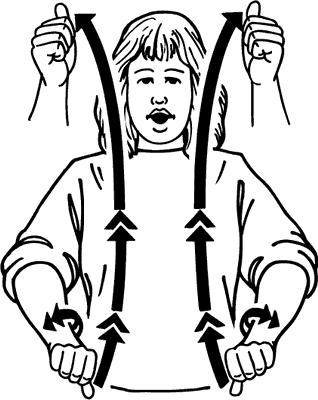
 Tawa Baptist