Confirming the covenant

Scripture: Genesis 17


Title: Confirming the Covenant


Structure:

  • Introduction
  • Confirming the covenant (1-16)

o   Naming

o   Committing

o   Circumcising

  • Abraham’s response (17-27)
  • Conclusion


Introduction:

This morning we continue our series on Abram by looking at Genesis 17

–         Last week, in chapter 16, we heard how Abram had a son (Ishmael) through Sarai’s maid servant Hagar

–         By the beginning of Genesis 17 it has been 13 years since Ishmael was born even longer since God first cut a covenant with Abram in chapter 15

–         Now, in chapter 17, God confirms his covenant

–         With the covenant encounter in Genesis 15 Abram wasn’t required to do anything, but in Genesis 17 God does require a response from Abraham


Genesis 17 is relatively long so I’m going to handle it in two parts

–         First we’ll read verses 1-16 which deal with confirming the covenant

–         And then we’ll read the rest of the chapter later which describes Abraham’s response. From verses 1-16 of Genesis 17 we read…


When Abram was ninety-nine years old, the Lord appeared to him and said, “I am God Almighty; walk before me and be blameless. I will confirm my covenant between me and you and will greatly increase your numbers.”

Abram fell facedown, and God said to him, “As for me, this is my covenant with you: You will be the father of many nations. No longer will you be called Abram; your name will be Abraham, for I have made you a father of many nations. I will make you very fruitful; I will make nations of you, and kings will come from you. I will establish my covenant as an everlasting covenant between me and you and your descendants after you for the generations to come, to be your God and the God of your descendants after you. The whole land of Canaan, where you now reside as a foreigner, I will give as an everlasting possession to you and your descendants after you; and I will be their God.”

Then God said to Abraham, “As for you, you must keep my covenant, you and your descendants after you for the generations to come. 10 This is my covenant with you and your descendants after you, the covenant you are to keep: Every male among you shall be circumcised.

11 You are to undergo circumcision, and it will be the sign of the covenant between me and you. 12 For the generations to come every male among you who is eight days old must be circumcised, including those born in your household or bought with money from a foreigner—those who are not your offspring.

13 Whether born in your household or bought with your money, they must be circumcised. My covenant in your flesh is to be an everlasting covenant. 14 Any uncircumcised male, who has not been circumcised in the flesh, will be cut off from his people; he has broken my covenant.”

15 God also said to Abraham, “As for Sarai your wife, you are no longer to call her Sarai; her name will be Sarah. 16 I will bless her and will surely give you a son by her. I will bless her so that she will be the mother of nations; kings of peoples will come from her.”


May the Spirit of Jesus illuminate this Scripture for us


Confirming the covenant:

In this reading God confirms his covenant with Abram and this confirmation involves three things: naming, committing and circumcising

–         First let us consider naming…


Naming:

In the state of Andhra Pradesh in southern India, there is an indigenous mission organisation called India Rural Evangelical Fellowship

–         It was begun in 1947 when Prasada Rao began training evangelists to go out into rural villages to preach the gospel

–         Prasada also took orphans into his home to show them the love of Christ

–         By the late 1990’s there were over 120 itinerant evangelists reaching 360 villages bringing many to Christ and planting churches

–         When these Indian believers were baptised they were often also given a new name – a Christian name

–         Many of the given names in India have a history that link the individual to the gods of their culture

–         So adopting a new name is a way of severing ties to the old life [1]

–         It’s a way of saying you are a new creation, on a new path with a new future


In verse 5 God changes Abram’s name to Abraham and in verse 15 the Lord changes Sarai’s name to Sarah

–         ‘Abram’ means ‘exalted father’ and ‘Abraham’ means ‘father of many nations’

–         ‘Sarai’ and ‘Sarah’ mean the same thing: ‘princess’

–         Perhaps the name Sarai looks back at her royal ancestry, while Sarah looks forward to her royal descendants – kings will come from her [2]

–         But the meaning of Sarah’s name isn’t as important as the fact that she is now included in the covenant – previously her role was unknown


God is renaming Sarah & Abraham because he is bringing about a new creation through them and (you will remember from Genesis 1 that) naming is one of the things God does in the act of creating

–         Their new names then are a reminder that God has severed the ties of past barrenness and given them a new future that is fruitful and blessed


Committing:

Naming is one aspect of confirming the covenant

–         Articulating the commitment is another aspect


In medieval times soldiers were sworn to allegiance by being dubbed a knight [3]

–         So becoming a knight wasn’t just a reward for service rendered it was a way of confirming loyal commitment to the king

–         The knight would get down on bended knee as a sign of his submission to the monarch

–         There were certain perks or privileges to being a knight I suppose – like enjoying a higher social status

–         But there were also responsibilities – like being obedient to your king


When God appears to Abram, in chapter 17, he begins by saying…

–         “I am God Almighty; walk before me and be blameless…”

–         ‘God Almighty’ means ‘God above all else’ or ‘God of nations’ (as our national anthem affirms)

–         Von Rad says the Hebrew word translated as ‘blameless’ here signifies wholeness of relationship and integrity rather than no sin [4]

–         I guess it’s another way of saying, “Do justly, love mercy and walk humbly with your God”

–         ‘To walk before God…’ means to orient one’s entire life toward God

–         Like when we sing ‘Jesus, be the centre…’ we are really saying we want our lives to revolve around Christ

–         God is commanding Abraham to live his life in such a way that every single step is made with reference to God

–         It’s sort of like God (the King of kings) is dubbing Abraham a loyal knight of his realm

–         And Abraham’s response is to fall facedown as a sign of his submission


For his part God commits to giving Abraham the land of Canaan and many descendants but that is more of a reiteration of things God has said on other occasions

–         At the heart of the covenant is the Lord’s commitment: I will be your God


If we think of God’s covenant like a set of Russian dolls, then the inner most doll is the Lord’s commitment to be Abraham’s God

–         I will be your God speaks of loyal relationship

–         Some of the other inner dolls include God’s promise of blessing, land and descendants but at its core God’s covenant is a relationship

–         By saying, I will be your God the Lord is offering Himself to Abraham

–         Sort of like when a couple adopt a child – they aren’t just offering to feed and house the child, they are offering themselves to that child

–         ‘I will be your father’ – ‘I will be your mother’

–         Or when a man & woman get married – they aren’t just offering a ring or a house or an income, they are offering themselves to each other

–         ‘I will be your husband’, or ‘I will be your wife’

–         I feel sad when I hear people in de-facto relationships say, ‘Oh we’re waiting until we can afford to buy a house before we get married’

–         As if financial security is an adequate foundation for marriage

–         Somewhere along the line our society has lost the idea that marriage is about giving yourself, not getting stuff


At its heart then God’s covenant is a relationship in which God offers Himself

–         God offers Himself to us most clearly in giving His Son Jesus

–         For God so loved the world that he gave his only Son that whoever believes in him would not perish but have eternal life 

–         You see, we don’t put our faith in Jesus just so we can avoid hell and get into heaven – Heaven is a perk, it’s a privilege, but it’s not the main point

–         We put our trust in Jesus so we can receive God Himself as our Father

–         Without the inner most doll of being in a loyal loving relationship with God, heaven becomes a kind of hell anyway

–         (Like being married to someone you don’t love for financial reasons)


 So confirming God’s covenant involves naming, committing & circumcising  

–         Naming – that’s about a new identity

–         Committing – that’s about loyal relationship

–         And circumcising – that’s about initiation and therefore belonging


Now we’re only talking about male circumcision here

–         Israel didn’t practice female circumcision (thankfully)

–         Male circumcision is when the foreskin of the penis is cut off

–         I don’t believe it is as harmful as female circumcision


Returning to our Russian dolls…

–         If being in relationship with God is the core of the covenant (the inner most doll), then circumcision is the sign of the covenant (the outer doll)

–         As a sign of the covenant it points to what’s inside


We might also compare circumcision to a passport

–         A passport identifies you personally and is a sign of your citizenship, it verifies where you come (or where you belong) and it gets you places

–         Without a passport you can’t get into another country

–         Without circumcision Abraham and his descendants couldn’t participate in God’s covenant


Circumcision wasn’t invented by God – it was already common practice in the ancient near east when God asked Abraham to do it

–         There were two main occasions why men might be circumcised

–         Perhaps when they got married, as a sign of entry into a new family

–         Or at puberty, as a rite of passage in becoming man

–         Both those occasions represented initiation or belonging to a new group

–         God borrowed the practice of circumcision and transformed it – giving it theological significance for Abraham and Israel so that circumcision became the sign of initiation (or entry) into God’s covenant [5]

–         Circumcision is how Israelites ‘opt-in’ to God’s covenant, in other words


God stipulated that males in Abraham’s household should be circumcised at 8 days old

–         Again we see a connection with the account of creation in Genesis 1

–         If the first seven days represent the creation of the cosmos then day eight represents the first day of a new week of creation – the creation of Israel

–         So circumcision was a ‘let there be light’ moment


The other thing we notice here is that circumcision involves cutting

–         You may remember from a couple of weeks ago, when we looked at Genesis 15, that a covenant is cut – it involves the shedding of blood

–         And in this case it is the most vulnerable part of a man that is cut

–         Having children, reproducing the next generation, has been such a big deal to Abraham and now God wants a piece of his reproductive organ

–         Wow – the symbolism is rich


As Christians we don’t need to participate in God’s covenant with Abraham

–         So guys, if you’re still in one piece down there, don’t panic – you don’t need to go cutting anything off


Jesus came to establish a new covenant for all people

–         And the sign of initiation into the new covenant is baptism (being immersed in water)

–         So our equivalent of circumcision is baptism [6]

–         Baptism is like a passport into God’s kingdom

–         In being baptised we transfer our citizenship as it were – we become aliens in this world and citizens of heaven

–         We break from the past and take on a new identity


When you are baptised as a conscious believer (or, if you come from an infant baptism tradition, when you confirm your baptism) you are essentially saying…

–         ‘Jesus I submit to you as King. No longer am I going to live my life to suit myself. I’m going to live my life to suit you.’

–         Being baptised or confirmed as a Christian is like being made a loyal knight (or dame) of Christ


Now here’s the thing…

–         These external signs of the covenant (whether it’s circumcision or baptism or confirmation) they don’t mean a thing if there’s no inner doll (no loyal relationship with God)

–         Baptism is an external ritual that is supposed to reflect an internal reality

–         If we’re only getting baptised out of conformity (because that’s what people do) then the sign is meaningless

–         Or if we get baptised just for what we can get out of it, with no intention of changing our life to suit Christ, then the passport is counterfeit

–         Whether we’ve been baptised as a baby or later in life as a believer the thing that makes our baptism effective and meaningful is having a committed loyal relationship with God (with Jesus), on the inside


To recap what we’ve covered so far, confirming God’s covenant involves naming, committing & circumcising  

–         Naming is about a new identity

–         Committing is about loyal relationship (the inner doll)

–         And circumcising – is a sign of initiation & belonging (like a passport)


Abraham’s response:

How then did Abraham respond to what God said?

–         Well, we pick up the story from verse 17 of Genesis 17…


17 Abraham fell facedown; he laughed and said to himself, “Will a son be born to a man a hundred years old? Will Sarah bear a child at the age of ninety?” 18 And Abraham said to God, “If only Ishmael might live under your blessing!”

19 Then God said, “Yes, but your wife Sarah will bear you a son, and you will call him Isaac. I will establish my covenant with him as an everlasting covenant for his descendants after him. 20 And as for Ishmael, I have heard you: I will surely bless him; I will make him fruitful and will greatly increase his numbers.

He will be the father of twelve rulers, and I will make him into a great nation. 21 But my covenant I will establish with Isaac, whom Sarah will bear to you by this time next year.” 22 When he had finished speaking with Abraham, God went up from him. 23 On that very day Abraham took his son Ishmael and all those born in his household or bought with his money, every male in his household, and circumcised them, as God told him. 24 Abraham was ninety-nine years old when he was circumcised, 25 and his son Ishmael was thirteen;


May the Spirit of Jesus illuminate this Scripture for us


One of the wonderful things about the Bible is its honesty

–         The Bible doesn’t paint an unrealistic picture of humanity

–         It tells it how it is, revealing human beings in all our complexity and imperfection


When we ask the question: how did Abraham respond to God? Genesis 17 gives us a wonderfully honest answer

–         Abraham’s response was a bit of a mixed bag

–         First he threw himself face-down in submission to God, a good start

–         But then he laughed in disbelief and suggested Ishmael as an alternative to what God had planned (not such a good follow up)


We have to remember that for the past 13 years Abraham probably thought that his son Ishmael (born to Hagar) would inherit God’s promise

–         If that’s the case it must have been a bit of shock for Abraham to hear that his hope had been misplaced all this time


Our human imperfection draws out the beauty of God’s grace

–         God doesn’t rebuke Abraham – he doesn’t withdraw his covenant because Abraham laughed in a moment of doubt


Instead God says a son will be born to Sarah and you will name him Isaac

–         The name ‘Isaac’ means ‘laughter’ – Isaac will be a source of joy to Abraham & Sarah

–         But God won’t forget Ishmael – Ishmael will be blessed too and will be fruitful, only he won’t inherit God’s covenant promises as Isaac will

–         God did in fact greatly increase Ishmael’s numbers – millions of Arabs today are descended from Ishmael


Despite an initial flicker of doubt Abraham finishes strongly, not wasting any time in obeying God

–         Abraham performs the rite of circumcision that very day on every male in his household, just as the Lord had told him

–         God is big enough to handle our doubts – what counts in the end is obedience


Conclusion:

We’ve heard today how God confirmed his covenant with Abraham and how Abraham responded to what God said

–         Confirming the covenant involves naming, committing and circumcising

–         Naming is about identity

–         Committing is about loyal relationship

–         And circumcising is about initiation, or opting into the covenant


Through Jesus, God has established a new covenant, not limited to ethnic Israel but available to anyone who is willing to receive Christ by faith

–         We opt in to this new covenant, not through circumcision, but through baptism


To those who have been baptised the question remains:

–         Is a loyal relationship with Jesus still at the centre of your life?


And to those who are yet to be baptised…

–         Are you willing to submit and commit to Jesus?


Questions for reflection or discussion:

1.)    What stands out for you in reading this Scripture and/or in listening to the sermon?

2.)    What is the significance of God renaming Abraham & Sarah?

–         What does your name mean?

3.)    What did God mean when he said to Abram, “I am God Almighty, walk before me and be blameless.”?

4.)    At the core of the covenant is God’s commitment, “I will be your God.” What does this mean? What is God offering in saying this?

–         How does God offer Himself to us today?

5.)    In what sense is circumcision (for Israel) and baptism (for us), like a passport?

6.)    What might be the symbolic significance for Israel in circumcising boys at 8 days old?

7.)    What gives circumcision (for Israel) and baptism (for us) it’s meaning?

–         What sorts of things empty circumcision and baptism of meaning?

8.)    How did Abraham respond to what God said? (vv. 17-27)

–         How does God handle Abraham’s moment of doubt?

9.)    Have you been baptised?

–         If you have, is a loyal relationship with Jesus at the centre of your life?

–         If you haven’t, are you willing to submit and commit to Christ?


https://soundcloud.com/tawabaptist/26-nov-2017-confirming-the-covenant

[1] This illustration was found in John Walton’s NIVAC Genesis, page 468

[2] Bruce Waltke, Genesis, page 262

[3] This illustration was also found in John Walton’s NIVAC Genesis, page 468

[4] Bruce Waltke, Genesis, page 259.

[5] Incidentally, keeping the Sabbath was a sign to show continued allegiance to the covenant. So you can see why the Pharisees got a bit touchy when Jesus challenged their rules around the Sabbath. From their perspective it may have seemed like Jesus was being disloyal to the covenant, when in fact Jesus had come to establish a new covenant


[6] And our equivalent of keeping the Sabbath (refer above footnote) is sharing communion
Baptism

Scripture: Mark 16:16a “Whoever believes and is baptised will be saved”


Title: Baptism


Key Idea: Baptism is where God’s grace meets our faith


Structure:

  • Introduction
  • Baptism is where God’s grace meets our faith
  • Conclusion


Introduction:

This morning Duan is being baptised

  • The word ‘baptise’ means to dip or immerse
  • There is a pool of water here at the front – we call this the ‘baptistery’
  • Duan will go into the water, make a profession of his faith in Jesus, then be immersed under the water before coming out again
  • That is the act of baptism


Baptism comes up in the New Testament quite a bit

  • John the Baptist immersed people in the Jordan river to get them ready for the coming Messiah
  • Jesus himself was baptised by John, as a sign that he had come to take away the sins of the world


Later Jesus went through another sort of baptism – not in water – but on the cross, when he was immersed in suffering

  • After his resurrection from the dead Jesus commanded his disciples to…


Go into all the world and preach the good news to all creation. Whoever believes and is baptised will be saved, but whoever does not believe will be condemned. [1]


Throughout the Book of Acts, the apostles did as Jesus instructed…

  • They preached the gospel and when people believed in Jesus the apostles baptised them


Baptism is where God’s grace meets our faith:

We could go on listing other New Testament references to baptism but the key idea I want to communicate this morning is…


Baptism is where God’s grace meets our faith


Or as Beasley-Murray puts it…

  • “Baptism is… the divinely appointed rendezvous of grace for faith.” [2]


In the New Testament the same gifts of grace are associated with faith as with baptism – so grace, faith and baptism go together

  • Baptism is a nexus point for God’s grace & our faith

Just so we are on the same page…

  • By grace we mean a multifaceted gift from God
  • A gift, by definition, is freely given – we don’t pay for it
  • So grace is unearned – it costs God but it doesn’t cost us


And faith is believing (or trusting) to the point we are prepared to act on that belief


Baptism is where God’s grace meets our faith


Let me illustrate by way of analogy

  • Imagine someone tells you that Mexted Motors are giving away cars – brand new cars at no cost
  • All you have to do is turn up at their car yard, collect the key, get in the car and drive away


Grace is being given the new car for free


And baptism is the rendezvous point for collecting the new car – that is: the yard at Mexted’s


Faith is believing that what you have been told is true and then acting on that belief by walking down to Mexted’s, collecting a key, getting in a vehicle and driving away

  • Faith is not saying, ‘I agree that Mexted’s are giving away cars’ and then sitting at home on the couch
  • Faith is acting on your belief – trusting that what you have heard is true


Baptism is where God’s grace meets our faith


Now, in many ways this is an inadequate analogy for baptism

  • We don’t just turn up to collect the goodies from God and then drive away – see you later. No
  • In baptism we become forever friends with Jesus
  • So when we get in the car (when we are baptised) the Spirit of God is already there waiting for us – ready to show us the way to go through life

Translating the analogy for you…

  • Duan has heard the gospel preached
  • He has heard the good news that God has grace – a wonderful multi-faceted gift to give away
  • And he has come to the waters of baptism in faith to receive God’s grace
  • After receiving the grace God wants to give, Duan will continue his journey through life with God


So what is this grace of God?

  • Well, firstly Duan, there’s no free car
  • And that goes for the rest of you as well
  • I don’t want anyone turning up at Mexted’s this afternoon, saying…
  • “I’ve been baptised. Where’s my free car.”


Seriously though, Jesus embodies the fullness of God’s grace

  • All the different facets of God’s grace we find in Christ
  • Jesus is God’s gift to the world for the salvation of creation


When we are baptised into Christ we receive forgiveness from sin [3]

  • And union with Christ [4]

With forgiveness God wipes our slate clean – He doesn’t hold our wrong doing against us

  • That means our guilt is removed – we’re justified & accepted before God
  • Not only are our sins forgiven – but sin also loses its power over us
  • The power of sin is death – because we are forgiven, death can’t hold us
  • And because we are justified, the accusations of the evil one won’t stick


In believers’ baptism we also receive from God union with Christ

  • Baptism is sort of like a wedding ceremony in that it unites us to Christ
  • Just as marriage is for richer or poorer, in sickness and in health, so too union with Christ is for better or worse, through thick & thin
  • Baptism doesn’t mean the end of suffering or difficulty in this life
  • But it does mean the end of trying to cope with difficulties on your own


It also means a change to our lifestyle

  • I remember when I married Robyn, I had to change my mind set
  • No longer could I think like a single man
  • Now I had to consider Robyn in everything I did
  • I needed to learn to listen to her and tell her what I was thinking & feeling
  • It’s the same with our union to Christ – we have to consider him in all our decisions – how will this affect Jesus?
  • We need to listen to him and be honest with him – we call that prayer


Union with Christ is a biggy – it comes with a number of benefits

  • For starters union with Christ gives you the Spirit of Jesus
  • The Holy Spirit is the key to everything really
  • The Spirit precedes baptism in that He leads us to Christ and makes faith & repentance possible
  • Faith is a gift from God
  • The Holy Spirit is also given in baptism [5]
  • One of the Biblical metaphors for the Holy Spirit is water
  • We are baptised in water as a sign that through our union with Christ we are being immersed in God’s Spirit
  • The Holy Spirit then follows baptism – we go on being filled with the Spirit who empowers us to live the Christian life


Union with Christ gives you the promise of resurrection

  • In Romans 6 Paul writes: Don’t you know that all of us who were baptised into Christ Jesus were baptised into his death?
  • …If we have been united with him like this in his death, we will certainly also be united with him in his resurrection. [6]


Because Jesus is God’s Son, union with Christ makes us sons & daughters of God

  • As co-heirs with Christ we will inherit God’s kingdom


And last but not least, union with Christ means we become members of the church universal

  • Duan’s baptism is not something which is done in isolation
  • It’s not just between him and God
  • Duan’s baptism is between him and God and us
  • Duan is being incorporated into Christ’s body, the church
  • So we who have been baptised are affected by this
  • We are encourageed and strengthened by it


There is much more I could say about baptism but that’s enough for today

  • The main point is: Baptism is where God’s grace meets our faith


We will now hear a testimony from Duan…


[1] Mark 16:15-16

[2] G.R. Beasley-Murray, ‘Baptism in the New Testament, page 273.

[3] Acts 2:38

[4] Galatians 3:27

[5] 1 Corinthians 12:13

[6] Romans 6:3 & 5

Israel’s Baptism

Scripture: Exodus 14:5-31

Title: Israel’s Baptism

Structure:

  • Introduction
  • Israel’s baptism
  • Moses’ leadership
  • Jesus’ identity
  • Conclusion

Introduction:

Please turn with me to Exodus chapter 14, page 72 in your pew Bibles

  • Today we continue our series on Moses
  • By this point in the story God has struck Egypt with the tenth plague – the death of the first born
  • Pharaoh has sent the Hebrew people away and they are making good their escape
  • We pick up the story from Exodus 14, verse 5…

[Read Exodus 14:5-31]


May the Spirit of Jesus illuminate this reading for us

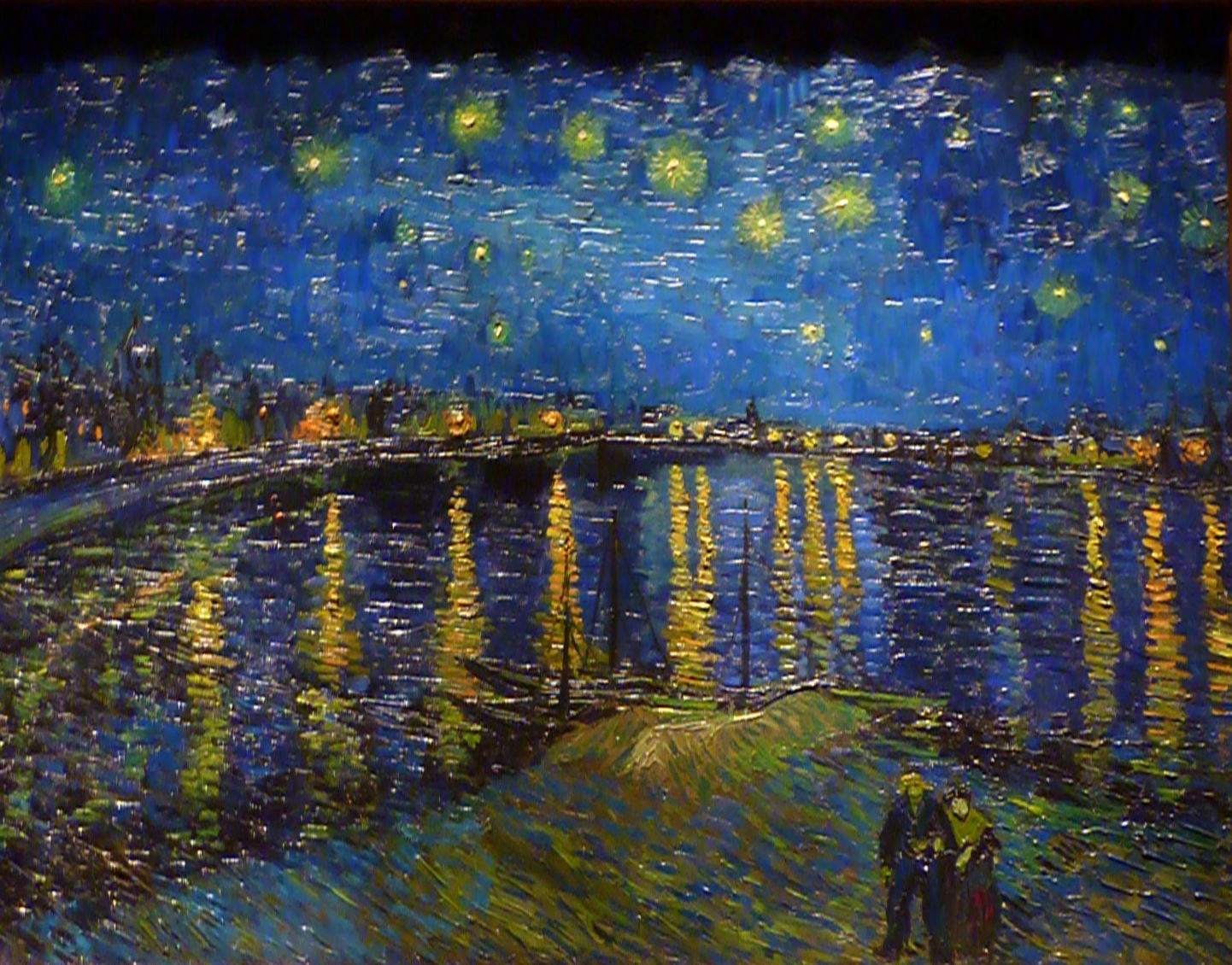
Impressionist - Starry Night


On the wall here is a painting by Vincent Van Gogh

  • Can anyone tell me what style this is painted in? [Wait]
  • Yes – that’s right, ‘Impressionist’ (or post-impressionist)

Impressionism is not interested in capturing a scene with photographic accuracy

  • Impressionism is about capturing the light and movement of a scene
  • This painting is called ‘Starry Night Over The Rhone’
  • You can see how Van Gogh is trying to give the impression of the star light reflecting on the rippling waters of the river – light and movement

Some would describe the account of Israel crossing the Red Sea as impressionistic [1]

  • It recalls a real historical event, perhaps not with photographic accuracy, but certainly in a way which conveys the light & movement of that night


We see a real movement for Israel in Exodus 14

  • Not just in the geographical sense of moving from one location to another
  • But in a spiritual sense as the people move from terror to trust – from fear of death to faith in God
  • In fact, as Christians looking back at this, we get the overall impression that Israel (as a nation) went through a kind of baptism when they passed through the Red Sea
  • This was a conversion experience, an internal change took place for them

Israel’s baptism:

Verse 8 of Exodus 14 tells us the Israelites were leaving Egypt triumphantly

  • They were full of confidence and bluster in other words

Triumphalism is the counterfeit of true faith

  • Triumphalism feels like what we imagine faith should feel like, but it actually isn’t faith

Triumphalism insulates us from reality

  • Faith exposes us to reality

Triumphalism is the advertisement

  • Faith is using the product

Triumphalism is maxing out our credit card and telling ourselves we will pay for it later

  • Faith is waiting until we can pay for it by cash

Triumphalism is telling ourselves we don’t need to prepare for exams – we just need to pray

  • Faith is studying

Triumphalism is the illusion (or the fantasy) that we cannot fail, that we are bullet proof, that we are always right and this will be easy

  • Faith is waking up from the fantasy, realising from experience that we can fail, that we are not bullet proof, that this life is difficult in practice

Triumphalism is what young men feel when they enlist in the army to go to war – “We’ll be home by Christmas”, they said

  • Faith is surviving the battle and learning respect for our enemies

Triumphalism is falling in love

  • Faith is the commitment to tough it out through the hard times

Triumphalism is what we Christians sometimes feel on a Sunday morning when we sing heroic songs to God, surrounded by people who think the same as us

  • Faith is Monday to Saturday when we are out in the world at work or school surrounded by people who think differently to us
  • Faith is also when we are at home struggling with grizzly children or at home by ourselves struggling with loneliness

We could go on but you get the point…

  • Triumphalism has no foundation – it is based on illusion
  • Faith has a firm foundation – it is based on reality

The Israelites left Egypt triumphantly, not realising their confidence had no foundation – it was based on a passing feeling

  • God was about to give them a firm foundation though – the reality of experiencing His salvation

From verse 10 of Exodus 14 we read…

When the Israelites saw the king and his army marching against them, they were terrified and cried out to the Lord for help. They said to Moses, “Weren’t there any graves in Egypt? Did you have to bring us out here in the desert to die? …It would be better to be slaves there than to die here in the desert.”


Their bubble of triumphalism has been burst

  • We shouldn’t be too hard on the Israelites though
  • Their backs were against the wall at this point
  • They were trapped between the devil and the deep blue sea
  • Or more precisely between Pharaoh’s army and the Red Sea
  • So they had good reason to panic

In that moment of terror, as they feared for their lives, and all trace of triumphalism had been drained from their hearts – it probably felt like they were a long way from faith

  • But in actual fact, the Israelites were closer to faith when they were scared than they were when they left Egypt triumphantly
  • The terror of the Egyptian army purged the Hebrew people of all illusion
  • The reality of their mortality wiped the slate clean to make room for faith
  • Fear is like a wind which blows the fog of fantasy away

You see, it is our thirst which makes us drink

  • It is our need which brings us to God
  • And it can be fear which brings us to our senses, clearing the way for faith

At God’s command Moses raised his hand and the Lord parted the sea so the people could walk through

  • Their walking through the sea was an act of faith
  • Faith isn’t just what we say we believe in the safety of church
  • Faith is what we do both in the ordinary moments of our lives and in those moments of utter desperation
  • Through the night the nation of Israel made its way on dry ground while God held back the water and the Egyptians

At the end of chapter 14, when the Israelites have made it through safely to the other side and they see the Egyptians lying dead on the seashore, we read how they [the Hebrew people] had faith in the Lord

  • The experience of God’s salvation has changed the Israelites
  • An internal shift has taken place within them
  • God has taken Israel from triumphalism through terror to trust
  • He has brought them from fantasy through fear to faith
  • The past is dead on the seashore – the future is open before them

It’s not that their faith is made perfect yet – baptism is just a beginning – the people still have a long way to go before they reach the Promised Land

  • But it is a start – the experience of God’s salvation has given Israel foundation for their faith

Okay, having heard about Israel’s baptism into faith, let’s now consider Moses’ leadership in this situation…


Moses’ leadership:

Although Moses is Israel’s leader, verse 31 describes him as The Lord’s servant

  • Moses is the original servant leader
  • Moses does not exercise leadership for his own benefit, as Pharaoh did
  • Moses exercises leadership in service to God’s agenda
  • He takes his direction from God and the people follow Moses
  • This serves both God’s purpose and the well-being of the people

One of the qualities required of leaders – and particularly of servant leaders – is differentiation

Differentiation is a term coined by the psychologist Murray Bowen

  • ‘Differentiation’ refers to a person’s capacity to “define his or her own life’s goals and values apart from the pressures of those around them” [2]

To put it another way, ‘differentiation’ is the ability to hold on to yourself, while staying connected to others

  • Holding on to yourself means holding on to who you are
  • Holding on to your beliefs and values – your integrity
  • Sticking to what you know is right and not being too easily swayed by other people’s feelings or opinions
  • Staying true to yourself, in other words

People who can differentiate in their relationships are able to stay calm, manage their anxiety and avoid blaming other people 

Rudyard Kipling has a famous poem – the opening lines of which describe differentiation. It goes like this…

If you can keep your head when all about you

Are losing theirs and blaming it on you,

If you can trust yourself when all men doubt you,

But make allowance for their doubting too;

If you can wait and not be tired by waiting,

Or being lied about, don’t deal in lies,

Or being hated, don’t give way to hating…

                                  …you’ll be a man, my son!


Good leadership requires the emotional intelligence to differentiate – to hold onto yourself like this

Now this concept of differentiation or ‘holding onto yourself’ is not new – it’s been around for thousands of years

  • When our core beliefs and values (our true self) is informed by God, differentiation goes by the term: ‘Fear of the Lord’
  • “The fear of the Lord is the beginning of wisdom”
  • It sets you free from the fear of lesser things – like the fear of man

To fear the Lord is to not be swayed by the opinion of others

  • So when people think you are a bit simple for believing in God
  • When they say that science is the answer to everything
  • And that religion is the opiate of the people
  • You don’t go along with that – you hold onto yourself
  • You stick to what you believe in your heart – that God is real and that one day, every knee shall bow and every tongue confess that Jesus is Lord
  • But you’re not offended either – you don’t just walk away
  • You simply smile & ask them what they believe & quietly pray for them

To fear the Lord is to stay calm in a crisis, even when people are saying the crisis is your fault

  • So when the boss is swearing at you at work because things didn’t go well that day
  • Or you are the boss and your team is not talking to you because you had to make a hard decision that they can’t understand
  • Or you’re at home and your kids are telling you it’s not fair and you’re the worst parent in the world
  • Or you’re on the sports field and some clown is yelling at you from the side lines because they are frustrated with their own lives
  • In those situations, to fear the Lord, means remembering that God is your judge – no one else
  • Not your boss, not your teacher, not your work mates, not your parents, not your children and certainly not the random armchair critics

Fear of the Lord, in the specific sense of remembering that God is our judge, enables us to hold onto our perspective and not take the criticism personally

  • It helps us to turn the other cheek and stay in the conversation
  • To listen without reacting and to communicate without antagonising

Differentiation, fear of the Lord, holding on to yourself, whatever you want to call it – if you can do that, you have the makings of a servant leader

Moses could do that

  • In verses 10-14 Moses demonstrates a high level of differentiation
  • Moses holds onto himself under extreme pressure

The entire Egyptian army is bearing down on them

  • They have nowhere to run and Moses has brought them to this cul-de-sac of death
  • Over a million people are terrified and blaming him saying things like…
  • “Did you have to bring us out here in the desert to die? Didn’t we tell you this would happen?”

And how does Moses respond?

  • With a message of good news
  • He doesn’t get angry with the people
  • He doesn’t turn the blame back on them or give in to their fear
  • Nor does he walk away

Moses holds onto himself, while staying connected to the people

  • He keeps his perspective and he sticks to what he believes, saying…
  • Do not be afraid
  • Stand your ground
  • You will see God’s salvation

Stay calm – be still – wait for God

This is not triumphalism – this is an invitation to faith

For Moses to respond in this way (with a message of good news), under these circumstances, required a high level of differentiation

  • Moses feared the Lord, more than he did the Red Sea or the Egyptians
  • Moses was more concerned about God’s opinion than he was the opinion of the people
  • Moses was able to define and differentiate what he believed & felt from what the people believed & felt
  • And he was able to hold onto his personal conviction without letting go of his connection with the people
  • So he was not swamped or knocked over by the tidal wave of criticism coming his way

As I said earlier, the experience of God’s salvation changed the Israelites

  • Verse 31 again, When the Israelites saw the great power with which the Lord had defeated the Egyptians, they feared the Lord
  • In other words, they began to learn to differentiate
  • They began to learn to hold onto themselves
  • Or, as Terence Fretheim puts it…
  • “Israel’s perspective will now be shaped by what God does, not by what the Egyptians do…”  [3]

It’s fair to say that, at this point, Israel has not mastered differentiation by any means – but it is a start

  • By saving Israel, God has strengthened the nation’s identity as His people

Jesus’ identity:

Strength of identity is key when it comes to holding onto ourselves

  • Those who have a clear understanding of who they are and who they are not, are less likely to lose their shape or identity around others

Jesus had a strong sense of identity – He knew in His heart of hearts (through & through) that He was God’s Son

After His baptism in the Jordan River, by John the Baptiser, God said of Jesus,

  • “This is my own dear Son with whom I am pleased” [4]
  • With this clear sense of identity Jesus was able to differentiate – to hold onto Himself throughout His ministry

So when the Devil tempted Jesus in the wilderness saying, ‘If you are the Son of God’, do this, that and the other thing [5]

  • Jesus was able to refuse, saying in effect…
  • ‘I have nothing to prove. I am not defined by what I do or what I own or what other people think of me. I am defined by God.’

Jesus held onto Himself in His confrontations with the religious leaders too

  • Like when He broke their man-made traditions by healing on the Sabbath
  • Or when He stood up for a woman caught in adultery [6]

Sticking to your principles in the face of an enemy is one thing but, in many ways, differentiation is more difficult when it comes to family & friends…

Like when Jesus’ mother and siblings came to take charge of Him – to bring Him home with them – because they doubted Him

  • Jesus was able to stay true to God’s purpose for Him and say,
  • ‘Anyone who does the will of my Father in heaven is my brother, my sister, and my mother’ [7]
  • Sometimes our family make it hard for us to leave home – but Jesus feared God more than His mum

He also feared God more than His friends – like when Jesus predicted His own death & resurrection and Peter took Jesus aside to rebuke Him

  • Jesus defined His purpose as different from Peter’s purpose, saying…
  • ‘Get away from me Satan… These thoughts of yours don’t come from God, but from man.’ [8]

We could go on but you get the point…

  • Jesus had a strong sense of identity grounded in His relationship with God
  • And from this firm foundation he had a tremendous capacity to stay true to God’s purpose for Him through all kinds of circumstances

Conclusion:

Differentiation, fear of the Lord, holding on to yourself, whatever you want to call it – it’s difficult to learn

  • None of us are quite at the level of Moses or Jesus (least of all me)
  • But that’s okay – we are all on a journey with this stuff
  • We don’t need to beat ourselves up about not being perfect
  • We do need to know that God’s grace is sufficient for us
  • And we also need to know what we’re aiming for

The temptation for us may be to try and manufacture our own identity…

  • Perhaps by what we do in racking up a long list of achievements,
  • Or by what we accumulate in terms of possessions,
  • Or maybe by pretending to be what we are not

Authentic identity cannot be manufactured

  • It can only be received as a gift from God

By the experience of God’s salvation the Israelites learned to fear the Lord and to trust Him as well

  • And through this process their identity as the people of God was strengthened

By the experience of Christ’s salvation of us we learn to fear the Lord and trust Him as well

  • And through this process our identity as members of the body of Christ is formed

Let us pray…

[1] For example, Terence Fretheim in his commentary on Exodus, page 158

[2] Quoted in Peter Scazzero’s book, ‘Emotionally Heathy Spirituality’, page 82

[3] Terence Fretheim, Exodus, page 156

[4] Matthew 3:13-17

[5] Matthew 4:1-11

[6] John 8:1-11

[7] Matthew 12:46-50

[8] Matthew 16:21-28