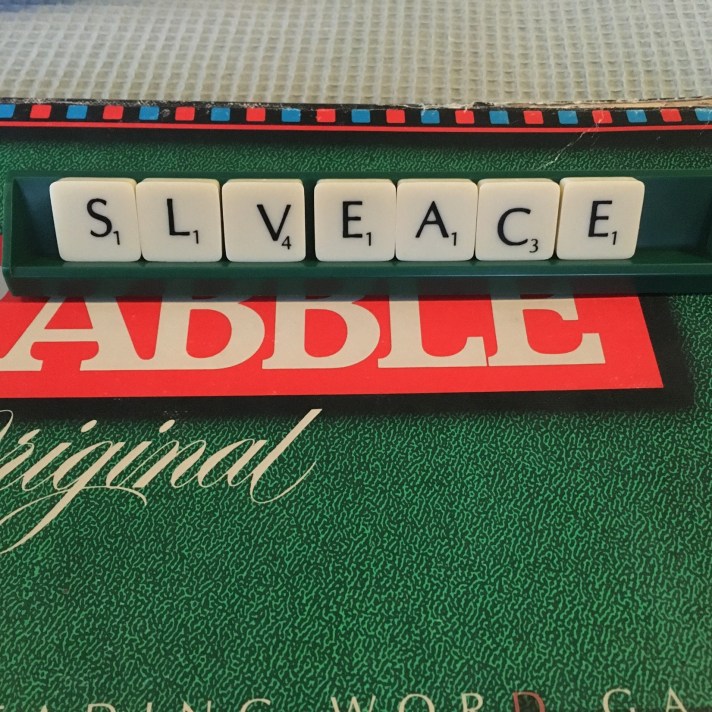
Absalom

Scriptures: Second Samuel 15-18, Psalms 3 & 63

Video Link: https://youtu.be/rIG7o5p1DRg

Structure:

  • Introduction
  • Absalom’s plot
  • David’s retreat
  • The Lord’s hand
  • Conclusion

Introduction:

Good morning everyone.

On the wall here is a painting of Narcissus. In Greek mythology, Narcissus was distinguished for his beauty. A prophet told Narcissus’ mother that her son would live a long life provided he never recognised himself.

Sadly, Narcissus fell in love with his own reflection in the waters of a spring and that was the beginning of the end for him. The flower that bears his name sprang up where he died.  

These days the term narcissism is used to describe someone who has an excessive amount of self-esteem or who admires themselves too much.

A couple of months ago we started a sermon series on hair and hairy people in the Bible. We heard about Esau, Samson and Samuel. Then we took a few weeks break to focus on other things. Today we return to our hair series by looking at Absalom, the third son of king David. Absalom was a narcissist. He fancied himself a little too much.

For those who are familiar with the Marvel universe, Samson is like the Hulk, Samuel is like a hairy Vision and Absalom is like Loki. In case you don’t know, Loki is a prince of Asgard and the brother of Thor. Loki is charming, good looking and intelligent but also a master manipulator and a deceiver. Wherever he goes destruction and grief follow. Absalom (like Loki) is vain and narcissistic; always looking for a way to promote himself.

Absalom’s plot:

This is how Second Samuel 14:25-26 describes Absalom…   

There was no one in Israel as famous for his good looks as Absalom; he had no defect from head to toe. His hair was very thick, and he had to cut it once a year, when it grew too long and heavy. It would weigh about five pounds according to the royal standard of weights.

I don’t know anyone who goes to the trouble of weighing their hair, but apparently Absalom did.

Please turn with me to Second Samuel chapter 15, page 315 toward the front of your pew Bibles. Although Absalom’s story starts in Second Samuel 13, we are picking up the narrative from chapter 15, where Absalom plots to steal the throne from his father David. From chapter 15, verse 1, we read…

After this, Absalom provided a chariot and horses for himself, and an escort of fifty men. He would get up early and go and stand by the road at the city gate. Whenever someone came there with a dispute that he wanted the king to settle, Absalom would call him over and ask him where he was from. And after the man had told him what tribe he was from, Absalom would say, “Look, the law is on your side, but there is no representative of the king to hear your case.” And he would add, “How I wish I were a judge! Then anyone who had a dispute or a claim could come to me, and I would give him justice.” When the man would approach Absalom to bow down before him, Absalom would reach out, take hold of him, and kiss him. Absalom did this with every Israelite who came to the king for judgment, and so he won their loyalty.

May the Spirit of Jesus illuminate God’s word for us.

This passage gives us a picture of Absalom’s character. Absalom fancies himself as king. Even though he is next in line to inherit the throne anyway, Absalom is not willing to wait for his father to die. Like the prodigal son, in Jesus’ parable, Absalom wants his inheritance now.

Not only does Absalom dishonour his father in the worst possible way, he fails to consider God in this situation. He can’t. His ego has left no room for God.

In ancient Israel it was the king’s job to dispense justice and settle disputes. Was king David doing this adequately? Some people did not think so. Absalom used this to his advantage, offering himself as an alternative candidate for king.

They say in politics, ‘perception is reality’. Absalom goes out of his way to cultivate a favourable perception of himself at the expense of his father.

Absalom implies that David is failing in his administration of justice. He sympathizes with the people without actually doing anything constructive to help them. It is all smoke and mirrors.

Absalom is completely beguiled by his own image. He works hard at stealing the people’s hearts for four years. Then, using the cloak of worship to hide his true motives, Absalom asks David’s permission to go to Hebron to make some sacrifices. Offering sacrifices is supposed to be about expressing love for God. But Absalom is in love with himself. God is not on his radar.

On his way to Hebron, Absalom sends messengers throughout the towns of Israel to proclaim he is king. Then Absalom sends for Ahithophel, one of the king’s advisors. Up to that point Ahithophel had served David. He was highly regarded for his wise advice. But Ahithophel switched allegiances and backed Absalom. 

David’s retreat:

When king David learned that public perception was against him and the loyalty of the people was with Absalom, David left the palace in Jerusalem with his family and his officials.

Verse 30 of Second Samuel 15 says that David went up the Mount of Olives weeping; he was barefoot and had his head covered as a sign of grief. This reminds us of Jesus on the Mount of Olives, weeping and praying in great anguish the night of his betrayal and arrest. But while David was leaving Jerusalem to save his life, Jesus came to Jerusalem to die.

It is a strange thing that when life is relatively easy for David, he tends to make poor choices and show a lack of moral fibre. It was when he was comfortably installed in his palace that David committed adultery with Bathsheba and plotted to have Uriah killed in battle.

But when life is tough and David is forced out of his comfort zone and into the wilderness, this seems to bring the best out of him. Some of David’s best poetry was written when he was on the run, first from king Saul and then later from and his son Absalom.

It is thought that David wrote Psalm 63 while in the wilderness because of Absalom. In verse 1 of Psalm 63 David says: “O God, you are my God, and I long for you. My whole being desires you; like a dry, worn-out, and waterless land, my soul is thirsty for you.” Unlike Absalom, who was proud and yearned for power and applause, David longs for the Lord his God.

Likewise, David was at his most gracious when people were treating him with gross injustice. Like a light that shines brightest when the night is darkest, so too David’s goodness is most evident when the odds are stacked against him.

As David leaves Jerusalem, grief stricken, he has a series of encounters with various individuals and each encounter reveals David’s generosity of spirit, his wisdom and his faith in God.

David’s first conversation is with a man named Ittai. Ittai is a foreigner, a Gentile refugee who has only just found his place in the land of Israel. Unlike Absalom, who is completely absorbed with himself, David thinks of others. In particular, David considers for Ittai’s well-being. David does not want Ittai to become a refugee all over again, so he gives Ittai the option of leaving to save his own skin.

But Ittai binds himself to David with an oath saying, Your majesty, I swear to you in the Lord’s name that I will always go with you wherever you go, even if it means death. We are reminded of Ruth (the Moabite) who pledged her loyalty (her hesed) to Naomi.

It is somewhat ironic that foreigners, in the Bible, often have more faith in the God of Israel and his chosen king than the Lord’s own people do. We are mindful of the Roman centurion of whom Jesus said, I have not seen faith like this in all of Israel.  

The next encounter David has is with the priests, Zadok & Abiathar. They are loyal to David and have brought the Covenant box with them in support of David. The Covenant box was a symbol of God’s presence.

But David says to them, Take the Covenant box back to the city. If the Lord is pleased with me, some day he will let me come back to see it and the place where it stays. But if he isn’t pleased with me – well then, let him do to me what he wishes.

Again we see the contrast between David and Absalom here. Absalom is quite prepared to use the cloak of religion to mask his true intent and make himself look good in the eyes of others. But David will not misuse God in that way. David is well aware that he is not perfect and makes no pretence of it.

David knows that God withdrew divine support for king Saul after Saul disobeyed. David is perhaps conscious of his failing with Bathsheba and does not presume upon God’s grace. David has the faith to let God be God.

David also has the faith to believe that God is not a prisoner of the Covenant box. God is more than able to be present with David in the wilderness, with or without a religious artefact.

This is not to imply that David’s trust equates to mindless resignation. David is not being fatalistic. He’s not throwing the dice and letting luck decide. David sends the priests back to Jerusalem asking them to be his informers. So there is strategy in sending Zadok & Abiathar back with the Covenant box.

There is a saying which is attributed to Oliver Cromwell: Trust in God and keep your powder dry. The powder here is gunpowder. Trusting in God does not mean folding your hands and doing nothing. Trusting God goes hand in hand with being prepared. David trusts in God and he keeps his powder dry. David is prepared.

In Matthew 10:16, Jesus said his disciples: “I am sending you out like sheep among wolves. Therefore, be as wise as serpents and as innocent as doves.”

We see David’s wisdom and innocence in the request he makes of Hushai. Hushai is a royal advisor, similar to Ahithophel, except Hushai is loyal to David. The king tells Hushai to go to Absalom and pretend he has defected.

Once Hushai has gained Absalom’s confidence, he is to muddy the waters and mislead Absalom with advice that will give David an advantage. Hushai returns to Jerusalem just as Absalom is arriving to make himself king. Hushai proves to be as wise as a serpent and as innocent as a dove.  

Not everyone was so friendly though. After David has travelled a bit further toward the Jordan river, he meets one of Saul’s relatives, a man named Shimei. When Shimei sees David he curses the king and starts throwing stones at him.

Shimei criticizes David saying: You took Saul’s kingdom and now the Lord is punishing you for murdering so many of Saul’s family. The Lord has given the kingdom to your son Absalom and you are ruined, you murderer.

In actual fact David did not murder Saul’s family and he did not take Saul’s kingdom. The kingdom belongs to God and the Lord chose David to replace Saul as king. And, even though David had more than one opportunity to kill Saul, David refused to lift a hand against the Lord’s anointed.

Although Shimei is misinformed of the details, his words do strike a chord of truth. David did effectively arrange for Bathsheba’s husband, Uriah, to be murdered. David is not guilty of crimes against Saul’s family but he does have blood on his hands and he knows it.

Some of David’s men wanted to cut Shimei’s head off but David would not let them.

David said to his men: “My own son is trying to kill me; so why should you be surprised at this Benjaminite? The Lord told him to curse; so leave him alone and let him do it. Perhaps the Lord will notice my miseryand give me some blessings to take the place of his curse.”         

Once again we see David’s wisdom and faith revealed under extreme pressure.

David is theological in his response and this helps him keep his perspective. My own son is trying to kill me, he says. That’s the more important issue to deal with at the moment. Shimei is the least of my worries.

David remembers the sovereignty of God. David believes that ultimately God is in control, not Shimei. Perhaps Shimei is doing God’s work. If that is the case, then David cannot argue with God. David knows he is a murderer and on some level recognises that he deserves the criticism, even if Shimei has the details wrong.

David believes that God is both just and merciful. To the extent that Shimei is too heavy handed in his abuse of David, the Lord can make that right by blessing David. David shows incredible trust in the goodness of God here.

David’s response to Shimei is wise. If he were to kill Shimei it would only prove Shimei’s point. By showing mercy to Shimei, David provides evidence that Shimei has no case.      

In his poem, The Divided World, Owen Marshal writes this wonderfully witty line: The world is divided between those who would try themselves and those who seek a less corrupt judge.

The point is, we should not judge ourselves because we have an inherent conflict of interest. We cannot be relied upon to give a fair verdict.

Absalom judged himself to be a better king than his father. David refused to judge himself. David left the matter in God’s hands, for God knows better and is completely fair in his judgements. As it turned out, God vindicated David and afterwards Shimei apologised to David.

You know, sometimes people make criticisms of us and it hurts, especially if what they are saying is not all that accurate. No one enjoys being misunderstood or misrepresented. In that situation we need to be as wise as serpents and as innocent as doves.

The temptation is to react in the heat of the moment. We do well to take some time to consider our response. Maybe God is trying to say something to us through that person. What is the kernel of truth in what they are saying and what is the husk that we can discard?

Perhaps, like David, the wisest thing is to say nothing. Don’t major on the minors and leave the matter in God’s hands. Or it may be better, both for your own soul and for the other person, to speak your truth and put their ignorance to the sword of reason and fact.  

So far we have heard about Absalom’s narcissistic plot and David’s wise retreat. Also woven through this narrative is the Lord’s providential hand.

God is at work to achieve his purpose quietly and unobtrusively through human beings. The war with Absalom is won as much behind the scenes as it is on the battlefield. 

The Lord’s hand:

When Absalom entered Jerusalem to take David’s throne, Hushai (David’s double agent) greeted Absalom with the words, ‘Long live the king’. This is a wonderfully ambiguous greeting. Who is Hushai referring to as king, David or Absalom?

We, the reader know that Hushai is backing David as king, but Absalom is vain enough to assume that Hushai is referring to him as king. Hushai is as wise as a serpent and as innocent as a dove. 

When Absalom questions Hushai’s loyalty, Hushai responds with another ambiguous remark, I am on the side of the one chosen by the Lord…

Absalom’s ego does not allow him to imagine that God would choose anyone else to be king but Absalom himself. Absalom thinks he is God’s gift.

Not long after Absalom has made himself at home in David’s palace, Ahithophel (the wise advisor who turned against David) proposed a way ahead for Absalom. From verse 1 of chapter 17 we hear Ahithophel’s plan…

“Let me choose twelve thousand men, and tonight I will set out after David. I will attack him while he is tired and discouraged. He will be frightened, and all his men will run away. I will kill only the king and then bring back all his men to you, like a bride returning to her husband. You want to kill only one man;the rest of the people will be safe.”

From a strategic point of view this was actually really good advice. It is full of common sense and would probably have worked, except for the Lord’s providential hand. God had not chosen Absalom to be king. God was still with David. The Lord used Hushai (David’s plant) to throw a spanner in the works.

It appears that God robbed Absalom of common sense in this moment so that Absalom asked Hushai for a second opinion. Hushai (who was really there to help David) answered…

“The advice Ahithophel gave you this time is no good. You know that your father David and his men are hard fighters and that they are as fierce as a mother bear robbed of her cubs. Your father is an experienced soldier and does not stay with his men at night. Right now he is probably hiding in a cave or some other place. As soon as David attacks your men, whoever hears about it will say that your men have been defeated. 10 Then even the bravest men, as fearless as lions, will be afraid because everyone in Israel knows that your father is a great soldier and that his men are hard fighters. 11 My advice is that you bring all the Israelites together from one end of the country to the other, as many as the grains of sand on the seashore, and that you lead them personally in battle. 12 We will find David wherever he is, and attack him before he knows what’s happening. Neither he nor any of his men will survive. 13 If he retreats into a city, our people will all bring ropes and just pull the cityinto the valley below. Not a single stone will be left there on top of the hill.”   

Hushai’s plan is not as good as Ahithophel’s clever strategy. Hushai’s plan buys David time to get organised and it puts Absalom in danger. But the grandness and glory of Hushai’s plan appeals to Absalom’s ego, so that Absalom overlooks the practical realities involved. God makes sure Absalom swallows the bait; hook, line and sinker.

Once Absalom decides to go with Hushai’s plan of attack, the priests who are loyal to David get word to their king in the wilderness, who then organises his troops in anticipation of Absalom’s onslaught.

From verse 6 of chapter 18 we read what happened…

David’s army went out into the countryside and fought the Israelites in Ephraim Forest. The Israelites were defeated by David’s men; it was a terrible defeat, with twenty thousand men killed that day. The fighting spread over the countryside, and more men died in the forest than were killed in battle.

David’s men were outnumbered and yet they still won. Those of you who are fans of The Lord of the Rings may remember how the trees of the forest fought with the Hobbits against the Orcs. Verse 8 tells us more men died in the forest than were killed in battle. Even the forest was on David’s side. This is another sign of the Lord’s providential hand.

This civil war was such a tragedy. It didn’t need to happen and probably wouldn’t have happened except for Absalom’s narcissism. Nevertheless, God is sovereign. Yes, he gives human beings a certain amount of freedom but that freedom always has it limits. God won’t let things get too out of control. The hand of the Lord made sure Absalom didn’t get away with the havoc he had caused.     

From verse 9 of Second Samuel 18 we read…

Suddenly Absalom met some of David’s men. Absalom was riding a mule, and as it went under a large oak tree, Absalom’s head got caught in the branches. The mule ran on and Absalom was left hanging in mid-air.

How ironic is that? Absalom’s long beautiful hair got him tangled in the branches of a tree, so that he was held in limbo, between heaven and earth. It must have been painful and terrifying for him to be held there powerless like that.

Walter Brueggemann puts it like this: Absalom is suspended between life and death, between the sentence of a rebel and the value of a son, between the severity of the king and the yearning of a father. [1]

David did not want his son harmed. As a parent you are never so vulnerable as with your kids. But when Joab (one of David’s generals) heard about it, he killed Absalom and buried him in the forest. If we want to find some redemption in this story, we have to look to the gospel of Jesus.

Conclusion:

I don’t imagine anyone here is quite as bad as Absalom was but that is only by the grace of God and a lack of opportunity. Everyone has at least a bit of Absalom in them. You might not think you do but neither did Absalom.

The truth is, each of us has rebelled against God’s chosen King, against Jesus. Each of us have taken matters into our own hands and tried to usurp God’s authority in our lives. Each of us, in this world, is suspended between eternal life and death. Each of us deserves the sentence of a traitor and yet we are valued as God’s sons and daughters.   

The gospel tells us that Jesus, God’s chosen King, died on a cross in our place, suspended between heaven and earth. And nailed to that cross was Absalom’s narcissism and ours. The good news is that through faith in Jesus’ death & resurrection we are set free from the tyranny of pride and the futility of vanity. We are set free to glorify God and enjoy him forever. 

May God satisfy the longing of your soul with his presence.  

Questions for discussion or reflection:

What stands out for you in reading these Scriptures and/or in listening to the sermon? Why do you think this stood out to you?

  • Why do you think Absalom wanted to usurp David as king of Israel? Have you ever wanted to be king?
  • How do you imagine David felt when he learned of Absalom’s plot?  Have you ever felt this way? How did you handle yourself in that situation? 
  • In what ways does David’s experience and conduct, in Second Samuel 15 & 16, remind us of Jesus?
  • What can we learn from David’s response to Shimei’s abuse? When is it right to remain silent in the face of insult (as David did) and when is it better to speak our truth?
  • What did it mean for David and his loyalists to be as wise as serpents and as innocent as doves? What does it mean for us today (as people loyal to Jesus) to be as wise as serpents and as innocent as doves?
  • In what ways do we see the Lord’s providential hand at work to ensure David remains king? In what ways are you aware of God’s hand for good in your life?
  • Take some time this week to read either Psalm 3 or Psalm 63 and reflect on these songs in light of David’s experience in the wilderness as he fled from Absalom.  What (or who) do you long for? Consider the ways God is present with and for you and give thanks to him. 

[1] Refer Walter Brueggemann’s Interpretation Commentary on First and Second Samuel, page 313. 

Gospel Renewal

Scriptures: 1st Corinthians 12:12-13, 2nd Samuel 21, Revelation 21:1-5,

Mark 2:1-12, John 15:5, John 4:22-24, Acts 2:43-47, Matthew 5:14-16.

Video Link: https://youtu.be/WS4tjOIcTks

Structure

  • Introduction
  • Collective of faith communities
  • Bringing gospel renewal
  • In local neighbourhoods
  • Conclusion

Introduction:

Good morning everyone.

Did you know there are typically around 210 bones in the human body, give or take? Although babies have a few more. Most of those 200 plus bones are small, in the hands and feet. The femur (in the top part of your leg) is the largest bone in your body and the stapes (in your middle ear) is the smallest bone.

All the bones serve an important purpose. The stapes may wish it were bigger (like the femur) but if it were, we wouldn’t be able to hear properly. In 1st Corinthians 12, the apostle Paul tells us…

12 Christ is like a single body, which has many parts; it is still one body, even though it is made up of different parts. 13 In the same way, all of us, whether Jews or Gentiles, whether slaves or free, have been baptized into the one body by the same Spirit, and we have all been given the one Spirit to drink.   

This morning our message focuses on the bones (or structure) of the body of Baptist churches in New Zealand.

Charles Hewlett, the national leader of the Baptist Union, describes our movement like this…

The Baptist Union is a collective of faith communities, bringing gospel renewal to people and places, in their local neighbourhoods. 

There are three main parts to that statement. So what do we mean by the first part, a collective of faith communities?

A collective of faith communities:

Well, there are currently 240 Baptist churches throughout New Zealand, and another 10 overseas. Each of these churches is different. We are genuinely diverse. The Baptist Union is not a franchise. It’s not like going to McDonalds or KFC where you know you will get the same recipe wherever you are in the country.

Some Baptist churches are more charismatic than others. Some have a focus on personal evangelism and some lean more towards social justice, while others combine both. Some churches are predominantly European while others are more ethnically diverse.   

Although Baptist churches are diverse, they are not completely independent or autonomous. Baptists believe in the principle of association and that’s where the idea of being a network or collective of churches comes in.

In addition to the Holy Spirit, there are a number of things that keep these 250 Baptist churches connected. We could call these things ‘Baptist Union glue’.

  • Baptist beliefs – DNA
  • Assembly Council / Hui – governance
  • National Resource Centre – admin support
  • Regional Associations – local support
  • NZBMS – overseas mission arm
  • Carey Baptist College – training seminary
  • Christian Savings – Baptist bank

Firstly, to be part of the Baptist Union, a local church must agree to the four main Baptist beliefs. I spoke about these a couple of months ago: freedom of conscience, congregational government, the authority of Scripture and believers’ baptism. These are the DNA of the Baptist movement.    

The Baptist Union also has a governing board called Assembly Council. Assembly Council have a policy development role and they ensure the National Resource Centre are implementing effective management procedures. 

The Assembly Council are elected at what is now called the Hui. Hui is a Maori word which means meeting or gathering. Baptist Hui is basically the AGM for the Baptist Union. Delegates from Baptist churches attend hui to network and vote and to hear a broader perspective on various issues.

In addition to the National Hui, there are also Regional Hui that happen from time to time.

One of the things that keeps coming up consistently at various Hui is the Baptist Union’s desire to relate well with Maori and to honour our commitments under the Treaty of Waitangi. There is a genuine effort to incorporate Tikanga Maori when we gather. In practical terms this means having Powhiri and Poroporoaki and other protocols.

Some people may wonder why the Treaty of Waitangi is important. Why should a document signed in 1840 still hold sway over us today? Something shared at the Regional Hui in June was helpful.

In 2nd Samuel 21 we read there was a famine in the land of Israel, for three years in a row. King David sought the Lord about this and the Lord said it was because Saul broke the Treaty with the Gibeonites. Now David did not make this Treaty with the Gibeonites, Joshua did. Nor did David break the Treaty, Saul did. And yet God still required David to keep the Treaty.

Can you see the parallel? None of us here signed the Treaty of Waitangi and most of us probably don’t feel like we (personally) broke it, but God still requires us to honour the Treaty with Maori. We seek to honour the Treaty because God is a faithful covenant keeping God and it is the right thing to do.        

The National Resource Centre, based in Auckland, is also part of the glue that holds the Baptist Union together. The National Resource Centre provides administrative support for Baptist churches around the country.

Eight Regional Associations also operate around the country, providing more grass roots support to local churches and pastors.

The New Zealand Baptist Missionary Society (NZBMS) is our overseas mission arm. We take up the annual Self Denial appeal to support our Baptist missionaries.

Carey Baptist College is our training seminary for pastors and missionaries.

And Christian Savings is like a Baptist bank. They lend money to churches for building projects.

So that gives you a bit of an overview of the bones (or structure) of the Baptist Union. That is how the collective of 250 New Zealand Baptist churches are connected.

Bringing gospel renewal:

What about the second part of that sentence describing the Baptist Union? What does it mean to bring gospel renewal to people and places? Well, this phrase is really talking about how we see our mission or our purpose in this world.

The Greek word translated as gospel literally means ‘good news’. If you see a sign saying that New World has a discount on chocolate, that is good news. That is a gospel message in the broader sense.

Of course, the gospel message in view here is not to do with chocolate but with Jesus. The Christian gospel is the good news that Jesus is Lord. Jesus is the King and he has come to save the world.

Interestingly, the Maori word for gospel is Rongo pai. Rongo means to hear or to listen and pai means good (as in ka pai). There’s a lovely poetry to it.

In the book of Revelation, chapter 21, the apostle John describes the gospel vision he received. This is the ultimate reality Jesus brings about…

Then I saw “a new heaven and a new earth,”for the first heaven and the first earth had passed away, and there was no longer any sea. I saw the Holy City, the new Jerusalem, coming down out of heaven from God, prepared as a bride beautifully dressed for her husband. And I heard a loud voice from the throne saying, “Look! God’s dwelling place is now among the people, and he will dwell with them. They will be his people, and God himself will be with them and be their God. ‘He will wipe every tear from their eyes. There will be no more death’or mourning or crying or pain, for the old order of things has passed away.”

He who was seated on the throne said, “I am making everything new!” 

In John’s vision heaven comes to earth. God himself comes to live with us.

The good news is that Jesus, the King, has come to make all things new.

During his earthly ministry Jesus indicated the newness he came to bring in many ways. Through healing people who were sick, through setting people free from evil spirits, by granting a pardon for sins, by challenging systems and institutions that had become corrupt and by giving people a new perspective on God and his Law.

In Mark chapter 2 we come across one such story of gospel renewal. Jesus was in Capernaum. So many people came to see him there wasn’t enough room in the house. Four men arrived carrying their friend on a mat. They couldn’t get through the door so they dug a hole in the roof and lowered their friend down to Jesus.

Seeing how much faith they had, Jesus said to the man who was paralysed, ‘My son, your sins are forgiven.’ This was unexpected. Everyone would have been expecting Jesus to heal the man, but instead Jesus forgives the man for his sins.

Jesus’ priorities are often different from ours. Jesus’ action in declaring the man forgiven shows the importance of the unseen spiritual aspect of our lives. It is our relationship with God that needs renewal first. We need the renewal that comes from being set free from our guilt and shame.  

The teachers of the Law of Moses thought this was blasphemy. In their minds only God could forgive sins. They did not realise that Jesus is King and as King Jesus has authority to issue a royal pardon.

Jesus knew what they were thinking and, to help people understand, the Lord brought physical renewal to the man by healing him of his paralysis. The people praised God.

All this happened because of the faith and awareness of the man’s four friends. They knew where Jesus was at work in their neighbourhood and they knew the needs of their friend. They helped to bring gospel renewal to the man by bringing him to Jesus. In a sense, they made Jesus accessible.

We too have a part to play in gospel renewal. It’s not that we bring the newness ourselves. No. Jesus brings the newness. Our job is to stay close to Jesus.

As Jesus said, in John 15: “I am the vine; you are the branches. If you remain in me and I in you, you will bear much fruit; apart from me you can do nothing.” 

As we do this, as we keep faith and remain in Christ, we make Jesus accessible for those who are stuck.

There are many other stories of renewal in the gospels. More than anything else though, we see the newness Jesus came to bring through his death on the cross and resurrection from the dead. The good news is that Jesus, our King, has conquered sin and death.  

It should be noted that while God does bring renewal through the local church, the Lord is not limited to working through the church. At a recent Regional Hui, we heard about a growth in ‘insider movements’. This is when people become followers of Jesus from inside another faith.      

For example, there are Muslims who have never met a Christian missionary who are having dreams in which Jesus appears to them. Through this profound encounter they then become followers of Jesus from within Islam.

We see an example of an insider movement in John 4, where Jesus has a conversation with a Samaritan woman at the well.

The relationship between Samaritans and Jews 2000 years ago was similar, in some ways, to the relationship between Muslims and Christians today. Even though Jews and Samaritans worshipped the same God, they had some differences in belief concerning where and how God should be worshipped. As a consequence, there was more than a little tension between them.

The Samaritans thought the temple should be at Mt Gerizim and the Jews thought Jerusalem was the proper site for the temple.

Jesus said, “Believe me, woman, the time will come when people will not worship the Father either on this mountain or in Jerusalem… 23 But the time is coming and is already here, when by the power of God’s Spirit people will worship the Father as he really is, offering him the true worship that he wants. 24 God is Spirit, and only by the power of his Spirit can people worship him as he really is.”

After her encounter with Jesus at the well, the Samaritan woman became an enthusiastic follower of Jesus. But in becoming a believer in Jesus she did not stop being a Samaritan. Jesus did not require her to convert to Judaism and travel to Jerusalem to worship God. She could still be a follower of Jesus and a Samaritan. (Although she probably was encouraged to tidy up her lifestyle.)

The point is, through Jesus we can worship God from anywhere. Not only that but no one is out of God’s reach. Gospel renewal is not limited to our church programmes.    

In their local neighbourhoods:

The Baptist Union is a collective of faith communities bringing gospel renewal to people and places in their local neighbourhood.

I’ve talked about being a collective of faith communities and bringing gospel renewal. What about the local neighbourhood part of that sentence?

In his book, Rural Poverty Unperceived, Robert Chambers points out that if there was a child, dressed in rags and starving, on the floor of your living room, you would take immediate action. You would feed the child, find some warm, clean clothes for the child and give them a hug. You would show practical kindness.

At the same time, we know the world is full of children who are starving and neglected, and yet we are not so quickly moved to help them. Yes, we might sponsor a child through World Vision or Tear Fund, and that is a good thing to do, but we are not affected as deeply or in the same way. The automatic payment goes out of our bank account and we hardly give it a second thought.

Why is that? Well, Robert Chambers reckons it has to do with proximity. There is a certain gravity in being close to someone in need. Proximity demands our action. Proximity does not allow us to be ambivalent or detached.      

The local neighbourhood speaks of proximity. Seeing a need in our local neighbourhood does not allow us to be ambivalent. It demands our action.

When the body of Christ’s followers are active and engaged in the local neighbourhood, Jesus is accessible.  

Gospel renewal can happen in a whole variety of ways in our neighbourhood. One way is through something called community neighbourhoods.

The name community neighbourhoods comes from South West Baptist. This is something they are doing in Christchurch. But you may have heard of the same concept by a different name. Around the world there is a movement among Christians which some call the new monasticism, others the missional church or the emerging church or radical community.

Whatever you want to call it, the idea with community neighbourhoods is that a group of Christians intentionally relocate to a particular street or neighbourhood for the purpose of relational discipleship and mission in that area. 

In practical terms, this could mean one house with a number of Christians in it who open their home to the poor for meals once a week. Or it could mean two houses, close by each other, who meet for regular rhythms of prayer and Bible study in their home. This small faith community would also work together to engage with people in their local neighbourhood.

Some of these groups might use the ‘3M’ or ‘Saturate’ discipleship material. Others might simply use the Anglican Prayer book or the lectionary. Each community neighbourhood agrees to its own ‘rule’. When we say ‘rule’ we mean an agreed pattern or lifestyle for living together in community, much like the monasteries of old.

Community neighbourhoods is really a new take on a very ancient idea. Acts 2 describes the way of life of the first Christian believers. From verse 43 we read,

43 Many miracles and wonders were being done through the apostles, and everyone was filled with awe. 44 All the believers continued together in close fellowship and shared their belongings with one another. 45 They would sell their property and possessions, and distribute the money among all, according to what each one needed. 46 Day after day they met as a group in the Temple, and they had their meals together in their homes, eating with glad and humble hearts, 47 praising God, and enjoying the good will of all the people. And every day the Lord added to their group those who were being saved.

That passage describes a first century version of community neighbourhoods, in a pure form.

Whatever particular shape the community neighbourhood group may take, whatever ‘rule’ they may agree to, they have four main things in common… 

They are grounded in the neighbourhood. Which means people live in the neighbourhood they serve in. They don’t come in from a different suburb, do their thing and then leave again. They are grounded in that place. 

Community neighbourhood groups are committed to their faith community. I take this to mean they are committed to one another in love. So they are aiming for quality in their relationships with other believers in their faith community. By this will all people know you are my disciples, by your love for one another.

Community neighbourhood groups are focused on relational discipleship. A disciple is an apprentice or a student. And so discipleship is the process of being Jesus’ apprentice; learning how to be like Jesus in other words. The idea here is that one doesn’t learn to be like Jesus in isolation. We learn to be like Jesus in a relational way; by being part of a community of other Christ followers.

Jesus’ disciples learned how to be like Jesus by actually following him around, watching what he did and having a go at it themselves. In the Christian life understanding comes with immersion and with practice.

For example, we learn to pray not just by reading what Jesus taught about prayer, but also by listening to other Christians pray and by praying ourselves. Likewise, we learn patience by not having all our prayers answered quickly but by being made to wait sometimes. And we learn forgiveness by being part of an imperfect community of faith where we are forgiven for our mistakes & have to forgive others for theirs.

Fourthly, community neighbourhood groups are intentional about mission and they are willing to sacrifice for it. By mission we mean reaching out to your neighbours. This might start with something as simple as a conversation over the fence or knocking on their door to introduce yourself or inviting people for a meal.

In Matthew 5 Jesus says to his disciples…

14 “You are like light for the whole world. A city built on a hill cannot be hidden. 15 No one lights a lamp and puts it under a bowl; instead it is put on the lampstand, where it gives light for everyone in the house. 16 In the same way your light must shine before people, so that they will see the good things you do and praise your Father in heaven.

The purpose with community neighbourhood groups is to make the church a better place. A safe place with better quality relationships, a place of reconciliation and creativity and so on. When that happens the world will look to the church as a shining example and want to become part of its authentic faith community. This is an attractional model, where church is like a light on a hill.

There are a number of faith communities operating like this in New Zealand and around the world. Some of you may have heard of Still Waters, which is connected with Wellington Central Baptist. You may also have heard of Urban Vision here in Wellington and on the Kapiti Coast. Or Iona in Scotland, Taize in France, Peace Tree in Perth and Jacob’s Well in Vancouver, to name a few.   

A number in this church are putting some of these ideas into practice already, although perhaps not to the same degree as proponents of the new monastic movement are advocating.

The amount of energy and level of commitment required to establish and sustain a community neighbourhood group is quite significant. So, if you are interested in exploring this further, perhaps it is wise to take little steps to start with.

If you want to learn more about community neighbourhoods and the new monastic movement then one place to start is by reading Jenny & Justin Duckworth’s book, Against the Tide, Towards the Kingdom.

Whatever your level of enthusiasm for this idea, each of us can borrow something helpful from the new monastic movement. When community neighbourhood groups function well, they serve as a prophetic sign of gospel renewal.

Conclusion:

In order to participate in gospel renewal, we need to keep our eyes on Jesus. Christ the King is God’s vision for humanity and for a world made new.   

Grace and peace be yours in abundance.

Questions for discussion or reflection:

What stands out for you in reading these Scriptures and/or in listening to the sermon? Why do you think this stood out to you?

  • Have you ever broken a bone? What happened? How did you feel while recovering? Did you learn anything from the experience?
  • Why is the Treaty of Waitangi still important today?
  • Read Revelation 21:1-5a. What is this telling us about the future? Why is this good news?
  • How did Jesus bring renewal to the man who was paralysed in Mark 2? How did the man’s four friends partner with Jesus in bringing gospel renewal?
  • Reflect on / discuss the four main elements of community neighbourhood groups
  • Grounded in the neighbourhood
  • Committed to their faith community
  • Focused on relational discipleship
  • Intentional about mission (and willing to sacrifice for it)

What is your level of enthusiasm for this idea? What can you borrow and implement in your faith journey? What little (or big) steps can you take in this direction?  

  • Where is Jesus at work in your neighbourhood? Where do you see gospel renewal happening? How might God want you to engage with your local neighbourhood?

Water

Scriptures: Acts 22:16, Romans 6:3-4, Acts 2:38, John 7:37-39, Mark 1:8

Video Recording: https://www.youtube.com/watch?v=eTRtKBEhDz8

Structure:

  • Introduction
  • Cleansing
  • New life
  • Holy Spirit
  • Conclusion

Introduction:

Good morning everyone.

Today is such a special day because two of our congregation are being baptized.

The word baptize literally means to submerge or to plunge under water. 

Baptism also refers to the Christian ritual of initiation. Baptism is not a badge that says “I’ve made it.” Rather, baptism is a beginning.

Baptism naturally involves water. Some traditions of Christian faith sprinkle or pour water over a person’s head and other traditions (like ours) immerse the person under water completely. The amount of water that is used is not the main thing. The main thing is the attitude of the person’s heart toward Jesus.

So why use water for baptizing people? Why not anoint a person with oil or wave incense around them or something else? What is the significance of water in baptism? Well, the water of baptism signifies three main things: cleansing, new life and the Holy Spirit.

Cleansing:

Water is patient. It has the ability to soften things. If you have a cooking pot or a casserole dish with stubborn baked on food and grime, then soaking that dish in water over night softens the hardened crust so that in the morning the mess washes off easily.

The water of baptism represents cleansing. When people pass through the waters of baptism we are reminded that, through faith in Jesus and repentance, we are cleansed from our sin.

In Acts 22, when the apostle Paul is giving his testimony of conversion, he recalls how Ananias told him to, ‘Get up, be baptized and wash away your sins, calling on his name.’  The name we call on in baptism is Jesus.

It’s not that the water people are baptized in has any sort of magical power. The power is in the name of Jesus and his blood shed on the cross. The water is a symbol of cleansing, cleansing from the inside out.

The human body is a sacred thing. God gave us our bodies to worship him. When we are baptized we are dedicating our bodies to God, for his purpose. Full immersion baptism is a symbol that our whole lives, all of our self, is dedicated to God.

Whatever you may have done with your body and whatever may have been done to your body by others, through faith in Jesus, it is washed away and you can have a clean conscience.    

The water of baptism signifies cleansing and therefore new life and a new start.

New life:

Water is one of the most ancient elements on earth and yet it is always renewing itself in a never ending cycle of transformation, which includes condensation (when clouds form), precipitation (when it rains) and evaporation (when water molecules rise up into the air again).

Over time this cycle of condensation, precipitation and evaporation has a purifying effect on water. Which means the water we drink from our taps is actually recycled and has probably been used by other people for drinking, washing and cooking down through the centuries. 

If you think about the history of the water in this baptistery, it could have been all round the world. Perhaps some of this water was present during the great flood of Noah’s time. Maybe some of it was parted when the people of Israel walked through the Red Sea.

It is even conceivable that a few molecules of this H2O flowed through the Jordan River when John baptized Jesus 2000 years ago (although there is no way of knowing of course).     

Water is essential to our survival. They say the human body is roughly around 60-70% water, give or take, and that we can only last about 3 or 4 days without water. Water then is life to us.

Baptism is a kind of acted out parable of the death and resurrection of Jesus. When we lay a person down in the waters of baptism we recall Jesus’ body laid in the tomb and when we raise that same person up out of the water again we remember Jesus’ resurrection from the dead.    

In Paul’s letter to the Romans 6:3-4, we read,Do you not know that all of us who have been baptized into Christ Jesus were baptized into his death? We were buried therefore with him by baptism into death, in order that, just as Christ was raised from the dead by the glory of the Father, we too might walk in newness of life.’

In other words, when we are baptized we are saying good bye to our old way of life, in which we did whatever we wanted, and we are committing to a new way of life in following Jesus. 

Closely connected with this newness of life, baptism signals entry into the church universal. When someone is baptized they become part of the body of Christ and part of the family of God.

The water of baptism symbolizes cleansing, new life and the gift of the Holy Spirit.

The Holy Spirit:

It seems lately there are a lot more news reports of flooding and landslides and catastrophic weather events. We hardly need further reminders that water is powerful and can be quite dangerous, if you get on the wrong side of it.

Little wonder then that some of the main images used to describe the Holy Spirit (wind, fire and water) are all powerful forces.

The Holy Spirit is the power of God; only God’s Spirit is not a destructive or chaotic power. God’s Spirit is a creative power bringing order and making life functional.  

In preparing the way for Jesus, John the Baptist said (in Mark 1:8), I baptize you with water, but he [meaning Jesus] will baptize you with the Holy Spirit.

Then later, during his public ministry, Jesus said to the people: “If anyone is thirsty, let him come to me and drink. Whoever believes in me, as the Scripture has said, streams of living water will flow from within them.” By this he meant the Spirit, whom those who believed in him were later to receive. (John 7:37-39)

About seven weeks after Jesus’ resurrection, on the day of Pentecost, the apostle Peter stood up and said to the crowd: “Repent and be baptized every one of you in the name of Jesus Christ for the forgiveness of your sins, and you will receive the gift of the Holy Spirit.” (Acts 2:38)

The waters of baptism are a reminder of the gift of God’s Holy Spirit.

Being a Christian is not easy. It can be a rough and confusing road to walk at times. But we don’t do it by ourselves or in our own strength. We follow Jesus with the help of the Holy Spirit flowing within. The Holy Spirit is there to guide us into truth and give us strength and courage to obey Jesus in faith.

Conclusion:

Cleansing, new life and the gift of the Spirit. This is what the waters of baptism symbolize. 

There may be times in our lives when we hit a dead end or we may feel like we are stuck between a rock and a hard place, with nowhere to turn. Sometimes the way ahead seems impossible.

Let me say to you, water finds a way.

Whatever challenges you may face in the weeks, months and years ahead, remember that you are not alone. You are part of a world wide body of believers, the Christian church. And God gives us His Spirit. The water of God’s Spirit always finds a way, even when we think there is none.

May you be blessed and may the presence of Jesus be close and real for you always.

Questions for discussion or reflection:

What stands out for you in reading these Scriptures and/or in listening to the sermon? Why do you think this stood out to you?

  • Have you been baptized? Describe / reflect on your experience (if you can remember).

Why do we need a ritual of initiation like baptism?

  • If you have been baptized, what does your baptism mean to you? If not, is there anything stopping you? 
  • What are some of the qualities and characteristics of water? (E.g. water is patient, powerful, ancient, etc.) What significance might these qualities imply for baptism?
  • Discuss / reflect on some of the stories from the Bible involving water. What light might these stories shed on the significance of water in baptism?
  • In what ways is the Holy Spirit like water? 
  • Can you think of a situation (either from the Bible or from your own experience) when the way ahead seemed impossible but God (by His Spirit) found a way through? What happened?

Communion

Scripture: Luke 22:14-20

Structure:

  • Introduction
  • The Exodus
  • The Bread
  • The Cup
  • Conclusion

Introduction:

Good morning everyone.

If you want to create a connection and send a message to someone you might arrange for a bouquet of flowers to be delivered. Different types of flowers symbolize different things. You just need to know how to interpret their meaning.   

We all know that Red Roses signify romantic love and desire but you wouldn’t want to send your beloved a bunch of Rhododendrons because Rhododendrons are poisonous; they say beware.[1]

Irises stand for wisdom and respect. So if you send a bunch of Irises to someone you are saying something along the lines of, ‘I respect your advice’. You might give Irises to a special teacher or mentor in your life.

If you receive some Verbena, then the sender may be asking you for help. Verbena say: ‘Pray for me’. They also represent protection from evil.  

Daffodils symbolize new beginnings. So you might give someone a bunch of daffodils when they are making a transition in their life; starting a new job or moving into a new house. 

Please turn with me to Luke chapter 22. This morning’s message focuses on Jesus’ last supper with his disciples, the night before his crucifixion and death. The ritual of communion finds its genesis in the last supper. Although it is called the last supper it is also a new beginning at the same time. Every new beginning starts with some other beginning’s end. From Luke 22, verses 14-20 we read…

14 When the hour came, Jesus took his place at the table with the apostles. 15 He said to them, “I have wanted so much to eat this Passover meal with you before I suffer! 16 For I tell you, I will never eat it until it is given its full meaning in the Kingdom of God.”

17 Then Jesus took a cup, gave thanks to God, and said, “Take this and share it among yourselves. 18 I tell you that from now on I will not drink this wine until the Kingdom of God comes.”

19 Then he took a piece of bread, gave thanks to God, broke it, and gave it to them, saying, “This is my body, which is given for you. Do this in memory of me.” 20 In the same way, he gave them the cup after the supper, saying, “This cup is God’s new covenant sealed with my blood, which is poured out for you.

May the Spirit of Jesus illuminate God’s word for us.   

The Exodus:

There are a number of flowers which signify remembrance. Forget Me Not’s obviously and Zinnias. But also Pansies. The Pansy symbolizes thoughtfulness and remembrance, which fits well with the message of communion.

Forget me nots lean more towards not forgetting a romantic interest. And Zinnias are about remembering absent friends. Pansies though, carry the nuance of practical remembrance which shows care and consideration for others. Like remembering to leave the toilet seat down and remembering your wife’s birthday or remembering not to serve sugary food to a person with diabetes. 

In Luke 22, verses 15-16, Jesus says to his disciples: “I have wanted so much to eat this Passover meal with you before I suffer! 16 For I tell you, I will never eat it until it is given its full meaning in the Kingdom of God.”

Just as flowers have their own language, sending a symbolic message, so too the Passover meal is packed with symbolism for those who know how to interpret it. Jesus was looking forward to this particular meal because it provided him the opportune moment and means for explaining his imminent suffering and death.

Jesus was basically using the Passover meal to interpret his own death, so his disciples could find meaning in the events of Easter after he had gone. 

So what is the Passover meal? Well, it was an annual Jewish ritual which remembered and celebrated the Exodus of the people of Israel from Egypt. During the meal special food was eaten and the story of the Exodus was retold. Each of the elements of food bore symbolic meaning, relating to the Exodus.

By celebrating this ritual meal, every year, the memory of what God did to save Israel (all those centuries ago) was preserved. 

So what is the Exodus? The word Exodus simply means exit. For many years the ancient Israelites were slaves in Egypt. They cried out to God for justice.

Incidentally, the flower which signifies justice is the Black Eyed Susan. I’m not sure if the Black Eyed Susan grows in Egypt (probably not) but in any case, God’s act of delivering the people of Israel from slavery was like sending acres of Black Eyed Susan flowers. God’s justice set his people free.

Jesus is taking the symbolism of the Passover meal and using it help his followers interpret his death on the cross. Just as God delivered Israel from slavery in Egypt, so too Jesus delivers humanity from slavery to sin.

On the night the nation was to exit Egypt, Moses commanded the people to sacrifice a lamb and paint the blood of the lamb over their door posts. The angel of death passed over those houses who had the blood of the lamb on their doors. So the blood of the lamb became a symbol of God’s protection.

Just as the blood of the sacrificial lamb protected the Israelites from death, so too Jesus’ blood poured out for us on the cross, protects us from death.

The Bread:

If you want to say ‘thank you’ to someone then the flower you need is the Sweet Pea. Sweet peas say thanks very much. The Passover meal is punctuated with little prayers and hymns which say ‘thank you’ to God for his provision and salvation. 

On that first Passover night the people were instructed to eat unleavened bread. Sort of like pita pockets or flat bread. Unleavened bread doesn’t use yeast and so it is quicker and easier to make. You don’t have to wait around for the bread to rise. The people couldn’t waste any time. They needed to be packed and ready to go so they could make a speedy exodus when the hour came.

With this in mind unleavened bread is a symbol of the obedience of faith that leads to salvation. By implication yeast became a symbol for sin. As the Passover tradition evolved Jewish families would take all the yeast out of their homes in the days leading up to the festival, sort of like an acted out parable of preparing for God’s salvation by ridding their lives of sin. That is, making sure they were free of anything that might hold them back from obeying God.   

In verse 19 of Luke 22 we read how Jesus took a piece of bread, gave thanks to God, broke it and gave it to his disciples saying, “This is my body, which is given for you. Do this in memory of me.”

Jesus wasn’t saying here that the bread is literally his body. Rather, Jesus is taking an ordinary common object, like bread, and giving it a special meaning and significance far beyond what it normally has. Jesus is the unleavened bread from heaven. He is the sinless sustenance of God. It is the obedience of faith in Jesus that leads to salvation.

By saying, “This is my body, which is given for you…”, Jesus is indicating that his death has sacrificial significance. Just as we rely on bread for our physical survival, so too we rely on the sacrifice of Jesus’ body for our spiritual survival. 

Bread is something we take into ourselves. Likewise, Jesus is someone we must take into ourselves by faith. By using bread as a symbol for himself, Jesus is describing a deep personal inner connection with him. Jesus is not distant or remote. He is close and intimate in the ordinary everyday stuff of life.

Following this train of thought, bread in the Old Testament was also a symbol of God’s presence with his people. So when we eat the communion bread (a symbol of Christ) we aren’t just recalling something that happened 2000 years ago. We are remembering that Jesus is present with us now, today, by his Spirit.

The Cup:

The same kind of flower can mean different things depending on the colour of that flower. Take Lilies for example: white ones signify purity, pink ones signify prosperity, red lilies represent passion, orange ones symbolise pride, and yellow lilies stand for gratitude.

But the symbolism of the colours doesn’t necessarily transfer to other flowers. If you send someone white Carnations you are saying, ‘I think you are sweet and lovely’. And if you send them pink Carnations the message is, ‘I will never forget you’. But if you send a yellow Carnation, well that signifies disdain, while the two toned variety says, ‘I cannot be with you’. Harsh. That’s like breaking up by bouquet.   

In Luke’s version of the last supper we read that Jesus served two cups. One before the bread and the other after the bread. The ritual of the Passover meal actually involves four cups of wine each watered down and drunk at different stages throughout the meal.

In verses 17-18 we are told that Jesus took a cup, gave thanks to God, and said, “Take this and share it among yourselves. 18 I tell you that from now on I will not drink this wine until the Kingdom of God comes.”

The cup is a bit like a carnation. It can symbolise quite different things. Sometimes the cup signifies abundance, blessing and fellowship, as in the 23rd Psalm where we read, you prepare a table for me… my cup overflows.  

Other times though, the cup is a symbol of God’s wrath and judgment. Like where it says in Isaiah 51:17, Jerusalem… You have drunk the cup of punishment that the Lord in his anger gave you to drink; you drank it down and it made you stagger. 

So which cup is meant here? Well, the cup the disciples drank (and the cup we drink) is not a cup of punishment. It is a cup of blessing and fellowship, made possible by Jesus’ sacrifice.

We notice that Jesus instructed his disciples to share the cup and so the cup is a symbol of unity. Often, when we share communion, I invite people to hold the cup that we may take it as one. It is a symbolic way of saying we are all connected through Jesus. Communion is both a personal faith thing and a community faith thing.   

Hyssop is the flower that symbolizes sacrifice and cleansing. ‘Purify me with hyssop and I will be clean’ the Psalmist says. Then, at Jesus’ crucifixion, it was a branch of hyssop that was dipped in vinegar and held to Jesus’ lips as he hung on the cross. Jesus’ sacrifice cleanses us of our sin. It removes our guilt.

Chrysanthemum flowers have a simple message: honesty. Communion is not something we take lightly. We need to approach the communion table honestly, with reverence and respect. Communion is not a place to pretend. It is a place where we face the truth about ourselves and remember our need for forgiveness.

The Purple Hyacinth says: I am sorry, please forgive me. You might give purple hyacinth to your wife or your husband after a row. Figuratively speaking we come to the communion table with Purple Hyacinth in hand, mindful of our need for God’s grace.   

Jesus talks about not drinking this wine until the Kingdom of God comes. One of the key symbols of the Kingdom of God is a wedding banquet, a party, or a feast. The Kingdom of God is a celebration, when God’s will is done perfectly.

Jesus is looking forward to the consummation of history when heaven comes to earth. When God wipes away every tear and there is no more war or famine or COVID or suffering or death. The Kingdom of God does not operate in the same way this world does. It is not more of the same.

When we celebrate communion, we not only look back in remembrance of Jesus’ death & resurrection. We also look forward to Jesus’ return in glory. But the coming of God’s Kingdom in its fullness isn’t just an external thing. The Kingdom of God is also within us; in our hearts and minds, both the conscious and unconscious aspects of our psyche (or our soul).

I think it is the Kingdom within that Jesus is getting at when he serves the cup after supper saying, “This cup is God’s new covenant sealed with my blood, which is poured out for you.

A covenant is a sacred agreement that cannot be broken. It is more than a contract. At its best marriage is a covenant. Sadly, marriage has lost its meaning for many people in the world today, so I’m not sure our society has an adequate symbol for the idea of covenant anymore.

Just outside the door of our house we have a little patch of Violets growing. Violets signify loyalty, devotion and faithfulness. The kind of loyalty, devotion and faithfulness that Ruth showed to Naomi. The kind of loyalty, devotion and faithfulness that God shows to us. And the kind of loyalty, devotion and faithfulness that God wants from us.

After the Israelites had left Egypt, and while they were still in the wilderness of Sinai, God made a covenant with the nation. He agreed to be their God and take care of them, if they kept his laws as summarized in the ten commandments. The covenant was sealed when the blood of a sacrificial animal was thrown over the people. 

Sadly, the people broke their covenant with God. They cheated on God basically. And so, in Jeremiah 31, the prophet spoke of a new covenant…

31 The Lord says, “The time is coming when I will make a new covenant with the people of Israel and with the people of Judah. 32 It will not be like the old covenant that I made with their ancestors when I took them by the hand and led them out of Egypt. Although I was like a husband to them, they did not keep that covenant. 33 The new covenant that I will make with the people of Israel will be this: I will put my law within them and write it on their hearts. I will be their God, and they will be my people. 34 None of them will have to teach a neighbour to know the Lord, because all will know me, from the least to the greatest. I will forgive their sins and I will no longer remember their wrongs. I, the Lord, have spoken.”

When Jesus said, ‘this is the cup of the new covenant’, he most likely had Jeremiah 31 in mind. The new covenant is different from the old because God’s law of love (His will) is written on our hearts, so that our greatest desire is to do what God wants. It is the Kingdom within.

Jesus seals the new covenant with his blood which is poured out for you. Once again, this speaks of Jesus’ sacrificial death. Jesus wants his followers to interpret his death, not as a pointless waste of life, but rather as the sealing or establishment of the new covenant Jeremiah had been talking about.  

Conclusion:

If we were to put together a bouquet of flowers symbolizing what we celebrate in sharing communion, we would have…  

Daffodils to recognise the new beginning Jesus makes possible for us,

Pansies to symbolize thoughtfulness and remembrance,

Chrysanthemums to keep us honest,

Purple Hyacinth to say ‘sorry, please forgive me’,

Hyssop to remind us that we are cleansed by Jesus’ sacrifice,

Sweet Peas to say ‘thank you’,

And Violets to represent the loyalty, devotion and faithfulness of God’s new covenant, the covenant within.

There is one other flower we might have in the bouquet; the Lotus. Lotus flowers grow in the mud. Each night, they return to the mud, and then miraculously re-bloom in the morning. In many Eastern cultures, they signify rebirth, purity, and enlightenment.

In the ritual of communion, we don’t just remember Jesus’ death, as important as that is. We remember too his resurrection. Like the Lotus flower, Jesus rose from the tomb. But unlike the Lotus flower, Jesus does not return to the mud. Jesus ascended to heaven.

And that is why I conclude our time of communion with the words, ‘The Lord is risen’, and you respond with the affirmation, ‘He is risen indeed’.

May grace and peace be yours in abundance.

Questions for discussion or reflection:

What stands out for you in reading this Scripture and/or in listening to the sermon? Why do you think this stood out to you?

  • Have you ever received (or given) flowers? What kind of flowers were they? What message was the sender trying to convey? How did this make you feel?
  • Jesus used the Passover meal to interpret his suffering and death. What connections can you see between Israel’s exodus from Egypt and Jesus’ ministry (work) through the cross?
  • Why do we celebrate communion? What associations do you have with taking communion? What do you remember? Who do you feel close to?
  • Discuss/reflect on the meaning/symbolism of the unleavened bread. (E.g. presence, sustenance, taking Christ into oneself, obedience of faith, etc.)  What does the bread mean to you?
  • Discuss/reflect on the meaning/symbolism of the cup.  (E.g. blessing and fellowship, blood, sacrifice, covenant, the Kingdom within, etc.) What does the cup mean to you? 
  • Read Jeremiah 31:31-34 again. Then share communion with at least one other believer, using Jesus’ words from Luke 22. What are you in touch with? What might God be saying to you?  

[1] https://www.goodhousekeeping.com/home/gardening/g2503/surprising-flower-meanings/?slide=21

Soul

Scripture: John 14:1-7

Structure:

  • Introduction
  • Jesus connects the physical with the spiritual
  • Jesus is the way, the truth and the life
  • Jesus is the soul of creation
  • Conclusion

Introduction:

Good morning everyone.

Blood vessels are extremely important. Blood vessels include things like arteries, veins and capillaries. They transport blood cells, nutrients and oxygen throughout the human body. They also remove waste and carbon dioxide. Blood vessels connect the different parts of the body. We need blood vessels to sustain life.

Blood vessels look a bit like tree roots and they are the source of healing. For example, if you have an infection in your leg, then you need blood vessels to bring anti-bodies to the wound site to fight the infection. Without blood vessels there is no blood flow and therefore no healing and no life. Jesus is a bit like the blood vessel system for humanity.

Today we conclude our sermon series on the I am sayings of Jesus in the gospel of John. Jesus uses a number of I am statements to describe himself. These sayings tell us about Jesus’ being, his identity.

Please turn with me to John chapter 14, page 137 toward the back of your pew Bibles. Last week we heard how Jesus is the vine and we are the branches. This morning we hear how Jesus says to his disciples: I am the way, the truth and the life. The main point here is that Jesus connects us with God, the source of life. From John 14, verses 1-7 we read…

“Do not be worried and upset,” Jesus told them. “Believein God and believe also in me. There are many rooms in my Father’s house, and I am going to prepare a place for you. I would not tell you this if it were not so. And after I go and prepare a place for you, I will come back and take you to myself, so that you will be where I am. You know the way that leads to the place where I am going.”

Thomas said to him, “Lord, we do not know where you are going; so how can we know the way to get there?”

Jesus answered him, “I am the way, the truth, and the life; no one goes to the Father except by me. Now that you have known me,” he said to them, “you will knowmy Father also, and from now on you do know him and you have seen him.”

May the Spirit of Jesus illuminate God’s word for us.

Jesus connects the physical with the spiritual:

A yacht moves by harnessing the power of the wind. Which means, for a yacht to truly be called a yacht, it must have a mast and sails. The mast and sails are really the soul of the yacht because they create the harness of a meaningful connection with the wind.  Without the mast and sails the boat is just a raft, floating lifeless on the water.

In this morning’s reading from John 14, Jesus is talking with his disciples on the eve of his crucifixion and death. He has told the disciples he must die and they are distraught. They have formed a close bond with Jesus after following him all this time. They love him and now he is talking about leaving.

What will this mean for them? They have given up everything to be with Jesus. I suppose they must have felt a bit like sailors on the open sea being told they were about to lose their mast and sails. Or they may have felt like a patient in a hospital being told the blood vessels in their leg were so damaged that the blood flow had ceased and the leg would have to be amputated.

Jesus senses their distress and reassures them that his death does not spell the end. His going away will not sever the bond between them. Jesus is going to prepare a place for his disciples. Not just any old place but a room in God’s house. That means Jesus’ departure from this world is actually a good thing for his disciples because he is creating a permanent and secure connection for them with God the Father.

Jesus is talking here about the connection he creates between the physical world and the spiritual realm, through his death, resurrection and ascension to heaven.

Thomas, one of the disciples, doesn’t understand Jesus’ meaning and he is too honest to pretend otherwise. He says, “Lord, we do not know where you are going; so how can we know the way to get there?” 

The blood in our body does not need to know where to go. As long as the blood remains inside the blood vessel (inside the vein or the artery) it will end up where it needs to be. It is the same with us. As long as we remain in Christ, we will end up where we need to be; with God in the heavenly realm.

And so Jesus says to Thomas (and to us), “I am the way, the truth, and the life; no one goes to the Father except by me.

Trying to go to God the Father without Jesus is like trying to cross the ocean in a yacht without a sail and a mast. Or it’s like a single blood cell trying to reach the heart without being in a vein. 

The way, the truth and the life:

Now those three terms, the way, the truth and the life, need a little bit of explanation.

When we hear the word way, we might think method. This is the way (or the method by which) you cook a steak. This is the way you fold a fitted sheet. Or this is the way you parent a child. Jesus does give us a method for living. Jesus does show us the way to be human. Christ shows us how to face the difficulties of this world and the limitations of our humanity, with faith.

But Jesus has more in mind than a mere method for living when he talks about being the way. Jesus is saying he is the pathway to God the Father. He is the pilot boat who guides the ship of humanity to the harbour of heaven. He is the blood vessel who carries us to the heart of the Father. He is the mast and sails who harnesses us to the wind of God’s Spirit.

Jesus is the way in the sense that he connects the physical world with the spiritual realm. Jesus connects us to God. This is what Jesus is getting at in verse 7 when he says: Now that you have known me, you will knowmy Father also, and from now on you do know him and you have seen him.”

When we hear the word truth, we tend think facts and figures and abstract philosophical statements. The sun always rises in the east. There are 1000 millilitres in a litre. A square has four sides. The Nile is the longest river in the world. Jesus is the Son of God. All these statements are true but I think Jesus meant something more when he said, ‘I am the truth’.

If you have to jump out of an aeroplane then you need a parachute and you want to know the parachute is true; that it will work and save you. Likewise, if you have to abandon ship in the middle of the ocean then you need a life boat or at least a life jacket. And you want to know the life boat is true; that it won’t sink and the life jacket will support you.

Or if you are sick and the doctor makes a diagnosis and prescribes some medicine, you want to know the qualifications hanging on the wall are true and that the doctor knows what he or she is doing.   

When Jesus said, ‘I am the truth’, he meant, ‘I am the real deal.’ Jesus is completely trustworthy and reliable. He is who he says he is and he will accomplish what he promises to do. He will return for us and bring us home to God our Father.

Remember, in this context, the disciples are upset. They are worried and anxious about the future. They don’t need cold facts or heavy doctrinal statements at this point. They need a warm commitment from Jesus, something they can hold on to. Something that will support them, like a properly functioning parachute or life jacket. They need to know that Jesus, the good doctor, is prescribing the right treatment.   

In thinking of the truth we are reminded of Pontius Pilate. When Jesus said to Pilate at his trial, “Whoever belongs to the truth listens to me”,  Pilate responded, perhaps a bit cynically, ‘And what is truth?’ Little did Pilate know that truth is not just an idea or a body of information. Truth is a living person. Jesus is the truth.    

When we hear the word life, we might think in terms of physical life only. Eating and sleeping. Working and breathing. Making a crust and getting by. But, as we have heard throughout this sermon series, when Jesus talks about life he is thinking in more comprehensive terms.

Life, in a Christian understanding, isn’t just physical. It is mental and emotional and social and spiritual as well. Life has to do with how we relate with our inner self, how we relate to others and how we relate to God. Love God, love your neighbour, love yourself. Following this way of thinking, eternal life isn’t just existing forever. Eternal life means union with God, intimacy with Him, enjoying the Father’s presence always.

Jesus is the soul of creation:

Okay, so having dissected verse 6 into three parts, what happens when we hold the way, the truth and the life together? Well, we get soul.

The word soul can mean different things in different contexts. Sometimes it refers to an individual person, their whole self, body and soul. Like when you hear people say, there were 232 souls on board.

Other times though people use the word soul to mean the life force of a person. The soul, in this sense, is what animates the body, giving it energy and vitality. In fact, the Latin word for soul is anima, from which we get animate (as in movement).

If you have ever seen a corpse it is quite clear that the soul has departed. While a dead body is physically recognizable, there is no one home so to speak. A dead body is inanimate; without a soul in other words.  

This implies that it is the soul that enables connection and relationship. It is the soul which connects the body and the spirit.  

Then there is the sense in which soul refers to a person’s true essence. Who they are at their core. Their inner self. We might say for example that someone is a kind soul or they have a gentle soul. Or, she sang with real soul. Meaning she sang from a place deep within herself that was real and authentic. She wasn’t faking it or putting on an act.  

When we hold the way, the truth and the life together, we see that Jesus is the soul of humanity. But not just humanity. Jesus is the soul of all of God’s creation.

Jesus is the life force – he animates our lives with energy and vitality. As John says at the beginning of his gospel: Through him God made all things; not one thing in all creation was made without him. The Word was the source of life and this life brought light to humankind.     

Jesus is the truth – he is the real deal, 100% reliable. Jesus embodies the true essence of what it means to be human. We discover who we are at our core (we discover our true essence) through Jesus. Jesus is light to our soul.    

And Jesus is the way – more than just showing us the way, Jesus is the soul of creation, holding together the physical with the spiritual. He connects us to God in other words. Jesus makes right relationship possible.

Conclusion:

The life force (or soul) of Jesus is more powerful than death. Jesus is resurrected from the dead. So even if we feel like our energy and vitality is waning as we get older, we know Jesus has the ability to restore our soul once we have passed through the gate of death.   

Let us pray…

Lord Jesus Christ, we pray for those who have lost their way. Restore them to yourself.

Lord Jesus Christ, we pray for those who are seeking the truth. Reveal yourself to them.

Lord Jesus Christ, we pray for those who are tired of this life. Renew their connection with yourself.

Lord Jesus Christ, we pray for our own soul. Help us to remain in you.

Amen.

Questions for discussion or reflection

What stands out for you in reading this Scripture and/or in listening to the sermon? Why do you think this stood out to you?

  • Why does Jesus tell his disciples he is going to prepare a place for them? Can you imagine Jesus saying the same thing to you? How would you like to respond to Jesus?
  • What did Jesus mean when he said, ‘I am the way’?
  • What did Jesus mean when he said, ‘I am the truth’?
  • What did Jesus mean when he said, ‘I am the life’?
  • Discuss/reflect on the meaning and function of the soul.
  • What does your soul need at this time? How might you take care of your soul this week?      

Vine

Scripture: John 15:1-10

Structure:

  • Introduction
  • The vine
  • The gardener
  • The branches
  • Conclusion

Introduction:

Good morning everyone.

One of the first things a new born foal does is stand. A baby horse normally attempts to get to its feet within the first 10 minutes of its life and manages to successfully stand after about 30 minutes or so.

Only after it has got to its feet does it begin to suckle off its mother. Then it will start to walk or run for the first time within 90 minutes of its birth. By comparison most human babies start walking independently around 12 months of age, on average.

Why the difference? Well, one reason could be that horses need to be able to run to survive. A horse can’t afford to wait a whole year before walking.

But humans are different. Human beings don’t rely so much on their ability to run. Human beings survive by forming attachments or relationships with other people. And so one of the first things a human baby does is cry, partly to get some oxygen into its lungs but also to get its mother’s attention and form an attachment.

Previously the experts thought that successful attachment was created by food, but John Bowlby discovered there was more to it than that. Babies need caregivers who are responsive to them, who smile at them and talk to them and spend time interacting with them in a warm and positive way. 

The central idea of attachment theory is that primary caregivers who are available and responsive to a baby’s needs allow the child to develop a sense of security. When the baby knows that the parent is dependable, this creates a secure base for the child to explore the world.

Today we continue our sermon series on the I am sayings of Jesus in the gospel of John. Jesus uses a number of I am statements to describe himself. These sayings tell us about Jesus’ being, his identity.

Please turn with me to John chapter 15. Last week we heard how Jesus is the gate for the sheep. This morning we hear how Jesus says to his disciples: I am the vine and you are the branches. The main idea here is that attachment to Jesus is essential to our spiritual survival. From John 15, verses 1-10 we read…

“I am the real vine, and my Father is the gardener. He breaks off every branch in me that does not bear fruit, and he prunes every branch that does bear fruit, so that it will be clean and bear more fruit. You have been made clean already by the teaching I have given you. Remain united to me, and I will remain united to you. A branch cannot bear fruit by itself; it can do so only if it remains in the vine. In the same way you cannot bear fruit unless you remain in me.

“I am the vine, and you are the branches. Those who remain in me, and I in them, will bear much fruit; for you can do nothing without me. Those who do not remain in me are thrown out like a branch and dry up; such branches are gathered up and thrown into the fire, where they are burned. If you remain in me and my words remain in you, then you will ask for anything you wish, and you shall have it. My Father’s glory is shown by your bearing much fruit; and in this way you become my disciples. I love you just as the Father loves me; remain in my love. 10 If you obey my commands, you will remain in my love, just as I have obeyed my Father’s commands and remain in his love.

May the Spirit of Jesus illuminate God’s word for us.

There are three main characters in Jesus’ allegory here, each in mutual relationship with the others. The vine (which represents Jesus), the gardener (which represents God the Father) and the branches (which represent those who follow Jesus). First let us consider Jesus, the vine.

The Vine:

The maple leaf is one of the national symbols of Canada.

The thistle is the national flower of Scotland.

The Protea is the national flower of South Africa.

While the silver fern is New Zealand’s symbol.

What plant do you think was used as the symbol of ancient Israel? Anyone want to take a guess? [Wait]

You are on to it. The vine, or the vineyard, in the Hebrew Scriptures, was a symbol for the nation of Israel.

In Isaiah 5:1-7 the prophet sings the song of the vineyard…

My friend had a vineyard on a very fertile hill. He dug the soil and cleared it of stones; he planted the finest vines. He built a tower to guard them, dug a pit for treading the grapes. He waited for the grapes to ripen, but every grape was sour…  Israel is the vineyard of the Lord Almighty; the people of Judah are the vines he planted. He expected them to do what was good, but instead they committed murder. He expected them to do what was right, but their victims cried out for justice.

There are other references in the psalms and the prophets describing Israel as the Lord’s vineyard and most of them end in a note of judgement. The message seems to be that ancient Israel had failed to produce the fruit of righteousness that God intended.

It is against this background that Jesus says of himself, “I am the real vine.” That’s like saying, “I am the real Israel.” Or, “I am the true Israel. I am the root stock of the nation who produces the fruit that God desires.”

That is an incredible claim to make. Jesus’ claim to be the true vine holds together judgment and hope. On the one hand, Jesus is criticising the nation of Israel, basically saying they have failed to produce the fruit God wanted.

But at the same time Jesus also castes a positive vision for the future. Judgment does not get the last word. Jesus is saying, I am what God called Israel to be. Where Israel failed, I will succeed. And so there is hope. In and through Christ, God gets the vineyard and the fruit he wants.      

Okay, so Jesus is the vine and God the Father is the gardener.

The Gardener:

From verse 2 Jesus explains how God, the gardener, breaks off every branch in me that does not bear fruit, and he prunes every branch that does bear fruit, so that it will be clean and bear more fruit.         

To better understand what God does let me take you through the annual cycle of tending to a grapevine.   

During winter, the vine dresser prunes (or cuts back) the previous year’s canes and chooses the best branches to grow new shoots. The gardener trains selected branches to grow along the wire. [1]

Then, during September or October, comes the bud break. This is when the first signs of life occur. The buds are extremely delicate during this time. You pray there are no hail storms.

The buds continue to grow and then flower. The gardener may choose to prune the downward facing shoots to reduce the crop size. Pruning in this way reduces the quantity of the crop with a view to improving the quality. With fewer grapes on the vine you get a concentration of flavour.

Then in November or December comes the fruit set. This is when bunches of green grapes appear and grow. You wouldn’t want to eat the fruit at this stage; it would be too sour.

Towards the end of summer, the green berries change colour and ripen. This process is called veraison. Depending on how many grapes are on the vine, some winegrowers will thin the crop so that more nutrients and goodness go into the remaining fruit.

Harvest usually happens in autumn, sometime between March and May, once the sugar levels in the grapes rise and they have reached their perfect ripeness. Harvest is a busy time. Once harvested the grapes do not continue to ripen.

When winter comes round again the leaves die off and the pruners trim the vines ready for spring and a new cycle of growth.

Leon Morris makes the observation that fruitfulness is the whole point of the vineyard. Left to itself a vine will produce a good deal of unproductive growth. Pruning is essential for maximum fruitfulness. The fruit of Christian service is never the result of allowing natural energies and inclinations to run riot. [2]

Or to put it another way; less is more. The temptation, particularly when we are young and have energy to burn, is to try and do everything. So rather than strategically focusing our time and resources on one or two things, we may be inclined to dissipate our energies in a flurry of busy-ness and activity.

There is no end of need and worthy causes in this world. There is always a long list of good things we could be doing. But the reality is, we can’t do it all. So the question becomes, what is it that God (the gardener) wants me to give myself to?  

Another way to frame that question is to ask yourself, what is it that I can do that others can’t do? If you have children, then no one else can really be a mum or a dad to your kids in the same way that you can. So giving love and time to your children, while they are still young, needs to be a priority.

I’m pleased that Bono chose to write songs instead of driving trucks. Just like I’m pleased Ashley Bloomfield chose a career in medicine rather than being a rock star. Just as I am pleased each of our deacons chose to serve the church instead of watching TV or playing golf. 

We can’t do everything. Less is more. Less quantity means better quality. What is it (or perhaps, who is it) that God wants you to give yourself to? And what is it that God is wanting to prune?  

Being pruned is not a pleasant experience. It can be painful and bewildering to be cut back. We think we are on the right track, doing well. We seem to be growing and making progress in our discipleship and then wham. We suffer some kind of loss or set back and we don’t understand why.

The temptation at that point is to give up on God. To lose faith. To cease remaining in the vine. But we need to remember that God is the gardener. God is in control not us. And God is very skilled at his job. He knows what he is doing and why.

If you feel like you are being pruned at the moment, hold on to the fact that God has a purpose in what he is doing. It could be that he intends to use this experience to improve the quality of your fruit. The quality of Job’s relationship with God, after he had suffered catastrophic loss and been restored, was far better than it was before his loss.

Now, by drawing a parallel between loss and God’s pruning I don’t mean to imply that every bad thing that happens to us can be put down to God improving the quality of our fruit. Suffering is often a mystery that we won’t understand this side of the harvest. By faith we know that whatever we might suffer, nothing is beyond God’s reach. God can redeem anything.

Jesus is the vine. God the Father is the gardener and we, the followers of Jesus, are the branches.

The Branches:

We began today’s message with the idea of attachment. Being attached to another human being in a nurturing, responsive relationship is essential to our survival. As infants, it is through a healthy attachment with one primary caregiver that we learn trust and find psychological security.

In verse 4 of John 15 Jesus says: Remain united to me, and I will remain united to you. A branch cannot bear fruit by itself; it can do so only if it remains in the vine. In the same way you cannot bear fruit unless you remain in me.

In other words, attachment to Jesus is essential to our spiritual survival.

We need Jesus like the branches of a tree need the roots and trunk. It is the roots and trunk that nourish and feed the branches. We need Jesus like a baby needs its mother or father. It is through Jesus that we learn trust and security.

Today is Pentecost Sunday when we remember afresh the gift of the Holy Spirit. Although Jesus does not explicitly mention the Holy Spirit, in the opening verses of John 15, he was just talking about God’s Spirit in chapter 14 and he will go on to say more about the Spirit in John 16.

We could think of the Holy Spirit as the sap flowing inside us from Jesus the vine. The Holy Spirit is life to the branches from within.   

More than once in today’s reading Jesus talks about the branches bearing fruit when they remain attached to him. So what exactly is the fruit? Well, verse 8 indicates the fruit is that which glorifies God. My Father’s glory is shown by your bearing much fruit;

When the vine produces quality grapes, the one who grew the grapes gets the credit. The gardener (God the Father) gets the glory. As branches grafted into Christ, our job (our main purpose in life) is to bear quality fruit for the glory of God. To glorify God means to reveal or reflect something of God’s goodness to others. To make God larger in the awareness of others, in a good way.

In Galatians 5 the apostle Paul lists some of the things that glorify God. Paul writes: But the fruit of the Spirit is love, joy, peace, patience, kindness, goodness, faithfulness, 23 gentleness and self-control. This is not an exhaustive list of the fruit but it gives us the idea.

When a husband and wife love each other and remain faithful through all the ups and downs of life, this is fruit which glorifies God. Their faithfulness points to God’s faithfulness.

Or when someone at work is having a bad day and you respond by not taking it personally but instead showing forbearance, this is fruit that glorifies God.

Or when a child sees someone alone in the playground without any lunch and goes over to share their own lunch and friendship, this is the fruit of kindness.

Or when a landlord does not charge a huge rent, simply because the market dictates it, but instead keeps the rent at a reasonable level, this kind of fruit reflects the mercy and justice of God. 

In verse 7 we see a connection between prayer and fruit where Jesus says: If you remain in me and my words remain in you, then you will ask for anything you wish, and you shall have it. 

This does not mean that we can use Jesus like a Genie in a bottle. Jesus is not promising to give us a never ending supply of wishes, like in the Tim Tam ad. Rather, when we are so closely attached to Jesus that his word is in us, we will be inclined to ask for things that are in line with his will and purpose anyway.

Another thing we notice is the number of times we come across the word remain in today’s passage. (The Good News Translation uses the word remain 11 times in ten verses.) The startling thing is that we bear the fruit of love by simply remaining attached to Jesus.

We are not required to go on some valiant quest to find the fruit like it was hidden treasure. Nor do we have to try and frantically manufacture or create the fruit ourselves. Branches don’t survive by running, like a horse. Branches grow and bear fruit by waiting, by remaining still. All we have to do is abide in Christ.

I say, ‘all we have to do is abide’, as if that is an easy thing. But in the rough and tumble of life, remaining attached to Jesus, over the long haul, is not as easy as it seems. Unlike the branches of a vine, we get a choice. We can walk away at any point. But in doing that we would only harm ourselves.

Okay then, if remaining (or abiding) in Christ is the key to fruitfulness, then what does it mean to remain attached to Jesus? How do we do that?

Well, in verse 9 of John 15, Jesus points us in the right direction when he says:

I love you just as the Father loves me; remain in my love. If you obey my commands, you will remain in my love, just as I have obeyed my Father’s commands and remain in his love.

Our attachment to Jesus is defined by love. There is a possible connection here with the Song of Solomon. The Song of Solomon is a love poem from the Hebrew Bible. The poet uses the vineyard as the place where the woman and the man will share their love. From Song of Solomon chapter 7:11-12 we read,

Come my beloved… let us go out early to the vineyards and see whether the vines have budded, whether the grape blossoms have opened… There I will give you my love.

I won’t read anymore because I don’t want you to get too excited. The point is, the vineyard is a place of tender love and intimacy. 

Love is loyal. Remaining attached to Jesus means being loyal to him. Christianity is an exclusive religion in the sense that we worship one God. Jesus is Lord. Jesus is the way the truth and the life. We follow him and no one else.

Love is open. Remaining attached to Jesus means being open to him. Open to listening to what he wants to say to us in the Scriptures. Open to receiving what he wants to give. Open to his truth and grace. Open to the sap of his Spirit. But it is an openness that goes both ways. We need to be honest with Jesus and not hide from him.

There is a certain vulnerability that comes with being open to Christ. Openness requires faith and trust on our part.

Love is voluntary. Remaining attached to Jesus is something we do because we want to, not because we are forced to. Our attachment to Jesus is not based on fear of punishment, nor is it based on some legal obligation. We stay close to Jesus and spend time cultivating our relationship with him because we like him. We enjoy his presence.       

Love needs to be expressed. When love is not expressed it turns into a kind of unbearable pain. When we express love to someone we invest a part of ourselves in that person and we strengthen the attachment.  Remaining attached to Jesus inevitably involves us expressing our love to him.

There are many ways to express love for Jesus but the primary way is through obedience; doing what he asks. Notice how Jesus puts love and obedience together. He does not separate them. Jesus loves us first and we respond by obeying him voluntarily. The love goes both ways.

Love is loyal. Love is open. Love is voluntary and love needs to be expressed. L.O.V.E. Spells love.

Now in giving you this acrostic I don’t mean to imply that this is all there is to remaining in Christ. There is a certain mystery with our attachment to Jesus. We can’t fully define it, much less reduce it to a pithy acrostic. Jesus’ attachment to us is deeper and more profound than we are able to fathom.

Conclusion:

Jesus is the vine. God the Father is the gardener and we are the branches.

One of the things I like about Jesus’ allegory of the vine is that it implies there are seasons in our life; seasons of new growth, seasons of fruitfulness and harvest, as well as seasons of dormancy and loss, when it seems that not much is happening.

This means we don’t have to feel guilty if we are not being fruitful all the time. Producing fruit is a process. We are not responsible for the outcome. We just need to remain attached to Jesus. God will take care of the fruit.

Whatever season you happen to be in at the moment, may God the Gardener keep you close to Jesus.

Questions for discussion or reflection:

What stands out for you in reading this Scripture and/or in listening to the sermon? Why do you think this stood out to you?

  • Why is attachment so important for human beings? What is needed for successful attachment?
  • How would Jesus’ original Jewish audience have understood his statement: I am the real vine?  In what sense was this a criticism of ancient Israel? In what sense is Jesus’ statement pregnant with hope?
  • Why does God prune the branches? Have you ever felt like God has pruned you? How did God do this? How did you feel / respond? What was the outcome? What (or who) is it that God wants you to give yourself to at this time?
  • What does it mean to glorify God? Can you think of real examples of the sort of fruit Jesus had in mind?
  • How do we remain attached to Jesus, the true vine?
  • What season are you in at the moment? What might you expect in this season?    

[1] https://winefolly.com/deep-dive/lifecycle-of-a-wine-grapevine

[2] Leon Morris, NICNT John, page 594.  

The Gate

Scripture: John 10:7-10

Structure:

  • Introduction
  • Security
  • Freedom
  • Nourishment
  • Conclusion

Introduction:

Good morning everyone.

Today we continue our sermon series on the I am sayings of Jesus in the gospel of John. Jesus uses a number of I am statements to describe himself. These sayings tell us about Jesus’ being, his identity.

Last week someone asked me if I was familiar with Colin McCahon’s I am paintings. Colin McCahon is one of New Zealand’s best artists. In 1970 McCahon painted an enormous piece called Gate III. For some time, it hung on the wall at Victoria University. It is 11 metres wide and 3 metres high.

Gate III is a landscape with the words I AM painted in the middle. Either side are a selection of Bible verses. One of those verses, a quote from Psalm 90:12, reads: Teach us to order our days rightly, that we may enter the gate of wisdom.

Some people say Gate III is a kind of protest or statement against the nuclear situation post world war two. Gate III could be showing a way through either to a pure land or a wasteland. Either abundant life or interminable death.

Please turn with me to John chapter 10, verse 7, page 132 toward the back of your pew Bibles. Last week we heard how Jesus is the good shepherd. This morning we hear how Jesus says: I am the gate for the sheep. From John 10, verses 7-10 we read…

So Jesus said again, “I am telling you the truth: I am the gate for the sheep. All others who came before me are thieves and robbers, but the sheep did not listen to them. I am the gate. Those who come in by me will be saved; they will come in and go out and find pasture. 10 The thief comes only in order to steal, kill, and destroy. I have come in order that you might have life—life in all its fullness.

May the Spirit of Jesus illuminate God’s word for us.

In this reading Jesus holds before his readers the option of life or death. Jesus is basically saying he is the gate for entry into life. Not mere existence but rather life in all its fullness. Abundant life. Three aspects of abundant life are highlighted in these verses: security, freedom and nourishment. First, let us consider the security that is ours through Christ.

Security:

It seems every generation faces some kind of threat. Colin McCahon was acutely aware of the nuclear threat. Often the threat is related to war and starvation. But not always.

Many of you would remember the Y2K bug and the way the world nervously waited through 1999 to see if computer technology would crash, when the clock ticked over to the new millennium, sending us all back to the dark ages. It turned out to be nothing in the end.

Currently the threat we are most aware of is the Covid virus, which is something very real. I suppose for people in places like Yemen and Gaza and Sheikh Jarrah the threat is bullets and shrapnel.

Security is the state of being free from danger or threat. Security is one of the pillars of abundant life.

In verse 7 & verse 9, of John 10, Jesus says: I am the gate. In other words, I am your security. (Or, as Frankie Goes to Hollywood would say: I’ll protect you from the hooded claw, keep the vampire from your door…)

Verses 7-10 of John 10 envision a shepherd caring for his sheep in the wilderness. Kenneth Bailey [1] explains that when grass is plentiful, in the middle east, shepherds can easily find pasture for their sheep. Therefore, they don’t need to travel far and can return to the safety of the village at night.

But toward the end of summer and beginning of autumn, when it hasn’t rained for a while and grass is harder to find, shepherds must go further afield to find pasture. This requires them to stay out overnight in the wilderness with their sheep.

Obviously the wilderness at night is a more threatening environment and so the need for security is heightened. Unlike relatively safe New Zealand, the middle east was (and still is) a dangerous place, both in terms of wild animals and thieves (and rockets).           

Typically, the shepherd would build a walled enclosure for the sheep made of rocks with thorns on the top, to deter thieves from climbing over to steal the sheep. The enclosure did not have a door as such, because this is the wilderness and shepherds don’t carry around spare doors in their pockets.

So the shepherd himself would lie across the opening of the sheep fold [2] to prevent the sheep walking out into the night and as a guard to prevent thieves or wild animals coming in. The shepherd themselves would act as the door or gate. Sort of like a bouncer on the door of a night club, except without the loud music and drinking. 

Freedom:

Many of you would be familiar with the folk tale of Rapunzel. The princess who was trapped in a tall tower and who never cut her hair. Eventually she found freedom when she let her hair down so a brave prince could climb up.

Rapunzel was definitely very secure but her life was not at all full or abundant.    Security, by itself, is not enough to ensure abundant life. Too much security actually makes for an impoverished life. Rapunzel had lots of security but no real freedom.

In verse 9 Jesus says: …Whoever comes in by me will be saved; he (or she) will come in and go out…

This verse is talking about the freedom that comes with the security Jesus provides. The shepherd does not keep the sheep locked up in a walled enclosure all the time. The sheep are not prisoners. During the day the sheep are free to come and go from the enclosure as they please. Freedom goes hand in hand with security.

The implication here is that security is provided by one’s closeness to the shepherd, not by the walls of the enclosure.

F.F. Bruce makes the comment: Whenever the people of Christ have… tried to secure unity or safety by building walls around themselves, the results have not been encouraging. The walls have either been so comprehensive as to enclose a number of wolves along with the sheep… or they have been so restrictive as to exclude more sheep than they enclose. [3]   

If you want an example of what F.F. Bruce is talking about here think Gloriavale or Jonestown or the movie The Village or some other religious cult that cuts itself off from the world.

We might think of the walls of the sheepfold as the traditions of a faith community. The walls of our traditions have their place and they do make us feel safe in times of change and uncertainty. But the traditions are there to serve us. We are not there to serve the traditions.

For example, traditionally the communion elements are bread and wine. But we bend the tradition a little to serve the people. Instead of wine we serve grape juice because we don’t want to make life difficult for someone who may have a problem with alcohol. Likewise, we serve gluten free craters alongside the bread because not everybody has the same tolerance for gluten. 

It’s not the tradition that saves us. It’s staying close to Jesus that saves us. The purpose of the tradition is to help us stay close to Jesus. If the tradition no longer does that, then we change the tradition. 

Because Jesus is both the good shepherd and the gate for the sheep, he is at home in the church and in the world. There is a time for the sheep to gather in the fold of the church. Just as there is a time for the sheep to roam the hillsides of the world.

To follow Jesus is to walk in freedom and righteousness. Freedom is both exciting and frightening at the same time because it takes us out of our comfort zone. When we walk with Jesus, we walk by faith and not by sight.

In verse 8 Jesus says: All others who came before me are thieves and robbers. And then in verse 10 Jesus goes on to say: The thief comes only in order to steal, kill and destroy. So who is the thief?

Well, there are many potential candidates. Most likely Jesus is referring to those who falsely claimed to be the Messiah. Often these false Messiahs were insurrectionists and revolutionaries, willing to sacrifice the sheep in a violent uprising against the authorities.

Jesus is the good shepherd. He is not asking people to take up arms and die in a bloody revolution. He wants nothing to do with such violence. God’s kingdom is not of this world.

We are talking about those things that make life truly abundant. Abundant life is not about having lots of stuff. Nor is abundant life about achieving lots of things. Abundance is not the same as busy-ness and clutter. To have abundant life we need security with freedom. But we also need nourishment for our souls.

Nourishment:

It is thought that around 9 million people die of hunger every year. In contrast nearly 3 million people die of obesity. We live in a world of great disparity.

Nourishment can be defined as the food necessary for growth, health and maintaining a good condition. Some foods contain more nourishment than others. Salmon, for example, is one of the most nutrient dense foods. Apparently not all fish are created equal. But if you don’t eat salmon then kale is also high in nutrients, as are foods like garlic, potatoes, seaweed and sardines.

In verse 9 Jesus says: I am the gate. Whoever comes in by me will be saved; he will come in and go out and find pasture.

Pasture is of course nourishment for the sheep.

Earlier I mentioned that grass, in the middle east, becomes more scarce towards the end of summer and into autumn. This means it takes a skilful shepherd to find feed for his flock. Jesus has the wisdom and knowledge to lead his followers to places of spiritually rich nourishment. 

Because of the security and freedom that Jesus provides, his sheep are able to find spiritual nourishment for their souls. Notice though the relationship between nourishment and freedom. We are not free to do whatever we want. No. We are free to find pasture or nourishment for ourselves.   

Our pasture may come in any number of forms. Perhaps through reading and reflecting on the Scriptures. Maybe by spending time in the beauty of God’s creation; climbing mountains or walking beaches. Quality time connecting with other people in an unhurried way may also nourish one’s soul, as can solitude and stillness. 

Interestingly, in John chapter 4, when Jesus’ disciples brought him some food he said to them, I have food to eat that you know nothing about. The disciples misunderstood, taking Jesus literally. But Jesus wasn’t talking about physical food. My food, Jesus said, is to do the will of the one who sent me and to finish the work he gave me to do.

Ultimately, the thing that satisfies our hunger for meaning more than anything else, is doing the will of God. So, when Jesus refers to himself as the gate for the sheep to find pasture, he could mean we discover God’s will for ourselves through him – that is, through Christ.

Conclusion:

For life to be abundant we need at least three things: security, freedom and nourishment. Jesus is the one who provides those things.

Now you may be thinking, that’s all well and good but what difference does that make to me today? How does Jesus being the gate translate in our experience?

Well, a gate or a door is a transition point. A gate leads us from one space to another. Our lives are punctuated with gates. Starting school is a transition point or doorway both for the child and their parents. Adolescence is a significant transition in one’s life from childhood to becoming an adult. The mid-life transition is also significant.

Leaving home is a gateway. Getting married, changing jobs, immigrating to another country, retiring from the work force and, when the time is right, passing from this life to the next; these are all doorways where we transition from one place to another.

Each of us must pass through a kind of internal, psychological gate. If we are to develop and mature we must take off our masks, walk through the door of consciousness and face the truth about ourselves.

Transitions or gates, whether they are internal or external, are not always easy to negotiate. Often when we pass through one of life’s metaphorical doorways we feel anxious. What will we find on the other side?

When we follow Jesus, we don’t walk alone. Jesus is the gate or the door for the sheep. We are the sheep. That means Jesus is present with us when we face the many transitions we must make in this life. Most importantly, Jesus is with us when we make our final transition through the doorway of death to eternal life. In fact, Jesus is the doorway to God the Father.

May security, freedom and nourishment be yours in abundance.    

Questions for discussion or reflection:

What stands out for you in reading this Scripture and/or in listening to the sermon? Why do you think this stood out to you?

  • How is abundant life different from mere existence?
  • What does Jesus mean when he says: I am the gate for the sheep?
  • How does Jesus provide security for you? Can you think of a time or situation when Jesus shielded you from some kind of threat or fear?
  • Why is freedom a necessary companion to security? When are the walls of tradition helpful? When might we need to step outside the walls of tradition? (Think of an example from your own experience.)   
  • Where do you find nourishment for your soul?
  • Are you facing a transition (or doorway) in your life at the moment? Take some time this week to tell God how you are feeling and to ask his guidance. What is God saying to you?

[1] Kenneth Bailey, ‘The Good Shepherd’, pages 220-224

[2] William Barclay, John, page 58.

[3] F.F. Bruce, quoted in Bruce Milne’s BST commentary on John, page 147. 

Good Shepherd

Scripture: John 10:11-18

Structure:

  • Introduction
  • Jesus knows – intimacy
  • Jesus brings – outreach
  • Jesus volunteers – love
  • Conclusion

Introduction:

Good morning everyone.

Theodore Roosevelt once said: “People ask the difference between a leader and a boss. The leader leads and the boss drives.”

Roosevelt was drawing attention to the fact that people willingly follow a good leader because they see value and meaning in where that person is taking them. By implication the leader is out front, showing the way by their example.

In contrast, the boss is behind, driving people, forcing them on a path they don’t necessarily agree with or understand.  

Today we continue our sermon series on the I am sayings of Jesus in the gospel of John. Jesus uses a number of I am statements to describe himself. These sayings tell us about Jesus’ being, his identity. What we notice is how closely Jesus identifies himself with God the Father.

Please turn with me to John chapter 10, verse 11, page 132 toward the back of your pew Bibles. This morning we hear how Jesus says: I am the good shepherd. A shepherd (in Biblical thought) is a leader. Jesus is referring to himself as a good leader, not a boss. We follow Jesus, we are not driven by him. From John 10:11-18, Jesus says… 

11 “I am the good shepherd, who is willing to die for the sheep. 12 When the hired man, who is not a shepherd and does not own the sheep, sees a wolf coming, he leaves the sheep and runs away; so the wolf snatches the sheep and scatters them. 13 The hired man runs away because he is only a hired man and does not care about the sheep. 14-15 I am the good shepherd. As the Father knows me and I know the Father, in the same way I know my sheep and they know me. And I am willing to die for them. 16 There are other sheep which belong to me that are not in this sheep pen. I must bring them, too; they will listen to my voice, and they will become one flock with one shepherd.

17 “The Father loves me because I am willing to give up my life, in order that I may receive it back again. 18 No one takes my life away from me. I give it up of my own free will. I have the right to give it up, and I have the right to take it back. This is what my Father has commanded me to do.”

May the Spirit of Jesus illuminate God’s word for us.

Our message today focuses on three main things: Jesus, the good shepherd (or good leader) knows, brings and volunteers. First let’s consider Jesus’ knowing.   

Jesus knows (intimacy)

If you watch the TV program, Country Calendar, you would have seen (many times) the image of a farmer on a motor bike, or horseback, driving a large flock of sheep from behind. This is not typically the way shepherds move their sheep in the Middle East. In the first century shepherds led their sheep. They walked in front and the sheep followed because they knew the shepherd.

Gary Burge tells a true story which demonstrates the mutual knowing between Arab shepherds and their sheep. [1]   

During the Palestinian uprising in the late 1980’s the Israeli army decided to take action against a village near Bethlehem for not paying its taxes. The officer in command rounded up all of the village animals and placed them in a large barbed wire pen. Later in the week he was approached by a woman who asked him to release her flock. Her husband was dead and the animals were her only source of income.

The officer pointed to the pen containing hundreds of animals and said, with a chuckle, that it was impossible for him to find her sheep among so many. She asked that if she could separate the sheep herself, would he let her take them. The army officer agreed.

When the soldier opened the gate the woman’s son pulled out a reed flute and repeatedly played a simple tune. Within moments sheep heads began popping up across the pen. The young boy continued playing his tune all the way home with his flock of 25 sheep following him.

The shepherd knows his sheep and the sheep know the call of their leader.

In verses 14-15 Jesus says: I am the good shepherd. As the Father knows me and I know the Father, in the same way I know my sheep and they know me.

When we hear the word ‘know’, we tend to think head knowledge. Facts and figures. Objective, rational information. Nothing below the neck.

But to know someone in a Biblical sense means far more than mere head knowledge. Biblical knowing refers to deep, profound and intimate relationships between people.    

I guess it is the difference between knowing someone at a virtual Facebook level, without ever having met them, and knowing someone in real life who you’ve lived or worked with for many years. Biblical knowing goes way beyond Facebook knowledge. Biblical knowing involves personal experience. 

R. didn’t get to know me by reading my biography. When she agreed to marry me it wasn’t a case of picking me out of a catalogue. R. got to know me by spending time with me and with my family. She saw how I behaved in different situations and experienced how much she missed me when I wasn’t around. (I can say this because she is in Sunday school and can’t hear me.)

In verses 14-15 of John 10 Jesus is holding up his intimate knowing of God the Father as a model for the kind of intimate knowing his sheep (or his followers) are able to have with him. Jesus, the good shepherd, knows his sheep and through the experience of faith we know him.

Twice in these verses Jesus says: I am the good shepherd who is willing to die for the sheep.

That’s how much Jesus cares about the sheep. He is willing to sacrifice himself that we would live.

The word translated as ‘good’ comes from the Greek kalos. Kalos combines a number of ideas of goodness. It means morally good but not in a ‘holier than thou’ or legalistic sort of way. The moral goodness of Jesus has overtones of beauty and winsomeness. Kalos goodness leans towards being noble in the sense of having fine personal qualities.

So Jesus is an attractive leader. He is a noble leader, one we admire and respect. Jesus wins people over so they want to follow him. Jesus does not boss or drive people with guilt. He woos and draws people with grace.  

The mother in the story of the 1980 uprising was like a good shepherd. There was a certain attractiveness in the way she bravely but respectfully approached the army officer. The soldiers would have been armed but the woman and her son were willing to risk their lives to redeem their sheep.

There was of course some self interest in their risk. The sheep were their livelihood. Without the sheep they would be destitute. But there is no self-interest with Jesus’ willingness to die. The sheep in Jesus’ parable are actually people and Jesus is not dependent on them for his livelihood.

In contrast to the good shepherd, Jesus describes the hired hand who does not know or care about the sheep all that much. When the hired hand sees a wolf coming he runs away and leaves the wolf to snatch and scatter the flock.

In a general sense the hired hand represents those who are motivated by selfish gain. Some of the temple priests of the first century were corrupt and in it for the money. They didn’t like it when Jesus over turned the tables of the money changers in the temple because that was bad for business. But not all the priests were like that. I expect many were decent men who sought to honour God as best they could. 

Unlike the hired hand who is a flawed human being, the wolf is not human. The wolf is a powerful force of nature, a beast that cannot be reasoned with. The wolf represents death.

Now some of you may be thinking, how does it help the sheep if the shepherd is killed. Surely that is worse for the sheep. Well, ordinarily, that is true but Jesus is no ordinary shepherd. As we know Jesus has the authority to rise from the dead. Through the cross and the resurrection Jesus has conquered death.

Jesus, the good shepherd (the ideal leader) knows his sheep and Jesus brings his sheep into the fold.   

Jesus brings (outreach)

Some of you may have heard of the wives of Weinsberg. The legend goes that the Duke of Weinsberg possessed an immense fortune in gold, silver and fine jewels, which he kept in his castle.

The Duke had a falling out with King Konrad (the sovereign of the realm) and so the king gathered his army and laid siege to Weinsberg, demanding the Duke’s fortress, the massive fortune and the lives of the men within.

Although the King had allowed for the safe release of all women and children, the wives of Weinsberg refused to leave without having one of their own conditions met. They requested to be allowed to leave at sunrise the next day bringing with them whatever they could carry on their backs.

Thinking the women couldn’t possibly make a dent in the massive fortune, the king decided to grant their request. After all, he would be hailed as a generous and merciful king and most of the Duke’s fortune would still be left for him.  

But the king got more than he bargained for. The next morning at sunrise, as the women walked out, the entire army was stunned to silence as they saw each wife carrying her husband on her back. The wives and husbands of Weinsberg shared a love that was more powerful than death.  

Deeply moved by their love, King Konrad kept his word and no lives were lost that day.

The wives in this story are like Jesus who brings us out of the castle of death and into the freedom of new life. And we are like the husbands, in need of Jesus’ rescue.

In verse 16 of John 10, Jesus says: There are other sheep which belong to me that are not in this sheep pen. I must bring them, too; they will listen to my voice, and they will become one flock with one shepherd.

In the context of John 10, Jesus is speaking to the Jews. The other sheep he mentions here refer to the Gentiles or non-Jews (people like us). The one flock is the Christian church which includes people of all nations. And the one shepherd is Jesus himself. Jesus is looking forward to that time when his followers would comprise people of many different cultures and ethnicities. 

Jesus isn’t just the good shepherd (or ideal leader) of Israel. Jesus is the ideal leader of the church universal – all Christians, of every race, throughout history. 

What we notice here is that Jesus says, “I must bring them too…”.

To bring means: to go with someone or something. If I ask you to bring me an apple, you have to get up, go outside to the tree (or supermarket), pick the apple and walk back with the apple to where I am. Bringing takes time and effort.

Bringing an apple with you is relatively easy because the apple does not have a mind of its own. Bringing people with you is quite different. To bring someone with you involves reaching out and establishing trust. Forcing someone at gun point is not the same as bringing them. There is no coercion or threat of violence with bringing people.

When thinking of the way Jesus brings people with him we remember the wives of Weinsberg who brought their husbands out of death and into life.

At the same time, we are conscious that the women could not force their husbands to come with them. The husbands needed to swallow their pride and trust themselves to their wives. They needed to cooperate. It takes humility, on our part, to receive Jesus’ help and let him bring us with him. 

In relation to bringing these other sheep Jesus says, ‘they will listen to my voice.’ This tells us that bringing involves communication. The ability to communicate effectively is one of the essential qualities of a good leader.

Jesus communicates with people in a whole variety of ways. Preaching of the gospel has been one of Jesus’ main ways of bringing people to himself through the past 2,000 years, but it is not the only way. Jesus also speaks to people through dreams and visions. Even today we hear reports of people, who have never heard the gospel, having dreams in which Jesus appears to them and talks with them.     

It is not enough though to sit through a sermon in church or to receive a dream in the night. The thing that opens our ears to really hear the word of God and to really be moved by a vision of Jesus, is our need. More than anything else it is realising our own poverty, our deep hunger, that brings us to God.

The husbands of Weinsberg allowed their wives to bring them out because they were conscious of their need for salvation and their powerlessness to save themselves.

Whenever I pray for someone’s salvation I feel the weight of that prayer. Because I know that God’s answer will most likely involve some pain and humiliation for the one I am praying for, as they realise their need for God.

How did Jesus bring you to himself? What need opened your ears to hear Jesus’ voice and follow him?

Jesus is the good shepherd. Jesus knows, Jesus brings and Jesus volunteers.

Jesus volunteers (love)

There is a moving scene at the beginning of the first Hunger Games movie where Primrose Everdeen is selected to participate in The Hunger Games. Prim is just a young girl with a compassionate nature and will certainly be killed.

Prim’s older sister, Katniss, realises this and volunteers as tribute in Prim’s place. Katniss knows there is a pretty good chance that she will be killed in The Hunger Games but her love for her sister is so great she is ready to die for Prim. Katniss and Prim share a love that is more powerful than death.      

The Hunger Games is fictional of course, while Jesus’ death is a historical fact. But Katniss’ example serves to illustrate the point that Jesus volunteered to die as tribute in our place.

Some of you may have heard of the Catholic priest Maximilian Kolbe. Father Kolbe was arrested in 1941 and sent to Auschwitz. He had been providing shelter for refugees, including many Jews.

At the end of July 1941 a prisoner escaped from the camp, so the deputy commander ordered 10 men to be starved to death in an underground bunker as a deterrent to anyone else planning an escape. When one of the men cried out, ‘My wife, my children’, Father Kolbe volunteered to take his place.

Each day in the bunker Max Kolbe led the other nine condemned men in prayer. After two weeks Father Kolbe was the only man left alive. The soldiers wanted to clear the bunker so they gave Kolbe a lethal injection of carbolic acid. Max Kolbe did not resist but calmly offered his arm.

That’s a true story of a man who followed Jesus’ example by volunteering his life to save another. And, in case you are wondering, the man Father Kolbe saved survived the war and was present when they canonised Father Max.

Max Kolbe shared a love with Jesus and with his fellow prisoners that was more powerful than death.    

From verse 17 of John 10, Jesus says: “The Father loves me because I am willing to give up my life, in order that I may receive it back again. 18 No one takes my life away from me. I give it up of my own free will. I have the right to give it up, and I have the right to take it back. This is what my Father has commanded me to do.”

In these verses Jesus is saying he volunteers for the cross. He lays down his life freely and willingly because this is what God has asked him to do. 

Like Katniss and Max Kolbe, Jesus is willing to give up his life to save others. But Jesus’ volunteerism is not exactly the same as Katniss’ and Father Kolbe’s. Jesus volunteers from a position of power.

Katniss and Father Kolbe’s hands were forced in a way. They had little control in the situation. They had the power to volunteer in someone else’s place but, unlike Jesus, they didn’t have the power to overthrow their enemies.

Jesus did have the power to overthrow his enemies. When the guards came to arrest Jesus in the Garden of Gethsemane and one of the disciples drew his sword, Jesus told him to put the sword away saying: Do you not think I could call on my Father and he would at once put more than twelve legions of angels at my disposal.      

That’s remarkable. Jesus had the power to destroy his enemies and avoid the cross but he chose instead to submit to God’s will in going to the cross, such was his love for God the Father.

You know the word Muslim is an Arabic term which means ‘one who has surrendered’. [2] More than any other human being Jesus surrendered to the will of God. But it wasn’t a forced surrender. Jesus surrendered willingly and freely to God’s will for him because of the love they shared.

When Jesus says, in verse 17, “The Father loves me because I am willing to give up my life…” he does not mean that he wins God’s love by going to the cross. Far from it. Later, in John 17, Jesus says that the Father loved the Son from the creation of the world. God the Father has always loved Jesus the Son.

The point is, Jesus’ voluntary death is a hallmark of his union with the Father’s will and an expression of the love they share together. [3]  The love, the bond, the relationship between God the Father and Jesus the Son is more powerful than death.

In verse 18 Jesus says, I have the right (or the authority) to give up my life and I have the right (or the authority) to take it back.

It wasn’t just God’s will for Jesus to die a sacrificial death on the cross. It was also God’s will for Jesus to live again, to experience resurrection life. Therefore, Jesus dies knowing he will receive his life back.

What we notice here is that Jesus’ authority comes from being one with God’s will. Being in God’s will gives us a certain authority also. I think Max Kolbe was able to volunteer like he did because he felt the power of being in harmony with Christ.  

Now, in some ways, I am reluctant to hold up the example of Max Kolbe. It may not always be the right thing to volunteer to die for someone else. If you are a parent of young children, then they can’t really afford for you to be a hero. You have responsibilities to your family.

More often Jesus does not call us to die for him. More often Jesus calls us to live for God. We are to be living sacrifices, giving ourselves to God’s will and purpose in a hundred different ways (large & small) every day. This is what it means to follow Christ. Volunteering as a living sacrifice, over a long period of time, is usually the more difficult thing.       

Conclusion:

Jesus is the good shepherd, the ideal leader of the church. And what a wonderful leader he is.

Jesus knows us intimately and desires that we share in his intimacy with God the Father.

Jesus reaches out, at great cost to himself, to bring us with him into the fold of God’s people.

And Jesus freely volunteers for God’s will, even unto death, such is the quality of the love he shares with the Father.

May grace and peace be yours in abundance.  

Questions for discussion or reflection:

What stands out for you in reading this Scripture and/or in listening to the sermon? Why do you think this stood out to you?

  • What does Jesus mean when he says: I am the good shepherd?
  • How is knowing (in a Biblical sense) different from head knowledge? How do we get to know Jesus and God?
  • How did Jesus bring you to himself? What need opened your ears to hear Jesus’ voice and follow him?
  • Why did Jesus volunteer for the cross?
  • Where did Jesus’ authority come from? Where does our authority come from?
  • In what ways has God asked you to volunteer?

[1] Refer Gary Burge, NIVAC on John, page 302. 

[2] Refer Kenneth Bailey, ‘The Good Shepherd’, page 243.

[3] Refer Gary Burge, ‘NIVAC John’, page 292.

Bread

Scripture: John 6:25-35 & 47-56

Structure:

  • Introduction
  • Material v. spiritual
  • Literal v. metaphorical
  • Conclusion

Introduction:

Good morning everyone.

If you were to ask what bread is, most people would say that it is a staple food, made of flour and water and usually leavened with yeast. That is a literal definition of bread.

In Ireland they have a very specific legal definition for bread, which has to do with their Valued Added Tax (VAT) system (similar to New Zealand’s GST).

Ireland’s Value Added Tax Act of 1972 says, for bread to be tax exempt it cannot have more than 2% sugar in the flour. Other baked goods, like cinnamon scrolls and cream buns and the like, are subject to VAT.

The sandwich making franchise Subway found this out the hard way. They didn’t think they should have to pay VAT on the bread they baked but the court ruled against them. Apparently the flour in Subway’s bread contains 10% sugar (5 times the amount allowed for tax exempt bread). In other words, the court deemed Subway’s bread to be legally closer to cake than bread, which might be why their sandwiches taste so good.

As well as the literal and legal definitions of bread, we also know that the words bread and dough can be used as metaphors for money. We make a crust (we make our income) by working.

Bread is one of those words which is a bit elastic in its meaning, depending on the context in which it is used.

Today we continue our series on the I am sayings of Jesus in the gospel of John. Jesus uses a number of I am statements to describe himself. These sayings tell us about Jesus’ being, his identity. What we notice is how closely Jesus identifies himself with God the Father.

Please turn with me to John chapter 6, verse 25, page 126 toward the back of your pew Bibles. This morning we hear what Jesus means by bread when he says: I am the bread of life. From John 6:25-35, we read… 

25 When the people found Jesus on the other side of the lake, they said to him, “Teacher, when did you get here?”

26 Jesus answered, “I am telling you the truth: you are looking for me because you ate the bread and had all you wanted, not because you understood my miracles. 27 Do not work for food that spoils; instead, work for the food that lasts for eternal life. This is the food which the Son of Man will give you, because God, the Father, has put his mark of approval on him.”

28 So they asked him, “What can we do in order to do what God wants us to do?”

29 Jesus answered, “What God wants you to do is to believe in the one he sent.”

30 They replied, “What miracle will you perform so that we may see it and believe you? What will you do? 31 Our ancestors ate manna in the desert, just as the scripture says, ‘He gave them bread from heaven to eat.’”

32 “I am telling you the truth,” Jesus said. “What Moses gave you was not the bread from heaven; it is my Father who gives you the real bread from heaven. 33 For the bread that God gives is he who comes down from heaven and gives life to the world.”

34 “Sir,” they asked him, “give us this bread always.”

35 “I am the bread of life,” Jesus told them. “Those who come to me will never be hungry; those who believe in me will never be thirsty.

May the Spirit of Jesus illuminate God’s word for us.

In a nutshell, John chapter 6 is saying that faith in Jesus satisfies our deepest hunger for God. Or said another way, Jesus is the bread that sustains eternal life.

John 6 also acts as a kind of sieve, separating those who major on material things from those who see life in spiritual terms.

Material v. spiritual

Recently I had to replace the tap handles for our kitchen sink. Without handles we aren’t able to get access to the water.

The relationship between that which is material and that which is spiritual is a bit like the relationship between tap handles and the water that comes out of the taps. (And just to be clear, the handles in this analogy represent that which is material and the water represents that which is spiritual.)

We need the handles to turn the taps and release the water but the handles are not the most important part. The most important part, the thing that gives the handles their meaning and fulfils their purpose, is the water itself. It doesn’t matter how fancy your handles are, if they don’t work you are going to be thirsty.  

Now most of us understand what is meant by material things because we deal with material stuff all the time. Material things are physical. You can see, feel, taste or hear material things. Like cars and houses and ice-cream.

Material things are not bad in themselves. We need material things in this life. But if we make material things more important than spiritual things we run into problems. 

Spiritual things are a little harder to think about because that which is spiritual is not usually seen with the naked eye. Spiritual things require the intuition of faith to be sensed.

In practical terms, spirituality has to do with relationships. Our relationship with God, our relationship with the different aspects of our inner self and our relationships with other people.

You can’t physically see a person’s relationship with God but you can get a pretty good idea about the character of their relationship with God (or their spirituality) by the way they handle themselves and treat others.          

Prayer is spiritual because it is about communicating with God. Reading the Bible is spiritual because Holy Scripture shows us how to relate with God. Forgiveness is spiritual because it is part of the process of restoring right relationship. Practicing hospitality is spiritual because eating together helps to create and sustain friendship.   

Earlier in the service we heard a reading from the beginning of John chapter 6, retelling how Jesus multiplied five loaves of barley bread and two fish to miraculously feed a crowd of well over 5,000 people. In doing this Jesus was holding the material and the spiritual together.

The miracles of Jesus are a bit like tap handles. They are not the most important thing but they are material; they are helpful for accessing the water of Jesus’ teaching. The miracles are not the water itself but they do give people a handle on Jesus’ meaning.  Unfortunately, most people seemed more fascinated with the handle (or miracle) than with the water of Jesus himself. 

When Jesus miraculously fed the multitudes in the wilderness, the people could not help but make a connection with Moses and the feeding of the people of Israel in the wilderness of Sinai.

The people find Jesus the next day and are a bit puzzled as to how he got across the lake. We know that Jesus walked on water but Jesus does not draw attention to this fact. Instead he points out they have misunderstood what is most important here. They have focused on the material stuff rather than the spiritual stuff. They have given too much attention to the tap handle of the miracles, and not enough to the spiritual water of Jesus himself.  From verse 26 Jesus says…

“I am telling you the truth: you are looking for me because you ate the bread and had all you wanted, not because you understood my miracles. 27 Do not work for food that spoils; instead, work for the food that lasts for eternal life…”

In a manner of speaking Jesus was basically telling the people they were materialists. A materialist is someone who is blind or insensitive to spiritual things. A materialist is more interested in the physical tap handle (a superficial feature) than they are in the water inside.

If your only tool is a hammer, then every problem looks like a nail. A materialist only has one way of looking at the world. They look at the way Jesus fed the multitudes and think, ‘Wouldn’t it be good if we could get Jesus to do that all the time. We could use that to start a political movement and fix a lot of problems. Right a lot of wrongs.’

Verse 15 of John 6 tells us that is, in fact, what the people wanted to do. They wanted to make Jesus king by force. But Jesus refused to go down that path. The real issues are not physical or political. The real hunger is spiritual. Deep down people need to have a good relationship with God. That is why Jesus came, to satisfy people’s spiritual hunger and thirst for God.

When we attend to spiritual things (and when I say ‘spiritual things’ I mean our relationship with God, our self and others) then we get our priorities right and find that most of the material things work out.

If you know, deep down in your inner most being, that God loves and accepts you, then you are better able to love and accept yourself. And when you can love and accept yourself you find the freedom and energy to love others.

But if you are always feeling guilty, always looking over your shoulder, always fearful of God’s punishment, then you will find you don’t have the same resources to love God, yourself or others and your spirituality (or the quality of your relationships) will suffer.        

Although the people in John 6 are materialists they at least believe in the existence of God and have the perception to realise that Jesus is claiming to be the one sent by God. They just don’t have the faith to trust Jesus. They are not ready to swallow the idea that Jesus is from God, so they ask for a sign (even though Jesus has already given them many signs), suggesting that Jesus replicate the miracle of manna from heaven.

The people’s request for a miracle was based on the Jewish expectation that when the Messiah came he would renew the miracle of the manna. Having tasted the loaves Jesus provided, the multitude challenge Jesus to give them a permanent supply of bread. [1] They figured, since Moses provided a whole nation with manna in the wilderness for 40 years then, if Jesus was the Messiah, he could do the same.

The thoughts of the people are earthbound and materialistic. Jesus tries to get them thinking spiritually or heavenward. From verse 32 Jesus says…

“I am telling you the truth, what Moses gave you was not the bread from heaven; it is my Father who gives you the real bread from heaven. 33 For the bread that God gives is he who comes down from heaven and gives life to the world.”

34 “Sir,” they asked him, “give us this bread always.”

35 “I am the bread of life,” Jesus told them. “Those who come to me will never be hungry; those who believe in me will never be thirsty.

Literal v. metaphorical

One thing we notice here is that God gives the bread from heaven. It is not earned by us. We don’t need to work for it, nor do we need to grovel and beg or try to manipulate the situation to get the bread. Jesus (the bread of heaven) is simply given by God.

Some of you may remember the story of The Little Red Hen from when you were children. It’s an American folk tale which is meant to teach the value of hard work and initiative.

In the story a hen on a farm finds some seed and decides to make bread with it. She asks various other animals on the farm if they will help her. ‘Will you help me plant the seed? Will you help me water the seed? Will you help me harvest the wheat? Will you help me grind the wheat into flour? Will you help me knead the dough? Will you help me make the fire to bake the bread?

And at each stage the animals all say ‘No, we won’t help you.’ Then at the end of the story, when the bread is freshly baked, all the animals are eager to help with the eating.  But the little red hen refuses to share her bread because no one helped her to make it.

That’s capitalism in a nutshell. While it is generally good to teach children to use their initiative and to work, so they don’t grow up with a sense of entitlement, the story of The Little Red Hen is not really the gospel of Jesus.

Unlike the little red hen, Jesus is saying the bread of heaven that God offers, is a gift. Even though we have done nothing to help in the process of making the bread we still get to eat it. All we have to do is believe in the one that God sent. In fact, that is our work, to eat the bread. Eating here is a metaphor for faith.

When we are very young (around 4 or 5 years old) we tend to take things literally. Our brains haven’t developed the cognitive ability to think abstractly and so metaphors like ‘the snow is a white blanket’ are lost on a small child. How can snow be a blanket? Snow is cold and blankets are meant to be warm? 

Psychologists reckon that children don’t develop the ability to understand complex metaphors until somewhere between 9-12 years of age.    

It appears many of Jesus’ listeners could not think in metaphorical terms either. They were locked into a literal interpretation of everything. Perhaps literalism and materialism go hand in hand. Which is unfortunate because at least one third of the Bible is poetry. In fact, the prophets mostly spoke in the language of metaphor.  

Later in John 6, from verse 47, Jesus goes on to say…

“I am telling you the truth: he who believes has eternal life. 48 I am the bread of life. 49 Your ancestors ate manna in the desert, but they died. 50 But the bread that comes down from heaven is of such a kind that whoever eats it will not die. 51 I am the living bread that came down from heaven. If you eat this bread, you will live forever.

The ‘bread from heaven’ is a metaphor for Jesus and ‘eating the bread’ is a metaphor for putting your faith in Jesus.

Faith is trust that puts its money where its mouth is. Faith isn’t just looking at the bread on the plate and agreeing that it exists. Faith is putting the bread in your mouth, chewing it over and swallowing it down. In other words, faith isn’t just agreeing that Jesus lived 2000 years ago in Palestine and that he was a good guy. Faith is accepting Jesus, receiving him and his teaching, into the deepest part of yourself. Faith is how we become one with Jesus.

Jesus presses the metaphor even further saying (in verse 51): The bread that I will give you is my flesh, which I give so that the world may live.”

This started an angry argument among them. ‘How can this man give us his flesh to eat?’ But Jesus did not back down. Jesus went on to say…

“I am telling you the truth: if you do not eat the flesh of the Son of Man and drink his blood, you will not have life in yourselves. 54 Those who eat my flesh and drink my blood have eternal life, and I will raise them to life on the last day. 55 For my flesh is the real food; my blood is the real drink. 56 Those who eat my flesh and drink my blood live in me, and I live in them.  

Once again the people misunderstand Jesus. They were thinking in purely materialistic terms and take Jesus literally. But Jesus isn’t speaking literally. 

To eat Jesus’ flesh and drink his blood is a metaphor for believing in Jesus’ sacrifice on the cross for the forgiveness of sins. Remember, eating in this context equates to faith. Eating is a personal act of trust, just as faith is a personal act of trust.

When you eat you take food into your person, into your stomach. You do so in good faith that the food will give life and strength to your body. Likewise, when you swallow the words of Jesus, you take them into your inner most being, trusting that they will give life and strength to your soul.

The point is, faith in Jesus satisfies our deepest hunger for God. Faith in Jesus sustains us for eternal life. As I’ve said on other occasions, eternal life isn’t just about existing for an infinite period of time. Eternal life describes a high quality relationship with God.

Keto has become fashionable lately. Keto is a kind of diet where you avoid eating carbohydrates. It is a diet high in fat and low in carbs. So you can’t eat bread. You can have a steak but not a donut. I’m not interested in promoting or condemning keto. I simply mention it by way of metaphor.

To the Jews of Jesus’ day, the idea of eating human flesh and drinking blood was deeply offensive. It was anathema. You just don’t do that. It was like suggesting to someone on a keto diet that they should eat a potato chip sandwich, except far worse. Because a keto diet is a physical thing; it is not done for religious reasons.

Jesus was Jewish and he knew full well how offensive his eating flesh and drinking blood metaphor was. It was like Jesus was sabotaging his own popularity. In fact, many people lost interest in him after that. So why did Jesus use such an offensive metaphor? 

Perhaps Jesus was using this metaphor as a sieve to filter out those who were following him for the wrong reasons. Just a day before the crowd had wanted to make Jesus king by force, to be their political and military leader, so they could get their own way. But that is not spiritual. That is materialistic.

If the reason for our relationship with Jesus is to make him do what we want, then we have got it all wrong. Our reason for following Jesus needs to be doing what God wants. He is the potter. We are the clay. We are his creation, his servants.   

We (in the 21st century) may not be too concerned by Jesus’ metaphor of eating his flesh and drinking his blood. But there are probably other things Jesus said that do offend us. If (or when) we are offended by Christ we need to ask ourselves why that is. Because, at the end of the day, it won’t be him that is wrong. 

Conclusion:

Some people see, in John 6, a reference to holy communion. The people in the synagogue in Capernaum could not have seen a connection with the Christian ritual of communion because the last supper had not happened yet. Jesus had not instituted the Eucharist at that point.

Nevertheless, with the benefit of hindsight, we can see a connection. When we share communion we eat bread which is a symbol (or metaphor) of Christ’s body and we drink grape juice which is symbol (or metaphor) of Christ’s blood.

We don’t believe that the bread and grape juice literally become the flesh and blood of Christ. No. Rather the physical act of eating the bread and drinking the grape juice reminds us that it is through faith in Jesus our sins are forgiven and we have eternal communion with God the Father.

This is not to imply that the death and resurrection of Jesus were just a metaphor. That literally happened. Jesus’ death & resurrection hold the material and the spiritual together in perfect unity.

It is through faith in Jesus’ material death & resurrection that our deepest spiritual needs are met.

May grace and peace be yours in abundance.

Questions for discussion or reflection:

What stands out for you in reading this Scripture and/or in listening to the sermon? Why do you think this stood out to you?

  • Why did Jesus miraculously feed the multitudes in John 6? What did Jesus mean by ‘bread’ in John 6:35?
  • What is spirituality? How would you rate the quality of your relationship with God, with your inner self and with those around you?
  • Where (or how) do you find nourishment for your spiritual life?
  • Discuss/reflect on ‘eating’ as a metaphor for faith. To what extent have you personally swallowed Jesus?
  • Is there anything about Jesus (or anything he said) that offends you? Why is that do you think?
  • Are you aware of any signs (or miracles) in your own life pointing you to Jesus? What are the signs saying?   

[1] Refer Leon Morris, NICT John, page 320.

Light

Scriptures: John 8:12-20; 9:1-39 and 12:44-46

Structure:

  • Introduction
  • Jesus guides
  • Jesus creates
  • Jesus reveals
  • Conclusion

Introduction:

Good morning everyone.

Today we continue our sermon series on the I am sayings of Jesus in the gospel of John. Jesus uses a number of I am statements to describe himself. These sayings tell us about Jesus’ being, his identity. What we notice is how closely Jesus identifies himself with God the Father.

Please turn with me to John chapter 8, verse 12, page 129 toward the back of your pew Bibles. This morning we hear how Jesus says: I am the light of the world. From John 8:12-20, we read… 

12 Jesus spoke to the Pharisees again. “I am the light of the world,” he said. “Whoever follows me will have the light of life and will never walk in darkness.”

13 The Pharisees said to him, “Now you are testifying on your own behalf; what you say proves nothing.”

14 “No,” Jesus answered, “even though I do testify on my own behalf, what I say is true, because I know where I came from and where I am going. You do not know where I came from or where I am going. 15 You make judgments in a purely human way; I pass judgment on no one. 16 But if I were to do so, my judgment would be true, because I am not alone in this; the Father who sent me is with me. 17 It is written in your Law that when two witnesses agree, what they say is true. 18 I testify on my own behalf, and the Father who sent me also testifies on my behalf.”

19 “Where is your father?” they asked him.

“You know neither me nor my Father,” Jesus answered. “If you knew me, you would know my Father also.”

20 Jesus said all this as he taught in the Temple, in the room where the offering boxes were placed. And no one arrested him, because his hour had not come.

May the Spirit of Jesus illuminate God’s word for us.

There are many things we could say about light in relation to Jesus. This morning we will focus on just three things: As the light of the world Jesus guides, Jesus creates and Jesus reveals. First let us consider how Jesus guides.

Jesus guides:

A lighthouse guides ships to keep them off the rocks.

Traffic lights guide cars to prevent crashes.

Runway lights guide aeroplanes as they land.

A torch light guides your steps in the dark.

Ancient mariners guided their craft by the light of the stars.

Illuminated exit signs in a picture theatre guide you to the nearest exit.

The light of the sun (with the constant cycle of day and night) is our guide for measuring time. 

And when one of the lights on the dashboard of your car starts flashing, that’s usually a sign to indicate something needs attention. 

Light guides us.  

In the context of John 8, Jesus is sitting in the temple in Jerusalem. More specifically he is in the Court of the Women, which got a great deal of foot traffic. It was the Feast of Tabernacles (also known as the Feast of Shelters).

A ‘tabernacle’ is a tent or temporary shelter such as was used by the Israelites when they journeyed through the wilderness after their exodus from Egypt. God commanded the people of Israel to celebrate the Festival of Tabernacles as a way of remembering the nation’s deliverance from slavery.

One of the traditions associated with the festival of Tabernacles was the lighting of four giant lamps. These lamps burned through the night, illuminating the city. The lamps were a reminder to the people of how God had guided his people through the wilderness with a pillar of cloud by day and pillar of fire by night.

By saying, “I am the light of the world”, during the festival of Tabernacles, Jesus was making an incredible claim. He was essentially saying, I am the physical representation of God’s presence with you on earth.

The motif of guidance is brought out more clearly when Jesus says: “Whoever follows me will have the light of life and will never walk in darkness.”

In other words, look to me and follow me to find freedom from the things that enslave you. I will be your security in the darkness. I will guide you through the wilderness to the Promised Land of God’s kingdom.

That was a huge claim to make in itself but Jesus takes it even further. Jesus says, I am the light of the world. Not just the light of Israel, but the light of the other nations of the world as well.

No wonder the Pharisees reacted against Jesus. To them Jesus was a tall poppy that just had to be cut down. So they said to Jesus:

“Now you are testifying on your own behalf; what you say proves nothing.”

The Pharisees are appealing to a technicality in the law of Moses which required that at least two witnesses needed to agree for their testimony to be substantiated. Basically the Pharisees were saying to Jesus, ‘We don’t believe you are the light of the world. Prove it.’ 

In actual fact Jesus’ claim to be the light of the world was evidenced based. The evidence included, for example, the testimony of John the Baptist, the wisdom of Jesus’ own teaching and the miracles that accompanied Jesus’ teaching, as well as Jesus’ alignment with the things predicted about the Messiah by the prophets of the Old Testament. Jesus’ claim to be light was even seen in the stars, at his birth, by wise men who travelled from the East with gifts of gold, frankincense and myrrh. The proof was there for those who were willing to open their eyes to see it.    

Interestingly, Jesus does not appeal to any of this evidence to support his claim. Instead he points to God the Father as his witness. From verse 17 Jesus says:

“It is written in your Law that when two witnesses agree, what they say is true. 18 I testify on my own behalf, and the Father who sent me also testifies on my behalf.”

It is fitting the way Jesus testifies on his own behalf. You see, light is unique in that it bears witness to itself. Everything else requires light to be seen but light does not require illumination. Light is illumination. The light of the sun in the sky is self-evident. It is its own witness. [1]

God the Father also testifies on Jesus’ behalf. God does this by vindicating Jesus. That is by upholding Jesus’ words so they come true, by enabling Jesus to perform miracles that only God could do and, most significantly, by raising Jesus from the dead. Perhaps too, Jesus is referring to the day of judgement when God the Father will bear witness to Christ His Son.    

In Tolkien’s book, The Fellowship of the Ring, Lady Galadriel gives Frodo a phial of starlight and says to the Hobbit, “a light to you in dark places, when all other lights go out”. Frodo uses this light in the darkness of Mordor as he faces the giant spider.

The opposite of light is darkness. Darkness comes in many forms. For example, there is the darkness of confusion. The darkness of grief. The darkness of despair and depression. The darkness of anger and violence. The darkness of ignorance and fear as well as the darkness of deceit and evil. Not to mention the darkness of loneliness and alienation.

All these forms of darkness have one thing in common. They make us blind. They rob of us of our ability to see. And when we can’t see we lose our way.

What darkness are you facing at the moment? Jesus is the light when all other lights go out. He shows us the way through the darkness, both the darkness out there and the darkness inside of us.

Jesus guides and Jesus creates.

Jesus creates:

In many ways light is the foundation of life. Without sunlight there would be no life on planet earth. Light causes plants to grow which feeds the animals and us.

Earlier in the service we heard a reading from John chapter 9, where Jesus healed a man born blind. In verse 5 of John 9 Jesus says, While I am in the world, I am the light of the world.

Then Jesus spat on the ground and made some mud with the spittle; he rubbed the mud on the man’s eyes and said, ‘Go and wash your face in the Pool of Siloam’. So the man went, washed his face, and came back seeing.

This is a miracle of creation.

You may remember that when God created the cosmos, the first thing he said was, ‘Let there be light.’ Later he created humankind out of mud. By calling himself the light of the world and healing the man’s blindness with mud, Jesus is making a clear connection with God at creation. It’s like Jesus is creating new eyes for the man, so he can see.  

One curious detail in this miracle is that Jesus tells the man to go and wash in the Pool of Siloam. Jesus gives the man something to do. He invites the man to participate in his own creation of sight.

Perhaps Jesus involves the man in this way to give him a choice in the matter. If the man doesn’t wish to see he doesn’t need to do as Jesus instructed.

Perhaps also we are meant to recognise the connection between faith and seeing. For the man to receive his sight he needed to trust and obey Jesus. That’s what faith is, trust which leads to obedience.

Yes, Jesus is the light of the world but we also have some light to bring. Our faith is the conduit of divine light. Through faith we participate in God’s creative action in the world.       

If we were to read on, in John 9, we would see how the man who was healed was interrogated by the Pharisees. Ironically the Pharisees lacked the faith to see that God was at work in and through Jesus.

The man who received new sight must have been a pretty nuggetty character. He stood up to the establishment saying, I don’t know if he [Jesus] is a sinner or not. One thing I do know: I was blind and now I see.

To the Pharisees this man was an was inconvenient truth. He represented that second witness they had asked for in John 8. Rather than accept the evidence before them, the religious leaders cast the man out of the synagogue.

It was quite sad really. The man’s healing was not meant to aggravate the Pharisees or anyone else. It was actually an invitation to believe in Jesus. But the Pharisees refused the invitation.       

Jesus is the light of the world. Jesus guides, Jesus creates and Jesus reveals.

Jesus reveals:

Plato was a Greek philosopher who lived around 400 years before Christ. One of his many gifts to humanity was the allegory of the cave.

In this allegory Plato asks us to imagine prisoners chained together in a cave. They cannot see out of the cave but are forced to look at the back wall.

Behind the prisoners (and out of sight) is a fire and between the fire and the prisoners are people carrying various objects. In the light of the fire these objects cast shadows on the back wall of the cave. The prisoners see the shadow puppets on the wall and think this is reality. They don’t know anything else.

I suppose in today’s terms it would be like someone whose entire perception of the world was formed through watching TV and playing video games.

One day one of the prisoners is set free. He makes his way out of the cave to broad daylight. Although it takes some time for his eyes to adjust to the brightness of the outside world, he eventually sees that the shadows on the cave wall were not reality at all. In fact, the outside world is far more beautiful and life giving than his miserable existence in the cave.

The free-man decides to go back to the cave to release the other prisoners but when he returns the prisoners kill him. They cannot believe the testimony of the free-man. They think leaving the cave will be harmful to them.

Contemporary movie makers have picked up on Plato’s allegory of the cave with films like The Truman Show, The Village and The Matrix. In each of these movies the main characters find their way out of the darkness of false belief into the light of reality. Light reveals the truth of their situation.    

In some ways, Plato’s allegory of the cave fits with the story in John 9. People generally, at that time, held the false belief that blindness and other disabilities or calamities were a punishment from God for sin. But this belief was just a shadow puppet on the cave wall. It wasn’t real.

Jesus is the light of the world. Jesus is not the fire inside the cave. He is not putting on a shadowy puppet show. No. Jesus is the light of the world outside the cave. The light of Jesus reveals the true situation. The light of Jesus reveals the beauty of God’s kingdom.

The man who received his sight was like a prisoner set free from the cave. Sadly, the Pharisees were like the prisoners inside the cave who could not accept any other reality than the shadows on the wall.

From John 9, verse 28 we read…

The [Pharisees] insulted [the man who had received his sight] and said, “You are that fellow’s disciple; but we are Moses’ disciples. 29 We know that God spoke to Moses; as for that fellow [Jesus], however, we do not even know where he comes from!”

30 The man answered, “What a strange thing that is! You do not know where he comes from, but he cured me of my blindness! 31 We know that God does not listen to sinners; he does listen to people who respect him and do what he wants them to do. 32 Since the beginning of the world nobody has ever heard of anyone giving sight to a person born blind. 33 Unless this man came from God, he would not be able to do a thing.”

34 They answered, “You were born and brought up in sin—and you are trying to teach us?” And they expelled him from the synagogue.

35 When Jesus heard what had happened, he found the man and asked him, “Do you believe in the Son of Man?”

36 The man answered, “Tell me who he is, sir, so that I can believe in him!”

37 Jesus said to him, “You have already seen him, and he is the one who is talking with you now.”

38 “I believe, Lord!” the man said, and knelt down before Jesus.

39 Jesus said, “I came to this world to judge, so that the blind should see and those who see should become blind.”

When Jesus says, ‘I came to this world to judge’, he does not mean judge in the sense of pass a sentence in condemnation. Jesus is not wagging his finger pronouncing people guilty. He means judge in the sense of reveal the truth. As the light of the world Jesus reveals the contents of a person’s heart. 

Jesus’ presence certainly revealed the truth of the situation in John 9. As it turned out the man who was born physically blind actually had faith and therefore the spiritual sight to see that Jesus is from God. While the Pharisees, who had physical sight, were actually spiritually blind. They did not have the faith to imagine any other reality than the shadows on the wall of their cave.

It may be tempting to look down on the Pharisees or to condemn them for their lack of faith. While many of them got it wrong about Jesus, and we cannot condone their behavior, we need to remember they were like prisoners chained in a cave with only shadows to look at.

We also do well to remember that each of us has a little bit of Pharisee in us. Hopefully we are more disciple than Pharisee but, ultimately, we are all limited in our understanding. We don’t know what we don’t know. We tend to accept the reality we are presented with.

Conclusion:

In John chapter 12 Jesus said to the people in a loud voice…

“Whoever believes in me believes not only in me but also in him who sent me. 45 Whoever sees me sees also him who sent me. 46 I have come into the world as light, so that everyone who believes in me should not remain in the darkness.

Jesus was sent by God and therefore Jesus reveals God. Jesus shows us what it means to be truly human. To be human is to be made in the image of God. By shining a light on what the image of God looks like, Jesus reveals God.

If the world we live in (and the reality we accept) is like a cave, then we are all (at some point at least) like prisoners accepting the shadow puppets as real. The good news is, the cave of this world is not all there is. Outside the cave is the wide open expanse and breath taking beauty of God’s eternal kingdom.

Jesus is the light of the world. Jesus enters the cave not to condemn us but rather to invite us out, into the light. Not the man-made light of the fire in the cave. But the divine light of God’s kingdom, outside the narrow cave of our perception.

Our part is to trust Jesus, to follow him as we make our exodus out of the cave.  Ultimately we pass judgement on ourselves, by the way we respond to Jesus. If we follow Jesus in trust, we are saved. But if we reject Jesus in disbelief and cling instead to our chains and shadows, we condemn ourselves.

Let us pray…

Lord Jesus Christ. You are the light of the world. You guide, you create and you reveal. Shine your light on our way. Set us free from blind unbelief. Guide us in the way of truth. Lead us out of our narrow perception into the light of God’s spacious kingdom. Give us courage and faith to follow you, even though we have never seen and cannot imagine what God has prepared for those who love him. We commit ourselves to you Lord Jesus, in trust. Amen.   

Questions for discussion or reflection:

What stands out for you in reading this Scripture and/or in listening to the sermon? Why do you think this stood out to you?

  • Why do you think Jesus waited for the festival of Tabernacles before saying, ‘I am the light of the world.’? What meaning (or significance) did the festival of Tabernacles lend to Jesus’ words in John 8:12?
  • What evidence (or witnesses) do we have to substantiate Jesus’ claim to be the light of the world?  
  • Can you think of a time in your own life when Jesus guided you through a dark place? What happened? How did Jesus shed light on your way?
  • Why did Jesus tell the man (in John 9:7) to go and wash in the pool of Siloam? What is the relationship between faith and seeing Jesus?
  • In what ways does Plato’s allegory of the cave connect with John 9? What (and/or who) does Jesus reveal?

[1] Refer Leon Morris, NICT John, page 390.