Owls

Scriptures: Isaiah 34:8-15 & 43:18-21

Video Link: https://youtu.be/gbOgWsraLvk

Structure:

  • Introduction
  • God’s vengeance (Isaiah 34)
  • God’s salvation (Isaiah 43)
  • Conclusion

Introduction:

Good morning everyone.

There’s a saying, ‘birds of a feather flock together’. It means, people with things in common tend to be found together.

Birds of the same kind do often flock together, but not always. Owls tend to be a relatively solitary bird for the most part. Only very rarely do you see them together. But, in the unlikely event you were to see a group of owls in one place, what would you call them?  [Wait] That’s right, a parliament of owls.

Other descriptors might include a wisdom of owls or a congress or a hooping or an eyrie or a looming or a stare and so on. All these words indicate the way owls haunt the human imagination. There’s something a little bit spooky about this bird.

Today we conclude our sermon series on Birds of the Bible, with the owl. Many people associate the owl with wisdom, as in ‘the wise old owl’. That idea comes from Greek mythology. In ancient Greece, the little owl was the companion of Athena the Greek goddess of wisdom. 

In Scripture, the owl is not really associated with wisdom. More often the owl is associated with sleepless nights, loneliness and alienation, desolation and judgement. There is a certain sense of foreboding (like a bad omen) that accompanies the owl.

With this in view, it is not surprising that owls appear several times in the Old Testament prophetic books. Our message today focuses on two occurrences of owls in the book of Isaiah. Let’s begin with chapter 34, verses 8-13.  

God’s vengeance

For the Lord has a day of vengeance, a year of vindication for Zion’s cause. And the streams of Edomshall be turned into tar and her soil into sulfur; her land shall become burning tar. 10 Night and day it shall not be quenched; its smoke shall go up forever. From generation to generation it shall lie waste; no one shall pass through it forever and ever. 11 But the desert owland the screech owl shall possess it; the great owl and the raven shall live in it. He shall stretch the line of confusion and the plummet of chaos over it…  13 Thorns shall grow over its strongholds, nettles and thistles in its fortresses. It shall be the haunt of jackals, an abode for ostriches. 14 Wildcats shall meet with hyenas; goat-demons shall call to each other; there also Lilith shall repose and find a place to rest. 15 There shall the owl nest and lay and hatch and brood in its shadow; there also the buzzards shall gather, each one with its mate.

May the Spirit of Jesus illuminate God’s word for us.

Owls are raptors. They are birds of prey. Owls have very good night vision and excellent hearing. The shape of the owl’s face funnels sound to their ears, magnifying what they hear up to ten times. Owls are keen listeners.

Put that together with super strong talons, natural camouflage and the ability to fly silently and that makes owls stealth hunters.

Like the sparrow, owls are resilient hardy birds found all over the world except Antarctica. They know how to survive. Fossil records show that owls have been around for about 55 million years. Significantly longer than human beings.

Owls will typically feed the oldest and strongest of their young first. This means if food is scarce, the smaller weaker owlets tend to starve while the fittest of the next generation survive. Owls are very unlike God in this way.

Nevertheless, owls are helpful to humankind. Farmers like to keep owls around as pest control. A barn owl can eat up to 1000 mice a year, usually swallowing them whole. Later it will regurgitate the bones and fur in the form of a pellet.

In Shakespeare’s play, Macbeth, the owl is a symbol of death, used to portray evil and darkness. The sound of the owl marks the death of Duncan, haunting Lady Macbeth. But long before Shakespeare, the prophet Isaiah associated the owl with ominous and fearful forces.  

In our reading earlier, from Isaiah 34, the prophet talks about God’s vengeance on the nations that have opposed the people of Israel. In particular, Isaiah foresees a day when God will smash Edom.

Edom (not to be confused with the cheese) is the people group descended from Esau. Esau was Jacob’s twin brother. Esau’s descendants became the nation of Edom and Jacob’s descendants became the nation of Israel.

Human parents, in the ancient world, treated their children in much the same way that owls treat their young. The oldest and strongest male was favoured and given the lion’s share of the estate.  

Esau was the oldest and therefore in line to inherit the land and birth right, while Jacob (the younger twin) would have to make do with the leftovers. This did not make for good family dynamics. Jacob cheated Esau out of his inheritance so there was bad blood between them.

Although Jacob and Esau did eventually make peace, the bad blood lingered with their descendants. The people of Edom treated the Israelites with aggression and cruelty.  

The worst of it though, was the way Edom allied itself with the Babylonians. (Birds of a feather flock together.) When the Babylonian army laid siege to Jerusalem, the people of Edom supported the Babylonians and after the city had been sacked, the Edomites plundered what remained. No love lost.  

Because of their violent opposition to God’s people and to God’s purpose, Isaiah predicted the destruction of Edom, saying the land of Edom would become the possession of the desert owl, the screech owl and the great owl.

Owls do not build their own nests. Rather, they take over the nests of other birds. So, from the perspective of Israel, who had lost their home to the Babylonians, the imagery of owls inhabiting Edom was poetic justice.

The owl’s association with darkness and evil comes out even more clearly in verses 14 & 15, where the prophet Isaiah puts the nesting owl alongside goat demons and Lilith.

Goat demons are a mythical creature, half goat, half man. And Lilith is the name of a demoness of the night who was thought to devour new born babies. These evil creatures were the stuff nightmares are made of and so they serve Isaiah’s poetry well.

Reading about God’s vengeance like this is a bit disturbing. As Christians we are more familiar with Jesus who is full of grace and compassion. Jesus who teaches us to love our enemies and turn the other cheek and so on. How do we reconcile the vengeance of God with the mercy of God?

Well, God’s vengeance is one aspect of his justice. God’s justice and mercy are not separate. They are one, just as God is one. The God of the Old Testament is the same as the God of the New Testament. God is consistently fair and measured in his response to evil.

We see the oneness of God’s justice and mercy in the way he contains Lilith. Following the logic of Isaiah’s poetry, if Lilith eats babies, then to read that she is at rest in a desolate and isolated place is a comfort, because it means she is not hurting children anymore.          

Likewise, if a nation is loose in the world doing harm, like Edom was, then it is not merciful of God to ignore that nation and look the other way. The just and merciful thing is to give that nation the opportunity to change their ways and if they don’t change, then the next step is to stop that nation from continuing to do harm.

God has every right to protect his creation from those who abuse it. That’s what God’s vengeance is, a just and merciful response to stop evil.

In Isaiah 34, the prophet is dressing an old wound. The Israelites have suffered much at the hands of the Edomites and Isaiah wants to clean up the wound so it can heal without becoming septic.

Think of it this way. If someone does serious violence to you or someone you love, then you will quite rightly feel angry with them and want that person stopped. You will also need to find a way to safely vent your rage, so it doesn’t eat away at you from the inside out and turn you bitter.

Forgiveness is a process which involves letting go of your anger in a way that does no harm. The poetry of Isaiah 34 provided Israel with a way to release their anger and their fear so they could forgive the past and not turn septic.

The words of Isaiah 34 give the people of God faith to leave vengeance in the Lord’s hands and move forward with hope. If you believe that God is going to carry out justice on your behalf, then it protects you (to some degree) from going down the path of violence yourself.

We have heard recently how Christians in the state of Manipur, in India, are being persecuted, with many churches burned to the ground. We feel for the believers in Manipur and pray for God to protect them and help them.

I’m not sure how I would respond if faced with that sort of violence. I pray that we would never have to find out. Lord, save us from the time of trial and deliver us from evil.

Isaiah 34, with its graphic description of God’s vengeance, may be confronting to many of us, but I imagine it is a comfort to those who are abused for their faith. It helps to know God will right the wrongs committed against his people.

Okay, so we have heard how owls are associated with death and the aftermath of God’s vengeance. But vengeance does not have the last word, for the prophets generally follow a message of judgement with a message of hope.

God’s salvation

God’s vengeance serves his greater plan of salvation. Later, in Isaiah, owls are depicted as honouring God.  From chapter 43, verses 18-21, we read…  

16 This is what the Lord says… 18 “Forget the former things; do not dwell on the past. 19 See, I am doing a new thing! Now it springs up; do you not perceive it? I am making a way in the wilderness and streams in the wasteland. 20 The wild animals honour me, the jackals and the owls, because I provide water in the wilderness and streams in the wasteland, to give drink to my people, my chosen, 21 the people I formed for myself that they may proclaim my praise.

In a nutshell, Isaiah’s message in these verses is: don’t be blinded by the past, be open to the future.

There’s an advertisement on TV at the moment for Ford motorcars. It quotes Henry Ford saying: “If I had asked people what they wanted, they would have said, faster horses.” Henry Ford was a man of vision, an innovator. He was not blinded by the past. He was open to the future and to new possibilities. 

Isaiah 43 was written for the Jewish exiles in Babylon. The exiles probably felt a bit like the owl; lonely and alienated, living in a spiritually desolate place, surrounded by evil. Remembering the stories of their past (how God had delivered them from slavery in Egypt) had a soothing affect. The old familiar stories were a comfort, like a security blanket.

Isaiah was aware that dwelling on the past was holding people back. The past can become an idealised world into which we retreat when the future becomes too frightening to face. The Jewish exiles were at risk of looking so long at a door that had closed that they would miss the new door of salvation God was opening.

Don’t dwell on the past can also mean, let go of your hurt and anger. There is a time and place for contemplating God’s vengeance and for venting your rage but, once you have got it out of your system, don’t wallow in self-pity and resentment. Move forward. Don’t be blinded by the hurts of the past.

In verse 19 the Lord says: See, I am doing a new thing! Now it springs up; do you not perceive it?  This is a call to be open to the future.

After some decades the Babylonian empire was conquered by the Medes who took a different approach. In 538 BC (around 50 years after the fall of Jerusalem) King Cyrus released the Jewish exiles, allowing them to return to their homeland to rebuild the Jerusalem temple.

On the one hand this was good news but, at the same time, it was also challenging. The Jewish exiles had become quite settled in Babylon. The prospect of picking up sticks and making a long journey through the wilderness to resettle in Palestine would have been daunting.

They were returning to ruins. They would have to rebuild from scratch. They needed reassurance and encouragement, so the Lord says…

I am making a way in the wilderness and streams in the wasteland.

God was promising to provide what the people needed to return and rebuild a new life in Jerusalem. 

Are you facing a daunting prospect at the moment? Are you facing challenges that feel overwhelming? Let me say to you: The Lord is able to make a way for you when you cannot see a way for yourself. Look to him to lead you.

The idea of God making a way in the wilderness continues in verse 20, where the Lord talks about the jackals and the owls honouring him because of the new thing he is doing.

Previously, in Isaiah 34, we read how the jackals and owls prowled among the ruins. They were associated with God’s vengeance, with chaos and evil spirits. Now, in chapter 43, Isaiah reintroduces the jackals and owls, not as sinister prowlers, but this time as giving honour to God. This is new and different.

The image here is one of salvation. Given that God can transform the owl from an omen of evil and death to a symbol of praise and new life, how much more will the Lord redeem his people.

Isaiah’s words are full of hope. The Lord Almighty is a creative, redemptive God, committed to the healing of his entire creation. Ultimately, even owls and jackals have a place, serving a positive purpose in God’s plan of salvation.

Conclusion:

The very things we dread and fear are often the things God uses to redeem us. We see the way of God’s salvation fulfilled in the life, death and resurrection of Jesus. God used the cross, an instrument of cruelty, vengeance and shame, to serve his purpose of forgiveness, reconciliation and salvation.

May the Lord bless you and keep. May the Lord make his face shine upon you and be gracious to you. May the Lord lift up his countenance on you and give you peace. Amen.

Questions for discussion or reflection:

What stands out for you in reading these Scriptures and/or in listening to the sermon? Why do you think this stood out to you?

  • How do you feel when you hear an owl (or Morepork) calling at night? What comes to mind when you think of an owl?
  • Why does God declare vengeance on Edom? What purpose does God’s vengeance serve? How might the idea of God’s vengeance help us to let go of our anger and forgive those who do harm?
  • Why does Isaiah tell the Jewish exiles to forget the former things? Are there things from the past you need to let go of? 
  • What is your life situation at the moment? Are you facing a daunting prospect? Are you facing challenges that feel overwhelming? Whatever your situation, can you sense God’s presence, making a way for you? If so, how?
  • In what way(s) is the characterisation of the owl in Isaiah 34, different from Isaiah 43? What does this change show us about God’s ultimate purpose?
The End

Scripture: 1st Corinthians 15:20-28

Video Link: https://youtu.be/WsylwUo8wpo

Structure:

  • Introduction
  • Jesus’ resurrection means the end of death
  • Conclusion

Introduction:

Good morning everyone.

When I was a kid my grandfather took me fishing every holidays. One of the things he taught me was how to avoid making a bird’s nest of your line. If you let your reel go too quickly, it tends to tangle the line. The key is control. Take your time and let your line out slowly.

Today we continue our series in 1st Corinthians 15, where Paul writes about resurrection. There were some in the church at Corinth who were saying there is no resurrection of the dead and this was creating a bird’s nest in people’s faith and thinking. Paul was writing (among other things) to untangle the bird’s nest. From 1st Corinthians 15, verses 20-28, we read…     

20 But Christ has indeed been raised from the dead, the firstfruits of those who have fallen asleep. 21 For since death came through a man, the resurrection of the dead comes also through a man. 22 For as in Adam all die, so in Christ all will be made alive.  23 But each in turn: Christ, the firstfruits; then, when he comes, those who belong to him. 24 Then the end will come, when he hands over the kingdom to God the Father after he has destroyed all dominion, authority and power. 25 For he must reign until he has put all his enemies under his feet. 26 The last enemy to be destroyed is death. 27 For he “has put everything under his feet.” Now when it says that “everything” has been put under him, it is clear that this does not include God himself, who put everything under Christ. 28 When he has done this, then the Son himself will be made subject to him who put everything under him, so that God may be all in all.

May the Spirit of Jesus illuminate God’s word for us. 

Now, after hearing that, you may be feeling a bit confused. I certainly felt confused the first 10 or 20 times I read it. Paul is untangling a bird’s nest here, so it is little wonder we might be somewhat bamboozled. But really, Paul’s main idea is not that complicated.

Jesus’ resurrection means the end of death.

We could summarise Paul’s thinking like this: Jesus’ resurrection means the end of death.As we work our way through the detail, I want you to keep that bigger picture in mind: Jesus’ resurrection means the end of death.

If I am following a recipe, I always like to have a picture of what the cake is supposed to look like when it is finished. Written instructions are necessary but without a picture of the end product I can’t see the goal I aiming for.

In 1st Corinthians 15, Paul is showing us what the recipe of resurrection turns out like.

When you are planting trees on your section, you need to keep the end in mind. The tree might be quite small when you put it in the ground, so you have to think ahead and imagine what the tree will look like in 10 or 20 years’ time. Is it in the right place? Will there be enough room for it?

In 1st Corinthians 15, Paul is showing us what the tree of resurrection looks like when it is fully grown.

If you think back to your time at high school, you might remember your maths text book. The body of the text book contained problems for you to solve and at the back you could find the answers. Being able to look up the correct answer enabled you to learn from your mistakes. It gave you a clue as to how to approach the problem.

In 1st Corinthians 15, Paul is giving us the answer to the problem of death so we can work backwards from there and learn from our mistakes.

In verse 20, Paul describes Jesus’ resurrection as the ‘firstfruits’ of those who have fallen asleep. The Law of Moses prescribed that the first sheaf of barley harvested from a common field was to be offered to God in the temple. In fact, on the first Easter Sunday, when Jesus rose from the dead, the Jewish priests would have been offering the firstfruits of the barley harvest.  

Offering the firstfruits was an acknowledgement that the whole harvest belonged to God, for the Lord had provided it. The offering of the first sheaf of grain blessed and guaranteed the rest of the harvest.

Jesus’ resurrection was like an offering of the firstfruits. Jesus’ resurrection is a foretaste or a deposit, guaranteeing the resurrection of all those who belong to Christ.    

In verses 21 & 22, Paul draws a comparison between Adam and Christ. Just as those who are descended from Adam die, because Adam sinned, so too those descended from Christ (through faith) will live, because Jesus the Christ was obedient to God.

Christ is both the beginning and the end. Jesus is the first of a new breed of human beings, a new creation, a new race which obeys God in faith. At the same time, Jesus is also the end result or the goal for humanity. If we want to know what God intends human beings to be like, then we look to Jesus. The risen Christ is God’s vision for humanity.

Basically, Jesus does for us what we are not able to do for ourselves. Jesus lives the perfect life on our behalf. He fulfils God’s requirements for us. Our part is to stand in solidarity with him. That is, to trust Jesus.  

The Wellington train lines had some difficulties over the past week. We could think of Paul’s comparison between Adam and Christ as two separate train lines. The train line which began with Adam leads to death. It is going to end in tragedy. But there is a second train line which begins with Christ and leads to life. The destination of Christ’s line is resurrection.

Adam’s line and Christ’s line overlap for a certain period of time in history. God wants to give everyone the opportunity to get off Adam’s death train and get onto Jesus’ life line. Getting off Adam’s train and boarding Jesus’ train requires an act of faith.  

In verse 23 Paul goes on to point out the resurrection happens in two stages. First, Jesus was raised from the dead and then later, when Jesus returns in glory, those who belong to Christ will be raised to life as well.

This means physical death is not a permanent state for those who belong to Jesus. Physical death is a temporary state, sort of like sleep.

Some of you may be wondering, what about those who do not belong to Jesus? What happens to them? Well, Paul doesn’t deal with that subject in these verses and so neither will I.

It is not for us to say how God will deal with people who don’t know Jesus or who do know him but reject him. What we can say with confidence is that God is good; he understands all things and he sees the heart. The Lord is just and merciful, slow to anger and rich in love. Therefore, we can rely on God to do what is right by each individual person.

From verse 24 Paul continues…

24 Then the end will come, when he hands over the kingdom to God the Father after he has destroyed all dominion, authority and power. 25 For he must reign until he has put all his enemies under his feet. 26 The last enemy to be destroyed is death.

The word end can have two meanings. It can mean the termination or destruction of something and it can also mean the purpose or goal of something. Both meanings are relevant here.  

Paul is saying that when Jesus returns in glory, the dead who belong to Christ will be resurrected. This resurrection of Jesus’ followers will mean the end (as in the destruction) of death. At the same time, the destruction of death is God’s end (as in God’s goal or purpose) as far as his creation is concerned.

In short, God’s purpose is to destroy death. Jesus’ resurrection sets in motion a process which will ultimately result in the end of death. So while death was not destroyed 2,000 years ago, when Jesus was raised to eternal life, death will be destroyed when Jesus returns to raise those who belong to him. 

Verses 24 & 25 indicate that the risen and ascended Christ is reigning. Jesus is King. However, despite Jesus’ reign, the enemies of God are still at work. And so we currently live in (what is sometimes called) ‘the now but not yet’. That is, the Kingdom of God is here now, in the person of Jesus, but it is not yet fully realised on earth.

We live in between the resurrection of Jesus and the destruction of death.

Yes, Jesus has conquered sin and death, but sin and death are still doing damage here on earth.

Perhaps we could think of it like a war. Once the heat of battle is over and the war is won, the effects of the war still remain for a certain period of time. Those who have survived the war may be maimed, both physically and psychologically. What’s more the enemy, though defeated, has left land mines in the ground which need to be cleared. 

To complicate matters, those loyal to the defeated enemy remain in the country to stir up trouble. Eventually though, all the land mines and booby traps will be cleared. All the trauma of war will be healed and God will wipe away every tear. What’s more, the enemies of Christ (including death) will be put under Jesus’ feet.

Jesus told a number of parables to illustrate this interim time of the now but not yet, including the parable of the wheat and the weeds, in Matthew 13.

You know the one. A man (aka: Jesus, the Son of Man) sowed good seed in his field. But, while everyone was asleep, the man’s enemies came and sowed weeds in the same field.

The man let the weeds grow alongside the wheat because he knew that if he pulled up the weeds, the wheat would be uprooted too. The man waited until harvest time (that is, the end of the age) and instructed the harvesters to separate the weeds from the wheat. The weeds are destroyed while the wheat (or those who belong to Christ) are brought into the barn (into God’s kingdom in other words).      

Returning to 1st Corinthians 15. Verse 27, where it says: For he “has put everything under his feet”, appears to be a twin reference to Psalm 8 and Psalm 110.

In the context of Psalm 8, putting everything under his feet, means God’s purpose is for humanity to rule over creation (the fish, the birds and animals) in a compassionate and fair way, maintaining the balance and harmony of the natural world.

But in the context of Psalm 110, putting everything under his feet, is a poetic way of saying, the Lord’s enemies (also the enemies of humanity) will be dead and buried, with no possible way of making a comeback.  

It seems Paul is saying two things at once here. Firstly, that the resurrection of Jesus restores God’s order to creation and secondly, that the resurrection of Jesus destroys death.

This makes sense because, destroying death is part and parcel of restoring God’s order to creation.  As long as people die, God’s sovereign purposes are not yet fully realised. Hence the need for resurrection.

Now, in talking about death, it is important to understand that we don’t just mean physical death. Death, in a Biblical understanding, isn’t just when someone’s heart stops beating and their brain function ceases.

Death comes by degrees. It disguises itself in many different ways. Sickness is a form of death. Divorce and the breakdown of relationships are a form of death. Violent acts of crime reek of death as does economic injustice. Addiction and slavery also spell death. And then there is spiritual death, which is essentially alienation from God.   

We live in the now but not yet, between Jesus’ resurrection and his second coming. Jesus has won the war and defeated death (on the cross) but God hasn’t yet destroyed death.

Knowing that, one day, God will destroy death in all its many and varied forms gives us something good to look forward to; it gives us hope. This means, when death touches our lives in some way, we do not need to be afraid. God does not want bad things for us, he wants good for us.

And this is why Jesus taught us to pray for God’s kingdom to come and his will to be done, on earth as it is in heaven. By praying for God’s kingdom to come, we are calling for an end to death, we are asking for eternal (resurrection) life.

In verses 27 & 28, Paul clarifies the obvious; that God the Father will not be put under Christ the Son. Rather, as Paul has already stated in verse 24, when death is destroyed, Christ (the new and perfect representative of humanity) will hand over the kingdom to God the Father, so that God may all in all.

By subjecting himself to God, Jesus is doing for humanity what we failed to do. Jesus is restoring the right order of things: with God in charge, human beings living in faithful, loving obedience to God and the rest of creation subject to (and cared for by) human beings. 

That phrase (in verse 28) where it says, so God may be all in all, sounds a bit cryptic but really it’s not that difficult. It is simply Paul’s unique way of saying, so God’s will may be done everywhere by everyone. That is what God’s kingdom is: A world where God’s will is done perfectly. A world without evil or fear. Relationships characterised by love and joy and peace.    

Conclusion:

To summarise then: Jesus’ resurrection means the end of death is inevitable. We live in the now but not yet, in between Jesus’ resurrection and our own resurrection. While Jesus currently reigns supreme, the enemies of sin and death still have an influence in this world, but it won’t always be like that.

God’s end goal, his ultimate purpose, is to destroy death in all its forms. Which means the best is yet to come.

As we read in the Revelation to John…

I heard a loud voice from the throne saying, “Look! God’s dwelling place is now among the people, and he will dwell with them. They will be his people, and God himself will be with them and be their God. ‘He will wipe every tear from their eyes. There will be no more death’or mourning or crying or pain, for the old order of things has passed away.” 

May our God of love refresh our hope and strengthen our faith, through Jesus’ resurrection. Amen.

Questions for discussion or reflection:

What stands out for you in reading this Scripture and/or in listening to the sermon? Why do you think this stood out to you?

  • Is the meaning of 1st Corinthians 15:20-28 clear to you or a bit confusing at first? 
  • Why does Paul show his readers God’s end goal in verses 20-28?
  • What difference does it make to you (personally) knowing that God’s end goal is to destroy death?
  • Discuss / reflect on the meaning of verse 27a (for he has put everything under his feet) in the context of Psalms 8 & 110.
  • What does Paul mean when he writes: ‘so God may be all in all’?
  • Take some time to pray the Lord’s Prayer slowly (phrase by phrase) reflecting on the meaning of the words in light of what Paul’s says about God’s end goal in 1st Corinthians 15:20-28. 

Our Father, who is in heaven, hallowed be your name.

Your kingdom come, your will be done, on earth as it is in heaven.

Give us this day our daily bread.

And forgive us our sins as we forgive those who sin against us.

Save us from the time of trial and deliver us from evil.

For yours in the kingdom, the power and the glory.

Forever and ever. Amen.

Loss & Hope

Scripture: Genesis 23

Title: Loss & Hope

Structure:

  • Introduction
  • Abraham mourns
  • Abraham buys land
  • Hope for exiles
  • Conclusion

Introduction:

“The Kingdom of heaven is like treasure hidden in a field. When a man found it, he hid it again, and then went and sold all he had and bought that field.”  [1]

Today we continue our series on the life & faith of Abraham & Sarah

–         Last time we heard how God tested Abraham by asking him to sacrifice his son Isaac. Abraham passed the test and Isaac’s life was spared

–         This morning our message focuses on Genesis 23

–         About 20 years have gone by and Isaac is a grown man – 37 years old

–         Sarah dies and Abraham finds hope in the face of death

–         Abraham is like the man who found the treasure and bought the field

–         From Genesis 23, in the NIV, we read…

 Sarah lived to be a hundred and twenty-seven years old. She died at Kiriath Arba (that is, Hebron) in the land of Canaan, and Abraham went to mourn for Sarah and to weep over her. Then Abraham rose from beside his dead wife and spoke to the Hittites.

He said, “I am a foreigner and stranger among you. Sell me some property for a burial site here so I can bury my dead.”

The Hittites replied to Abraham, “Sir, listen to us. You are a mighty prince among us. Bury your dead in the choicest of our tombs. None of us will refuse you his tomb for burying your dead.”

Then Abraham rose and bowed down before the people of the land, the Hittites. He said to them, “If you are willing to let me bury my dead, then listen to me and intercede with Ephron son of Zohar on my behalf so he will sell me the cave of Machpelah, which belongs to him and is at the end of his field. Ask him to sell it to me for the full price as a burial site among you.”

Ephron the Hittite was sitting among his people and he replied to Abraham in the hearing of all the Hittites who had come to the gate of his city. “No, my lord,” he said. “Listen to me; I give you the field, and I give you the cave that is in it. I give it to you in the presence of my people. Bury your dead.”

Again Abraham bowed down before the people of the land and he said to Ephron in their hearing, “Listen to me, if you will. I will pay the price of the field. Accept it from me so I can bury my dead there.”

Ephron answered Abraham, “Listen to me, my lord; the land is worth four hundred shekels of silver, but what is that between you and me? Bury your dead.”

Abraham agreed to Ephron’s terms and weighed out for him the price he had named in the hearing of the Hittites: four hundred shekels of silver, according to the weight current among the merchants.

So Ephron’s field in Machpelah near Mamre—both the field and the cave in it, and all the trees within the borders of the field—was deeded to Abraham as his property in the presence of all the Hittites who had come to the gate of the city. Afterward Abraham buried his wife Sarah in the cave in the field of Machpelah near Mamre (which is at Hebron) in the land of Canaan. So the field and the cave in it were deeded to Abraham by the Hittites as a burial site.

May the Spirit of Jesus illuminate this reading for us


Abraham mourns:

During a storm we might see some lightning and hear some thunder

–         The lightning & thunder happen at the same time but because light travels a lot faster than sound we don’t hear the thunder until seconds later

–         You can roughly calculate how far away the lightning strike was by counting the seconds that pass between the lightning and the thunder

–         Sound travels one kilometre every 3 seconds [2]

–         So, if we hear were to count 15 seconds between a lightning flash and the sound of thunder we know the lightning struck 5 kilometres away, because 15 seconds divided by 3 kilometres per second = 5 km’s

–         Or if we were to count 6 seconds between the lightning and the thunder we know the lightning was closer, only 2 kilometres away

Our emotions are a bit like thunder – our feelings travel at the speed of sound, slower than the speed of light

–         Consequently there is often a gap between something happening to us and us feeling it

–         The more detached from our soul we are the longer it takes us to feel it

–         While the more in touch with our soul we are the quicker we feel it

For example, we might have an accident or get some really bad news and at the time we feel relatively okay, better than we expected we would

–         But then the feeling hits us a couple of days or weeks later – maybe we start freaking out or we break down in tears or whatever

–         Lightning, then the thunder


In Genesis 23 lightning strikes (so to speak) when Sarah dies

–         Sarah & Abraham have been together for well over 100 years and they have been through all sorts of experiences (good & bad)

–         Sarah was loyal to Abraham through thick & thin – but she was not one to ride on the coat tails of her husband’s faith

–         Sarah had her own relationship with God

–         Her faith was hard won and tested in the disappointment of barrenness

–         Sarah went from hope to despair and beyond, then back again

In losing Sarah, Abraham lost a great deal

–         Verse 2 tells us that Abraham went to mourn for Sarah and weep over her

–         Abraham is in touch with his soul – he knows who he is and what is important to him. He is comfortable being himself and isn’t trying to be something different

–         Because Abraham is in touch with his soul he is able to face loss honestly, without denial. When lightning strikes he feels the thunder


To mourn is to show the sorrow you feel for the death of someone

–         People in the ancient world mourned or showed their sorrow in a number of ways including wearing sackcloth, sitting in solemn silence, putting ashes on their head, tearing their clothes and so on

–         These days we mourn in quite different ways

–         We don’t wear sack cloth but we might wear black clothes

–         We don’t throw ashes on our head but we might dress up for a funeral or hang out with friends & family to share stories

However we do it, mourning is a way of being in touch with our soul and showing others the thunder we are feeling on the inside

–         Mourning is the opposite of hiding our feelings

–         Mourning is refusing to pretend we are okay when we are not feeling ok

–         Mourning means expressing our grief rather than holding it in

–         Mourning is a way of spring cleaning our soul, as opposed to sweeping things under the carpet

–         Many of us in this congregation have done quite a bit of mourning lately


We’re not told specifically how Abraham mourned, except that he wept

–         This reminds us of Jesus who wept at the grave of his friend Lazarus

–         Weeping releases something in us – it sets us free is some small way

–         Tears are like oil in an engine – tears lubricate the inner workings of our soul so things don’t over heat or seize up

–         Tears reduce the friction caused by death

Of course, when anyone dies there are usually a lot of practical things to organise – so Abraham doesn’t wallow in his sorrow

–         He takes a positive step – he rises to buy some land in order to bury Sarah


Abraham buys land:

Victor Hugo, the writer of the book Les Miserables, has a quote…

–         Virtue has a veil, vice a mask

A bride wears a veil over her face as a sign of her modesty – her purity

–         A veil is both delicate and transparent

–         It allows people to see who you are without giving everything away

A mask, on the other hand, is something people hide behind

–         People who wear masks are pretending to be something they are not

–         Virtue has a veil, vice a mask

–         Abraham has a veil, the Hittites (it seems) are wearing a mask


Abraham approaches the Hittites in the gate of their city

–         The gate of ancient cities wasn’t just an entry point – it was more importantly a place where legal decisions were made

–         Most ancient cultures were oral cultures, as opposed to writing cultures

–         So if you wanted to make an agreement or settle a dispute you didn’t do this in writing – you did it by speaking publicly with the people involved in front of respected witnesses

–         Abraham goes to the gate because he wants to legally purchase land

Abraham approaches the Hittites in an attitude of humility & vulnerability, as one wearing a veil – modest and transparent

–         He doesn’t come in force, nor does he beg – he is gracious & true saying,

I am a foreigner and a stranger among you. Sell me some property for a burial site here so I can bury my dead.

Abraham is a ‘resident alien’ – he doesn’t have full citizenship rights so he can’t buy & sell land without permission from the locals

–         There is a certain irony here – Abraham is asking permission to buy the land that God has already promised to give him

–         Abraham doesn’t use God as an excuse to take the land by force – he doesn’t start a holy war with the Hittites to get what he wants, no

–         Abraham modestly puts himself somewhere near the bottom of the social ladder – he humbles himself before the people of the land


Again we see something of Jesus in Abraham – I’m reminded of Philippians 2 where the apostle Paul writes…

–         Your attitude should be the same as that of Christ Jesus: Who being in very nature God, did not consider equality with God something to be grasped, but made himself nothing, taking the very nature of a servant…

–         Abraham didn’t grasp the land – but humbled himself saying, I’m a foreigner and an stranger among you

But at the same time he is quite direct & straight up about what he wants

–         There’s no hidden agenda – everything is above board & transparent

–         He wants to own a permanent stake in the land

The Hittites replied to Abraham, “Sir, listen to us. You are a mighty prince among us. Bury your dead in the choicest of our tombs. None of us will refuse you his tomb for burying your dead.”

The Hebrew which is translated as ‘mighty prince’ there, literally means ‘a prince of God’ [3] (i.e. a prince of Elohim)

–         The Hittites recognise that Abraham has a special relationship with God

–         However, their politeness is somewhat of a mask – the truth is they are reluctant to sell any land to Abraham

–         Behind the mask they are saying, ‘you are welcome to use our land to bury your dead but we want to retain ownership’

Abraham is not so keen on that idea so he wisely requests that they ask Ephron (on his behalf) if he will sell his cave

–         That’s a smart move – Abraham isn’t getting the response he wants from the group so he gets more specific by asking an individual

–         This also shows that Abraham has done his homework – he knows the particular place he wants for a burial site and who owns that land

–         Ephron’s land is near Mamre, which is a sacred place for Abraham because God met Abraham at Mamre

Ephron happens to be there at the gate and says, ‘I’ll give you the field and the cave to bury your dead.’

–         Now, as generous as that sounds, Ephron is not offering to give the land to Abraham for nothing. It’s just a polite (masked) way of saying ‘let’s negotiate’. After all, Abraham didn’t ask for the field, just the cave

–         The fact that Ephron is now making the field part of the deal is a sign to Abraham that he is about to get more than he bargained for

Abraham is not interested in playing games – he gets to the point as quickly as he can and offers to pay Ephron

–         Ephron says the price is 400 shekels of silver – but what’s that between me and you?

–         Well, I can tell you 400 shekels is a lot – more than your average worker could expect to earn in a life time

–         But what can Abraham do? Ephron has him over a barrel

–         He needs to bury Sarah soon, before her body starts decomposing

–         Abraham agrees to Ephron’s terms without haggling with him – which is unusual in that culture. But it’s not about the money for Abraham

–         Clearly Abraham values his wife Sarah – he will gladly pay the price for the woman he loves

By paying what Ephron asked and not negotiating the price down, Abraham reduces the risk of the sale being contested in the future

–         No one can argue that Abraham ripped Ephron off with blankets & beads

–         Abraham is looking to the future – he is staking his claim in the land that God has promised him

–         You see, in that culture people had a strong desire to be buried with their ancestors in their native land. By purchasing a burial place in Canaan Abraham demonstrated his unswerving commitment to the Lord’s promise. [4] Canaan was his new homeland.


“The Kingdom of heaven is like treasure hidden in a field. When a man found it, he hid it again, and then went and sold all he had and bought that field.”

–         Like the man in Jesus’ parable, Abraham was prepared to pay whatever was necessary to gain the treasure (the hope) that field promised


Hope for exiles:

This story of Abraham buying land in Canaan is really a story of hope for the exiles

Many centuries later Abraham’s descendants (the nation of Israel) were under siege by the Babylonians and the city of Jerusalem was about to fall

–         The people were facing either death or exile to a foreign land

–         At the very point of facing defeat God tells his prophet, Jeremiah, to buy a field

–         In many ways it was a crazy financial decision – buying land just weeks before the Babylonians seized possession of it

–         But God asked Jeremiah to do this as a sign of hope in the face of death & exile

–         The Lord was saying to the people, ‘I will restore you and your land. One day you will again buy & sell property in Canaan and live in safety’


In some ways it was similar with Abraham

–         Abraham was facing death – he had just lost his dear wife Sarah and he was, by this stage, an old man himself, at 137

–         As a resident alien, a landless foreigner, Abraham was also a kind of exile

–         He had left the land of his birth to follow the call of God and now Canaan was his new homeland – but he wasn’t yet a full citizen so he was sort like an exile in his own country

–         Buying real estate was a courageous act of hope – It was a way of saying our present circumstance does not determine our future

–         Beyond death there is resurrection – life with abundance

–         Beyond exile there is restoration – belonging with peace


New Zealand has undergone rapid change in recent years. Some of those changes have been good but other changes have been detrimental to community

–         I heard someone say recently that, ‘Culturally speaking, the church in NZ is in exile at the moment.’ There is truth in that statement

–         To be a Christian in NZ is to be like a resident alien in your own country

–         It’s not quite as difficult for us as it was for Abraham – we can still buy & sell property for example

–         But to a large extent the way of Christ is a foreign concept to our society

–         Even the stories of the Bible are foreign to many people today

–         We are a minority and we are not in power


Conclusion:

So what are we to do? Well, we take a leaf out Abraham’s book

We stay in touch with our soul so that we can face loss honestly, without denial

–         When lightning strikes we feel the thunder

–         We don’t pretend it doesn’t hurt – we mourn, we weep

–         But we don’t wallow in our sorrow either

–         After our tears we rise and act positively, doing what needs to be done


When dealing with those who don’t share our faith we wear a veil, not a mask

–         We don’t give everything away but we don’t pretend to be something we are not either – we don’t fake it, nor compromise who we are

–         We humble ourselves, remaining modest & transparent

–         We don’t seize, by force, what God has promised – we pay our dues

–         We don’t wage a holy war against our neighbours – we seek the peace, the wholeness, the shalom of the city in which we live


Above all we face death & exile with a spirit of hope – a determined belief that God’s kingdom will come in our land one day

–         That doesn’t necessarily mean we go round buying up real estate

–         The field where our treasure is buried is not a literal patch of dirt

–         Jesus is the treasure – Jesus embodies the Kingdom of God in his person – so the field is wherever we find Jesus

Three places we are likely find Jesus…

–         In the Bible

–         In right relationship with other believers

–         And in our own experience of suffering

But the key to finding Jesus is the Holy Spirit

–         So when we read the Bible we ask the Holy Spirit to illuminate Christ in the Scriptures – to shine his light on what we are reading so we can see the heart of God

–         And when we are hanging out with other Christians we ask the Holy Spirit to connect us – so we are aware of the presence of Christ among us (Where two or three are gathered in his name, Jesus is with them)

–         And when we are going through a difficult time we ask the Holy Spirit to make us one with Christ in his suffering – for if we share in his suffering we will also share in his glory


Questions for discussion or reflection:

1.)    What stands out for you in reading this Scripture and/or in listening to the sermon?

2.)    Can you think of a time in your life when lightning struck and then thunder followed a little later? What happened?

–         What does it mean to be in touch with your soul?

–         How in touch with your soul are you?

3.)    What does it mean to mourn?

–         How do you mourn?

–         Why is it important not to wallow in our sorrow?

4.)    Victor Hugo said, “Virtue has a veil, vice a mask”.

–         What do you think this means? How is a veil different from a mask?

–         In what sense did Abraham wear a veil in his dealings with the Hittites?

5.)    What is the significance of Abraham insisting on buying land to own in perpetuity, as opposed to borrowing a tomb to bury Sarah?

6.)    Discuss (or reflect on) the similarities and differences between Abraham’s and Jeremiah’s real estate purchases

–         How was the purchase of land an act of hope in the face of death & exile?

–         What acts of hope might we perform in the face of death & exile?

7.)    In what sense is the church in NZ in exile at the moment?

–         What can we do in a context of cultural exile?

8.)    Take some time this week to find the treasure of Jesus (with the help of the Holy Spirit)…

–         By reading the Bible

–         Spending time with other Christians

–         Or in some difficulty you are facing at present


[1] Jesus, quoted in Matthew 13:44.

[2] https://www.wikihow.com/Calculate-the-Distance-from-Lightning

[3] Refer Bruce Waltke’s commentary on Genesis, page 318.

[4] Refer footnote to Genesis 23:19 in the NIV Study Bible, page 40.

Seeing Jesus

Scripture:

Mark 8:27-35

Key Idea:

There is a time to hold on and a time to let go

Title:

Seeing Jesus

Structure:

  • Introduction
  • Peter’s confession – Mark 8:27-30
  • Jesus’ prediction – Mark 8:31-33
  • Salvation’s paradox – Mark 8:34-35
  • Conclusion

Introduction:

Today we continue our sermon series looking at some of Jesus’ conversations with his disciple, Simon Peter

Please turn with me to Mark chapter 8, verse 27

–        You can find Mark 8 on page 56 toward the back of your pew Bibles

–        Chapter 8 is a hinge passage in Mark’s gospel

–        In comes in the centre as a turning point in Jesus’ ministry

–        It is also a hinge point for Peter and the disciples as they become aware of who Jesus is, what he came to do and what it all means for them

–        From Mark chapter 8, verse 27, we read…

[Read Mark 8:27-35]

May the Spirit of Christ help us to understand the time for holding on and the time for letting go

Peter’s confession – Mark 8:27-30

William Barclay retells the story of a 4th Century monk by the name of Telemachus [1]

–        Telemachus had determined to leave the world to live all alone in prayer & fasting and through these disciplines to save his soul

–        In his lonely life he sought nothing but contact with God

–        But somehow he felt there was something wrong

One day, as he rose from his knees, it suddenly dawned on him that the life he was living was somewhat selfish

–        He realised that if he was to serve God he must serve people and therefore the desert was no place for a Christian to live

–        The cities may have been full of sin but they were also full of people who needed to know God’s love

So Telemachus left his life of solitude in the desert and set out to the greatest city in the world – the city of Rome

–        He begged his way across land and seas to reach his destination

By this time Rome was officially Christian

–        Telemachus arrived at a time when the Roman General, Stilicho, had gained a mighty victory over the Goths

–        As part of the celebrations there would be gladiatorial games where those captured in battle were forced to fight each other to the death to entertain the Roman populace

The crowd of 80,000 roared with blood lust as the gladiators fought

–        Meanwhile Telemachus found his way into the arena

–        He was appalled at what he saw

–        Men for whom Christ had died were killing each other to amuse a supposedly Christian audience

Still in his monk’s robes, Telemachus, leapt over the barrier and dropped into the fighting pit – standing between two gladiators

–        For a moment they stopped

–        But the crowd shouted, ‘Let the games go on’

–        The gladiators pushed Telemachus aside & again he stood between them

–        The crowd began to hurl stones at him urging the soldiers to kill the old monk, so the captain of the games gave an order, a sword flashed and in moments Telemachus was dead

The arena fell silent – shocked that a holy man had been killed in such a way

–        Suddenly everyone’s eyes were opened and they saw Christ in the man who gave his life to stop the violence

The games ended abruptly that day and never began again

There is a time for holding on and a time for letting go

–        Telemachus let go of his life of solitude but he held on to his vision of Christ

–        Then he let go of his life so that others could get hold of God’s love

This morning’s reading from Mark’s gospel begins with Jesus leading his disciples from Bethsaida to the villages near the city of Caesarea Philippi

–        At the time of Jesus, Caesarea Philippi was a centre of worship for those who believed Caesar was a god

–        Before that the city had been a centre of worship for Pan, the Greek god of nature

–        And before that Caesarea Philippi had been a site where the god Baal was worshiped [2]

Now you would think this was a most unlikely location for Jesus to reveal his true identity and purpose – like hearing God speak to you at a Metallica concert, or in a shopping mall or at an arena during a gladiators’ contest – totally unexpected

–        Caesarea Philippi may have been a city full of sin but it was also a city full of people who needed to know the love of God

–        So in a way it was the most appropriate place for the disciples to learn who Jesus really is

Whales communicate by a technique called echo-location

–        They can’t see all that well under water so they make high pitched sounds measuring how long it takes for the sound to bounce back to them

–        Obviously the longer it takes for the sound to come back the further away the object

It seems to me Jesus uses a bit of echo-location with the disciples on this occasion

–        Jesus doesn’t come straight out with it by saying…

–        “Guess what guys – I’m the Messiah”

–        No – he gently questions the disciples to sound out how far they are from understanding who he really is

–        In an area which is renowned for its worship of false gods Jesus says to his followers, “Who do people say that I am”

–        And they reply, “Some say you are John the Baptist, others say that you are Elijah, while others say that you are one of the prophets.”

This tells us most people didn’t yet perceive who Jesus actually was

–        Yes, they had a vague idea that Jesus was a messenger from God (and this created quite a bit of expectation) but their vision of Jesus was still pretty blurry

So Jesus asks his disciples another echo-location question…

–        “What about you? Who do you say I am?

–        This is more specific – more personal

–        Peter replies, “You are the Messiah”

The word ‘Messiah’ is a Hebrew word which literally means ‘anointed one’

–        The Greek equivalent is ‘Christ’ – also meaning ‘anointed one’

–        In Old Testament times when God wanted to identify someone to be king he would have one of his prophets anoint the chosen one by pouring olive oil on his head

The words ‘Messiah’ and ‘Christ’ are not surnames for Jesus – they are titles

–        You know – like ‘Sir Daryl’ or ‘Baron Brian’ or ‘Dame Letitia’

–        Except the title of ‘Messiah’ carries a far greater status and honour than any other title

–        To call Jesus ‘Messiah’ was like calling him King – a rival to Caesar

–        This title was politically explosive – a treasonable offence

Verse 30 tells us that Jesus ordered his disciples not to tell anyone about him

–        For various reasons the Jews thought the Messiah would be a military leader (like king David) who would completely destroy Israel’s enemies

–        If word got out that Jesus was the Messiah all hell would break lose

–        People would rally alongside Jesus in expectation of a violent overthrow of Rome and much life would be lost for nothing

So Jesus orders his disciples to remain silent about his true identity

–        Jesus didn’t come for genocide – he came for salvation

–        He didn’t come to take life – he came to give life

Jesus’ prediction – Mark 8:30-33

There is a time for holding on and a time for letting go

–        Peter had correctly confessed that Jesus is the Messiah – and the disciples needed to hold on to that

–        But the common misconception that the Messiah would spill his enemies’ blood they needed to let go of

–        The only blood that would be spilled was Jesus’ blood. From verse 31 we read…


Then Jesus began to teach his disciples: the Son of Man must suffer much and be rejected by the elders, the chief priests and the teachers of the Law. He will be put to death but three days later will rise to life. Jesus made this very clear to them (Which means he didn’t talk in parables)


So Peter took Jesus aside and began to rebuke him but Jesus turned round, looked at his disciples, and rebuked Peter, saying…

–        “Get behind me Satan. Your thoughts don’t come from God but from man”

This is one of the most difficult parts of the gospel to listen to

–        It sounds like such a harsh thing for Jesus to say when Peter is so well intentioned

So what’s actually happening here?

–        Well, the first thing we notice is that Jesus only rebukes Peter after Peter has tried to rebuke him

–        The measure we use for others is the measure God will use for us

–        If we forgive others He will forgive us

–        If we are generous with others He will be generous with us

–        If we rebuke God or try to correct Him, He will rebuke us

The Good News Bible (the one in our pews) translates verse 33 as ‘Get away from me Satan’

–        A more accurate translation has Jesus saying, ‘Get behind me Satan’

–        These are words of grace and truth

–        Jesus is not telling Peter to get lost (as the Good News translation suggests)

–        Jesus is telling Peter to get in behind

  • Stop trying to lead me
  • Stop trying to manage me
  • Stop trying to set the agenda for me

–        ‘Get behind me as my disciple – I need your support not your opposition’

Having said that, we can’t avoid the fact that Jesus compares Peter to Satan

–        Although it sounds harsh it is a fair comparison

–        Just as Satan had tried to divert Jesus from going to the cross by offering a short cut, so too Peter tries to divert Jesus

–        The difference between Peter and the Devil is that Peter wasn’t really aware of what he was doing, whereas Satan was quite intentional

It’s interesting that Jesus follows the phrase ‘Get behind me Satan’ with ‘Your thoughts don’t come from God but from man’

–        The implication is the human race has had its thinking distorted by Satan

–        So Peter was not on his own in wanting Jesus to avoid the cross

–        He was only saying what everyone else was thinking

–        Jesus may have been talking to Peter but he was looking at the other disciples as he spoke

–        They (and we) have all had our thinking distorted by the devil

Recently a movie came out called Gravity – starring Sandra Bullock & George Clooney

–        Set in space Gravity tells the story of one woman, Dr Ryan Stone, who learns that in order to truly live she needs to learn to let go

I’d like to play you a clip from the film now – I think it helps to illustrate what Jesus was saying and how Peter struggled with it…

Play the clip from ‘Gravity’

Chapter 4, start at 29:45 and finish at 32:40 if using VLC Media Player


In the scene we just saw Matt Kowalski (played by George Clooney) was the leader of the mission and Dr Ryan Stone (played by Sandra Bullock) was the scientist

–        Dr Stone didn’t want to let go of her mission leader Matt Kowalski

–        In her desperation she started trying to give him orders

–        Her thought was to try & save Kowalski by grabbing hold of the tether between them

–        But Kowalski tells her, ‘…you have to let me go or we will both die’

–        Dr Stone can’t do it – she can’t let go

–        In the end mission commander Kowalski has to unclip the tether himself

This situation reminds me a bit of Jesus and Peter

–        Peter is holding on when he needs to let go

–        Jesus is the mission leader and Peter is hanging by a thread

–        Peter wants to save Jesus (or perhaps he just wants to save his idea of the Messiah) and in his desperation he starts trying to give Jesus orders

–        Jesus knows if he doesn’t go to the cross he can’t save Peter or anyone

–        So it’s like Jesus says to Peter, You have to let me go or we will both die

Salvation’s paradox – Mark 8:34-35

There is a time for holding on and a time for letting go

–        In verse 34 Jesus calls the crowd and his disciples to him saying…

–        If anyone wants to come after me he must forget self, carry his cross and follow me.

Jesus is referring to his own death in this verse – he would literally be crucified as would some of his disciples

–        Most of us are unlikely to ever be crucified but nevertheless there is still a cost to following Jesus

So what does it mean then for us forget self and carry our cross?

Well, forgetting self does not mean neglecting our own physical or mental health

–        It does not mean working 16 hours a day 7 days a week burning ourselves out for the gospel – that’s just poor stewardship

–        As a general rule we do better if we keep life in balance and take care of ourselves so we are able to serve God as a living sacrifice

By the same token carrying your cross does not mean stoically putting up with any sort of suffering or hardship – like when people say of an illness or a difficult relative, ‘It’s just my cross to bear’

–        No – carrying our cross has to do specifically with suffering through our association with Jesus

–        Crucifixion was not only a painful death – it was also a humiliating death

–        Part of the punishment involved carrying the cross bar through the streets as a way publicly shaming the person and destroying their reputation

–        So ‘forget self and carry your cross’, in the context of Mark 8, means forget your reputation for the sake of Christ

–        Be prepared to identify with Jesus even though it makes you look bad in the eyes of others

Jesus’ step dad Joseph (the carpenter) forgot himself

–        Joseph had a good reputation – a reputation as a just man

–        But when God asked him to marry the pregnant Mary he had to forget his reputation

–        He couldn’t afford to worry about what others thought or said about him

–        He had to suck it up and endure being misunderstood

What if we bring this idea of forgetting your reputation into a contemporary NZ context?

–        Well, generally speaking Christians don’t get good press in this country

–        We are sometimes portrayed as a bit backward, a bit homo-phobic, a bit irrelevant, a bit narrow minded and a bit cultish – like the Moonies, something to be avoided

–        Whenever someone asks if they can name me as a referee on their job application I think they are quite brave really

–        I’m not sure it always helps your cause to say you go to church

Having said this we shouldn’t be too quick to develop a persecution complex

–        Christians are not usually targeted for persecution in NZ – we have it a lot easier than Christians in some other countries

–        And, in my experience, once people get to know you properly any reservations they may have had about Christians tend to dissolve – so it is generally worth the risk being up front about our allegiance to Jesus

–        Better for your employer to find out you are Christian before they give you the job than to find out 3 months down the track and then feel like you have been hiding things from them

Anyway, the point is, forgetting self and carrying your cross means forgetting your reputation and being willing to suffer humiliation for the sake of Christ

–        In reality this can hurt because so much in life seems to depend on our reputation

–        Like getting a foot in the door, getting work, getting a promotion, getting friends, getting accepted and getting ahead in life

–        Jesus is saying we need to be prepared to put these things aside if we are going to follow him – because he didn’t come make us look good

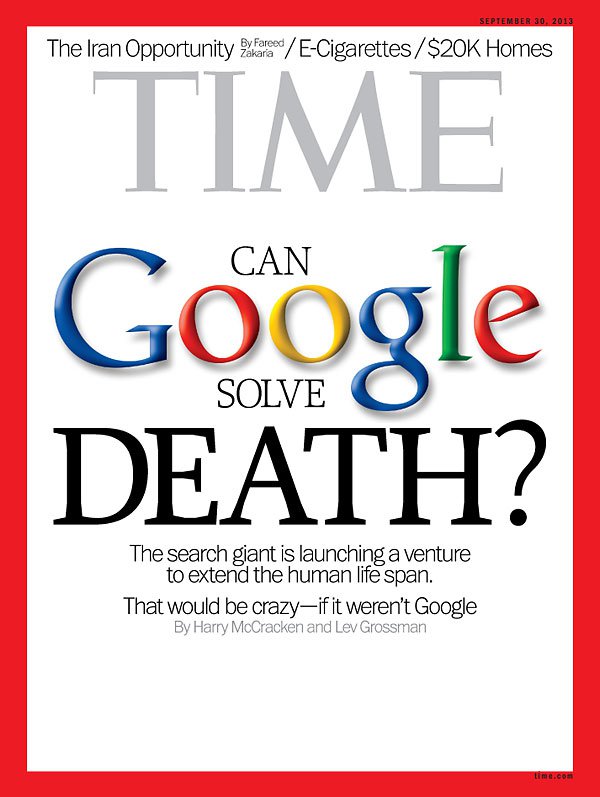
I was reading an article in Time magazine recently – this article in fact…

 [Display slide 1]

Time - google-calico-cover-0913

“Can Google solve death?”

–        Internet giant Google have started a subsidiary company called ‘Calico’ which is doing some long range research into finding ways to enable people to live longer

–        Not just finding a cure for diseases like cancer and dementia but trying to find a way to reverse the aging process

–        Sounds like science fiction but I suppose if you have lots of money and time you begin to think seriously about this sort of stuff

–        Now I have no intention of criticising their efforts

–        Who knows – maybe they will stumble upon some remedy which helps to extend the average life expectancy of human beings – good luck to them

As I reflected on the article though it occurred to me that Jesus has already solved death

 [Stop displaying slide 1]

 In verse 35 Jesus says…

–        For whoever wants to save his own life will lose it; but whoever loses his life for me and the gospel will save it.

There is a profound paradox in these words which evades full comprehension

The movie clip we saw earlier sheds some light on the first part of what Jesus says…

–        Whoever wants to save his own life will lose it

–        If Matt Kowalski had tried to save his own life he would have lost it and taken Dr Stone with him

–        He knew it was time for him to let go – even if Dr Stone didn’t

But the story I told earlier about the monk Telemachus provides a better illustration of the paradox, for Telemachus’ story finds its meaning more directly in relation to Jesus’ story

–        Jesus literally lost his life by dying on a cross to make us right with God

–        But in losing his life Jesus saved it – for God raised him from the dead

–        Now all who put their faith in Jesus will share in his resurrection, even though they die

–        Telemachus’ death reminded the crowd that Jesus died for them and for those gladiators who were being killed for their entertainment

–        His death also reminded the people of Jesus’ resurrection – a resurrection that Telemachus shares in, just as he shared in Christ’s sufferings

Conclusion:

At the heart of this idea of losing our life to save it is the lesson all human beings need to learn – the lesson of when to hold on and when to let go

For those of us who are parents – our kids need us to hold on to them when they are young but as they get older we need to learn to let them go

–        Not all at once but gradually

–        If we hold on too tightly for too long it damages the relationship

It’s a similar principle with school and work

–        When we are studying for an exam or working toward an important deadline at work – that’s the time to hold on

–        But once the exam is finished and the deadline has passed – that’s the time to let go

–        Do the work, do the hard yards, but don’t worry about the outcome

There is a time for holding on and a time for letting go

–        Forgiveness requires us to hold on to God’s grace while letting go of our feelings of hurt and guilt

–        Grief is similar to forgiveness – it’s the letting go which is painful

When you are maligned, misunderstood and mistreated because of Christ that is a time to hold on to the hope of heaven – those who share in Christ’s suffering will also share in his glory

–        But when you want something so badly that you would give anything to get it – that’s a time to let go and simply pray, ‘Not my will Father, but your will be done.’

There is a time for holding on and a time for letting go

–        What time is it for you?

Let us pray…


[1] William Barclay, ‘The Gospel of Mark’, pages 208-209.

[2] Ben Witherington, ‘The Gospel of Mark’, page 240.