Israel’s Baptism

Scripture: Exodus 14:5-31

Title: Israel’s Baptism

Structure:

  • Introduction
  • Israel’s baptism
  • Moses’ leadership
  • Jesus’ identity
  • Conclusion

Introduction:

Please turn with me to Exodus chapter 14, page 72 in your pew Bibles

  • Today we continue our series on Moses
  • By this point in the story God has struck Egypt with the tenth plague – the death of the first born
  • Pharaoh has sent the Hebrew people away and they are making good their escape
  • We pick up the story from Exodus 14, verse 5…

[Read Exodus 14:5-31]


May the Spirit of Jesus illuminate this reading for us
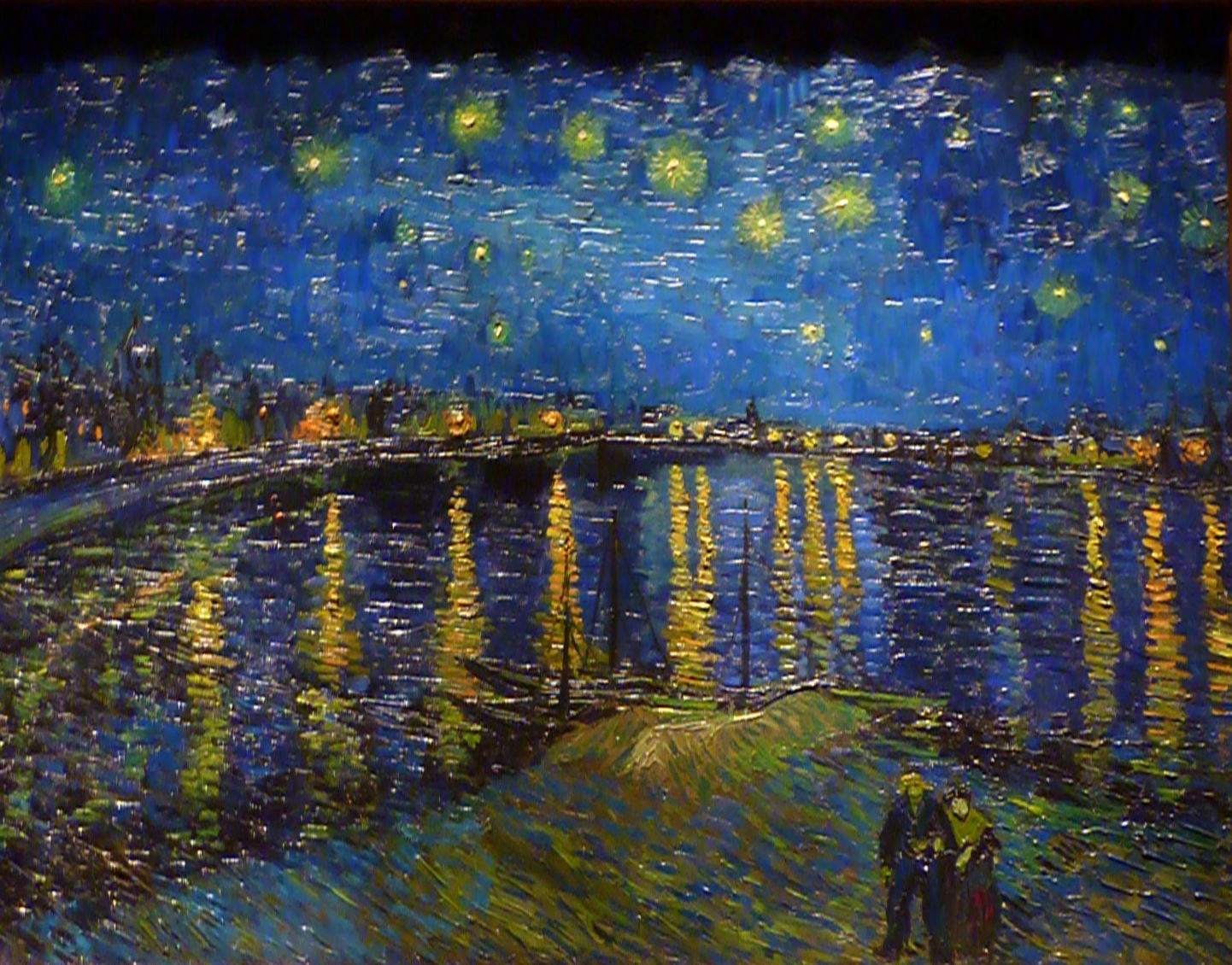
Impressionist - Starry Night


On the wall here is a painting by Vincent Van Gogh

  • Can anyone tell me what style this is painted in? [Wait]
  • Yes – that’s right, ‘Impressionist’ (or post-impressionist)

Impressionism is not interested in capturing a scene with photographic accuracy

  • Impressionism is about capturing the light and movement of a scene
  • This painting is called ‘Starry Night Over The Rhone’
  • You can see how Van Gogh is trying to give the impression of the star light reflecting on the rippling waters of the river – light and movement

Some would describe the account of Israel crossing the Red Sea as impressionistic [1]

  • It recalls a real historical event, perhaps not with photographic accuracy, but certainly in a way which conveys the light & movement of that night


We see a real movement for Israel in Exodus 14

  • Not just in the geographical sense of moving from one location to another
  • But in a spiritual sense as the people move from terror to trust – from fear of death to faith in God
  • In fact, as Christians looking back at this, we get the overall impression that Israel (as a nation) went through a kind of baptism when they passed through the Red Sea
  • This was a conversion experience, an internal change took place for them

Israel’s baptism:

Verse 8 of Exodus 14 tells us the Israelites were leaving Egypt triumphantly

  • They were full of confidence and bluster in other words

Triumphalism is the counterfeit of true faith

  • Triumphalism feels like what we imagine faith should feel like, but it actually isn’t faith

Triumphalism insulates us from reality

  • Faith exposes us to reality

Triumphalism is the advertisement

  • Faith is using the product

Triumphalism is maxing out our credit card and telling ourselves we will pay for it later

  • Faith is waiting until we can pay for it by cash

Triumphalism is telling ourselves we don’t need to prepare for exams – we just need to pray

  • Faith is studying

Triumphalism is the illusion (or the fantasy) that we cannot fail, that we are bullet proof, that we are always right and this will be easy

  • Faith is waking up from the fantasy, realising from experience that we can fail, that we are not bullet proof, that this life is difficult in practice

Triumphalism is what young men feel when they enlist in the army to go to war – “We’ll be home by Christmas”, they said

  • Faith is surviving the battle and learning respect for our enemies

Triumphalism is falling in love

  • Faith is the commitment to tough it out through the hard times

Triumphalism is what we Christians sometimes feel on a Sunday morning when we sing heroic songs to God, surrounded by people who think the same as us

  • Faith is Monday to Saturday when we are out in the world at work or school surrounded by people who think differently to us
  • Faith is also when we are at home struggling with grizzly children or at home by ourselves struggling with loneliness

We could go on but you get the point…

  • Triumphalism has no foundation – it is based on illusion
  • Faith has a firm foundation – it is based on reality

The Israelites left Egypt triumphantly, not realising their confidence had no foundation – it was based on a passing feeling

  • God was about to give them a firm foundation though – the reality of experiencing His salvation

From verse 10 of Exodus 14 we read…

When the Israelites saw the king and his army marching against them, they were terrified and cried out to the Lord for help. They said to Moses, “Weren’t there any graves in Egypt? Did you have to bring us out here in the desert to die? …It would be better to be slaves there than to die here in the desert.”


Their bubble of triumphalism has been burst

  • We shouldn’t be too hard on the Israelites though
  • Their backs were against the wall at this point
  • They were trapped between the devil and the deep blue sea
  • Or more precisely between Pharaoh’s army and the Red Sea
  • So they had good reason to panic

In that moment of terror, as they feared for their lives, and all trace of triumphalism had been drained from their hearts – it probably felt like they were a long way from faith

  • But in actual fact, the Israelites were closer to faith when they were scared than they were when they left Egypt triumphantly
  • The terror of the Egyptian army purged the Hebrew people of all illusion
  • The reality of their mortality wiped the slate clean to make room for faith
  • Fear is like a wind which blows the fog of fantasy away

You see, it is our thirst which makes us drink

  • It is our need which brings us to God
  • And it can be fear which brings us to our senses, clearing the way for faith

At God’s command Moses raised his hand and the Lord parted the sea so the people could walk through

  • Their walking through the sea was an act of faith
  • Faith isn’t just what we say we believe in the safety of church
  • Faith is what we do both in the ordinary moments of our lives and in those moments of utter desperation
  • Through the night the nation of Israel made its way on dry ground while God held back the water and the Egyptians

At the end of chapter 14, when the Israelites have made it through safely to the other side and they see the Egyptians lying dead on the seashore, we read how they [the Hebrew people] had faith in the Lord

  • The experience of God’s salvation has changed the Israelites
  • An internal shift has taken place within them
  • God has taken Israel from triumphalism through terror to trust
  • He has brought them from fantasy through fear to faith
  • The past is dead on the seashore – the future is open before them

It’s not that their faith is made perfect yet – baptism is just a beginning – the people still have a long way to go before they reach the Promised Land

  • But it is a start – the experience of God’s salvation has given Israel foundation for their faith

Okay, having heard about Israel’s baptism into faith, let’s now consider Moses’ leadership in this situation…


Moses’ leadership:

Although Moses is Israel’s leader, verse 31 describes him as The Lord’s servant

  • Moses is the original servant leader
  • Moses does not exercise leadership for his own benefit, as Pharaoh did
  • Moses exercises leadership in service to God’s agenda
  • He takes his direction from God and the people follow Moses
  • This serves both God’s purpose and the well-being of the people

One of the qualities required of leaders – and particularly of servant leaders – is differentiation

Differentiation is a term coined by the psychologist Murray Bowen

  • ‘Differentiation’ refers to a person’s capacity to “define his or her own life’s goals and values apart from the pressures of those around them” [2]

To put it another way, ‘differentiation’ is the ability to hold on to yourself, while staying connected to others

  • Holding on to yourself means holding on to who you are
  • Holding on to your beliefs and values – your integrity
  • Sticking to what you know is right and not being too easily swayed by other people’s feelings or opinions
  • Staying true to yourself, in other words

People who can differentiate in their relationships are able to stay calm, manage their anxiety and avoid blaming other people 

Rudyard Kipling has a famous poem – the opening lines of which describe differentiation. It goes like this…

If you can keep your head when all about you

Are losing theirs and blaming it on you,

If you can trust yourself when all men doubt you,

But make allowance for their doubting too;

If you can wait and not be tired by waiting,

Or being lied about, don’t deal in lies,

Or being hated, don’t give way to hating…

                                  …you’ll be a man, my son!


Good leadership requires the emotional intelligence to differentiate – to hold onto yourself like this

Now this concept of differentiation or ‘holding onto yourself’ is not new – it’s been around for thousands of years

  • When our core beliefs and values (our true self) is informed by God, differentiation goes by the term: ‘Fear of the Lord’
  • “The fear of the Lord is the beginning of wisdom”
  • It sets you free from the fear of lesser things – like the fear of man

To fear the Lord is to not be swayed by the opinion of others

  • So when people think you are a bit simple for believing in God
  • When they say that science is the answer to everything
  • And that religion is the opiate of the people
  • You don’t go along with that – you hold onto yourself
  • You stick to what you believe in your heart – that God is real and that one day, every knee shall bow and every tongue confess that Jesus is Lord
  • But you’re not offended either – you don’t just walk away
  • You simply smile & ask them what they believe & quietly pray for them

To fear the Lord is to stay calm in a crisis, even when people are saying the crisis is your fault

  • So when the boss is swearing at you at work because things didn’t go well that day
  • Or you are the boss and your team is not talking to you because you had to make a hard decision that they can’t understand
  • Or you’re at home and your kids are telling you it’s not fair and you’re the worst parent in the world
  • Or you’re on the sports field and some clown is yelling at you from the side lines because they are frustrated with their own lives
  • In those situations, to fear the Lord, means remembering that God is your judge – no one else
  • Not your boss, not your teacher, not your work mates, not your parents, not your children and certainly not the random armchair critics

Fear of the Lord, in the specific sense of remembering that God is our judge, enables us to hold onto our perspective and not take the criticism personally

  • It helps us to turn the other cheek and stay in the conversation
  • To listen without reacting and to communicate without antagonising

Differentiation, fear of the Lord, holding on to yourself, whatever you want to call it – if you can do that, you have the makings of a servant leader

Moses could do that

  • In verses 10-14 Moses demonstrates a high level of differentiation
  • Moses holds onto himself under extreme pressure

The entire Egyptian army is bearing down on them

  • They have nowhere to run and Moses has brought them to this cul-de-sac of death
  • Over a million people are terrified and blaming him saying things like…
  • “Did you have to bring us out here in the desert to die? Didn’t we tell you this would happen?”

And how does Moses respond?

  • With a message of good news
  • He doesn’t get angry with the people
  • He doesn’t turn the blame back on them or give in to their fear
  • Nor does he walk away

Moses holds onto himself, while staying connected to the people

  • He keeps his perspective and he sticks to what he believes, saying…
  • Do not be afraid
  • Stand your ground
  • You will see God’s salvation

Stay calm – be still – wait for God

This is not triumphalism – this is an invitation to faith

For Moses to respond in this way (with a message of good news), under these circumstances, required a high level of differentiation

  • Moses feared the Lord, more than he did the Red Sea or the Egyptians
  • Moses was more concerned about God’s opinion than he was the opinion of the people
  • Moses was able to define and differentiate what he believed & felt from what the people believed & felt
  • And he was able to hold onto his personal conviction without letting go of his connection with the people
  • So he was not swamped or knocked over by the tidal wave of criticism coming his way

As I said earlier, the experience of God’s salvation changed the Israelites

  • Verse 31 again, When the Israelites saw the great power with which the Lord had defeated the Egyptians, they feared the Lord
  • In other words, they began to learn to differentiate
  • They began to learn to hold onto themselves
  • Or, as Terence Fretheim puts it…
  • “Israel’s perspective will now be shaped by what God does, not by what the Egyptians do…”  [3]

It’s fair to say that, at this point, Israel has not mastered differentiation by any means – but it is a start

  • By saving Israel, God has strengthened the nation’s identity as His people

Jesus’ identity:

Strength of identity is key when it comes to holding onto ourselves

  • Those who have a clear understanding of who they are and who they are not, are less likely to lose their shape or identity around others

Jesus had a strong sense of identity – He knew in His heart of hearts (through & through) that He was God’s Son

After His baptism in the Jordan River, by John the Baptiser, God said of Jesus,

  • “This is my own dear Son with whom I am pleased” [4]
  • With this clear sense of identity Jesus was able to differentiate – to hold onto Himself throughout His ministry

So when the Devil tempted Jesus in the wilderness saying, ‘If you are the Son of God’, do this, that and the other thing [5]

  • Jesus was able to refuse, saying in effect…
  • ‘I have nothing to prove. I am not defined by what I do or what I own or what other people think of me. I am defined by God.’

Jesus held onto Himself in His confrontations with the religious leaders too

  • Like when He broke their man-made traditions by healing on the Sabbath
  • Or when He stood up for a woman caught in adultery [6]

Sticking to your principles in the face of an enemy is one thing but, in many ways, differentiation is more difficult when it comes to family & friends…

Like when Jesus’ mother and siblings came to take charge of Him – to bring Him home with them – because they doubted Him

  • Jesus was able to stay true to God’s purpose for Him and say,
  • ‘Anyone who does the will of my Father in heaven is my brother, my sister, and my mother’ [7]
  • Sometimes our family make it hard for us to leave home – but Jesus feared God more than His mum

He also feared God more than His friends – like when Jesus predicted His own death & resurrection and Peter took Jesus aside to rebuke Him

  • Jesus defined His purpose as different from Peter’s purpose, saying…
  • ‘Get away from me Satan… These thoughts of yours don’t come from God, but from man.’ [8]

We could go on but you get the point…

  • Jesus had a strong sense of identity grounded in His relationship with God
  • And from this firm foundation he had a tremendous capacity to stay true to God’s purpose for Him through all kinds of circumstances

Conclusion:

Differentiation, fear of the Lord, holding on to yourself, whatever you want to call it – it’s difficult to learn

  • None of us are quite at the level of Moses or Jesus (least of all me)
  • But that’s okay – we are all on a journey with this stuff
  • We don’t need to beat ourselves up about not being perfect
  • We do need to know that God’s grace is sufficient for us
  • And we also need to know what we’re aiming for

The temptation for us may be to try and manufacture our own identity…

  • Perhaps by what we do in racking up a long list of achievements,
  • Or by what we accumulate in terms of possessions,
  • Or maybe by pretending to be what we are not

Authentic identity cannot be manufactured

  • It can only be received as a gift from God

By the experience of God’s salvation the Israelites learned to fear the Lord and to trust Him as well

  • And through this process their identity as the people of God was strengthened

By the experience of Christ’s salvation of us we learn to fear the Lord and trust Him as well

  • And through this process our identity as members of the body of Christ is formed

Let us pray…

[1] For example, Terence Fretheim in his commentary on Exodus, page 158

[2] Quoted in Peter Scazzero’s book, ‘Emotionally Heathy Spirituality’, page 82

[3] Terence Fretheim, Exodus, page 156

[4] Matthew 3:13-17

[5] Matthew 4:1-11

[6] John 8:1-11

[7] Matthew 12:46-50

[8] Matthew 16:21-28

Passover

Scripture: Exodus 12:1-14

Title: Passover

Structure:

  • Introduction
  • Passover is about deliverance (God’s commitment)
  • Passover is about new beginnings (letting go)
  • Passover is about the gathered community (everyone counted/included)
  • Conclusion

Introduction:

Please turn with me to Exodus 12, page 69 in your pew Bibles

  • Today we continue our series on Moses
  • By this stage in the story God has struck Egypt with nine plagues and Moses has warned Pharaoh of a tenth plague to come – the death of the first born
  • This morning we hear God’s instructions for the Passover festival
  • From Exodus 12, verse 1 we read…

[Read Exodus 12:1-14]


May the Spirit of Jesus illuminate this reading for us

This morning we will consider the meaning of the Jewish Passover festival

  • Passover is about deliverance
  • It’s about new beginnings
  • And it’s about the gathered community

Passover is about deliverance:

Passover – it’s an interesting word

In Kiwi culture a ‘pass-over’ can refer to a road or a bridge which enables people to pass over some kind of obstacle safely

  • For example, the foot bridge by the Tawa railway station, enables pedestrians to safely pass over the railway lines

Another way we hear the term ‘pass over’ used is in relation to work when someone says, ‘I was passed over for promotion’ – meaning I missed out on advancing in my career

So, depending on the context, the term ‘pass over’, in the English language, means either…

  • A safe passage
  • Or to miss out on something

These two English meanings of pass-over actually find a connection with the meaning of the Jewish Passover

For the Hebrew people ‘Passover’ is a religious festival (similar to our Easter)

  • It remembers Israel’s safe passage out of Egypt
  • And it also recalls how they missed out on the death of the first born
  • Put those two things together – being given safe passage and missing out on judgement – and the primary meaning of Passover is deliverance

The Passover celebrates God’s deliverance of Israel from slavery and death

  • So it is an annual party to celebrate God’s gifts of life and freedom

One of the things we notice in God’s instructions to Moses is, the blood of the lamb or kid goat is to be painted on the doorframes as a sign

  • Verse 13 in the NIV translates God’s words saying…
  • “The blood will be a sign for you on the houses where you are; and when I see the blood, I will pass over you. No destructive plague will touch you when I strike Egypt” 

Blood, of course, symbolises life and in the ancient world shedding blood was a way of making a solemn commitment – a way of ‘sealing the deal’

  • The blood, therefore, is a sign of God’s solemn commitment to protect Israel from the tenth plague [1]
  • The blood tells the abused & oppressed Israelites that God is for them
  • It’s not that the blood had some magical property which protected them
  • It’s more that the Israelites needed to perform an act of faith to acknowledge they accepted God’s commitment to them
  • And that act of faith was painting the blood on their door posts

The other thing we should note here is, the blood of the Passover is not about the forgiveness of sins

  • Sin is not mentioned in today’s Scripture reading
  • Later on, when the Law is given at Sinai, God would stipulate other kinds of sacrifices for atonement of sin, but not at this point with the Passover
  • The blood of the Passover lamb is not for God’s benefit
  • It is not for appeasing God in some way
  • The blood of the lamb is for Israel’s benefit
  • It is a sign of God’s commitment to protect Israel from judgment

The Passover finds its ultimate meaning in the person of Christ

  • Jesus, who was crucified during the Passover festival, is the perfect sacrificial Lamb
  • And as the perfect Passover Lamb, Jesus’ blood shed on the cross is the sign of God’s commitment to humanity
  • A commitment to deliver us from judgement
  • A commitment to set us free to serve and enjoy Him forever

Now most of us here come from a Protestant / evangelical church tradition

  • So we tend to associate the blood of Christ with the forgiveness of sins – end of story
  • And while it is true that Jesus is the lamb of God who takes away the sin of the world, [2] that is not the whole truth
  • As I keep saying, the first Passover wasn’t really about forgiveness or atonement
  • In this situation the Jewish people were not the sinners – they were the ones who were sinned against
  • The Egyptians were the sinners and they didn’t get forgiveness, they got judgement

The typical protestant approach to evangelism is to say to people something like

  • ‘You are a sinner, but the good news is you can be forgiven and avoid hell if you accept Jesus’
  • And that might be okay for some people, but it doesn’t fit for everyone
  • In fact, if you tell someone who has been abused badly or experienced terrible suffering & injustice, that they are a sinner and need to repent to be forgiven, you would most likely turn them away from God

The oppressed don’t need forgiveness – they need release

  • The abused don’t need to be threatened with judgment – they are already going through hell
  • The oppressed & abused need a sign (some kind of evidence) that God is committed to their well-being and is going to deliver them from the injustice they suffer

To the abused and the oppressed we can say…

  • Jesus has suffered as you have suffered
  • He understands injustice and He understands your pain
  • Jesus’ blood, shed on the cross, is the sign of God’s commitment to you
  • It is a commitment to deliver you from oppression and death
  • It is a commitment to set you free to serve Him and enjoy eternal life
  • That’s good news for the poor

I’m not saying the abused & oppressed are perfect and don’t need forgiveness

  • I’m just saying we must be careful not to turn people away
  • People need to hear and feel that God is for them
  • Grace must come first and then repentance can follow

As well as being about deliverance for the oppressed the Passover is also about new beginnings

Passover is about new beginnings:

It’s August at the moment – technically the end of winter

  • Come September we will officially begin spring
  • By this time of year most of us are a bit weary and a bit sick of the wet and cold
  • We are starting to fantasise about summer and going on holiday and being warm
  • With the first signs of spring (blossoms on the trees, pine pollen on our cars and daffodils in our gardens) we start to see light at the end of winter’s tunnel

In verse 2 of Exodus 12, God says to Moses…

  • “This month is to be the first month of the year for you…”

This means the Passover was like a New Year’s celebration

  • Passover happens in March / April each year – which is spring time in the Northern hemisphere – sort of like August / September for us
  • God wants Israel to be different from the other nations around them and celebrate the New Year at the beginning of spring
  • In many ways this makes better sense, for spring is a new beginning

Passover then, is about new beginnings

  • It celebrates both the beginning of a New Year and a new beginning for Israel as a nation
  • This new beginning is not by Israel’s own strength but by the hand of God who has the power to make all things new
  • It comes when the Israelites are tired and low, after a very long winter of oppression

Of course, new beginnings usually require a letting go of something – or a sacrifice in other words

Sometimes we find it hard to let go but really we needn’t feel this way because letting go is built into the natural rhythm of our lives

Think about your breathing

  • You draw breathe in and you let it go, without even thinking about it
  • If we try to hold on to our breathe it starts to hurt
  • Not letting go pains us

The NZ poet Glenn Colquhoun has a poem called, The trick of standing upright here [3]


The last four lines read…


The art of walking upright here

is the art of using both feet.


One is for holding on.

One is for letting go.

If you hold on with both feet you don’t go anywhere

  • And if you let go with both feet you fall over
  • To walk without falling we need to hold on with one foot while simultaneously letting go with the other

For Israel to make a new beginning – for Israel to learn the art of walking with God by faith – they needed to use both feet

  • One for holding on
  • One for letting go
  • Sacrifice is about letting go

God instructed Israel to select a one year old male lamb or kid goat, without blemish, on the 10th day of the month

  • Then on the 14th day, four days later around dusk, everyone in Israel was to slaughter their animals

Imagine that for a moment

  • You take one of the best animals in your flock, one with most of its life ahead of it and you set it apart from the rest
  • Perhaps you and your children become a little attached to this cute lamb – like a family pet – and then you have to kill it
  • I imagine that would be difficult – killing something young, innocent, healthy and loved – so why do it?

Verse 11 has God saying…

  • “…It is a Passover festival to honour me.”

The way to honour God is to give Him the best we have to offer

  • It’s not so much that God needs us to pay homage to him
  • He’s not insecure
  • He doesn’t need our reassurance and He doesn’t need to be appeased
  • In fact He doesn’t need anything from us
  • It’s more that we need to honour Him
  • We need God so our lives will have meaning and purpose
  • God is the ground of our being – without God there is no point

If we make something else (like a lamb or a goat or our work) more important than God then our meaning & hope depend on the animal

  • And that is a very insecure position to put yourself in
  • But if God is the most important then nothing can threaten our meaning and our hope so we have a real sense of security

Honouring God with our best is really for our benefit

  • The obvious practical benefit for the Israelites in making a sacrifice was the people ate the meat as nourishment for the journey ahead

Beyond this, sacrificing the Passover lamb was an acted out parable for Israel

  • If we think of the sacrificial lamb as representing the Hebrew people:
  • Up till this point in their history the nation of Israel had been like a child (like a yearling lamb) – powerless and bullied in Egypt
  • Now God was saying, it is time to grow up, time to leave your childhood behind and follow me into adulthood

So killing the young innocent lamb was kind of like a ‘rite of passage’

  • A ritual for letting go of one stage of the nation’s development in order to transition to the next phase
  • They were transitioning from being slaves to being free
  • From being told what to do (like children) to learning how to handle freedom & responsibility (like adults)

Rituals to recognise transitions in life are everywhere

In Vanuatu, for example, the transition from boyhood to manhood is demonstrated by land diving (which is sort of like bungy jumping)

  • The jumper’s goal is to launch off the platform and brush his head on the ground – if he survives he is a man

For the people of Israel, growing up and leaving Egypt was a little bit like land diving

  • It meant taking a risk – stepping out in faith, letting go of the platform

The killing of the lamb or kid goat also represented a letting go of what the people themselves wanted

  • It was a way of saying, ‘Not my will God, but Your will be done’

There’s a song we sometimes sing called All for Jesus

  • One of the verses goes like this…


All of my ambitions, hopes and plans

I surrender these into Your hands

For it’s only in Your will that I am free

For it’s only in Your will that I am free…

Sacrificing the young lamb or goat was a way for the Hebrew people to demonstrate that they were surrendering their ambitions, hopes and plans into God’s hands

  • It was a real and physical way of reminding themselves that it is only in God’s will that they are free
  • Leaving Egypt in itself isn’t freedom
  • Walking with God is freedom

Passover is about new beginnings

  • It’s about being ready to let go, ready to make the transition to the next stage in our life – the next stage in God’s will for us
  • That’s why the people had to eat the meal in a hurry, dressed and ready to leave with staff in hand

As Christians we don’t celebrate Passover but we do have other rituals for marking new beginnings:

Baptism, for example, is a new beginning – it is the letting go of our old way of life and stepping out, in faith, to follow Jesus

Marriage is another new beginning – when we let go of single life and find a new kind of freedom (a new kind of intimacy) with our partner in marriage

Dedication of a baby and his or her parents is also a new beginning

Transitions and new beginnings can happen all through life, and we don’t always have a ritual to celebrate them, like…

When you hit 40 and realise your life is more than half over so you’d better make the most of what’s left

Or when you turn 65 and become eligible for a Gold Card and a pension

  • Now you have a new found freedom with your time

Or when someone returns to the church and Christian faith after spending years away – except on returning their faith is different

  • So they are now more comfortable with mystery,
  • Not needing an answer for everything,
  • Not needing to prove themselves right,
  • Happy to trust themselves to God’s grace

We don’t have a Passover festival as such but we do have Easter and Lent

  • Lent (the six weeks leading up to Easter) is a time of sacrifice – a time of fasting or letting go – when we surrender afresh to God our ambitions, hopes and plans
  • Easter weekend itself is a time when we remember Jesus and the new beginning of resurrection
  • For Christians, Easter is the equivalent of a New Year celebration

Passover is about deliverance and new beginnings

  • Passover is also about the gathered community, everyone counted

Passover is about the gathered community:

John, can you tell me how many people are here this morning?

  • Thanks John


Every Sunday when you come to church someone greets you at the door and gives you a newsletter

  • Then, when everyone is seated (and before the kids go out) one of the door stewards does a head count and writes the number in attendance in the blue book in the foyer
  • It’s not exactly like taking the roll at school – we don’t put a tick by people’s names or anything like that – but we do keep a track of totals

John said there were about 150 odd here this morning

  • If everyone who attends Tawa Baptist were to turn up at the same time there would be over 200 people here
  • So that tells me there are about 60 or 70 people away this morning

I’m not saying this to make you feel guilty if you miss a Sunday

  • I’m saying this so you know you count

The Passover festival was something the Jewish people were to do at the same time, together, as a gathered community – verse 4 says…

  • If his family is too small to eat a whole animal, he and his next door neighbour may share an animal, in proportion to the number of people and the amount that each person can eat.

As a general rule of thumb it was thought 10 people could finish off a beast

  • So if there were five in your family then you could get together with some of your neighbours to share an animal

The point is, Passover was designed to bring communities together

  • It was designed to include people – not just those in your own family but also those who worked for you, those who couldn’t afford their own sacrifice and anyone else who happened to be travelling through
  • It wasn’t an exclusive meal – it was a meal which required the host to account for everyone

We all have a responsibility for each other

  • If you have noticed someone missing from our gathered worship for a while, it might be appropriate to give that person a call – not to reprimand them but simply to ask how they are, show you care, show they count with you and are not forgotten

Conclusion:

I suppose there is much more we could say about the Passover but that’s probably enough for today

For us, as Christians, the main thing is Jesus

  • Jesus is the ultimate Passover Lamb – the perfect sacrifice
  • Jesus’ blood is a sign of God’s commitment to deliver us from judgement
  • Jesus’ death & resurrection makes a new beginning possible for all of us
  • And Jesus is the one who draws us together as a gathered community – the one who counts us among God’s people

Let us pray…

[1] Refer Terence Fretheim, Exodus, page 138

[2] John 1:29

[3] Glenn Colquhoun, “The Art of Walking Upright”, page 33.