Scripture: Exodus 19:3-6 and Isaiah 40:27-31
Video Link: https://youtu.be/BVEFT_yjKSM
Structure:
- Introduction
- Freedom with faithfulness
- Strength with grace
- Vision with patience
- Conclusion
Introduction:
Good morning everyone.
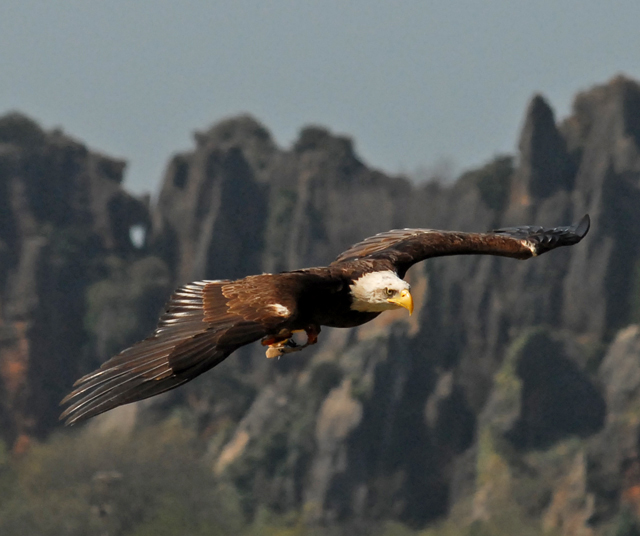
Today we continue our sermon series on ‘Birds of the Bible’ by focusing on eagles. Eagles are mentioned more than 30 times in the Scriptures, mostly in the Old Testament. There are many things we could say about eagles but three characteristics stand out: Freedom, strength and vision.
Freedom:
Let us begin with the eagle’s freedom. From Exodus 19 we read…
3 Then Moses went up to God, and the Lord called to him from the mountain and said, “This is what you are to say to the descendants of Jacob and what you are to tell the people of Israel: 4 ‘You yourselves have seen what I did to Egypt, and how I carried you on eagles’ wings and brought you to myself. 5 Now if you obey me fully and keep my covenant, then out of all nations you will be my treasured possession. Although the whole earth is mine, 6 youwill be for me a kingdom of priests and a holy nation.’
May the Spirit of Jesus illuminate God’s word for us.
In The Lord of the Rings, Tolkien uses eagles to rescue the Hobbits and their friends. When the Hobbits are outnumbered or in an impossible situation, the eagles come (at Gandolf’s command) and carry them away to safety. Tolkien borrowed this imagery from the Bible.
Perhaps the most obvious characteristic of eagles is their freedom. Any bird with the ability to fly has freedom of course, but eagles have an even greater freedom than most because they are at the top of the food chain. They are an apex predator. The eagle is fearless.
Eagles are also one of those birds that mate for life, or at least until their mate dies. So as well as being free, the eagle is also a symbol of faithfulness.
In verse 4 of Exodus 19, Yahweh (the Lord God) talks about the freedom he secured for the nation of Israel. The people of Israel were being oppressed as slaves in Egypt and God delivered them, carrying them on eagles’ wings.
Eagles don’t actually carry their young (or anything else) on their wings, which is the point of the metaphor. God is using the eagle (a symbol of freedom and faithfulness) and making it do something that eagles don’t ordinarily do.
When God says to Israel, I carried you on eagles’ wings, he means something like, ‘I rescued you, Israel, from an impossible situation in a truly miraculous way. What I did in delivering you from Egypt has never been done before.’
We might read this passage and be so taken with the poetry of eagles’ wings that we miss what comes next. The Lord goes on to talk about faithfulness, saying: …if you obey me fully and keep my covenant, then out of all nations you will be my treasured possession.
Can you see how God puts freedom and faithfulness together?
To be faithful means obeying God and keeping his covenant. Following his law of love in other words. To be God’s treasured possession means that Israel will belong to the Lord in a special way. God is the creator of all there is and so everything belongs to God, but if Israel remains faithful to the Lord, they will be his Taonga, his prized treasure.
In the islands you often see outrigger canoes. In Hawaii they are known as Wa‘a (Vah-ah). Outrigger canoes have at least one lateral support which give the canoe stability.
Freedom is a wonderful gift to be given but it needs to be balanced by faithfulness. If freedom is the canoe, then faithfulness is the outrigger, supporting freedom so the people paddling the canoe don’t capsize.
In Galatians 5 Paul writes: It is for freedom that Christ has set us free. Stand firm then and do not let yourselves be burdened by a yoke of slavery.
The yoke of slavery in this context could be the observance of man-made religious rules, that only make you feel guilty when you break them. But the yoke of slavery could also be some kind of unhelpful or unholy habit.
Jesus came to set us free from sin and guilt. But the freedom Jesus bought for us is not a freedom to do whatever we want. It is a freedom to obey God. A freedom to love God with all our being and to love our neighbor as we love ourselves. Faithfulness is the right use of freedom.
Freedom is a good thing, so long as we don’t make it the main thing. We live in a society which places a high value on personal freedom. We are very attached to our individual autonomy. We don’t like anyone or anything messing with our plans or getting in the way of our happiness. You could say that personal freedom (or individualism) is one of the golden calves of western society.
Sadly, our society is not so enamored by faithfulness. Broadly speaking we like the convenience of personal freedom but are less keen on the responsibility that freedom requires. It’s like we have done away with the outrigger of faithfulness, so the canoe of freedom is prone to capsizing.
Freedom, without faithfulness tends to leave the door open to fear. Despite our emphasis on freedom we are a relatively anxious society. We are not fearless like the eagle.
As the people of God in this place, we need to hold freedom and faithfulness together, like the eagle. That means we will often have to sacrifice our personal freedom for the sake of God’s purpose. Sometimes following Jesus’ way is not convenient but we do it anyway because that is who we are, we belong to Christ, we are his treasured possession.
It needs to be acknowledged that most of you do hold freedom and faithfulness together much of the time. I can see that. So, in talking about the divorce between freedom and faithfulness, I am not criticizing anyone here personally. I’m simply making an observation about western society generally.
Strength:
Okay, so freedom coupled with faithfulness is the first characteristic of the eagle. The second is the eagle’s strength. Eagles are among the most powerful birds on the planet. They can fly at speeds of up to 160 km’s per hour and they can reach altitudes as high as 15,000 feet.
The claws of an eagle can exert a pressure of over 300 psi. That’s a vice like grip. Eagles often swoop down to catch fish but will also eat rodents and snakes. Some species of eagles are strong enough to pick up a lamb or a small calf. They are powerful creatures.
But raw strength and power by itself is not necessarily a good thing. Just as a hot curry needs some yogurt and cucumber to temper the taste, so too strength needs to be tempered with gentleness and grace. To give balance to their strength, eagles also possess a wise grace.
Seeing an eagle fly is a beautiful thing. Eagles are graceful. Here in New Zealand we are more likely to see hawks in the sky. A hawk is quite similar to an eagle in the way it soars and glides on the wind. Although an eagle has great strength, it has the sense not to waste its energy flapping madly. The eagle makes good use of the air currents.
Gliding gracefully takes some skill. Eagles are so fine-tuned, so adept at flying, that if they lose a feather in one wing, they are able to shed a corresponding feather in their other wing in order to maintain equilibrium.
We also see the wise grace of the eagle in the way it parents its young. The mother stays with her young eaglets to protect them and keep them warm, while the father goes out to catch food and bring it home to the family.
And, contrary to popular belief, eagle parents don’t push their young out of the nest to see if they will fly. Rather, they use a wise and gentle approach. When the parents think their children are ready to fly, they stop feeding them. Then, when the young eagles get hungry, they venture out of the nest in search of food for themselves. Smart birds.
We notice this careful balance of strength and grace in the eagle imagery used in Isaiah 40, where the Lord God says through the prophet…
27 Why do you complain, Jacob? Why do you say, Israel, “My way is hidden from the Lord; my cause is disregarded by my God”? 28 Do you not know? Have you not heard? The Lord is the everlasting God, the Creator of the ends of the earth. He will not grow tired or weary, and his understanding no one can fathom. 29 He gives strength to the weary and increases the power of the weak. 30 Even youths grow tired and weary, and young men stumble and fall; 31 but those who hope in the Lord will renew their strength. They will soar on wings like eagles; they will run and not grow weary, they will walk and not be faint.
The message of Isaiah 40 is one of comfort for the Jewish exiles in Babylon. Following the fall of Jerusalem in 587 BC, those who had survived the siege were forcibly marched off to a strange land. Apparently some of the exiles were thinking that God did not care for them anymore.
By definition, God is the most powerful, strongest being there is. But it does not matter how deeply you might believe in God’s strength and power, if you don’t believe in God’s grace for yourself personally, then you will become bitter towards God.
In verse 29 we read that the Lord strengthens those who are weak and tired. God shares his power with people who are spiritually exhausted so they soar on wings like eagles…
As I’ve already mentioned, eagles don’t flap. Eagles are calm and graceful. They spread their wings in freedom and they glide. Eagles can’t see the thermal currents that carry them but they still trust themselves to the wind.
God’s grace uplifts the weak who trust in him, like the thermal currents uplift the eagle with outstretched trusting wings.
Those who wait in hope for God will run and not grow weary, they will walk and not grow faint. In other words, God’s grace sustains us both in the challenging times of life, when the pressure is on and we find ourselves running just to keep up, as well as in the ordinary routine of life when things simply tick over at a steady walking pace.
Isaiah’s use of the eagles’ wings imagery connects the exile with the exodus. Just as God got Israel out of an impossible situation, carrying them out of slavery in Egypt, so too he carried Israel out of captivity in Babylon.
Are you feeling like a captive in your life’s circumstances at the moment? Are you run off your feet, tired, weak and at the end of your tether? Are you feeling out of place, oceans from where you want to be? Are in an impossible situation, trapped between a rock and hard place?
What might God be saying to you this morning? Put your hope in the Lord.
God can do the impossible. He can renew your strength so that you soar on wings like eagles; so you run without growing weary and walk without growing faint.
Vision:
The eagle is a symbol of freedom, strength and vision.
You have probably heard the phrase, ‘eagle eyed’. This is because eagles have very good vision. An eagle’s eyesight is around five times better than that of a human being. In practical terms, that means, an eagle can spot a rabbit from three kilometers away. Pretty impressive, not to mention handy.
Of course, having amazing vision does not make for an expert hunter. Like any good hunter, the eagle also needs patience to support its vision. The eagle may have to patiently glide around the sky for hours, waiting for its prey and the right moment to strike.
Just as freedom needs the outrigger of faithfulness and strength needs to be tempered with grace, so too vision needs the twin virtue of patience. The ability to wait, with the right attitude, until the time is right.
In the Bible, vision has at least two meanings. Firstly, vision is the ability to see what God is doing in the present. In John chapter 9, Jesus heals a man born blind. Somewhat ironically, the man who was blind had more vision than the religious leaders. He could see that God was at work in and through Jesus, whereas the religious leaders refused to acknowledge the Lord.
At the same time, vision also has to do with hope; vision is the capacity to imagine a good future. And so we have the well-worn verse, ‘without vision the people perish’; which basically means, without hope for a good future the people give up.
Vision, then, is about seeing what God is doing in the present and believing in God to provide a good future. Jesus is God’s vision for humanity. The risen Christ is our hope for the future.
Returning to Isaiah 40. In verse 31 we read, but those who hope in the Lord will renew their strength; they will soar on wings like eagles.
It seems that Isaiah is making a connection between the long range vision of eagles and the long range vision of those who hope in the Lord.
Hoping and waiting and patience go together in Biblical thought. As Paul says in Romans 8: 25 But if we hope for what we do not yet have, we wait for it patiently.
Hope is a powerful source of energy. Hope for a good future gives us joy in the present and that joy can carry us on eagles’ wings through tough times.
Those who are familiar with the story of Jacob might remember how Jacob had to work seven years to pay the bride price and be married to his sweetheart, Rachel. But that seven years seemed like only a few days to him because of his love for her. The hope of a good future with Rachel carried Jacob, on eagles’ wings, through his seven years hard labour.
Hope is a powerful source of energy but like any kind of power, hope can be dangerous if it is misplaced. If we put our hope in the wrong things, and our hope is disappointed, then our heart can be broken and our capacity to trust damaged.
That’s why we need to be careful to put our ultimate hope in the Lord. Not in our career or money. Not in education or expertise. Not even in marriage or family. While all those things are good and helpful and we need them to get by in this world, they are not perfect and so they have the potential to let you down, to break your heart.
Let me say it another way. Putting your hope in the Lord does not mean believing that God will give you what you want. No. If you think that God will always give you what you ask for, then you will be disappointed. God will give you what you need and sometimes what you want, but not always.
Most of the time we don’t realise what we have put our hope in. We can be quite blind to our own vision of the future until that vision is threatened or taken away.
Although I wasn’t aware of it at the time, as a child, my hope was in my parents. When my mum and dad got divorced, my hope (or my vision of what the future held) came apart, it was undone.
At that point I had a choice. I could become angry and bitter or I could transfer my hope to God. In other words, I could trust God to be my vision. I could trust God to redeem the past and create a good future.
Where have you placed your hope?
Waiting for God to fulfil his vision for our lives is the work of a lifetime, it requires patience.
If you love God more than the things God gives, then you will be more secure. You will be better equipped to accept your losses in this life, because you know that you have God and God has you. And that is what really matters.
Conclusion:
Freedom with faithfulness, strength with grace and vision with patience. These are the qualities of the noble eagle.
We see these qualities embodied in Jesus. Jesus sets people free and he faithfully lives out God’s law of love on our behalf.
Jesus has the strength to defeat sin and death, as well as the grace to forgive.
Jesus’ vision is to make all things new, to bring heaven to earth, and he suffers patiently to realise this vision.
May the Lord bless you and keep you. Amen.
Questions for discussion or reflection:
What stands out for you in reading these Scriptures and/or in listening to the sermon? Why do you think this stood out to you?
- Why does freedom need faithfulness? What happens if we separate freedom from faithfulness? What does it mean to be faithful to God today?
- Discuss / reflect on the imagery of God carrying Israel on eagles’ wings. What does this mean in the context of Israel’s exodus from Egypt. What does it mean for you personally?
- The eagle combines strength with grace. Can you think of an example, either from your own experience or from the gospels, of how Jesus combined strength and grace?
- Have you experienced God renewing your strength? What happened? What did God do for you?
- What are the two ways of understanding vision? Why is patience the necessary companion to vision?
- Where is your hope placed? How do you know this?
 Tawa Baptist