For Peace

Scripture: Psalm 120


Title: For Peace


Structure:

  • Introduction
  • Distress
  • Decision
  • Conclusion


Introduction:

A number of you would have travelled away for the holidays – perhaps spending many hours in the car on the way

–         One of the things that helps on a long road trip is having some music to listen to

–         When our kids were younger we listened to a lot of High 5 and Wiggles music. Now though it’s more like Ed Sheeran and Adele


In ancient Israel people tended to go on road trips each year to the temple in Jerusalem to celebrate the three main religious festivals

–         They didn’t have CD players or MP3’s on their donkeys back then but they did have a special collection of 15 songs they would sing on the road

–         They called this album the Songs of Ascents – which we know as Psalms 120 to 134


The word ‘Ascent’ has to do with moving upward

–         The temple in Jerusalem was on a hill – so the pilgrims were physically ascending (or moving upwards) as they made their way to the temple

–         And, at the same time, they were drawing closer to God


In April this year we will celebrate Easter

–         Easter is the main festival for Christians , alongside Christmas and Pentecost

–         The plan, over the next couple of months, is to explore these Songs of Ascents as we journey toward Easter, beginning this morning with psalm 120. From the NIV we read…


I call on the Lord in my distress, and he answers me. Save me, O Lord, from lying lips and from deceitful tongues. What will he do to you, and what more besides, O deceitful tongue? He will punish you with a warrior’s sharp arrows, with burning coals of the broom tree.


Woe to me that I dwell in Meshech, that I live among the tents of Kedar! Too long have I lived among those who hate peace. I am a man of peace; but when I speak, they are for war. 


May the Spirit of Jesus illuminate this psalm for us


There’s a great clip in the film Jerry McGuire where Jerry is on a road trip searching for the perfect song

–         Eventually he finds Tom Petty’s song, Free Falling


In the context of the movie Jerry was a sports agent

–         His job was to manage sporting stars – getting them lucrative contracts and endorsement deals

–         But Jerry became tired of the falseness and deceit in his line of work – he felt jaded

–         One night he has an epiphany and writes a new mission statement for the company – essentially…

–         Fewer clients, less money, better quality relationships, really caring for the people we represent

–         And he called his mission statement: The things we think but do not say


Jerry was being honest with those around him

–         Unfortunately they weren’t so honest with him

–         To his face they were nice enough but behind his back they plotted to get rid of him

–         Eventually he was fired and they stole all his clients, all but one


The scene we just saw came after Jerry had been fired and as he was starting out again from scratch

–         For Jerry McGuire Tom Petty’s Free Falling was (ironically) a kind of song of Ascents

–         It was about being set free and rising above


The writer of Psalm 120 reminds me a little bit of Jerry McGuire

–         Like Jerry he is lied about and deceived by his neighbours

–         And like Jerry he doesn’t follow their lead

–         He deals straight and stands apart from them


Distress:

Psalm 120 begins in a very personal way

–         The pilgrim says, “I call on the Lord in my distress…”


The word for distress here carries the idea (in Hebrew) of being in a narrow or confined space – the psalmist feels trapped [1]

–         In particular he is trapped by the lying lips and deceitful words of those around him

–         He can’t trust those around him because they are out to ruin his good name


Jesus faced this very thing from time to time in his interaction with the Pharisees

–         In Matthew 22 we read how the Pharisees sent some of their own to try and trap Jesus by asking him a question

–         They said, “Teacher, we know that you tell the truth. You teach the truth about God’s will for man, without worrying about what people think, because you pay no attention to man’s status. Tell us then, what do you think? Is it against our Law to pay taxes to the Roman Emperor or not?”


Notice the sucker punch

–         They start off all nice, with flattery, but it’s a trick

–         They think they’ve got him with their question

–         If Jesus says, ‘No it’s not lawful to pay taxes to Caesar’, they can accuse him to the Roman authorities

–         And if Jesus says, ‘Yes it is lawful to pay taxes’, they can accuse him of supporting the enemy – being a traitor to Israel


Jesus doesn’t allow them to trap him with their deceitful tongues

–         He says to their face, “You hypocrites”

–         A hypocrite (in this context) is an actor – someone who wears a mask and pretends to be something they are not

–         “Why are you trying to trap me? Show me the coin for paying the tax”

–         They brought him a coin

–         “Whose face and name are these?”

–         “The Emperor’s” they answered

–         So Jesus said to them, “Well then, give to Caesar what belongs to Caesar and give to God what belongs to God”


In other words, it’s not either / or – it’s both / and

–         Pay your taxes and worship God


Returning to Psalm 120, the psalmist says, “I call on the Lord…


What’s interesting here is that when the psalmist is deceived, lied to and slandered he doesn’t respond by lying or deceiving or spreading nasty rumours about his antagonists

–         No. He calls on the Lord

–         He takes the problem to God

–         He says, “Save me, O Lord, from lying lips and deceitful tongues”

–         He doesn’t descend to the level of his enemies

–         He ascends (or lifts his heart & mind up) to the Lord


The point I want to highlight here is that even though the psalmist feels trapped he still has some freedom

–         He can’t control what those around him say or do

–         But he can control his response to his enemies

–         While it is true that their words are putting him in a bind he still has options – he doesn’t have to behave in the same way they do

–         Like Jerry McGuire he has the freedom to do something different


The point of application for us is that, with God, we always have the freedom of another option

–         No matter how trapped we might feel, when we look to God, he is able to create a way out so that we don’t become like those who mean us harm


Okay, so even though he feels trapped the psalmist still exercises what freedom he has by calling on the Lord, and the Lord answers him

–         Isn’t that intriguing

–         What does it mean that ‘the Lord answers him?’

–         The psalmist doesn’t say explicitly how the Lord answers – that is left to us to read between the lines

–         (Although this psalm is relatively short there is quite a bit left unsaid between the lines)

–         It is unlikely that the psalmist heard an audible voice talking to him

–         It is more probable that the psalmist found God’s answer in the Scriptures

–         By reflecting on the Law of Moses and the story of Israel


The psalmist is Jewish – he knows from reading the Hebrew Bible that God is just. The Lord is for truth and he won’t let liars get away with it

–         In the end God will see that the truth comes out and justice is done

–         What’s more the Lord is able to use these circumstances for good


Although God doesn’t get a speaking part in this psalm we can figure out God’s answer from what follows in verses 3-4, where the psalmist says…

–         What will he do to you, and what more besides, O deceitful tongue? He will punish you with a warrior’s sharp arrows, with burning coals of the broom tree.


Now we might think, that doesn’t sound very nice or gracious

–         Well, we need to remember that these words are poetry

–         So sharp arrows and burning coals are metaphors for the damage that lying words can do


Words, when they are misused, are like arrows

–         They can really get under our skin and wound us

–         Slander or lying words are also a bit like burning coals

–         A burning coal sets fire to most things it touches

–         Gossip spreads like wild fire, destroying a person’s reputation, ruining trust

–         What’s more, a burn isn’t a short sharp pain – it is a long lingering pain, which if not treated properly can become infected


The psalmist’s enemies have slandered him

–         They have shot his reputation to pieces and burned his trust

–         So the psalmist takes comfort in the knowledge that God will punish those deceitful tongues, like for like


What about forgiveness though?

–         Isn’t that what Jesus preached?

–         Yes – Jesus did preach forgiveness

–         But, if we are honest with ourselves, forgiveness is not usually automatic

–         Forgiveness is normally a process, for us


You see, if we suffer injustice then what we are left with is anger

–         Forgiveness is the process of letting go of that anger

–         Rather than trying to get even himself the psalmist calls on the Lord and (reading between the lines) the Lord’s implied response appears to be…

–         ‘Leave it with me. I will deal with these deceitful tongues’

–         Knowing that God will punish his adversaries sets the psalmist free

–         It enables him to let go of his anger and move on

–         He doesn’t need to take revenge because God is going to do that


Therefore what we get in verses 3 & 4 is the road to forgiveness or the means of forgiveness

–         So if you have been wronged by someone and they are unrepentant so you are angry with them – struggling to forgive – then one strategy for dealing with your anger is to imagine God’s punishment for them

–         However, this is more of a last resort strategy where the injustice is big

–         A better strategy for letting go of your anger at being hurt is to remember your own wrong doing and the grace you have received

–         There’s nothing like remembering our own guilt for taking the wind out of the sails of our anger


Decision:

In the first half of the psalm (verses 1-4) we hear about the psalmist’s distress

–         Now, in the second half (having processed his anger) the psalmist moves from distress to decision – a decision for peace


In our church library at the moment we have a new book called Saving My Assassin by Virginia Prodan

–         You may have read the book review that Elaine wrote about it

–         Saving My Assassin is the autobiography of a Romanian attorney who lived through the communist regime in that country during the 1960’s, 70’s and 80s’

–         Virginia Prodan reminded me of the author of psalm 120


In her book Virginia writes: “During the totalitarian regime of Nicolae Ceausescu, the most brutal and repressive regime… Communist Romania was a land of lies. Religion was tolerated only to keep up outside appearances, and internal dissidence was not permitted. Ceausescu’s goal was to demolish the churches…” [2]


Like the psalmist Virginia Prodan was surrounded by lying lips and deceitful tongues – communist Romania was not a place of truth or trust

–         As an attorney she found herself frustrated by the lack of justice and was on the brink of giving up her career in law


This is probably quite difficult for many of us here in NZ to imagine

–         According to a recent international survey, NZ is the least corrupt country in the world at the moment – not that we are perfect [3]


In any case Virginia went in search of the truth and was invited to a Baptist church where she heard the words of John 14:6 for the first time

–         This is where Jesus says, “I am the way and the truth and the life” No one comes to the Father except through me.”


Virginia found Christ and became a lawyer who successfully defended Christians whose crimes against the state included possessing a Bible, showing the Jesus film in their homes and holding prayer meetings and Bible studies

–         For this she was kidnapped, tortured, beaten and nearly killed

–         The mistreatment she suffered was perhaps worse than the distress described by the writer of psalm 120 who says in verses 5-7…


Woe to me that I dwell in Meshech, that I live among the tents of Kedar! Too long have I lived among those who hate peace. I am a man of peace; but when I speak, they are for war. 


The idea of peace is central to these verses and indeed is at the core or the heart of the psalmist’s identity

–         When the psalmist says there, “I am a man of peace” he means peace is my middle name – I embody peace – I live sleep and breathe it


The Hebrew concept of peace or shalom isn’t just the absence of conflict

–         It is the presence of health and prosperity and right relationship in community with others. It is abundant life

–         In order to have this kind of peace one must first have justice

–         By saying he is a man of peace but his adversaries hate peace, the psalmist is essentially saying…

–         ‘I seek truth & justice, while those around me are corrupt’


Meshech and Kedar are a long way apart geographically speaking

–         Meshech is in the far north of that part of the world while Kedar is in the south east

–         Again the reference is poetic, symbolising the Gentile (or non-Jewish) world in which Israel is dispersed [4]

–         Basically the psalmist is living away from home among a people who are hostile to him

–         The implication (reading between the lines) is that wherever they go in the world the Jews have enemies


The psalmist’s cry, “Woe to me…” seems to be a cry of desperation

–         As a man of peace he walks a narrow path

–         On the one hand he doesn’t want to compromise his beliefs and values in order to fit in with those around him

–         Because he knows that would be like selling his soul – being untrue to himself and there’s no peace in that

–         By the same token he doesn’t want to always be in conflict with those around him because there’s no peace in that either, it’s just exhausting

–         So, “Woe to me” means, ‘How I am supposed to maintain my integrity?’

–         How am I supposed to be a man of peace in such a hostile environment?

–         I try to get along with them, but when I speak they are for war


The psalmist really is between a rock and hard place

–         And so he reaches a decision saying, “Too long have I lived among those who hate peace…”

–         The implication here is that he has to get away, at least for a little while

–         If he doesn’t have a break from this he risks losing himself


Like the psalmist, Virginia Prodan was a woman of peace – meaning she stood for truth and justice

–         Sadly, the land in which she lived (communist Romania) was for war

–         Meaning it was corrupt and hostile to Christian believers

–         It came to the point where Virginia could no longer stay in Romania

–         Eventually she was offered asylum in America where she now practices as a human rights lawyer in Dallas, Texas.


Some things just don’t go together

–         This is a picture of two animals (an ox and a donkey) unequally yoked

–         Incompatible


What the psalmist realises by the end of his song is that he can’t be friends with everyone – he is incompatible with those around him

–         Sometimes as Christians we might feel like we have to try and be everyone’s friend – that we must offer our trust to everyone

–         I don’t think that’s very wise – you can’t be everyone’s friend

–         Don’t throw your pearls before swine

–         Don’t give your trust to those who are not worthy of it

–         Freedom is found in Christ, not in trying to please people


When people deal falsely with you then do what you need to do to forgive them

–         Find a way to let the anger go, for your own sake

–         But forgiving someone doesn’t mean you have to be yoked to them as their friend forever

–         Be smart – look for peace

–         Build friendships with those you can trust


The psalmist’s journey begins with distress and discontent

–         But his distress is the catalyst for his ascent

–         It clarifies things for him – leading him to the realisation that he cannot be yoked to those who want war (when he embodies peace)

–         And so he makes a decision to leave that place, for his own survival

–         Although Psalm 120 doesn’t explicitly say where the psalmist intends to go we know from the songs that follow that he is headed for the temple in Jerusalem where he can be free to be the man of peace he is


Like the psalmist we are a people of peace

–         But in this world the path of peace is sometimes narrow and difficult

–         On the one had we don’t want to compromise who we are in order to fit in with those around us

–         But at the same time we don’t want to be in constant conflict with those around us either


Our temple (our place of pilgrimage) is not in Jerusalem

–         Our temple is the body of Christ – his church

–         Wherever 2 or 3 of Jesus’ followers are gathered together, that’s our temple – that’s one reason why we gather here each Sunday

–         To remember who we are in Christ

–         To gain the strength and perspective we need to walk the narrow path of peace.


Perhaps the question for us is: what do we need to do (both personally and corporately) to remain a people of peace? (To stand for truth, to seek justice)


Conclusion:

You wouldn’t think it at first but Psalm 120 touches on some pretty significant issues, when we scratch beneath the surface

–         Lies and truth

–         Betrayal and trust

–         Anger and forgiveness

–         War and peace

–         Feeling trapped and finding freedom

–         Being stuck in a rut and going on a journey


Let’s stand and sing…


♫       Guide me O Thou Great Jehovah


This is a song about going on a journey

[1] Refer Josh Moody, ‘Journey to Joy’, page 19.

[2] Virginia Prodan, “Saving My Assassin”, page 3.

[3] As reported on TVNZ’s “One News” during the past week

[4] Refer Derek Kidner, Psalm 73-150, page 466.

Jonah’s Justice

Scripture: Jonah 1:1-16


Title: Jonah’s Justice


Structure:

  • Introduction – Nineveh
  • Jonah and God (vv. 1-4)
  • Jonah and the sailors (vv. 5-16)
  • Conclusion


Introduction:

Today we begin a new sermon series on the city of Nineveh

–         According to Genesis, Nineveh was founded by Nimrod (the great grandson of Noah and a mighty warrior & hunter) [1]

–         Archaeologists have found pottery at the site of Nineveh which dates back to 3000 BC – so Nineveh was a very ancient city indeed

In Old Testament times Nineveh was located in the Assyrian Empire – what we today would call Northern Iraq (about 220 miles north of Baghdad)

–         The Assyrian Empire doesn’t exist anymore but back in the day the people of Nineveh were Israel’s enemies

–         At the height of their powers (during the 7th Century BC) the Assyrians controlled a vast area – reaching down through Palestine into Egypt

–         The residents of Nineveh had a reputation for cruelty and violence

–         Consequently the city of Nineveh was considered an evil place – sort of like Sodom & Gomorrah or Babylon


The two books of the Bible which have the most to say about Nineveh are the prophets Jonah & Nahum

–         We are going to start our series on Nineveh by looking at the book of Jonah and, depending on how that goes, we may look at the book of Nahum later in the year

Jonah was a prophet who lived in Galilee (that’s the northern part of Israel)

–         We read about Jonah in 2 Kings chapter 14 – where he successfully predicted king Jeroboam II would recapture some of the lands of Israel to restore its former borders

–         In other words, Jonah gave the king of Israel confidence to fight and reclaim lost territory for Israel

–         This was a good message to bring – a patriotic message


It also tells us Jonah lived and prophesied in the 8th Century BC, so he came after Elijah & Elisha, but before Jeremiah

–         Jonah was a contemporary of Amos & Hosea

Please turn with me to Jonah chapter 1 – page 895 in your pew Bibles

–         We can’t be certain but the story of Jonah is probably set about 750 years before Jesus when the Assyrians were on the rise – just before they became a super power

–         From Jonah chapter 1, verses 1-16 we read…


One day the Lord spoke to Jonah son of Amittai. He said, “Go to Nineveh, that great city, and speak out against it; I am aware of how wicked its people are.” Jonah, however, set out in the opposite direction in order to get away from the Lord. He went to Joppa, where he found a ship about to go to Spain. He paid his fare and went aboard with the crew to sail to Spain, where he would be away from the Lord.


But the Lord sent a strong wind on the sea, and the storm was so violent that the ship was in danger of breaking up. The sailors were terrified and cried out for help, each one to his own god. Then, in order to lessen the danger, they threw the cargo overboard. Meanwhile, Jonah had gone below and was lying in the ship’s hold, sound asleep.

The captain found him there and said to him, “What are you doing asleep? Get up and pray to your god for help. Maybe he will feel sorry for us and spare our lives.”


The sailors said to each other, “Let’s draw lots and find out who is to blame for getting us into this danger.” They did so, and Jonah’s name was drawn. So they said to him, “Now, then, tell us! Who is to blame for this? What are you doing here? What country do you come from? What is your nationality?”

“I am a Hebrew,” Jonah answered. “I worship the Lord, the God of heaven, who made land and sea.” 10 Jonah went on to tell them that he was running away from the Lord.


The sailors were terrified, and said to him, “That was an awful thing to do!” 11 The storm was getting worse all the time, so the sailors asked him, “What should we do to you to stop the storm?”


12 Jonah answered, “Throw me into the sea, and it will calm down. I know it is my fault that you are caught in this violent storm.”


13 Instead, the sailors tried to get the ship to shore, rowing with all their might. But the storm was becoming worse and worse, and they got nowhere. 14 So they cried out to the Lord, “O Lord, we pray, don’t punish us with death for taking this man’s life! You, O Lord, are responsible for all this; it is your doing.”


15 Then they picked Jonah up and threw him into the sea, and it calmed down at once. 16 This made the sailors so afraid of the Lord that they offered a sacrifice and promised to serve him.


May the Spirit of Jesus illuminate this reading for us

Irony - polar bear

Jonah & God:

Here we have a road sign saying, ‘Watch for ice’, with a polar bear slipping over in the background – this is a picture of irony


Irony, in this sense, is when the situation seems to reverse normal expectations

–         We wouldn’t expect a polar bear to fall over on the ice, so it is ironic

–         The book of Jonah is full of irony – especially chapter 1


The story begins with God telling Jonah to go to Nineveh to speak against it because of its wickedness

–         This is not what Jonah expected

–         Normally in the Old Testament when prophets were asked to speak against foreign nations they simply did it from the relative safety of Israel

–         But in this situation, God actually wants Jonah to go to Nineveh in person


The difference is this…


If you preach against your enemies at home, then people will applaud you

–         They will take heart and gain hope from your message

–         Not only that but your enemies are unlikely to hear your message and therefore even less likely to change their ways and be forgiven


But if you go to your enemies and preach to them, then you are putting yourself at great risk

–         It would be like God saying, ‘Go to ISIS controlled territory (in Iraq) and preach against their violence’

–         You would expect to be killed

–         Having said that, there is an outside chance they will listen, change their ways and be forgiven – after all, you wouldn’t expect God to send you unless he thought there was some possibility of success


Jonah doesn’t like what God is asking him to do so he lodges a protest with God

–         The opening chapter doesn’t record Jonah’s protest – it presents Jonah as silent on the matter

–         But chapter 4 makes it clear that Jonah had words with God before going

–         As we shall see, Jonah was not afraid of dying

–         Jonah was afraid he would be successful – that the people of Nineveh would be conscience stricken by his message, repent and be forgiven


This also is ironic – a prophet who doesn’t want his message to be successful

–         Jonah didn’t think God should forgive the Assyrians

–         Jonah believed in justice and forgiveness isn’t fair

–         Just as there was no room for Jesus in Bethlehem – there is no room for forgiveness in Jonah’s heart

Instead of obeying God, Jonah goes to Joppa, pays his fare and gets on a boat bound for Tarshish – in Spain

–         Now Tarshish is in the opposite direction from Nineveh

–         In Jonah’s day Tarshish was considered to be on the edge of the known world

–         The point is, Jonah was trying to get as far away from Nineveh (and from the presence of the Lord) as he possibly could


Now when it says that Jonah was wanting to flee from the Lord, it doesn’t mean that Jonah somehow thought he could outrun God or go somewhere that God wasn’t

–         As a prophet Jonah knew that God was present everywhere in the world

–         Jonah ran away from Israel because Israel reminded him of the Lord and he didn’t want to be reminded of what the Lord wanted him to do


The band U2 have a song, ‘Where the Streets Have No Name’

–         The words go like this…


I want to run, I want to hide

I want to tear down the walls that hold me inside

I want to reach out and touch the flame

Where the streets have no name


The walls that hold me inside’ are the things that restrain us and make us feel trapped on the inside

–         And I interpret ‘Where the streets have no name’ to be a place that is unfamiliar to you – a place you don’t know at all


I’m not sure what Bono meant by those words but they speak to me of a person (like Jonah) who is wanting to run away from something but feels trapped

–         If you’ve lived in the same place for a while then you build up this library of memories – some of them good and some of them bad

–         And those memories are attached to places – to streets with names

–         So every time you go down a particular street it reminds you of something – perhaps a failure or a regret or even worse, something good that you’ve lost


My grandfather used to take me fishing when I was kid

–         We had some great times in this little aluminium dingy of his

–         He was good to me – we were close

–         When he died I inherited the dingy

–         Funny thing is I never took it out on the water again

–         I can’t really explain it but perhaps it reminded me of my loss

–         Fishing without my grandfather just wouldn’t be the same


I reckon Jonah wanted to go somewhere completely new where the street names didn’t have any memories attached to them – where he wouldn’t be constantly haunted by what God wanted him to do or by what he had lost

–         For Jonah, Spain was a place where the streets had no name

–         A place where he wouldn’t be reminded of the Lord

–         Of course, Jonah’s action in running away from God was like playing with fire – reaching out and touching the flame – he would get burned


Now at this point God has a choice

–         He can either replace Jonah – cut him loose and ask someone else to go to Nineveh in his place

–         Or, God can go after Jonah and turn him around


We’ve just completed a series on the 23rd Psalm and have learned that the Lord is not inclined to cut his sheep loose

–         If a sheep wanders off and gets lost then the Lord (who is a good shepherd) goes looking for that sheep in order to restore it to the flock

–         This is exactly what God does with Jonah

–         God, in his goodness, pursues Jonah – he doesn’t give up on him


Verse 4 tells us how God sent a wind on the sea that was so violent the ship was in danger of breaking up


Jonah & the sailors:

It must have been a pretty bad storm because the sailors, who were used to high seas, were terrified

–         The fact they threw cargo overboard tells us this was a serious situation


But throwing cargo overboard is not the first thing the sailors do

–         These sailors are not atheists – they are pagans

–         They don’t know about Yahweh, the God of Israel, and yet they are still religious in their own way

–         Their first response is to pray – each to his own god

–         Their gods are not real and have no control over the elements but the sailors don’t know that


What makes this scene highly ironic is that Jonah (the prophet) is fast asleep while the pagan sailors are praying

–         We would expect Jonah to be leading the prayer meeting, not sleeping through it


That Jonah is able to sleep so soundly through such a violent storm tells us that his conscience is not disturbed

–         We would expect Jonah to be feeling some degree of guilt or shame and therefore not to be sleeping well – but apparently he is comfortable with the decision he has made


Why is that?

–         Well some people might say it’s because Jonah has hardened his heart

–         But I don’t think so – that doesn’t fit with Jonah’s character

–         He’s actually a fairly sensitive bloke


I reckon Jonah is able to sleep easy because, in his mind, he is acting with integrity


Jonah’s belief in justice – that people should get what they deserve – is so strong that it allows no room for God’s grace or forgiveness


You know how in a forest the larger trees overshadow the smaller saplings

–         So the light doesn’t get through and those smaller plants don’t ever get a chance to grow

–         Well it’s a bit like that with Jonah


In Jonah’s heart and mind justice is the really big, dominant tree in the forest – and mercy or forgiveness is the sapling that just doesn’t get a chance to grow

–         Jonah believes the people of Nineveh should not be given an opportunity to repent and be forgiven

–         In his mind that wouldn’t be fair, not after what they’ve done

–         God has to prune the trees of justice in Jonah’s mind to let the light of his grace through and allow the saplings of forgiveness to grow


Any guilt that Jonah may feel as a consequence of disobeying God is absolved by his self-imposed exile

–         Jonah is consistent – if he doesn’t obey God’s word then he doesn’t deserve to live among God’s people

–         Which may be part of the reason he takes himself off to Spain


Unfortunately, acting with integrity doesn’t guarantee that you are right

–         It is possible to be perfectly consistent and yet still be wrong


It seems to me that Jonah has confused justice with God

–         While it is true to say that ‘God is just’

–         It does not automatically follow that ‘justice is God’

–         God is free – both free to punish and free to forgive – that’s what makes him God

–         If God had to submit to Jonah’s idea of justice then he wouldn’t be God


The captain has to go and wake Jonah

–         “What are you doing asleep”, he asks, “Get up and pray to your god for help. Maybe he will feel sorry for us and spare our lives.”


Irony again

–         The pagan captain is basically saying to Jonah, “Pray for mercy”

–         This is what Jonah should be saying to the people of Nineveh

–         But Jonah doesn’t believe in mercy – he believes in justice

–         Despite the captain’s call to prayer Jonah doesn’t pray at this point – he is giving God the silent treatment


The sailors draw lots to find out who is to blame

–         We can’t be sure, from this distance in history, what ‘drawing (or casting) lots’ involved, but it was something like throwing dice

–         If your number came up then you were it

–         Surprise, surprise, Jonah’s number comes up


The sailors ask Jonah a series of quick fire questions and Jonah responds…

–         I am a Hebrew

–         I worship Yahweh, the God of heaven who made land and sea

–         And, I’m running away from the Lord


Now the sailors are even more afraid

–         But their fear this time is different

–         At first they were simply afraid of dying

–         Now they’re afraid because they have become aware they are in the presence of such a great and powerful God

–         It’s that sense of wo-oh – this is for real

–         We are not alone, we are in the presence of someone or something that we do not understand and cannot control


The sailors are absolutely shocked that anyone would disrespect their God like that – especially a God so powerful


The waves were getting worse so the mariners ask Jonah, “What should we do to stop the storm”,

–         And Jonah replies, “Throw me into the sea and it will calm down”


Now this is a brave and interesting move by Jonah

–         There was more than one way to stop the storm

–         Jonah could have cried out to God for mercy and forgiveness

–         The Lord would have stilled the waves and the sailors could return Jonah to Joppa


But Jonah doesn’t do this – sadly his integrity gets in the way

–         Jonah wouldn’t ask for forgiveness and mercy for himself all the while expecting justice and judgement for the people of Nineveh

–         No – if they deserve justice, then so does he

–         Jonah may be wrong but at least he is consistent

–         Jonah would rather be thrown in the sea and die than ask the Lord for forgiveness – that’s how tight his integrity is


As Terence Fretheim points out…

–         “Jonah admits that he is guilty, yet he will not repent. And so he will satisfy God’s justice. He will take upon himself what he deserves…

–         In a clever move Jonah has here succeeded in throwing the ball back into God’s court. He will show God how to act justly” [2]


We the audience are left wondering, ‘How will the Lord respond?’


That Jonah is willing to sacrifice himself to save the pagan sailors also shows us that Jonah wasn’t against Gentiles (or non-Jews)

–         Jonah’s resistance in going to Nineveh wasn’t a racial thing – it was a justice thing


Like Jonah, the sailors have integrity too

–         They are not about to throw Jonah overboard if they can help it

–         Ironically, they try to repent on Jonah’s behalf – they try to row back to shore

–         But it’s no use – you can’t repent for someone else, they must do it for themselves


The wind and waves just get worse

–         In the end they realise there is nothing else for it

–         The sailors pray to Jonah’s God – to Yahweh – asking for mercy,

–         “O Lord, don’t punish us with death for taking this man’s life”


Yet again we see the irony…

–         Jonah won’t pray to the Lord (he won’t ask God for mercy, even though he knows he’ll get it)

–         But the pagan sailors do ask, even though they’re not sure of the outcome


As soon as they throw Jonah in the drink, the sea goes calm

–         At this the sailors fear the Lord


The Hebrew word for fear (yara) is the same as for worship

–         So to fear the Lord (in this context) is to worship the Lord


The sailors have been pretty consistent through all of this

–         They have been afraid the whole way along

–         But the nature of their fear has changed

–         In the beginning, when the storm started, they were afraid of dying

–         But in the end, when the stormed ceased, they feared God


Two quite different types of fear

–         When you are afraid of dying then you tend to do stupid things

–         But when you fear the Lord, you make better choices

–         The fear of the Lord is the beginning of wisdom

–         The sailors’ fear of the Lord led them to offer sacrifices to him and promise to serve him


Again there is this beautiful irony

–         Jonah’s disobedience to God results in the sailors’ conversion

–         God doesn’t waste anything, especially not our mistakes

–         If Jonah hadn’t got on that boat to Spain the sailors would never have come to know the Lord

–         They would never have experienced the reality of God’s power like they did in that storm and the calming of the storm

–         Nor would they have met a prophet like Jonah to interpret God’s power for them


And that’s the fascinating thing right there

–         God’s power in and of itself was not enough to change the sailors

–         The storm is inarticulate – it doesn’t make sense

–         God’s power by itself just makes the sailors more afraid of dying

–         The sailors need Jonah to articulate God’s purpose in the storm

–         When Jonah interprets the events for them then the sailors’ fear is transformed from soul destroying appeasement to life giving worship


We might think the part we play in God’s plan of salvation is unimportant

–         And while it doesn’t depend on us entirely God does give us a vital role

–         Like Jonah we may be called upon to interpret God’s power

–         The wonderfully ironic thing is that it’s through his weakness that Jonah interprets God’s power

–         It is when Jonah confesses his wrong doing that the sailors come to know God’s grace


Conclusion:

Some Biblical commentators are pretty hard on Jonah

–         They think the moral of the story is, “don’t be like Jonah”

–         But I don’t think that’s point at all

–         I like Jonah – he is honest and he is brave

–         And most importantly he points to Jesus


The name ‘Jonah’ means dove

–         Doves were used by the poor, in ancient Israel, as a sacrifice to the Lord

–         If you couldn’t afford a lamb or a goat then you sacrificed pigeons or doves instead

–         Jonah (the dove) sacrificed himself – he put himself at risk – for the sake of those who did not know the Lord

–         Remind you of anyone?  (That’s right – Jesus)


Jesus had integrity – he believed in justice, but not at the expense of grace and mercy

–         God is free – free of our expectations

–         We must have a belief system (a theology) which is spacious enough to allow room for both justice & mercy

–         We don’t want to let the tree of justice grow so large that the sapling of forgiveness has no light to grow


Let us pray…


https://soundcloud.com/tawabaptist/21-aug-2016-jonahs-justice


[1] Genesis 10:8-11

[2] Terence Fretheim, ‘The Message of Jonah’, page 88-89.

Just Moses

Scripture: Exodus 2:11-22

Title: Just Moses

Structure:

  • Introduction
  • Punitive justice
  • Restorative justice
  • Social justice
  • Conclusion

Introduction:

“Peace without justice is tyranny”  [1]

Please turn with me to Exodus chapter 2, verse 11, page 60, near the beginning of your pew Bibles

  • Today we continue our series on Moses in the book of Exodus
  • I’ve given this morning’s sermon the title ‘Just Moses’
  • Partly because we see Moses on his own quite a bit in this reading
  • But also because, in this passage, Moses realises that the peace Egypt enjoys is a false peace – it is in fact tyranny for it is peace without justice
  • From verse 11 of chapter 2 we read…

 Read Exodus 2:11-22


May the Spirit of Jesus illuminate this Scripture for us

In this reading Moses demonstrates three kinds of justice…

  • Punitive justice, restorative justice and social justice

Punitive justice:

Scales of Justice

On the wall here is a picture of a woman (a virgin actually) holding a sword in one hand and set of scales in the other

  • Who can tell me what this symbolises? [Wait]
  • Yes, that’s right – it is a symbol of justice

The virgin woman represents purity and innocence

  • While the scales represent even handedness or fairness – the idea of weighing the evidence equitably so that justice is served
  • But also the idea of making sure the punishment measured out is in balance with the crime committed
  • The sword represents not only the power to punish but also the precision to clearly separate the issues in dispute


This image finds resonance with the Bible in a number of respects…

Quite often in the Bible wisdom is personified as a woman

  • And wisdom is what is needed for rulers to exercise justice
  • Hence it is a woman (the symbol of wisdom) holding the scales of justice

The Bible also talks about the importance of using honest scales and in not going overboard with punishment

  • In Matthew’s gospel Jesus indicated that God’s justice fits the crime, when he said…
  • The measure you use for others is the measure God will use for you  [2]

Likewise, in the book of Hebrews, God’s word is described as a double edged sword separating the thoughts and attitudes of the heart, [3] so an accurate and fair judgment can be made

  • And of course, the sword is also a metaphor of punishment
  • In his letter to the Romans, Paul talks about the government having a God given role in executing punitive justice…
  • For he does not bear the sword for nothing. He [the government] is God’s servant, an agent of wrath to bring punishment on the wrong doer.

In Exodus 2 we read how an adult Moses went out to visit his people

  • Moses you will remember had been raised with the royal Egyptian family after Pharaoh’s daughter took him under her wing to protect him
  • Moses’ upbringing had been a relatively privileged one
  • He received the best education available and never wanted for a thing
  • So he wasn’t treated like a slave as his Hebrew kin were
  • And this was probably necessary for God’s purpose
  • To be effective in leading Israel out of slavery Moses needed to think like a freeman – not like a slave

It is quite significant really that Moses sent himself

  • He could have stayed in the comfort of the palace
  • He could have sent a servant to check things out and bring back a report
  • He could have given money
  • But he didn’t – Moses gave himself and that takes courage

This reminds us of Jesus who left heaven and came to earth to give himself

When Moses saw the suffering of his own people

  • And when he saw an Egyptian kill a Hebrew he felt compelled to act
  • In quite a deliberate & premeditated way Moses looked around to see no one was watching & then killed the offender, hiding his body in the sand

Some people are a bit hard on Moses at this point – they say he was an angry young man or that he was impetuous and lacked self-control

  • I don’t think we should be too quick to judge Moses though
  • The text doesn’t actually say Moses was angry – although it is reasonable to infer that he was
  • It takes a lot to kill a man and it is hard to imagine Moses not feeling anything here
  • Whatever he may have felt I don’t think Moses had a problem with anger
  • I think he had a problem with injustice – he had no tolerance for it
  • And that is actually a good thing. As Benjamin Franklin said…

Justice will not be served until those who are unaffected are as outraged as those who are.”

Many of us were brought up with this idea that anger is always bad and we must never get angry because that suggests we are bad

  • And to be fair, anger is bad when it’s misplaced – when we take our rage out on some innocent third party
  • But outrage is not wrong in itself – it can be an appropriate response to injustice
  • If you cut yourself you bleed, if you see injustice you feel angry
  • I think God made us like himself, to be disturbed by injustice
  • So that we will be motivated to do something about it

It appears Moses was affected by the injustice he saw

  • He wanted to restore some balance to the scales of justice
  • So he killed the Egyptian as a punishment
  • We might call this punitive justice – justice which makes things even by taking something away

The Law of Moses would later include elements of punitive justice

  • An eye for an eye and a tooth for a tooth
  • The idea here is not so much to enforce a punishment as it is to limit the extent of the punishment
  • To ensure that people don’t go overboard in carry out their vengeance

Punitive justice is not ideal in that it takes something away

  • It’s a lose / lose scenario – no one wins
  • ‘An eye for eye will make the whole world blind’ [4] – as they say

Having said that, punitive justice will probably always be necessary, at least until Christ returns

  • It can be a deterrent for many people
  • And it may placate people’s anger for a time
  • But it doesn’t have the power to transform people
  • Punitive justice, by its very nature, influences people by external force
  • Genuine transformation comes from the inside, not from the outside

By killing the Egyptian Moses didn’t really achieve much – there would be plenty more task masters just as brutal to replace the one Moses eliminated

  • And the result for Moses was a loss of freedom
  • Moses was forced into exile and obscurity by his actions

Restorative justice:

Earlier we showed a classic image of justice – a woman carrying balanced scales in one hand and a sword in the other

  • Here’s another image of justice…

Or a couple of images actually

  • One of two people shaking hands
  • And the other of a group of people sitting in a circle talking
  • These are images of restorative justice

The image of a woman carrying scales and a sword is quite impersonal

  • Justice isn’t merely a mechanism – like scales or a sword
  • Nor is it an end in itself
  • Justice is an inter-personal relationship – justice must serve relationship

The next day, after killing the Egyptian, Moses returned and saw two Hebrew men fighting

  • Once again Moses is confronted with an injustice and finds himself unable to resist getting involved – he says to the one in the wrong,
  • “Why are you beating up a fellow Hebrew?”

What we notice here is that Moses takes a different approach from the day before – Moses doesn’t resort to violence, instead he uses his words

  • He tries to restore the relationship by talking about it

Punitive justice takes something away – Restorative justice puts it back

So for example, if someone steals your car and crashes it, then punitive justice takes something away from the offender without giving anything to the victim

  • Neither the offender nor the victim get a say in the matter – it’s lose / lose
  • Restorative justice though, gives the victim a voice and the offender the opportunity to make it right – it’s potentially win / win

On the wall here is a table comparing & contrasting punitive justice & restorative justice…


Punitive Justice Restorative Justice [5]

What rule has been broken?

What happened?

Who is to blame?

Who has been affected and how?

What will the punishment be?

What needs to be done to put things right?

There is no redemption in punitive justice but there is opportunity for redemption with restorative justice

The Law of Moses would later include elements of restorative justice

  • Leviticus 6, for example: If anyone cheats his neighbour out of his stuff then he must return what was lost or stolen and add 20% to it

Later Jesus would give strong emphasis to a restorative approach

  • When Peter came to him and asked, ‘Lord, how many times should I forgive my brother? Seven times?’
  • Jesus replied, ‘No, not seven times, but seventy times seven’ – meaning as often as it takes

Moses may have had the right idea in acting as a peace-maker and trying to restore the relationship between the two Hebrew men, but his input wasn’t appreciated

  • The man in the wrong answered, “Who made you our ruler and judge? Are you going to kill me just as you killed that Egyptian?”
  • Moses was only trying to help but he was rejected by his own people
  • I think this would have hurt Moses – it would have left its mark on him

This was Jesus’ experience too

  • When Jesus challenged the religious leaders by asking…
  • Why are you laying heavy burdens on your own people,
  • Why are you beating them up with unnecessary shame & guilt,
  • Why are you making their lives harder?
  • They crucified him

After Moses learned that Pharaoh was trying to have him killed, he fled for his life to the land of Midian

Social justice:

So far we have looked at two different kinds of justice: punitive & restorative

  • God is interested in a third kind also – what we might call social justice

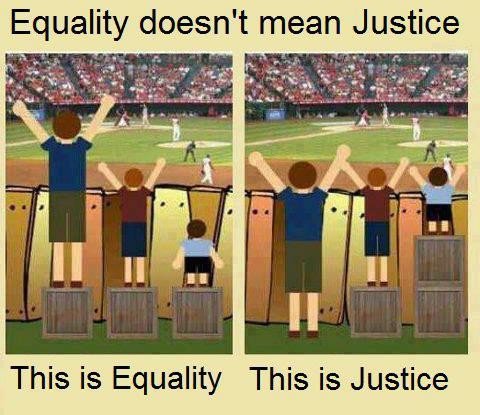
Justice

‘Equality does not mean justice’

  • Giving everyone the same box to stand on doesn’t make it fair because not everyone is the same height
  • The tall guy doesn’t need a box to see over the fence
  • The short guy needs two boxes
  • Distributing resources & opportunities so everyone has what they need to see over the fence is social justice

One day, after running away from Egypt, Moses finds himself sitting by a well when seven young women come along to draw water for their flocks

  • As they do this some other (male) shepherds drive the women away
  • Once again Moses is confronted with an injustice

You’ve probably heard the saying,

  • ‘Give a man a fish and he will eat for a day. Teach a man to fish and he will eat for a lifetime’
  • Well that’s okay but what if the man doesn’t have fair access to fishing equipment or to the fish pond itself?
  • Then we have a social justice issue

Driving the women away from the well so they couldn’t water their flocks was a social justice issue

  • And as one who can’t stand to see people abusing power Moses takes action to help correct the imbalance
  • This time though he doesn’t use violence or diplomacy
  • He doesn’t try to punish the shepherds nor does he try to restore the broken relationship
  • This time Moses simply waters the flocks for the women

Now there may be some who would say, ‘That’s a poor solution because it doesn’t empower the women to do it themselves – and it reinforces unhelpful stereotypes about women not being able to cope without men’

Well, that’s not how I see it

  • If the goal is to bring about social change, so that women shepherds are allowed fair access to the well for watering their flocks, then the change needs to come from inside the male shepherds
  • I’m talking about changing attitudes and values and mind-sets
  • Internal change comes about by being with someone who embodies that change – experiencing someone who is a living example of the change

Just outside the Wellington railway station there is a statue of Mahatma Ghandi with the quote, “Be the change you want to see in the world

  • I wonder if this is what Moses was aiming for when he watered the women’s flock
  • Yea he was doing it for them – but perhaps he was also making a statement to the other male shepherds
  • Perhaps his act of chivalry would have made them stop and think about their actions so they felt a little ashamed for how they had behaved
  • Maybe next time they would remember Moses’ example and allow the women access to the well – who knows?

What we do know is that Moses found acceptance and a family for his efforts

Whether Moses was able to change attitudes by his example or not the Law of Moses would later include elements of social justice

  • In the book of Numbers (chapter 27) the five daughters of Zelophehad asked for an inheritance in the Promised Land because their father had no sons and Moses granted it to them
  • Social justice you see – giving everyone fair access to the fish pond, giving everyone the means to see over the fence.

Conclusion:

This morning we’ve considered three different kinds of justice…

  • Punitive justice – where people are punished by having something taken away from them
  • Restorative justice – where the loss (and hopefully the relationship) are restored
  • And social justice – where everyone gets fair access to the fish pond, or the watering well

There is a true story which illustrates all of these kinds of justice at once

  • Many of you would have heard it already but it’s worth retelling

Fiorello LaGuardia was mayor of New York City during the worst days of the Great Depression and all of WWII

  • He was a colourful character who used to ride the New York City fire trucks, take entire orphanages to baseball games, and whenever the New York newspapers were on strike, he would go on the radio and read the Sunday funnies to the kids.

One bitterly cold evening in January of 1935, the mayor turned up at a night court that served the poorest ward of the city

  • LaGuardia dismissed the judge for the evening and took over the bench himself
  • Within a few minutes, a tattered old woman was brought before him, charged with stealing a loaf of bread
  • She told LaGuardia that her daughter’s husband had deserted her, her daughter was sick, and her two grandchildren were starving

But the shopkeeper, from whom the bread was stolen, refused to drop the charges

  • “It’s a real bad neighbourhood, your Honour.” the man told the mayor. “She’s got to be punished to teach other people around here a lesson.”

LaGuardia sighed. He turned to the woman and said “I’ve got to punish you. The law makes no exceptions—ten dollars or ten days in jail.”

  • But even as he pronounced sentence, the mayor was already reaching into his pocket. He extracted a bill and tossed it into his famous sombrero saying: “Here is the ten dollar fine which I now remit; and furthermore I am going to fine everyone in this courtroom fifty cents for living in a town where a person has to steal bread so that her grandchildren can eat. Mr. Baliff, collect the fines and give them to the defendant.”

Everyone in the court room gave the mayor a standing ovation [6]

Mayor LaGuardia made sure the requirements of punitive justice were met and at the same time attempted some social justice

  • The woman was also restored in that she now had money in her pocket with which to pay the grocer for the bread she had stolen

There was someone else of course who managed to satisfy the requirements of punitive, restorative and social justice all at once & that was Jesus, on the cross

  • He took our punishment
  • He made it possible for us to be restored to right relationship with God
  • And he provided access for everyone to drink from the well of life
  • For [in Christ] there is no difference between Jew and Gentile – the same Lord is Lord of all and richly blesses all who call on him, for, ‘Everyone who calls on the name of the Lord will be saved.’ [7]  

[1] Attributed to William Allen White

[2] Matthew 7:1-2

[3] Hebrews 4:12

[4] This is often attributed to Mahatma Ghandi although it is unclear if he actually said it

[5] http://www.restorativeschools.org.nz/restorative-practice

[6] Brennan Manning, The Ragamuffin Gospel, pages 91-2

[7] Romans 10:12