Ten Words

Scripture: Exodus 20:1-17

Title: Ten Words

Structure:

  • Introduction
  • God’s love comes first – relationship, freedom & grace (v.2)
  • Loving God – loyalty & jealousy (vv.3-7)
  • Sabbath holds it all together – creation not chaos (vv. 8-11)
  • Loving neighbour – community not competition (vv. 12-17)
  • Conclusion

Introduction:

Whenever I cook I like to follow a recipe

  • Without the instructions I’m cooking blind and don’t know if the outcome will taste any good
  • But with the recipe I don’t worry
  • The recipe gives me confidence that we will eat well that night

Please turn with me to Exodus chapter 20, page 80 in your pew Bibles

  • Today we resume our series on Moses
  • By this stage in their journey Israel are 3 months out of Egypt, camped at the foot of Mt Sinai
  • Moses is acting as an intermediary between God and the people, communicating God’s words to the Israelites
  • In this morning’s reading God gives Moses a recipe for life
  • These are God’s instructions for living well
  • From Exodus chapter 20, verse 1, we read…

Read Exodus 20:1-17

May the Spirit of Jesus illuminate this reading for us

This recipe or list of instructions, in Exodus 20, has been summarised as ‘love God and love your neighbour’

  • And while that’s a pretty good summary it doesn’t actually start with our love – it begins with God’s love
  • Before we can love God, or anyone else, we must first accept God’s love for us – if we miss out that step all our efforts will come to nothing

God’s love comes first – relationship, freedom & grace (v.2)

The thing with following a recipe, or any other set of instructions, is that you have to follow all of it

  • If you leave out any part of the recipe then it doesn’t taste right
  • For example, you might be making a brownie and you see the list of ingredients includes 100 grams of butter
  • You think to yourself – that’s easy – I’ll just measure out 100 grams and throw it in the bowl with the sugar and the flour
  • Then you can’t understand why the ingredients don’t combine well
  • So you go back to read the recipe again (properly this time) and you see that you were supposed to melt the butter first

It’s the same with flat pack furniture

  • You might think you can take a short cut here or there but if you miss out any steps along the way or get those steps in the wrong order, you have to start again

This recipe or list of instructions that God gives Moses in Exodus 20 is commonly referred to as the ‘10 Commandments’

  • It would be more accurate though to call this the ‘10 Words’ or the Decalogue (deca meaning 10 and logue meaning word)

Verse 1 reads, ‘God spoke and these were his words.’

  • The original Hebrew text doesn’t even mention the term ‘commandment’ in this passage

Anyway in verse 2, Yahweh says to Moses…

  • “I am the Lord your God who brought you out of Egypt, where you were slaves.”

Clearly this is not a commandment – it is a statement of fact

  • God is essentially saying, ‘Israel, I love you. Remember that, because my love is how it all begins’
  • Consequently, in Jewish tradition, the Decalogue (or the 10 words) begins with verse 2

Unfortunately our Protestant tradition overlooks verse 2 altogether

  • Our tradition begins with verse 3, ‘Worship no God but me’.
  • By not paying attention to vs. 2 we Protestants have messed up the recipe
  • We’ve forgotten the first & most important ingredient – God’s love for us

So let’s get it right then – let’s pay attention to the whole recipe and start with God’s first word in verse 2 – because this is where God makes it plain what His intention is in giving the Law

Yahweh begins, “I am the Lord your God”

  • This is a statement of personal relationship
  • As Terence Fretheim observes: The address is to the individual ‘you’ and not to Israel generally – which lifts up the importance of internal motivation rather than corporate pressure or external coercion [1]
  • In other words, God’s instructions should be understood relationally and personally
  • God does not intend for our obedience to be forced from the outside but wants us to obey Him freely and willingly from the inside, because we know He loves us and we love Him in return

We have speed limits on our roads

  • Those limits are put there for our well-being, our safety
  • We might obey the speed limit for external reasons – because we don’t want to get snapped by a speed camera and fined
  • Or we might obey the speed limit for internal reasons – because we care about the people travelling in our vehicle
  • They say a man never drives more carefully than when he has his new born baby in the car. Why? Because he loves his child
  • As a father he isn’t worried about speed cameras – he just wants to protect his child
  • God’s words, His instructions or His recipe, are given in love
  • And He means for us to keep His words out of love for Him – not out of fear of punishment

God goes on to say, in verse 2 …

  • I brought you out of Egypt where you were slaves
  • The message is clear – God’s intention for Israel is that they be free
  • The Law is not to be understood as another form of bondage
  • The Law is to be understood as a recipe for freedom

When God says…

  • Do not commit murder, do not commit adultery, do not steal and so on, He isn’t taking away their freedom
  • He is indicating how they can more fully enter into their freedom
  • The Law is not a whip and God is not a slave driver
  • The Law is a gift and God is a redeemer

The other thing we should note here is that grace comes first, before the giving of the Law

  • God saved Israel before they had done anything to deserve it, that’s grace
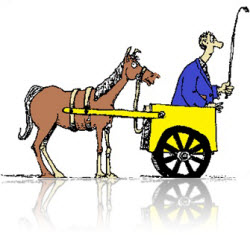
  • Grace is the horse and obedience is the cart
  • The horse of grace pulls the cart of obedience
  • We mustn’t get the cart before the horse

So, God frames His Law in terms of personal relationship, freedom and grace

  • God gives the Law for our well-being
  • The Law is intended as an expression of God’s love for us


The first step in God’s recipe then is recognising His love for us

  • The second step is about us loving Him
  • Loving God means being loyal to Him


Loving God – loyalty & jealousy (vv.3-7)

In verse 3 the Lord says, ‘Worship no God but me’

  • Then He goes on to explain in verses 4 & 5, this means you don’t make any sort of graven image and you don’t bow down to any idol

Basically God wants our exclusive loyalty

  • He tolerates no rivals (as the Good News Bible puts it)
  • It’s not that God is insecure or feels threatened by the competition
  • Rather, there is no competition
  • There are no other gods beside Yahweh and therefore we would be wasting our time if we worshipped anything else

More literal translations of verse 5 have the Lord saying, ‘I am a jealous God’

  • We tend to think of jealousy as a negative thing – like envy
  • And while jealousy can have that nuance in today’s modern English use-age, it never has that meaning in relation to God – God is not envious

The word jealousy originates from the Latin word zelosus – from which we get the word zealous  [2]

  • Jealousy, in relation to God, has to do with His zealousness for our well being

I didn’t really begin to understand the concept of God’s jealousy until I became a parent

  • You know when your child is vulnerable or threatened or at risk in some way and you experience this incredible urge from within to protect them
  • That energy, that irrepressible instinct to protect, that’s jealousy in the positive sense of the word

There is a movie which came out in 2008 starring Liam Neeson, called Taken

  • I haven’t seen the movie because, as a father of two girls, I don’t find that kind of thing entertaining
  • Basically the daughter of an ex CIA agent is kidnapped and the father (Liam Neeson) goes after the kidnappers to get his girl back
  • The father is jealous for his daughter – he is fiercely protective of her and will not rest until she is safe

God is jealous in the sense that He is fiercely protective of those in His care – those who belong to Him

  • He is jealous in the sense that He will leave no stone unturned to find us and restore us to Himself

Pharaoh inflamed the Lord’s jealousy by his mistreatment of the Hebrew people and Egypt suffered terribly as a consequence

We see the lengths that God would go to, in His jealous love for us, in Jesus’ sacrifice on the cross

God’s jealousy, then, is essentially His protective instinct for us

  • Like a parent’s protective instinct with their child
  • God doesn’t want us to bow down to anything else because that would be bad for us and He wants to protect us from what is bad
  • It’s really quite cool that in loving God we are doing ourselves a favour

In the same way that God is jealous for our well-being – we too need to be jealous for God’s reputation

  • And so in verse 7 The Lord says, ‘Do not use my name for evil purposes’
  • Or, ‘Do not take the Lord’s name in vain’

To take the Lord’s name in vain is to say, ‘You must do what I say because God has told me this’, when in fact God has not told you that

To take the Lord’s name in vain is to claim you are doing God’s work by blowing yourself up in a crowd or flying a passenger plane into a high rise

To take the Lord’s name in vain is to say, ‘I’m a Christian’ and then live the lifestyle of a pagan

God is jealous for us and we need to be jealous for Him

  • Loyalty and jealousy – that is what it means to love God

Sabbath holds it all together – creation not chaos (vv.8-11)

When you make a cake you need a binding ingredient – something (like an egg for example) that holds the mixture together

At the centre of God’s recipe is the instruction to dedicate one day in seven, a Sabbath to the Lord for resting

  • The Sabbath is the binding ingredient in God’s recipe for living well
  • It holds together God’s love for us with our love for God & our neighbour
  • Or to change the metaphor: The Sabbath instruction is a major intersection connecting the main arterial routes within God’s Law

We observe a Sabbath for ourselves, for our neighbour and for the sake of creation

Jesus said, ‘Man was not made for the Sabbath. The Sabbath was made for man’

  • Before anything else the Sabbath reminds us of God’s love for us
  • The Sabbath is a gift from God for our well-being
  • By resting, our body is restored and our mind is released from the knots it gets itself into
  • Rest prevents work from becoming an idol and therefore helps us to remain loyal to God

If you are baking bread then normally part of the process involves allowing the dough time to rest before you put it in the oven

  • Or when you cook a choice piece of meat – you don’t cut it as soon as it leaves the pan – you let it rest for a few minutes first

If we are going to enjoy life and get the most out of it then we need to factor in times of regular rest

Not only is it good for us when we observe a Sabbath, it is good for others also – it makes us easier to live with

In verse 10 the Lord says the Sabbath is for everyone, including your children, your manservants & maidservants, your animals and the foreigners living in your country

  • This instruction was way ahead of its time
  • In other cultures the men in charge might be allowed a day off while everyone else had to keep working
  • In Israel though, there was to be Sabbath equality

At its heart, Sabbath rest is really about creation. In verse 11 God says…

  • “In six days I, the Lord, made the earth, the sky, the sea, and everything in them, but on the seventh day I rested. That is why I, the Lord, blessed the Sabbath and made it holy.”

There is a relationship between the physical order and the moral order

  • When Adam sinned against God in the garden, the land was cursed
  • When we make production and consumption and money more important than God, then the environment suffers
  • But when we keep God’s moral order we preserve the physical order
  • Observing Sabbath rest is a creative act which keeps the forces of chaos at bay

The first step in God’s recipe is recognising His love for us

  • The second step is us loving God – being loyal to Him & jealous for His reputation
  • The key ingredient which holds it all together is Sabbath rest
  • Sabbath connects loving God with loving our neighbour

Loving neighbour – community not competition (vv. 12-17)

To love our neighbour is to be beside them and have their back – to be committed to their well-being as God is committed to our well-being

Verses 12-17, of Exodus 20, spell out what loving our neighbour looks like…

  • Honour your father and mother
  • Do not kill
  • Do not commit adultery
  • Do not steal
  • Do not accuse anyone falsely
  • Do not covet

These instructions are about living in community, as opposed to living in competition

  • Community requires cooperation – competition leads to isolation
  • Community sees connections and how to strengthen those connections
  • Competition sees people either as tools to be used or as a threat to be eliminated
  • In community we have each other’s back – we don’t worry about ourselves – we think about the person next to us
  • Therefore we have a sense of security in community
  • But in competition there is only anxiety

When we look at these ‘love thy neighbour’ instructions we notice that at least two of them relate directly to family life

  • Honouring parents and not committing adultery
  • Parents and husband or wife are our nearest neighbours
  • To follow these two instructions is to maintain family life which in turn strengthens the wider community

Honouring parents is an intentionally broad expression which may mean different things depending on the circumstances and stages of life

  • When we are young it could mean obeying our parents, but it won’t always mean that
  • As our parents get older and less able, honouring them might mean taking care of their physical needs

‘Do not kill’, is a tricky one – particularly in light of some other aspects of Old Testament Law where God seems to condone killing

  • For this reason some translators prefer to say, ‘Do not commit murder’
  • But this is problematic also
  • Perhaps it is good that the Hebrew word for kill (rasah) is a little vague in its definition, because this forces us to continually reflect on the meaning of the commandment, particularly in light of issues like war, euthanasia, suicide, self-defence and abortion
  • I like what Terence Fretheim says here: “The basis of the command is that all life belongs to God. The divine intention in creation is that no life be taken. Life is thus not for human beings to do with as they will; they are not God.” [3]

We are not to steal, because work is a gift from God and when someone steals they show contempt for other people’s work

  • Stealing, in the original context, could also be a life and death matter, depending on what was stolen and how poor the victim was

‘Do not accuse anyone falsely’, was originally a reference to not giving a false testimony in legal proceedings – don’t pervert justice in other words

  • But it could also mean don’t gossip or speak slanderous or deceptive words about anybody
  • We need to have each other’s backs in our conversations and guard one another’s reputations – this builds trust

Covetousness has to do with misplaced desire, envy, lust & greed and this last instruction is mostly concerned with a person’s inner life – the inclinations of the heart and the habits of the mind

  • The thing with coveting is that other people can’t usually tell when we are doing it – but God knows, because God looks on the heart
  • If we avoid coveting other people’s stuff then we will probably avoid breaking the previous five ‘love thy neighbour’ instructions

Conclusion:

There’s a lot more we could say about God’s recipe in Exodus 20 – in particular the way Jesus modified it and extended its meaning in His Sermon on the Mount in Matthew 5 – but that’s enough for today

The main thing to take away is that the Decalogue (God’s 10 Words of instruction) are a recipe for living well

The first step in the recipe is recognising God’s love for us

  • Grace comes before the Law
  • But even the Law itself is an expression of God’s grace
  • God gives His instructions so we can be free

The second step is us loving God

  • That means being loyal to Him & jealous for His reputation

The key ingredient which holds it all together is Sabbath rest

  • Sabbath is a creative act in that it keeps the forces of chaos at bay and connects loving God with loving our neighbour

To love our neighbour is to have their back – to stand beside them in commitment to their well-being as God is committed to our well being

  • Loving our neighbour requires a community attitude, in contrast to a competitive attitude

Let us pray…

[1] Terence Fretheim, Exodus, page 222

[2] http://www.oxforddictionaries.com/definition/english/jealous

[3] Terence Fretheim, Exodus, page 233.

God’s Plan

Scripture: Exodus 19:1-6

Title: God’s Plan

Structure:

  • Introduction – God’s plan
  • What God has done for Israel – Grace
  • What God expects of Israel – Obedience
  • What Israel will be (if they obey) – Purpose
    • A treasured possession
    • A kingdom of priests
    • A holy nation
  • Conclusion

Introduction:

Today we continue our series in Exodus, focusing on chapter 19, verses 1-6

  • I will be reading from the New International Version this morning
  • So the words will appear on the wall shortly

At this point in the story the people of Israel have travelled to the foot of Mount Sinai – it has been 3 months since they left Egypt

  • The Israelites will camp at Sinai for 11 months while God gives them the Law
  • Today’s Scripture describes the first of Moses’ seven ascents up the mountain to meet with God
  • From Exodus 19, verse 1 we read…


On the first day of the third month after the Israelites left Egypt – on that very day – they came to the Desert of Sinai. After they set out from Rephidim, they entered the Desert of Sinai, and Israel camped there in the desert in front of the mountain.


Then Moses went up to God, and the Lord called to him from the mountain and said, ‘This is what you are to say to the descendants of Jacob and what you are to tell the people of Israel:


“You yourselves have seen what I did to Egypt, and how I carried you on eagles’ wings and brought you to myself. Now if you obey me fully and keep my covenant, then out of all nations you will be my treasured possession.


Although the whole earth is mine, you will be for me a kingdom of priests and a holy nation.” These are the words you are to speak to the Israelites.’


May the Spirit of Jesus illuminate this reading for us

In these verses Yahweh lays out his blue print for Israel

  • If you have a look on the back page of your newsletter you will see the basic outline of God’s plan for His people

Firstly, God recaps what He has done for Israel in delivering them from slavery in Egypt – step one is salvation by grace

Then God makes it clear (in general terms) what He expects of Israel and so step two is obedience

  • Obedience is the appropriate response to grace

And thirdly God explains what Israel will be (if they obey)

  • Step three, therefore, is about purpose
  • God’s purpose is for Israel to be…
  • A treasured possession
  • A kingdom of priests
  • And a holy nation

So that’s the basic outline of God’s plan for Israel

  • Let’s unpack each step of the plan a little now…
  • Firstly, God’s grace in delivering Israel from slavery in Egypt

eagle

What God has done for Israel – Grace

Tell me, when you see this eagle, what is it that comes to mind?

[Wait for people to respond]


Thanks for those thoughts

  • When I see a picture of an eagle in flight I mostly think, freedom
  • But I also think skill and good vision – eagle eyed

One fact I wasn’t aware of before preparing this sermon is that the mother & father eagle are known for their devotion to their young

  • More than most other birds they take great care over their eaglets
  • Another thing I learned is that young eagles need to be taught to fly
  • It doesn’t come instinctively to them
  • In fact, without an adult eagle to mentor them, young eagles won’t learn to fly – they learn by watching their parents and imitating what they do


In verse 4 the Lord says to Moses…

  • “You yourselves have seen what I did to Egypt, and how I carried you on eagles’ wings and brought you to myself.”

In this verse God is recapping what He has done for Israel in rescuing them from slavery in Egypt – this is stage one of God’s plan in retrospect

  • Israel have been carried by God out of harm’s way
  • They did not need to fight for their release – God fought for them
  • All they had to do was hold on and enjoy the ride
  • Israel did not do anything to earn this special treatment by God
  • It was done at God’s initiative and by His grace – freely

God hasn’t just carried the people out of Egypt, He has brought them to Himself

  • This speaks of a personal relationship and of being at home with the Lord
  • It also indicates that God’s presence is revealed in a special way here at Sinai, where the people are now camped

It’s interesting that God associates Himself with an eagle – a powerful & skilful bird that is known for its freedom – this fits because God is free

  • If we are to imply from the metaphor that Israel is like a young eagle learning to fly then we have a very powerful image
  • The Israelites, who had been slaves, were being told by God that they should think of themselves as free, like an eagle
  • But while they were free in principle, they still needed to learn how to fly
  • That is, Israel needed to learn how to use their freedom well, without falling, and God intended to teach them

The giving of the Law at Sinai needs to be understood in the light of the eagle metaphor

  • God didn’t give the Israelites a whole lot of rules to make their lives more difficult – he gave them the Law so they could learn how to fly safely
  • So they could get the most of life and enjoy their new found freedom

Okay – so that’s stage one of God’s plan – it starts with grace

  • The next stage covers Israel’s response to that grace
  • God makes it clear his expectation of the people is obedience

 cart before the horse

What God expects of Israel – Obedience

Who can tell me what’s wrong with this picture?

  • [Wait for people to respond]

Yes, that’s right – the driver has got the cart before the horse

The expression ‘cart before the horse’ is English idiom for getting things in the wrong order – the wrong way around

Obviously things work better when the horse pulls the cart

  • It doesn’t work so well when the cart is in the way of the horse

When it comes to Jewish faith (and Christian faith for that matter), the horse is God’s grace and the cart is our obedience

  • The horse of grace pulls the cart of obedience
  • Grace is the engine – it is the power for us to obey

Judaism and Christianity are concerned with keeping God’s grace in front and allowing the awareness of God’s grace to draw us into obedience

  • So we don’t do things for God in order to get Him to do things for us
  • That would be paganism
  • God does good things for us up front and then as a grateful and willing response we do what God asks

So when the apostle Paul (in the New Testament) said we are not saved by works but by grace through faith – what he meant was, ‘Don’t get the cart before the horse’

  • God’s grace comes first and gives us the willingness to obey

It’s interesting isn’t it that the book of Exodus gives us 19 chapters of God’s grace before it introduces the Law with the 10 commandments

  • Grace precedes law, like a horse precedes a cart

The wonderful thing about the horse of God’s grace is that it leads us in the way we should go and at the right pace

  • It is an intelligent horse – we don’t need to drive it – it will draw us along

Okay then – stage 1 of God’s plan is grace

  • Stage 2 is obedience
  • And stage 3 is purpose

What Israel will be (if they obey) – Purpose

From verse 5 of Exodus 19, God instructs Moses to say to the people…

  • Now if you obey me fully and keep my covenant, then out of all nations you will be…
    • my treasured possession
    • a kingdom of priests
    • a holy nation

Clearly this is a conditional statement

  • If you obey me this is what you will be
  • Some things with God are unconditional – like His deliverance of the people from slavery in Egypt
  • It was all grace – a free gift, or more accurately a free ride

Other things with God are conditional – like whether or not we will fulfil the purpose He has for us

  • Fulfilling God’s purpose for us is not automatic – it depends (to some degree at least) on the choices we make

The horse of God’s grace will take us to the destination God has planned for us – but only if we attach our cart to the horse and stay on the cart

  • If we fall off the wagon (so to speak) then we can’t expect to arrive at the destination

A couple of weeks ago Robyn was offered some free tickets to the WOW festival (WOW stands for World of WearableArt)

  • Some people pulled out at the last minute and we had the option to use their tickets that night
  • Now I wouldn’t ordinarily go to something like this, but it was free, so I made the choice to accept the offer and we had a great time
  • What an amazing display of creativity
  • WOW is certainly the right word for it

The point is, although the tickets were free to us – a gift – our attendance at the event was not automatic

  • Fulfilling the purpose of the tickets was conditional on me changing my plans for the evening, driving into the city and collecting the tickets

It was like this with Israel

  • God was giving them a free ticket for a wonderful purpose – being His priests to the world
  • But whether Israel would actually fulfil God’s purpose for them was conditional on their obedience
  • They had to put aside their plans in order to go with God’s plan

As we’ve already noted verses 5 & 6 give three descriptions of God’s purpose for Israel – they are to be…

  • A treasured possession
  • A kingdom of priests
  • And a holy nation

These aren’t three separate things

  • They are three different but related ways of describing the same thing – Israel’s special relationship to Yahweh for the world
  • Israel don’t exist for themselves – they live for God’s purpose in the world

Each of the three descriptors highlights a unique perspective on God’s purpose for Israel

  • What then does it mean to be a ‘treasured possession’?

Imagine for a moment that your house is on fire

  • No one else is inside – only you
  • As it happens you have just enough time to rescue one item from the flames – your most treasured possession – What would you take?

Maybe the family photographs or your grandfather’s war medals or your mother’s wedding ring?

You probably wouldn’t take the TV or the microwave – those things can be replaced with insurance

  • You would be more inclined to take those things which have a special significance because of their association with people you love – right?
  • Things that can’t be replaced

In verse 5 we read that if Israel obeys Yahweh fully they will be His treasured possession – like the special photo you keep in your wallet or the heirloom wedding ring or the watch your grandfather gave you – something priceless

Now it is important to understand that God chose Israel as His people before they obeyed – their photo is already in His wallet

  • But whether their photo will be a painful reminder to God or a joyful one is conditional – it depends on Israel’s obedience


The second (and central) descriptor of God’s purpose for Israel is they are to be

  • A kingdom of priests

Most kingdoms are about ruling – being the boss in charge of other nations

  • But Israel is to be a kingdom of priests
  • A priest’s job isn’t to exert power and rule over people
  • A priest’s job is to serve people
  • So Israel is to be a servant nation, not a ruling nation [1]
  • God’s purpose for Israel is not total world domination
  • Rather God wants Israel to bless the other nations of the world
  • To this end priests act as mediators – representing other people to God


On the wall here is the picture of a linesman, working on overhead wires

  • Priests are a little like linesmen in that they work to restore the connection between God and people when the lines are down
  • In other words, priests pray (or intercede) for other people – especially those who are not able to pray for themselves

The whole world is God’s temple and Israel are to function as God’s priests in the world

  • They are to be a kingdom of priests both by representing others to God and by representing God to the world
  • Priests are God’s rep team
  • They make Yahweh known to others & they teach God’s ways to people
  • In particular Israel are to represent God by being a holy nation
  • You can’t expect to complete a marathon if you don’t do the training
  • You can’t expect to represent God as a priest if you live a life of drunkenness & debauchery


To be holy basically means to be different in a good way

  • If Israel obeyed the Lord then they would be distinctive from the nations around them
  • People would look at them and think: ‘Wow, they are on to it – we want what they’ve got.’

When Jesus talked about holiness in Matthew 5, he said to His disciples…

14 ‘You are the light of the world. A town built on a hill cannot be hidden. 15 Neither do people light a lamp and put it under a bowl. Instead they put it on its stand, and it gives light to everyone in the house. 16 In the same way, let your light shine before others, that they may see your good deeds and glorify your Father in heaven.

To be a holy nation therefore is to be distinctive – a light in the darkness

  • When all the other nations around them are worshipping many gods, Israel is to worship just one God, Yahweh
  • And when all the other nations around them are stealing and lying and committing adultery and wishing they could get their hands on their neighbour’s stuff, Israel are to look out for their neighbour’s well being

There is a cost to being holy – or different in a good way – and that is people don’t always like you or accept you

  • But Israel are to fear the Lord, not the nations
  • They are to care more for what God thinks than for what other people think


Conclusion:

This morning we’ve heard God’s plan for Israel in three basic steps:

  • Grace, obedience and purpose
  • God has rescued Israel from slavery in Egypt by His grace
  • And in response to that grace God is calling for their obedience
  • If they obey the Lord then Israel will serve a special purpose as God’s priests to the other nations of the world

This blueprint for Israel applies to Christians as well

  • While we were still sinners Christ died for us – the righteous for the unrighteous
  • Jesus is our rescue from slavery to sin & death – He is God’s grace for us up front before we’ve done anything to deserve it
  • In response to that grace we follow Jesus, in obedience to God
  • And if we obey the Lord in this way then we will be…
    • A treasured possession to God
    • A kingdom of priests

  • And a holy people
  •  

    The apostle Peter picks up God’s blue print in his letter to the churches, where he writes…


    But you are a chosen people, a royal priesthood, a holy nation, God’s special possession, that you may declare the praises of him who called you out of darkness into his wonderful light. 10 Once you were not a people, but now you are the people of God; once you had not received mercy, but now you have received mercy.


    11 Dear friends, I urge you, as foreigners and exiles, to abstain from sinful desires, which wage war against your soul. 12 Live such good lives among the pagans that, though they accuse you of doing wrong, they may see your good deeds and glorify God on the day he visits us.  

    Grace, obedience and purpose

    Let’s pray…

    [1] Durham 263, cited in Fretheim, Exodus, page 212.

    Moses Delegates

    Scripture: Exodus 18:13-27

    Title: Moses Delegates

    Structure:

    • Introduction
    • Moses’ blind spot
    • Jethro’s vision
    • Conclusion

    Introduction:

    There are many things you can do with your time – most of which can be done by someone else

    • So you have ask yourself, ‘What are the things only I can do?’
    • They are probably the things you need to give priority to


    There were many things Michelangelo could have done with his time

    • He could have been a blacksmith or a monk;
    • He could have studied the law or milked cows – but he didn’t
    • Instead he gave himself to what only he could do
    • Four years it took him to paint the ceiling of the Sistine chapel
    • Three years to sculpt the statue of David

    Please turn with me to Exodus chapter 18 – page 79 in your pew Bibles

    • Today we continue our series on Moses through Exodus
    • In chapter 18 Moses’ father-in-law, Jethro, comes to visit and finds that his son-in-law is doing many things – most of which could be done by someone else
    • From Exodus 18, verse 13 we read…

    [Read Exodus 18:13-27]

    May the Spirit of Jesus illuminate this reading for us

    In this Scripture we get a rare glimpse of Moses’ blind spot and Jethro’s vision

    Moses’ blind spot:

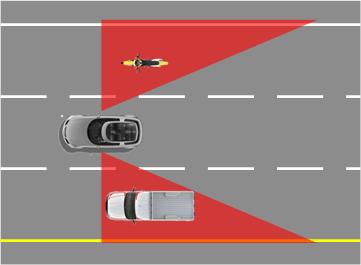
    Blind Spot

    On the wall here is a diagram showing the blind spots for a driver on the road

    • The red area, either side of the vehicle, reveals those zones the driver can’t see in his rear vision mirror
    • So to be able to change lanes safely the driver needs to look over their shoulder and check their blind spot


    Blind spots aren’t just something drivers have on the road – we all have them

    • A blind spot is essentially something about ourselves we are not aware of
    • Some personality trait we don’t realise we possess
    • Or some behaviour we do unconsciously
    • Other people can see it clearly enough, but we can’t

    It’s interesting isn’t it – that (without a mirror) we can’t see our own faces

    • Have you ever been in a conversation with someone and they’ve got something stuck in their teeth and you’re not sure whether to say anything
    • Or maybe they start wiping their nose and that makes you think, ‘Are they trying to subtly tell me I’ve got a bogey hanging out?’
    • So you wipe your nose too, which makes them wipe their nose again and so on, until it gets really awkward
    • Has that ever happened to you? (No – it’s just me then)

    Blind spots – things other people can see but you can’t

    True story – many years ago when our children were young and I wasn’t getting much sleep, Robyn and I went for a walk on the beach (we were on holiday)

    • I remember pushing the pram along the firm sand for probably the better part of an hour when Robyn pointed out to me that I had some toilet paper hanging out the back of pants (like a tail)
    • I had no idea – I couldn’t see because it was in my blind spot
    • Robyn had no sympathy – she cracked up laughing (if you’ll excuse the pun) and couldn’t look at me without giggling for the rest of the day

    When we are young we tend to have a lot of blind spots – we don’t know ourselves all that well

    • But hopefully as we get older and more experienced we learn to look into our blind spots and become more self-aware

    Carl Jung describes psychological blind spots as our shadow side – He writes…

    “Wholeness for humans depends on the ability to own their own shadow”

    In other words, unless we are prepared to face and accept those parts of ourselves which we are not aware of, and which we perhaps don’t like all that much, we’ll never be whole

    Moses was a remarkable leader – a man of incredible character – but even he had his blind spots, his shadow

    • Fortunately he had the humility not to deny his shadow side but to face it

    What Moses wasn’t aware of, but what Jethro (and everyone else) could plainly see, was that Moses was doing too much himself

    • Because of his relationship with Yahweh Moses had become the ‘go to’ guy for settling disputes
    • If you want peace you must have justice
    • But in order to have justice you must have wisdom
    • Where does wisdom come from? – It comes from God
    • Moses hears from God better than anyone else – so we’ll go to him

    Consequently, what we have in Exodus 18 is a bottleneck

    • Thousands of cases (many trivial, some serious) coming to one person for a resolution
    • It was a recipe for burnout & frustration
    • Burn out for Moses and frustration for the people, who had to stand in the hot sun all day waiting for a hearing with Moses
    • Justice delayed is not justice

    Jethro could see the problem and the solution – but Moses couldn’t

    This is kind of ironic when you think about it

    • Here we have Moses making enquiries of God to help other people fix their problems, all the time quite blind to his own problem
    • We can understand this though…
    • You can see a car in your rear vision mirror in the distance
    • But when it’s up close beside you, then you can’t see it
    • Moses couldn’t see because he was too close – too involved

    The other contributor to Moses’ blind spot was that he was doing good things

    • And when we do good things we are less inclined to question our method
    • Doing the right thing doesn’t guarantee we are doing it in the right way
    • Moses was doing the right thing – in the wrong way
    • He couldn’t see the toll his work was taking on him
    • Sometimes our focus on the task at hand conceals from us the expenditure on our reserves and it’s not until we stop and have a day off that we realise just how exhausted we are

    Quite apart from the drain on Moses’ personal resources, being sucked into the details and doing things other people could do, prevented Moses from seeing the bigger picture

    There are times when leaders need to take a step back and look at the situation from the balcony, rather than the floor

    • Of course, we don’t know what we don’t know
    • If we don’t know we have a problem then we don’t know to stand back and get some perspective – nor do we know to ask for help
    • This is where God’s grace comes in


    In his letter to the Romans the apostle Paul writes…


    …the Spirit helps us in our weakness. We do not know what we ought to pray for, but the Spirit Himself intercedes for us with groans that words cannot express. And He who searches our hearts knows the mind of the Spirit, because the Spirit intercedes for the saints in accordance with God’s will. [1]

    There have been times in my life when all I had was an ache in my heart, which I couldn’t put into words, but which the Holy Spirit felt and understood

    • Then, when I wasn’t expecting it, God did something which answered the ache in my heart and it was better than anything I might have asked for, had I been able to find the language
    • There’s no way I can explain the mystery of this
    • Either you understand it from your own experience or you don’t

    Moses didn’t know what to pray for – but God, who searches the human heart, knew the strain Moses was under

    • God also felt the frustration of the people as they waited for justice
    • And so the Lord, in His wonderful grace, sent Jethro to give Moses the perspective he needed

    Once Jethro had pointed out the issue, in Moses’ blind spot, Moses was able to see clearly what he needed to do

    • Seeing into his blind spot and accepting the truth it contained actually set Moses free from a whole lot of work he didn’t need to do
    • It also set the people free from waiting around all day

    We, in the west, tend to think of freedom as licence to do what whatever we want

    • But this is not freedom as the Bible understands it
    • Biblical freedom comes with spiritual sight – or with knowing the truth
    • As Jesus said, ‘…it is the truth that sets you free’ [2]

    It is looking in your blind spot to assess the reality of the situation, before changing lanes, that sets you free from a crash on the motorway

    • It is checking yourself in the mirror before going out in public that sets you free from the embarrassment of stray bogeys and toilet paper tails
    • It is the humility of listening to the truthful observations of wise Jethro’s which sets us free from self-destructive patterns of behaviour

    Face your shadow side – look for the truth it contains – there is freedom in it

    One of the things that is interesting in this little story from Exodus 18 is that the truth which sets Moses free doesn’t come from within the Israelite community

    • The truth comes from the outside – from Jethro, a Midianite

    In contrast to Moses’ blind spot we have Jethro’s vision

    Jethro’s vision:

    There are two aspects to Jethro’s vision in Exodus 18

    • Jethro has the insight to see the root of the problem
    • And he has the foresight to imagine a different future

    Moses is carrying the weight of the world (or at least the weight of Israel) on his shoulders and so Jethro asks the question…

    • “Why are you doing this all alone?” (verse 14)

    Why indeed?

    • This question is insightful – it cuts to the core of the issue, which is Moses’ isolation – his sense of alienation from his own people
    • Moses is alone in the crowd and it is the pattern of his life

    He grew up in a palace while his fellow Israelites lived in a slum

    • When he tried to reconnect with his people and help them he was rejected and ended up spending 40 years in exile
    • Then, as if he doesn’t feel different enough, God calls him to a special task – something no one else has ever done before
    • Moses reluctantly obeys and for all his pains and troubles the people complain against him and accuse him of meaning them harm, even though he has only ever done them good
    • It is little wonder that Moses doesn’t think to ask for help

    Leadership is a paradox

    • On the one hand, a leader needs to learn the strength to stand alone
    • And unfortunately you can’t learn that without the experience of being alone & misunderstood
    • At the same time though, a leader also needs to learn to trust other people
    • It seems to me Moses knew how to stand alone – he had that in spades – but he was still learning to trust

    Of course, it’s one thing to point out the problem, but unless you can offer a better alternative then it’s usually best to keep your opinions to yourself

    Not only did Jethro uncover the core of the problem – Moses’ loneliness

    • He also gave Moses the vision to imagine a better future
    • He gave Moses a plan and a strategy that was sustainable
    • In a word, that strategy was, delegation. Jethro says…

    Choose some capable men and appoint them as leaders of the people: leaders of thousands, hundreds, fifties and tens. They must be God fearing men who can be trusted and who cannot be bribed. Let them serve as judges for the people on a permanent basis. They can bring all their difficult cases to you, but they themselves can decide all the smaller disputes. That will make it easier for you as they share your burden.


    The first thing we observe about Jethro’s vision here is that delegation is not abdication

    • Moses isn’t to appoint just any body
    • The men he appoints must be capable, God fearing and trustworthy

    To be God fearing means to be more concerned with what God thinks than with what other people think

    • A God fearing person is not a ‘yes’ person
    • A God fearing person is able to say ‘no’ when it matters
    • They are guided by their conscience more than the praise or blame of others

    To be trustworthy in this context means having integrity – not open to bribery

    • The judge must love truth & justice more than money or comfort
    • Being ‘trustworthy’ implies it is a relationship of trust
    • Trust is a sacred thing and should not be abused or misplaced

    The point is, Moses shouldn’t just throw his authority away – he should carefully place it in men who have the competence & character to handle it

    We also note that Moses is not to delegate all his authority

    • Delegation doesn’t really work when the leader in charge expects everyone else to get stuck in without doing anything themselves
    • The delegates need to know the buck stops with Moses and that Moses will be there to take care of the really difficult cases
    • If Moses abdicated all responsibility and sat back saying – ‘It’s all on you boys’ – then he would lose the respect of his men pretty quickly

    Jethro’s plan – his vision of delegation – comes with a number of advantages


    The first and most obvious advantage is that many hands make light work

    At the end of verse 22 Jethro comments to Moses that his plan…

    • …will make it easier for you as they share your burden.
    • The burden is shared in that Moses has less disputes to sort out
    • And it’s also shared in the sense that Moses is less alone
    • Sharing responsibility actually engenders more understanding for the leader

    You often find those who are most critical of leaders have never actually been in leadership themselves

    • They are arm chair critics who have never really felt the burden or the isolation of leadership and so they have no empathy
    • But when you have had to carry some responsibility and felt the loneliness of a difficult decision then you have a bit more understanding for your boss

    By delegating, Moses was drawing the best out of others

    • Jesus said, “You are the salt of the earth”
    • One of the things salt does is bring the best out of food
    • Trusting others to do something meaningful (as Moses did) generally brings the best out of them

    Conclusion:

    There are many things you can do with your time – most of which can be done by someone else

    • So you have ask yourself, ‘What are the things only I can do?’
    • They are probably the things you need to give priority to

    No one could have helped Moses to see his blind spot quite like Jethro did

    • The same good advice from one of Moses’ juniors would have been a lot more difficult for Moses to accept
    • But Jethro was a leader in his own right (a priest of Midian) and so he understood Moses’ position
    • He had done his time and earned the right to speak into Moses’ life
    • Fortunately for Moses (and for Israel) Jethro used his vision to help Moses find a sustainable way forward
    • Imagine if Jethro had held his tongue
    • Moses and Israel would have suffered for it


    No one could hear from God quite like Moses could – he seemed to have a direct line of communication with the Lord

    • Fortunately for Israel (and for us) Moses gave himself to listening to God’s word and communicating this to the people
    • But that didn’t mean he had to settle every dispute
    • There were others capable of handling the smaller more routine matters
    • Imagine if Moses hadn’t taken Jethro’s advice
    • What a waste that would have been

    No one could save the world like Jesus did

    • Fortunately for us Jesus gave Himself on the cross for our salvation
    • Imagine if he had remained in Nazareth working as a carpenter his whole life
    • There would be some nice houses there I guess, but we would be without hope

    Now at this point you might be thinking that’s all well & good but what can I do that no one else can?

    • I’m not Michelangelo, I’m not Moses, I’m not Jethro and I’m certainly not Jesus
    • Well, each of us is unique and none of us are fully aware of how God will use us
    • Quite often our potential is hidden in our blind spot
    • God sees though and He will use us for His good purpose – even if we aren’t aware

    [1] Romans 8:26-27

    [2] John 8:32

    Resilient Faith

    Scripture: Exodus 16:1-21

    Title: Resilient Faith

    Structure:

    • Introduction
    • What is resilience?
    • Developing resilience
      • Presence (not absence)
      • Nourishment (not neglect)
      • Discipline (not excess)
    • Conclusion

    Introduction:

    Resilience - Elephant

    Resilience is the capacity to withstand stress & catastrophe [1]

    • This Volts Wagon is certainly showing some resilience

    Please turn with me to Exodus chapter 16 – page 76 in your pew Bibles

    • Today we continue our series in Exodus
    • The people have been camped at Elim – an oasis in the wilderness
    • Now they set out toward Sinai and on the way their resilience is tested and found wanting. From Exodus 16, verse 1, we read…

    Read Exodus 16:1-21


    May the Spirit of Jesus illuminate this reading for us


    What is resilience?

    A diamond is just a piece of charcoal that handled stress exceptionally well

    • Diamonds are of course one of the most resilient objects known to man
    • They are formed when carbon is put under extreme heat and pressure

    Resilience is not something you’re born with

    • Resilience develops as we grow up – although it doesn’t develop automatically

    Some factors that contribute to resilience are:

    • A good support network – including family & friends
    • A positive (and accurate) view of yourself
    • Good problem-solving and communication skills
    • The ability to ask for help and resources
    • Healthy coping strategies – including the ability to celebrate & enjoy life
    • An outward focus – by which I mean a mind-set which considers the needs and well-being of others
    • And most importantly, in my view, faith in a loving God

    All these things give us the basic materials for resilience – but we don’t really know how resilient we are until we face some kind of crisis

    • Pressure and stress reveal the diamond in our charcoal

    People who are resilient have the ability to pick themselves up and carry on

    • They don’t see themselves as victims – they see themselves as survivors
    • Those with resilience are able to find positive meaning in the difficult circumstances of their lives
    • And they have the strength to manage strong feelings and impulses

    Moses provides a good example of someone with resilience

    • The people of Israel? – Not so much

    In Exodus 16 the people have left the oasis at Elim and followed Moses into the desert of Sin

    • It has been somewhere between 4 and 6 weeks since the Israelites left Egypt (depending on how you interpret verse 1)
    • For not the first time the people complain to Moses & Aaron, saying…
    • “We wish the Lord had killed us in Egypt. There we could at least sit down and eat meat and as much other food as we wanted. But you have brought us out into this desert to starve us all to death”

    Wow – that’s messed up

    • The people who said that didn’t have their heads screwed on right
    • It hasn’t been two months yet and already they seem to have forgotten what God has done for them

    The good old days are never as good as people remember them

    • In actual fact the Israelites were slaves in Egypt – they were badly mistreated – they didn’t always have meat or enough to eat
    • Pharaoh was trying to kill them
    • But God delivered them from their suffering in a miraculous way

    The people weren’t starving yet – they were just worried that they might run out of food – what happens then?

    • They were getting ahead of themselves and thinking the worst

    One of the things you notice when you watch interviews with the All Blacks for this world cup is that they are very careful not to get ahead of themselves

    • The tournament is just getting underway
    • They’re not thinking about the final
    • They’re thinking about what’s happening now
    • They’re thinking about the practice that morning
    • Or the pool game that afternoon
    • One day at a time sweet Jesus, one day at a time

    Not getting ahead of yourself – not thinking the worst – takes mental discipline

    • Sadly it was a discipline the Israelites hadn’t learned at that point
    • They accuse Moses of wanting to starve them which just shows how fearful they were – and how little control they had over their thoughts
    • They weren’t calm on the inside – their minds were racing
    • The food crisis has led to a faith crisis [2]

    Moses shows resilience in the face of this accusation

    • Like the Volts Wagon under the elephant he doesn’t crumple
    • He isn’t defeated by the weight of the people’s criticism
    • Nor does he spit the dummy and walk off
    • Moses waits for God

    So where does Moses’ resilience come from?

    • Well, I think there are a number of pillars to his resilience

    If we look at Moses’ upbringing we note that he had a loving and supportive family network

    • His sister Miriam watched over him as a baby when he was put in a basket and floated down the Nile
    • His biological mother spent lots of face to face time with him as an infant, so he learned basic trust from that consistent attachment
    • His adopted mother was a princess in Egypt and so Moses never wanted for anything growing up
    • His basic assumption as a child was one of abundance not scarcity

    But Moses didn’t live his whole life in an ivory tower

    • After 40 years living in the wilderness as a shepherd he was well acquainted with the realities of survival
    • His adult life experience had taught him resilience in harsh environments

    Aaron was another string to Moses’ bow of resilience – although it was only a matter of time before Aaron became a thorn in Moses’ side

    The main stay of Moses’ resilience is his relationship with Yahweh

    • Moses is not acting or speaking on his own
    • He is following God’s instructions and so he is able to say…
    • ‘When you complain against us you are really complaining against the Lord’, verse 8
    • When we know we are in God’s will for us, when we know we are doing what God wants us to do, nothing can shake us
    •  “If God is for us, who can be against us?” [3]
    • The Lord is Moses’ support network, his resilience, his strength

    To be fair the people of Israel did not enjoy the same advantages that Moses did

    • They didn’t have the raw materials needed for resilience
    • They didn’t have a princess looking after them
    • They had the sting of the slave driver’s whip instead
    • They didn’t know abundance – they only knew hard work & poverty
    • Years of brutal oppression & slavery had all but wiped out their resilience

    Suffering and stress may reveal resilience – like sandpaper reveals the wood grain under paint

    • But when suffering and stress is all you’ve known then pain and fear is all you’ve got
    • If you keep sanding the wood too long it will wear thin and break
    • Suffering by itself doesn’t make you stronger – it makes you less resilient
    • Faith – learning to trust – that is what makes a person stronger

    Developing resilience:

    It seems to me that God wanted to develop a resilient faith among His people

    • The sort of faith that wouldn’t fall to pieces every time they found themselves in a stressful situation

    And to develop this resilience the Lord gave the people three things…

    • His presence, nourishment and discipline
    • These three things are (coincidentally) what a parent needs to give their child for resilience

    Presence – not absence

    C.S. Lewis once wrote…

    “We may ignore, but we can nowhere evade the presence of God. The world is crowded with Him. He walks everywhere incognito. And the incognito is not always easy to penetrate. The real labour is to remember to attend. In fact to come awake. Still more to remain awake.”


    This has been my experience

    • God is not absent or aloof – He is everywhere, but He’s in disguise

    Personally I see God most clearly in my circumstances

    • I tend to be more aware of Him out there (in the world) than I am of Him in here (in church)
    • I love it when God puts me in just the right place, at just the right time, with just the right resources to help just the right person
    • That’s when I’m most aware of God’s presence

    I remember on our honeymoon, Robyn and I were near Russell, in the Bay of Islands

    • We were driving along in our burnt orange Mark 2 Ford Escort, coming over the hill from Tapeka Point, and this lady waved us down
    • So I pulled over to the side of the road and she quickly opened the door and jumped in the back
    • She was scared out of her wits because a dog had been chasing her
    • We gave her a lift down the hill into Russell township – she got out and we never saw her again

    It was a small thing for us to do – no inconvenience really – but I saw God in that situation

    • He put us in the right place, at the right time, with the right resources to help a stranger in need
    • If we had come over the hill one minute earlier we would probably have missed her
    • And if we had come one minute later, who knows – maybe she would have been bitten or worse
    • It was a God moment

    In Exodus 16, verse 10, we read how God makes is presence visible to the people of Israel in the form of a dazzling light inside a cloud

    • The people were scared and insecure – they needed to see God’s presence in a tangible way
    • Nothing is more convincing than presence

    If you want to develop or maintain a resilient faith, then stay alert to the signs of God’s presence, whatever form He may meet you in, whether that’s through:

    • Reading the Bible
    • Or singing worship songs
    • Or helping people
    • Or experiencing dreams and visions
    • Or whatever – just look for His presence

    Nourishment – not neglect

    The second thing God does in Exodus 16, to help the people develop resilient faith, is He feeds them

    • God provides nourishment (He does not neglect His people)

    The nourishment comes in the form of meat and bread – protein and carbs

    • God sends quail in the evening and manna in the morning

    Quail are known to migrate across the Sinai Peninsula at certain times of the year

    • They stop to rest on the ground in the evening and would be easy for the people to catch
    • Although quail are naturally occurring, their provision in this situation, is extraordinary – God must be behind it
    • Because the quail arrive every night for 40 years and they never run out
    • In the ordinary course of events you wouldn’t expect that sort of frequency or quantity

    The manna which appeared in the morning could also be a naturally occurring food source

    • There is an insect in that part of the world which feeds off the tamarisk tree and it secretes a white yellowy substance which is sweet to eat
    • It is rich in carbohydrates & sugar and it’s still gathered by people living in that area today
    • At night, when it’s cold, the substance congeals, but then, when the sun comes out, it melts in the heat of the day
    • It is a food which normally decays quickly and it attracts ants

    Whatever you want to call this stuff it fits the description of manna in Exodus

    The provision of manna, in this situation, is extraordinary – God must be behind it

    • Because the manna is there every morning for 40 years, enough to feed well over 1 million people each day
    • And on Friday’s it lasts for two days without going bad
    • In the normal course of events you wouldn’t expect that kind of frequency or quantity – nor would you expect that kind of shelf life

    The way God consistently provides quail & manna shows the people He can be relied on – they can trust Him

    • Even when the people complain or disobey, God still keeps feeding them

    Feeding children is one of the core responsibilities of parents

    • That routine of providing regular meals is actually one of the things that contributes to a child’s resilience
    • It helps them to feel safe and secure so they learn to trust and not worry about where their next meal is coming from

    God provides the ingredients for a resilient faith by the gift of His presence and by feeding His people regularly

    • He also develops resilience through discipline

    Discipline – not excess

    Discipline is a misunderstood word these days

    • We often associate discipline with punishment – six of the best or time out or being grounded or some other negative consequence

    But discipline isn’t really about punishment – discipline is about learning

    • To discipline someone is to teach them

    So for example, teaching your child how to use a knife and fork so they can eat their dinner independently – that is discipline

    • Or teaching them how to bake a cake or sew on a button – these are also examples of disciplining your children

    God’s gift of manna & quail comes with certain instructions

    • These instructions are designed to help the people get the most out of God’s gifts and to teach the people faith or trust in God

    So when God says, ‘only gather as much as you need and don’t try and hoard it’, this is teaching the people both to practice self-restraint and to trust the Lord to provide some more tomorrow

    • Give us this day our daily bread

    And when the Lord says, ‘gather a double portion on Friday and don’t gather any on Saturday’, this is teaching the people to rest

    • It is showing them their life does not depend on work and endless activity – it depends on God
    • Learning to rest, to celebrate, to enjoy life, to find a healthy distraction from work, this is a significant contributor to resilience also

    Another thing you notice if you watch interviews with the All Blacks, leading up to this world cup, is the way they are keeping the conversation light

    • They’re not intensely focused on rugby all the time and I think this helps to preserve their resilience
    • I saw an interview in which Luke Romano was talking about how he and Sam Whitelock had been feeding the hotel nuts to a squirrel
    • It’s a healthy distraction – something else to think about – it helps them stay relaxed so they are better able to handle the pressure when it comes

    God loves the people of Israel enough to discipline them

    • He doesn’t spoil the Israelites with excess
    • He teaches them resilience by giving them boundaries

    We human beings need certain boundaries (especially when we are young)

    • The discipline or the teaching of what is good for us, and what is harmful, actually gives us a sense of security and strength in adulthood

    Boxing - footpath

    Discipline (teaching right from wrong) is like setting up the boxing when you are pouring concrete

    • If you want the concrete to hold its shape you need to make sure the boxing is in place beforehand
    • Without the boxing the wet concrete runs everywhere
    • But with the firm boundary provided by the boxing the concrete stays in place and then once it is set you can take the boxing away
    • Once the child has learned you don’t have to stay on their back all the time

    Bicycle-Training-Wheels

    Or to use another metaphor, teaching resilient faith is like teaching someone to ride a bike

    • When we start out in the faith God may give us training wheels
    • By training wheels I mean special supports like miracles perhaps, or a warm glow, or enthusiasm for reading the Bible or something else that makes believing in Him a bit easier
    • These training wheels give us the feel of faith and help us to build up some confidence

    But ultimately God wants to teach us to ride without the training wheels

    • Because the picture of an adult riding with kiddy wheels is disturbing


    And so, as we progress in the Christian faith, God may take away the supports

    • We might not experience miracles anymore or we may go through a real dry time in our devotional life or we may struggle with doubt
    • When God removes the training wheels it might feel like He has abandoned us – but actually He hasn’t – He’s still right there beside us
    • It’s just that we are having to learn to ride a two wheeler now
    • It feels a bit wobbly to begin with and we may fall over & skin our knees
    • But if we pick ourselves up again and carry on we eventually get the hang of it – we learn resilient faith

    Conclusion:

    I’m conscious that we are not all the same when it comes to resilience

    • Some people have been given all they need for resilience
    • They have grown up in a functional family and are surrounded by people who love and support them
    • They are able to take time off to enjoy life and have really good communication skills and so on

    Then there are others who have suffered loss repeatedly and actually feel quite fragile most of the time

    • Or those who didn’t have a happy childhood
    • Those whose experience was one of neglect or excess or even abuse
    • And others who are having to work three jobs just to make ends meet, so they don’t have time to rest and enjoy life
    • Resilience in these cases seems like an unattainable goal
    • Let me say to you, Jesus understands – He is all compassion
    • “A bruised reed he will not break and a smouldering wick he will not snuff out.”

    Whatever your situation – Jesus is our security

    • His resurrection from the dead is our hope of eternal resilience.
    • Whether we feel bullet proof or paper thin – strong or weak…
    • We need to keep looking to Christ for His presence, His nourishment and His discipline
    • And we shouldn’t be afraid or surprised when the training wheels come off – it’s really a compliment when God does that – a sign of His love and trust in us

    [1] http://www.pbs.org/thisemotionallife/topic/resilience/what-resilience

    [2] Terence Fretheim, Exodus, page 181.

    [3] Romans 8:31

    God Heals

    Scripture: Exodus 15:19-27

    Title: God Heals

    Structure:

    • Introduction
    • God heals the waters, naturally
    • God heals the people, conditionally
    • Conclusion

    Introduction:

    Please turn with me to Exodus chapter 15, page 75, near the beginning of your pew Bibles

    • This morning we continue our series on Moses
    • Last week we heard how God & Moses led the Israelites out of Egypt and through the Red Sea
    • This was a journey from triumphalism, through terror, to trust
    • Today Moses & God lead the people from victory, through bitter disappointment to healing & refreshment

    From Exodus 15, verse 19, we read…

    [Read Exodus 15:19-27]


    May the Spirit of Jesus illuminate this reading for us

    In this Scripture God heals through Moses

    • God heals the bitter waters, naturally
    • And God heals the people, conditionally


    God heals the waters, naturally:

    If we were to make a movie of the Exodus (and people have of course) then the end of chapter 14 would be the perfect place to finish

    • The Israelites (who are the underdogs) have just passed through the Red Sea to safety
    • God (the hero) has won the day and the bad guy (Pharaoh) has been defeated
    • Now the Israelites can ride off into the sunset and live happily ever after
    • The audience can leave the theatre with Miriam’s song of victory ringing in their ears and reality can be avoided for another day

    But what if the movie kept going?

    • What if we went past the climax of the story and into ordinary life beyond the happy ending?

    This is what happens in Exodus 15

    • After the victory over the Egyptians at the Red Sea, Moses leads the people off into the desert
    • And after three days of walking into the sunset the people are thirsty

    You can imagine their disappointment when they do eventually find some water, only to discover it was too bitter to drink

    • This is life after the end credits

    Terence Fretheim observes…

    • “It is not enough for the people of God to sing, they must also listen to their God and follow the divine leading” [1]

    The people were understandably happy to be delivered from the Egyptians and it was right that they responded to God with songs of praise

    • But the best way to give thanks to God is by listening to what he says and following His lead

    Jesus told a parable (in Matthew 21) of a man who had two sons

    • He went to the elder one and said…
    • ‘Son, go and work in the vineyard today’
    • And the elder son replied…
    • ‘Na. Don’t want to’, but later he changed his mind and went
    • Then the father went to the other son and said the same thing
    • The younger son said, ‘Yea sure Dad, be happy to’, but he did not go

    The first son says the wrong thing but then he does the right thing

    • The other son says the right thing but he does the wrong thing

    It is not enough for the people of God to sing the right words, they must also listen to God and follow His leading

    I said last week that passing through the Red Sea was a kind of baptism for Israel

    • Baptism is a new beginning
    • It is not the end of all your problems – it is the end of an old way of life and the start of a new way of life

    Shortly after Jesus was baptised the Spirit of God led Him into the wilderness to be tested by Satan

    • It was similar for Israel
    • After their baptism in the Red Sea, God led the people into the wilderness to test them
    • The people needed to learn not just to say the right thing but also to do the right thing
    • Because it is in listening to God and obeying Him that we are healed (spiritually)

    Verse 24 of Exodus 15 tells us the people said the wrong thing – they complained to Moses, asking, ‘what are we going to drink?’

    Moses models the example of the right thing to do in a situation like this

    • Moses prays earnestly
    • This means both calling on God and listening for His response
    • As Moses listened the Lord showed him a piece of wood (a tree) which Moses threw into the water – to make it drinkable

    This is interesting

    • The fact there is a tree here which can be used to heal the bitter waters shows us that God had prepared a solution a long time in advance
    • God is not taken by surprise, even if we are
    • God goes ahead of His people not to remove all obstacles but rather to provide the remedy for the problem

    God could have arranged for the tree to fall into the water before the people came to Marah – that way the water would be ok to drink when they arrived

    • But God didn’t do it like that
    • He waited to be asked before helping
    • It’s not that God can’t do anything unless we pray
    • It’s more that we need to be reminded not to take God for granted
    • If things always go our way, or come too easily for us, we will begin to think we did it ourselves and we won’t learn to rely on God

    It’s also interesting that God resolved the difficulty with something in nature

    • God doesn’t wave a magic wand or snap His fingers to fix the problem
    • He doesn’t do anything miraculous here
    • God simply uses what’s at hand naturally, in creation, to help His people
    • The point seems to be, if you have a problem, don’t just look up, look around – the solution might be right in front of you

    God’s healing of the bitter waters at Marah is perhaps an acted out parable of the healing God intended for Israel

    • Years of oppression and brutality at the hands of the Egyptians was bound to leave its mark
    • God wanted to remove the bitterness caused by this hurt

    Okay then, God heals the bitter waters, naturally

    • And, God heals the people, conditionally

    God heals the people, conditionally:

    The last part of verse 25 tells us that, there (at Marah) the Lord gave them laws to live by

    • We tend to have this idea that God only gave the Law in one place – at Sinai – but God gives the law in a variety of places
    • Which means, “Israel will need to be attentive to the will of God in every life situation, knowing that the body of law given at Sinai may not speak directly to the issue at hand.” [2]

    Jesus seemed to understand this

    • He realised that you can’t legislate for every possibility in life
    • You can’t anticipate rules to cover every situation that might arise
    • But you can be attentive to the will of God
    • Because Jesus was listening to God all the time, He was able to see behind the letter of the law to find its spirit – that is, to understand what God’s will was in that particular circumstance
    • The Pharisees, on the other hand, were not listening to God (they were listening to themselves) and so they often missed the point

    Now it’s all very well for me to say, ‘we need to listen to God’, but hearing Him clearly is often difficult in practice

    • How do we know if we’ve heard God accurately?
    • Well, one clue is that God reveals His will (or gives His law) to heal people

    Yes, healing can come in miraculous ways – like when Jesus restored sight to the blind or when He enabled the lame to walk

    • And healing can come in natural ways too – like when God directed Moses to throw a certain tree into the bitter waters at Marah
    • But God’s healing is also something we participate in through our obedience to the Lord – by the changes we make to our lifestyle
    • The people had to learn God’s laws – His way of living – a new lifestyle, in order to be healed of bad habits – in order for their soul to be restored

    When I was younger – a teenager – I injured my back

    • It wasn’t so bad that I couldn’t walk, but it was pretty painful all the same
    • We were new to the Christian faith at that stage
    • My mum asked one of her friends to pray for me and when she did I fell into a deep sleep
    • When I woke up the woman who had prayed for me was gone and my back was healed
    • I had no more pain and I had freedom of movement – it was wonderful
    • A small miracle – But miracles are for beginners

    Years later, when I became a pastor, I did a sermon series on Job and during that time, while I was sitting down to plan the series, the pain in my lower back returned – the timing was interesting

    • On this occasion God did not heal me miraculously like He did when I was young
    • This time God showed me through physiotherapists how to change my posture and do exercises to heal & strengthen my back
    • It was like God was teaching me to take better care of myself
    • Now, if I revert to those old habits of not holding myself in the right position, the pain returns
    • But as long as I keep good posture and avoid using my back like a crane it’s fine

    In verse 26 God says to Israel…

    • “If you will obey me completely by doing what I consider right and by keeping my commands, I will not punish you with any of the diseases that I brought on the Egyptians. I am the Lord, the one who heals you.”


    God gives His law (He reveals is will) to heal us

    What we notice here, in verse 26, is that this is a conditional statement by God

    • If you obey me I won’t punish you’
    • This does not mean that all sickness is a punishment from God
    • In the context of Exodus 15, God is talking about Himself as a healer,
    • And so we should take this statement positively, as a promise of good things

    But even if we take it positively, the promise is still conditional

    • God is not saying, ‘You will enjoy good health no matter what’
    • God is saying, ‘You will enjoy good health if you obey me’
    • It’s like with the physiotherapist, ‘your back will get better if you do the exercises’

    Now some of us might struggle with the idea that God’s promise of good health & healing (in this context) is conditional on Israel’s obedience

    • It seems to contradict a belief held by many people today that God’s love is unconditional

    To say that “God’s love is unconditional.” (full stop), is misleading

    • It gives some people the impression that they have licence to do whatever they want and get away with it
    • Some use it to claim diplomatic immunity from God’s judgement – like a get out of jail free card

    Well, that kind of thinking presumes too much

    The Bible does talk about God’s steadfast love & faithfulness

    • It talks about Him being slow to anger and rich in love
    • The Lord is gracious and gives freely to all
    • He causes His rain to fall on the just and the unjust alike [3]

    God’s virtue is not interested in reward

    • God loves us because of who He is – not because of what we do
    • God doesn’t stop loving us when we sin – His love for us remains steadfast and true
    • He doesn’t switch His love off and on, like a light
    • His love stays on permanently

    But that doesn’t mean we have a licence to do whatever we want

    • The Bible also talks about God punishing those who do wrong
    • Over the last few weeks we’ve heard how God has punished the Egyptians for oppressing the Israelites

    You see, love is not licence

    • Love seeks the well-being of the other person
    • And it’s not always in the other person’s interests to give them everything they want
    • Sometimes the most loving thing to do is to impose certain restrictions and certain conditions

    A recovering alcoholic needs very firm restrictions & conditions

    • You can’t say to an alcoholic, ‘You’re allowed a drink on special occasions’
    • You have to say, ‘You can never have a drink of alcohol again. And if you blow your wages on booze, I’m not going to come to your rescue
    • I’m not going to buy you groceries because that would just be enabling you to destroy yourself’

    Other times imposing conditions is not appropriate and grace is what is needed

    So for example, babies need a lot of grace – they don’t need a lot of conditions

    • Babies are completely dependent on their parents to take care of them
    • It’s no good saying to a new born baby…
    • ‘Look you’re going to have to start pulling your weight around here. If you don’t take your turn with the household chores there’s no breast milk for you.’

    The goal with babies is to teach them basic trust and we do that by providing a consistent person in their lives – someone who loves them and takes care of them without thought of reward or reimbursement

    Of course, as the child develops, they reach a point where they need some conditions placed on them – otherwise they won’t grow up psychologically

    • And so it’s appropriate to say to your 12 year old…
    • ‘If you want pocket money this week then you need to help with the vacuuming or putting the dishes away or mowing the lawns’

    Sometimes we experience God’s love unconditionally, as pure grace, no strings attached – but not always

    • There are other times when we experience God’s love with conditions

    God’s healing of my back when I was young – that was unconditional, no strings attached, pure grace

    • But God’s healing of my back in mid-life is conditional on the choices I make about how I use my back
    • I don’t think God has stopped loving me because my healing is conditional
    • He’s just loving me in a different way now – by teaching me to take better care of myself

    God’s promise to Abraham, to make him the father of a great nation was unconditional

    • Israel did nothing to earn God’s favour
    • Their selection as God’s special people was pure grace
    • As was their deliverance from slavery in Egypt

    But God’s healing of their soul, by giving the law, was conditional on the choices they made – whether to listen to God and obey Him, or not

    God’s grace – His giving things to us unconditionally, for free – makes it possible for us to live by faith – to trust Him

    • It should also make us think twice about imposing unreasonable conditions on other people

    But as well as grace, we also need God’s restrictions & conditions

    • His conditions help us to grow up – they teach us responsibility
    • And His restrictions show us our limits – they give us firm and healthy boundaries, which make it possible for others to trust us
    • If God didn’t impose certain restrictions & conditions on us we would become spoiled and develop an ugly attitude of entitlement
    • Which would make living with other people pretty difficult

    Whether we experience God’s unconditional grace or His restrictions & conditions, it is still love – He always has our well-being at heart

    Conclusion:

    Verse 27 tells us how the people next came to Elim, where there were twelve springs and seventy palm trees; there they camped by the water.

    Twelve and seventy – these are numbers representing perfection, completeness

    • God and Moses led the people to a place of rest
    • God does not test us beyond what we can endure
    • Yes there are challenges along the way but there are oasis’ too
    • God wants us to enjoy these pleasant places and be refreshed by them for the journey ahead

    God heals the bitter waters, naturally (with what is at hand in creation)

    • God heals the people, conditionally (with His law)
    • And God heals through rest

    Let us pray…

    Our Father in heaven

    • You are our home,
    • We belong to You

    Hallowed be Your name

    • Your integrity is perfect,
    • Your reputation is sacred
    •  

    Your Kingdom come, Your will be done on earth as it is in heaven

    • You alone have the wisdom to heal our world
    • We want You in charge

    Give us this day our daily bread

    • Nourish and strengthen us for what each day holds
    • You know our needs

    Forgive us our sins as we forgive those who sin against us

    • Release us from bitterness, resentment and hate
    • Set us free to love our neighbour

    Lead us not into temptation but deliver us from evil

    • Help us God not just to say the right thing
    • But also to do the right thing. Amen.

    [1] Terence Fretheim, Exodus, page 176

    [2] Terence Fretheim, Exodus, page 179

    [3] Matthew 5:45

    Israel’s Baptism

    Scripture: Exodus 14:5-31

    Title: Israel’s Baptism

    Structure:

    • Introduction
    • Israel’s baptism
    • Moses’ leadership
    • Jesus’ identity
    • Conclusion

    Introduction:

    Please turn with me to Exodus chapter 14, page 72 in your pew Bibles

    • Today we continue our series on Moses
    • By this point in the story God has struck Egypt with the tenth plague – the death of the first born
    • Pharaoh has sent the Hebrew people away and they are making good their escape
    • We pick up the story from Exodus 14, verse 5…

    [Read Exodus 14:5-31]


    May the Spirit of Jesus illuminate this reading for us

    Impressionist - Starry Night


    On the wall here is a painting by Vincent Van Gogh

    • Can anyone tell me what style this is painted in? [Wait]
    • Yes – that’s right, ‘Impressionist’ (or post-impressionist)

    Impressionism is not interested in capturing a scene with photographic accuracy

    • Impressionism is about capturing the light and movement of a scene
    • This painting is called ‘Starry Night Over The Rhone’
    • You can see how Van Gogh is trying to give the impression of the star light reflecting on the rippling waters of the river – light and movement

    Some would describe the account of Israel crossing the Red Sea as impressionistic [1]

    • It recalls a real historical event, perhaps not with photographic accuracy, but certainly in a way which conveys the light & movement of that night


    We see a real movement for Israel in Exodus 14

    • Not just in the geographical sense of moving from one location to another
    • But in a spiritual sense as the people move from terror to trust – from fear of death to faith in God
    • In fact, as Christians looking back at this, we get the overall impression that Israel (as a nation) went through a kind of baptism when they passed through the Red Sea
    • This was a conversion experience, an internal change took place for them

    Israel’s baptism:

    Verse 8 of Exodus 14 tells us the Israelites were leaving Egypt triumphantly

    • They were full of confidence and bluster in other words

    Triumphalism is the counterfeit of true faith

    • Triumphalism feels like what we imagine faith should feel like, but it actually isn’t faith

    Triumphalism insulates us from reality

    • Faith exposes us to reality

    Triumphalism is the advertisement

    • Faith is using the product

    Triumphalism is maxing out our credit card and telling ourselves we will pay for it later

    • Faith is waiting until we can pay for it by cash

    Triumphalism is telling ourselves we don’t need to prepare for exams – we just need to pray

    • Faith is studying

    Triumphalism is the illusion (or the fantasy) that we cannot fail, that we are bullet proof, that we are always right and this will be easy

    • Faith is waking up from the fantasy, realising from experience that we can fail, that we are not bullet proof, that this life is difficult in practice

    Triumphalism is what young men feel when they enlist in the army to go to war – “We’ll be home by Christmas”, they said

    • Faith is surviving the battle and learning respect for our enemies

    Triumphalism is falling in love

    • Faith is the commitment to tough it out through the hard times

    Triumphalism is what we Christians sometimes feel on a Sunday morning when we sing heroic songs to God, surrounded by people who think the same as us

    • Faith is Monday to Saturday when we are out in the world at work or school surrounded by people who think differently to us
    • Faith is also when we are at home struggling with grizzly children or at home by ourselves struggling with loneliness

    We could go on but you get the point…

    • Triumphalism has no foundation – it is based on illusion
    • Faith has a firm foundation – it is based on reality

    The Israelites left Egypt triumphantly, not realising their confidence had no foundation – it was based on a passing feeling

    • God was about to give them a firm foundation though – the reality of experiencing His salvation

    From verse 10 of Exodus 14 we read…

    When the Israelites saw the king and his army marching against them, they were terrified and cried out to the Lord for help. They said to Moses, “Weren’t there any graves in Egypt? Did you have to bring us out here in the desert to die? …It would be better to be slaves there than to die here in the desert.”


    Their bubble of triumphalism has been burst

    • We shouldn’t be too hard on the Israelites though
    • Their backs were against the wall at this point
    • They were trapped between the devil and the deep blue sea
    • Or more precisely between Pharaoh’s army and the Red Sea
    • So they had good reason to panic

    In that moment of terror, as they feared for their lives, and all trace of triumphalism had been drained from their hearts – it probably felt like they were a long way from faith

    • But in actual fact, the Israelites were closer to faith when they were scared than they were when they left Egypt triumphantly
    • The terror of the Egyptian army purged the Hebrew people of all illusion
    • The reality of their mortality wiped the slate clean to make room for faith
    • Fear is like a wind which blows the fog of fantasy away

    You see, it is our thirst which makes us drink

    • It is our need which brings us to God
    • And it can be fear which brings us to our senses, clearing the way for faith

    At God’s command Moses raised his hand and the Lord parted the sea so the people could walk through

    • Their walking through the sea was an act of faith
    • Faith isn’t just what we say we believe in the safety of church
    • Faith is what we do both in the ordinary moments of our lives and in those moments of utter desperation
    • Through the night the nation of Israel made its way on dry ground while God held back the water and the Egyptians

    At the end of chapter 14, when the Israelites have made it through safely to the other side and they see the Egyptians lying dead on the seashore, we read how they [the Hebrew people] had faith in the Lord

    • The experience of God’s salvation has changed the Israelites
    • An internal shift has taken place within them
    • God has taken Israel from triumphalism through terror to trust
    • He has brought them from fantasy through fear to faith
    • The past is dead on the seashore – the future is open before them

    It’s not that their faith is made perfect yet – baptism is just a beginning – the people still have a long way to go before they reach the Promised Land

    • But it is a start – the experience of God’s salvation has given Israel foundation for their faith

    Okay, having heard about Israel’s baptism into faith, let’s now consider Moses’ leadership in this situation…


    Moses’ leadership:

    Although Moses is Israel’s leader, verse 31 describes him as The Lord’s servant

    • Moses is the original servant leader
    • Moses does not exercise leadership for his own benefit, as Pharaoh did
    • Moses exercises leadership in service to God’s agenda
    • He takes his direction from God and the people follow Moses
    • This serves both God’s purpose and the well-being of the people

    One of the qualities required of leaders – and particularly of servant leaders – is differentiation

    Differentiation is a term coined by the psychologist Murray Bowen

    • ‘Differentiation’ refers to a person’s capacity to “define his or her own life’s goals and values apart from the pressures of those around them” [2]

    To put it another way, ‘differentiation’ is the ability to hold on to yourself, while staying connected to others

    • Holding on to yourself means holding on to who you are
    • Holding on to your beliefs and values – your integrity
    • Sticking to what you know is right and not being too easily swayed by other people’s feelings or opinions
    • Staying true to yourself, in other words

    People who can differentiate in their relationships are able to stay calm, manage their anxiety and avoid blaming other people 

    Rudyard Kipling has a famous poem – the opening lines of which describe differentiation. It goes like this…

    If you can keep your head when all about you

    Are losing theirs and blaming it on you,

    If you can trust yourself when all men doubt you,

    But make allowance for their doubting too;

    If you can wait and not be tired by waiting,

    Or being lied about, don’t deal in lies,

    Or being hated, don’t give way to hating…

                                      …you’ll be a man, my son!


    Good leadership requires the emotional intelligence to differentiate – to hold onto yourself like this

    Now this concept of differentiation or ‘holding onto yourself’ is not new – it’s been around for thousands of years

    • When our core beliefs and values (our true self) is informed by God, differentiation goes by the term: ‘Fear of the Lord’
    • “The fear of the Lord is the beginning of wisdom”
    • It sets you free from the fear of lesser things – like the fear of man

    To fear the Lord is to not be swayed by the opinion of others

    • So when people think you are a bit simple for believing in God
    • When they say that science is the answer to everything
    • And that religion is the opiate of the people
    • You don’t go along with that – you hold onto yourself
    • You stick to what you believe in your heart – that God is real and that one day, every knee shall bow and every tongue confess that Jesus is Lord
    • But you’re not offended either – you don’t just walk away
    • You simply smile & ask them what they believe & quietly pray for them

    To fear the Lord is to stay calm in a crisis, even when people are saying the crisis is your fault

    • So when the boss is swearing at you at work because things didn’t go well that day
    • Or you are the boss and your team is not talking to you because you had to make a hard decision that they can’t understand
    • Or you’re at home and your kids are telling you it’s not fair and you’re the worst parent in the world
    • Or you’re on the sports field and some clown is yelling at you from the side lines because they are frustrated with their own lives
    • In those situations, to fear the Lord, means remembering that God is your judge – no one else
    • Not your boss, not your teacher, not your work mates, not your parents, not your children and certainly not the random armchair critics

    Fear of the Lord, in the specific sense of remembering that God is our judge, enables us to hold onto our perspective and not take the criticism personally

    • It helps us to turn the other cheek and stay in the conversation
    • To listen without reacting and to communicate without antagonising

    Differentiation, fear of the Lord, holding on to yourself, whatever you want to call it – if you can do that, you have the makings of a servant leader

    Moses could do that

    • In verses 10-14 Moses demonstrates a high level of differentiation
    • Moses holds onto himself under extreme pressure

    The entire Egyptian army is bearing down on them

    • They have nowhere to run and Moses has brought them to this cul-de-sac of death
    • Over a million people are terrified and blaming him saying things like…
    • “Did you have to bring us out here in the desert to die? Didn’t we tell you this would happen?”

    And how does Moses respond?

    • With a message of good news
    • He doesn’t get angry with the people
    • He doesn’t turn the blame back on them or give in to their fear
    • Nor does he walk away

    Moses holds onto himself, while staying connected to the people

    • He keeps his perspective and he sticks to what he believes, saying…
    • Do not be afraid
    • Stand your ground
    • You will see God’s salvation

    Stay calm – be still – wait for God

    This is not triumphalism – this is an invitation to faith

    For Moses to respond in this way (with a message of good news), under these circumstances, required a high level of differentiation

    • Moses feared the Lord, more than he did the Red Sea or the Egyptians
    • Moses was more concerned about God’s opinion than he was the opinion of the people
    • Moses was able to define and differentiate what he believed & felt from what the people believed & felt
    • And he was able to hold onto his personal conviction without letting go of his connection with the people
    • So he was not swamped or knocked over by the tidal wave of criticism coming his way

    As I said earlier, the experience of God’s salvation changed the Israelites

    • Verse 31 again, When the Israelites saw the great power with which the Lord had defeated the Egyptians, they feared the Lord
    • In other words, they began to learn to differentiate
    • They began to learn to hold onto themselves
    • Or, as Terence Fretheim puts it…
    • “Israel’s perspective will now be shaped by what God does, not by what the Egyptians do…”  [3]

    It’s fair to say that, at this point, Israel has not mastered differentiation by any means – but it is a start

    • By saving Israel, God has strengthened the nation’s identity as His people

    Jesus’ identity:

    Strength of identity is key when it comes to holding onto ourselves

    • Those who have a clear understanding of who they are and who they are not, are less likely to lose their shape or identity around others

    Jesus had a strong sense of identity – He knew in His heart of hearts (through & through) that He was God’s Son

    After His baptism in the Jordan River, by John the Baptiser, God said of Jesus,

    • “This is my own dear Son with whom I am pleased” [4]
    • With this clear sense of identity Jesus was able to differentiate – to hold onto Himself throughout His ministry

    So when the Devil tempted Jesus in the wilderness saying, ‘If you are the Son of God’, do this, that and the other thing [5]

    • Jesus was able to refuse, saying in effect…
    • ‘I have nothing to prove. I am not defined by what I do or what I own or what other people think of me. I am defined by God.’

    Jesus held onto Himself in His confrontations with the religious leaders too

    • Like when He broke their man-made traditions by healing on the Sabbath
    • Or when He stood up for a woman caught in adultery [6]

    Sticking to your principles in the face of an enemy is one thing but, in many ways, differentiation is more difficult when it comes to family & friends…

    Like when Jesus’ mother and siblings came to take charge of Him – to bring Him home with them – because they doubted Him

    • Jesus was able to stay true to God’s purpose for Him and say,
    • ‘Anyone who does the will of my Father in heaven is my brother, my sister, and my mother’ [7]
    • Sometimes our family make it hard for us to leave home – but Jesus feared God more than His mum

    He also feared God more than His friends – like when Jesus predicted His own death & resurrection and Peter took Jesus aside to rebuke Him

    • Jesus defined His purpose as different from Peter’s purpose, saying…
    • ‘Get away from me Satan… These thoughts of yours don’t come from God, but from man.’ [8]

    We could go on but you get the point…

    • Jesus had a strong sense of identity grounded in His relationship with God
    • And from this firm foundation he had a tremendous capacity to stay true to God’s purpose for Him through all kinds of circumstances

    Conclusion:

    Differentiation, fear of the Lord, holding on to yourself, whatever you want to call it – it’s difficult to learn

    • None of us are quite at the level of Moses or Jesus (least of all me)
    • But that’s okay – we are all on a journey with this stuff
    • We don’t need to beat ourselves up about not being perfect
    • We do need to know that God’s grace is sufficient for us
    • And we also need to know what we’re aiming for

    The temptation for us may be to try and manufacture our own identity…

    • Perhaps by what we do in racking up a long list of achievements,
    • Or by what we accumulate in terms of possessions,
    • Or maybe by pretending to be what we are not

    Authentic identity cannot be manufactured

    • It can only be received as a gift from God

    By the experience of God’s salvation the Israelites learned to fear the Lord and to trust Him as well

    • And through this process their identity as the people of God was strengthened

    By the experience of Christ’s salvation of us we learn to fear the Lord and trust Him as well

    • And through this process our identity as members of the body of Christ is formed

    Let us pray…

    [1] For example, Terence Fretheim in his commentary on Exodus, page 158

    [2] Quoted in Peter Scazzero’s book, ‘Emotionally Heathy Spirituality’, page 82

    [3] Terence Fretheim, Exodus, page 156

    [4] Matthew 3:13-17

    [5] Matthew 4:1-11

    [6] John 8:1-11

    [7] Matthew 12:46-50

    [8] Matthew 16:21-28

    Passover

    Scripture: Exodus 12:1-14

    Title: Passover

    Structure:

    • Introduction
    • Passover is about deliverance (God’s commitment)
    • Passover is about new beginnings (letting go)
    • Passover is about the gathered community (everyone counted/included)
    • Conclusion

    Introduction:

    Please turn with me to Exodus 12, page 69 in your pew Bibles

    • Today we continue our series on Moses
    • By this stage in the story God has struck Egypt with nine plagues and Moses has warned Pharaoh of a tenth plague to come – the death of the first born
    • This morning we hear God’s instructions for the Passover festival
    • From Exodus 12, verse 1 we read…

    [Read Exodus 12:1-14]


    May the Spirit of Jesus illuminate this reading for us

    This morning we will consider the meaning of the Jewish Passover festival

    • Passover is about deliverance
    • It’s about new beginnings
    • And it’s about the gathered community

    Passover is about deliverance:

    Passover – it’s an interesting word

    In Kiwi culture a ‘pass-over’ can refer to a road or a bridge which enables people to pass over some kind of obstacle safely

    • For example, the foot bridge by the Tawa railway station, enables pedestrians to safely pass over the railway lines

    Another way we hear the term ‘pass over’ used is in relation to work when someone says, ‘I was passed over for promotion’ – meaning I missed out on advancing in my career

    So, depending on the context, the term ‘pass over’, in the English language, means either…

    • A safe passage
    • Or to miss out on something

    These two English meanings of pass-over actually find a connection with the meaning of the Jewish Passover

    For the Hebrew people ‘Passover’ is a religious festival (similar to our Easter)

    • It remembers Israel’s safe passage out of Egypt
    • And it also recalls how they missed out on the death of the first born
    • Put those two things together – being given safe passage and missing out on judgement – and the primary meaning of Passover is deliverance

    The Passover celebrates God’s deliverance of Israel from slavery and death

    • So it is an annual party to celebrate God’s gifts of life and freedom

    One of the things we notice in God’s instructions to Moses is, the blood of the lamb or kid goat is to be painted on the doorframes as a sign

    • Verse 13 in the NIV translates God’s words saying…
    • “The blood will be a sign for you on the houses where you are; and when I see the blood, I will pass over you. No destructive plague will touch you when I strike Egypt” 

    Blood, of course, symbolises life and in the ancient world shedding blood was a way of making a solemn commitment – a way of ‘sealing the deal’

    • The blood, therefore, is a sign of God’s solemn commitment to protect Israel from the tenth plague [1]
    • The blood tells the abused & oppressed Israelites that God is for them
    • It’s not that the blood had some magical property which protected them
    • It’s more that the Israelites needed to perform an act of faith to acknowledge they accepted God’s commitment to them
    • And that act of faith was painting the blood on their door posts

    The other thing we should note here is, the blood of the Passover is not about the forgiveness of sins

    • Sin is not mentioned in today’s Scripture reading
    • Later on, when the Law is given at Sinai, God would stipulate other kinds of sacrifices for atonement of sin, but not at this point with the Passover
    • The blood of the Passover lamb is not for God’s benefit
    • It is not for appeasing God in some way
    • The blood of the lamb is for Israel’s benefit
    • It is a sign of God’s commitment to protect Israel from judgment

    The Passover finds its ultimate meaning in the person of Christ

    • Jesus, who was crucified during the Passover festival, is the perfect sacrificial Lamb
    • And as the perfect Passover Lamb, Jesus’ blood shed on the cross is the sign of God’s commitment to humanity
    • A commitment to deliver us from judgement
    • A commitment to set us free to serve and enjoy Him forever

    Now most of us here come from a Protestant / evangelical church tradition

    • So we tend to associate the blood of Christ with the forgiveness of sins – end of story
    • And while it is true that Jesus is the lamb of God who takes away the sin of the world, [2] that is not the whole truth
    • As I keep saying, the first Passover wasn’t really about forgiveness or atonement
    • In this situation the Jewish people were not the sinners – they were the ones who were sinned against
    • The Egyptians were the sinners and they didn’t get forgiveness, they got judgement

    The typical protestant approach to evangelism is to say to people something like

    • ‘You are a sinner, but the good news is you can be forgiven and avoid hell if you accept Jesus’
    • And that might be okay for some people, but it doesn’t fit for everyone
    • In fact, if you tell someone who has been abused badly or experienced terrible suffering & injustice, that they are a sinner and need to repent to be forgiven, you would most likely turn them away from God

    The oppressed don’t need forgiveness – they need release

    • The abused don’t need to be threatened with judgment – they are already going through hell
    • The oppressed & abused need a sign (some kind of evidence) that God is committed to their well-being and is going to deliver them from the injustice they suffer

    To the abused and the oppressed we can say…

    • Jesus has suffered as you have suffered
    • He understands injustice and He understands your pain
    • Jesus’ blood, shed on the cross, is the sign of God’s commitment to you
    • It is a commitment to deliver you from oppression and death
    • It is a commitment to set you free to serve Him and enjoy eternal life
    • That’s good news for the poor

    I’m not saying the abused & oppressed are perfect and don’t need forgiveness

    • I’m just saying we must be careful not to turn people away
    • People need to hear and feel that God is for them
    • Grace must come first and then repentance can follow

    As well as being about deliverance for the oppressed the Passover is also about new beginnings

    Passover is about new beginnings:

    It’s August at the moment – technically the end of winter

    • Come September we will officially begin spring
    • By this time of year most of us are a bit weary and a bit sick of the wet and cold
    • We are starting to fantasise about summer and going on holiday and being warm
    • With the first signs of spring (blossoms on the trees, pine pollen on our cars and daffodils in our gardens) we start to see light at the end of winter’s tunnel

    In verse 2 of Exodus 12, God says to Moses…

    • “This month is to be the first month of the year for you…”

    This means the Passover was like a New Year’s celebration

    • Passover happens in March / April each year – which is spring time in the Northern hemisphere – sort of like August / September for us
    • God wants Israel to be different from the other nations around them and celebrate the New Year at the beginning of spring
    • In many ways this makes better sense, for spring is a new beginning

    Passover then, is about new beginnings

    • It celebrates both the beginning of a New Year and a new beginning for Israel as a nation
    • This new beginning is not by Israel’s own strength but by the hand of God who has the power to make all things new
    • It comes when the Israelites are tired and low, after a very long winter of oppression

    Of course, new beginnings usually require a letting go of something – or a sacrifice in other words

    Sometimes we find it hard to let go but really we needn’t feel this way because letting go is built into the natural rhythm of our lives

    Think about your breathing

    • You draw breathe in and you let it go, without even thinking about it
    • If we try to hold on to our breathe it starts to hurt
    • Not letting go pains us

    The NZ poet Glenn Colquhoun has a poem called, The trick of standing upright here [3]


    The last four lines read…


    The art of walking upright here

    is the art of using both feet.


    One is for holding on.

    One is for letting go.

    If you hold on with both feet you don’t go anywhere

    • And if you let go with both feet you fall over
    • To walk without falling we need to hold on with one foot while simultaneously letting go with the other

    For Israel to make a new beginning – for Israel to learn the art of walking with God by faith – they needed to use both feet

    • One for holding on
    • One for letting go
    • Sacrifice is about letting go

    God instructed Israel to select a one year old male lamb or kid goat, without blemish, on the 10th day of the month

    • Then on the 14th day, four days later around dusk, everyone in Israel was to slaughter their animals

    Imagine that for a moment

    • You take one of the best animals in your flock, one with most of its life ahead of it and you set it apart from the rest
    • Perhaps you and your children become a little attached to this cute lamb – like a family pet – and then you have to kill it
    • I imagine that would be difficult – killing something young, innocent, healthy and loved – so why do it?

    Verse 11 has God saying…

    • “…It is a Passover festival to honour me.”

    The way to honour God is to give Him the best we have to offer

    • It’s not so much that God needs us to pay homage to him
    • He’s not insecure
    • He doesn’t need our reassurance and He doesn’t need to be appeased
    • In fact He doesn’t need anything from us
    • It’s more that we need to honour Him
    • We need God so our lives will have meaning and purpose
    • God is the ground of our being – without God there is no point

    If we make something else (like a lamb or a goat or our work) more important than God then our meaning & hope depend on the animal

    • And that is a very insecure position to put yourself in
    • But if God is the most important then nothing can threaten our meaning and our hope so we have a real sense of security

    Honouring God with our best is really for our benefit

    • The obvious practical benefit for the Israelites in making a sacrifice was the people ate the meat as nourishment for the journey ahead

    Beyond this, sacrificing the Passover lamb was an acted out parable for Israel

    • If we think of the sacrificial lamb as representing the Hebrew people:
    • Up till this point in their history the nation of Israel had been like a child (like a yearling lamb) – powerless and bullied in Egypt
    • Now God was saying, it is time to grow up, time to leave your childhood behind and follow me into adulthood

    So killing the young innocent lamb was kind of like a ‘rite of passage’

    • A ritual for letting go of one stage of the nation’s development in order to transition to the next phase
    • They were transitioning from being slaves to being free
    • From being told what to do (like children) to learning how to handle freedom & responsibility (like adults)

    Rituals to recognise transitions in life are everywhere

    In Vanuatu, for example, the transition from boyhood to manhood is demonstrated by land diving (which is sort of like bungy jumping)

    • The jumper’s goal is to launch off the platform and brush his head on the ground – if he survives he is a man

    For the people of Israel, growing up and leaving Egypt was a little bit like land diving

    • It meant taking a risk – stepping out in faith, letting go of the platform

    The killing of the lamb or kid goat also represented a letting go of what the people themselves wanted

    • It was a way of saying, ‘Not my will God, but Your will be done’

    There’s a song we sometimes sing called All for Jesus

    • One of the verses goes like this…


    All of my ambitions, hopes and plans

    I surrender these into Your hands

    For it’s only in Your will that I am free

    For it’s only in Your will that I am free…

    Sacrificing the young lamb or goat was a way for the Hebrew people to demonstrate that they were surrendering their ambitions, hopes and plans into God’s hands

    • It was a real and physical way of reminding themselves that it is only in God’s will that they are free
    • Leaving Egypt in itself isn’t freedom
    • Walking with God is freedom

    Passover is about new beginnings

    • It’s about being ready to let go, ready to make the transition to the next stage in our life – the next stage in God’s will for us
    • That’s why the people had to eat the meal in a hurry, dressed and ready to leave with staff in hand

    As Christians we don’t celebrate Passover but we do have other rituals for marking new beginnings:

    Baptism, for example, is a new beginning – it is the letting go of our old way of life and stepping out, in faith, to follow Jesus

    Marriage is another new beginning – when we let go of single life and find a new kind of freedom (a new kind of intimacy) with our partner in marriage

    Dedication of a baby and his or her parents is also a new beginning

    Transitions and new beginnings can happen all through life, and we don’t always have a ritual to celebrate them, like…

    When you hit 40 and realise your life is more than half over so you’d better make the most of what’s left

    Or when you turn 65 and become eligible for a Gold Card and a pension

    • Now you have a new found freedom with your time

    Or when someone returns to the church and Christian faith after spending years away – except on returning their faith is different

    • So they are now more comfortable with mystery,
    • Not needing an answer for everything,
    • Not needing to prove themselves right,
    • Happy to trust themselves to God’s grace

    We don’t have a Passover festival as such but we do have Easter and Lent

    • Lent (the six weeks leading up to Easter) is a time of sacrifice – a time of fasting or letting go – when we surrender afresh to God our ambitions, hopes and plans
    • Easter weekend itself is a time when we remember Jesus and the new beginning of resurrection
    • For Christians, Easter is the equivalent of a New Year celebration

    Passover is about deliverance and new beginnings

    • Passover is also about the gathered community, everyone counted

    Passover is about the gathered community:

    John, can you tell me how many people are here this morning?

    • Thanks John


    Every Sunday when you come to church someone greets you at the door and gives you a newsletter

    • Then, when everyone is seated (and before the kids go out) one of the door stewards does a head count and writes the number in attendance in the blue book in the foyer
    • It’s not exactly like taking the roll at school – we don’t put a tick by people’s names or anything like that – but we do keep a track of totals

    John said there were about 150 odd here this morning

    • If everyone who attends Tawa Baptist were to turn up at the same time there would be over 200 people here
    • So that tells me there are about 60 or 70 people away this morning

    I’m not saying this to make you feel guilty if you miss a Sunday

    • I’m saying this so you know you count

    The Passover festival was something the Jewish people were to do at the same time, together, as a gathered community – verse 4 says…

    • If his family is too small to eat a whole animal, he and his next door neighbour may share an animal, in proportion to the number of people and the amount that each person can eat.

    As a general rule of thumb it was thought 10 people could finish off a beast

    • So if there were five in your family then you could get together with some of your neighbours to share an animal

    The point is, Passover was designed to bring communities together

    • It was designed to include people – not just those in your own family but also those who worked for you, those who couldn’t afford their own sacrifice and anyone else who happened to be travelling through
    • It wasn’t an exclusive meal – it was a meal which required the host to account for everyone

    We all have a responsibility for each other

    • If you have noticed someone missing from our gathered worship for a while, it might be appropriate to give that person a call – not to reprimand them but simply to ask how they are, show you care, show they count with you and are not forgotten

    Conclusion:

    I suppose there is much more we could say about the Passover but that’s probably enough for today

    For us, as Christians, the main thing is Jesus

    • Jesus is the ultimate Passover Lamb – the perfect sacrifice
    • Jesus’ blood is a sign of God’s commitment to deliver us from judgement
    • Jesus’ death & resurrection makes a new beginning possible for all of us
    • And Jesus is the one who draws us together as a gathered community – the one who counts us among God’s people

    Let us pray…

    [1] Refer Terence Fretheim, Exodus, page 138

    [2] John 1:29

    [3] Glenn Colquhoun, “The Art of Walking Upright”, page 33.

    Meek Moses

    Scripture: Exodus 9:8 to 11:10

    Title: Meek Moses

    Structure:

    • Introduction
    • God’s Grace
    • Moses’ Meekness
    • Conclusion

    Introduction:

    Please turn with me to Exodus chapter 9, page 67 in your pew Bibles

    • Today we continue our series on Moses
    • Last Sunday we covered the first five plagues that God brought on Egypt – blood, frogs, gnats, flies and death of animals
    • This morning we will cover the remaining five plagues – boils, hail, locusts, darkness and the death of the first born

    Our message today is a sermon of two halves

    • The first half focuses on God’s grace in bringing the plagues
    • And the second half focuses Moses’ meekness

    We don’t have time to read chapters 9 through to 11 in full, so I’ll just read the account of the sixth plague to put you in the picture and then pick the eyes out of the rest

    • From Exodus 9, verse 8 we read…

    [Read Exodus 9:8-12]

    May the Spirit of Jesus illuminate this reading for us

    God’s Grace:

    Things aren’t always what they seem

    • On the wall here we have a picture of a rough looking homeless man and a sweet looking girl
    • We might be more inclined to trust the girl but when we take a second look behind their backs – we see the man is holding flowers and the girl is holding an axe

    Things are not always as they seem

    • At first glance the plagues on Egypt make God appear mean and cruel
    • But when we take a closer look we find the plagues actually point to God’s grace

    The sixth plague (of boils) is the most personal and painful the Egyptians have experienced so far

    • The first four plagues were a significant inconvenience
    • But the sixth plague directly affected the Egyptians’ health

    Pharaoh’s magicians were unable to stand before Moses because they were covered in sores – they have been publicly humiliated, shown up as frauds

    Verse 12 of Exodus 9 says, the Lord made the king stubborn

    • God had predicted, right at the beginning, that He would make Pharaoh stubborn
    • But God doesn’t actually do this until the sixth plague
    • Up till now (with the first five plagues) it has been Pharaoh who has hardened his own heart
    • It is only after the boils that God starts to harden Pharaoh’s heart
    • Why is this?

    Well, the Lord is gracious and compassionate – slow to anger and rich in love

    • By the end of the fifth plague God has given Pharaoh at least seven opportunities to repent – to admit he is wrong & let Israel go
    • Two chances before the plagues and then five more with the plagues
    • But Pharaoh hardened his own heart and missed the opportunities for grace that God offered

    Sometimes in life there is a point of no return – a point at which we might realise our mistake but are unable to avoid the consequences of our actions

    • Like going too fast around a corner and losing control of your car – there comes a point when you just know it’s too late for you to do anything to correct the problem and the car is going to leave the road
    • Or like swimming in the ocean and getting caught in a rip – there comes a point when you realise the current has got you and there is nothing you can do to fight it

    Other times we might not realise we have gone past the point of no return and still try to fix the problem ourselves

    • When it says that God hardened Pharaoh’s heart, it means that God prevented Pharaoh from realising he had gone past the point of no return

    It’s like God had given Pharaoh (the driver of Egypt’s car) plenty or warnings that a corner was coming, so he should slow down

    • But Pharaoh ignored the signs and when he lost control on the bend he tried to fix the problem by going faster
    • Of course the faster you go the bigger the mess

    Or to use the metaphor of getting caught in a rip…

    • God had given Pharaoh plenty of warnings of a strong current but Pharaoh ignored the signs and when he got caught in the rip he wore Egypt out trying to swim against it

    From the sixth plague onwards, Pharaoh has gone past the point of no return and so God gives Pharaoh over to the consequences of Pharaoh’s own actions

    • By repeatedly refusing to let the Hebrews go Pharaoh sealed his own fate
    • Now God is committed to finishing the cycle of plagues

    The seventh plague is hail – not just little pea sized hail, like we might be used to, but pieces big enough to kill livestock and break branches off trees

    • With this plague God makes it clear that Pharaoh deserves to die for his crimes – indeed God could have killed Pharaoh with the boils
    • But instead God is keeping Pharaoh alive and prolonging the plagues
    • Why is this?

    Well, the Lord is gracious – He has compassion on all that He has made

    Now you might think – how is it gracious & compassionate to prolong Egypt’s suffering?

    • If Pharaoh has gone past the point of no return wouldn’t it be kinder to simply end it and put him out of his misery?
    • No – that would not be the kindest thing in this situation

    God’s purpose is not to destroy Pharaoh or to make him suffer

    • God’s purpose is to reveal Himself to the whole world

    From verse 15 of Exodus 9, God says to Pharaoh (through Moses)…

    • “If I had raised my hand to strike you and your people with disease, you would have been completely destroyed
    • But to show you my power I have let you live so that my fame might spread over the whole earth”

    God could have completely annihilated the Egyptians – He could have wiped them off the face of the earth so the nation of Egypt no longer existed

    • But He didn’t – God, in His grace, withheld the full force of His power
    • God wants all people everywhere (including the Egyptians) to know His name – to know His character – to know His love

    This isn’t God blowing His own trumpet to make Himself look good

    • This is God making all people of the earth aware who the Lord of creation is so that we might be saved from the futility of idol worship
    • God isn’t doing the plagues for Himself – He is doing them for the well-being of the human race

    As a token of His grace God instructs Moses to tell the Egyptians to stay indoors so they are not harmed by the coming hail

    • It is clear that God doesn’t want to see people or animals suffer
    • Some people heed the warning and are saved
    • Others ignore Moses and pay the price

    The other point to note with the hail is that the Israelites in Goshen were not affected – once again God makes a distinction

    The eighth plague is locusts – probably the most well-known of the plagues

    • What the hail didn’t destroy the locusts did
    • Now Egypt’s economy was ruined and the people faced a famine

    What isn’t so well known from our distance in history is that the Egyptians worshipped Senehem, a god who supposedly protected Egypt’s crops from insects [1]

    • The plague of locusts were a clear sign that Senehem (the god of insecticide) was a false god
    • Whenever the Egyptian gods are put to the test they prove unreliable
    • It isn’t just Pharaoh’s injustice which is being judged and found wanting
    • Egypt’s whole religious system is rotten too

    We could say the locusts are a sign against out of control consumerism

    • Just as the locusts stripped the plant life bare so too Egypt was stripping bare the environment and the Hebrew people
    • And just as the locusts were eventually driven into the Red Sea, so too the Egyptian army would be driven into the sea
    • The locusts are a warning to all societies to keep consumerism in check

    With the locusts Pharaoh’s own advisors tell him to let the Hebrews go but still Pharaoh won’t listen

    • It seems everyone understands the situation except the king
    • Pharaoh thinks he is right when he is actually wrong
    • Hardness of heart is blindness

    The ninth plague is a darkness over the land that was so heavy it could be felt

    • The darkness lasted for 3 days everywhere in Egypt, except where the Israelites were
    • This plague is a blow against Amon-Re, the sun god – Egypt’s chief god [2]

    It is also a sign that God is on the cusp of a new creation

    • With the darkness God takes Egypt back to primordial chaos [3] – before the first day of creation when God had said ‘Let there be light’
    • Just as God separated light from darkness in the beginning – so now he is about separate Israel from Egypt
    • God’s grace is seen in the way He brings order to the chaos – the way He restores the moral order
    • It’s like God is pressing the reset button to make things new again

    By this ninth plague (of darkness) Pharaoh was livid – in anger he threatened to kill Moses if he ever came back

    • Moses wasn’t worried though – he did come back – at least one more time to warn Pharaoh about the death of the first born
    • In verse 6 of Exodus 11 Moses predicts…
    • “There will be loud crying all over Egypt…”
    • Just as Israel had cried out under the yoke of slavery, so too all Egypt would cry out in grief with the death of their first born

    You might say, ‘Where’s the grace in that – in killing children?’

    • Well, grace is when we are treated better than we deserve
    • As terrible as the death of the first born was, Egypt was still escaping full punishment
    • At least two Pharaoh’s had a policy of genocide against the Jewish race
    • By that measure, if Pharaoh and the Egyptians were to get what they truly deserved, they would have all been killed and Egypt wouldn’t exist today
    • God’s grace is seen in that He withheld the full force of His judgement and allowed the nation to survive
    • So even with the death of the first born Egypt was being treated better  than it deserved

    Pharaoh could have had more of God’s grace if he wanted but he was too proud and rejected it

    • Like Pharaoh, we all have a choice
    • We can choose God’s grace or His judgement
    • We can humbly receive God’s mercy or we can proudly insist on justice
    • We can put our trust in Jesus or we can rely on our own deeds

    As for the children who died – I am inclined to believe they were better off in heaven with God than they would have been with their parents on earth

    Verse 8 of Exodus 11 tells us that Moses left the king in great anger

    • It gave Moses no pleasure to see the Egyptians suffer – he was angry that Pharaoh was bringing so much bloodshed and grief on his own people

    So that’s the first half of the sermon

    • Things are not always as they seem
    • A closer look at the plagues reveals God’s grace
    • Now let’s turn our attention to Moses himself

    Moses’ Meekness:

    What we notice with the last five plagues is that Aaron fades out of the picture

    • We hear about Aaron less and we see Moses in action more

    Numbers 12, verse 3 says that Moses was a meek man – the meekest on earth

    • So what does that word meek mean anyway?
    • Well to help us understand this I need two volunteers
    • This is not difficult or embarrassing – in fact if you like eating brownie you might find it quite enjoyable

    [Select two volunteers and give them a piece of brownie each – ask them to taste the brownie and try to guess the ingredients]


    Ingredients:

    • Cocoa
    • Chocolate bar (white / raspberry & dark / hazelnut chocolate)
    • Sugar
    • Flour
    • Butter
    • Vanilla essence
    • Eggs

    Now obviously there are a number of ingredients which go into making a brownie – a brownie isn’t just one ingredient

    • So it is with meekness
    • We can’t describe or define meekness with just one word
    • Meekness combines a number of qualities in just the right proportion

    The main qualities or ingredients which go into the mix of a meek character include…

    • A good measure of humility
    • A healthy self-awareness coupled with self-restraint
    • Patience
    • Inner strength or back bone
    • A capacity for long suffering
    • And respect for others

    Putting these ingredients together we might say, a meek person will put aside their own ambitions and desires for the sake of someone else

    Or said another way, meekness is the readiness to restrain one’s own power in order to make room for others

    By this definition a meek person has power and the ability to exercise it – they simply choose to restrain their power for the well-being of others

    We see God’s meekness in dealing with Egypt

    • Although Egypt deserved to be wiped out altogether, God (in His grace)  dialled back His power and allowed the country to survive

    In this sense meekness is close to mercy, but not exactly the same

    • With mercy someone uses their power to help someone else
    • But with meekness it’s the opposite – they hold back their power to help someone else

    So for example, a meek person won’t rush in to take the last piece of cake

    • They will wait to see if someone else wants it first

    Or, if there is a lolly scramble a meek child won’t grab as many lollies as they can without regard to others

    • A meek child will hold back a little to let the younger kids get some lollies

    A meek person makes room for others in a conversation by listening

    Turning the other cheek when someone strikes you and not seeking revenge is another example of the self-restraint of the meek

    • Likewise, when we forgive someone we make room for that person to change and we also make room for God to sort them out

    Recently, in the lead up to our AGM, we invited members of the congregation to put themselves forward for the role of deacon or to nominate someone else for the Deacons Board

    • We were one person short of the minimum number of deacons required
    • So either there are lots of meek people in this church (all wanting to make room for others) or hardly anyone wants to be a deacon

    It is interesting that God called Moses to be Israel’s leader

    • God chose a man who is the very definition of meekness to lead His people – someone who was powerful and yet ready to restrain his power in order to make room for others

    Moses had all of the ingredients of meekness and we see them on display through his interaction with Pharaoh, who is the opposite of meek

    • The light of Moses’ meekness shines brightly against the darkness of Pharaoh’s greed

    [Stop displaying slide 3]


    Moses demonstrates patience and long suffering with Pharaoh

    • And Moses makes room for Pharaoh to turn to God by repeatedly forgiving Pharaoh whenever he asks for help
    • Four times in the cycle of ten plagues Pharaoh asks Moses to pray for him and each time Moses prays, the Lord removes the plague
    • But Pharaoh’s repentance is shallow – it has no roots – for as soon as the plague is lifted the king goes back on his word

    Many people today equate meekness with being quiet and submissive or easily imposed on by other people

    • They see meekness as the sign of a weak or limp personality – sort of the opposite of assertiveness
    • But meekness is not weakness.
    • Meekness requires an uncommon degree of inner strength
    • Meekness does not mean giving in to everyone all the time
    • As well as being meek Moses is also discerning – he knows when to give way and when to stand his ground

    When Pharaoh tries to negotiate with Moses, Moses does not compromise

    • For example, with the plague of flies Pharaoh says, ‘your people can sacrifice here in Egypt – but they can’t leave the country’
    • And Moses says, ‘No, we must travel 3 days into the wilderness’
    • Then with the locusts Pharaoh says, ‘the men can go but the women and children must stay’
    • But Moses doesn’t budge – they all leave or none of them go
    • And then with the darkness Pharaoh agrees to let the women and children go, but says the Hebrews must leave their livestock
    • Once again Moses is uncompromising saying, ‘No, we will take our animals with us’

    I imagine it would have been very tempting for Moses to give in to Pharaoh – to make concessions for him

    • Moses would have been under incredible pressure
    • All these people suffering and he could potentially end their suffering by negotiating with Pharaoh
    • But compromising with the king would mean disobeying God
    • God has said all the people must travel 3 days into the wilderness to worship Him and Moses won’t change what God has said
    • By standing his ground and insisting on what God has asked for Moses makes room for God

    Meekness is not weakness – meekness is humility

    • Moses doesn’t presume to know better than God
    • Moses walks in humble obedience to God’s word

    Conclusion:

    Jesus is our model in meekness

    • We see this most clearly in the Garden of Gethsemane where Jesus wrestles with God’s request that he go to the cross
    • Jesus says, ‘Not my will Father, but Your will be done.’
    • Jesus had the power to walk away but he didn’t
    • Instead Jesus restrained his own will to make room for God and for us

    In doing this Jesus was practising what he preached when he said…

    Blessed are the meek for they will inherit the earth.

    In other words…

    • Blessed are those who restrain their own power to make room for others
    • Blessed are those who walk in humble obedience to God
    • Blessed are those who are patient and suffer long without taking revenge
    • Because when we make room for God and for others, God makes room for us – it is the meek (not the greedy & grasping) who inherit the earth

    The Lord is gracious & compassionate – His is the power of meekness

    Let us pray…

    [1] Alec Motyer, Exodus, page 124

    [2] Alec Motyer, Exodus, page 125

    [3] Terence Fretheim, Exodus, page 129

    Striking Signs

    Scripture: Exodus 7:14-25 (followed by 8:1-9:7)


    Title: Striking Signs


    Structure:

    • Introduction
    • Striking
    • Signs
    • Conclusion


    Introduction:

    Please turn with me to Exodus 7, page 65 near the beginning of your pew Bibles

    • This morning we continue our series on Moses in the book of Exodus
    • Moses & Aaron have, by this stage, met with Pharaoh twice and both times the king refused to let the Israelites go
    • Now come the plagues


    There were 10 plagues altogether – this morning we will cover the first five: blood, frogs, gnats, flies and the death of animals

    • For the sake of time I will only read the account of the first plague in full and then give you a brief overview of the next four plagues
    • From Exodus 7, verse 14, we read…


    [Read Exodus 7:14-25]


    May the Spirit of Jesus illuminate this Scripture for us


    So that was the first plague God brought on Egypt – turning water to blood


    The next plague was an infestation of frogs

    • Frogs everywhere – all through the house, in people’s kitchens, bedrooms, pantries, toilets, you name it
    • As with the first plague Pharaoh’s magicians were able to replicate it – although this would be the last plague they could copy
    • But unlike the first plague Pharaoh said to Moses, pray to the Lord to take away the frogs and I will let your people go
    • So, the next day Moses prayed and the frogs all died leaving a terrible stench in the land from rotting flesh
    • Sadly, Pharaoh went back on his word and refused to the let the people go


    The third plague was to change the dust of Egypt into gnats

    • We are not sure exactly what type of insect is meant by a gnat but it was something annoying and disgusting like mosquitos or fleas or lice
    • Unlike the first two plagues, Pharaoh’s magicians were not able to replicate gnats and admitted, “God has done this”
    • But still the king refused to release the Israelites


    The fourth plague was swarms of flies – once again an incredibly annoying and disgusting plague

    • The main difference here is that God makes a distinction so that only the Egyptians are affected while the Israelites in Goshen have no flies
    • Pharaoh tries to negotiate with Moses at this point saying, ‘you can offer sacrifices to your God here in Egypt but you can’t leave’
    • Moses doesn’t compromise though
    • So Pharaoh says, ‘Okay, I’ll let you go, just don’t go too far’
    • Moses prays and the next day the flies leave
    • But the king remained stubborn and went back on his word a second time


    The fifth plague was a disease which killed all kinds of animals – horses, donkeys, camels, cattle, sheep and goats.

    • As with the fourth plague the Israelite’s animals were not affected
    • And yet still the king refused to let the Israelites go


    All these plagues are both a striking of Egypt and a sign to Pharaoh at the same time

    • First let us consider the plagues as a striking of Egypt


    Striking:

    We are going to have a little quiz now – it’s multi-choice so it’s fairly easy

    First question:

    • What was Moses’ job before he encountered God at the burning bush?
      • A.) Camel salesman
      • B.) Preacher
      • C.) Shepherd
      • D.) Farrier
      • [Wait]

    Yes – that’s right – C.) Shepherd 

    Okay – next question, something slightly harder this time:

    • What two shepherd’s tools are mentioned in the fourth verse of the 23rd Psalm?
      • A.) Slingshot & knife
      • B.) Slingshot & shears
      • C.) Rod & spear
      • D.) Rod & staff              [Wait]

    Yes – that’s right – D.) “Your rod & staff they comfort me”


    Now, one more question. This one is a bit tricky though:

    • Which one of these diagrams best resembles a shepherd’s rod?
      • A.) or B.)?
      • [Wait]

    The shepherd’s rod is A.)

    • B.) is a picture of a shepherd’s staff (what we might call a shepherd’s crook)


    A shepherd’s rod is basically a weapon – like a mace or a club

    • The shepherd’s rod is shorter than a staff with a lumpy heavy round bit on the end for hitting predators with
    • The shepherd uses their rod to protect the sheep from wild animals
    • They use the staff for gently bringing the sheep back into line and steering them in the right direction
    • For this reason both the rod & the staff are a comfort to the sheep – because they make the sheep safe


    When it comes to the plagues and God striking Egypt we need to be careful to remember the character of our God

    • Some people are frightened by the plagues and come away with faulty ideas of a God who is always violent and angry and out to punish people
    • That perception of God is quite unfair


    It is more accurate and more helpful to think about the Lord as a good shepherd who cares for His sheep

    • This includes protecting His flock (Israel) from predators like Pharaoh.
    • The shepherd does not want to kill the wolf but if the wolf is attacking his sheep, and won’t be scared off, what choice does the shepherd have?


    As Israel’s shepherd the Lord God takes His rod and strikes Egypt with plagues in order to protect His flock

    • What we notice though is that the first four plagues (blood, frogs, gnats and flies) are not calculated to hurt anyone, but rather to make life unpleasant
    • It’s not until the sixth plague (of boils) that God actually strikes people
    • So in protecting His flock from the big bad wolf (that is from Pharaoh) God does not go in for the kill straight away
    • God tries to warn Pharaoh off first


    In God’s hand the rod of the plagues is both an instrument of judgement and an instrument of salvation at the same time

    • In general terms, the rod means judgment for Egypt & salvation for Israel
    • We see this pointed to in the fourth plague, where flies trouble the Egyptians but not the Israelites,
    • And in the fifth plague, where many of the Egyptian’s animals die while the Hebrew animals live
    • God makes a distinction you see – He doesn’t use His rod on His own sheep – God only uses the rod on those who threaten His sheep
    • So while the plagues are terrifying to the Egyptians they are a comfort to the Hebrews because they demonstrate that God is doing something to help His oppressed people – thy rod & staff comfort me


    Now at this point I need to make it clear, just because God was behind the plagues in ancient Egypt, it does not automatically follow that all natural disasters, pandemics, famines and pestilence can be attributed to God


    New Zealand suffers from a pestilence of opossums, which threaten our natural environment, but that is not God punishing us

    • The opossums were introduced by man in 1837 to establish a fur trade
    • God didn’t plague NZ with opossums – our ancestors did


    I don’t believe the earthquakes in Nepal were a punishment from God

    • As far as I know the Nepalese people are not oppressing anyone like the Egyptians did
    • Earthquakes are caused by the movement of tectonic plates
    • If you live on a fault line you have to expect earthquakes from time to time – but that doesn’t mean God is striking you


    Not every bad thing that happens in the world can be thought of as a divine punishment


    Signs:

    If something is a plague from God then usually there is some kind of relationship between the plague and the problem

    • The plague serves as a sign (or a clue) as to what the evil is


    So when God turns the River Nile to blood we see how this points to the crime

    • Pharaoh once decreed that Hebrew babies be thrown into the Nile to drown or be eaten by crocodiles
    • By turning the river to blood God is reminding Pharaoh of what he has done – Pharaoh has spilled innocent blood in the Nile
    • But Pharaoh ignores the sign


    The first two plagues (of blood and frogs) both caused an awful stink

    • Perhaps God was saying here, ‘Pharaoh, your injustice stinks – it is an offensive stench to me – if you get up my nose I’ll get up yours’


    The other thing the first two plagues share in common is that Pharaoh’s magicians were able to replicate them

    • They were able to turn water into blood and produce more frogs
    • The irony is, this only made matters worse
    • If the magicians had any real power they would have used it to reverse the plagues – surely
    • The point is: the magicians of Egypt are part of the problem – Pharaoh should get rid of them


    The third and fourth plagues of gnats & flies also give a clue to what the problem is

    • Generally speaking the Egyptians were scrupulously clean – they shaved off all their hair and they showered 5x a day in order to pray to their idols
    • So you can imagine what a horror it was for them to be covered with lice and fleas and mosquitos and maggots and flies
    • It would have interrupted their religious rituals
    • Perhaps the Lord was saying to them here, ‘You may pride yourself on cleanliness but in reality your deeds are filthy – if you won’t let the Hebrews go to worship me, I will interrupt your worship’


    The fifth plague (the death of animals) also highlights a problem

    • Animals of all kinds were sacred to the Egyptians [1]
    • We see this in verse 26 of Exodus 8 where Moses says the Egyptian people would be offended by our sacrificing animals to the Lord
    • While animals are important to God they are not as sacred as human beings, who are made in God’s image
    • The irony is, the Egyptians had more respect for their livestock than they did for the Hebrew people and that is wrong
    • Not that our world is much better today
    • You know there’s something wrong when cattle are fed corn while human beings go hungry

    As well as pointing to the problem the plagues also point to God, who is the solution


    Back in chapter 5, when Moses first confronted Pharaoh, asking him to let the people go, Pharaoh said…

    • “Who is the Lord? Why should I listen to him? I do not know the Lord and I will not let Israel go.”


    So, in verse 17 of Exodus 7, Moses says to Pharaoh…

    • “Now your majesty, the Lord says that you will find out who he is by what he is going to do…”
    • The plagues are striking signs (or clues) designed to communicate something about God to Pharaoh and the whole world


    Okay – so what do the plagues say about God?

    • Well, essentially that Yahweh (the God of the Hebrews) is Lord of all
    • He is Lord over creation
    • He is Lord over time
    • And He is Lord over life & death
    • Taken together the plagues make it clear to everyone that God is in charge, not Pharaoh and not any of the so called Egyptian gods


    The Egyptians worshipped the Nile [2] because it provided so much of what they needed for survival – water for drinking, fish for food and irrigation for crops

    • The Pharaohs took credit for the Nile as their own creation [3]
    • By turning the river to blood God shows clearly that He is in fact the creator of the Nile – not Pharaoh
    • Therefore the Egyptian people should be worshipping the Lord God – for He is the one who sustains life


    If Pharaoh had let the Hebrews go after the first sign he would be admitting that he wasn’t creator of the Nile – which means he would lose face with the people

    • Better to lose face though than to ruin the nation

    What about the frogs – what’s the connection there?

    • Well, the frogs were associated with the Egyptian god Hapi and the goddess Heqt who the ancient Egyptians believed assisted at child birth [4]
    • So frogs were a fertility symbol in ancient Egypt


    By making the frogs prolific and then killing them Yahweh was demonstrating that He is Lord over life & death – not Hapi and not Heqt

    • And by making frogs a pest Yahweh was also saying, ‘these false fertility gods you worship are actually a nuisance – you don’t need them’

    Incidentally, with the frogs, Pharaoh became so fed up with them that he called for Moses and Aaron and said…

    • “Pray to the Lord to take away these frogs and I will let your people go”
    • And Moses replied, “I will be glad to pray for you. Just set the time when I am to pray… then you will be rid of the frogs”
    • The king answered, “Pray for me tomorrow”
    • So Moses did and, when he did, the frogs died


    This shows us Yahweh is in control of events and indeed is Lord of time


    Pharaoh went back on his word though – so the plagues continued


    The plagues are striking signs

    • They point to the problem of injustice
    • And they point to the solution of God
    • They also point to the future outcome for Egypt


    Okay – now for something different

    • Who remembers playing pass the parcel when you were a kid?
    • If you haven’t played pass the parcel in a while let me remind you how it goes
    • As long as the music plays you must keep passing the parcel to the person next to you
    • So in this case you would pass it along the pew and then when it gets to the end of the pew you pass it to the pew behind you and they pass it along their row and so on
    • But when the music stops – so does the parcel
    • And the person left holding the parcel opens just one layer of paper


    You need to open the paper carefully though because the underside of each sheet has a clue written on it – a clue to the gift inside

    • Whoever unwraps a layer must read out the clue and we’ll see if anyone can guess what’s coming


    Okay – here’s the parcel

    • Music please – play the song Yahweh by U2 – track 11 on CD


    1. 33% cocoa – that’s the first clue
    2. 50 grams net – that’s the second clue
    3. 24 Mohuia Cres
    4. Peanuts


    Okay can anyone guess what’s underneath?

    • Yes – that’s right


    Sometimes our lives are a bit like pass the parcel

    • We carry along our merry way, moving to life’s music, but every now and then we are stopped, we take a layer off and we go deeper
    • We discover something new about ourselves and about God – something which changes our outlook
    • It might be a pleasant realisation, like when a child is born
    • Or it might be a difficult realisation, like when we face our own mortality
    • But we keep going and with each layer we get closer to the core, closer to the truth, closer to God


    As I keep saying the plagues are signs – signs with clues attached

    • Put all the clues together and you get an idea of what’s coming
    • Unfortunately for Pharaoh it wasn’t a nice surprise


    Blood in the water, dead fish, dead frogs and dead animals – all pointed toward Egypt’s future – when the first born would die and thousands of Egyptian soldiers would drown in the Red Sea


    So how do we interpret our clues – how do we read the signs of our times – to know what is in store for us?

    • Well, appearances can be deceiving
    • Misfortune now is no indictor of calamity later
    • In fact suffering now can mean peace later


    In Matthew 5 Jesus says…

    • Blessed are the poor in spirit for the kingdom of heaven belongs to them


    The poor in spirit are those who have come to the end of their own resources and they know it

    • This first beatitude describes the Hebrew people in slavery in Egypt
    • Despite appearances, God had good things in store for Israel


    Generally speaking, in the west today, we think the opposite to Jesus

    • We think, blessed are the self sufficient
    • Blessed are those who win
    • And blessed are those who get even
    • Jesus’ interpretation of the clues is as counter cultural for us as it was for his original listeners


    So does that mean powerful countries in the West today are like ancient Egypt – on track for disaster?

    • Not necessarily – we all have a choice


    Jesus went on to say…

    • Blessed are the merciful for they will be shown mercy


    • The merciful are, by definition, those in a place of power – because you can’t show mercy unless you have some kind of power
    • Pharaoh had power and he could have used it to show mercy to Israel
    • If he had, things would have turned out a lot differently for Egypt
    • They would have received the peanut slab instead of rotten tomatoes
    • It is similar for powerful countries and powerful individuals today – those who use their power to help others will be shown mercy by Christ
    • The measure we use for others is the measure God will use for us


    Perhaps the plagues were God’s way of bringing Pharaoh & the Egyptian people to the end of their own resources?


    Conclusion:

    This morning we have looked at the first five plagues in Exodus chapter 7 through to chapter 9

    • These plagues are striking signs from God
    • God doesn’t want to hit Egypt with them but as Israel’s shepherd He must use His rod to protect His flock against Pharaoh the wolf


    More than punishment though the plagues are signs (or clues) which point to…

    • The problem of Egypt’s injustice,
    • The solution in God (who is Lord of all)
    • And the future outcome for Egypt


    While the plagues spell disaster for Egypt they are a comfort and a hope to Israel


    Let us pray…


    [1] http://www.bbc.co.uk/history/ancient/egyptians/animal_gallery.shtml

    [2] Alan Cole, Exodus, page 97

    [3] Ezekiel 29:3

    [4] Alan Cole, Exodus, page 98

    God Wrestles

    Scripture: Exodus 6:28-7:13

    Title: God Wrestles

    Structure:

    • Introduction
    • God wrestles with Moses – trust
    • God wrestles with Pharaoh – despair
    • Conclusion

    Introduction:

    Please turn with me to Exodus chapter 6, page 65 toward to front of your pew Bibles

    • Today we continue our series on Moses
    • Last week we heard how Moses & Aaron confronted Pharaoh for the first time and Pharaoh refused to let the Israelites go
    • This week Moses & Aaron go back to ask Pharaoh again
    • Our reading this morning begins at verse 28 of Exodus 6 and continues to verse 13 of chapter 7…

    [Read Exodus 6:28-7:13]


    May the Spirit of Jesus illuminate this reading for us

    I’ve given this morning’s message the title: God Wrestles, because in today’s Scripture passage we catch a glimpse of the way God wrestles with human will

    • Both Moses’ freewill and Pharaoh’s freewill

    God doesn’t programme people to do what he wants, like robots or computers

    • God gives human beings genuine choice and he respects our choices
    • This doesn’t mean God just stands back and lets us have what we want
    • Sometimes God challenges our will – sometimes he wrestles with us
    • But God’s purpose in wrestling is not to overpower us with brute force
    • His purpose is to train our will – to make it stronger and better informed so we will make better choices
    • Wrestling with God exercises our faith

    First let us consider how God wrestles with Moses…

    God wrestles with Moses – trust:

    Just prior to this morning’s reading, in the second half of Exodus 6, the narrator gives us Moses’ & Aaron’s family tree, going back to Jacob

    • Jacob is famous (among other things) for wrestling with God

    In Genesis 32, as Jacob was preparing to return home and face his brother Esau, a man came and wrestled with him until just before daybreak

    • When the man saw that he was not winning the struggle, he struck Jacob on the hip and it was thrown out of joint.
    • The man said, ‘Let me go; daylight is coming’
    • ‘I won’t, unless you bless me’, Jacob replied
    • ‘What is your name?’ the man asked
    • ‘Jacob’, he answered
    • ‘Your name will no longer be Jacob. You have struggled with God and with men and you have won; so your name will be Israel’
    • Jacob said, ‘Now tell me your name’
    • But he answered, ‘Why do you want to know my name?”
    • Then he blessed Jacob
    • Jacob said, ‘I have seen God face to face and I am still alive.’

    Moses is like his ancestor Jacob (aka ‘Israel’)

    • Moses doesn’t give in to God’s requests too easily
    • He shows some resistance, so God must wrestle with Moses’ will
    • But God’s wrestling is not violent where Moses is concerned
    • God doesn’t force Moses – God works with him gently to strengthen trust
    • This isn’t WWF or On the Mat, it’s more like Tai Chi – slow and graceful

    The first thing God does to strengthen the bond of trust, is to say…

    • ‘I am the Lord’ or ‘I am Yahweh’ in other words
    • It’s interesting that while God did not reveal his name to Jacob – he did reveal it to Moses
    • By sharing His name God is opening up to Moses in vulnerability and intimacy
    • It’s like God is saying, ‘Here I am sharing something personal about myself, something I didn’t even share with your ancestor Jacob, so you know you can trust me Moses’

    The next thing God does to create trust is to ask Moses to do something for him

    • He says to Moses, ‘Tell the king of Egypt everything I tell you’
    • Be my spokesman to Pharaoh
    • By asking Moses to speak for him God is trusting Moses with His reputation – when someone shows trust in you it helps you to trust them

    Furthermore, God doesn’t beat around the bush in making his request

    • God is open and up front with Moses about what he wants so Moses isn’t left second guessing God’s motivation
    • There is no hidden agenda, no manipulation, no smoke screen
    • Honesty goes a long way in building trust

    Moses responds to the Lord by saying…

    • ‘You know I’m such a poor speaker; why should the king listen to me?’
    • This is dejavu – Moses has already had this conversation with Yahweh, at the burning bush
    • It shows us that Moses is still reluctant to do what God says

    In reflecting on Moses’ resistance to God’s will, Terence Fretheim observes…

    • “God is clearly not in absolute control of Moses. For all of God’s powers, Moses is not easily persuaded to take up his calling… [but] God relates to Moses in such a way that his will is not overpowered”  [1]

    Just as God did not overpower Jacob in the midnight wrestling match, so too God does not overpower Moses in this verbal wrestling match

    • To the contrary, God further strengthens trust by listening to Moses
    • God takes Moses’ concerns seriously and adjusts His plan to accommodate Moses by allowing Aaron to help

    The Lord goes on to say to Moses…

    • “I am going to make you like God to the king and your brother Aaron will speak to him as your prophet. Tell Aaron everything I command you and he will tell the king to let the Israelites leave his country”

    There is a real tone of affirmation in what God says to Moses here – just as there was affirmation for Jacob

    • God raises up the lowly and humbles the proud
    • Moses is lowly and Pharaoh is proud
    • Moses may not have much faith in his own ability
    • But God certainly believes in him
    • God gives Moses a dignity and a status greater than that of Pharaoh

    God wrestled with Moses’ will in a firm but gracious way

    • God did not bellow orders at Moses, nor did He try to manipulate Moses
    • God essentially built trust with Moses
    • And He did this in four main ways…
    • By revealing something personal about himself – His name
    • By asking Moses, in an honest & direct way, to do something for Him
    • By listening to Moses’ concerns and providing Aaron as a helper
    • And fourthly, by raising Moses up with words of affirmation – ‘you will be like God to Pharaoh’
    • In all these ways God showed Moses He was trustworthy and Moses responded by doing what God asked of him

    God used a different approach, however, in wrestling with Pharaoh’s will and this is because Pharaoh was stubborn and hard of heart

    God wrestles with Pharaoh – despair:

    The prophet Amos describes God’s justice like a river

    • Let justice roll down like waters, and righteousness like a mighty stream [2]

    The image of God’s justice flowing like a river is multi-faceted

    • A river is a source of life for the land and creation generally
    • Sometimes the river of God’s justice is flat and calm, moving slowly
    • Other times it is wild and rough, moving quickly
    • Always though it is powerful and deserves respect

    In verses 3 & 4 of Exodus 7 the Lord God says to Moses…

    • But I will make the king stubborn, and he will not listen to you, no matter how many terrifying things I do in Egypt. Then I will bring severe punishment on Egypt and lead the tribes of my people out of the land.

    If we read that (in isolation) we could come away thinking that God isn’t being fair to Pharaoh

    • Because it sounds like God is determining Pharaoh’s response
    • That would be a false conclusion

    As I keep saying, God respects the freewill of human beings – he doesn’t force people against their will

    • So how are we to understand this statement about God making the king stubborn?
    • Because, as we read through the cycle of plagues, we will keep hearing how God hardens Pharaoh’s heart – it comes up again and again

    Well, the first thing to say is that the text describes the stubbornness of Pharaoh (his hardness of heart) in three ways…

    • Sometimes it says that God hardens Pharaoh’s heart (e.g. 7:3)
    • And sometimes it reads like Pharaoh hardens his own heart (e.g. 7:14)
    • Then there are other times again where the text couches it in more passive or neutral terms by saying that Pharaoh’s heart was hardened (e.g. 7:13)

    This tells us that both Pharaoh himself and God have a hand in the hardening of Pharaoh’s heart – so we can’t attribute Pharaoh’s stubbornness entirely to God

    • Pharaoh must take some responsibility also

    Put up your hand if you’ve been to Huka Falls

    • Just above the falls there is a gorge which runs for about 800 metres with some pretty significant rapids in it
    • And just above the gorge there is a large wide flat area of relatively slow moving water, so if you are a kayaker you can easily avoid going into the gorge if you wish – but once you enter the gorge there is no turning back
    • The only way out is through the chaos of white water and over the falls

    Terence Fretheim makes the point that…

    • [Pharaoh’s situation] …is not unlike a boat on a fast moving river, headed for a gorge or a waterfall. As often in history, human decisions… can bring human affairs to a point where there is no turning back, no possibility of getting the boat to the shore before it goes over the waterfall.
    • In such cases, history’s possibilities are… narrowed to a single one.  [3]

    Pharaoh entered the gorge of his own freewill

    • No one forced him to attempt genocide against the Israelites
    • No one forced him to abuse the Hebrew people
    • But once Pharaoh had committed himself to that course of action – there was no turning back – he effectively narrowed his options to a single one
    • Pharaoh was in for a rough ride, but he could have avoided it by treating his subjects with fairness

    Okay – so Pharaoh brought this on himself because he was hard hearted in the first place

    • But isn’t God making it worse by hardening Pharaoh’s heart even more?
    • Well, yes and no – first let me explain what hardness of heart is

    Hardness of heart is spiritual blindness – spiritual deafness

    • The hard of heart cannot see God’s presence in the world
    • Such blindness results in pride, haughtiness and arrogance
    • To make matters worse those with hardened hearts are not aware of their spiritual blindness and so they are unable to repent and recover [4]

    Jesus (quoting the prophets) described the hard of heart in this way saying…

    Though seeing, they do not see; though hearing they do not hear or understand

    • In them is fulfilled the prophecy of Isaiah:
    • You will be ever hearing but never understanding
    • You will be ever seeing but never perceiving
    • For this people’s heart has become calloused;
    • They hardly hear with their ears
    • And they have closed their eyes
    • Otherwise they might see with their eyes, hear with their ears, understand with their hearts and turn and I would heal them [5]

    [Set out one jug of water and two empty glasses on a tray – one glass open and the other covered over with tin foil]


    Imagine these glasses represent the human heart

    • This glass without the tin foil on it is an open heart
    • And this one with the tin foil over the top is a calloused hard heart
    • Over here I have a jug full of water
    • Imagine that the water in this jug represents understanding

    What happens if I pour the water of understanding into the open heart?

    • [Pour the water in from a jug]
    • It goes in – the water of understanding God’s Word fills the open heart

    Now what happens if I try to pour the water of understanding into the closed hard heart?

    • [Pour water on the tin foiled glass]
    • It doesn’t go in
    • No matter how much understanding I try to pour into the hard heart, the glass remains empty

    Many of the Pharisees had ‘calloused’ hardened hearts

    • They saw Jesus’ miracles and they heard Jesus preach but they still didn’t get it – they couldn’t see that Jesus was from God
    • They misunderstood Jesus so thoroughly that they thought he was the devil

    The Jewish theologian, Abraham Heschel, said…

    • “The opposite of freedom is a hard heart” [6]
    • And he was right

    We tend to think of freedom as the ability to do whatever we want

    • But that is not freedom – that is just licence

    If a hard heart is spiritual blindness, and the opposite of freedom is a hard heart, then it follows that true freedom is spiritual sight

    Freedom is the open glass – the one without the tin foil which allows understanding of God’s Word to fill the human heart

    So the truly free soul is ‘fit and pliable, open to truth and sensitive God’ [7]

    • The truly free soul recognises God’s presence in the world

    By that definition Pharaoh is not free – and the tragedy is he doesn’t realise it

    • Now this may come as bit of a mind bender to many of us
    • We tend to think of Pharaoh as the most free because he gets to boss everyone else around
    • But actually he is the most blind and therefore the least free
    • Pharaoh has a thick layer of tinfoil over his heart

    When God says to Moses, I am going to make Pharaoh stubborn – I’m going to harden his heart

    • What it means is that God is going to take away what little freedom (what little sight or understanding) Pharaoh still has
    • As Jesus said, Be careful how you listen; because whoever has will be given more, but whoever does not have, even the little he thinks he has will be taken away from him [8]
    • In other words, if you listen to God’s Word with a hard heart (with the tinfoil on), no understanding will get in and so God will stop pouring
    • But if you listen with an open (sensitive) heart, God will keep pouring the understanding in

    God is going to make Pharaoh even more blind so that he won’t be able to see or understand that God is behind the plagues

    • Pharaoh won’t be able to join the dots between his abusing people and God punishing him

    As I asked before, how is that helpful?

    • Isn’t God making it worse by hardening Pharaoh’s heart even more?
    • Yes and no

    You see, in some cases, the only thing that cures hardness of heart – the only thing that removes the blindness of pride – is despair

    • We think of despair as a bad thing
    • And, to be fair, it is not a pleasant experience
    • But sometimes God uses despair for our salvation
    • Despair is a kind of chemotherapy for the soul
    • Despair restores our sight by killing the cancer of pride
    • (Despair causes the tinfoil to come off the glass of our heart so the water of understanding can get in)
    • Unfortunately despair also kills joy – and so freedom (or spiritual sight & understanding) comes with a price

    God loves Pharaoh and wants to set Pharaoh free – which means that God has little choice but to make things worse for Pharaoh

    • Pharaoh has hardened his own heart – now, in order to cure Pharaoh of his blindness and pride, God must make that hardness complete
    • God must bring Pharaoh to the place of utter despair so that Pharaoh can see reality as it is and be free


    Abraham Heschel puts it this way…

    • It seems the only cure for wilful hardness is to make it absolute. Half –callousness, paired with obstinate conceit, seeks no cure. When hardness is complete, it becomes despair, the end of conceit. Out of despair, out of total inability to believe, prayer bursts forth. [9]

    I don’t know how he does it – I only know that he can

    • God can make something out of nothing
    • God can bring order out of chaos
    • God can cause prayer to burst forth out of total dis-belief

    “When all pretensions are abandoned, one begins to feel the burden of guilt. It is easier to return from an extreme distance than from the complacency of a good conscience.” [10]

    God had to make things harder for Pharaoh so that he would ‘feel the burden of guilt’ and repent

    The prodigal son discovered this didn’t he – that it is easier to return from an extreme distance than from the complacency of a good conscience

    • The prodigal son didn’t come to his senses until he hit rock bottom, a long way from home, in total despair
    • Blessed are the poor in spirit for theirs is the kingdom of heaven  [11]
    • The older son, who never left home – well, his hardness of heart remained because he never tasted despair
    • He was blinded by the complacency of a good conscience
    • Woe to you when all men speak well of you… [12]

    The hard truth is: God sometimes wounds us in order to save us

    • He sometimes hurts us in order to heal us
    • It is painful to remove the tinfoil or callous from a heart

    As if to prove the point of Pharaoh’s blindness our Scripture reading this morning finishes with Aaron’s stick turning into a snake

    • Pharaoh’s magicians do the same trick, only Aaron’s snake eats their snakes
    • The message couldn’t be clearer – the best Egypt has to offer will be swallowed up, consumed
    • But Pharaoh doesn’t get it – he can’t get it – his hardness of heart prevents him from seeing

    If we oppress people and abuse people, like Pharaoh did, we will lose our freedom, we will lose our spiritual sight

    • We will find ourselves in the gorge of God’s justice unable to turn back, quite oblivious to the fact that a pummelling waterfall awaits us

    The king remained stubborn and eventually the first born of Egypt died and Pharaoh’s army was swallowed by the (waterfall of the) Red Sea

    • Only then did despair do its work so that Pharaoh’s eyes were opened and the tinfoil was removed from the opening of his heart

    Conclusion:

    God wrestles, both with Moses and with Pharaoh – although his strategy with Moses is significantly different from his strategy with Pharaoh

    In wrestling with Moses, God creates trust

    • He shows faith in Moses and helps Moses to see that He (Yahweh) can be relied on

    In wrestling with Pharaoh though, God creates despair

    • The kindest thing God can do with Pharaoh is to remove his pride and conceit so that Pharaoh is free to see reality as it really is

    Trust and despair are not God’s only strategies in wrestling with people

    • He has other ways of dealing with people too
    • But however he may deal with us we can be assured, God’s ultimate goal is our healing and salvation – our freedom

    [1] Terence Fretheim, ‘Interpretation Commentary on Exodus’, page 102

    [2] Amos 5:24

    [3] Terence Fretheim, Interpretation Commentary on Exodus, page 101

    [4] Abraham Heschel, The Prophets, page 244

    [5] Matthew 13:13-15

    [6] Abraham Heschel, The Prophets, page 243

    [7] Abraham Heschel, The Prophets, page 244

    [8] Luke 8:18

    [9] Abraham Heschel, The Prophets, page 244

    [10] Abraham Heschel, The Prophets, page 246

    [11] Matthew 5:3

    [12] Luke 6:26