The Gate

Scripture: John 10:7-10

Structure:

  • Introduction
  • Security
  • Freedom
  • Nourishment
  • Conclusion

Introduction:

Good morning everyone.

Today we continue our sermon series on the I am sayings of Jesus in the gospel of John. Jesus uses a number of I am statements to describe himself. These sayings tell us about Jesus’ being, his identity.

Last week someone asked me if I was familiar with Colin McCahon’s I am paintings. Colin McCahon is one of New Zealand’s best artists. In 1970 McCahon painted an enormous piece called Gate III. For some time, it hung on the wall at Victoria University. It is 11 metres wide and 3 metres high.

Gate III is a landscape with the words I AM painted in the middle. Either side are a selection of Bible verses. One of those verses, a quote from Psalm 90:12, reads: Teach us to order our days rightly, that we may enter the gate of wisdom.

Some people say Gate III is a kind of protest or statement against the nuclear situation post world war two. Gate III could be showing a way through either to a pure land or a wasteland. Either abundant life or interminable death.

Please turn with me to John chapter 10, verse 7, page 132 toward the back of your pew Bibles. Last week we heard how Jesus is the good shepherd. This morning we hear how Jesus says: I am the gate for the sheep. From John 10, verses 7-10 we read…

So Jesus said again, “I am telling you the truth: I am the gate for the sheep. All others who came before me are thieves and robbers, but the sheep did not listen to them. I am the gate. Those who come in by me will be saved; they will come in and go out and find pasture. 10 The thief comes only in order to steal, kill, and destroy. I have come in order that you might have life—life in all its fullness.

May the Spirit of Jesus illuminate God’s word for us.

In this reading Jesus holds before his readers the option of life or death. Jesus is basically saying he is the gate for entry into life. Not mere existence but rather life in all its fullness. Abundant life. Three aspects of abundant life are highlighted in these verses: security, freedom and nourishment. First, let us consider the security that is ours through Christ.

Security:

It seems every generation faces some kind of threat. Colin McCahon was acutely aware of the nuclear threat. Often the threat is related to war and starvation. But not always.

Many of you would remember the Y2K bug and the way the world nervously waited through 1999 to see if computer technology would crash, when the clock ticked over to the new millennium, sending us all back to the dark ages. It turned out to be nothing in the end.

Currently the threat we are most aware of is the Covid virus, which is something very real. I suppose for people in places like Yemen and Gaza and Sheikh Jarrah the threat is bullets and shrapnel.

Security is the state of being free from danger or threat. Security is one of the pillars of abundant life.

In verse 7 & verse 9, of John 10, Jesus says: I am the gate. In other words, I am your security. (Or, as Frankie Goes to Hollywood would say: I’ll protect you from the hooded claw, keep the vampire from your door…)

Verses 7-10 of John 10 envision a shepherd caring for his sheep in the wilderness. Kenneth Bailey [1] explains that when grass is plentiful, in the middle east, shepherds can easily find pasture for their sheep. Therefore, they don’t need to travel far and can return to the safety of the village at night.

But toward the end of summer and beginning of autumn, when it hasn’t rained for a while and grass is harder to find, shepherds must go further afield to find pasture. This requires them to stay out overnight in the wilderness with their sheep.

Obviously the wilderness at night is a more threatening environment and so the need for security is heightened. Unlike relatively safe New Zealand, the middle east was (and still is) a dangerous place, both in terms of wild animals and thieves (and rockets).           

Typically, the shepherd would build a walled enclosure for the sheep made of rocks with thorns on the top, to deter thieves from climbing over to steal the sheep. The enclosure did not have a door as such, because this is the wilderness and shepherds don’t carry around spare doors in their pockets.

So the shepherd himself would lie across the opening of the sheep fold [2] to prevent the sheep walking out into the night and as a guard to prevent thieves or wild animals coming in. The shepherd themselves would act as the door or gate. Sort of like a bouncer on the door of a night club, except without the loud music and drinking. 

Freedom:

Many of you would be familiar with the folk tale of Rapunzel. The princess who was trapped in a tall tower and who never cut her hair. Eventually she found freedom when she let her hair down so a brave prince could climb up.

Rapunzel was definitely very secure but her life was not at all full or abundant.    Security, by itself, is not enough to ensure abundant life. Too much security actually makes for an impoverished life. Rapunzel had lots of security but no real freedom.

In verse 9 Jesus says: …Whoever comes in by me will be saved; he (or she) will come in and go out…

This verse is talking about the freedom that comes with the security Jesus provides. The shepherd does not keep the sheep locked up in a walled enclosure all the time. The sheep are not prisoners. During the day the sheep are free to come and go from the enclosure as they please. Freedom goes hand in hand with security.

The implication here is that security is provided by one’s closeness to the shepherd, not by the walls of the enclosure.

F.F. Bruce makes the comment: Whenever the people of Christ have… tried to secure unity or safety by building walls around themselves, the results have not been encouraging. The walls have either been so comprehensive as to enclose a number of wolves along with the sheep… or they have been so restrictive as to exclude more sheep than they enclose. [3]   

If you want an example of what F.F. Bruce is talking about here think Gloriavale or Jonestown or the movie The Village or some other religious cult that cuts itself off from the world.

We might think of the walls of the sheepfold as the traditions of a faith community. The walls of our traditions have their place and they do make us feel safe in times of change and uncertainty. But the traditions are there to serve us. We are not there to serve the traditions.

For example, traditionally the communion elements are bread and wine. But we bend the tradition a little to serve the people. Instead of wine we serve grape juice because we don’t want to make life difficult for someone who may have a problem with alcohol. Likewise, we serve gluten free craters alongside the bread because not everybody has the same tolerance for gluten. 

It’s not the tradition that saves us. It’s staying close to Jesus that saves us. The purpose of the tradition is to help us stay close to Jesus. If the tradition no longer does that, then we change the tradition. 

Because Jesus is both the good shepherd and the gate for the sheep, he is at home in the church and in the world. There is a time for the sheep to gather in the fold of the church. Just as there is a time for the sheep to roam the hillsides of the world.

To follow Jesus is to walk in freedom and righteousness. Freedom is both exciting and frightening at the same time because it takes us out of our comfort zone. When we walk with Jesus, we walk by faith and not by sight.

In verse 8 Jesus says: All others who came before me are thieves and robbers. And then in verse 10 Jesus goes on to say: The thief comes only in order to steal, kill and destroy. So who is the thief?

Well, there are many potential candidates. Most likely Jesus is referring to those who falsely claimed to be the Messiah. Often these false Messiahs were insurrectionists and revolutionaries, willing to sacrifice the sheep in a violent uprising against the authorities.

Jesus is the good shepherd. He is not asking people to take up arms and die in a bloody revolution. He wants nothing to do with such violence. God’s kingdom is not of this world.

We are talking about those things that make life truly abundant. Abundant life is not about having lots of stuff. Nor is abundant life about achieving lots of things. Abundance is not the same as busy-ness and clutter. To have abundant life we need security with freedom. But we also need nourishment for our souls.

Nourishment:

It is thought that around 9 million people die of hunger every year. In contrast nearly 3 million people die of obesity. We live in a world of great disparity.

Nourishment can be defined as the food necessary for growth, health and maintaining a good condition. Some foods contain more nourishment than others. Salmon, for example, is one of the most nutrient dense foods. Apparently not all fish are created equal. But if you don’t eat salmon then kale is also high in nutrients, as are foods like garlic, potatoes, seaweed and sardines.

In verse 9 Jesus says: I am the gate. Whoever comes in by me will be saved; he will come in and go out and find pasture.

Pasture is of course nourishment for the sheep.

Earlier I mentioned that grass, in the middle east, becomes more scarce towards the end of summer and into autumn. This means it takes a skilful shepherd to find feed for his flock. Jesus has the wisdom and knowledge to lead his followers to places of spiritually rich nourishment. 

Because of the security and freedom that Jesus provides, his sheep are able to find spiritual nourishment for their souls. Notice though the relationship between nourishment and freedom. We are not free to do whatever we want. No. We are free to find pasture or nourishment for ourselves.   

Our pasture may come in any number of forms. Perhaps through reading and reflecting on the Scriptures. Maybe by spending time in the beauty of God’s creation; climbing mountains or walking beaches. Quality time connecting with other people in an unhurried way may also nourish one’s soul, as can solitude and stillness. 

Interestingly, in John chapter 4, when Jesus’ disciples brought him some food he said to them, I have food to eat that you know nothing about. The disciples misunderstood, taking Jesus literally. But Jesus wasn’t talking about physical food. My food, Jesus said, is to do the will of the one who sent me and to finish the work he gave me to do.

Ultimately, the thing that satisfies our hunger for meaning more than anything else, is doing the will of God. So, when Jesus refers to himself as the gate for the sheep to find pasture, he could mean we discover God’s will for ourselves through him – that is, through Christ.

Conclusion:

For life to be abundant we need at least three things: security, freedom and nourishment. Jesus is the one who provides those things.

Now you may be thinking, that’s all well and good but what difference does that make to me today? How does Jesus being the gate translate in our experience?

Well, a gate or a door is a transition point. A gate leads us from one space to another. Our lives are punctuated with gates. Starting school is a transition point or doorway both for the child and their parents. Adolescence is a significant transition in one’s life from childhood to becoming an adult. The mid-life transition is also significant.

Leaving home is a gateway. Getting married, changing jobs, immigrating to another country, retiring from the work force and, when the time is right, passing from this life to the next; these are all doorways where we transition from one place to another.

Each of us must pass through a kind of internal, psychological gate. If we are to develop and mature we must take off our masks, walk through the door of consciousness and face the truth about ourselves.

Transitions or gates, whether they are internal or external, are not always easy to negotiate. Often when we pass through one of life’s metaphorical doorways we feel anxious. What will we find on the other side?

When we follow Jesus, we don’t walk alone. Jesus is the gate or the door for the sheep. We are the sheep. That means Jesus is present with us when we face the many transitions we must make in this life. Most importantly, Jesus is with us when we make our final transition through the doorway of death to eternal life. In fact, Jesus is the doorway to God the Father.

May security, freedom and nourishment be yours in abundance.    

Questions for discussion or reflection:

What stands out for you in reading this Scripture and/or in listening to the sermon? Why do you think this stood out to you?

  • How is abundant life different from mere existence?
  • What does Jesus mean when he says: I am the gate for the sheep?
  • How does Jesus provide security for you? Can you think of a time or situation when Jesus shielded you from some kind of threat or fear?
  • Why is freedom a necessary companion to security? When are the walls of tradition helpful? When might we need to step outside the walls of tradition? (Think of an example from your own experience.)   
  • Where do you find nourishment for your soul?
  • Are you facing a transition (or doorway) in your life at the moment? Take some time this week to tell God how you are feeling and to ask his guidance. What is God saying to you?

[1] Kenneth Bailey, ‘The Good Shepherd’, pages 220-224

[2] William Barclay, John, page 58.

[3] F.F. Bruce, quoted in Bruce Milne’s BST commentary on John, page 147. 

Green Pastures

Scripture: Psalm 23:2a (in green pastures) – with reference to Mark 6:30-44


Key Idea: Jesus nourishes the whole person – body & spirit


Structure:

  • Introduction
  • In green pastures
  • Jesus is the good shepherd who feeds us
  • Conclusion


Introduction:

This morning we continue our series on Psalm 23

  • The key message of Psalm 23 (as a whole) is, the Lord is my security
  • God looks after me like a shepherd looks after his sheep
  • A couple of weeks ago we considered how the Lord makes me lie down
  • In other words He makes it possible for me to rest
  • Rest is the very first need the Lord takes care of for us
  • We work best from a foundation of rest


Today we unpack the green pastures of verse 2…

  • ‘Green pastures’ speaks of feeding and nourishment
  • Before we explore this metaphor of ‘green pastures’ though let’s stand and sing the whole psalm together now…


♫       The Lord is my shepherd, I shall not want (Crimond)


May the Lord illuminate His word for us

  • Please be seated


Green Pastures:

Food is essential to life

  • We need to eat in order to gain energy to move, repair & grow our bodies
  • In our society there is quite a bit of emphasis placed on nutrition and the quality of the food we eat
  • We are encouraged to have 5 plus (fruit & vege) a day and to buy food with the Heart foundation tick or with 3 or more health stars
  • Some fats are good for you and some are bad
  • What’s more we are warned against too much salt and too much sugar


With this in mind I thought we might have a wee food & nutrition quiz – here’s our first question…


Which is better for you?

  • A cup of rice
  • A cup of pasta
  • About the same


The answer is: about the same – okay next question


Which has fewer calories?

  • Baked potato
  • Brown rice
  • About the same


The answer is: baked potato – one potato has about half the calories of a serving of brown rice. A potato (with the skin on) also has more vitamin C than rice


Which has less sugar?

  • Apple juice
  • Orange juice
  • About the same


The answer is: orange juice. In fact apple juice has about the same amount of sugar as coke and there’s over 9 teaspoons of sugar in a can of coke [1]


Okay – one more

  • How long would you need to walk to burn off the calories in a Big Mac? [2]
  • 20 minutes
  • One hour and 20 minutes, or
  • Two hours and 20 minutes


The answer: about two hours and 20 minutes – slightly more in fact


As I said before our focus today is the green pastures of verse 2

  • Sheep eat grass and so the green pastures of Psalm 23 is a metaphor for food & nutrition – both physical sustenance and spiritual sustenance
  • As Jesus said, ‘Human beings cannot live by bread alone – but by every word which proceeds from the mouth of God’ [3]
  • So ‘green pastures’ refers both to the food we eat with our mouths and the Word of God which sustains the human soul and spirit


Most farms in NZ have green grass almost all year around, except perhaps some of the large sheep stations in the South Island

  • But in the Middle East (where David, the author of this psalm, comes from) green pastures are only plentiful for about 2-3 months of the year
  • Most of the time green pastures are a delicacy and a delight

A skilled shepherd will know exactly where to lead his or her flock to find the best pasture, even during the dry season

  • So when David says, the Lord makes me lie down in green pastures, he is implying that God is an expert shepherd
  • The Lord knows exactly where to take his sheep for the best quality nourishment – the food God provides has a 5 health star rating


In our modern culture we have a saying…

  • ‘The grass is always greener on the other side of the fence’
  • Which refers to the way we tend to look at other people’s lives through rose tinted glasses
  • We imagine our neighbour has it better than us, when in fact s/he doesn’t
  • Bob Dylan captured this thought in the song lyric, ‘What looks large from a distance up close ain’t never that big’


I think we all have those ‘grass is greener’ moments don’t we

  • Times when we’ve had a few hard weeks (or months) and start to think,
  • ‘Wouldn’t it be great if we lived somewhere else or we had a different job’, or whatever it is we imagine the problem to be
  • The Big Mac over the fence looks more appealing than the rice salad right in front of us


Sometimes the grass might be greener and we can improve our lot by making a change – but in reality most of the time it isn’t

  • Generally speaking, ‘the grass is greener’ is a warning against thinking we’re hard done by

By saying the Lord makes it possible for me to lie down in green pastures David is implying: with the Lord the grass is not greener on the other side of the fence

  • God doesn’t provide second rate nourishment
  • The Lord knows where the best pasture is and how to lead us there
  • This speaks to His wisdom and skill as our shepherd


Of course, sheep in a Middle Eastern context don’t usually wake up to find themselves in green pastures

  • The sheep must often travel through relatively barren wilderness before arriving in green pastures
  • So we can’t expect green pastures every moment of every day
  • But we can expect them often enough to sustain us


The other thing to point out is that while the Lord provides the green pastures we still need to eat for the nourishment to have any effect


Let me demonstrate what I mean…

  • On the wall here is a delicious selection of food
  • Hmmm – look at that pork-chop and salad – yum
  • Or maybe you prefer the healthy burger
  • Imagine finishing with the freshness of that fruit salad
  • Or perhaps the smoothness of the marbled chocolate cheesecake


Are you feeling full looking at those images?

  • No – why not?
  • Because just looking at the food, just smelling it and being near it doesn’t nourish you
  • For the food to do any good you have to eat it – you have to actually take it in to yourself – right?


God will bring us to green pastures but we still have to feed ourselves

  • The Lord has provided His word for us but unless we take it to heart it won’t do any good


God’s word is available to us in a whole variety of ways

  • Sometimes God’s word comes to us in conversation with others or by listening to a sermon or through a sequence of events
  • One of the main ways we feed on God’s word is by reading the Bible
  • Not just reading it once over lightly but taking time to allow the message to sink in – meditating on it, digesting it


Sometimes reading the Bible can become just another chore that we tick off our list, like brushing our teeth or washing the dishes

  • We do it without thinking and are pleased when it’s over because then we can get back to what we really want to do
  • I don’t think that’s what God intends for His word
  • Reading the Bible in that way won’t nourish you much


When you read the Scriptures – read slowly – chew on the words

  • And when you come to a verse which resonates with your spirit – pause and linger over that verse – read it and re-read it
  • Savour it like a piece of chocolate melting in your mouth
  • Or crunch the words like an apple – enjoy the taste


The experience of reading the Bible and coming across a gem of a verse that just speaks to your heart can happen in the most unexpected of passages

  • Psalm 94 is a bit like that
  • It starts off, ‘O Lord, God of vengeance shine forth… give to the proud what they deserve…’
  • Then it carries on with the psalmist spitting tacks over evil doers
  • Not very uplifting or positive stuff
  • Just as you’ve had enough and are about to put it down you come to verse 19 – a ray of light…


“When the cares of my heart are many, your consolations cheer my soul”


I love that – it speaks to my experience and nourishes my soul

  • After walking through a wilderness of spleen venting we break out into a vista of green pastures
  • Not that all that talk of vengeance doesn’t have its place
  • If you’ve been badly treated or oppressed with injustice, like the psalmist, then ranting against evil doers might be exactly what you need to hear
  • It may be food for your soul to know you are not alone in your grievances


The point is, God knows what we need to sustain us and He is faithful in providing what we need

  • But we need to do our part too and take in what He is saying to us
  • Allow God’s word to register in your inner being & strengthen your hope


Jesus is the good shepherd who feeds us:

Please turn with me to Mark chapter 6 – page 53 in your pew Bibles

  • Jesus is our shepherd – he knows what sustains us and is an expert at providing it
  • On many occasions Jesus demonstrated his shepherding skills in his care of the disciples and the crowds that followed him
  • Mark 6, verses 30-44 describes one such occasion
  • As we read these verses I want you to listen for echoes of the 23rd Psalm
  • From Mark chapter 6, verse 30 we read…


30 The apostles returned and met with Jesus, and told him all they had done and taught. 31 There were so many people coming and going that Jesus and his disciples didn’t even have time to eat. So he said to them, “Let us go off by ourselves to some place where we will be alone and you can rest a while.” 32 So they started out in a boat by themselves to a lonely place.

33 Many people, however, saw them leave and knew at once who they were; so they went from all the towns and ran ahead by land and arrived at the place ahead of Jesus and his disciples. 34 When Jesus got out of the boat, he saw this large crowd, and his heart was filled with pity for them, because they were like sheep without a shepherd. So he began to teach them many things. 35 When it was getting late, his disciples came to him and said, “It is already very late, and this is a lonely place. 36 Send the people away, and let them go to the nearby farms and villages in order to buy themselves something to eat.”

37 “You yourselves give them something to eat,” Jesus answered.

They asked, “Do you want us to go and spend two hundred silver coins[a] on bread in order to feed them?”

38 So Jesus asked them, “How much bread do you have? Go and see.”

When they found out, they told him, “Five loaves and also two fish.”

39 Jesus then told his disciples to make all the people divide into groups and sit down on the green grass. 40 So the people sat down in rows, in groups of a hundred and groups of fifty. 41 Then Jesus took the five loaves and the two fish, looked up to heaven, and gave thanks to God. He broke the loaves and gave them to his disciples to distribute to the people. He also divided the two fish among them all. 42 Everyone ate and had enough. 43 Then the disciples took up twelve baskets full of what was left of the bread and the fish. 44 The number of men who were fed was five thousand.


May the Lord feed us with His word


Before you can swallow your food you have to chew it

  • Before you can ingest a passage of Scripture you have to understand the context


Previously Jesus had sent the 12 apostles out in pairs to preach to the people, drive out demons and heal the sick

  • The apostles had now returned to Jesus having experienced some success in their work
  • But while they were gone King Herod had killed John the Baptist – cutting his head off [4]


John the Baptist was regarded as a prophet by the people – the first prophet Israel had heard in about 400 years

  • So the common people were upset, confused and angry at what Herod had done
  • The atmosphere was tense – a powder keg ready to blow at any moment


John was also a blood relative of Jesus – so with John’s death Jesus lost a family member and a friend

  • Not only did Jesus have his own personal grief to deal with he also had to cope with the cultural & political pressure to avenge John’s murder


Verse 31 of Mark 6 says…

  • There were so many people coming and going that Jesus and his disciples didn’t even have time to eat


Kenneth Bailey observes that this is the only instance in the Gospels that speaks of people both ‘coming and going’

  • Why this sudden back-and-forth flow of people?
  • Because all across Galilee people wanted to know how Jesus planned to respond to this horrifying murder of John, his relative
  • They came to hear what Jesus intended to do and then went back to report his initial response [5]

To avoid the constant flow of interruptions, Jesus the good shepherd says to his disciples…

  • “Let us go off by ourselves to some place where we will be alone and you can rest for a while.”
  • There we have an echo of Psalm 23 – He makes me lie down
  • Jesus makes it possible for me to rest, in other words


They get into a boat and cross the lake for a lonely place where they won’t be disturbed

  • But the people saw them and followed around the lake on land
  • When Jesus got out of the boat he saw this large crowd and his heart was filled with compassion for them, because they were like sheep without a shepherd
  • Sheep and shepherd – another echo of Psalm 23


The people followed Jesus because they were hungry


I imagine many were hungry for justice or revenge – ‘O Lord, God of vengeance shine forth… give to the proud what they deserve…’

  • Herod was supposed to be the shepherd of the Jewish people – at least in his province – but he was a bad shepherd
  • He abused & scattered the sheep
  • Herod shouldn’t be allowed to get away with this


I imagine also in the crowd those gentler souls who were too broken in spirit to pursue revenge – those hungry for joy – those craving some lightness and relief from the daily grind of poverty


So Jesus himself shepherded the people in their time of need and hunger

  • Verse 34 says that Jesus taught the people many things
  • In other words, he fed them with calm words of wisdom fitting for the situation they found themselves in


We don’t know exactly what Christ told the crowds but I expect he satisfied their hunger for justice by talking about God’s judgment

  • The measure you use for others is the measure God will use for you
  • So love your enemies, turn the other cheek, repay evil with good
  • Treat others the way you want to be treated
  • Don’t take matters into your own hands – vengeance belongs to God
  • Remember this world is not all there is – God will make all things right


Jesus’ integrity is impeccable

  • Jesus practiced what he preached
  • Naturally there was a huge wave of sympathy for Jesus
  • He could have easily raised an army of willing soldiers to march against Herod – but he doesn’t
  • Jesus himself turns the other cheek despite being under immense pressure to avenge John’s murder


For those who were hungry for some comfort and joy I expect Jesus had words of understanding and grace

  • ‘Come to me all you who are weary and heavy laden and I will give you rest. Take my yoke upon you and learn from me, for I am gentle and humble in heart and you will find rest for your souls. For my yoke is easy and my burden is light [6]
  • Or perhaps, ‘A bruised reed he will not break and a smouldering wick he will not snuff out, till he leads justice to victory’ [7]
  • Or maybe, ‘Blessed are the poor in spirit for theirs is the kingdom of heaven’ [8]
  • “When the cares of my heart are many, your consolations cheer my soul”


Jesus cares about the whole person – both the spiritual and the physical

  • In fact he doesn’t separate the two – he holds the physical & spiritual together
  • After nourishing hearts, minds & spirits with the word of God, Jesus then nourished people’s bodies with food, by multiplying the loaves & fishes


In verse 39 we read how Jesus told his disciples to make the people sit down on the green grass

  • The echo from Psalm 23 could not be clearer
  • Jesus is the good shepherd who …makes me lie down in green pastures
  • Jesus is the one who feeds me both with God’s word and with food


There are many other things we could say about this passage but that’s enough to digest for one day


Conclusion:

Jesus is the good shepherd who knows where to find the best pasture for his sheep

  • Jesus is not interested in leading a bloody crusade
  • He has compassion on people and feeds them with the wisdom which leads to peace
  • When we are hungry for vengeance Jesus satisfies our anger with a vision of God’s justice
  • And when we are hungry for joy, because the cares of our heart are many, the consolations of Jesus’ grace cheer our soul


Jesus nourishes the whole person – body & spirit


What is it you hunger for?


[1][1] http://www.livestrong.com/article/283136-how-many-teaspoons-of-sugar-are-there-in-a-can-of-coke/

[2] http://www.calorieking.com/foods/    (a Big Mac has 549 calories)

[3] Matthew 4:4

[4] I imagine that, on the one hand, the apostles were pumped (or excited) at all they had done. But on the other hand they were unsure if it was appropriate to express their excitement given that John had just been killed. It’s kind of like having a baby but not feeling like you can celebrate too much because someone else has recently died.


[5] Kenneth Bailey, ‘The Good Shepherd’, page 163.

[6] Matthew 11:28-30

[7] Matthew 12:20

[8] Matthew 5:3

Resilient Faith

Scripture: Exodus 16:1-21

Title: Resilient Faith

Structure:

  • Introduction
  • What is resilience?
  • Developing resilience
    • Presence (not absence)
    • Nourishment (not neglect)
    • Discipline (not excess)
  • Conclusion

Introduction:

Resilience - Elephant

Resilience is the capacity to withstand stress & catastrophe [1]

  • This Volts Wagon is certainly showing some resilience

Please turn with me to Exodus chapter 16 – page 76 in your pew Bibles

  • Today we continue our series in Exodus
  • The people have been camped at Elim – an oasis in the wilderness
  • Now they set out toward Sinai and on the way their resilience is tested and found wanting. From Exodus 16, verse 1, we read…

Read Exodus 16:1-21


May the Spirit of Jesus illuminate this reading for us


What is resilience?

A diamond is just a piece of charcoal that handled stress exceptionally well

  • Diamonds are of course one of the most resilient objects known to man
  • They are formed when carbon is put under extreme heat and pressure

Resilience is not something you’re born with

  • Resilience develops as we grow up – although it doesn’t develop automatically

Some factors that contribute to resilience are:

  • A good support network – including family & friends
  • A positive (and accurate) view of yourself
  • Good problem-solving and communication skills
  • The ability to ask for help and resources
  • Healthy coping strategies – including the ability to celebrate & enjoy life
  • An outward focus – by which I mean a mind-set which considers the needs and well-being of others
  • And most importantly, in my view, faith in a loving God

All these things give us the basic materials for resilience – but we don’t really know how resilient we are until we face some kind of crisis

  • Pressure and stress reveal the diamond in our charcoal

People who are resilient have the ability to pick themselves up and carry on

  • They don’t see themselves as victims – they see themselves as survivors
  • Those with resilience are able to find positive meaning in the difficult circumstances of their lives
  • And they have the strength to manage strong feelings and impulses

Moses provides a good example of someone with resilience

  • The people of Israel? – Not so much

In Exodus 16 the people have left the oasis at Elim and followed Moses into the desert of Sin

  • It has been somewhere between 4 and 6 weeks since the Israelites left Egypt (depending on how you interpret verse 1)
  • For not the first time the people complain to Moses & Aaron, saying…
  • “We wish the Lord had killed us in Egypt. There we could at least sit down and eat meat and as much other food as we wanted. But you have brought us out into this desert to starve us all to death”

Wow – that’s messed up

  • The people who said that didn’t have their heads screwed on right
  • It hasn’t been two months yet and already they seem to have forgotten what God has done for them

The good old days are never as good as people remember them

  • In actual fact the Israelites were slaves in Egypt – they were badly mistreated – they didn’t always have meat or enough to eat
  • Pharaoh was trying to kill them
  • But God delivered them from their suffering in a miraculous way

The people weren’t starving yet – they were just worried that they might run out of food – what happens then?

  • They were getting ahead of themselves and thinking the worst

One of the things you notice when you watch interviews with the All Blacks for this world cup is that they are very careful not to get ahead of themselves

  • The tournament is just getting underway
  • They’re not thinking about the final
  • They’re thinking about what’s happening now
  • They’re thinking about the practice that morning
  • Or the pool game that afternoon
  • One day at a time sweet Jesus, one day at a time

Not getting ahead of yourself – not thinking the worst – takes mental discipline

  • Sadly it was a discipline the Israelites hadn’t learned at that point
  • They accuse Moses of wanting to starve them which just shows how fearful they were – and how little control they had over their thoughts
  • They weren’t calm on the inside – their minds were racing
  • The food crisis has led to a faith crisis [2]

Moses shows resilience in the face of this accusation

  • Like the Volts Wagon under the elephant he doesn’t crumple
  • He isn’t defeated by the weight of the people’s criticism
  • Nor does he spit the dummy and walk off
  • Moses waits for God

So where does Moses’ resilience come from?

  • Well, I think there are a number of pillars to his resilience

If we look at Moses’ upbringing we note that he had a loving and supportive family network

  • His sister Miriam watched over him as a baby when he was put in a basket and floated down the Nile
  • His biological mother spent lots of face to face time with him as an infant, so he learned basic trust from that consistent attachment
  • His adopted mother was a princess in Egypt and so Moses never wanted for anything growing up
  • His basic assumption as a child was one of abundance not scarcity

But Moses didn’t live his whole life in an ivory tower

  • After 40 years living in the wilderness as a shepherd he was well acquainted with the realities of survival
  • His adult life experience had taught him resilience in harsh environments

Aaron was another string to Moses’ bow of resilience – although it was only a matter of time before Aaron became a thorn in Moses’ side

The main stay of Moses’ resilience is his relationship with Yahweh

  • Moses is not acting or speaking on his own
  • He is following God’s instructions and so he is able to say…
  • ‘When you complain against us you are really complaining against the Lord’, verse 8
  • When we know we are in God’s will for us, when we know we are doing what God wants us to do, nothing can shake us
  •  “If God is for us, who can be against us?” [3]
  • The Lord is Moses’ support network, his resilience, his strength

To be fair the people of Israel did not enjoy the same advantages that Moses did

  • They didn’t have the raw materials needed for resilience
  • They didn’t have a princess looking after them
  • They had the sting of the slave driver’s whip instead
  • They didn’t know abundance – they only knew hard work & poverty
  • Years of brutal oppression & slavery had all but wiped out their resilience

Suffering and stress may reveal resilience – like sandpaper reveals the wood grain under paint

  • But when suffering and stress is all you’ve known then pain and fear is all you’ve got
  • If you keep sanding the wood too long it will wear thin and break
  • Suffering by itself doesn’t make you stronger – it makes you less resilient
  • Faith – learning to trust – that is what makes a person stronger

Developing resilience:

It seems to me that God wanted to develop a resilient faith among His people

  • The sort of faith that wouldn’t fall to pieces every time they found themselves in a stressful situation

And to develop this resilience the Lord gave the people three things…

  • His presence, nourishment and discipline
  • These three things are (coincidentally) what a parent needs to give their child for resilience

Presence – not absence

C.S. Lewis once wrote…

“We may ignore, but we can nowhere evade the presence of God. The world is crowded with Him. He walks everywhere incognito. And the incognito is not always easy to penetrate. The real labour is to remember to attend. In fact to come awake. Still more to remain awake.”


This has been my experience

  • God is not absent or aloof – He is everywhere, but He’s in disguise

Personally I see God most clearly in my circumstances

  • I tend to be more aware of Him out there (in the world) than I am of Him in here (in church)
  • I love it when God puts me in just the right place, at just the right time, with just the right resources to help just the right person
  • That’s when I’m most aware of God’s presence

I remember on our honeymoon, Robyn and I were near Russell, in the Bay of Islands

  • We were driving along in our burnt orange Mark 2 Ford Escort, coming over the hill from Tapeka Point, and this lady waved us down
  • So I pulled over to the side of the road and she quickly opened the door and jumped in the back
  • She was scared out of her wits because a dog had been chasing her
  • We gave her a lift down the hill into Russell township – she got out and we never saw her again

It was a small thing for us to do – no inconvenience really – but I saw God in that situation

  • He put us in the right place, at the right time, with the right resources to help a stranger in need
  • If we had come over the hill one minute earlier we would probably have missed her
  • And if we had come one minute later, who knows – maybe she would have been bitten or worse
  • It was a God moment

In Exodus 16, verse 10, we read how God makes is presence visible to the people of Israel in the form of a dazzling light inside a cloud

  • The people were scared and insecure – they needed to see God’s presence in a tangible way
  • Nothing is more convincing than presence

If you want to develop or maintain a resilient faith, then stay alert to the signs of God’s presence, whatever form He may meet you in, whether that’s through:

  • Reading the Bible
  • Or singing worship songs
  • Or helping people
  • Or experiencing dreams and visions
  • Or whatever – just look for His presence

Nourishment – not neglect

The second thing God does in Exodus 16, to help the people develop resilient faith, is He feeds them

  • God provides nourishment (He does not neglect His people)

The nourishment comes in the form of meat and bread – protein and carbs

  • God sends quail in the evening and manna in the morning

Quail are known to migrate across the Sinai Peninsula at certain times of the year

  • They stop to rest on the ground in the evening and would be easy for the people to catch
  • Although quail are naturally occurring, their provision in this situation, is extraordinary – God must be behind it
  • Because the quail arrive every night for 40 years and they never run out
  • In the ordinary course of events you wouldn’t expect that sort of frequency or quantity

The manna which appeared in the morning could also be a naturally occurring food source

  • There is an insect in that part of the world which feeds off the tamarisk tree and it secretes a white yellowy substance which is sweet to eat
  • It is rich in carbohydrates & sugar and it’s still gathered by people living in that area today
  • At night, when it’s cold, the substance congeals, but then, when the sun comes out, it melts in the heat of the day
  • It is a food which normally decays quickly and it attracts ants

Whatever you want to call this stuff it fits the description of manna in Exodus

The provision of manna, in this situation, is extraordinary – God must be behind it

  • Because the manna is there every morning for 40 years, enough to feed well over 1 million people each day
  • And on Friday’s it lasts for two days without going bad
  • In the normal course of events you wouldn’t expect that kind of frequency or quantity – nor would you expect that kind of shelf life

The way God consistently provides quail & manna shows the people He can be relied on – they can trust Him

  • Even when the people complain or disobey, God still keeps feeding them

Feeding children is one of the core responsibilities of parents

  • That routine of providing regular meals is actually one of the things that contributes to a child’s resilience
  • It helps them to feel safe and secure so they learn to trust and not worry about where their next meal is coming from

God provides the ingredients for a resilient faith by the gift of His presence and by feeding His people regularly

  • He also develops resilience through discipline

Discipline – not excess

Discipline is a misunderstood word these days

  • We often associate discipline with punishment – six of the best or time out or being grounded or some other negative consequence

But discipline isn’t really about punishment – discipline is about learning

  • To discipline someone is to teach them

So for example, teaching your child how to use a knife and fork so they can eat their dinner independently – that is discipline

  • Or teaching them how to bake a cake or sew on a button – these are also examples of disciplining your children

God’s gift of manna & quail comes with certain instructions

  • These instructions are designed to help the people get the most out of God’s gifts and to teach the people faith or trust in God

So when God says, ‘only gather as much as you need and don’t try and hoard it’, this is teaching the people both to practice self-restraint and to trust the Lord to provide some more tomorrow

  • Give us this day our daily bread

And when the Lord says, ‘gather a double portion on Friday and don’t gather any on Saturday’, this is teaching the people to rest

  • It is showing them their life does not depend on work and endless activity – it depends on God
  • Learning to rest, to celebrate, to enjoy life, to find a healthy distraction from work, this is a significant contributor to resilience also

Another thing you notice if you watch interviews with the All Blacks, leading up to this world cup, is the way they are keeping the conversation light

  • They’re not intensely focused on rugby all the time and I think this helps to preserve their resilience
  • I saw an interview in which Luke Romano was talking about how he and Sam Whitelock had been feeding the hotel nuts to a squirrel
  • It’s a healthy distraction – something else to think about – it helps them stay relaxed so they are better able to handle the pressure when it comes

God loves the people of Israel enough to discipline them

  • He doesn’t spoil the Israelites with excess
  • He teaches them resilience by giving them boundaries

We human beings need certain boundaries (especially when we are young)

  • The discipline or the teaching of what is good for us, and what is harmful, actually gives us a sense of security and strength in adulthood

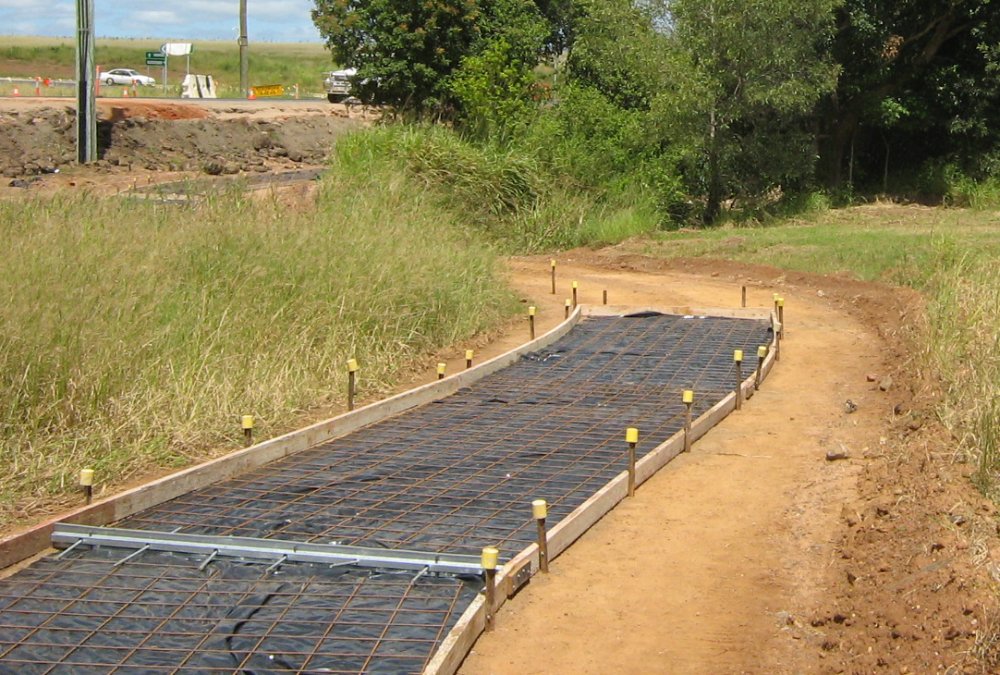
Boxing - footpath

Discipline (teaching right from wrong) is like setting up the boxing when you are pouring concrete

  • If you want the concrete to hold its shape you need to make sure the boxing is in place beforehand
  • Without the boxing the wet concrete runs everywhere
  • But with the firm boundary provided by the boxing the concrete stays in place and then once it is set you can take the boxing away
  • Once the child has learned you don’t have to stay on their back all the time

Bicycle-Training-Wheels

Or to use another metaphor, teaching resilient faith is like teaching someone to ride a bike

  • When we start out in the faith God may give us training wheels
  • By training wheels I mean special supports like miracles perhaps, or a warm glow, or enthusiasm for reading the Bible or something else that makes believing in Him a bit easier
  • These training wheels give us the feel of faith and help us to build up some confidence

But ultimately God wants to teach us to ride without the training wheels

  • Because the picture of an adult riding with kiddy wheels is disturbing


And so, as we progress in the Christian faith, God may take away the supports

  • We might not experience miracles anymore or we may go through a real dry time in our devotional life or we may struggle with doubt
  • When God removes the training wheels it might feel like He has abandoned us – but actually He hasn’t – He’s still right there beside us
  • It’s just that we are having to learn to ride a two wheeler now
  • It feels a bit wobbly to begin with and we may fall over & skin our knees
  • But if we pick ourselves up again and carry on we eventually get the hang of it – we learn resilient faith

Conclusion:

I’m conscious that we are not all the same when it comes to resilience

  • Some people have been given all they need for resilience
  • They have grown up in a functional family and are surrounded by people who love and support them
  • They are able to take time off to enjoy life and have really good communication skills and so on

Then there are others who have suffered loss repeatedly and actually feel quite fragile most of the time

  • Or those who didn’t have a happy childhood
  • Those whose experience was one of neglect or excess or even abuse
  • And others who are having to work three jobs just to make ends meet, so they don’t have time to rest and enjoy life
  • Resilience in these cases seems like an unattainable goal
  • Let me say to you, Jesus understands – He is all compassion
  • “A bruised reed he will not break and a smouldering wick he will not snuff out.”

Whatever your situation – Jesus is our security

  • His resurrection from the dead is our hope of eternal resilience.
  • Whether we feel bullet proof or paper thin – strong or weak…
  • We need to keep looking to Christ for His presence, His nourishment and His discipline
  • And we shouldn’t be afraid or surprised when the training wheels come off – it’s really a compliment when God does that – a sign of His love and trust in us

[1] http://www.pbs.org/thisemotionallife/topic/resilience/what-resilience

[2] Terence Fretheim, Exodus, page 181.

[3] Romans 8:31