Wishes & Worship

Video Link: https://youtu.be/tKkOt-DVER8

Wishes:

In his book, A Night the Stars Danced for Joy, Bob Hartman imagines a shepherding family sitting under the night sky making wishes.

The shepherd father, who has fought a few battles with wild animals and Romans, wishes for someone to save him from the violence and greed of others.  

The shepherd mother, who nurses regrets over things said in anger, wishes for peace of mind and a chance to redeem the past.

While the son (a young boy), who is feeling a bit bored, wishes for fun and excitement, something to sing and dance about.

In some ways our wishes reflect what we don’t have. They point to the emptiness and the loss we feel inside.

Part of praying involves sharing our wishes with God. God is not like a genie in a bottle who grants our every wish, no. But God is still interested in hearing what we wish for. God wants to restore the loss and fill the emptiness we feel with his goodness and love. That’s why Jesus came.

Praying is a bit like a zipper. You know the way a zip merges together, or the way traffic on the road merges together when two lanes become one lane. Prayer is sort of like that.

Prayer is a mystery in which God’s wishes merge with our wishes.

In prayer we don’t just bulldoze our way forward regardless.

In prayer we slow down. We listen to what God is saying he wants (his will) and we let God know what we want. Then we trust the outcome to him.

In prayer we are ready to give way to God’s purpose.

As it turned out the wishes of the shepherds in the story fitted perfectly with God’s wishes. Like the shepherd father, God also wants to see an end to violence and greed. Just as he wants us to have peace of mind and release from the hurts of our past. And God is delighted to give his children something exciting to sing and dance about.

Jesus is the key. Jesus comes to make God’s wishes come true on earth.

The wonderful thing about God’s wishes is they are even better than anything we could have wished for or imagined.

What is it you wish for? What emptiness do you need God to fill? What loss do you need him to restore? I wonder what it is God wishes for you personally. I wonder what God wants for all of us together.

Worship:

Bob Hartman’s story is loosely based on the gospel account of the angels and shepherds. In Luke 2, verse 20, after the shepherds had seen Jesus, Mary and Joseph, we read…

The shepherds returned, glorifying and praising God for all the things they had heard and seen, which were just as they had been told.

According to Luke, the shepherds were buzzing with excitement, telling everyone they met what they had been told about Jesus. They responded in praise & worship to God. Their worship looked and sounded like a party.

We might not always think of worship as a party or a celebration. We might be more inclined to think of worship as a sombre sacrifice and sometimes it is. Or we might think of worship as a duty (something we do in obedience to God).  And, while that is true, we must not lose sight of the fact that, at its heart, praise & worship is a joyful response to God for what he has done and will do.

In a few moments we are going to sing the Christmas carol, Hark the herald angels sing, as a response of worship to God. During this song we encourage you to dance and express yourself as you sing.

For those who may not feel much like dancing, we have some really cool (and very easy) actions you can do. You don’t have to remember all these actions. Just do what you feel comfortable with.

The first action is the New Zealand Sign Language word for peace, which goes like this. Super easy to remember and low key. Jesus is the Prince of peace.          

The next action is the New Zealand sign language word for party. To say party in NZSL you make the hang loose sign with both hands like this. Worship is meant to be a party. Jesus’ coming to the earth is good news. So when we are singing, let’s party. 

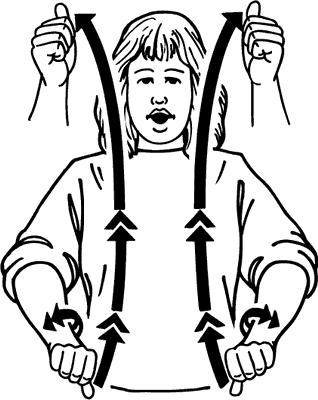
Another action that fits for Hark the herald is glory. When we worship God in a genuine way we bring him glory. The New Zealand Sign Language word for glory looks like this. Have your thumbs pointing down by your waist and then raise your arms above your head, waving your thumbs as you do.

You can really go to town with this one. Glory, glory to God in the highest.   

So, as a response of worship, let’s sing and celebrate God’s gift of Jesus:

Hark the herald angels sing…    

Psalm 36

Scripture: Psalm 36

Video Link: https://youtu.be/HYK-TE2dACc

Structure:

  • Introduction
  • Prophecy (1-4)
  • Praise (5-9)
  • Prayer (10-12)
  • Conclusion

Introduction:

Kai ora whanau and good morning everyone.

Tell me, what do these things all share in common?

The Screwtape Letters, The Problem of Pain, The Great Divorce, The Abolition of Man, The Four Loves and The Magician’s Nephew. [Wait]

That’s right, they are all books written by C.S. Lewis.

Clive Staples Lewis was a wonderful servant of the Lord whose writing continues to bring light and clarity to our thinking about God.

In his book, The Great Divorce, Lewis says: There is but one good; that is God. Everything else is good when it looks to him and bad when it turns from him.   

I quite like that quote. It sums up our reality as human beings. We depend on God for our goodness and indeed for our very lives. Lewis’ words here remind me of Psalm 36, the focus of our message today.   

The title of this Psalm reads: ‘For the director of music. Of David, the servant of the Lord. There are only two psalms which describe David as the Lord’s servant. This one and Psalm 18. 

From verse 1 of Psalm 36 we read…

I have a message from God in my heart concerning the sinfulness of the wicked: There is no fear of God before their eyes. In their own eyes they flatter themselves too much to detect or hate their sin. The words of their mouths are wicked and deceitful; they fail to act wisely or do good. Even on their beds they plot evil; they commit themselves to a sinful course and do not reject what is wrong. Your love, Lord, reaches to the heavens, your faithfulness to the skies. Your righteousness is like the highest mountains, your justice like the great deep. You, Lord, preserve both people and animals. How priceless is your unfailing love, O God! People take refuge in the shadow of your wings. They feast on the abundance of your house; you give them drink from your river of delights. For with you is the fountain of life; in your light we see light. 10 Continue your love to those who know you, your righteousness to the upright in heart. 11 May the foot of the proud not come against me, nor the hand of the wicked drive me away. 12 See how the evildoers lie fallen—thrown down, not able to rise!

May the Spirit of Jesus illuminate God’s word for us.

David, the servant of the Lord does three things in this psalm: prophecy, praise and prayer. As the servant of the Lord David knows the truth about humanity, he adores God’s goodness and he prays in faith.

Prophecy:

In popular culture a prophet is thought to be someone who predicts the future. In the Bible though a prophet is someone who communicates God’s message. He or she sees the truth of the present situation and speaks that truth to the people; how the people respond shapes their future.

Broadly speaking, the prophets of the Old Testament gave two kinds of messages: messages of judgment and messages of hope.

Those who were proud and had turned away from God tended to get a message of judgment. You’re on the wrong track, change your direction in life before you end up destroying yourself.

While the humble poor, who were suffering oppression, tended to receive a message of hope. Keep looking to the Lord and trusting in him. He will deliver you and restore you.     

Messages of judgement and hope are not either / or. They are both / and. They go together. There is hope in God’s judgement. When we return to God we are saved.

C.S. Lewis was somewhat of a prophet during the 20th Century, although he probably would not have seen himself in that way.

In his book, Mere Christianity, Lewis writes: No man knows how bad he is until he has tried very hard to be good.

Lewis goes on to say: ‘Only those who try to resist temptation know how strong it is. After all, you find out the strength of an army by fighting against it, not by giving in. You find out the strength of a wind by trying to walk against it, not by lying down. A man who gives in to temptation after five minutes simply does not know what it would have been like an hour later. That is why bad people, in one sense, know very little about badness — they have lived a sheltered life by always giving in. We never find out the strength of the evil impulse inside us until we try to fight it: and Christ, because He was the only man who never yielded to temptation, is also the only man who knows to the full what temptation means — [Jesus is] the only complete realist.’

Psalm 36 begins with David giving a prophecy. Verse 1 reads: I have a message from God in my heart concerning the sinfulness of the wicked: There is no fear of God before their eyes.

Sometimes prophets are called Seers because they have the God given ability to see into a person’s heart. David’s message, from God, is not a prediction of the future. Rather it is a vision of what goes on inside an evil person. David knows the truth about humanity and it is not pretty.

In some ways the human heart is like a loaded gun waiting for the wrong circumstances to pull the trigger. I remember my systematic theology lecturer, saying: ‘Christians should be the least surprised by sin’. When people do bad things we should not be shocked by it.

We should not look down on the wicked nor think of ourselves as too good to commit evil. That potential is within each one of us. Those who think they are not capable of evil are like the person C.S. Lewis described as never having offered any real resistance to sin. 

David knows his potential for evil and he knows what it is to suffer at the hands of evil doers. That’s probably how God gave him the insight.

There’s a scene in the movie Shawshank Redemption where Andy, a wrongly convicted prisoner, approaches the boss of the prison for justice. The prison boss won’t help Andy and so Andy says to him, ‘How can you be so obtuse?’

To be obtuse is to be insensitive or hard hearted, lacking compassion. The wicked are obtuse, they are deluded. In their own eyes they flatter themselves too much to detect or hate their sin. The boss of the prison is like that; he does not fear the Lord. 

Usually the term ‘fear of the Lord’ means having reverence and respect for God. But in Psalm 36 the word fear leans more towards terror and being afraid for your life.

There are basically two reasons why a person obeys God. The first reason is because they love God and want to please him. But if a person does not love God they might still obey him just to save their own skin, because they are afraid of what God will do to them if they don’t act justly. 

Obviously, the ideal is to obey God because we love him. But God is gracious enough that he will still accept the person who obeys him out of fear. However, God will not accept the person who neither loves him nor fears him. The wicked are so obtuse that they don’t even fear God, much less love him.

In verse 3, David says the wicked are deceitful and they fail to act wisely or do good. In the Bible, wisdom is not about being brainy or super smart and intelligent. Wisdom is about doing the morally right thing, the good thing.

Being a Christian is not easy. There are times when it is frustrating and difficult and confusing and humiliating and painful and a whole list of other unpleasant things. But don’t let that put you off. It’s not all bad and it is worth it in the end. In the meantime, it helps to be very clear in your own mind, about why you are a Christian.

Perhaps, like me, you started the Christian journey from a place of fearing the Lord and wanting to avoid hell. That’s okay. We all have to start somewhere. It is better to fear the Lord than ignore him.

But fear of the Lord by itself is not enough; it won’t get you through this life. At some point you need to grow in your love for the Lord. And the only way I know of growing in your love for the Lord is to focus on his goodness and to enjoy his love for yourself.

In verses 5-9 of Psalm 36, David praises God for his goodness and love.     

Praise:

In his book, Reflection on the Psalms, C.S. Lewis writes about praise. He says,

I thought of praise in terms of compliment, approval or the giving of honour. I had never noticed that all enjoyment spontaneously overflows into praise…

We delight to praise what we enjoy because the praise not merely expresses but completes the enjoyment… It is not out of compliment that lovers keep on telling one another how beautiful they are; the delight is incomplete till it is expressed.

Lewis is pointing out here the relationship between praise and enjoyment. God does not need our praise. He is not insecure or vain. We praise God because we have experienced his love and we enjoy him. We can’t help but praise him. 

It’s like when anyone in our family sees a rainbow and has to tell the others. Or when the surf is going off and you just have to tell your mates to get out there and catch a wave. Or when you hear a really good joke and need to share it. Praise is essentially the expression of enjoyment. Praise liberates joy.

In verses 5-6 of Psalm 36, David liberates some joy when he praises God by saying: Your love, Lord, reaches to the heavens, your faithfulness to the skies. Your righteousness is like the highest mountains, your justice like the great deep.

The first thing we notice here is the spaciousness of God. God is not small or stingy. He is roomy and generous. The love and faithfulness of the Lord is sky high – it has no limits. His righteousness is as solid and dependable and unmissable as the highest mountain range.

I remember waking up at Aoraki Mt Cook and looking out the window at Mount Sefton, on a beautiful cloudless blue sky day. It was spectacular. I couldn’t stop looking at the mountains all around us. That’s what God’s righteousness is like. It is awesome and beautiful and impossible to miss.

Once again our friend, Mr Lewis, clarifies things when he writes: We may ignore but we can nowhere evade the presence of God. The world is crowded with him. He walks everywhere incognito. (Letters to Malcolm)

God’s justice is like the great deep. The great deep refers to the ocean.

Like the ocean, God’s justice is a powerful force that cannot be manipulated or controlled by human beings. God’s justice has hidden depths. There is a certain mystery to it. God’s justice is teeming with life and it feeds us, it supports our life. God’s justice is also patient, turning rock into sand. 

Returning to verse 5, the word translated as love is actually hesed. (My apologies for not pronouncing it correctly.) Hesed is steadfast love, loyal love.

Hesed is not just a feeling. It is an action. Katherine Sakenfeld, who did her PhD on this subject, outlines the three main criteria of hesed. [1]

Firstly, the action is essential to the survival or the basic wellbeing of the recipient – so it’s a big deal.

Secondly, the needed action is one that only the person doing the hesed is in a position to provide – given the circumstances no one else can do it.

And thirdly, hesed takes place in the context of an existing relationship.

Unlike human hesed which is limited, God’s hesed (his loyal love) is unlimited, it crosses boundaries reaching to the heavens. This is like saying, ‘No one and nothing is beyond the reach of God’s love’.  

In the gospels, Jesus crossed boundaries in a righteous way, extending divine hesed to people he did not know. In doing that he transformed their lives and created a special kind of relationship with them.

When Jesus healed the man born blind on the Sabbath, that was hesed.

When Jesus delivered a man from a legion of demons, that was hesed.

When Jesus protected the woman caught in adultery, that was hesed.

When Jesus forgave the man who was paralysed and then healed him, that was hesed.

When Jesus invited himself to Zacchaeus’ house for dinner, that was hesed. 

When Jesus died on the cross to make us right with God, that was hesed.

Verses 5-6 are about the greatness of God, while verses 7-9 are about God’s care and providence. Or, as verse 8 puts it, People feast on the abundance of your house.

The image here is one of joyful celebration. In his book, The Weight of Glory, Lewis observes how ‘the sun looks down on nothing half so good as a household laughing together over a meal’.

Christians readily see connections in these verses with Jesus who identified himself as the light of the world, the bread of life and a well springing up to eternal life. 

Verse 9 of Psalm 36 is beautiful poetry, full of mystery. It says: in your light we see light. I’m not sure these words are fully knowable but, given the context, light suggests joy along with purity, clarity and truth.

Possibly C.S. Lewis had verse 9 in mind when he wrote: I believe in Christianity as I believe that the sun has risen – not only because I see it, but because by it I see everything else. (Is Theology Poetry) 

It is the light of God’s goodness and love which helps us to trust the Lord and to see what is right. 

Exuberant praise welling up out of enjoyment of God is one thing, but David (like us) was living in a fallen world. The Lord’s servant still had to contend with the difficult reality of wicked men who sought to do him harm. And so Psalm 36 moves from prophecy to praise to prayer.

Prayer:

Here’s another little gem from Lewis: Relying on God has to begin all over again every day as if nothing had yet been done.

This is something I have found to be true in my own experience. I imagine that after David had killed Goliath, it may have been tempting for him to stop relying on God. I expect a victory like that would make most young men a bit cocky, a bit over confident. But not David. He does not turn away from God in pride. 

The secret to David’s success is that he relies on God all over again, every day, as if nothing had yet been done. We demonstrate our reliance on God through prayer. That is, by asking for his help daily.

David’s prayer in verses 10-11 of Psalm 36 is this: Continue your love to those who know you, your righteousness to the upright in heart. 11 May the foot of the proud not come against me, nor the hand of the wicked drive me away.

Once again the Hebrew word for love, in verse 10, is hesed. David is asking God to support the righteous and the upright in heart. Righteousness indicates right actions in one’s relationships with others, while uprightness of heart refers to one’s inner life being true or without pretence.

The upright in heart are like the pure in heart. They are the same on the inside as they are on the outside. They don’t pretend to be something they are not.  

David stands in solidarity with the righteous and upright in heart when he asks God to protect him in verse 11. David wants God’s love (his divine hesed) to set the agenda for his life, not the power of proud men. 

Verse 12 is a statement of faith: See how the evildoers lie fallen—thrown down, not able to rise! David is voicing his confidence in God’s ability to protect him. His faith is not blind or unfounded. It is based on his experience of God helping him in the past.  

We, who are Christian, may feel a bit uncomfortable with David’s prayer. He was a soldier, having to fight for his life. Most of us know nothing of mortal combat. We may have occasional fantasies of violence against our enemies, when we feel angry or afraid, but we know this is wrong.

Jesus taught us to love our enemies and to pray for their well-being, not their downfall. So what are we to do with David’s prayer?   

Another word from C.S. Lewis on prayer may help us here: We must lay before God what is in us; not what ought to be in us.

The psalms are unapologetically honest. They reveal what is actually in the psalmist and not necessarily what ought to be in him. Our prayer life needs to be honest, otherwise it loses its power.

If we are not honest with God we risk resenting him or, even worse, becoming obtuse and deluding ourselves. The upright in heart are honest with God, even when their truth is difficult to say.      

Please hear me on this. Honest is not careless. We still need to keep our prayers respectful, remembering that God loves us and wants the best for us.

Conclusion:

There is but one good; that is God. Everything else is good when it looks to him and bad when it turns from him.   

So the question for each one of us is, which way are we facing?

Are you looking to the Lord, feasting on his goodness?

Or do you have your back to him, pretending he is not there?

Jesus shows us the goodness of God. He shows us what it looks like to be made in the image of God, what it is to be truly human in the best sense of that word.

When we look to Jesus, when we build our life on his teaching and follow his example, we become good.

Let us pray…

Father God, we thank you for your love and faithfulness, your justice and mercy, your grace and truth. Give us a vision of yourself, in the face of Jesus, that we would reflect your image and enjoy you forever. Amen.

Questions for discussion or reflection:

What stands out for you in reading this Scripture and/or in listening to the sermon? Why do you think this stood out to you?

  • Do you have a favourite C.S. Lewis book or quote? What is it and why do you like it?
  • What do you think C.S. Lewis meant when he wrote: No man knows how bad he is until he has tried very hard to be good?
  • Why did you become a Christian? Is your reason for being a Christian the same now as it was when you started your journey of faith?
  • Discuss / reflect on the relationship between praise and enjoyment. Why do we praise God?
  • In what ways is God’s justice like the ocean? In what ways is God’s righteousness like a great mountain range? What does David mean when he says, “God’s love (hesed) reaches to the heavens”? What are verses 5-6 telling us about God?
  • Why does David pray? Why do you pray? Why is it important that we keep our prayer life honest?
  • Take some time this week to contemplate the various ways Psalm 36 connects with Jesus.

[1] Katherine Doob-Sakenfeld, Ruth, page 24

Body & Spirit

Scripture: Ephesians 6:18-24

Structure:

  • Introduction
  • Praying in the Spirit
  • Praying in the body
  • Conclusion

Introduction:

Cyril Bassett was New Zealand’s first Victoria Cross recipient

  • Cyril was a sapper in the NZ Engineers during World War 1
  • His job was to lay communication lines so the allies could talk to each other
  • Because of his short stature Bassett was initially rejected for military service but he persisted and they let him in, assigning him to Signals
  • Bassett served in Gallipoli and was noted for his bravery in laying telephone wires under heavy fire early in the campaign
  • Some months later, when the NZ Infantry was attacking Chunuk Bair, Corporal Bassett found himself in the heat of the battle once more laying communication lines on the exposed hill slopes
  • He braved continuous gunfire during broad daylight armed only with a revolver and a bayonet.
  • A bullet struck his boot and two more passed through the fabric of his tunic during the fighting, but he was not wounded
  • For his efforts he was awarded the Victoria Cross 
  • Afterwards Cyril Bassett had this to say…

“I reckon there must be some guardian angel looking after me, especially as one man was shot dead in front of me and another wounded just behind.”

This morning we conclude our series in Paul’s letter to the Ephesians, focusing on chapter 6, verses 18-24

  • Last week we heard about the armour of God and the need to stand firm in the battle against evil  
  • In the same vein of thought Paul continues from verse 18 encouraging his readers to stay alert and to pray
  • Prayer is essentially about establishing and maintaining lines of communication with God and other believers
  • In praying we are doing the spiritual equivalent of what Cyril Bassett did
  • From Ephesians 6, verses 18-24 (in the NIV) we read…  

And pray in the Spirit on all occasions with all kinds of prayers and requests. With this in mind, be alert and always keep on praying for all the Lord’s people. 19 Pray also for me, that whenever I speak, words may be given me so that I will fearlessly make known the mystery of the gospel, 20 for which I am an ambassador in chains. Pray that I may declare it fearlessly, as I should.

21 Tychicus, the dear brother and faithful servant in the Lord, will tell you everything, so that you also may know how I am and what I am doing. 22 I am sending him to you for this very purpose, that you may know how we are, and that he may encourage you. 23 Peace to the brothers and sisters, and love with faith from God the Father and the Lord Jesus Christ. 24 Grace to all who love our Lord Jesus Christ with an undying love.

May the Spirit of Jesus illuminate God’s word for us

Paul started his letter to the Ephesians with a prayer and now he concludes it by encouraging the Ephesians to pray.

  • They are to pray in the Spirit and in the body.

Praying in the Spirit:

When you read a book you need to be in the light. If you are in the dark, it is very difficult to read

  • When you are sailing a boat you need to make sure your sail is trimmed to catch the wind. If your sail isn’t in the wind your boat won’t go far

In verse 18 of Ephesians 6, Paul says we are to pray in the Spirit.

  • That’s ‘Spirit’ with a capital ‘S’, as in God’s Spirit
  • Praying in the Spirit parallels what Paul says earlier in Ephesians about being in Christ
  • What then does Paul mean by praying in the Spirit?
  • We pray in the Spirit sort of like we read in the light
  • Just as we can’t really read all that well in the dark, so too we can’t really pray without the Spirit
  • Praying in the Spirit is also like hoisting a sail to catch the wind
  • Just as we can’t really get our boat moving without putting our sail in the wind, so too our prayers don’t provide any movement without the wind (or energy) of God’s Spirit

The Spirit of God communicates God to us. Through the Spirit we receive all the gifts and empowering we need from God [1]

  • True prayer in the Spirit isn’t about technique – it’s about relationship
  • True prayer in the Spirit involves engagement with God
  • If you want to cook a roast dinner, then you need to put the meat and veges in the oven 
  • Say you are having roast chicken. You might make a nice basting sauce and rub it all over the raw bird.
  • You might make a sage and onion stuffing just like your grandmother used to make
  • You might put potatoes and pumpkin all around the chook
  • Then you turn the oven on and let it warm up to the right temperature
  • But if you leave the chicken and veges on the bench – if you don’t put them in the oven – then you are going hungry that night 
  • Praying in the Spirit is like putting our prayers and requests in God’s oven. Without the Spirit of God our prayers are inedible
  • Praying in the Spirit nourishes us

Praying in the Spirit then is about praying in relationship with God

  • Simply reciting words without our heart being in it, or without directing those words to the person we call ‘God’, isn’t that effective
  • Praying in the Spirit is like pouring water into a cup – it requires focus and intention
  • I could throw handfuls of water around the room and some of it might, by chance, end up in the cup – but mostly it will just make everyone around me wet and annoyed
  • Praying in the Spirit fills the cup of our personal relationship with God

Praying in the Spirit is also like singing in a choir. It is prayer led by the Spirit and in harmony with God’s will.

  • Like choristers, we know the words & parts and we keep our eyes on the conductor, staying alert, listening as we sing (and by sing I mean pray).

Paul says to pray in the Spirit on all occasions with all kinds of prayers and requests. Praying in the Spirit is comprehensive prayer, diverse in form and woven throughout all the circumstances of our lives.

  • If you come from a charismatic background you might think praying in the Spirit means praying in tongues and while it can mean that it isn’t limited to that
  • Praying in the Spirit can include lament & tears as well as laughter & praise
  • Praying in the Spirit can include meaningful liturgy read from the heart as well as spontaneous conversation with Christ as our close friend
  • Praying in the Spirit can include sitting alone in silence as we meditate on Scripture, our hearts open in a posture of listening to God, but I can also include singing songs in worship with other believers
  • We can pray in our heart for the person sitting next to us on the train during the week or we can intercede out loud in church on a Sunday for the things in this world that grieve God’s heart and ours
  • I could go on but you get the point, praying in the Spirit is not an occasional act – it is more like breathing
  • The Spirit of God is the atmosphere in which we breathe (and by ‘breathe’ I mean pray).

Alongside Paul’s instruction to pray in the Spirit we also find his encouragement to pray in the body

Praying in the body:

A few weeks ago I was talking with a sports fan about the rugby. He was telling me how the top rugby teams are really good at off-loading the ball before the ball handler is tackled and goes to ground

  • The more often a team takes the ball down in the tackle the quicker that team runs out of steam
  • But if you can keep your momentum by passing the ball you tend to make more ground with less effort
  • The All Blacks are brilliant at the off load pass. You often see them passing the ball out the back door, without even looking
  • When they throw the ball back they trust their team mates to be alert and in position to catch it   
  • They don’t work as individuals – they work as a unit, supporting each other

Throughout Ephesians Paul has talked about the church in various ways

  • The church is the wisdom of God, the church is the temple of God and the church is the body of Christ
  • Paul wants to underline the connection believers have in Christ
  • He wants us to think of ourselves, not as a group of individuals (alone together), but as a unit, a single body made up of different parts
  • We need to remain alert, supporting each other spiritually, ready to receive the off load pass.

In the second part of verse 18 Paul says: With this in mind, be alert and always keep on praying for all the Lord’s people.

  • While it is okay to pray for yourself our prayers shouldn’t be self-centred
  • ‘Praying in the body’ means being mindful of other believers in the church – remaining alert to the joys and sorrows, successes and trials of others
  • Praying for others actually gives us a break from thinking about ourselves
  • Not only that but it helps us to feel more connected, less alone
  • If you pray for someone long enough you start to care about them  

In verse 19 Paul goes on to ask the Ephesians to pray for him also

  • Interesting here that Paul has the humility to ask for help from others. He doesn’t try to do the work on his own. He realises he needs prayer support. 
  • The other thing to note is that Paul doesn’t ask the Ephesians to pray for his freedom, even though he is chained to a Roman soldier night and day.
  • Instead Paul asks for the clarity and courage to make known the mystery of the gospel.

The word ‘mystery’ here doesn’t refer to a puzzle to be solved but rather to something that was not known before but has now been revealed by God  

  • ‘Mystery’ refers to the unfolding of God’s plan – new light shed on an old word
  • Before Christ came Paul read the Old Testament Scriptures in a certain way – much of the meaning was hidden from him
  • But since encountering Jesus, Paul now reads those same Old Testament Scriptures in a whole new light
  • Before he saw a stern and angry God who was out to destroy sinners; now he sees a loving God full of generous grace for all
  • Before he saw himself as better than others; now he realises the ground is level at the foot of the cross.

Paul wants the Spirit’s help to preach the gospel about Jesus with clarity and courage – he wants others to understand all of the gospel, the rough with the smooth

  • The word ‘gospel’ means good news. But when we read the gospels (Matthew, Mark, Luke & John) we find there is actually a fair amount of bad news as well
  • The gospel talks about suffering as a prerequisite to glory; it talks about forgiveness with repentance; salvation for some but judgement for others
  • It can be tempting as a preacher to leave out the unpopular parts of the gospel but the Spirit of Jesus is a Spirit of grace and truth
  • Most people are happy to hear the nice bits, the grace-full bits, but the truthful bits require some courage to say      
  • Paul doesn’t want to edit his message. Paul wants to be open and honest in his presentation of the gospel.

Those who proclaim the word of God need clarity and courage

  • This morning the children in the Flock Sunday school are learning how God spoke to the boy Samuel at the temple in Shiloh
  • Samuel slept in the temple near the ark of the covenant – the symbol of God’s presence with his people
  • One night Samuel hears a voice calling his name
  • At first he thinks it is the priest Eli calling him but every time he goes to Eli, the old man tells him to go back to bed
  • Eventually Eli realises that Samuel is hearing the Lord’s voice, so he instructs Samuel to respond by saying, ‘Speak Lord, your servant is listening’. Samuel does as he is told.

The next morning Samuel seems to be avoiding Eli, so Eli sits Samuel down and asks the boy to tell him what the Lord said, without leaving anything out

  • The message is one of judgement against Eli and his family
  • ‘The guilt of Eli’s house will never be atoned for by sacrifice or offering.’
  • That’s a heavy message for a child to give a grown man
  • To his credit Eli accepted the message saying, ‘He is the Lord; let him do what is good in his eyes.’   

The gospel message Paul preached wasn’t so harsh. Paul was able to say, ‘The good news is; your guilt is atoned for by Christ’s sacrifice, but you still need to change your ways and repent. God’s love is not a license to do what we want.

Eli may have been accepting of what Samuel said but not everyone was accepting of what Paul had to say and as a consequence he found himself under house arrest, chained to a Roman soldier day and night

  • Most people in the ancient near east would have been ashamed to be in chains, but not Paul. He is not an Instagram star, ‘showing the best and hiding the rest’. Paul doesn’t hide the reality.
  • By being open like this Paul owns his suffering. He doesn’t let it own him.

We are talking about praying in the body

  • Perhaps one of the reasons Paul was able to cope with being in chains is that he saw himself as part of the body of Christ, so it didn’t all depend on him
  • Sure, he couldn’t visit the Ephesians himself, but he could send Tychicus, his assistant
  • Tychicus was Paul’s hands and feet – he could deliver Paul’s letter
  • When Paul went down in the tackle of house arrest, he could off load the ball to Tychicus, so the momentum wasn’t lost.       

Tychicus wasn’t just a letter carrier though – he was someone who knew Paul and could pass on personal news of how Paul and the others were getting on

  • It is so easy in the culture I come from to think of prayer as a disembodied thing – a mental exercise – just words you say in your head
  • But true prayer is embodied and relational  
  • Prayer in the body isn’t just the communication of words and information
  • Prayer in the body involves being physically present
  • Prayer in the body conveys warmth and emotion
  • Prayer in the body communicates encouragement and comfort
  • Tychicus’ visit did this – his going to see the Ephesians in person was prayer in a bodily form.

When our youngest daughter was about two years old she caught rota virus and had to go to hospital. This was before I became a minister, when we were living in Tauranga

  • While we were in hospital the pastor of our church came to visit. He didn’t stay long, just popped in, spoke to us, said a short prayer and then went on his way again
  • I don’t remember the words he prayed but I do remember feeling comforted and encouraged by his presence
  • I had never been visited by a pastor before. Greg simply showed up embodying warmth and this made me feel cared for and connected to the rest of the church. That’s an example of prayer in the body (of Christ).

Now in talking about prayer in the body I don’t mean to convey the idea that this is somehow different from praying in the Spirit – body & Spirit go together

It must be over twelve years ago now our family went on holiday to Christchurch

  • On about the second day our youngest daughter had an accident and had to go to hospital
  • They put her is this tiny room with no windows, no view outside – it was an awful environment – we were supposed to be on holiday, having fun
  • To make matters worse the words I prayed to God didn’t appear to make any positive difference – our daughter just got worse
  • When you are in a strange city, with a sick child and God isn’t answering your prayers it makes you feel incredibly isolated and vulnerable – we were powerless really.

But in that situation God was still present, just not in the way we were expecting

  • Some friends we knew in Christchurch looked after our well daughter for us so she wasn’t stuck in hospital all week
  • When the church here in Tawa heard what was happening they arranged a gift basket for us and one of you asked his sister (who lives in Christchurch) to come and visit us in hospital. That meant a lot to us.  
  • Then, when we had to stay longer than our accommodation was booked for, the Ronald McDonald House gave us a room for a couple of nights

My prayers in that situation didn’t bring about a miraculous healing but we were very aware of God’s providence

  • On reflection I am conscious of the Spirit’s intercession for us 
  • In Romans 8 Paul writes, ‘…the Spirit helps us in our weakness. We do not know what we ought to pray for, but the Spirit himself intercedes for us with groans that words cannot express…’ 
  • I had prayed for our daughter’s healing thinking that was what was needed, but at a deeper level (a level I wasn’t conscious of) what we really needed was to know that we were not alone – loneliness, isolation, alienation, these are the real sicknesses of our society today 
  • The Spirit of God knew what we really needed and interceded for us with groans that words cannot express and God answered the Spirit’s prayer to comfort us in the loneliness and isolation we felt with practical, embodied help through friends and strangers.
  • Prayer in the Spirit goes hand in hand with prayer in the body.

Conclusion:

Paul concludes his letter with a prayer of blessing for the Ephesians

  • Four key words we notice in his benediction. Paul wishes his readers…
  • Peace, love with faith, and grace.   

Praying in the Spirit and praying in the body are not meant to be separated – they go together

  • In a few moments we will share communion.
  • Communion holds together body and Spirit
  • It is a celebration of the peace, love, faith and grace that are ours in Christ

Questions for discussion or reflection:

  1. What stands out for you in reading this Scripture and/or in listening to the sermon? Why do you think this stood out to you?
  2. What does it mean to ‘pray in the Spirit’? Can you think of a time in your life when the Spirit interceded for you with groans too deep for words?
  3. What are some of the ways you prefer to pray? Are there some new ways of praying you could try?
  4. What does it mean to ‘pray in the body’?
  5. Have you ever experienced prayer in body and Spirit? Perhaps share your experience with someone you trust or write it down in a journal. 
  6. What affect does praying for other believers have on us?  
  7. Why did Paul ask for clarity & courage in preaching the gospel?
  8. How does Paul own his suffering? How might we own our suffering?
  9. Take some time to slowly read Paul’s benediction in verses 23-24 of Ephesians 6. Receive this blessing into your soul.

[1] Klyne Snodgrass, Ephesians, page 344.

Glory

Scripture: John 17:1-8

Title: Glory

Structure:

  • Introduction
  • Glorifying God (Jesus is the glory of God)
  • Enjoying God forever (Jesus gives eternal life)
  • Conclusion

Introduction:

There are moments in our lives when someone older and wiser tells us something meaningful, but at the time we don’t fully appreciate what they mean – it’s not until sometime later that their words sink in with the help of the spade of experience

–         I remember sitting by my grandfather’s bed as he was dying – his kidneys had failed and he was slowly drowning from the inside

–         He said to me, ‘Son, life goes by so fast. It seems like just yesterday I was young and starting out. It all went so quickly.’

–         At the time I was 24 and didn’t think too much of it

–         ‘Life goes by so fast’ sounds like a cliché – it’s something older people often say to parents with young children, ‘It goes so quickly. Make the most of it while you’ve still got them’

–         When I was a parent of young children it felt to me like time was slowing down – I welcomed the thought of the kids growing up so I could get a decent night’s sleep and not have to change nappies

–         But looking back now the last 20 years has gone quickly

‘Life goes by so fast’. At the time I didn’t fully appreciate what my grandfather was trying to say

–         There he was dying slowly and uncomfortably and yet he wasn’t thinking about that – his perspective was on the whole of life, not just the end

–         He was considering the bigger purpose & meaning of life

–         If 72 years seems short to a man whose days dragged long then that begs the question: Why are we here and what is the best way to use our time?

–         When you get to the end you don’t want to be thinking, ‘I wasted it’


Today is the third Sunday in Lent

–         Lent is traditionally a time when Christians prepare for Easter by remembering Jesus’ obedience to God the Father in going to the cross

–         This remembering isn’t just a casual recall of the Easter story though

–         Lent is an opportunity to get back in touch with the bigger purpose and meaning of life: Why am I here? Is it just for me and my own temporary concerns or is it for something bigger?

–         Is it for Christ and things of an eternal nature?


The night before his crucifixion and death Jesus took his disciples aside and spoke with them to help them with what was coming

–         The gospel of John chapters 13-17, also known as Jesus’ farewell discourse, capture much of that (death bed) conversation

–         Probably the disciples didn’t fully appreciate all that Jesus was saying at the time but they would appreciate it in the days, weeks and years ahead

Please turn with me to John 17, page 140 toward the back of your pew Bibles

–         John 17 is the longest recorded prayer of Jesus we have

–         In this prayer Jesus takes a look at the bigger purpose and meaning of his life and how he has used his time on earth

–         There is a lot going on in this prayer but in broad terms we could say that Jesus prays for three things: He prays for glory; He prays for his disciples; and he prays for us

–         Today the message focuses on the first 8 verses of John 17, where Jesus prays for glory – both for himself and for God the Father

–         From John 17, verses 1-8, we read…

After Jesus finished saying this, he looked up to heaven and said, “Father, the hour has come. Give glory to your Son, so that the Son may give glory to you. For you gave him authority over all people, so that he might give eternal life to all those you gave him. And eternal life means to know you, the only true God, and to know Jesus Christ, whom you sent. I have shown your glory on earth; I have finished the work you gave me to do. Father! Give me glory in your presence now, the same glory I had with you before the world was made.

“I have made you known to those you gave me out of the world. They belonged to you, and you gave them to me. They have obeyed your word, and now they know that everything you gave me comes from you. I gave them the message that you gave me, and they received it; they know that it is true that I came from you, and they believe that you sent me.

May the Spirit of Jesus illuminate this Scripture for us


Glorifying God:

The Westminster Shorter Catechism tells us (and I paraphrase here)…

–         The chief purpose of humankind is to glorify God and enjoy Him forever

–         It is difficult to improve on that really

–         This statement seems to capture in a nutshell what Jesus is talking about in the opening verses of his prayer in John 17

–         There is certainly a lot of talk of glory on Jesus’ lips here

–         What then does it mean to glorify God?

The word glory has to do with honour, distinction, esteem, beauty, splendour, magnificence, mana and the like

–         Glory isn’t a word we New Zealanders are comfortable with – we tend to shy away from glory a bit – but to people in the ancient world the concept of glory was highly important


Now when we talk about ‘glorifying God’ we don’t mean adding to God’s honour and splendour and mana – God already has glory and there is nothing we can do to add to it (or take away from it)

–         From a human perspective, ‘glorifying God’ means revealing something of God’s glory – so in glorifying God we’re not adding something to him we are simply showing others what is already there

If we think of God’s glory as a bank account – then in glorifying God we’re not depositing any more money to his account, it’s more like we are showing others his bank balance


We glorify God like a lightbulb glorifies a beautiful person

–         If it is dark and the light is off you can’t see the person’s face let alone admire their beauty

–         But when the light is switched on the person’s beauty is revealed

–         The lightbulb doesn’t add anything to the person’s beauty – it simply helps others to see that beauty better

–         Of course, as lightbulbs we don’t have any power in ourselves to give light – God is the one who gives us the electricity to shine


Or take this apple as another example: While it’s in the bowl you can’t see it, the glory of the apple is hidden from you

–         For me to glorify this apple, I need to take it out of the bowl and hold it up for everyone to see

–         But seeing an apple from a distance doesn’t really reveal the apple in all its glory – to properly glorify this apple I need to bring it close so you can smell it and taste it – because the glory of the apple is in its taste

–         Obviously there is nothing I can do to make this apple taste better

–         The most I can do is reveal its glory by giving you a piece to eat

It’s similar with glorifying God – I can’t improve on God’s glory

–         The most I can do is offer you a piece of his glory to taste

–         When we love one another, forgive one another, show patience with one another, share good things with one another, and so on, then we let others experience a small taste of God’s glory

–         The thing is we can only really reveal God’s glory to the extent we have experienced (or tasted) it for ourselves

–         It’s only when I eat God’s apples and enjoy them that I’m impelled to share some with you


Glory is a weighty thing – if something is glorious it has substance, it affects us, it moves us

–         Consider the moon in the night sky for example

–         On the face of it the glory of the moon is in its radiance

–         Some nights the moon is more glorious than other nights

–         The moon is perhaps at its most glorious (or most radiant) on a clear night when it is full and close to the horizon

–         But it’s not just the sight of the moon that is glorious

–         The moon’s glory is a weighty thing – whether we can see the moon or not it’s gravity is moving the oceans of the world, drawing the tide in and out twice a day

–         There is nothing I can do to change the tide – all I can do is stand on the beach feel its power

It is similar with God – we can’t see God but we can feel the weight of his glory and power drawing whole nations here and there in accordance with his purpose

As the creator of all things – God is the one who gives the apple the glory of its taste and the moon the beauty of its radiance and the power of its gravity


In John 17 Jesus begins his prayer by saying…

–         Father, the hour has come. Give glory to your Son, so that the Son may give glory to you…

The context of Jesus’ request is a Father / Son relationship, one in which Jesus the Son depends on God the Father for everything – his identity, his existence, his message, his everything

‘The hour has come’, refers to the hour of Jesus’ trial, suffering and death on the cross – so when Jesus talks about glory here it is with the cross in view

Jesus asks God to glorify him (the Son)

–         At first glance this might seem a bit ego centric or selfish but it’s not – Jesus is asking an entirely reasonable and good thing

–         Jesus is saying, make my suffering count – give it weight, reveal your love for the world (and our love for each other) through my death

–         Because if I’m going through all this I want the tides of history to be moved by it – I want people’s hearts to be changed

God the Father and Jesus the Son are one – they are so closely connected that in asking for glory for himself Jesus is really asking glory for God too

–         When a sports team wins against a difficult opponent, that reflects well on the coach

–         When a river is clean, that reflects well on the people who live near that river

–         When a plane lands safely on just one engine (or in a howling southerly in Wellington), that reflects well on the pilot

–         When a 71 year old man at prayer greets a gunman with ‘hello bother’, that reflects well on his courage and humanity

–         When a Prime Minister (and her people) respond with compassion & justice to a mass shooting, that reflects well on the whole country

–         When God’s Son endures the suffering of the cross with dignity & grace, that reflects well on God the Father


In verse 4 Jesus has some more to say about glory…

–         I have shown your glory on earth; I have finished the work you gave me to do.      

What does it mean that Jesus has shown God’s glory on earth? How did Jesus do this? What is the work God gave Jesus to do?


The first thing Jesus did to reveal God’s glory was to become human – we call that the incarnation, when God became human in the birth of Christ

–         This means that Jesus is, in fact, the glory of God in human form

–         Jesus doesn’t just shine a light on God’s beauty, he is God’s beauty

–         Jesus doesn’t just share the apple of God’s glory, so others can taste God’s goodness, Jesus is the apple


Returning to our apple in the bowl – when Jesus was born God’s glory was plucked from the tree of heaven and put in a bowl on earth

–         Jesus, the very glory of God, stayed in the bowl hidden from sight for 30 years, until John the baptist lifted Jesus out of the bowl and said…

–         ‘This is the Lamb of God who takes away the sin of the world’

–         This is the glory of God in human form

–         Throughout his ministry Jesus taught the people and healed the people and forgave the people and delivered the people from all sorts of evil

–         And each time he did that he cut off a little piece of himself so that those who believed in him could taste something of the glory of God


Now, at the hour of his death, Jesus had got down to the core of God’s glory – suffering out of love to save others – giving himself completely to redeem creation


In verse 5 Jesus asks God again saying…

–         Father, give me glory in your presence now, the same glory I had with you before the world was made.


The obvious implication in these verses is that Jesus (the Son) was pre-existent with God the Father

–         John has already said this at the beginning of his gospel when he wrote:

–         Before the world was created, the Word already existed; he was with God and he was the same as God. 

–         Jesus, the glory of God and the apple of God’s eye, is looking forward to returning to the tree of heaven

–         Here on earth God’s glory is veiled – we can’t see God, although with the eyes of faith we can see where he has been, much like we can see where the rain has been because the grass is green and not brown

–         In heaven though God’s glory is plain to see – there is no drought


There are two parts to the Westminster’s statement on the chief purpose of human beings:

–         We’ve talked about the first part, of glorifying God

–         The second part is enjoying God forever – which is rather a nice way of describing ‘eternal life’


Enjoying God forever:

In verse 3 Jesus says: And eternal life means knowing you, the only true God, and knowing Jesus Christ, whom you sent.


We have to pay close attention here because this definition of eternal life goes beyond our normal categories

–         For many years I thought eternal life simply meant time without end, so that one was immortal and never died

–         And while living forever may be one by-product of eternal life it isn’t the star of the show

–         Eternal life isn’t just quantity of life, it is more importantly quality of life

–         And that quality of life comes from knowing God & Jesus


Now when Jesus talks about ‘knowing’ in this verse, he doesn’t just mean knowing something in your head – he means knowing it in your experience, knowing it, intimately, in the core of your being

–         I might be able to learn some facts about someone by stalking them on Facebook – I might be able to find out when they were born, what their favourite colour is, how they spend their time, where they went on holiday, that sort of thing, but that doesn’t mean I know them

–         To know someone I’ve actually got to meet them and spend time with them, listen to them, hang out with their friends, do life with them

–         Then, after building a relationship with them, I can say I know them

–         Eternal life is essentially a wonderful relationship in which we know God in our experience, as a friend, and enjoy Him forever

This means that eternal life isn’t just something a way off in the future after we die – if eternal life is a relationship with God then eternal life is something we can experience now, through Christ


Once again we note the close relationship between God and Jesus – they go together – we can’t know God the Father without knowing Jesus

–         Jesus (the glory of God) shows us what God the Father is like

–         Trying to have a relationship with God the Father without Jesus is like trying to use a computer without a keyboard or a screen – Jesus is the interface between God and humanity

–         Trying to have a relationship with God the Father without Jesus is like trying to cross the ocean without a boat – God is infinite. Being ‘in Christ’ is what supports us and keeps us afloat in the sea of God’s love

–         Trying to have a relationship with God the Father without Jesus is like trying to have a conversation without sharing a common language – Jesus is the Word of God (a language we can understand) by which we comprehend something of the mystery of God


In verses 6-8 Jesus gives us a few more clues about what it means to know God

I have made you known to those you gave me out of the world. They belonged to you, and you gave them to me. They have obeyed your word, and now they know everything you gave me comes from you. I gave them the message that you gave me and they received it; they know that it is true that I came from you, and they believe that you sent me.

Jesus is talking about imparting eternal life to his disciples by making God known to them

–         Of course a relationship is a two way thing – the disciples have to receive that knowledge, the penny has to drop for them, they have to get it

–         And the key to getting it – the key to knowing God – is obeying Jesus

–         It is with obedience that understanding and relationship forms

–         This means that we have to obey in faith or in trust – we have to do what God asks without knowing for certain what the outcome is going to be


The disciples obeyed Jesus in faith – they left their work, their families and their homes to follow Jesus without knowing where it would lead

–         But through that act of obedience they came to know God – they formed a friendship with God and with one another, through Jesus

–         The kind of knowing that is in view here is not a scientific, evidence based knowing – it’s the kind of knowing which comes through obedience & belief


The classic Biblical story of knowing God through obedience and belief is the Exodus story

–         When God instructed Moses to approach Pharaoh and ask for the Israelites’ freedom, Moses wasn’t that keen at first – he could see it was big ask

–         It wasn’t until Moses obeyed God, and God delivered the people, that he knew God’s character


It was similar with the nation of Israel themselves

–         Before the exodus from Egypt, Israel’s experience was one of suffering &  oppression – the evidence for God’s care & concern for them was a fairy tale from the past – it wasn’t part of their present reality

–         Before they could know that God cared for them – that he was a God of justice & compassion – they had to take a step of obedience in leaving Egypt

–         Their obedience (like ours) was a faltering obedience and so they were 40 years in the wilderness learning to trust & obey God

–         When it was time to leave the wilderness and enter the Promised Land, they had to take another step of obedience in crossing the Jordan River

–         It wasn’t until they literally took that first step into the waters of the Jordan that the river stopped and they were able to cross

–         But through that obedience the people knew that God was powerful and was with them as they entered Canaan


Eternal life is knowing (and enjoying) God in our personal experience

–         We come to know God through believing in and obeying Jesus

–         I expect many of you have your own stories of knowing God’s goodness and provision through faith & obedience


Conclusion:

The purpose of humankind is to glorify God and enjoy him forever


Let us pray…

–         Father God, glorify yourself we pray, especially through our suffering

–         May Christ be lifted up in our life in both the ordinary & extraordinary

–         May people taste & see that the Lord is good through their interaction us

–         And may our relationship with you be a source of delight & enjoyment

–         Through Jesus we pray. Amen.


Questions for discussion or reflection:

1.)    What stands out for you in reading this Scripture and/or in listening to the sermon?

–         Why do you think this stood out to you?

2.)    What do you think of when you hear the word ‘glory’?

3.)    What does it mean to glorify God?

–         How might we glorify God in practical terms?

4.)    Why does Jesus ask for glory for himself?

5.)    How did Jesus glorify God?

–         How is this different to how we might glorify God?

6.)    What is eternal life?

–         What does it mean to know God?

7.)    What is the key to knowing God?

–         Can you recall a time in your life when you obeyed God in faith and came to know him better? What happened?

8.)    Take some time this week to enjoy God


God’s Finger Prints

Scripture: Genesis 24:10-27

Title: God’s Fingerprints

Structure:

  • Introduction
  • Asking Prayer
  • Listening Prayer
  • Conclusion – Giving Thanks

Introduction:

Fingerprints are detailed, unique to the individual, difficult to alter and durable over a lifetime. For these reasons fingerprints are one means of identifying people

Today we continue our series on the life & faith of Abraham

–         In this episode Abraham’s servant finds a wife for Isaac

–         We see God’s fingerprints throughout this story

–         From Genesis chapter 24, verses 10-27, in the NIV we read…

Then the servant left, taking with him ten of his master’s camels loaded with all kinds of good things from his master. He set out for Aram Naharaim and made his way to the town of Nahor. He had the camels kneel down near the well outside the town; it was toward evening, the time the women go out to draw water. Then he prayed, “Lord, God of my master Abraham, make me successful today, and show kindness to my master Abraham. See, I am standing beside this spring, and the daughters of the townspeople are coming out to draw water.

May it be that when I say to a young woman, ‘Please let down your jar that I may have a drink,’ and she says, ‘Drink, and I’ll water your camels too’—let her be the one you have chosen for your servant Isaac. By this I will know that you have shown kindness to my master.”

Before he had finished praying, Rebekah came out with her jar on her shoulder. She was the daughter of Bethuel son of Milkah, who was the wife of Abraham’s brother Nahor. The woman was very beautiful, a virgin; no man had ever slept with her. She went down to the spring, filled her jar and came up again.

The servant hurried to meet her and said, “Please give me a little water from your jar.”

“Drink, my lord,” she said, and quickly lowered the jar to her hands and gave him a drink. After she had given him a drink, she said, “I’ll draw water for your camels too, until they have had enough to drink.”

So she quickly emptied her jar into the trough, ran back to the well to draw more water, and drew enough for all his camels. Without saying a word, the man watched her closely to learn whether or not the Lord had made his journey successful. When the camels had finished drinking, the man took out a gold nose ring weighing a beka and two gold bracelets weighing ten shekels. Then he asked, “Whose daughter are you? Please tell me, is there room in your father’s house for us to spend the night?”

She answered him, “I am the daughter of Bethuel, the son that Milkah bore to Nahor.” And she added, “We have plenty of straw and fodder, as well as room for you to spend the night.”

Then the man bowed down and worshiped the Lord, saying, “Praise be to the Lord, the God of my master Abraham, who has not abandoned his kindness and faithfulness to my master. As for me, the Lord has led me on the journey to the house of my master’s relatives.”

May the Spirit of Jesus illuminate this Scripture for us


When we talk about the finger prints of God we mean that God is involved in the details to make good things happen or to prevent bad things happening

–         We know something has God’s finger prints on it when three main variables line up: timing, placement & power

–         If you find yourself in just the right place at just the right time with just the right power or ability or knowledge to help someone, then that probably has God’s finger prints on it – God is likely involved somehow

For example, imagine you are walking down the street one day and you notice a ball rolling down a driveway with a child running after it

–         The ball hits your legs, so you pick it up and give it to the child

–         Just at that moment a truck rushes by and you realise that had you not been there at that exact moment the child would have run out onto the road after the ball and been hit by the truck

–         Right time, right place, with the right kind of power to help

God’s finger prints go by many names…

–         Theologians call it providence

–         Poets call it serendipity

–         Philosophers call it synchronicity

–         Gamblers call it luck

–         Scientists call it evolution

–         Pagans call it fate

–         And cynics call it coincidence

Whatever we call it though, prayer is the lens through which we see God’s fingerprints – as we pray we notice God’s timing, placement & power at work in our lives

–         In today’s reading from Genesis 24 Abraham’s servant prays and, as he does, he sees God’s finger prints in finding a wife for Isaac

–         The servant’s prayer includes asking God for help, listening for God’s response and giving thanks for God’s answer


Asking Prayer:

Abraham’s servant sets out to find a wife for Isaac with 10 camels

–         Camels are sort of the ancient equivalent of a late model Land Rover

–         They provide reliable transport over variable terrain and are the sort of vehicle only the rich can afford

Although the journey from Hebron to Aram Naharaim is hundreds of miles and would have taken weeks, the author of Genesis skips over that part and focuses on what happens when the servant arrives in the town of Nahor

–         As it happens Abraham’s servant arrives towards the end of the day when the women normally came to draw water from the well

–         The timing and placement has God’s fingerprints all over it

–         However the servant needs power to discern which of the women is to be Isaac’s wife

 So he prays, asking God for help…

–         “O Lord, God of my master Abraham, give me success today, and show kindness to my master Abraham. See, I am standing beside this spring, and the daughters of the townspeople are coming out to draw water…

The servant’s prayer is interesting – it shows us that Abraham didn’t keep his faith a secret – he must have shared his faith with others in his household because Abraham’s servant knows about the Lord and he understands that faith has to do with depending on God

The servant says “Give me success”, which in the Hebrew literally means, “make happen before me” [1] (I’d like to see your finger prints here God)

–         The servant is asking the Lord to make it clear which one of these women is to be Isaac’s wife – he is asking for power to discern

–         But the success isn’t for himself – the success is for his master Abraham

–         The servant asks the Lord to show kindness to Abraham

The word translated as kindness there is hesed in the original Hebrew

–         You may recall me talking about hesed on other occasions

–         It’s one of those Hebrew words that needs more than one English word to capture it’s meaning

–         Sometimes it is translated as kindness, other times as mercy or steadfast love or loyalty. Hesed is often used in connection with God’s covenant

Hesed isn’t a trifling thing – hesed is an act of real importance, it’s a big deal, life & death stuff

–         With hesed the inferior partner depends on the kindness of the superior to meet a desperate need. [2]

–         So in this case the inferior partner is the servant and he is depending on God’s kindness/hesed to meet the desperate need he has of finding a wife for Isaac and being released from his oath to Abraham

In asking God to show hesed or kindness to Abraham the servant isn’t telling God what to do, nor is he asking God to do something out of character

–         God loves hesed – hesed is at the core of who God is

–         The servant is simply saying, be true to yourself God – keep your promise to Abraham by helping me to find a wife for Isaac


The servant also believes that God is present there with him – he says, ‘See, I’m standing here beside this spring…’

–         Unlike most other people of his time, who believed there were many gods who were limited to specific territories or domains, Abraham’s servant believes that the Lord Almighty is with him everywhere – because Abraham’s God is Lord of all the earth

This is amazing – the servant has caught something of the spirit of Abraham’s faith & theology, and we hear it reflected in the opening lines of his prayer

The servant continues praying…

  • May it be that when I say to a young woman, ‘Please let down your jar that I may have a drink,’ and she says, ‘Drink, and I’ll water your camels too’—let her be the one you have chosen for your servant Isaac. By this I will know that you have shown kindness to my master.”

Abraham’s servant is asking for a sign and he’s telling God what the sign ought to be – something quite extraordinary

–         Giving a drink to a stranger would be expected of a woman in that culture but volunteering to go the extra mile, by watering 10 camels as well, would not be expected – it was quite a stiff test for Isaac’s would be wife

Now at this point I want to make a distinction between looking for God’s finger prints and asking for a sign – they are not the same thing

–         It is good for us to look for God’s finger prints

–         Part of listening to God includes looking for evidence of his presence in our lives – those little details which suggest that God is involved here

–         When we look for God’s finger prints we leave the initiative with God and we give him considerable freedom to act as he wants

–         But asking for a sign is like creating a little artificial box and expecting God to only do things inside that box

–         As a consequence we are less able to accept what God might want to do outside the box

Asking God for a sign is not generally a good thing in the Bible – in fact it usually reveals a lack of faith

–         When Gideon asked for a sign by laying a fleece – he did that because he didn’t really believe God [3]

–         Likewise when the Pharisees asked Jesus for a sign, Jesus was like, ‘Really? You’ve just seen me heal all these people and reveal all this wisdom and you still don’t believe me. The only sign you will get is the sign of Jonah.’ [4] (That’s my very loose paraphrase)

The tricky thing is that faith doesn’t just require us to trust God, it also requires us to trust ourselves (that we have heard God correctly)

–         Asking for signs suggests we have little or no faith in our own judgement

–         By asking for a sign I’m abdicating responsibility for my actions

–         I’m saying, ‘I don’t really trust myself to discern God’s will in this situation, so if things go wrong, it’s your fault Lord’

–         In a sense, asking God for a sign is like using God to cover your backside and that’s not cool

Part of having a mature faith is owning the decisions we make

–         Now some people have too much confidence in themselves – they have illusions of grandeur and need to question their own judgement more

–         Others of us don’t trust ourselves enough and need to take more risks

–         Managing our self-confidence is like riding a bike – it requires balance

–         We need time and truth to grow in self-awareness and humility

–         If we do our best to discern God’s will and still get it wrong then we don’t blame God, but nor do we lose heart and give up on ourselves

–         We ask for forgiveness and trust that our relationship with God is strong enough to handle it

It seems to me that Abraham’s servant trusted God – he just didn’t trust himself, and that’s why he asked for a sign

–         Even though it is not best practice, God in his grace accommodated the servant’s request – after all the servant was trying to discern God’s will for Abraham’s benefit


Listening Prayer:

Prayer is the lens through which we see God’s fingerprints – as we pray we notice God’s timing, placement & power at work in our lives

–         Sometimes we think that prayer is simply us talking to God

–         We might have a quiet time in the morning during which we say some words to God then get on with the rest of our day, completely forgetting our earlier conversation with the Lord

–         But prayer has a much broader application than simply talking to God

When the apostle Paul said, ‘pray without ceasing’,[5] he didn’t mean talk to God all the time – he meant, ‘live your whole life in conversation with God’

–         Sometimes that will mean us speaking to God but most of the time it will mean listening to God by looking for his finger prints, both in the bigger picture and in the details of our daily lives


Let me tell you a story…

–         Once there was man, called Caleb, who came to Christian faith at the age of 34

–         Caleb was a big bloke – tall & thick set, ideally suited for the position of lock in a rugby scrum

–         Despite his menacing physical presence Caleb was actually quite a gentle soul

Caleb caught the train to and from work and usually redeemed the time by reading the Bible on his phone

–         One evening he was kept late at the office to meet a deadline

–         By the time he made it to the station, the platform was virtually empty, except for a girl in her 20’s all alone

–         He stood a little way off from her, because he didn’t want to make her feel uncomfortable, and busied himself by reading the Bible

–         It was that part in Exodus where some women were being harassed at a well and Moses protected them [6]

–         Caleb was just thinking about the qualities of a good shepherd when he noticed 3 young guys standing around the girl – they had been drinking

–         She didn’t seem to like it much and tried to move away but they kept following her

Caleb had a strong sense that he should walk over – so he did

–         He didn’t say anything – just stood there between the 3 guys and the girl

–         The guys shuffled off to the side but the girl stayed near him – she seemed grateful for his presence

–         The train arrived and the five of them; Caleb, the girl and the three young guys, all got on board

–         Caleb didn’t talk to the girl or sit too close to her either – he didn’t want to appear creepy – but his presence kept the drunk guys in check

Caleb was meant to get off at Tawa but when he noticed that the girl was staying and would be alone in the carriage with the three drunk guys he decided to stay too

–         The train went all the way to Waikanae before the girl got off and by that time the 3 guys had fallen asleep

–         When the girl saw that Caleb wasn’t leaving the carriage she realised he had stayed for her benefit and smiled at him as if to say ‘thank you’

As Caleb sat in the train on the way back to Tawa he thought about what had happened and realised that this situation had God’s finger prints all over it

–         It was unusual for him to be kept late at work

–         Not only that but what were the chances of him reading the story about Moses at just the moment the girl was being harassed

–         It was like God had arranged for him to be in the right place at the right time with the right kind of power to provide peace & prevent harm


Prayer is the lens through which we see God’s fingerprints – as we pray we notice God’s timing, placement & power at work in our lives

The bigger part of prayer and perhaps the more difficult part, is actually listening to God

–         Before Abraham’s servant had even finished praying Rebekah comes over with her jar on her shoulder

–         Apparently God had anticipated what Abraham’s servant would ask for and was already at work answering his prayer

–         So the servant asks for a drink and waits to see what will happen

He thinks he has set a pretty stiff test for God & Rebekah

–         You see, the water jar Rebekah was carrying most likely had a capacity of about 3 gallons or 13½ litres

–         Giving the servant water was no big deal

–         He might drink only 1 litre, if he was thirsty, but watering a camel was a far bigger task

Camels can drink up to 25 gallons at a time if they’re empty [7]

–         25 gallons equates to over 113 litres – that’s quite a bit of water

–         If Rebekah was using a 3 gallon water jar then it would take at least 8 trips from the well to the watering trough to satisfy just one camel

–         And Abraham’s servant had 10 camels – so that’s potentially more than 80 drawings from the well – over 1130 litres of water

–         As you can imagine this would take some time and effort

The fact that Rebekah volunteers to go the extra mile to help a stranger like this speaks volumes about her character

–         It shows she is strong and not afraid of work

–         It also shows that she has an outward focus and is hospitable

–         You will remember that hospitality (as opposed to consumerism) is one of the key characteristics of Abraham’s household

–         Furthermore it shows that Rebekah knows what is important for life – in this case water

–         One of the problems with affluence & wealth is that it tends to make people forget what matters

–         Rebekah is in touch with reality – she has her priorities right

In verse 21 we read, Without saying a word, the man watched her closely to learn whether or not the Lord had made his journey successful.

–         The servant’s patient waiting & watching is an act of listening to God and is just as much a part of his prayer as the talking he did at the beginning


Conclusion – Giving Thanks:

Once the camels have had enough to drink Abraham’s servant asks whose daughter she is and learns that Rebekah is in fact Abraham’s great niece – that is, the grand-daughter of Abraham’s brother Nahor

–         That clinches it for the servant

–         After giving Rebekah generous gifts of gold the servant bows down and worships the Lord, saying,

–         “Praise be to the Lord, the God of my master Abraham, who has not abandoned his kindness [his hesed] to my master. As for me the Lord has led me on the journey to the house of my master’s relatives.”

–         In other words, this has God’s finger prints of all over it

The servant’s prayer started with petition and ended in praise but was filled with listening. (Listening was the greater part)

–         Prayer is the lens through which we see God’s fingerprints – as we pray we notice God’s timing, placement & power at work in our lives


Let us pray…

–         Holy Spirit, help us to see God’s finger prints in our lives

–         Give us ears to listen and eyes to see you at work in the world around us

–         Encourage us by your presence and make us ready to do your will as we live for the praise of your glory. Through Jesus we pray. Amen.


Questions for discussion or reflection:

1.)    What stands out for you in reading this Scripture and/or in listening to the sermon?

2.)    What do we mean by the phrase, ‘the finger prints of God’?

–         In what ways do we see God’s finger prints in finding a wife for Rebekah?

–         How might we see the finger prints of God in our own lives?

–         Do you have a ‘finger prints of God’ story?

3.)    What does the servant’s prayer (in verses 12-13) reveal about Abraham?

–         What does the servant’s prayer (in verses 12-13) reveal about God?

4.)    How is ‘looking for God’s finger prints’ different from ‘asking for a sign’?

–         Why is asking God for a sign less than ideal?

5.)    How does your faith in God compare with your faith in yourself?

6.)    What do you think the apostle Paul meant when he said, ‘pray without ceasing’?

7.)    What does it say about Rebekah that she volunteered to water the servant’s 10 camels?

8.)    Take some time this week to listen to what God is saying to you?

https://soundcloud.com/tawabaptist/22-july-2018-gods-finger-prints

[1] Bruce Waltke, Genesis, page 328.

[2] Ibid

[3] Judges 6

[4] Matthew 12:38-39

[5] 1 Thessalonians 5:17

[6] Exodus 2:16-20

[7] Bruce Waltke, Genesis, page 328.