Eagles

Scripture: Exodus 19:3-6 and Isaiah 40:27-31

Video Link: https://youtu.be/BVEFT_yjKSM

Structure:

  • Introduction
  • Freedom with faithfulness
  • Strength with grace
  • Vision with patience
  • Conclusion

Introduction:

Good morning everyone.

Today we continue our sermon series on ‘Birds of the Bible’ by focusing on eagles. Eagles are mentioned more than 30 times in the Scriptures, mostly in the Old Testament. There are many things we could say about eagles but three characteristics stand out: Freedom, strength and vision.

Freedom:

Let us begin with the eagle’s freedom. From Exodus 19 we read…

Then Moses went up to God, and the Lord called to him from the mountain and said, “This is what you are to say to the descendants of Jacob and what you are to tell the people of Israel: ‘You yourselves have seen what I did to Egypt, and how I carried you on eagles’ wings and brought you to myself. Now if you obey me fully and keep my covenant, then out of all nations you will be my treasured possession. Although the whole earth is mine, youwill be for me a kingdom of priests and a holy nation.’ 

May the Spirit of Jesus illuminate God’s word for us.

In The Lord of the Rings, Tolkien uses eagles to rescue the Hobbits and their friends. When the Hobbits are outnumbered or in an impossible situation, the eagles come (at Gandolf’s command) and carry them away to safety. Tolkien borrowed this imagery from the Bible. 

Perhaps the most obvious characteristic of eagles is their freedom. Any bird with the ability to fly has freedom of course, but eagles have an even greater freedom than most because they are at the top of the food chain. They are an apex predator. The eagle is fearless.

Eagles are also one of those birds that mate for life, or at least until their mate dies. So as well as being free, the eagle is also a symbol of faithfulness.

In verse 4 of Exodus 19, Yahweh (the Lord God) talks about the freedom he secured for the nation of Israel. The people of Israel were being oppressed as slaves in Egypt and God delivered them, carrying them on eagles’ wings.

Eagles don’t actually carry their young (or anything else) on their wings, which is the point of the metaphor. God is using the eagle (a symbol of freedom and faithfulness) and making it do something that eagles don’t ordinarily do.

When God says to Israel, I carried you on eagles’ wings, he means something like, ‘I rescued you, Israel, from an impossible situation in a truly miraculous way. What I did in delivering you from Egypt has never been done before.’

We might read this passage and be so taken with the poetry of eagles’ wings that we miss what comes next. The Lord goes on to talk about faithfulness, saying: …if you obey me fully and keep my covenant, then out of all nations you will be my treasured possession.

Can you see how God puts freedom and faithfulness together?

To be faithful means obeying God and keeping his covenant. Following his law of love in other words. To be God’s treasured possession means that Israel will belong to the Lord in a special way. God is the creator of all there is and so everything belongs to God, but if Israel remains faithful to the Lord, they will be his Taonga, his prized treasure.  

In the islands you often see outrigger canoes. In Hawaii they are known as Wa‘a (Vah-ah). Outrigger canoes have at least one lateral support which give the canoe stability. 

Freedom is a wonderful gift to be given but it needs to be balanced by faithfulness. If freedom is the canoe, then faithfulness is the outrigger, supporting freedom so the people paddling the canoe don’t capsize.

In Galatians 5 Paul writes: It is for freedom that Christ has set us free. Stand firm then and do not let yourselves be burdened by a yoke of slavery.

The yoke of slavery in this context could be the observance of man-made religious rules, that only make you feel guilty when you break them. But the yoke of slavery could also be some kind of unhelpful or unholy habit.

Jesus came to set us free from sin and guilt. But the freedom Jesus bought for us is not a freedom to do whatever we want. It is a freedom to obey God. A freedom to love God with all our being and to love our neighbor as we love ourselves.  Faithfulness is the right use of freedom.   

Freedom is a good thing, so long as we don’t make it the main thing. We live in a society which places a high value on personal freedom. We are very attached to our individual autonomy. We don’t like anyone or anything messing with our plans or getting in the way of our happiness. You could say that personal freedom (or individualism) is one of the golden calves of western society.

Sadly, our society is not so enamored by faithfulness. Broadly speaking we like the convenience of personal freedom but are less keen on the responsibility that freedom requires. It’s like we have done away with the outrigger of faithfulness, so the canoe of freedom is prone to capsizing. 

Freedom, without faithfulness tends to leave the door open to fear. Despite our emphasis on freedom we are a relatively anxious society. We are not fearless like the eagle.

As the people of God in this place, we need to hold freedom and faithfulness together, like the eagle. That means we will often have to sacrifice our personal freedom for the sake of God’s purpose. Sometimes following Jesus’ way is not convenient but we do it anyway because that is who we are, we belong to Christ, we are his treasured possession.

It needs to be acknowledged that most of you do hold freedom and faithfulness together much of the time. I can see that. So, in talking about the divorce between freedom and faithfulness, I am not criticizing anyone here personally. I’m simply making an observation about western society generally.

Strength:

Okay, so freedom coupled with faithfulness is the first characteristic of the eagle. The second is the eagle’s strength. Eagles are among the most powerful birds on the planet. They can fly at speeds of up to 160 km’s per hour and they can reach altitudes as high as 15,000 feet.

The claws of an eagle can exert a pressure of over 300 psi. That’s a vice like grip. Eagles often swoop down to catch fish but will also eat rodents and snakes. Some species of eagles are strong enough to pick up a lamb or a small calf. They are powerful creatures.

But raw strength and power by itself is not necessarily a good thing. Just as a hot curry needs some yogurt and cucumber to temper the taste, so too strength needs to be tempered with gentleness and grace. To give balance to their strength, eagles also possess a wise grace.

Seeing an eagle fly is a beautiful thing. Eagles are graceful. Here in New Zealand we are more likely to see hawks in the sky. A hawk is quite similar to an eagle in the way it soars and glides on the wind. Although an eagle has great strength, it has the sense not to waste its energy flapping madly. The eagle makes good use of the air currents.

Gliding gracefully takes some skill. Eagles are so fine-tuned, so adept at flying, that if they lose a feather in one wing, they are able to shed a corresponding feather in their other wing in order to maintain equilibrium.   

We also see the wise grace of the eagle in the way it parents its young. The mother stays with her young eaglets to protect them and keep them warm, while the father goes out to catch food and bring it home to the family.

And, contrary to popular belief, eagle parents don’t push their young out of the nest to see if they will fly. Rather, they use a wise and gentle approach. When the parents think their children are ready to fly, they stop feeding them. Then, when the young eagles get hungry, they venture out of the nest in search of food for themselves. Smart birds.

We notice this careful balance of strength and grace in the eagle imagery used in Isaiah 40, where the Lord God says through the prophet…  

27 Why do you complain, Jacob? Why do you say, Israel, “My way is hidden from the Lord; my cause is disregarded by my God”? 28 Do you not know? Have you not heard? The Lord is the everlasting God, the Creator of the ends of the earth. He will not grow tired or weary, and his understanding no one can fathom. 29 He gives strength to the weary and increases the power of the weak. 30 Even youths grow tired and weary, and young men stumble and fall; 31 but those who hope in the Lord will renew their strength. They will soar on wings like eagles; they will run and not grow weary, they will walk and not be faint.

The message of Isaiah 40 is one of comfort for the Jewish exiles in Babylon. Following the fall of Jerusalem in 587 BC, those who had survived the siege were forcibly marched off to a strange land. Apparently some of the exiles were thinking that God did not care for them anymore.

By definition, God is the most powerful, strongest being there is. But it does not matter how deeply you might believe in God’s strength and power, if you don’t believe in God’s grace for yourself personally, then you will become bitter towards God.

In verse 29 we read that the Lord strengthens those who are weak and tired. God shares his power with people who are spiritually exhausted so they soar on wings like eagles…

As I’ve already mentioned, eagles don’t flap. Eagles are calm and graceful. They spread their wings in freedom and they glide. Eagles can’t see the thermal currents that carry them but they still trust themselves to the wind.

God’s grace uplifts the weak who trust in him, like the thermal currents uplift the eagle with outstretched trusting wings.  

Those who wait in hope for God will run and not grow weary, they will walk and not grow faint. In other words, God’s grace sustains us both in the challenging times of life, when the pressure is on and we find ourselves running just to keep up, as well as in the ordinary routine of life when things simply tick over at a steady walking pace.

Isaiah’s use of the eagles’ wings imagery connects the exile with the exodus. Just as God got Israel out of an impossible situation, carrying them out of slavery in Egypt, so too he carried Israel out of captivity in Babylon.

Are you feeling like a captive in your life’s circumstances at the moment? Are you run off your feet, tired, weak and at the end of your tether? Are you feeling out of place, oceans from where you want to be? Are in an impossible situation, trapped between a rock and hard place? 

What might God be saying to you this morning? Put your hope in the Lord.

God can do the impossible. He can renew your strength so that you soar on wings like eagles; so you run without growing weary and walk without growing faint.     

Vision:

The eagle is a symbol of freedom, strength and vision.

You have probably heard the phrase, ‘eagle eyed’. This is because eagles have very good vision. An eagle’s eyesight is around five times better than that of a human being. In practical terms, that means, an eagle can spot a rabbit from three kilometers away. Pretty impressive, not to mention handy.

Of course, having amazing vision does not make for an expert hunter. Like any good hunter, the eagle also needs patience to support its vision. The eagle may have to patiently glide around the sky for hours, waiting for its prey and the right moment to strike.

Just as freedom needs the outrigger of faithfulness and strength needs to be tempered with grace, so too vision needs the twin virtue of patience. The ability to wait, with the right attitude, until the time is right.    

In the Bible, vision has at least two meanings. Firstly, vision is the ability to see what God is doing in the present. In John chapter 9, Jesus heals a man born blind. Somewhat ironically, the man who was blind had more vision than the religious leaders. He could see that God was at work in and through Jesus, whereas the religious leaders refused to acknowledge the Lord.

At the same time, vision also has to do with hope; vision is the capacity to imagine a good future.  And so we have the well-worn verse, ‘without vision the people perish’; which basically means, without hope for a good future the people give up.

Vision, then, is about seeing what God is doing in the present and believing in God to provide a good future. Jesus is God’s vision for humanity. The risen Christ is our hope for the future.   

Returning to Isaiah 40. In verse 31 we read, but those who hope in the Lord will renew their strength; they will soar on wings like eagles.

It seems that Isaiah is making a connection between the long range vision of eagles and the long range vision of those who hope in the Lord.

Hoping and waiting and patience go together in Biblical thought. As Paul says in Romans 8: 25 But if we hope for what we do not yet have, we wait for it patiently.   

Hope is a powerful source of energy. Hope for a good future gives us joy in the present and that joy can carry us on eagles’ wings through tough times.

Those who are familiar with the story of Jacob might remember how Jacob had to work seven years to pay the bride price and be married to his sweetheart, Rachel. But that seven years seemed like only a few days to him because of his love for her. The hope of a good future with Rachel carried Jacob, on eagles’ wings, through his seven years hard labour.

Hope is a powerful source of energy but like any kind of power, hope can be dangerous if it is misplaced. If we put our hope in the wrong things, and our hope is disappointed, then our heart can be broken and our capacity to trust damaged.

That’s why we need to be careful to put our ultimate hope in the Lord. Not in our career or money. Not in education or expertise. Not even in marriage or family. While all those things are good and helpful and we need them to get by in this world, they are not perfect and so they have the potential to let you down, to break your heart.  

Let me say it another way. Putting your hope in the Lord does not mean believing that God will give you what you want. No. If you think that God will always give you what you ask for, then you will be disappointed. God will give you what you need and sometimes what you want, but not always.

Most of the time we don’t realise what we have put our hope in. We can be quite blind to our own vision of the future until that vision is threatened or taken away.

Although I wasn’t aware of it at the time, as a child, my hope was in my parents. When my mum and dad got divorced, my hope (or my vision of what the future held) came apart, it was undone.

At that point I had a choice. I could become angry and bitter or I could transfer my hope to God. In other words, I could trust God to be my vision. I could trust God to redeem the past and create a good future.  

Where have you placed your hope?

Waiting for God to fulfil his vision for our lives is the work of a lifetime, it requires patience.  

If you love God more than the things God gives, then you will be more secure. You will be better equipped to accept your losses in this life, because you know that you have God and God has you. And that is what really matters. 

Conclusion:

Freedom with faithfulness, strength with grace and vision with patience. These are the qualities of the noble eagle.

We see these qualities embodied in Jesus. Jesus sets people free and he faithfully lives out God’s law of love on our behalf.

Jesus has the strength to defeat sin and death, as well as the grace to forgive.

Jesus’ vision is to make all things new, to bring heaven to earth, and he suffers patiently to realise this vision.

May the Lord bless you and keep you. Amen.

Questions for discussion or reflection:

What stands out for you in reading these Scriptures and/or in listening to the sermon? Why do you think this stood out to you?

  • Why does freedom need faithfulness? What happens if we separate freedom from faithfulness? What does it mean to be faithful to God today?
  • Discuss / reflect on the imagery of God carrying Israel on eagles’ wings. What does this mean in the context of Israel’s exodus from Egypt. What does it mean for you personally?
  • The eagle combines strength with grace. Can you think of an example, either from your own experience or from the gospels, of how Jesus combined strength and grace?
  • Have you experienced God renewing your strength? What happened? What did God do for you?
  • What are the two ways of understanding vision? Why is patience the necessary companion to vision?
  • Where is your hope placed? How do you know this?

Mirrors & Reflections

Scriptures: Genesis 1:26-27; John 1:14-18; John 15:8 & 2 Corinthians 4:6-15

Title: Mirrors and reflections

Key Idea: Our mission is to glorify God and be a blessing to His world

Later this morning, during the AGM, we plan to quiz you on the content of the Annual Report – I’ve got a warm-up question for you now

  • What did I see as I walked the streets of Tawa early in June this year?
  • [Wait] That’s right. A kowhai tree

Kowhai 1

And what was significant about this tree?

  • It was in full flower at the beginning winter; 3 months earlier than usual

The tree, which was on Lincoln Ave, was full of Tui (I counted at least seven) all feeding off the nectar of the flowers

  • I stood and watched the Tui in the kowhai tree for nearly 10 minutes
  • It was a beautiful sight, a glorious sight, and I found myself quietly praising God under my breath
  • The kowhai tree was a blessing to the Tui and a blessing to me

This morning, because it’s AGM Sunday, we are taking a break from our sermon series in Ephesians to focus on our church’s mission

For many years now we have expressed the church’s mission with the words:

  • To glorify God and be a blessing to His world
  • I don’t talk about this very much and probably should put it before you more often than I have – but there it is


To glorify God, means to show others what God is like

  • To reflect His good character
  • To praise His name and give God the credit or the honour

To be a blessing, means to communicate through word and deed something of God’s love and truth and presence to others

  • To do something that enhances someone’s else’s well-being

‘Glorifying God’ and ‘being a blessing’ are two sides of the same coin

  • When we glorify God by showing others God’s grace and truth, His justice and mercy, the world is blessed

This statement also reminds us that our mission is to God’s world

  • The church does not exist only for itself
  • We are here both for those within the church and those outside of it
  • So it’s not all about us
  • Our purpose, our ‘why’, our reason for being is God and the world


Some of you may be wondering, where did this mission statement come from?

  • Well, it comes from the Bible and from Christian tradition
  • The shorter Westminster catechism sounds similar a note where it says: “The chief end of man is to glorify God and enjoy Him forever.”
  • The people who penned that were drawing from the meta narrative (the big story) of the Bible when they wrote

Right throughout the Bible we read about God’s glory and the role of God’s people in mediating His blessing

Ask for a volunteer

  • All you need to do is stand at the front here with your back to the audience. You don’t need to say anything and you can’t turn around

Position myself with a mirror facing the volunteer so the congregation can see the face of the volunteer reflected in the mirror.

Put up your hand if you can see [volunteer’s] face reflected in the mirror

  • What if I do this with the mirror – can you see now?
  • Try the mirror in a variety of positions and get the congregation’s feedback
  • What if the mirror was all dirty? You wouldn’t be able to see as clearly

Okay, thanks, you can sit down now

At the beginning of the Bible, in Genesis chapter 1, we read… 

Then God said, “Let us make humankind in our image, according to our likeness… So God created humankind in his image, in the image of God he created them; male and female he created them. God blessed them.

Our purpose as human beings is to glorify God

  • To glorify God means to show others what God is like
  • God created us to be like mirrors – to reflect His image to all of creation,
  • Sort of like the mirror reflected [volunteer’s] image so you could see her face
  • In practical terms this means that God wants us to shows others what His kindness and love and forgiveness and truth and care is like

Unfortunately, the mirror of our lives gets a bit dirty sometimes or it’s pointing in the wrong direction so we don’t reflect God’s image very well

  • When that happens we need to clean the mirror and reposition it

There are many stories in the Bible of how God has elected certain people to glorify Himself and be a blessing to His world

  • For example, the Lord said to Abraham, “…all peoples on earth will be blessed through you,”
  • God’s plan was for Abraham’s descendants, the nation of Israel, to show the other nations of the world what God is like and, in so doing, enhance their well-being
  • God gave Israel His law (the 10 commandments and so forth) to reveal His goodness and justice
  • Sometimes Israel managed to glorify God and be a blessing, and other times they failed miserably
  • Eventually, when the time was right, God sent His Son, Jesus, to show us how it is done. From the gospel of John chapter 1 we read about Jesus…

And the Word became flesh and lived among us, and we have seen his glory, the glory as of a father’s only son, full of grace and truth… From his fullness we have all received, grace upon grace. The law indeed was given through Moses; grace and truth came through Jesus Christ.  No one has ever seen God. It is God the only Son, who is close to the Father’s heart, who has made him known.

In other words, Jesus glorifies God

  • Jesus shows us, better than anyone or anything else, what God is like
  • Jesus fulfils the purpose of humanity in being the perfect image of God
  • And therefore we need to look to Jesus to see what God is like and to see how to be human

As well as a mission statement our church also has a vision statement

  • A vision is a picture of what we are aiming for
  • If our mission statement is about purpose, then our vision statement is about hope
  • Why are we here? To glorify God and be a blessing to His world
  • What does that look like? It looks like Jesus; or as we phrase it, Christ in community.
  • We don’t have time this morning to explore what we mean by Christ in community, suffice to say that Jesus shows us how to glorify God and be a blessing to the world


Now it is important to understand that there is nothing we can do to add to God’s glory – His glory is perfect or complete already

  • God doesn’t need us to fill up the tank of His ego
  • Or to make Him look good – he already looks good
  • We can’t improve on His perfection


  • We are the mirror – the mirror doesn’t add anything to the image, it simply reflects what is already there

So when we talk about glorifying God we really mean reflecting or revealing the goodness of God that has always been there since before creation

In the same vein of thought, there is nothing we can do to create or manufacture blessing

  • In blessing others, we are simply passing on the blessings we ourselves have received from God – we are paying it forward

Lift up a plate covered with a tea-towel

  • I have here a plate with a number of items on it
  • You can’t see what is on this plate because it is covered with a tea towel
  • Would anyone like to guess what is on this plate? [Wait]
  • Okay, they were interesting guesses.
  • Let’s see what actually is on the plate [remove the tea towel]
  • It’s a fruit platter: we’ve got an apple, a banana, a mandarin, a lemon and a kiwifruit

Glorifying God is like removing the tea towel to reveal what God is like underneath; removing the tea towel doesn’t add anything to the plate it just shows people what’s there

  • God is gracious and compassionate, slow to anger and quick to forgive and a whole lot of other really wholesome things besides

Now, imagine you’ve never tasted any of these kinds of fruit before

  • I could try to explain to you what the fruit tastes like, by saying its yummy, or its sweet or its juicy, but you wouldn’t really understand, not until you tasted the fruit for yourself
  • People taste what God is like when they experience Jesus through us
  • Our lives are like the plate that holds or displays the fruit of God’s goodness

In John 15, Jesus says to his disciples…

“I am the true vine, and my Father is the vine-grower. He removes every branch in me that bears no fruit. Every branch that bears fruit he prunes to make it bear more fruit…

Abide in me as I abide in you. Just as the branch cannot bear fruit by itself unless it abides in the vine, neither can you unless you abide in me. I am the vine, you are the branches. Those who abide in me and I in them bear much fruit, because apart from me you can do nothing…

My Father is glorified by this, that you bear much fruit and become my disciples.

The kind of fruit I believe Jesus had in mind here includes things like: love, joy, peace, patience, kindness, generosity, faithfulness, gentleness and self-control

  • When people see and taste that kind of fruit in our lives they are blessed and God is glorified; much like the Tui feeding off the nectar of the kowhai tree

When we are able to tell others about the good things God has done in our lives, naturally and without embarrassment, we glorify God

  • There is so much hope and meaning in the Christian faith; when we are able to find wise and creative ways to communicate that hope and meaning, we glorify God
  • When we have the humility to admit we were wrong and the courage to put things right, we glorify God
  • When we have the grace to forgive those who have hurt us, we glorify God
  • When we have the faithfulness to keep our commitments, even though it is not convenient to us, we glorify God
  • When we have the patience to handle someone else’s anger with gentleness, we glorify God
  • When we have the faith to be generous and not worry too much about tomorrow, we glorify God
  • To be able to bear this sort of fruit we need to stay close to Jesus


One of the things you may notice about our mission is that it’s quite broad and inclusive – a lot of different things could fit under the framework of glorifying God and being a blessing. That’s intentional.

  • The glory of God is broad and the richness of His blessing is wide
  • God is glorified in many different ways

A child glorifies God by their innocence, their uncomplicated trust, their delight and their wonder

  • Young people bless us with their energy, their fresh ideas and their belief that, together, we can make a positive difference in this world
  • Those of us in mid-life tend to bless others by providing support and scaffolding for young and old alike
  • And those who are older glorify God by keeping the faith – they bless us with the wisdom and perspective that comes with experience
  • Older people often don’t realise how valuable their presence, their prayers, their support and their encouragement are to the rest of us

I’m speaking in generalisations of course and don’t mean to draw too sharp a distinction between the generations

  • Older people can still glorify God through their delight and wonder
  • And those in mid-life can still bring fresh ideas
  • Just as our young people can bless us with their service
  • The point is, everyone has a something to offer – God is able to use us all to glorify Himself and be a blessing to His world


Sometimes we may think we that we can only glorify God and be a blessing from a position of strength, but this is not true

    • God often uses our weakness and suffering to glorify Himself
  • As we heard Jesus say in John 15, God prunes every branch that bears fruit to make it bear more fruit…


  • Pruning hurts – it is not usually pleasant
  • Suffering and glory go hand in hand

In John 11, Mary and Martha sent a message to Jesus to say that their brother Lazarus was ill, and Jesus responded by saying…

  • ‘This illness does not lead to death; rather it is for God’s glory


    • By the time Jesus arrived in the town of Bethany, Lazarus had been dead four days, and the sisters were in pain, grieving
    • Nevertheless, Jesus said, ‘Take away the stone’
    • When Martha protested that there would be a stench Jesus said to her,
  • ‘Did I not tell you that if you believed, you would see the glory of God’


  • So they took the stone away and Jesus called Lazarus back from the dead

The miracle Jesus performed in raising Lazarus was a sign pointing to Jesus’ own glorification – his death and resurrection

  • It seems in this life we can’t glorify God without suffering

In 2nd Corinthians chapter 4 Paul connects our weakness & troubles with God’s glory, when he writes…

For God…made his light shine in our hearts to give us the light of the knowledge of God’s glory displayed in the face of Christ.

  • In other words, Jesus shows us what God is like and God helps us to understand this in our inner being. Paul continues…

But we have this treasure in jars of clay to show that this all-surpassing power is from God and not from us.

  • ‘Jars of clay’ is a reference to our earthly bodies
  • A jar of clay is something humble and fragile; as opposed to a gold cup
  • God is glorified, His power it seen more clearly, in our weakness

We are hard pressed on every side, but not crushed; perplexed, but not in despair; persecuted, but not abandoned; struck down, but not destroyed. We always carry around in our body the death of Jesus, so that the life of Jesus may also be revealed in our body.

  • Which is another way of saying, Jesus is glorified through our suffering and troubles

…we know that the one who raised the Lord Jesus from the dead will also raise us with Jesus and present us with you to himself. All this is for your benefit, so that the grace that is reaching more and more people may cause thanksgiving to overflow to the glory of God.

  • In other words, Jesus is our vision (our hope)
  • Jesus’ experience provides the picture or the pattern for us to follow
  • And the pattern is suffering, death and then resurrection to eternal life

Therefore, we do not lose heart. Though outwardly we are wasting away, yet inwardly we are being renewed day by day. For our light and momentary troubles are achieving for us an eternal glory that far outweighs them all.

  • The glory of God is a weighty thing, a meaningful thing, an enduring thing, a thing of substance
  • When we share in the sufferings of Christ, God shares His glory with us
  • Suffering in this life is the price we pay for glory, but really it’s a small price to pay in the light of eternity

I know that many of you face difficulties and challenges – perhaps with your health or with your family or in some other way

  • You may not always feel like you are glorifying God or being a blessing but it does not depend on you – not entirely
  • It is something God does when we remain in Christ
  • God is the great artist painting a masterpiece with our lives – he uses all the colours of our character and circumstances to display His glory
  • One of the joys of heaven will be seeing what God has done with our lives to reveal Himself and to bless others


There is a lot more we could say about all of this but that’s enough for now.


Questions for discussion or reflection:

  1. What stands out for you in reading this Scripture and/or in listening to the sermon?
  • Why do you think this stood out to you?

2. What does it mean to glorify God?

3. What does it mean to be a blessing to God’s world?

4. How do we know what God is like?

5. In John 15 Jesus talks about himself as the vine and us as the branches. He then says God is glorified by the fruit we bear and by us becoming his disciples.

  • What is the fruit Jesus is talking about? (Give practical examples)
  • Abiding in Christ is the key to being fruitful. How do we abide in Christ?

6. Can you think of someone who glorifies God through their weakness or suffering?

7. What is your purpose (mission) in life?

  • How does this fit with God’s purpose/mission?


Moses Delegates

Scripture: Exodus 18:13-27

Title: Moses Delegates

Structure:

  • Introduction
  • Moses’ blind spot
  • Jethro’s vision
  • Conclusion

Introduction:

There are many things you can do with your time – most of which can be done by someone else

  • So you have ask yourself, ‘What are the things only I can do?’
  • They are probably the things you need to give priority to


There were many things Michelangelo could have done with his time

  • He could have been a blacksmith or a monk;
  • He could have studied the law or milked cows – but he didn’t
  • Instead he gave himself to what only he could do
  • Four years it took him to paint the ceiling of the Sistine chapel
  • Three years to sculpt the statue of David

Please turn with me to Exodus chapter 18 – page 79 in your pew Bibles

  • Today we continue our series on Moses through Exodus
  • In chapter 18 Moses’ father-in-law, Jethro, comes to visit and finds that his son-in-law is doing many things – most of which could be done by someone else
  • From Exodus 18, verse 13 we read…

[Read Exodus 18:13-27]

May the Spirit of Jesus illuminate this reading for us

In this Scripture we get a rare glimpse of Moses’ blind spot and Jethro’s vision

Moses’ blind spot:

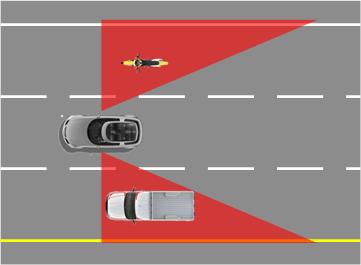
Blind Spot

On the wall here is a diagram showing the blind spots for a driver on the road

  • The red area, either side of the vehicle, reveals those zones the driver can’t see in his rear vision mirror
  • So to be able to change lanes safely the driver needs to look over their shoulder and check their blind spot


Blind spots aren’t just something drivers have on the road – we all have them

  • A blind spot is essentially something about ourselves we are not aware of
  • Some personality trait we don’t realise we possess
  • Or some behaviour we do unconsciously
  • Other people can see it clearly enough, but we can’t

It’s interesting isn’t it – that (without a mirror) we can’t see our own faces

  • Have you ever been in a conversation with someone and they’ve got something stuck in their teeth and you’re not sure whether to say anything
  • Or maybe they start wiping their nose and that makes you think, ‘Are they trying to subtly tell me I’ve got a bogey hanging out?’
  • So you wipe your nose too, which makes them wipe their nose again and so on, until it gets really awkward
  • Has that ever happened to you? (No – it’s just me then)

Blind spots – things other people can see but you can’t

True story – many years ago when our children were young and I wasn’t getting much sleep, Robyn and I went for a walk on the beach (we were on holiday)

  • I remember pushing the pram along the firm sand for probably the better part of an hour when Robyn pointed out to me that I had some toilet paper hanging out the back of pants (like a tail)
  • I had no idea – I couldn’t see because it was in my blind spot
  • Robyn had no sympathy – she cracked up laughing (if you’ll excuse the pun) and couldn’t look at me without giggling for the rest of the day

When we are young we tend to have a lot of blind spots – we don’t know ourselves all that well

  • But hopefully as we get older and more experienced we learn to look into our blind spots and become more self-aware

Carl Jung describes psychological blind spots as our shadow side – He writes…

“Wholeness for humans depends on the ability to own their own shadow”

In other words, unless we are prepared to face and accept those parts of ourselves which we are not aware of, and which we perhaps don’t like all that much, we’ll never be whole

Moses was a remarkable leader – a man of incredible character – but even he had his blind spots, his shadow

  • Fortunately he had the humility not to deny his shadow side but to face it

What Moses wasn’t aware of, but what Jethro (and everyone else) could plainly see, was that Moses was doing too much himself

  • Because of his relationship with Yahweh Moses had become the ‘go to’ guy for settling disputes
  • If you want peace you must have justice
  • But in order to have justice you must have wisdom
  • Where does wisdom come from? – It comes from God
  • Moses hears from God better than anyone else – so we’ll go to him

Consequently, what we have in Exodus 18 is a bottleneck

  • Thousands of cases (many trivial, some serious) coming to one person for a resolution
  • It was a recipe for burnout & frustration
  • Burn out for Moses and frustration for the people, who had to stand in the hot sun all day waiting for a hearing with Moses
  • Justice delayed is not justice

Jethro could see the problem and the solution – but Moses couldn’t

This is kind of ironic when you think about it

  • Here we have Moses making enquiries of God to help other people fix their problems, all the time quite blind to his own problem
  • We can understand this though…
  • You can see a car in your rear vision mirror in the distance
  • But when it’s up close beside you, then you can’t see it
  • Moses couldn’t see because he was too close – too involved

The other contributor to Moses’ blind spot was that he was doing good things

  • And when we do good things we are less inclined to question our method
  • Doing the right thing doesn’t guarantee we are doing it in the right way
  • Moses was doing the right thing – in the wrong way
  • He couldn’t see the toll his work was taking on him
  • Sometimes our focus on the task at hand conceals from us the expenditure on our reserves and it’s not until we stop and have a day off that we realise just how exhausted we are

Quite apart from the drain on Moses’ personal resources, being sucked into the details and doing things other people could do, prevented Moses from seeing the bigger picture

There are times when leaders need to take a step back and look at the situation from the balcony, rather than the floor

  • Of course, we don’t know what we don’t know
  • If we don’t know we have a problem then we don’t know to stand back and get some perspective – nor do we know to ask for help
  • This is where God’s grace comes in


In his letter to the Romans the apostle Paul writes…


…the Spirit helps us in our weakness. We do not know what we ought to pray for, but the Spirit Himself intercedes for us with groans that words cannot express. And He who searches our hearts knows the mind of the Spirit, because the Spirit intercedes for the saints in accordance with God’s will. [1]

There have been times in my life when all I had was an ache in my heart, which I couldn’t put into words, but which the Holy Spirit felt and understood

  • Then, when I wasn’t expecting it, God did something which answered the ache in my heart and it was better than anything I might have asked for, had I been able to find the language
  • There’s no way I can explain the mystery of this
  • Either you understand it from your own experience or you don’t

Moses didn’t know what to pray for – but God, who searches the human heart, knew the strain Moses was under

  • God also felt the frustration of the people as they waited for justice
  • And so the Lord, in His wonderful grace, sent Jethro to give Moses the perspective he needed

Once Jethro had pointed out the issue, in Moses’ blind spot, Moses was able to see clearly what he needed to do

  • Seeing into his blind spot and accepting the truth it contained actually set Moses free from a whole lot of work he didn’t need to do
  • It also set the people free from waiting around all day

We, in the west, tend to think of freedom as licence to do what whatever we want

  • But this is not freedom as the Bible understands it
  • Biblical freedom comes with spiritual sight – or with knowing the truth
  • As Jesus said, ‘…it is the truth that sets you free’ [2]

It is looking in your blind spot to assess the reality of the situation, before changing lanes, that sets you free from a crash on the motorway

  • It is checking yourself in the mirror before going out in public that sets you free from the embarrassment of stray bogeys and toilet paper tails
  • It is the humility of listening to the truthful observations of wise Jethro’s which sets us free from self-destructive patterns of behaviour

Face your shadow side – look for the truth it contains – there is freedom in it

One of the things that is interesting in this little story from Exodus 18 is that the truth which sets Moses free doesn’t come from within the Israelite community

  • The truth comes from the outside – from Jethro, a Midianite

In contrast to Moses’ blind spot we have Jethro’s vision

Jethro’s vision:

There are two aspects to Jethro’s vision in Exodus 18

  • Jethro has the insight to see the root of the problem
  • And he has the foresight to imagine a different future

Moses is carrying the weight of the world (or at least the weight of Israel) on his shoulders and so Jethro asks the question…

  • “Why are you doing this all alone?” (verse 14)

Why indeed?

  • This question is insightful – it cuts to the core of the issue, which is Moses’ isolation – his sense of alienation from his own people
  • Moses is alone in the crowd and it is the pattern of his life

He grew up in a palace while his fellow Israelites lived in a slum

  • When he tried to reconnect with his people and help them he was rejected and ended up spending 40 years in exile
  • Then, as if he doesn’t feel different enough, God calls him to a special task – something no one else has ever done before
  • Moses reluctantly obeys and for all his pains and troubles the people complain against him and accuse him of meaning them harm, even though he has only ever done them good
  • It is little wonder that Moses doesn’t think to ask for help

Leadership is a paradox

  • On the one hand, a leader needs to learn the strength to stand alone
  • And unfortunately you can’t learn that without the experience of being alone & misunderstood
  • At the same time though, a leader also needs to learn to trust other people
  • It seems to me Moses knew how to stand alone – he had that in spades – but he was still learning to trust

Of course, it’s one thing to point out the problem, but unless you can offer a better alternative then it’s usually best to keep your opinions to yourself

Not only did Jethro uncover the core of the problem – Moses’ loneliness

  • He also gave Moses the vision to imagine a better future
  • He gave Moses a plan and a strategy that was sustainable
  • In a word, that strategy was, delegation. Jethro says…

Choose some capable men and appoint them as leaders of the people: leaders of thousands, hundreds, fifties and tens. They must be God fearing men who can be trusted and who cannot be bribed. Let them serve as judges for the people on a permanent basis. They can bring all their difficult cases to you, but they themselves can decide all the smaller disputes. That will make it easier for you as they share your burden.


The first thing we observe about Jethro’s vision here is that delegation is not abdication

  • Moses isn’t to appoint just any body
  • The men he appoints must be capable, God fearing and trustworthy

To be God fearing means to be more concerned with what God thinks than with what other people think

  • A God fearing person is not a ‘yes’ person
  • A God fearing person is able to say ‘no’ when it matters
  • They are guided by their conscience more than the praise or blame of others

To be trustworthy in this context means having integrity – not open to bribery

  • The judge must love truth & justice more than money or comfort
  • Being ‘trustworthy’ implies it is a relationship of trust
  • Trust is a sacred thing and should not be abused or misplaced

The point is, Moses shouldn’t just throw his authority away – he should carefully place it in men who have the competence & character to handle it

We also note that Moses is not to delegate all his authority

  • Delegation doesn’t really work when the leader in charge expects everyone else to get stuck in without doing anything themselves
  • The delegates need to know the buck stops with Moses and that Moses will be there to take care of the really difficult cases
  • If Moses abdicated all responsibility and sat back saying – ‘It’s all on you boys’ – then he would lose the respect of his men pretty quickly

Jethro’s plan – his vision of delegation – comes with a number of advantages


The first and most obvious advantage is that many hands make light work

At the end of verse 22 Jethro comments to Moses that his plan…

  • …will make it easier for you as they share your burden.
  • The burden is shared in that Moses has less disputes to sort out
  • And it’s also shared in the sense that Moses is less alone
  • Sharing responsibility actually engenders more understanding for the leader

You often find those who are most critical of leaders have never actually been in leadership themselves

  • They are arm chair critics who have never really felt the burden or the isolation of leadership and so they have no empathy
  • But when you have had to carry some responsibility and felt the loneliness of a difficult decision then you have a bit more understanding for your boss

By delegating, Moses was drawing the best out of others

  • Jesus said, “You are the salt of the earth”
  • One of the things salt does is bring the best out of food
  • Trusting others to do something meaningful (as Moses did) generally brings the best out of them

Conclusion:

There are many things you can do with your time – most of which can be done by someone else

  • So you have ask yourself, ‘What are the things only I can do?’
  • They are probably the things you need to give priority to

No one could have helped Moses to see his blind spot quite like Jethro did

  • The same good advice from one of Moses’ juniors would have been a lot more difficult for Moses to accept
  • But Jethro was a leader in his own right (a priest of Midian) and so he understood Moses’ position
  • He had done his time and earned the right to speak into Moses’ life
  • Fortunately for Moses (and for Israel) Jethro used his vision to help Moses find a sustainable way forward
  • Imagine if Jethro had held his tongue
  • Moses and Israel would have suffered for it


No one could hear from God quite like Moses could – he seemed to have a direct line of communication with the Lord

  • Fortunately for Israel (and for us) Moses gave himself to listening to God’s word and communicating this to the people
  • But that didn’t mean he had to settle every dispute
  • There were others capable of handling the smaller more routine matters
  • Imagine if Moses hadn’t taken Jethro’s advice
  • What a waste that would have been

No one could save the world like Jesus did

  • Fortunately for us Jesus gave Himself on the cross for our salvation
  • Imagine if he had remained in Nazareth working as a carpenter his whole life
  • There would be some nice houses there I guess, but we would be without hope

Now at this point you might be thinking that’s all well & good but what can I do that no one else can?

  • I’m not Michelangelo, I’m not Moses, I’m not Jethro and I’m certainly not Jesus
  • Well, each of us is unique and none of us are fully aware of how God will use us
  • Quite often our potential is hidden in our blind spot
  • God sees though and He will use us for His good purpose – even if we aren’t aware

[1] Romans 8:26-27

[2] John 8:32