God’s Glory

Scripture: Isaiah 60

Video Link: https://youtu.be/AaDoG32hNoo

Structure:

  • Introduction
  • Light
  • Gravity
  • Worship
  • Conclusion

Introduction:

Good morning everyone.

One of the greatest mathematicians to have ever lived was a man called Archimedes. Archimedes was born in 287 BC, nearly three hundred years before Christ. Archimedes lived in Sicily, a region in Italy.

One day the king asked Archimedes to help him solve a problem. The king had given an exact amount of gold to a jeweler and asked the jeweler to make a crown for him. But when the crown came back, the king suspected the jeweler had cheated him by substituting some of the gold for silver.

Archimedes had to determine whether the gold crown contained any silver, without damaging the crown. Archimedes thought hard about this for a while. Gold has a higher density than silver, so if the density of the crown was less than the density of the gold the king had given the jeweler, then the king had been ripped off.

To calculate the density, Archimedes needed to know the volume of the crown. However, he couldn’t measure the volume with a ruler, like you might a square box, because the crown was an irregular shape.

The answer came to Archimedes while he was taking a bath. As Archimedes sat down in the bathtub some water overflowed and went on the floor. At that moment Archimedes had an epiphany. He could calculate the volume of the crown by placing it in a bucket of water. The volume of water that was displaced would equal the volume of the crown.

Some say that Archimedes was so excited about this sudden flash of insight that he ran down the street naked shouting, ‘eureka’, which in Greek means,

‘I found it’. That last part about Archimedes running down the street naked might be an embellishment, but the rest of the story is true.

As it turned out, the density of the crown was less than the density of the king’s gold, which meant the crown did in fact contain silver. I’m not sure what happened to the jeweler, but it probably wasn’t good.           

Today, the 5th of January, is the twelfth and last day of Christmas, which means you are supposed to take your Christmas decorations down after today. It also means that tomorrow, the 6th of January, is Epiphany.

An epiphany (with a small ‘e’) is a sudden realization or insight, when the answer or meaning dawns on you, as it did with Archimedes in the bath.     

Epiphany with a capital ‘E’ is a special day in the church calendar celebrating the visit of the wise men to see Jesus after his birth. These wise men were probably like Archimedes; mathematicians, engineers and astronomers.

The wise men had an epiphany after studying ancient prophecies and the stars in the night sky. One star shone brighter than usual, so they followed that light to Bethlehem where they found and worshiped Jesus, the Messiah of God.     

The Bible doesn’t say how many wise men there were, only that they brought gifts of gold, frankincense and myrrh. From these three gifts, people assume there were three wise men.

Whatever their number, none of them were Jewish. They were gentiles from the east. For this reason, Epiphany (with a capital ‘E’) is associated with God’s plan of salvation for the nations of the world. 

The classic Old Testament reading for Epiphany comes from the book of Isaiah chapter 60. If you listen carefully, God may give you an epiphany of your own. From verses 1-6 we read…

“Arise, shine, for your light has come, and the glory of the Lord rises upon you. See, darkness covers the earth and thick darkness is over the peoples, but the Lord rises upon you and his glory appears over you. Nations will come to your light, and kings to the brightness of your dawn. “Lift up your eyes and look about you: All assemble and come to you; your sons come from afar, and your daughters are carried on the hip. Then you will look and be radiant, your heart will throb and swell with joy; the wealth on the seas will be brought to you, to you the riches of the nations will come. Herds of camels will cover your land, young camels of Midian and Ephah. And all from Sheba will come, bearing gold and incense and proclaiming the praise of the Lord.

May the Spirit of Jesus illuminate God’s word for us.

Light:

Isaiah 60 is about the glory of the Lord and the epiphanous effect God’s glory has on the world. Three words to give you a handle on this passage: light, gravity and worship. We start with light.

Near the beginning of the 20th Century, Albert Einstein came up with the special theory of relatively. Einstein had an epiphany in which he realized that the speed of light is constant, while time is relative. Don’t ask me to explain it, but apparently the faster you go, the slower time goes. It’s a real mind bender.

Now light is extremely quick, the fastest thing known to humanity. Light travels at a speed of 300,000 kilometers per second. Einstein theorized that if time slows down as you go faster, then at the speed of light time stands still.  

In verse 1 of Isaiah 60 the prophet says, “Arise, shine, for your light has come, and the glory of the Lord rises upon you.”

The experts say the one being told to arise and shine here is the city of Jerusalem, also known as Zion. The promise is that God will shine the light of his glory on the holy city, on the people of Jerusalem.

Isaiah 60 gets interpreted in different ways depending on your point of view. Interpretation is often relative to where you stand in time and history.

If you were Jewish and had recently returned to Jerusalem from exile in Babylon, then you would be inclined to think of these words as applying to the physical city of Jerusalem.

When the Jewish exiles returned, during the time of Nehemiah and Ezra, they found the city in ruins. They had to rebuild the walls and the temple and all the infrastructure and they faced opposition in doing this. The city of Jerusalem was anything but glorious. It was a shambles.

For the Jews who were trying to rebuild, Isaiah 60 was an encouragement that God would help restore their fortunes and make them prosperous again. Their hard work would not be in vain. 

But if you are a Christian living in a secular western culture in the 21st Century, then Zion, the holy city of God, is code for God’s kingdom on earth.

For us, Isaiah 60 is not talking about the physical Jerusalem we see on the news in the Middle East.

Rather, Isaiah is talking about God’s spiritual reign on earth. For Christians, Zion is not so much a geographical location. It’s more a state of being in which God’s will is done. It is a community of righteousness, justice and peace. It is heaven on earth.

We believe God’s kingdom came to earth in the person of Jesus and that when Jesus returns in glory, heaven on earth will be realized in its fullness.        

However you choose to interpret it, Isaiah 60 is first and foremost about the light of God’s glory. God’s people are to reflect the light of God’s glory, sort of like the moon reflects the sun’s light.

In verse 2, Isaiah says, See, darkness covers the earth and thick darkness is over the peoples, but the Lord rises upon you and his glory appears over you.

Darkness here is spiritual darkness. It is moral evil and death. In contrast, the light of the Lord represents truth and goodness, justice and peace, love and life. The light of God’s glory shows us how to live right.

This imagery sounds echoes of the creation story in Genesis 1 where we read…

In the beginning God created the heavens and the earth. Now the earth was formless and empty, darkness was over the surface of the deep, and the Spirit of God was hovering over the waters.And God said, “Let there be light,” and there was light. 

Isaiah is piggy backing off the creation story in Genesis. He is acknowledging that the world is in bad shape, it’s in chaos and darkness. But God is going to bring order to the chaos. God is going to bring light to the darkness. God is making his creation new and it begins with his glory, his divine light, rising over you.

Jesus said of himself, ‘I am the light of the world’. In other words, Jesus shows us the goodness of God. Jesus reveals the truth about God (and the truth about us). Jesus overcomes the darkness of sin and death through his death and resurrection. Jesus comes to make all things new. Jesus restores God’s order to creation.   

As I mentioned earlier, light is fast. Isaiah 60 finishes with these words: I am the Lord; in its time I will do this swiftly. In other words, the revelation of God’s glory, will happen quickly in the end, like having an epiphany after a long struggle to understand.

Gravity:

We’ve heard about the light of God’s glory rising over Zion. Now let’s consider the gravity of God’s glory. God’s glory is a weighty thing. It is heavy, it has substance, mass, gravitas.

Outside the Oxford University Museum of Natural History, there’s a statue of Isaac Newton looking down at an apple on the ground. This commemorates Newton’s epiphany about gravity.

For some time, Isaac Newton had been contemplating the nature of gravity.

One day in 1666 Newton was walking in the garden of his family home, when he noticed an apple fall from a tree. He considered why the apple fell straight down and not up or sideways. 

From that simple observation Newton reasoned that a falling apple and the orbiting moon are both pulled by the same force. Newton then did some mathematical calculations to prove his theory. Basically, the greater the mass of an object the stronger its gravitational pull.

In verses 3 and 4 we read…

Nations will come to your light, and kings to the brightness of your dawn. “Lift up your eyes and look about you: All assemble and come to you;

Thinking in spiritual terms, the light of God’s glory will have a certain gravitational pull, drawing the leaders of the nations toward Zion. This is a poetic way of saying, people are attracted to the glory of God’s wisdom, justice and peace, his salvation, his abundant life. Deep down people want God’s reign on earth.

Notably, among those coming are your sons and daughters. For the Jews of Nehemiah’s time (hundreds of years before Christ) this could have meant the lost tribes of Israel returning to Jerusalem. But for believers today it might mean seeing wayward children returning to church or witnessing secular society returning to faith in God.

Verse 6 mentions Midian and Ephah being drawn to Zion. Midian and Ephah were descended from Abraham through Abraham’s second wife Keturah.

They were like half-brothers to the Israelites. This hints at a reconciliation between the children of Abraham. The power of God’s glory is that strong.

Verse 6 indicates the people of Sheba feeling the gravitational pull of God’s glory too. This reminds us of the time the Queen of Sheba came to Jerusalem with gifts of gold to learn the wisdom of Solomon.

God’s glory is not like gravity in every way. Gravity is an unconscious force of nature. By contrast, God’s glory is discerning and wise, capable of restoring people to right relationship. 

God’s glory is his wisdom and power to save all the nations of the earth, whether they are descended from Abraham or not.

Worship:

The glory of God’s salvation requires a response of worship.

The word worship comes from the old English word, ‘worth-ship’.

Worship is about attributing worth or value to something. This means worship costs us. It involves a sacrifice of time, energy and gifts.

Verse 5 talks about the riches of the nations coming to Zion and verse 6 talks about those from Sheba bringing gold and incense and proclaiming the praise of the Lord. Gold, incense and praise are all symbols or elements of worship.

The financial offerings we make each week and the time we volunteer in service to Christ are part of our worship of God, as are the songs of praise we sing in church.

The smoke of incense is a symbol of people’s sweet-smelling prayers rising to God. We don’t literally burn incense in our tradition, but we do pray as part of our worship. Prayer itself is the more important part. Incense is simply a visual reminder of the invisible reality of prayer.

We note also that worship is a process. Worship involves going on a journey. The pilgrims in Isaiah 60 don’t just set and forget a weekly automatic payment to the church (as much as the deacons and staff do appreciate that).

The pilgrims in Isaiah 60 travel a long way to get to a place where they can offer their gifts in worship to God.

The journey to worshipping God takes time and energy. It requires faith to leave what feels safe and familiar. It requires commitment and endurance to go the distance. But we make the effort to go on that journey because God is worth it. The journey is part of our offering to God, it is part of the sacrifice.  

Our life in this world is a journey with a purpose. The goal is to offer ourselves in obedience and praise to God our Father.  

Isaiah 60, verse 11, says: your gates will always stand open, they will never be shut, day or night, so that people may bring you the wealth of the nations…    

Many times, over the centuries, nations have come to conquer and destroy the city of Jerusalem. But Isaiah 60 imagines a very different future. One in which the nations of the world recognize God’s worth (as revealed by his glory) and are drawn to worship the Lord in peace. 

God’s glory opens doors and offers security. People are drawn to Zion with goodwill. By God’s grace and power, the spirit of greed and violence, which dominates this current age, is replaced by a spirit of generosity and love.

The glory of God’s salvation requires a response of worship.

Conclusion:

History tells us the promise of Isaiah 60 is yet to be fulfilled. The Jews who returned from exile in Babylon saw a partial fulfilment of Isaiah’s prophecy.

The earthly city and the temple were rebuilt but not to the former glory of Solomon’s time and certainly not to the extent of Isaiah’s vision.

As Christians, we believe Isaiah 60 is properly fulfilled in and through Jesus, the Christ. The visit of the wise men, bearing gifts of gold, frankincense and myrrh, points to Jesus being the one in whom the glory of God dwells.

As we read in the gospel of John: The Word became flesh and made his dwelling among us. We have seen his glory, the glory of the One and Only,  who came from the Father, full of grace and truth.

Jesus is the Word of God made flesh. Jesus came to make all things new.

Jesus embodies the light of God’s grace and the gravity of truth.

Through Jesus’ sacrifice salvation is available to all people. 

Through faith in Jesus our worship is made acceptable to God the Father. 

May the light of God’s glory inspire your hope. And may the gravity of God’s glory keep your feet on the ground, as you journey in worship to him. Amen. 

Questions for discussion or reflection:

  1. What stands out for you in reading this Scripture and/or in listening to the sermon? Why do you think this stood out to you?
  2. Have you ever had an epiphany? What happened? What did you suddenly realise? How did you feel? What difference did it make to your life?
  3. How would the returning Jewish exiles of Nehemiah’s day interpret Isaiah 60? How might Christians living in the 21st Century interpret Isaiah 60?
  4. Discuss / reflect on the Biblical connections between Isaiah 60 and the creation story in Genesis. How does Jesus fulfil the vision of Isaiah 60? 
  5. Why are you drawn to Christian faith? What do you find attractive about Jesus?
  6. What is worship? Why do we worship? How do we worship God? To what or whom do you attribute value and worth? 

Jesus’ Insight

Scripture: Mark 12:38-44

Video Link: https://youtu.be/Jl2L_Egupx4

Structure:

  • Introduction
  • Jesus’ insight
  • The widow’s worship
  • Conclusion

Introduction:

Good morning everyone.

Bob Dylan once said, ‘What looks large from a distance, up close ain’t never that big’.

Great line. Who knows what Dylan had in mind when he wrote that, but to me it has several layers of meaning. On one level, it says, “Don’t believe the hype. Things are not always as they appear at first”.

Or, if we look at it from another angle, “Don’t make a mountain out of a molehill. Most problems seem bigger from a distance. But when you get close enough to break it down, the problem is more manageable than you first thought”. In other words, don’t worry too much about the future.

Today we continue our series in Mark’s gospel, following the lectionary readings. In this week’s passage, Jesus shows his disciples that, ‘what looks large from a distance, up close ain’t never that big’.  From Mark chapter 12, verses 38-44 we read… 

38 As he taught, Jesus said, “Watch out for the teachers of the law. They like to walk around in flowing robes and be greeted with respect in the marketplaces, 39 and have the most important seats in the synagogues and the places of honour at banquets. 40 They devour widows’ houses and for a show make lengthy prayers. These men will be punished most severely.” 41 Jesus sat down opposite the place where the offerings were put and watched the crowd putting their money into the temple treasury. Many rich people threw in large amounts. 42 But a poor widow came and put in two very small copper coins, worth only a few cents. 43 Calling his disciples to him, Jesus said, “Truly I tell you, this poor widow has put more into the treasury than all the others. 44 They all gave out of their wealth; but she, out of her poverty, put in everything—all she had to live on.”

May the Spirit of Jesus illuminate God’s word for us.

This morning’s message has two points of focus. Jesus’ insight and the widow’s worship. Let’s begin with Jesus’ insight.

Jesus’ insight:

Some of you will be familiar with the Yohari window. The Yohari window is a graph of four quadrants, depicting self-awareness.

Some things about you are in the public arena, they are known to you and to everyone else. Other things are known to you but not to others, those private thoughts and motivations you keep hidden behind a façade.

Then there are the things other people know about you, but you yourself are unaware of. Those things in your blind spot or your shadow. The things you deny or don’t want to face.

There are things too which are unknown to you and unknown to others. These things are known only to God. 

With some people what you see is what you get. They are the same on the inside as they are on the outside. They are not pretending.

But then there are those who hide their true self. How they appear in the public arena is quite different from how they actually are in private. Insight sees behind the façade. Insight recognizes reality. What looks large from a distance, up close ain’t never that big.

In verse 38, Jesus warned people against the teachers of the law. These were the religious experts or Bible scholars of Jesus’ day. It might be difficult to imagine, but being a Bible expert was very cool in first century Israel.

Studying the Law of Moses (the Torah) was Israel’s national sport. The Jews of 2000 years ago put the teachers of the law on a pedestal. The teachers of the law were like the All Blacks of Israel, they were honoured.

In contrast, being a Bible scholar is not really valued these days. Bible teachers in wider NZ society are largely ignored or misunderstood. If you want to be popular, then join a sports team or become a rock star. Don’t become a preacher.

In the public arena the religious leaders seemed like paragons of virtue.

Jesus had the insight to see that, when it came to the teachers of the law of his day, what looks large from a distance up close ain’t never that big. Don’t believe the hype. Don’t be too impressed by them.

Many of these teachers of the law (probably not all, but many) did not put God first. Their worship was false, a show to make themselves look good. God hates it when people use religion to hide evil. To do this is to take the Lord’s name in vain. It is hypocrisy.  

If it wasn’t bad enough that these religious leaders sought honour for themselves, some also devoured widows’ houses. They inveigled their way into the lives of vulnerable women and took advantage of them financially.

Jesus sees a day of reckoning coming for these men. They won’t get away with it.

In Mark 12, verses 28-34, last week’s lectionary reading, Jesus had a good conversation with a teacher of the law. This shows us that not all the religious leaders of Jesus’ day were the same. 

This religious expert had correctly discerned that love for God and love for your neighbour is more important than ritual sacrifice. In response, Jesus says to him, “You are not far from the kingdom of God”, meaning you are close but not yet in God’s kingdom.

This may have been a bit unsettling for the teacher of the law, who probably thought he was already in, given he was Jewish and one of the religious elite.

The religious leaders were trusting in their heritage and their traditions.

Perhaps Jesus was hinting at the fact that being Jewish and knowing about God’s law in your head is not enough. For even when we know God’s law, we are not always able to keep it, not perfectly.

We must put our faith in the one who fulfils God’s law of love on our behalf, that is: Jesus. Putting our faith in Jesus’ righteousness requires us to abandon all pretence of our own righteousness.

Many of the religious leaders of Jesus’ time were pretending to be righteous when they were not. Some may have done this cynically and others may have been quite unaware of how bad they really were.

Jesus had to shine the light of his insight on the unknown so people wouldn’t be deceived. What looks large from a distance, up close ain’t never that big.

The widow’s worship: 

In contrast to the religious leaders who steal from the vulnerable and say long prayers to cover their tracks, Jesus holds up the example of a poor widow who says nothing and gives everything she has in devotion to God.

The widow in this reading from Mark’s gospel shows us what true worship looks like. Faith expressing itself in love. She worships God with a pure heart.   

William White retells an old Jewish folktale… [1]

Once there was a rich man who never gave donations to the poor. People in his small village never called him by name, they simply referred to him as the Miser.

One day a beggar came to the door of the Miser. ‘Where do you come from?’ he asked. ‘I live in the village’, answered the beggar. ‘Nonsense’, cried the Miser. ‘Everyone in this village knows I do not support beggars’.

In the same village there lived a poor shoemaker. He was a generous man who responded to every person in need that was brought to his attention. No one was ever turned away empty handed from his door.

One day the Miser died. The village leaders decided to bury him at the edge of the cemetery. No one mourned his passing; no one followed the funeral procession to the place of burial.

As the days passed the village rabbi heard disturbing news regarding the shoemaker. ‘He no longer gives alms to the poor’, complained one man.

‘He has refused every charity that has approached him’, declared another.

‘Has anyone asked about his change?’ inquired the rabbi. ‘Yes’, replied the first man. ‘He says he no longer has money to give away’.

Soon the rabbi called on the shoemaker. ‘Why have you suddenly stopped giving money to worthy causes?’ Slowly the shoemaker began to speak.

‘Many years ago, the man you called the Miser came to me with a huge sum of money and asked me to distribute it to those in need. He made me promise that I would not reveal the source of the money until after he died.

Once every month he would visit me secretly and give me additional money to distribute. I became known as a great benefactor even though I never spent a penny of my own money.

I am surprised that no one questioned me earlier. How could anyone who earned the wages of a shoemaker give away as much money as I have all these years?’

The rabbi called all the villagers together and told them the story.

‘The miser has lived the Scriptures, worshipping God with a pure heart by keeping his giving a secret.’

Things are not always as they appear at first. What looked like meanness from a distance, was actually generosity up close. The widow in Mark 12 shows us what it means to worship God with a pure heart.

There are three things, about widowhood, we should be aware of…

Firstly, to be a widow is to experience loss and the pain of grief which goes with that loss. Grief is the price we pay for love. The more you love someone, the deeper the grief you feel when you lose them.

Secondly, widowhood often involves the experience of loneliness. Yes, you can have friends but it’s not the same as your husband or wife. You can get involved in the church and community. But even when the community is warm and kind, a single person might still feel out of place around married couples.

Thirdly, for the woman in Mark 12, being a widow involved financial hardship. There weren’t many employment opportunities for women in those days.

And no government welfare system to pay out a widow’s benefit. Without a man on the scene to provide for her, options for this widow were limited.

Life was extremely difficult for the widow in Mark 12. If anyone had reason to be angry with God, it was this woman. She had suffered much and it probably felt (at times) like no one was on her side. And yet she is not angry with God. She loves God with a pure heart, without there being anything in it for her.

Although the widow gives her offering publicly, no one could accuse her of doing this to make herself look good. If anything, she probably looked relatively bad in the eyes of others, like a miser.

Many rich people dropped in a lot of money, but she dropped in just two thin copper coins. Compared to their great gifts her offering must have seemed very stingy indeed, but not to Jesus. Jesus looks with insight. Jesus sees beyond appearances to what is hidden in the heart.  

After witnessing the widow’s act of worship, Jesus calls his disciples together and says to them, 43 “Truly I tell you, this poor widow has put more into the treasury than all the others. 44 They all gave out of their wealth; but she, out of her poverty, put in everything—all she had to live on.”

Jesus’ measure is different to ours. Jesus doesn’t just look at the amount given. He measures the proportion given and the cost to the giver. The widow’s offering, which looks small from a distance, up close is really quite big.

The widow gave 100%, whereas the rich gave maybe 5% or 10%? Their 5% or 10% may have equated to hundreds of dollars while her 100% amounted to only a few cents. But the personal cost to her was much greater. The rich did not miss what they gave but the widow faced hunger.      

Now, in saying this we must note that Jesus is not criticising the wealthy here. This is a freewill offering, over and above the minimum required by the law. And the wealthy in this passage give generously. They are not like the religious leaders who are ripping people off. Their giving still counts with God. 

The point is Jesus’ measure is different to ours. We measure the amount. Jesus measures the cost to us personally. We measure quantifiable outcomes, results and bottom lines. Jesus measures the immeasurable, our motivations and heart attitude.

Some witty soul once quipped, ‘the last part of a person to be converted is their wallet’. If that is true, then by giving all the money she possessed, this widow demonstrated her faith was whole and her conversion was complete. She trusted God totally with her life. She genuinely did love God with all her heart and with all her strength. This is challenging stuff.

When I was a boy, we went on holiday somewhere and attended a theme park where they had a wishing well. The idea was to throw your coins into the water and the money would then be given to charity.

I was about to throw my 10 cents in when an older lady said to me, ‘Keep your money son. Don’t throw it away like that.’ She went on to explain that the money wouldn’t go to a good cause. It would be pocketed by the owners of the establishment. She was trying to protect me.

We might think Jesus would do the same for the poor widow. ‘Don’t throw your money away luv, it will just be pocketed by the religious leaders’.

Jesus knows the religious establishment are mostly corrupt. And he knows the widow can’t afford it. Surely it would be a kindness to save her throwing good money after bad. But Jesus doesn’t stop her. To the contrary, Jesus celebrates the widow’s giving.

We are not as radical as Jesus or the widow. We prefer a more common-sense approach.

If anyone here was to give all their money to the church, so they had nothing to live on, most of us would be horrified. No one wants you to be under financial hardship. Be generous to the extent you can afford it but please, take care of yourself as well.    

So why does Jesus not prevent this widow from giving away her last penny?

Well, Jesus sees this woman with spiritual insight.

Firstly, the widow’s giving was an act of worship for God. Her primary motivation wasn’t practical. She wasn’t giving to support the priests or to maintain the running of the temple. Nor was she giving out of a misplaced hope that God would make her rich if she gave up everything.  

Her primary motivation was spiritual. The widow was giving to express her love and devotion to God. And Jesus honours the widow for this. He honours her by respecting the choice she makes and he honours her by ensuring her story is passed on by his disciples.

Worship is like breathing. It is something we must do all the time in order to live. Just as it is not good to hold your breath for too long, so too it is not good for the human soul to hold on to excess cash for too long. Accumulating material wealth for its own sake will weaken your faith. Giving will strengthen your faith and refresh your soul.    

This is not to imply some sort of cargo cult or prosperity doctrine. I’m not suggesting that generous financial giving will make you wealthy. It probably won’t. But it will free you to love God and live lighter.

Another thing we notice here is that Jesus is not anxious for this widow, because he knows the character of God.  In Matthew 6, Jesus says to his disciples…

“Do not worry about your life, what you will eat or drink; or about your body, what you will wear. Is not life more important than food and the body more important than clothes? Look at the birds of the air; they do not sow or reap or store away in barns and yet your heavenly Father feeds them. Are you not much more valuable than they? Who of you by worrying can add a single hour to his life?”  

Again, parts of Jesus’ teaching seem to go against the grain of our survival instinct. To be clear we still need to work and plan for the future, but not at the expense of our perspective. Often those worries which look large from a distance, up close ain’t never that big.

Of course, by pointing out this woman had given away her last coin, Jesus is making the widow’s need known to the wider network of his disciples so they can do something practical to help her. If the men didn’t take the hint to help this widow, then the women travelling with Jesus surely would have. 

Isn’t it interesting, despite his power to turn stones into bread, Jesus does nothing miraculous here. Rather Jesus points to the miracle of the widow’s love and devotion, and he invites others to share the responsibility for her care.  

Jesus is not anxious for this woman because her faith is strong and her soul is in good shape. She embodies a number of the beatitudes in Matthew 5…

Blessed are the poor for theirs is the kingdom of heaven.

Blessed are the pure in heart for they shall see God.

Blessed are those who mourn for they will be comforted. 

Conclusion:

We must not miss the bigger picture. Soon Jesus would go to the cross and pour out his life, totally, for us. The widow who gave everything points to Jesus who gave everything. Like Jesus, her sacrifice of love held nothing back.  

If you are not ready to love God as totally as this poor widow did (and as Jesus does) then don’t be discouraged and don’t give up. Simply love God as much as you can. God in his grace is able to meet us where we are at.

But understand that God will probably call you to greater love and faith, providing all you need in the process.

May the Lord bless you richly and make you a blessing to others, for his glory. Amen.

Questions for discussion or reflection:

  1. What stands out for you in reading this Scripture and/or in listening to the sermon? Why do you think this stood out to you?
  2. Discuss / reflect on the Bob Dylan quote: ‘What looks large from a distance, up close ain’t never that big’. What does this mean to you?
  3. Thinking of the Yohari window, how might we grow in our self-awareness? Can you think of a time when you learned something new about yourself? What happened? How did you feel? 
  4. Why did Jesus point out the religious leaders’ hypocrisy?
  5. Put yourself in the shoes of the widow in Mark 12. What do you imagine life was like for her? How do you feel thinking about this widow and what she did? Why do you feel this way?
  6. Why does Jesus highlight the widow’s offering? What can we learn from the widow’s example. In what way(s) does the widow point to Jesus?
  7. Make some time this week (either on your own or with your partner in marriage) to calculate what you give financially to God. E.g. donations to the church and mission or to the poor. Consider both the dollar amount and the proportion of income this represents. What does your level of giving say about your love for God and for others? Does anything need to change?   

[1] William White, ‘Stories for Telling’, page 101-102.

Jesus’ Authority

Scripture: Matthew 28:16-20

Video Link: https://youtu.be/4UlurtIrQV0

Structure:

  • Introduction
  • Mountain top moments
  • Worship and doubt
  • All authority
  • Conclusion

Introduction:

Good morning everyone.

Today we begin a new sermon series in support of Arotahi.

Arotahi is the new name for the New Zealand Baptist Missionary Society.

Arotahi means to focus in one direction, concentrating on one thing together.

Each year we spend three weeks focusing on the work of our Baptist missionaries working overseas and in New Zealand. We call this three weeks’ focus on mission: Renew Together. (In the past it was called Self Denial.)

Renew Together is about remembering God’s mission of gospel renewal and our part in that mission.

The New Zealand Baptist Missionary Society (NZBMS) began in 1885 with this statement of purpose: “…to fulfill the ‘Great Commission’ of the Lord Jesus Christ in those areas of the world to which He may direct.”

Over the three weeks of this year’s Renew Together campaign we will use the sermon time to focus on Jesus’ great commission. Let us begin then with a reading from Matthew 28, verses 16-20…

16 Then the eleven disciples went to Galilee, to the mountain where Jesus had told them to go. 17 When they saw him, they worshiped him; but some doubted. 18 Then Jesus came to them and said, “All authority in heaven and on earth has been given to me. 19 Therefore go and make disciples of all nations, baptizing them in the name of the Father and of the Son and of the Holy Spirit, 20 and teaching them to obey everything I have commanded you. And surely I am with you always, to the very end of the age.”

May the Spirit of Jesus illuminate God’s word for us.

Although this passage of Scripture, is called ‘the great commission’, there’s actually more going on here, including some important things about Jesus’ great authority and Jesus’ great presence. We will get to the commission part of ‘the great commission’ next week. The focus of this week’s message is Jesus’ authority.

Mountain top moments:

I grew up in the city of Hamilton. Unlike Wellington, the Waikato is a relatively flat place. The closest mountain of any significance is Mount Pirongia, about half an hour’s drive west of Hamilton.

It takes four and half hours to walk up Mount Pirongia, give or take. The thing I remember about the climb was the way it just seemed to go on and on and on. You thought you were making progress and then you had to walk down into a saddle, knowing you would have to climb up that distance again.

But just when you think the grind is never going to end, you come around a corner and you are there, at the summit. It’s a mountain top moment.

In general terms, ‘a mountain top moment’ is an expression which means a moment of exhilaration, joy and triumph after achieving a goal.

In spiritual terms though, ‘a mountain top moment’ refers to a significant revelation given by God. It’s a sacred time when you feel especially close to the Lord. Mountain top moments may not last long but they have the feel of eternity, like you are transcending time somehow. They leave a lasting impression.

Mountain top moments are a gift from God; we can’t really conjure them. But, in the Bible at least, they often come after some kind of ordeal.

Abraham had a mountain top moment when the angel of the Lord stopped him from sacrificing Isaac. Moses received the ten commandments on a mountain. And Elijah had a mountain top moment after his confrontation with the prophets of Baal.          

Mountain top moments mark the beginning, middle and end of Jesus’ earthly ministry in the gospel of Matthew. Jesus gives his famous sermon on the mount in Matthew 5. Then, in Matthew 17, we read of Jesus’ transfiguration on a mountain. While, in Matthew 28, the risen Jesus appears to his disciples on a mountain in Galilee.

All of these are special moments of revelation given by God. The sermon on the mount reveals Jesus’ authority in relation to the law. Jesus isn’t just a skillful and wise teacher. He is the one who fulfills God’s law of love on behalf of humanity.

Likewise, the transfiguration of Jesus on the mountain reveals Jesus’ authority as God’s representative. Jesus stands glorified alongside two of Israel’s greatest prophets, Moses and Elijah. Then a voice from heaven says of Jesus, ‘This is my Son, listen to him’. Jesus is the one the prophets spoke about.

The appearance of the risen Jesus, on a mountain top in Matthew 28, reveals Jesus’ authority over life and death. Jesus has conquered sin and death through his obedience to God in going to the cross. Jesus has authority to grant eternal life. 

As much as we may enjoy the mountain top moments and wish them to never end, we cannot remain on the mountain indefinitely. The disciples didn’t stay on the mountain top. They came down and went out into the world. In the same way, we must come down the mountain to live our lives on the flat.

Where are you right now? Are you on the mountain top or in the valley? Or somewhere in between? The mountain top may be where we are most aware of God. But really, God is with us wherever we are, even if we feel like we are in the pits.

Worship and doubt:

You’ve probably heard the saying, ‘Keep it real’. It means something like, be honest, don’t lie to yourself, be authentic. Live in your own soul. Be who you are.

The Bible has a way of keeping it real. It is such an honest book. It shows people as they are. It doesn’t gloss over the mess or the complexity that comes with being human. Verse 17 of Matthew 28, keeps things real where it says…

17 When [the disciples] saw [Jesus], they worshiped him; but some doubted. 

What we have here is a very honest picture of the disciples. A mixture of worship and doubt.

These disciples are Jewish and had been raised in the knowledge of the ten commandments, which said you shall worship no other God but Yahweh. The fact that the disciples worshipped Jesus shows they acknowledged his divine authority. After three years of not really understanding who Jesus is, the disciples finally get it. A mountain top moment of divine revelation. 

Matthew could have left out the part about some of the disciples doubting but he chooses to leave it in. And I’m pleased he did. It has the ring of truth to it.

It resonates with our own experience. Matthew is keeping it real.

So what does it mean that some doubted? Well, it is not doubt in the sense of complete disbelief. It is not the intellectual doubt of an atheist. Nor is it the arrogant doubt of those opposed to Jesus, like the religious leaders who believed in God and yet disbelieved that Jesus is the Messiah of God.

No. It is the kind of doubt that puts a person in two minds. It is an honest doubt that says, ‘I want to believe the good news, that Jesus is alive and God loves me, but I have some practical concerns that I find difficult to reconcile.’

We might call it the doubt that seeks integrity. Not the doubt of a closed minded skeptic but the doubt of an open minded seeker of the truth.

Let me offer two examples of how this honest doubt operates.

In the gospel of John, the disciple Thomas refused to believe that Jesus had risen from the dead without physical proof. Thomas wanted to touch Jesus’ wounds. For this he earned the nick name, Doubting Thomas, which is a bit unfair.

When we consider Thomas’ stand on this point we notice a certain thoughtfulness and integrity in the man. He was not willing to simply go along with the crowd. Thomas was in two minds. He wanted to believe Jesus was alive but he had some practical concerns he needed to reconcile and he was being honest about that.

When the risen Jesus did appear to Thomas a week later, Thomas believed and worshipped Jesus. Thomas rightly perceived Jesus’ divine authority. The interesting thing is that of all the disciples, Thomas travelled further with the gospel than anyone else, taking the message about Jesus all the way from Palestine to India.

There is another way to understand the doubt of the disciples in this context. That is: self-doubt. Richard France observes how the disciples were mindful of the way they had deserted Jesus when he needed them most. They were probably feeling a bit embarrassed by their lack of moral fiber.

They may have had no doubt that God had raised Jesus from the dead. What they doubted was themselves. How can I call Jesus, ‘Lord and friend’, when I have let him down so badly? How can I worship Jesus with integrity after my own lack of integrity has been so clearly shown?

You know there are some worship songs I find hard to sing. I am quite comfortable singing about the greatness of God and the worthiness of Jesus to receive all honour, praise and glory. I don’t doubt that God raised Jesus from the dead. That makes perfect sense to me.  

But when the chorus has me singing about what I will do for God or what I will give to God, my confidence evaporates. I doubt myself with good reason. I know my own limitations. What integrity I do have, stops me from making extravagant claims about what I will do for God. Like the first disciples, I worship with doubts about myself.

The good news is that Jesus’ authority is not threatened by the disciples’ doubt. Jesus is not unsettled by your doubts either. Jesus understands our weakness and frailty and is able to work with us.

Verse 18 tells us how Jesus came to the disciples and spoke to them.

Many, many times in Matthew’s gospel we read how people came to Jesus either for help or to question him. But only twice do we read that Jesus came to his disciples. Once, in chapter 17, after his transfiguration and then again in Matthew 28, after his resurrection.

Jesus comes to restore a sense of normality when his disciples are feeling overwhelmed by a supernatural event. [1]

Isn’t that cool. Jesus doesn’t use his authority like a big stick to keep his disciples in fearful submission. Jesus uses his authority to reassure his disciples and to calm their fears. Jesus accepts his disciples, honest doubts and all.

To be accepted by someone in authority is not only a great honour, it also fosters confidence and puts doubt in its place. Jesus’ authority is greater than our doubts and fears.   

The message here is that honest doubt does not exclude you from friendship with Jesus, but cynical doubt will. Know yourself and keep it real with God.

All authority:

Perhaps the clearest indication of Jesus’ authority, in Matthew’s gospel, is found on the lips of Jesus himself, where the Lord says: All authority in heaven and earth has been given to me…

This is both a statement of fact and a reference to the prophet Daniel who foresaw one like a son of man who was given all authority by God Almighty (the Ancient of Days). Jesus is the son of man prophesied by Daniel. Giving all authority to Jesus is something God had planned for centuries.   

One thing we notice here is that Jesus’ authority is universal. Jesus has been given all authority in heaven and earth. This means there is nowhere that Jesus is not in charge. There is no place seen or unseen that is beyond Jesus’ jurisdiction. The risen Jesus is Lord of life and death, of time and eternity, of this world and the next. 

Another thing we notice is how Jesus’ authority is given by God. It is not taken by force. In the same way that love can only be given freely, so too authority is given. Authority that is taken by force is not genuine, it is counterfeit. Jesus’ authority is legitimate because it is given by God Almighty.

Those who are familiar with Matthew’s gospel will understand that the key to Jesus’ authority is found in Jesus’ loving obedience to God the Father.     

In Matthew 4 we read that, when Jesus was being tested in the wilderness, the devil took him to a very high mountain and showed him all the kingdoms of the world and their splendour. ‘All this will be yours’, the devil said, ‘if you bow down and worship me.’

But Jesus refused. Jesus would not betray God nor take the devil’s short cut.

By choosing the longer route of obedience to God the Father, Jesus received all authority in heaven and earth, far more than Satan offered.   

Returning to Matthew 28. In verse 19 Jesus goes on to say…

19 Therefore go and make disciples of all nations, baptizing them in the name of the Father and of the Son and of the Holy Spirit, 

We will get to the part about ‘making disciples’ next week. Today our focus is the authority of Jesus.

Baptism is the initiation ceremony for Christians. Baptism represents a number of things, including submission to Jesus’ authority. When we are baptized, we are effectively saying; ‘Jesus is my Lord and King, I give my allegiance to Christ and commit myself to obeying him’. 

We also see Jesus’ authority in the baptismal formula he uses. Jesus, the Son, places himself in between God the Father and God the Holy Spirit. Jesus is saying, quite clearly here, that he is divine.

Notice though that we are baptized into the name (singular) of Father, Son and Holy Spirit. We are not baptized into three names but into one name. So God the Father, Son and Spirit are one. There is a mystery to the Trinity that we cannot fully comprehend.  

Conclusion:

Let me leave you with this thought: Jesus, who has been given all authority in heaven and earth, shares his authority with his disciples by commissioning them to make more disciples.

And who are Jesus’ disciples? Is it just the eleven who met him on the mountain 2000 years ago? No. A Christian disciple is anyone who loves and obeys Jesus. So the question is: do we love Jesus enough to do what he says?

May our God of grace bless you with his peace and a deeper awareness of his love. Amen.

Questions for discussion or reflection:

What stands out for you in reading these Scriptures and/or in listening to the sermon? Why do you think this stood out to you?

  • Why does the risen Jesus meet his disciples on a mountain? What other mountain top moments do we read about in Matthew’s gospel? What do these mountain top experiences say about the authority of Jesus?
  • Have you ever had a mountain top moment (spiritually speaking)? What happened? What impression did you come away with? What change did it make in your life?
  • Why does Matthew include the comment that some of the disciples had doubts? What is the difference between honest doubt and cynical doubt?
  • Do you have doubts? What is the nature of those doubts? How might we best handle our doubts?
  • Where does Jesus’ authority come from? Why did God give all authority in heaven and earth to Jesus?
  • Who does Jesus share his authority with? What might it look like to exercise the authority Jesus shares?

[1] R. France, NICNT Matthew, page 651.

Pentecost

Scripture: Deuteronomy 16:9-12

Video Link: https://youtu.be/Ix2Ecqso8L8

Structure:

  • Introduction
  • Count – rhythm 
  • Give – gratitude
  • Include – communion
  • Conclusion – remember

Introduction:

Kia ora koutou and good morning everyone.

Today is Pentecost Sunday, a time in the church calendar when we remember and celebrate the gift of the Holy Spirit. The Holy Spirit provides a connection between Jesus and his followers. The Holy Spirit makes Jesus close and real.

Although today is Pentecost, the Holy Spirit is not bound by the church calendar. He can move at any time. But having a special day to remember the gift of the Spirit helps us.

Pentecost gets its name from the Greek word for fiftieth, because Pentecost is celebrated on the fiftieth day after Easter.

Ten days after Jesus’ ascension to heaven, while the disciples were waiting in Jerusalem, the Holy Spirit descended on them, empowering the disciples to proclaim the good news about Jesus in a whole host of foreign languages. We read about this in chapter 2 of the book of Acts. 

Pentecost wasn’t always a Christian festival though. Pentecost was originally the Jewish Festival of Weeks. Sometimes called the harvest festival. As it happens we learn about the feast of weeks in the book of Deuteronomy. From chapter 16, verses 9-12, we read…    

Count off seven weeks from the time you begin to put the sickle to the standing grain. 10 Then celebrate the Festival of Weeks to the Lord your God by giving a freewill offering in proportion to the blessings the Lord your God has given you. 11 And rejoice before the Lord your God at the place he will choose as a dwelling for his Name—you, your sons and daughters, your male and female servants, the Levites in your towns, and the foreigners, the fatherless and the widows living among you. 12 Remember that you were slaves in Egypt, and follow carefully these decrees.

May the Spirit of Jesus illuminate God’s word for us.

In these verses Moses gives the Israelites a number of instructions. Moses tells the people to count the weeks, celebrate by giving and include the whole community in your celebration. Count, give and include.

Counting is about rhythm. Giving is about gratitude and including is about communion. First let’s consider the instruction to count.

Count – rhythm:

Have you ever noticed the rhythms that naturally occur in this world? The sun rises in the east and sets in the west and so we have the rhythm of night and day, sleeping and waking.

The ocean’s tide rises and falls with the gravitational pull of the moon. The moon itself goes through its own cycle from full moon to half-moon to new moon. The seasons have their rhythm too, of spring, summer, autumn and winter. Your heart also beats to a rhythm. We could go on but you get the point.

These rhythms support life and they become a measure for time. Without these natural rhythms the world would revert to chaos and life would not be functional or sustainable.

Deuteronomy places quite a bit of importance on the idea of time. We see this in the way Moses prescribed a rhythm of three main religious festivals each year. These holidays were pilgrimages in which the people of Israel travelled to one central place to participate in worship.

The three main festivals were Passover, which remembered God’s deliverance of Israel from slavery in Egypt. The festival of Weeks, which happened at the end of the grain harvest. And Tabernacles (also known as the festival of shelters) which remembered Israel’s 40 years in the wilderness when they lived in tents.

Christians don’t need to celebrate the Jewish festivals. The three main events for Christians are Easter, Pentecost and Christmas, each of which find their meaning in Jesus.

From verse 9 of Deuteronomy 16 we read…

Count off seven weeks from the time you begin to put the sickle to the standing grain. 10 Then celebrate the Festival of Weeks to the Lord your God

If you’ve ever done long distance running, then you will know the importance of keeping your rhythm. If you have to stop and start all the time it takes a lot more energy and the run is less enjoyable.

The Passover festival and the festival of Weeks book ended the barley and wheat harvests. This fifty-day harvest period was a busy time if you were a farmer. It was like running a marathon. When you are really busy and working hard you need a rhythm to sustain you and you need something to look forward to, a celebration or a holiday at the end of it.

Counting the days and the weeks gives you a lift, that motivation you need to get the job done. Only five more weeks till the school holidays. Only three more weeks to another long weekend. 

There is a thoughtfulness and a consideration for what people need in this command to count the weeks to the end of harvest. It provides a rhythm and something to look forward to. 

The last two or three years have been challenging, like a long distance run. Although we have much to be thankful for here in New Zealand, Covid has disrupted many of our natural rhythms. We’ve had to stop and start repeatedly and this has left us feeling more tired than we normally would.

The other thing about Covid and the various lockdowns we went through, is that we never really knew when it would all end. So counting off the weeks wasn’t possible. Hard to look forward to something when you can’t see the finish line.

What rhythms do you have to support your health & well-being? Perhaps eating meals and going to sleep at the same time every day. Maybe having a 30-minute walk in the morning. Or not bringing work home in the weekend, so you can look forward to a break.

What rhythms do you have to support your faith and hope? Perhaps starting and finishing the day with a dedicated prayer time. Perhaps stopping to be silent and still three or four times a week. Maybe meeting with your Bible study group once a fortnight. Hopefully Sunday worship features as well.  

Give – gratitude:

A few years ago now, when the kids were younger, Robyn’s parents gave our family a voucher to visit Hobbiton, near Matamata in the Waikato. At Hobbiton there is this amazing tree, known in Tolkien’s books as the party tree. It is where they filmed Bilbo Baggins’ birthday party for the movie. 

The tour guide asked the group what was different about the way Hobbits celebrate birthdays and no one knew, so I felt I had to answer. Hobbits don’t receive presents on their birthday, instead they give presents to all their guests. 

In verse 10 of Deuteronomy 16 Moses gives the instruction to celebrate the Festival of weeks to the Lord your God by giving a freewill offering in proportion to the blessings the Lord your God has given you.

The thing that strikes me here is that the people are to celebrate by giving. This is a bit like the way Hobbits celebrate their birthdays. Not by receiving presents but by giving gifts. Cool aye.

The other thing I find interesting here is that, in Deuteronomy, Moses places the emphasis on the freewill offering aspect of the festival.

The protocol for observing the Festival of Weeks is detailed in the book of Numbers and in Leviticus as well. But both those accounts focus on the mandatory aspects of the celebration. For example, the priests had to sacrifice two bulls, seven lambs, a ram and a goat, along with grain and drink offerings as well.[1]

In addition to this legal requirement, people could also make freewill offerings.    

In Deuteronomy, Moses shines a spotlight on the freewill aspect of the feast of Weeks. The technical details are not in view here, as much as one’s gratitude for the blessings the Lord your God has given you.

A freewill offering means exactly that. It is an offering you make to God of your own freewill. Not because you have to but because you want to. Not because you must but because you can.

In the gospels we hear of a woman of ill repute who anointed Jesus’ feet with expensive perfume. She did this of her own freewill, out of gratitude and love for what Jesus had done for her. Those who have been forgiven much, love much.

Likewise, in the book of Acts we read of Barnabas selling a field he owned and giving the proceeds to the apostles. No one was forcing Barnabas to do this. He was moved by the Spirit, in an act of gratitude and love.

Although there is a rhythm with Israel’s worship, Moses did not want this rhythm to become routine or like an empty ritual, where the people just tick a box. Nor did he want people to think that somehow their giving put God under obligation.

In giving to God we are not securing for ourselves some influence over God. We cannot keep God in our pocket. The Lord Almighty cannot be bought. To the contrary. All that we have is a gift from God. Our giving to God is meant to be a response of gratitude for his blessing in our lives.

Celebrating by giving provides an antidote to greed and avarice. What’s more, gratitude in worship keeps our feet on the ground, it keeps us humble. Gratitude saves us from the self-righteous contempt that often characterised the Pharisees. 

The point here is that giving is good for us. We don’t give because God is short of cash. God is not short on resources. Giving supports the life and well-being of the individual donor and the community.

Moses tells the people to count the weeks, celebrate by giving and include the whole community in your celebration. Count, give and include. Counting is about rhythm. Giving is about gratitude and including is about communion.

Include – communion:

In verse 11 Moses says…

11 And rejoice before the Lord your God at the place he will choose as a dwelling for his Name…

Moses is referring here to a central place of worship. This one place was to be the hub of Israel’s life in the land. It was to hold the wheel of Israel’s cultic worship together.

Having one central place of worship was also meant to provide coherence and integrity for Israel’s thinking about God. Without a central place of worship, the people would be inclined to conform to the influence of their pagan neighbours, with the result that Israel’s religion would become indistinguishable from pagan practices.  

One central place of worship reinforced the idea that there is one God and he is holy, set apart, different from the gods of the Canaanites and Philistines. 

During the time of Eli, Hannah and Samuel, that one central place of worship was Shiloh. But God’s name was brought into disrepute there, so the central place of worship became Jerusalem, during the time of David and Solomon.

In the gospel of John chapter 4, Jesus has a conversation with a Samaritan woman by a well. The Samaritans believed that their mountain, in Samaria, was the special place chosen by God, while the Jews maintained the temple in Jerusalem was the place.

Jesus said, “Believe me woman, a time is coming when you will worship the Father neither on this mountain nor in Jerusalem… 23 Yet a time is coming and has now come when the true worshipers will worship the Father in the Spirit and in truth, for they are the kind of worshipers the Father seeks. 24 God is spirit, and his worshipers must worship in the Spirit and in truth.”

For Christians, worship of God is not centred around a geographical place. For us, worship is centred in the person of Jesus Christ. Jesus replaces the Jerusalem temple. In and through Jesus we are reconciled to God and we enjoy communion with God. In Jesus, God’s name, his character and reputation, dwells in fullness.

Returning to Deuteronomy 16. Verse 11 goes on to say that everyone is to be included in the celebration.

When we think of ancient Israel making sacrifices, we might imagine the slaughter and burning of whole animals. Livestock and grain going up in smoke. And while some sacrifices were treated in this way, other offerings and sacrifices took the form of a shared meal for the whole community, sort of like a Hobbit party.

The freewill offering attached to the Feast of Weeks was a party to which everyone was invited. Not just people in your own family but also your male and female servants. So women were included along with men.

The Levites were also to be included. It was the Levites’ job to look after the special tent of God’s presence and to assist with the ritual sacrifices and other religious duties. The Levites were set apart for God’s service and, as such, were not allocated any land. The Lord was their portion.

But wait there’s more. Moses says that foreigners, or resident aliens, living among you must be included in the feasting as well. And we cannot forget the orphans and widows. They were not to miss out either.  

What we notice here is that the Levites, the foreigners, the widows and the fatherless were in no position to contribute anything to the feast. Doesn’t matter though. Not being able to bring a plate should not exclude anyone.

What we have in this community meal, in which everyone is included, is a kind of communion. The food, the lamb, the bread, the grain, the wine was offered to God and belongs to him anyway because it came from him in the first place. So that makes God the host of the party and the host can invite anyone he wants.

And so, in the Festival of Weeks (and other religious practices of ancient Israel), we have a form of social welfare, where those who cannot provide for themselves are provided for.

Once again we see how the festivals and sacrifices Israel was instructed to make were beneficial for them. Israel’s rhythm of worship was not meant to be a heavy burden. It was meant to support the life and well-being of the individual and the whole community.

Deuteronomy’s instructions for the Feast of Weeks finishes with these words…

12 Remember that you were slaves in Egypt, and follow carefully these decrees.

We hear this phrase about Israel being slaves in Egypt a number of times in the Old Testament. Deuteronomy is peppered with it. In the context of chapter 16, the call to remember makes the Feast of Weeks a memorial meal.

But why frame the memory in this way? Why say, remember that you were slaves in Egypt, when you could just as easily say, remember God’s deliverance or remember your release or something more positive like that? After all, the Feast of Weeks is meant to be a party, a celebration, isn’t it?

Well, it is characteristic of Moses, and of ancient Israel generally, to make room for lament. Lament allows grief and sadness to be acknowledged and expressed. Something like 40% of the Psalms are laments, to say nothing of the prophetic writings like Jeremiah and Lamentations.

The longer you live the more you have to grieve. True rejoicing cannot really take place if grief and loss is ignored or swept under the carpet.

It is rude and insensitive to laugh and joke and drink too much, when there are children in the room who have lost their father or a woman who has just gone through a divorce or refugees who have been forced to leave their land.  

Remembering the pain of their slavery in Egypt goes hand in hand with including refugees, orphans and widows. It is a way of honouring those who have suffered loss and standing in solidarity with them. You’ve got scars? I’ve got scars from where I come from too?

The white middle class western culture I was born into is pretty buttoned down when it comes to lament. We are not very good at expressing our grief. But as repressed as we are, we still have the social sensibility to keep things real.

Where I come from it is not unusual for someone at a party to give a heartfelt speech and make a toast to absent friends. It might be a time to celebrate, like a birthday party or a wedding anniversary, but that doesn’t mean we have to pretend everything in our life is perfect or whole.

Conclusion:

This morning we celebrate communion. Communion is a memorial meal, bringing to mind Jesus’ suffering, death and resurrection.

As well as remembering Jesus’ scars, we also remember others in the room with us. Those who have suffered much to be here.

Communion isn’t just a personal thing, between you and God. Communion is something we share with each other as well. Communion transcends differences in gender and ethnicity and social status.  

Maybe your circumstances right now are a bit rubbish. Communion remembers forward as well as back. Communion looks forward to that time when God will wipe away every tear and heal every hurt. A time when we will participate in the Messianic banquet with Jesus in heaven.

Let us pray…

Eternal God, help us to find our rhythm as we walk humbly with you.    

Generous God, open our hands to pay forward what you have given us.

Compassionate God, open our hearts and minds to include others.

Suffering God, help us to remember where we come from and where we are headed. Through Jesus we pray. Amen. 

Questions for discussion or reflection:

What stands out for you in reading this Scripture and/or in listening to the sermon? Why do you think this stood out to you?

  • What rhythms do we observe in the natural world and in our own bodies? How do these rhythms create order and support life?
  • What rhythms do you have to support your health & well-being? What rhythms do you have to support your faith and hope? What are you looking forward to in the short to medium term?
  • Why do you think Moses highlights the freewill aspect of the Feast of Weeks in Deuteronomy? What are the benefits of giving, both for the donor and the community?
  • Why did Israel have one central place of worship? Discuss / reflect on the ways Jesus replaces the Jerusalem temple.
  • How did the Feast of Weeks (and other religious rituals) contribute to the social welfare system of ancient Israel? Who are the foreigners, fatherless and widows in our society today? How might we include them?
  • Why is it important to make room for lament even as we celebrate? How might we do this in our context today?
  • Take some time this week to reflect on the connections between the Jewish festival of Weeks and the Christian festival of Pentecost. What do these two festivals share in common? How are they different? 

[1] Numbers 28:26-31

Wishes & Worship

Video Link: https://youtu.be/tKkOt-DVER8

Wishes:

In his book, A Night the Stars Danced for Joy, Bob Hartman imagines a shepherding family sitting under the night sky making wishes.

The shepherd father, who has fought a few battles with wild animals and Romans, wishes for someone to save him from the violence and greed of others.  

The shepherd mother, who nurses regrets over things said in anger, wishes for peace of mind and a chance to redeem the past.

While the son (a young boy), who is feeling a bit bored, wishes for fun and excitement, something to sing and dance about.

In some ways our wishes reflect what we don’t have. They point to the emptiness and the loss we feel inside.

Part of praying involves sharing our wishes with God. God is not like a genie in a bottle who grants our every wish, no. But God is still interested in hearing what we wish for. God wants to restore the loss and fill the emptiness we feel with his goodness and love. That’s why Jesus came.

Praying is a bit like a zipper. You know the way a zip merges together, or the way traffic on the road merges together when two lanes become one lane. Prayer is sort of like that.

Prayer is a mystery in which God’s wishes merge with our wishes.

In prayer we don’t just bulldoze our way forward regardless.

In prayer we slow down. We listen to what God is saying he wants (his will) and we let God know what we want. Then we trust the outcome to him.

In prayer we are ready to give way to God’s purpose.

As it turned out the wishes of the shepherds in the story fitted perfectly with God’s wishes. Like the shepherd father, God also wants to see an end to violence and greed. Just as he wants us to have peace of mind and release from the hurts of our past. And God is delighted to give his children something exciting to sing and dance about.

Jesus is the key. Jesus comes to make God’s wishes come true on earth.

The wonderful thing about God’s wishes is they are even better than anything we could have wished for or imagined.

What is it you wish for? What emptiness do you need God to fill? What loss do you need him to restore? I wonder what it is God wishes for you personally. I wonder what God wants for all of us together.

Worship:

Bob Hartman’s story is loosely based on the gospel account of the angels and shepherds. In Luke 2, verse 20, after the shepherds had seen Jesus, Mary and Joseph, we read…

The shepherds returned, glorifying and praising God for all the things they had heard and seen, which were just as they had been told.

According to Luke, the shepherds were buzzing with excitement, telling everyone they met what they had been told about Jesus. They responded in praise & worship to God. Their worship looked and sounded like a party.

We might not always think of worship as a party or a celebration. We might be more inclined to think of worship as a sombre sacrifice and sometimes it is. Or we might think of worship as a duty (something we do in obedience to God).  And, while that is true, we must not lose sight of the fact that, at its heart, praise & worship is a joyful response to God for what he has done and will do.

In a few moments we are going to sing the Christmas carol, Hark the herald angels sing, as a response of worship to God. During this song we encourage you to dance and express yourself as you sing.

For those who may not feel much like dancing, we have some really cool (and very easy) actions you can do. You don’t have to remember all these actions. Just do what you feel comfortable with.

The first action is the New Zealand Sign Language word for peace, which goes like this. Super easy to remember and low key. Jesus is the Prince of peace.          

The next action is the New Zealand sign language word for party. To say party in NZSL you make the hang loose sign with both hands like this. Worship is meant to be a party. Jesus’ coming to the earth is good news. So when we are singing, let’s party. 

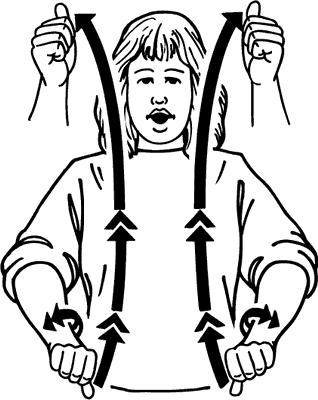
Another action that fits for Hark the herald is glory. When we worship God in a genuine way we bring him glory. The New Zealand Sign Language word for glory looks like this. Have your thumbs pointing down by your waist and then raise your arms above your head, waving your thumbs as you do.

You can really go to town with this one. Glory, glory to God in the highest.   

So, as a response of worship, let’s sing and celebrate God’s gift of Jesus:

Hark the herald angels sing…    

Psalm 27

Scripture: Psalm 27

Video Link: https://youtu.be/B5kaW-5Epto

Structure:

  • Introduction
  • Confidence in the Lord (1-3)
  • Sanctuary in worship (4-6)
  • Seeking God’s face (7-12)
  • Conclusion – Hope for this life (13-14)

Introduction:

Kia ora whanau and good morning everyone.

Some things in life we can control but most things we can’t. We cannot control things like when we are born, the choices other people make, the weather, the traffic, the past, the future, earthquakes, who you fall in love with, and cats. (Definitely can’t control cats.)

But we can usually control our self. Things like our mind-set, what we eat, who we hang out with, how we spend our time and how we treat others.

Alongside this sits our values. Not everything in life is of equal importance to us. Basic needs like oxygen, clean drinking water, food shelter, faith and family are generally more important than things like TV or the cricket score or what other people think of us.

There is an overlap between what is important and what we can control. Given that we have limited resources; it makes good sense to focus our time and energy on the intersection of those things which we can control and those things which matter.

For example, having an income is important, up to a certain point, because money is useful for providing your basic needs. But your overall health and well-being is more important than having loads of money. So we have to find a work life balance that allows us to provide for ourselves and our family without destroying our health or our relationships.    

Today our message focuses on Psalm 27. In this psalm David is faced with many things he can’t control. Mainly, what others are saying about him and the way they are treating him.

David wisely uses his energy to focus on the intersection of those things which are important and which he can control. The thing that matters most to David is his relationship with God. And, although David can’t control God, he can control himself. So that’s what he focuses on, the way he relates with God.

From verse 1 of Psalm 27 we read…

The Lord is my light and my salvation—whom shall I fear? The Lord is the stronghold of my life—of whom shall I be afraid? When the wicked advance against me to devourme, it is my enemies and my foes who will stumble and fall. Though an army besiege me, my heart will not fear; though war break out against me, even then I will be confident. One thing I ask from the Lord, this only do I seek: that I may dwell in the house of the Lord all the days of my life, to gaze on the beauty of the Lord and to inquire in his temple. For in the day of trouble he will keep me safe in his dwelling; he will hide me in the shelter of his sacred tent and set me high upon a rock. Then my head will be exalted above the enemies who surround me; at his sacred tent I will sacrifice with shouts of joy; I will sing and make music to the Lord. Hear my voice when I call, Lord; be merciful to me and answer me. My heart says of you, “Seek his face!” Your face, Lord, I will seek. Do not hide your face from me, do not turn your servant away in anger; you have been my helper. Do not reject me or forsake me, God my Saviour. 10 Though my father and mother forsake me, the Lord will receive me. 11 Teach me your way, Lord; lead me in a straight path because of my oppressors. 12 Do not turn me over to the desire of my foes, for false witnesses rise up against me, spouting malicious accusations. 13 I believe that I shall see the goodness of the Lord in the land of the living. 14 Wait for the Lord; be strong and let your heart take courage; wait for the Lord.

May the Spirit of Jesus illuminate God’s word for us.

Psalm 27 shows us David’s focus; the intersection of what matters to David and what he can control. Psalm 27 gives us a picture of how David handles himself in his relationship with God.

There are four parts to Psalm 27:

Confidence in the Lord,

Sanctuary in worship,

Seeking God’s face,

And hope for this life.

First let us consider David’s confidence in the Lord.

Confidence in the Lord:

If you magnify a dust mite it looks quite terrifying. But when you look at a dust mite in perspective your fear dissolves. In reality a dust mite is about the same size as a single grain of salt, very small.

Sometimes our problems can feel bigger than they actually are. The more we think about them, the more anxious and overwhelmed we become. If that happens a change of perspective can help. 

In verses 1-3 David shows us how he handles fear and the threat of violence, by focusing on the Lord. Focusing on God gives David a better perspective on his problems. Next to God, David’s enemies are small, like a grain of salt or like dust mites. Verse 1 reads…  

The Lord is my light and my salvation—whom shall I fear? The Lord is the stronghold of my life—of whom shall I be afraid?

In saying the Lord is my light David probably means God is the source of all goodness. Light dispels darkness and fear. Life flourishes and thrives in the light. Light gives true knowledge and perspective on our situation. Light enables us to see the way we should go. The Lord is David’s light and salvation.

Salvation refers here to David’s physical safety. David is confident that God will intervene to save his life. To say the Lord is the stronghold of David’s life means that God is David’s protection and security.

In verse 3 David says: Though an army besiege me, my heart will not fear; though war break out against me, even then I will be confident.

As king of Israel David had some pretty big threats to deal with. He had lots of enemies who literally wanted to kill him. David’s psalms are peppered with complaints about his enemies. David does not ignore or deny the difficult reality of being king. Rather he keeps things in perspective by choosing to focus on the Lord and his heart is not afraid.

As I keep saying, the heart in ancient Hebrew thought refers to a person’s inner life. Our mind, emotions and will. Our decision making faculties basically. David’s heart (or mind) is confident of God’s help and protection.  

So how do we do this? How do we focus on the Lord?

Sanctuary in worship:

Well, David seeks sanctuary in worshipping God. Verse 4 reads:One thing I ask from the Lord, this only do I seek: that I may dwell in the house of the Lord all the days of my life, to gaze on the beauty of the Lord and to inquire in his temple.

Then in verse 5: For in the day of trouble he will keep me safe in his dwelling;

And in verse 6 David goes on to say: at his sacred tent I will sacrifice with shouts of joy; I will sing and make music to the Lord.

‘House of the Lord’, ‘dwelling’ and ‘sacred tent’ are a reference to the special place where God was worshipped. Where the ark of the covenant was kept and God’s holy presence resided.

God’s temple hadn’t been built yet. That didn’t happen until David’s son Solomon came to the throne. But the point here is that David wants to be close to God’s presence. There is sanctuary in worshipping God, in giving our whole focus to the Lord.

I am reminded here of Jesus’ words in Matthew 5: Blessed are the pure in heart for they shall see God.

To be pure in heart is to will one thing. The one thing David asks for. The only thing he seeks is God’s presence. David probably wrote this psalm when he was on the run, either from Saul or Absalom. Hiding in a cave and away from Jerusalem, David longed to go to church and worship God.

You know the first couple of weeks in lockdown aren’t too bad. On-line church is a change but the novelty soon wears off and I find myself itching to get back to regular gathered worship. It’s not the same singing songs in your lounge at home.

Religious rituals, like Sunday church worship, support our faith and our life. They give us a fresh perspective. They take our minds off ourselves and redirect our focus onto God. Without regular Godly worship the dust mites in our lives start to look like scary monsters.  

I’m reading a book on art history at the moment by Terry Glasbey. The book includes a chapter on Gian Lorenzo Bernini, arguably the greatest sculptor of all time.

Bernini was a devout Christian. He went to church every day. As an artist he had a gift for entering into the emotions of others and conveying moments of spiritual experience.

One of his famous altar pieces, in the Corona chapel in Rome, depicts a moment of spiritual ecstasy for St Teresa of Avila. St Teresa was a Spanish nun. In order to avoid an arranged marriage Teresa entered the convent at the age of 19. At first life was difficult for Teresa. She didn’t enjoy convent life much. But eventually she got the hang of it.

One day, while in worship, praying and singing a hymn, Teresa experienced an overwhelming sense of God’s love flowing through her whole being. God’s presence was so real and tangible that she felt consumed by his love and exalted into a state of ecstasy. These mystical experiences happened a numbered of times for her.

In her journal Teresa describes one vision in which an angel repeatedly pierced her heart with a spear. In Teresa’s words: “The pain was so severe that it made me utter several moans. The sweetness caused by this intense pain is so extreme that one cannot possibly wish it to cease, nor is one’s soul then content with anything but God”.         

It might seem strange to us that Teresa described God’s intimate presence as an intense pain but it makes sense. God is love and intense love feels like pain.

Teresa, like David, longed for God’s presence and wanted nothing more than intimacy with God. God meets us in surprising ways. There is sanctuary in worship. But it’s not the same for everyone.

Blessed are the pure in heart for they shall see God.

Seeking God’s face:

In verses 7-12 of Psalm 27, David’s tone changes as he lifts an intense, heartfelt prayer to God: Hear my voice when I call, Lord; be merciful to me and answer me. My heart says of you, “Seek his face!” Your face, Lord, I will seek.

Verse 8 is fascinating. David’s heart (or more accurately) his mind tells him to seek the Lord’s face. We have many voices inside us don’t we. They are not audible voices, they are silent, like thoughts with feelings attached.

There is the voice of our conscience, guiding us. The voice of the critic, scolding us. The voice of pride puffing us up, the voice of temptation misleading us, the voice of fear holding us back, the voice of some desire buried deep in the unconscious and the voice of wisdom.

Each of these voices sound similar at first and so it can be confusing discerning which is which. Sometimes we might think God is speaking to us when in fact it is actually some latent desire wanting an audience. We have to test the voices against God’s word in Scripture and by talking with wise and trusted friends.       

David hears a voice within himself. My heart says, ‘seek his face’. Perhaps that is the voice of wisdom. Or perhaps it is the voice of David’s inner most desire. What does it mean then to seek God’s face?

Seeking God’s face is a way of describing prayer. You see, Christian prayer is different from pagan prayer. In pagan prayer the worshipper is trying to control God, trying to leverage him into doing something with many words and sacrifices and other grand gestures.

But with Christian prayer we are not trying to control God, we are seeking to commune with him. Yes, we do ask God for certain things when we pray. Jesus said, ‘Ask and you shall receive’. But the asking Jesus had in mind here is for those things that are in line with God’s will and purpose.

So we are not trying to bend God to our will. Rather we are seeking to align ourselves with God’s will. This means being honest with God about what we want but at the same time being willing to relinquish what we want in order that God’s will be done.

Jesus sought the face of God in the Garden of Gethsemane, the night before he died. Jesus said, ‘Father, if you are willing, take this cup from me; yet not my will but yours be done.’ He prayed that three times. Once he had reconciled himself to God’s will, in prayer, he was able to face the cross.

When you are apart from someone you love, you seek their face. You just want to be there in person with them, up close and personal, because there is no substitute for presence. That’s why, when we are in love, our thoughts are peopled by the person we love. We can’t stop thinking about them.  

To seek God’s face is to desire to be close to God, to enjoy his presence and commune with him in an intimate way. In seeking God’s face we are valuing the giver, more than his gifts. Teresa of Avila sought God’s face in prayer and praise, and God touched her heart.

David gives us another clue about what it means to seek God’s face in verses 9 & 10 where he says: Do not hide your face from me, do not turn your servant away in anger; you have been my helper. Do not reject me or forsake me, God my Saviour. Though my father and mother forsake me, the Lord will receive me.

The face reflects a person’s feelings: happiness, disappointment, sadness, anger, guilt, triumph, love. A face that smiles in acceptance and approval is a thing of true beauty. But the face that turns away in an expression of rejection and disappointment is a source of great pain.

In verses 9 & 10 David is seeking assurance that the Lord accepts him. On the one hand David does not take God’s acceptance for granted, for he prays that God will not reject him. But at the same time David is confident that God will accept him. Verse 10 is not saying that David’s parents have rejected him. The point is, God’s love for David is even greater the love of a father and mother.

At this point I am reminded of another famous artist, Rembrandt, who painted The Return of the Prodigal Son. After wasting his father’s inheritance on wild parties and a reckless lifestyle, the younger son (in Jesus’ parable) came to his senses and returned home, seeking his father’s face.

Rembrandt captures the moment when the repentant son is received by his father. The main focus of the painting is the expression on the father’s face, reflecting love and tenderness and warmth. To seek God’s face is to return to God and feel his acceptance and embrace.

To seek God’s face is to want to please God and to know that God is pleased with you. And so another facet of seeking God’s face is asking for his guidance. In verse 11 David says: Teach me your way, Lord; lead me in a straight path because of my oppressors.

In other words, show me God how you want me to handle the situation I find myself in. I cannot control my enemies. I can only control myself.

Lead me in a straight path means, make it plain to me Lord what the right thing is to do. I want to come out of this with a clear conscience. I want to be able to sleep at night. I don’t want to imitate the behaviour of my enemies.

Lead me in a straight path probably also means remove the obstacles from my path. Don’t let me trip up or fall over the edge. When we are going through a difficult trial we don’t have the same resources to cope. Our fuse is a bit shorter. So if something doesn’t go right we don’t have the energy to respond with our usual grace. When we are fatigued we need the path to be relatively smooth and straight forward.  

God did indeed lead David in a straight path. When it was in David’s power to kill king Saul (who was hunting him) David did the right thing and saved Saul’s life.       

Seeking God’s face also means asking God for protection and for justice. In verse 12 David says to the Lord:  12 Do not turn me over to the desire of my foes, for false witnesses rise up against me, spouting malicious accusations.

Ancient Israel did not have the same legal system that we do today. The courts had no lawyers to prosecute or defend and no judge (in the modern sense) to ensure fair procedures.

The witness played a dominant role in bringing accusations and evidence. The testimony of a witness put one’s status in the community in question. Two false witnesses left the innocent with no recourse but to appeal to God and seek sanctuary at the shrine. [1]

David was being falsely accused by men who wanted to kill him. In seeking God’s face David was going to the highest court of appeal there is. He was asking God for justice.  

David uses his energy to focus on the intersection of those things which are important and which he can control. The thing that matters most to David is his relationship with God. And so David seeks God’s face.

Conclusion – Hope for this life:

Psalm 27 finishes with David addressing us, his listeners, saying: I believe that I shall see the goodness of the Lord in the land of the living. Wait for the Lord; be strong and let your heart take courage; wait for the Lord.

To ‘wait for the Lord’ means to actively put your hope in him. To trust that God will provide a better future, despite the difficult present.

Waiting is hard, especially when you have to wait without knowing. With no end in sight you are blind, you have nothing to hold on to. At the beginning of a crisis you are carried by your adrenalin. But adrenalin wears off after a day or two and fatigue sets in. You have to keep things simple and do less in order to conserve your energy for what matters.

David had no idea how long his exile in the wilderness was going to last. Would it be two more days, two more weeks, too more years. There was no telling. And what shape would he be in when it was all finally over. These things take their toll. David kept it simple, he didn’t overthink it. David told himself it would end well.

Since the resurrection of Jesus, Christians have comforted themselves with the hope of heaven after we die. The suffering (or exile) of this life is relatively short by comparison with eternity. But David is more optimistic than that.

David has hope for this life too. He believes he will see God’s goodness (his justice and mercy) ‘in the land of the living’. David believes God will vindicate him and restore him before he dies.

As it turned out David’s hope was not in vain. He did see the goodness of the Lord in the land of the living. David was restored and lived to see God subdue his enemies.

Let us pray…

God, grant me serenity to accept the things I cannot change,
courage to change the things I can,
and wisdom to know the difference.

Amen.    

Oh Lord, you’re beautiful. Your face is all I seek. For when your eyes are on this child, your grace abounds to me. 

Questions for discussion or reflection:

What stands out for you in reading this Scripture and/or in listening to the sermon? Why do you think this stood out to you?

  • What matters most to you? What things are within your power to control? What do you need to focus on? What do you need to leave with God?
  • Why is David so confident when his circumstances are so dire? How might we live in this sort of confidence?   
  • When (or where) do you feel closest to God? How do you feel when God is close to you?
  • What does it mean to seek God’s face? (Discuss / reflect on the different aspects of seeking God’s face.) How might we do this?
  • Can you recall a time in your life when you had to wait without knowing? How did you feel? What was helpful for you in that experience? What was the outcome? What strength (or wisdom) can you draw from that experience? 
  • Make some time this week to seek the Lord’s face.

[1] Refer James Mays commentary on the Psalms, page 131.

Psalm 34

Scripture: Psalm 34

Video Link: https://youtu.be/_dk_5R3ViuI

Structure:

  • Introduction
  • Worship for the weak
  • Wisdom for well-being
  • Conclusion

Introduction:

Kia ora whanau and good morning everyone.

Those of you who have done a basic first aid course will recognise this acrostic:

DRSABC (or Doctors ABC). D reminds us to check for Danger. R tells us to seek a response from the person who is injured. S stands for Shout in order to get help. A is for clearing the Airway. B means helping the patient with their Breathing, should they need it. And C stands for Circulation. If there is no pulse, then start CPR or better still get hold of a defibrillator.

Today our message focuses on Psalm 34. This song of David is an acrostic poem. Each verse begins with the successive letters of the Hebrew alphabet. So the first letter starts with the Hebrew equivalent of A, the second verse with Bet, then Gimel and so on. But the acrostic is lost in translation for English speakers.

Psalm 34 is a song (or rather a whole alphabet) of thanksgiving to God, based in David’s experience. From verse 1 we read…

I will extol the Lord at all times; his praise will always be on my lips. My soul will boast in the Lord; let the afflicted hear and rejoice. Glorify the Lord with me; let us exalt his name together. I sought the Lord, and he answered me; he delivered me from all my fears. Those who look to him are radiant; their faces are never covered with shame. This poor man called, and the Lord heard him; he saved him out of all his troubles. The angel of the Lord encamps around those who fear him, and he delivers them. Taste and see that the Lord is good; blessed is the one who takes refuge in him. Fear the Lord, you his holy people, for those who fear him lack nothing. 10 The lions may grow weak and hungry, but those who seek the Lord lack no good thing. 11 Come, my children, listen to me; I will teach you the fear of the Lord. 12 Whoever of you loves life and desires to see many good days, 13 keep your tongue from evil and your lips from telling lies. 14 Turn from evil and do good; seek peace and pursue it. 15 The eyes of the Lord are on the righteous, and his ears are attentive to their cry; 16 but the face of the Lord is against those who do evil, to blot out their name from the earth. 17 The righteous cry out, and the Lord hears them; he delivers them from all their troubles. 18 The Lord is close to the broken-hearted and saves those who are crushed in spirit. 19 The righteous person may have many troubles, but the Lord delivers him from them all; 20 he protects all his bones, not one of them will be broken. 21 Evil will slay the wicked; the foes of the righteous will be condemned. 22 The Lord will rescue his servants; no one who takes refuge in him will be condemned.

May the Spirit of Jesus illuminate God’s word for us.

Broadly speaking there are two main parts to Psalm 34, worship and wisdom. Charles Spurgeon, the great Baptist preacher, said: “The first ten verses are a hymn, and the last twelve a sermon.” First the singing, then the sermon.

David’s worship of God is based in his personal experience of God saving him. Likewise, the wisdom David shares is also born out of his experience. First let us consider David’s worship.

Worship for the weak:

In verse 1 David says, I will extol the Lord at all times. Extol means to praise highly or enthusiastically. Extol is praise on steroids. It is part of a cluster of words like glorify and exalt which are associated with worshipping God in community with others. David’s worship is both personal and public.

David’s worship is mindful of others. He is thinking about the less fortunate, for he says: let the afflicted hear and rejoice. This is not a psalm for those who have it altogether. This is a psalm for those who are weak and in a vulnerable position.

They say, evangelism is one beggar telling another beggar where to find bread. David has found bread (in the form of God’s help) and he is letting others know about it.

From verse 4 David speaks, from his own experience, of God’s deliverance. David says, I sought the Lord, and he answered me; …he saved this poor man out of all his troubles. To seek the Lord and look to him means to pray, to ask God for help.

So what was it that the Lord delivered David from? According to the title of Psalm 34, David wrote this song when on the run from king Saul. From 1st Samuel 21, verse 10 we read…

10 That day David fled from Saul and went to Achish king of Gath. 11 But the servants of Achish said to him, “Isn’t this David, the king of the land? Isn’t he the one they sing about in their dances: “‘Saul has slain his thousands, and David his tens of thousands’?” 12 David took these words to heart and was very much afraid of Achish king of Gath. 13 So he pretended to be insane in their presence; and while he was in their hands he acted like a madman, making marks on the doors of the gate and letting saliva run down his beard. 14 Achish said to his servants, “Look at the man! He is insane! Why bring him to me? 15 Am I so short of madmen that you have to bring this fellow here to carry on like this in front of me? Must this man come into my house?” 22 David left Gath and escaped to the cave of Adullam. When his brothers and his father’s household heard about it, they went down to him there.

Clearly David was in a desperate situation, one which called for desperate measures. For fear of king Saul, David tried to find refuge with his enemies in Gath. But he didn’t feel safe there either so he pretended to be insane to save himself.

The thing I find interesting here is that David prayed and kept his powder dry. He relied both on God and on his own cunning. Wise as a serpent, and as innocent as a dove.

It is similar with us. When we find ourselves in dire straits we do everything in our power to help ourselves and we pray, trusting God with the things we can’t control.

For example, if you are sick you pray for healing and you go to the doctor. Or, if you want to stop the spread of a contagious disease, you pray to God and you get immunised. We rely on God and science, because we know that God gave us the science but, at the same time, science is not always enough by itself. 

In verse 4 we read that God delivered David from all his fears. Fear and anxiety is a normal part of life for human beings. Fear is a bit like pain. It feels unpleasant but it serves an important purpose. Fear is part of our built in warning system; it is designed to protect us.

The problem is if we let our fears get out of control, if we don’t learn to calm our fears, they disable us. David managed his fears by using his street smarts and by praying.

If you have been blindsided by circumstance on a semi regular basis. If you have had the rug pulled out from under your feet, at random times and through no fault of your own, then you will be well acquainted with anxious fear.

As some of you know one of our daughters was seriously ill in hospital recently. She is recovering now but for a while we were under constant siege from our fears. One thing that helped me to manage my fear was this simple prayer: 

Lord Jesus Christ, Son of God, have mercy.

I lost count of the number of times I prayed that prayer. It is a refuge for me. It is simple, which is what you need when you are stressed, and it puts fear into perspective by magnifying the Lord and his mercy.

With this prayer we are not telling God what to do. We are not trying to micro manage God. Nor are we making any claim to our own righteousness. This prayer leaves the door open. It lets God be God. What form the Lord’s mercy may take is up to God.

Lord Jesus Christ, Son of God, have mercy is a prayer for emergencies. I’m not sure it is the best long term solution. At some point we all have to pour out our heart before God but when you can’t afford the luxury of doing that, asking Jesus for mercy gets you through.

In verses 7-10, of Psalm 34, David describes the refuge he finds in God. He says, ‘The angel of the Lord encamps around those who fear him, and he delivers them.’

The angel of the Lord is a mysterious figure in the Old Testament. We are never quite sure who this angel is. Some see the angel as one of God’s elite heavenly soldiers (sort of like a Navy Seal or SAS type angel). Others wonder if it is the Lord Jesus himself.

The point is, the angel of the Lord protects those who fear the Lord. The kind of fear that is meant here is not terror or anxiety, it leans more towards reverence and respect. To fear the Lord is to care more about what God thinks than what anyone else thinks. To fear the Lord is to listen to God and obey him.    

Verse 8 is quite famous: Taste and see that the Lord is good; blessed is the one who takes refuge in him.

To taste the Lord means to experience his goodness, his faithfulness and his love. If you have never eaten chocolate cake before, then it doesn’t matter how much someone tells you about the ingredients, you can’t know how good it tastes until you actually put it in your mouth. So it is with God. We can’t know how good God is until we taste his grace.

The sixth Century Christian monk, St Columba (of Iona fame), died while copying out the psalms. These were the last words he wrote: …lions may grow weak and hungry, but those who seek the Lord lack no good thing.

The idea here is that even the lion, the apex predator, the greatest and most self-sufficient of animals, may sometimes go hungry; but the weak and afflicted, who depend on God, lack nothing. In God’s kingdom it is not survival of the fittest. Faithful dependence on the Lord is the currency of God’s economy.

As you heard earlier, the first part of Psalm 34 is worship, while the second half is wisdom; what David has learned from his experience.

Wisdom for well-being:

From verse 11 David starts his sermon: Come, my children, listen to me; I will teach you the fear of the Lord. Whoever of you loves life and desires to see many good days. What follows is David’s wisdom for well-being.

The first piece of wisdom here is about living a morally sound life, both in word and deed. Be honest and do good.

Peace (in the sense of abundant life) doesn’t just happen by itself. Peace requires effort. Peace is something we seek and pursue. Do the mahi, get the treats. It is not enough to simply avoid evil. We must actively look for ways to promote the well-being of others. Justice and mercy are the prerequisites to peace.

In verses 15-17 we read that God is attentive and responsive to the cry of the righteous but he is against those who do evil. The word cry is repeated.

Human beings may cry out for a variety of reasons. We may cry out in anger at some injustice. Or we might cry out in pain or grief at some hurt or loss. We might also cry out in fear when we get a sudden fright or, conversely, we might cry out in joy when something good happens.

A cry might contain words which make sense, but more often a cry is inarticulate and spontaneous. Either way, God notices the cry of the righteous, like a parent notices the cry of their child. It is impossible to ignore.

What David is getting at here, is there is wisdom in crying out to God. Crying out to God is essentially the heart of prayer. You see, God isn’t just listening to the words we say in prayer. He is also listening to the feeling (or pathos) behind those words.

This means that when we have no words, when we are holding on by a thread, God gets our meaning. God hears and he understands perfectly.    

Verse 16, which talks about the Lord being against those who do evil, may grate with our sensibilities. We might not like the idea that God is for some people and against others. Perhaps we suspect we are not righteous.

I believe God is for the well-being of everyone. But promoting the well-being of everyone requires God to be against evil, because evil undermines everyone’s well-being.

Verses 21 & 22 help to shed light on the goodness of God. Verse 21 indicates it is not God who slays the wicked, rather it is evil which slays the wicked.

Or to put it another way, the wicked eventually become victims of their own injustice. The wicked condemn themselves by their own actions. Like someone sawing off the branch they are sitting on.

Verse 22 assures us that, ‘No one who takes refuge in him will be condemned’. To take refuge in God means (among other things) to repent and do good, to throw ourselves on his mercy. When we do that God is quick to forgive.

The Lord will rescue his servants and the foes of the righteous will be condemned. Knowing that God is just and that there is an ultimate reckoning, is a tremendous comfort to God’s people. It gives us strength to endure. There is no condemnation for those who are in Christ Jesus.

And so we come to one of the most comforting verses in Scripture: The Lord is close to the broken-hearted and saves those who are crushed in spirit.

To be broken hearted and crushed in spirit are probably two ways of saying the same thing. The broken hearted feel incredibly sad and the crushed in spirit feel heavy with defeat. Their hope is smashed and their vitality (or energy) is gone.

The heart in Hebrew thought is a way of describing a person’s inner life, our mind, our emotions and our will; our decision making faculties basically. To be broken hearted is to feel undone on the inside and to lose all desire.

Spirit has to do with relationship. A person’s spirit is their capacity to relate or connect in meaningful ways with others. Your spirit is sort of like the wifi of your soul. When you are crushed in spirit, your inner wifi is broken and you just don’t have it in you to truly connect.

Having a broken heart goes hand in hand with being crushed in spirit. Are you broken hearted? It hurts doesn’t it. Are you crushed in spirit? It feels heavy doesn’t it. The good news is, God is close to you, to comfort and restore.

To the broken hearted Jesus says: Blessed are those who mourn for they shall be comforted. And to the crushed in spirit Jesus says: Blessed are the poor in spirit for theirs is the kingdom of heaven.

In verse 19 of Psalm 34 David writes: The righteous person may have many troubles, but the Lord delivers him from them all;

One time we were invited to a 60th birthday party and there were photos on display. The older photos, taken when this person was younger, were in black & white, while the more recent photos were in colour. In all the black & white photos this person had long hair. But in the colour photos they were bald.

Having a good sense of humour they joked that this proved that colour photography causes hair loss. It doesn’t of course. That’s not a very scientific deduction. Correlation does not prove causation.

David will not accept any simplistic formulas which say that all suffering is due to sin. Just because bad things happen to you, it does not necessarily follow that you are being punished. Correlation does not prove causation. David knew from his own experience that bad things sometimes happen to good people. But David was also confident that God delivers the righteous in the end.  

As Jesus said: Blessed are those who are persecuted because of righteousness for theirs is the kingdom of heaven.

Conclusion:

Verse 20, where it says, he protects all his bones, not one of them will be broken, reminds us of Jesus on the cross. In the gospel of John chapter 19 we read what happened after Jesus died…

Because the Jewish leaders did not want the bodies left on the crosses during the Sabbath, they asked Pilate to have the legs broken and the bodies taken down. 32 The soldiers therefore came and broke the legs of the first man who had been crucified with Jesus, and then those of the other. 33 But when they came to Jesus and found that he was already dead, they did not break his legs. 

34 Instead, one of the soldiers pierced Jesus’ side with a spear, bringing a sudden flow of blood and water…  36 These things happened so that the scripture would be fulfilled: “Not one of his bones will be broken,”

Suffering is part of the fabric of this life. We can’t avoid it. Sometimes we get what we deserve, but more often we don’t. Jesus was a truly righteous man, more righteous than anyone who has ever lived, and yet he suffered a great deal. When we suffer for doing what is right we stand in solidarity with Jesus.

Let us pray…

Lord Jesus Christ, Son of God, have mercy on us. Amen.

Questions for discussion or reflection:

What stands out for you in reading this Scripture and/or in listening to the sermon? Why do you think this stood out to you?

  • Who did David have in mind when he wrote Psalm 34? Have you ever been in a similar situation?
  • How did David manage his fears? How do you manage your fears?
  • What does it mean to taste and see that the Lord is good? How would you describe your experience of God’s goodness?
  • Discuss / reflect on the various gems of wisdom David shares in verses 11-22 of Psalm 34. How might we apply David’s advice in our own lives today?
  • What does it mean to be broken-hearted and crushed in spirit? What difference does it make knowing God is close when we are broken-hearted and crushed in spirit?
  • Reflect on / discuss the connections you see with Jesus in Psalm 34.

God’s Commitment

Scripture: Genesis 8:20-22 and Matthew 13:24-30

Structure:

  • Introduction
  • Noah’s worship
  • God’s commitment
  • Conclusion

Introduction:

Good morning everyone.

Let me tell you a story. Once there was an artist, a painter. He had an eye for light, the way it falls differently depending on the time of year and the time of day. Although he worked hard trying to capture the nuance of the light on his subject, he never felt like he quite did justice to the picture in his mind’s eye. But at the same time he wasn’t able to give it up. The pursuit of beauty made him even more determined.

One day the artist was asked to paint a mural on a wall for the town. He took this project seriously. After months of thinking and sketching he started painting. The scale of the mural was large but he had it finished in a week. He wouldn’t admit to it being perfect but it was certainly very good – it suited the space. Many passers-by stopped to admire the mural’s grace and message.     

Sadly, one night, some vandals came and defaced the mural. The artist was deeply hurt by this. Not only had the vandals undone the time and effort he had put into the painting, they had shown contempt for him and contempt for the light. The only part of the mural not damaged was a corner where his name was. It was like the culprits wanted to mar his reputation.  

The artist could not stand to look at the now grotesque image. He set to work removing the graffiti but the spray paint they had used was stubborn; it wouldn’t wash off without damaging the art work underneath. There was no way to clean the mess without destroying the mural. Only the corner with his name on it was able to be saved.

Once the wall had been washed, the artist went about repainting the mural. In doing this he knew he was making himself vulnerable to getting hurt all over again. The vandals would likely come back to ruin the new art work too. But the artist refused to be silenced. He was determined that light and beauty would prevail in the end.    

Today we continue our series on Noah and the great flood. In some ways God is like the painter in the story and his creation is like the mural. Although the world God created was good, some vandals defaced it and God had little choice but to start again with Noah, the only one not tagged by evil.

Last week we heard how God remembered Noah, while Noah waited patiently for the Lord as the flood waters receded. This morning Noah and the animals are finally released from the ark. From Genesis 8, verses 20-22, we read…

20 Then Noah built an altar to the Lord and, taking some of all the clean animals and clean birds, he sacrificed burnt offeringson it. 21 The Lord smelled the pleasing aromaand said in his heart: “Never again will I curse the groundbecause of humans, even thoughevery inclination of the human heart is evil from childhood.And never again will I destroyall living creatures, as I have done. 22 “As long as the earth endures, seedtime and harvest, cold and heat, summer and winter, day and night will never cease.”

May the Spirit of Jesus illuminate God’s word for us.

In this passage we see Noah’s worship of the Lord and God’s commitment to repaint the mural of his creation.

Noah’s worship:

Can anyone tell me what happened on Tuesday the 28th April this year? [Wait]

That’s right, New Zealand moved from level 4 lockdown to level 3, under COVID restrictions. This meant that around 400,000 people returned to work and some restaurants opened for takeaways. I remember watching the evening news and seeing really long queues of cars snaking down the road as people waited in the drive-thru for their first taste of McDonalds in over a month.

After over a year in the ark God tells Noah he can leave; his lockdown is over. And the first thing we read that Noah does was worship God. Noah built an altar to the Lord and sacrificed some of the clean animals and birds on it. 

We know from the beginning of Genesis 7 that God instructed Noah to take seven pairs of clean animals and one pair of every unclean animal. So in sacrificing some of the clean animals Noah wasn’t wiping out the species, he had spares.

We can’t be sure what constituted a clean animal or bird in Noah’s day. The Law of Moses, which defines what is clean and unclean, was not introduced until centuries after Noah so we don’t know what animals Noah sacrificed. But that is beside the point. The main thing here is that Noah’s first thought was not a Maccas run or going back to the office or anything mundane like that. His first thought was worshipping God. Noah puts God first.

Verse 21 of Genesis 8 indicates that God was pleased with Noah’s sacrifice. While Genesis 8 doesn’t explain why God was pleased, we know from elsewhere in Scripture the sorts of things God is looking for in worship.

For our worship to be pleasing to God it needs to be true. We can’t fake it with God. True worship comes from the inside out. In other words, it has its roots in our heart and its fruit in our obedient actions.

In Isaiah 29, verse 13, God criticizes the people of Isaiah’s day saying: These people come near to me with their mouth and honour me with their lips, but their hearts are far from me. Their worship of me is made up only of rules taught by men.

Jesus had a similar complaint about many of the religious leaders of his day. Jesus described them as ‘white washed tombs’ – looking good on the outside but full of decay and corruption on the inside.

In John 4, verse 24, while speaking to the Samaritan woman by the well, Jesus made it clear what kind of worship God requires saying: God is Spirit and those who worship him must worship in spirit and truth.

Obeying God in faith is the litmus test of true, heartfelt worship. Like the prophet Micah famously said: Will the Lord be pleased with thousands of rams, with ten thousand rivers of olive oil? Shall I offer my firstbornfor my transgression, the fruit of my body for the sin of my soul? He has shown you, O mortal, what is good. And what does the Lord require of you? To act justly and to love mercy and to walk humblywith your God.         

And that is probably why God was pleased with Noah’s sacrifice of worship, because Noah obeyed God. Not just for show, when people were looking, but from the heart when it was him alone with God.

Jesus’ sacrifice on the cross has done away with the need for animal sacrifice. We don’t need to approach God by killing a lamb or a dove. We are able to approach God through faith in Jesus.

This is not to say that our worship is without sacrifice. Our sacrificial worship of God may come in a variety of forms these days, including the money we give to the poor and to the church, as well as the time we volunteer in service to God and his people.

If you are in business, then part of your worship may cost you trade if you choose not to do business on a Sunday. I am mindful too of the way this church (Tawa Baptist) has often offered its best and brightest people to serve in church and mission work both here in NZ and overseas. The people are a church’s life blood. It is a costly sacrifice training up interns and then sending them off to be a blessing for someone else.  

Noah’s worship was pleasing to God because it was true. Noah’s worship came from the inside out. It had its roots in Noah’s heart and its fruit in Noah’s obedient actions. Noah put God first, before his stomach and before his career.

God’s commitment:

It appears that Noah’s worship touched God’s heart. In verse 21, of Genesis 8, we read, The Lord smelled the pleasing aroma [of Noah’s sacrifice] and said in his heart: “Never again will I curse the ground because of humans, even thoughevery inclination of the human heart is evil from childhood.And never again will I destroyall living creatures, as I have done…”

The reference to cursing the ground connects with Genesis 3, after the fall of humankind, when God cursed the ground making it harder for people to grow food. God will not curse the ground again because of humans.

But the more interesting thing here is God’s commitment to the human race. In Genesis 6:5, before the flood, we read how …every inclination of the human heart was only evil all the time. Now, after the flood in Genesis 8:21, we read that …every inclination of the human heart is evil from childhood. This shows us the flood has not changed the human heart. Noah’s heart may be better than most but God can see that, in time, his creation will degenerate again.

God is a bit like the artist who painted the mural on the wall. Even though the human heart has not changed, even though God knows the vandals will return to deface his image, the Lord resolves to persevere with his creation. He is determined that the beauty of his grace will prevail in the end. The implication here is that God is committing himself to suffering with his creation. God is leaving himself open to more grief so that we may be saved. 

Let me tell you another story. Once there was a writer. She wrote all sorts of things, from poems to short stories, to novels and even the occasional play. She was always looking for the right words to express the truth of something but often felt like her words didn’t quite do justice to the truth. Still, she couldn’t help writing. The pursuit of truth made her even more determined. 

One day she wrote a play. Actually it brewed in her mind for years before pouring out on her keyboard over the course of a week. She wouldn’t admit to it being perfect but it was certainly very good – a masterpiece. Handing her play over to the cast of actors felt like handing a child over to strangers. It was an act of trust. She hoped they would look after her baby.

Some months passed while the actors rehearsed the script and the prop builders constructed the set. Finally, the opening night came. The play started well but before long it became apparent the actors didn’t know their lines. In fact, the cast had made some pretty big changes to the script and it wasn’t recognizable as her story anymore.

The writer sat in the audience heart broken. Most of the cast of the play had completely misunderstood their parts. They had taken her magnum opus and turned it into a farce. Only one actor nailed it. The play-write felt betrayed. She wanted to stand up and stop the whole show. But instead she sat through it, even though it was torture, both for her and the rest of the audience.        

In some ways, God is like the writer of the play and humanity is like the cast who have forgotten their lines, misunderstood their parts and changed the script.  

Returning to Genesis 8. When God resolved not to destroy humanity he was essentially making a commitment to persevere with our imperfection, at least for a period of time (although not forever). Ultimately God’s plan is to redeem his creation – to make it new and perfect again.

The kingdom of heaven is a place where all the actors understand their parts and know their lines by heart. It is a place where God’s will is done; where his script is followed and the story of our lives are given coherence and meaning.

In Ezekiel 36:26, God says through the prophet: I will give you a new heart and put a new spirit in you; I will remove from you your heart of stone and give you a heart of flesh.

In other words, God intends to give humanity a heart transplant; to remove our hard unfeeling heart (our dead heart) and give us a heart which is alive and beats for him. A heart which feels and is grieved by evil, as God’s heart is.

In Matthew 13 Jesus tells the parable of the wheat and the weeds. An enemy sows weeds among the wheat but the farmer does not uproot the weeds in case this disturbs the wheat. He allows the weeds to grow alongside the wheat until the harvest. Then at the harvest the workers separate the weeds from the wheat. The weeds are destroyed and the wheat is saved.

The parable of the wheat and the weeds is an allegory about the final judgement – the harvest represents judgement day. The field is the world, and the good seed stands for the people of God’s kingdom, while the weeds are the people of the evil one.

There is a point of connection between this parable and God’s attitude after the flood. Namely that God is committed to redeeming what is good in his creation, even though that involves persevering with the weeds of evil for a certain period of time.

Conclusion:

The world we live in is not perfect but the good news is: this world is not all there is. God has chosen to suffer with his creation in order to redeem it. In the end, the light of God’s truth and the beauty of God’s grace will prevail.

In the meantime, God makes this commitment: 22 “As long as the earth endures, seedtime and harvest, cold and heat, summer and winter, day and night will never cease.”

Questions for discussion or reflection:

What stands out for you in reading this Scripture and/or in listening to the sermon? Why do you think this stood out to you?

What connections do you see between the story of the artist who painted the mural and the story God who created the earth?

Why do you think God was pleased with Noah’s sacrifice? What makes our worship pleasing to God?

What are the implications of God’s commitment to persevere with human beings, even though the human heart is bent toward evil?     

What connections do you see between the story of the writer who penned the play and the story of God who created history?

What connections do you see between God’s attitude after the flood (in Genesis 8:21) and the parable of the wheat & weeds (in Matthew 13)?

Although this world/life is not perfect, the hope of God’s kingdom gives us something to look forward to. What can we look forward to in the fullness of God’s kingdom?

Abide with me

Scriptures: Luke 24:29, Matthew 9:10-13, Malachi 4:1-2, 1st Corinthians 15:55, John 14:1-4

Introduction:

Good morning everyone

From midnight last Wednesday we have all been in our self-isolation bubbles. But even before that we have been washing our hands more than usual. When you wash your hands you inevitably make lots of tiny bubbles with the water and soap.

Soap bubbles are wonderful really – although fragile and fleeting they are also beautiful, each one containing its own little rainbow. 

A single bubble naturally forms the shape of a sphere (as opposed to a square or a triangle) because that’s the smallest stable structure it can take.

While the life of a bubble is short the joy they inspire lasts a lot longer. Children never get tired of blowing bubbles.

Today we continue our ‘Anthems’ series. In this series we are looking at the lyrics of one hymn or Christian worship song each week to see how that song informs our thinking about God and how it connects with Scripture and the heritage of our faith.

In some ways singing songs of worship is a bit like blowing bubbles. While the singing doesn’t last very long, the beauty and joy of it linger after the music has popped and we find ourselves coming back again and again to sing the same songs, like a child blowing bubbles over and over.

Origins:

The song we are looking at this morning is called Abide with me.

Abide with me is actually a prayer for Jesus to be close to us personally and yet it is one of those songs that people, who don’t usually go to church, keep coming back to

Those of you who are football fans will know that the crowd sing a couple of verses of Abide with me before the start of the FA Cup final. They have done this every year since 1927 as a matter of tradition. It was a favourite of King George the fifth who was present at the FA Cup final that year.

Abide with me was also sung by British soldiers in the trenches during World War 1 and it is often sung at ANZAC services in NZ & Australia.

On Sept 21, 2001 it was played at Ground Zero by a Salvation Army band during the commemoration of the September 11 attacks.

It also features on the soundtracks of several movies, like The Full Monty, 28 Days Later and A Bridge Too Far.

Abide with me was written by Henry Lyte. Henry was born in Scotland in 1793, educated in Ireland and then served as an Anglican priest for a number of years in England.

For much of his life Henry Lyte did not enjoy good health but he didn’t let that stop him serving the Lord. On more than one occasion he was heard to say rather jokingly, ‘it is better to wear out than to rust out’. These are the words of a man who knows his days are numbered and wants to make the most of them. They are not good advice for most of us though. The journey of faith is a marathon, not a sprint and we need to pace ourselves.

Henry Lyte died at the relatively young age of 54, from TB

It is uncertain when Henry Lyte wrote Abide with me. Some say it was around 1820, after visiting a friend on his death bed. Others say Henry wrote the song in 1847, just weeks before his own death. Whatever the case, Erik Routley was surely right when he said Abide with me is a hymn which, “looks death itself in the face”. It is a song which expresses our human desire for companionship when we are in extreme circumstances, which may be one reason why it is so popular outside of church walls.    

While Henry Lyte did write music to accompany his lyrics, the tune we sing it to these days was written by William Monk following the death of his daughter, Florence. William had been standing, hand in hand with his wife, at the window of their cottage, ‘silently watching the glory of the setting sun until the golden hue faded’, when suddenly the words of the hymn Abide with me came to his mind. He wasted no time in composing the music he called Eventide

Death and resurrection:

The opening verse of the hymn reads…

Abide with me; fast falls the eventide;
The darkness deepens; Lord, with me abide;
When other helpers fail and comforts flee,
Help of the helpless, oh, abide with me.

The word abide, in this context, means to ‘stay with’, to ‘reside’ or to ‘hang out’ together – for example, we abide with those in our bubble.

Abide can also mean to tolerate or put up with or obey, but that’s not the meaning here. In this song abide is about spending time together, enjoying each other’s presence, connecting with one another on the inside.

Eventide means the end of the day when the sun sets and night falls. It is a metaphor for the end of this life, when the sun sets on our mortal body and we are facing death. It could be our own mortality we are facing or the death of a loved one    

That phrase, the darkness deepens, is a poetic way of talking about the sadness, the loneliness and the powerlessness we feel in the face of death. When you are grieving, the things that once comforted you and helped you no longer hold any enjoyment. You might go off your food, for example, or you might find it hard to sleep. In that situation Jesus is the help of the helpless. Jesus comes to the aid of those who are powerless to help themselves.

Now some of you may be thinking, why is Will preaching on a song that reminds us about death and mortality – especially when the world is threatened by an epidemic?

Well, it’s not my job to distract people from reality. We have Netflix for that.

Part of my job involves helping people to face reality and the reality is, everyone dies eventually. But that is only a small part of our reality. The bigger part, the good news, is that Jesus has conquered death and so death does not have the last word. You see, facing our own mortality opens the door to thinking about resurrection.

Henry Lyte, who lived in the constant shadow of death, was very conscious of resurrection.  

The inspiration for verse 1 of Henry’s song comes from Luke 24:29. In Luke 24 two people are facing the deepening darkness of death. Just a couple of days before they had witnessed the murder of someone they loved dearly – they saw Jesus crucified. The bottom has fallen out of their world and the sun is setting on hope. As Cleopas and the other disciple are walking away from Jerusalem toward Emmaus, Jesus himself comes alongside them. They don’t recognise him at first. At that point their minds are closed to the possibility of resurrection. They can’t comprehend that Jesus has been raised to new life.

Jesus asks them what they are talking about and they are shocked that he hasn’t heard all that has happened over the weekend. It would be like someone not knowing we are at level 4 alert for Corona virus. After listening to them Jesus says…

26 “Did not the Messiah have to suffer these things and then enter his glory?” 27 And beginning with Moses and all the Prophets, he explained to them what was said in all the Scriptures concerning himself. 28 As they approached the village to which they were going, Jesus continued on as if he were going further. 29 But they urged him strongly, “Stay with us [abide with us], for it is nearly evening; the day is almost over.” So he went in to stay with them. 30 When he was at the table with them, he took bread, gave thanks, broke it and began to give it to them. 31 Then their eyes were opened and they recognized him…

May the Spirit of Jesus illuminate God’s word for us

What we notice here, in this eye witness account from Luke’s gospel, is that it is the risen Jesus who abides with his bewildered and grieving disciples. And somehow his presence is enough. Although he disappears from their sight, soon after their eyes were opened, he continues to abide in their hearts and minds. Because of his resurrection, they don’t feel alone or sad anymore. To the contrary, they feel connected and joyful – they run back to Jerusalem to tell the others the good news. 

The next verse of Henry Lyte’s song starts with the words…

Swift to its close ebbs out life’s little day;
Earth’s joys grow dim, its glories pass away;

These lines are talking about how short life is.  

I remember sitting with my grandfather as he was dying. He said about his life, ‘It all went by so quickly’. He was 72. I was 24 and, at that age, you feel like you’ve got all the time in the world. But really, in the light of eternity, this life is like a soap bubble. It is fragile and fleeting but also quite beautiful in its own short way   

The second half of verse 2 finds a note of hope  

Change and decay in all around I see—
O Thou who changest not, abide with me.

In other words: Yes, life is short and constantly changing (how quickly things have changed in the last couple of weeks) but God does not change. God is stable and secure, faithful and reliable. The Lord is our rock, a firm foundation.

As we read in Hebrews 13:8, Jesus Christ is the same yesterday, today and forever.

Or as Yahweh says through the prophet Malachi, “I the Lord do not change. So you… are not destroyed.” (3:6)     

Or as we read in the Psalms, the steadfast love of the Lord never ceases, His mercies never come to an end.

Fear not:

There are actually eight verses to the original version of Abide with me, but we normally only sing four. We don’t have time to examine every verse in detail but I would like to touch on one of the less well known verses, where we say to Jesus…

Come not in terror, as the King of kings,
But kind and good, with healing in Thy wings;

This line of the song recalls Malachi chapter 4 where we read about the day of the Lord’s return – the day of judgment…

“Surely the day is coming; it will burn like a furnace. All the arrogant and every evildoer will be stubble, and the day that is coming will set them on fire,” says the Lord Almighty. “Not a root or a branch will be left to them. But for you who revere my name, the sun of righteousness will rise with healing in its wings. And you will go out and frolic like well-fed calves.  

The day of God’s judgement is frightening. Even though Malachi is using poetic language, the image of being burned up in a furnace is terrifying, especially when you consider that none of us are perfect. All of us have participated in some evil in our life.

But it’s not all bad news. Those who revere God’s name receive healing and are set free to frolic like well-fed calves. Clearly, we want to be on the side of those who revere God’s name. But what does that mean, to revere God’s name? Well, the next line in the song gives us a few clues…

Tears for all woes, a heart for every plea.
Come, Friend of sinners, thus abide with me.

Jesus is the picture of God’s compassion – he feels our pain and weeps with us for our woes. He has a heart that listens to and understands the cry of our heart. What’s more, Jesus is a friend of sinners, which comes as a great relief in light of Malachi’s furnace metaphor.

In singing the words, Come, Friend of sinners, thus abide with me, we are identifying ourselves as sinners, humbly calling on the compassion and mercy of Jesus, our friend.

In Matthew 9 the Pharisees saw Jesus abiding with disreputable people, people they considered to be evil doers, so they said to Jesus’ disciples, ‘Why does your teacher eat with tax collectors and sinners?’ To which Jesus replied…

“It is not the healthy who need a doctor, but the sick. Go and learn what this means: ‘I desire mercy, not sacrifice’. For I have not come to call the righteous, but sinners.”

You see, God doesn’t want to destroy people – he loves people and wants to save us – that’s why Jesus came, so that we might have abundant life. Those who revere God’s name are not perfect but they are not arrogant either – they are humble. True humility is about being honest with ourselves. Those who ‘revere the name of the Lord’ are under no illusion – they rely on Jesus’ mercy, not their own power.

The risk with living in a bubble is that people may become fearful and anxious. Consequently, there has been a lot of talk in the media about taking care of our mental health while we are in self-isolation. The pen-ultimate verse of Henry Lyte’s song addresses this very thing…

I fear no foe, with Thee at hand to bless;
Ills have no weight, and tears no bitterness;
Where is death’s sting? Where, grave, thy victory?
I triumph still, if Thou abide with me.

This verse implies that having Jesus abide with us does not mean nothing bad will ever happen to us. Jesus’ presence is not a bullet proof vest or Personal Protective Equipment. We may still suffer illness but the ills have no weight – they are lighter somehow when Jesus abides with us. Likewise, we may still suffer injustice & grief but our tears hold no bitterness – if anything the presence of Christ brings release. How is this possible? It is possible because when Jesus abides with us we know we are loved by God

I am mindful of several verses from the Bible which hold together the paradox of suffering with joy (and without fear). In particular…

Psalm 126:5, Those who sow in tears will reap with songs of joy.

And the beatitudes where Jesus says, Blessed are those who mourn for they shall be comforted (Matthew 5:4)

Also Paul’s letter to the Romans (5:3-5), We rejoice in sufferings, because we know that suffering produces perseverance; perseverance, character; and character hope. And hope does not disappoint us, because God has poured out his love into our hearts by the Holy Spirit, whom he has given us.  

And that’s the key right there isn’t it. When we have faith in Christ we are not afraid of illness and calamity because we know God loves us. Therefore, we know our suffering is not a punishment from God. We may get sick, we may even die, but we are not destined for the furnace. As the poet Robert Browning said, ‘The best is yet to be’.  

Where is death’s sting? Where, grave, thy victory? This is a quote from 1st Corinthians 15:55, where Paul is talking about the resurrection of Christ. When Paul wrote this he was making reference to the Old Testament prophet Hosea (13:14) where God says to the nation of Israel…

I will ransom them from the power of the grave; I will redeem them from death. Where O death are your plagues? Where, O grave is your destruction?    

Henry Lyte could say, with a chuckle, ‘it is better to wear out than to rust out’, because (despite having TB) he believed God loved him and would raise him to new life. Henry was not afraid of dying. His last words were, “Peace! Joy!” He was looking forward to heaven

We don’t need to be afraid of this plague we are in either. We do need to be careful, but we don’t need to be anxious, for our God is greater than illness and death – we have resurrection to look forward to.

Conclusion:

Abide with me starts with the sun going down and the darkness of night deepening. In the final verse the darkness of night has past and we have the picture of light breaking at the dawn of a new day… 

Hold Thou Thy cross before my closing eyes;
Shine through the gloom and point me to the skies;
Heav’n’s morning breaks, and earth’s vain shadows flee;
In life, in death, O Lord, abide with me.

The last verse looks beyond this life to the next. For those who trust in Christ, death is not the final reality. Yes, we all die but Jesus has transformed death from an ending to an open door. When the brief bubble of this life pops those who are in Christ are released from their self-isolation into a wonderfully spacious intimacy with God. And you will go out and frolic like well-fed calves.  

In John 14, the night before he died, Jesus said to his disciples…

Do not let your hearts be troubled. Trust in God; trust also in me. In my Father’s house are many rooms; if it were not so, I would have told you. I am going there to prepare a place for you. And if I go and prepare a place for you, I will come back and take you to be with me that you also may be where I am.

That’s a verse about abiding with Jesus forever in the house of God  

The song Abide with me is a prayer for Jesus to stay close with us through life and death and resurrection. It is a prayer God is happy to answer.

Let’s sing now, in our bubbles, Abide with me. Make this your heartfelt prayer.

Questions for discussion or reflection:

Listen to the song, ‘Abide with me’.  What are you in touch with as you listen to this song? (What connections, memories or feelings does the song evoke for you?) 

How are things going for you in your bubble? What rainbow moments have you had this past week?

Why do we need to face the reality of our own mortality? What is the bigger part of reality (the good news)?

What difference did it make to the disciples on the Road to Emmaus to learn that Jesus was alive? What difference does Jesus’ resurrection make for you, personally?

Why do we not need to be afraid? What basis do we have for facing suffering with joy?

What does it mean to revere God’s name?

How might you abide with Jesus while in self-isolation? Take some time this week to be with Jesus.    

Star Child

Scripture: Luke 4:16-30

Some years ago I was talking with my theology lecturer and asked him what he did his Phd thesis on

  • It had a long name that I can’t remember exactly now but essentially it focused on the work of a dead theologian from the middle ages
  • What I do remember about that conversation is my lecturer’s advice
  • He said, if you are going to do a thesis on someone else’s work it is best to it on a dead person because they can’t disagree with your findings 

Today we continue our ‘Anthems’ series

  • In this series we are looking at the lyrics of one hymn or Christian worship song each week to see how that song informs our thinking about God and how it connects with Scripture and the heritage of our faith.
  • The song we are looking at this morning is Star Child

Star Child was written by a New Zealander, Shirley Murray, who I believe is still very much alive

  • I have never met Shirley and I don’t know what she would think of the connections and interpretations I am making with her song
  • She may disagree with some (or maybe all) of what I’m about to say
  • So my message today comes with a disclaimer: this is what Shirley’s song puts me in touch with and is not necessarily the meaning she intended to convey – please don’t hold my words against her
  • In any case the lyrics to Star Child are so broad and spacious they invite a wide range of interpretive possibility.

Shirley Murray was born in Invercargill, NZ, in 1931 – which I guess makes her 88 years old now

  • Shirley studied music as an undergraduate and then did a Masters in classics and French at Otago
  • She grew up attending a Methodist church but later became a Presbyterian when she married the Rev John Stewart, a Presbyterian minister
  • Shirley started her working career as a teacher of languages, then did research for the Labour party for a number of years
  • She was also involved in Amnesty International

Shirley was quite prolific, writing (I think) around 600 hymns including: Carol our Christmas, Our life has its seasons and God speed you on your way (which is sung to Tawa College school leavers)

  • Many of her songs address human rights issues, women’s concerns, social justice, peace and care of creation – and were written at a time when these things were considered a bit edgy and not as mainstream as today.   

The song Star Child was written in 1993 and explores the meaning of Christ’s birth in light of the growing gap between rich and poor

  • Shirley is quoted as saying: “The carol grew out of increasing concern at the market values dictating our welfare system, now creating more and more ‘social rejects’.”
  • In other words, Shirley saw how the government’s economic policy was detrimental to the social well-being of many New Zealanders at that time
  • Certainly the early 1990’s saw relatively high unemployment rates, peaking at 10.7% in 1992 – which equates to nearly 181,000 people out of work. [1]  
  • The point is, Shirley wrote about real world issues – she was of that ilk who held the Bible in one hand and the newspaper in the other. 

The music for Star Child was written by Carlton Young, but I think Colin Gibson may have had some involvement too, as his name is on the music score alongside Carlton’s 

The song begins with the words: Star-Child, Earth Child, go between of God, love Child, Christ Child, heaven’s lightning rod,

This verse is clearly about Jesus

  • The phrase Star Child instantly creates a variety of connections
  • It makes us think of Jesus’ natal star – the bright light in the evening sky which guided the wise men to Bethlehem the place of Jesus’ birth
  • More generally though it indicates that Jesus comes from heaven above
  • Jesus is the light that shines in the darkness and the darkness has not overcome it
  • As a star, we could say Jesus is the one we look to, to navigate our way through life, much like sailors at sea navigate by the stars at night
  • Then of course, Jesus is a star in the sense of being famous and adored, sort of like a rock star, except without the sex and drugs

But Jesus isn’t just a star child from above. He is also an earth child – conceived by the Holy Spirit but born of Mary, humble and down to earth

  • Star child indicates the transcendence of God – God far above us, God who is different from us and as unreachable as the stars
  • While earth child suggests the immanence of God – God’s presence close to us, God with us in a form that is accessible and relatable

Jesus is the go between of God – he creates a bridge between humanity and God through his very person

  • This is the doctrine of the incarnation – Jesus is both truly divine and truly human. As we read in John’s gospel…
  • The Word became flesh and lived among us, and we have seen his glory as of a father’s only son, full of grace and truth.    

The expression Love child has a double meaning I think

  • In the 1970’s the term ‘love child’ referred to a child born to parents who were not married to each other
  • Mary was not married when she conceived Jesus by the Holy Spirit but she was married to Joseph by the time Jesus was born
  • God is love, so love child could also refer to Jesus being the Son of God
  • Jesus shows us what God’s love is like. It is a self-giving love

Jesus is the Christ child

  • In Luke 2, an angel appears to the shepherds and says…
  • Today in the town of David a Saviour has been born to you; he is Christ the Lord.
  • Christ is not Jesus’ surname – Christ is a title which literally means ‘anointed one’ or king 
  • Christ means the same thing as Messiah – Christ being the Greek term and Messiah being the Hebrew word

The last line of verse 1 is a bit troubling – it talks about Jesus being heaven’s lightning rod

  • In my sixth form year at Hamilton Boys’ High School we had an electrical storm during the day.
  • About 20 boys (I was not one of them) were sheltering from heavy rain under a tree when a bolt of lightning struck the tree.
  • Eleven boys were knocked to the ground and one had to be revived with mouth-to-mouth resuscitation.
  • He suffered serious burns to his face, neck and shoulders, and especially to his elbows and the soles of his feet.
  • You don’t want to be hit by lightning

To protect people from lightning strikes like this, tall structures sometimes have a rod-like conductor installed to divert lightning away to the ground

  • With this in mind the term ‘lightning rod’ is an English idiom for someone who attracts a lot of criticism or anger in order to shield others
  • A lightning rod personality is often blamed for other people’s mistakes
  • Most people who have ever been in a leadership role know what it means to be a lightning rod for people’s anger and criticism.
  • The Bible doesn’t specifically talk about Jesus as heaven’s lightning rod but we do get the idea of a scapegoat from the Bible, which is similar

To say that Jesus is “heaven’s lightning rod” does not mean that God directs his anger at Jesus. God was not angry with Jesus – He was pleased with Jesus

  • Jesus comes from heaven but the lightning does not come from heaven
  • The lightning comes from earth
  • Jesus is a lightning rod for the anger, criticism and sin of people    

There were a number times in the gospel when Jesus acted as a lightning rod, in order to save those in need

  • Like when Jesus defended the woman caught in adultery, in John 8
  • And it seems whenever Jesus healed someone on the Sabbath he got a hard time from the religious leaders. No good deed goes unpunished.

Please turn with me to Luke 4, page 80, toward the back of your pew Bibles

  • This passage describes one occasion, near the beginning of Jesus’ ministry, when he became a lightning rod for people’s anger
  • From Luke 4, verse 16, we read…

16 Then Jesus went to Nazareth, where he had been brought up, and on the Sabbath he went as usual to the synagogue. He stood up to read the Scriptures 17 and was handed the book of the prophet Isaiah. He unrolled the scroll and found the place where it is written,

18 “The Spirit of the Lord is upon me,
    because he has chosen me to bring good news to the poor.
He has sent me to proclaim liberty to the captives
    and recovery of sight to the blind,
to set free the oppressed
19     and announce that the time has come
    when the Lord will save his people.”

20 Jesus rolled up the scroll, gave it back to the attendant, and sat down. All the people in the synagogue had their eyes fixed on him, 21 as he said to them, “This passage of scripture has come true today, as you heard it being read.”

22 They were all well impressed with him and marvelled at the eloquent words that he spoke. They said, “Isn’t he the son of Joseph?”

23 He said to them, “I am sure that you will quote this proverb to me, ‘Doctor, heal yourself.’ You will also tell me to do here in my hometown the same things you heard were done in Capernaum. 24 I tell you this,” Jesus added, “prophets are never welcomed in their hometown. 25 Listen to me: it is true that there were many widows in Israel during the time of Elijah, when there was no rain for three and a half years and a severe famine spread throughout the whole land. 26 Yet Elijah was not sent to anyone in Israel, but only to a widow living in Zarephath in the territory of Sidon. 27 And there were many people suffering from a dreaded skin disease who lived in Israel during the time of the prophet Elisha; yet not one of them was healed, but only Naaman the Syrian.”

28 When the people in the synagogue heard this, they were filled with anger. 29 They rose up, dragged Jesus out of town, and took him to the top of the hill on which their town was built. They meant to throw him over the cliff, 30 but he walked through the middle of the crowd and went his way.     

May the Spirit of Jesus illuminate God’s word for us

This passage from Luke 4 provides a kind of executive summary of Jesus’ earthly ministry – it outlines the gospel in a short story

  • Jesus came with a message of salvation for everyone but not everyone welcomed him or his message
  • Yes, he was popular at first but it wasn’t long before his words and actions rubbed people up the wrong way and they were out to kill him
  • Jesus is sent from heaven and becomes a lightning rod for people’s anger
  • This episode, in Nazareth, foreshadows Jesus’ rejection & crucifixion 

Why did the people of Jesus’ home town get so angry with him that they were ready to throw him off a cliff? I don’t know.

  • Perhaps they didn’t like the way Jesus was claiming the status of prophet.
  • Maybe they thought he had committed blasphemy
  • Or perhaps they took offence at the way Jesus seemed to imply that God was more interested in saving social rejects like the widow of Zarephath and Naaman the Syrian (both of whom were Gentiles).  

Shirley Murray’s song connects with Luke 4 in a number of ways

  • Luke 4 talks about Jesus being good news for the poor and the oppressed
  • Star Child is a song which highlights the needs of the poor & oppressed
  • The chorus expresses the ‘now but not yet’ of salvation

This year, this year, let the day arrive, when Christmas comes for everyone, everyone alive.

On the one hand God’s salvation and kingdom have arrived in the person of Jesus but the fruit of that salvation is yet to mature and be realised

  • The world we live in is still filled with the poor and oppressed
  • Christmas is not good news for everyone
  • For some it only highlights their need and what they don’t have
  • We pray to God, ‘Your kingdom come, your will be done, on earth as it is in heaven’,and we wait in hope.

If the first verse of the song is about Jesus, then the next three verses are about us. Verse 2 reads…

Street child, beat child, no place left to go, hurt child, used child, no one wants to know,

This verse seems to be addressing the reality of homelessness and being displaced.

  • Beat is another way of saying street. The police walk the beat
  • Beat also hints at violence and being beaten up
  • For a variety of reasons family violence tends to spike at Christmas time
  • Sadly, some young people feel safer on the streets than they do at home

Thinking about the connection with Jesus’ story I am reminded of how, shortly after Jesus’ birth, an angel appeared to Joseph in a dream warning him to take his family to Egypt for a while

  • This was to escape king Herod who felt threatened by the news of Christ’s birth and sought to manage the situation by killing all the babies in the area under two years old. Talk about child abuse.

The line no place left to go connects with what Jesus said to a would be follower, in Matthew 8 verse 20: Foxes have holes and birds of the air have nests, but the Son of Man has no place to lay his head.

  • Jesus knew what it was to have no fixed abode.   

The last line in verse two of the song is intriguing: hurt child, no one wants to know. This speaks of rejection and abandonment and neglect

  • To get to know someone you have to spend time with them
  • Children need the time and attention of caring adults. Not every waking moment, but often enough for a healthy relationship to develop.
  • Consistently enough for the child to know they are safe and valued

We are reminded of the story in Mark 10 where the disciples try to shoo the children away and Jesus rebukes his disciples saying…

  • Let the little children come to me for the kingdom of God belongs to such as these.
  • Jesus welcomes the little children and, by his example, encourages us to give them our time

Verse 3 of the song continues the theme of harsh reality…

Grown child, old child, memory full of years, sad child, lost child, story told in tears,

This verse makes me think of the child within each of us

  • It is perhaps more of a modern psychological idea
  • If you go to counselling, you will probably be asked about your childhood and once those memories are unearthed you may be asked to take care of that child in you  

To some extent the experiences we had in our childhood stay with us into adulthood

  • All of my grandparents grew up during the Great Depression of the 1930’s and they went without
  • This experience stayed with them and, consequently, they were careful with money, always making sure they had some put aside just in case
  • They didn’t want to go through that same experience of deprivation again 

Story told in tears is an interesting line

  • It speaks of someone who doesn’t tell their story in words, so much as reveal the sadness of their life through tears
  • Blessed are those who mourn. They shall be comforted

Each of us is telling ourselves a story to help make sense of our lives

  • We need to make sure the story we are telling ourselves is true 

Once there was a girl named Stacey

  • Stacey grew up in an average middle class kiwi home
  • Both her parents worked hard to pay the bills and provide for their family
  • One day Stacey’s mum left, she ran off with another man
  • Her father was devastated of course
  • He stayed around to provide for his kids and he did his best but he was struggling with his own grief and that limited his emotional availability  

Stacey was the eldest of three children and so she did what most eldest siblings do in a situation like this – she stepped up and took responsibility

  • Stacey cooked the dinner and made the lunches and read stories to her younger brothers
  • She made sure her dad knew about the important stuff like paying the power bill and remembering the boys’ birthdays
  • Stacey worked hard at school, got lots of excellence credits and thought about going to Uni at Otago but put that aside so she could stay home and look after her family
  • Stacey appeared like the model daughter. Always taking care of everyone else’s needs. Never really attending to her own. Not properly.
  • Stacey sacrificed her childhood to be a mother to her father and brothers

One day a young man became interested in Stacey. He was kind, handsome and from a good family

  • The young man asked Stacey out and they started dating
  • Things seemed to be going along nicely at first but whenever he tried to get close emotionally Stacey put up a wall
  • She never really let him in. There was always a distance there.
  • The young man would have stayed around but Stacey ended the relationship, saying they could still be friends, but knowing in her heart that wasn’t going to happen
  • When he asked her why, Stacey couldn’t find the words to tell him how terrified she was at the way love made her feel so vulnerable

You see, Stacey was telling herself a story – a story told in tears. It went like this: ‘I am to blame for my mother leaving. I am responsible for that.’

  • The story was false of course. No one else was blaming Stacey for what her mother did.
  • Stacey was just 13 at the time, it was nothing to do with her
  • But Stacey needed to believe she was to blame in order to feel safe
  • As long as she was responsible, she was in control of the situation
  • (Or at least that’s what she thought)
  • Facing the truth that she had no control over her mother, that her mother’s leaving had nothing to do with her, was just too scary, too painful
  • It made her feel powerless & vulnerable, like being in love with someone
  • But if Stacey told herself it was her fault, that she made it happen, then in a twisted way she felt like she had some control over her circumstances
  • Taking responsibility for everyone else helped to support the illusion.   

Sometimes when we are going through a difficult situation we tell ourselves a lie, to protect ourselves, just to get through that situation, but once the situation has passed we need to tell ourselves the truth and the truth may be a story told in tears

  • Jesus came to set people free. We are set free by the truth.
  • Jesus helps us to face the truth so we are not afraid to love and feel vulnerable

It’s Christmas time, so I can’t leave Stacey’s story with a sad ending

  • Some years later the young man, who had asked Stacey out, returned
  • He was still single, still holding a flame for Stacey
  • In that time apart (a time of waiting) Stacey’s heart was touched by Jesus and she figured a few things out
  • Now Stacey was able to tell herself a new story. It went like this:
  • ‘I am not responsible for the choices other people make. I am only responsible for the choices I make. My mother’s leaving was a gift. It showed me who I am; strong, loyal, compassionate.’  
  • With this new story Stacey was no longer emotionally closed off.
  • Yes, she was discerning about who she trusted but she was also ready to love and be vulnerable.
  • The young man asked Stacey out again and this time it worked out – they were able to get close to one another

Verse 4 of the song reads…

Spared child, spoiled child, having, wanting more, wise child, faith child knowing joy in store,

This verse draws a contrast between those who have too much (and for whom things come too easily), with those who are made to wait in faith

  • Ever noticed how God often makes us wait
  • Sometimes he answers our prayers quite quickly.
  • Other times he says ‘no’ or he says nothing
  • Waiting is God’s way of teaching us to value something
  • When things are given to us too easily we tend to take them for granted
  • But when we are made to wait, we value the gift (and the giver) more
  • Not always getting what we want shows us what we really need

Advent is about waiting for the coming of Christ

  • Waiting is not easy.
  • Waiting in faith for test results
  • Waiting in faith for your surgery
  • Waiting in faith for the baby to come
  • Waiting in faith for the pain to pass so your body and soul can heal
  • Waiting in faith for Christ to touch your heart with God’s love & truth so you are free to be vulnerable and love again, without fear.

Yes, waiting is difficult but there is hope and joy in the waiting

  • Knowing joy in store speaks of the joy of anticipation
  • Joy is the positive energy that comes from hope

The song finishes in the same way that it started, by focusing on Jesus

  • The first verse was all about Christ and so is the last

Hope-for-peace Child, God’s stupendous sign,

down-to-earth Child, star of stars that shine,

Jesus is our hope for peace – peace with God, peace with each other and peace with ourselves

  • The Biblical idea of peace (or shalom) is more than the mere absence of conflict. The peace Christ gives is the presence of abundant life
  • Jesus said: I have come that they may have life and have it to the full [2]
  • Abundant life is life worth living, life at its best
  • We are yet to realise the fullness of life and peace that Jesus came to bring – but we wait for it, knowing joy in store   

God’s stupendous sign is a phrase that may need some explanation

  • Stupendous does not mean stupid or dumb
  • Stupendous means surprising in a pleasing way, generous, better than expected, large or extravagant 
  • Jesus surprises us in a good way, he reveals the extravagance and generosity of God’s love
  • God’s love is deep and wide – deep enough to heal the hurt child within you and wide enough to embrace those a market driven economy rejects

Let’s stand and sing Star Child now, and as we do I invite you to feel the words

  • Let them in.
  • What line or verse is God impressing upon your heart?
  • What is God saying to you today?

[1] http://socialreport.msd.govt.nz/paid-work/unemployment.html

[2] John 10:10b